September 5, 2026 · Travel Diary
First, take in Nanhou Street, then let your footsteps lead you down the side alleys
The name “Three Lanes and Seven Alleys” sounds like a checklist of places to visit one by one, but once you’re actually there, a more practical approach is to first understand the relationship between Nanhou Street and the lanes on either side. The main street provides direction, while the alleys extending horizontally lead you into different spaces. Here, you can walk quickly or linger for a long time in front of a courtyard gate—it all depends on what you’re interested in seeing.
According to information from the Fuzhou Municipal Government, the “Three Lanes” include Yijin Lane, Wenru Lane, and Guanglu Lane, while the “Seven Alleys” include Yangqiao Alley, Langguan Alley, Ta Alley, Huang Alley, Anmin Alley, Gong Alley, and Jibi Alley. It’s enough to know these names before you go; there’s no need to visit them all at once. Picking two or three of these alleys to explore in detail usually offers a better understanding of this neighborhood than simply taking photos along the main street.
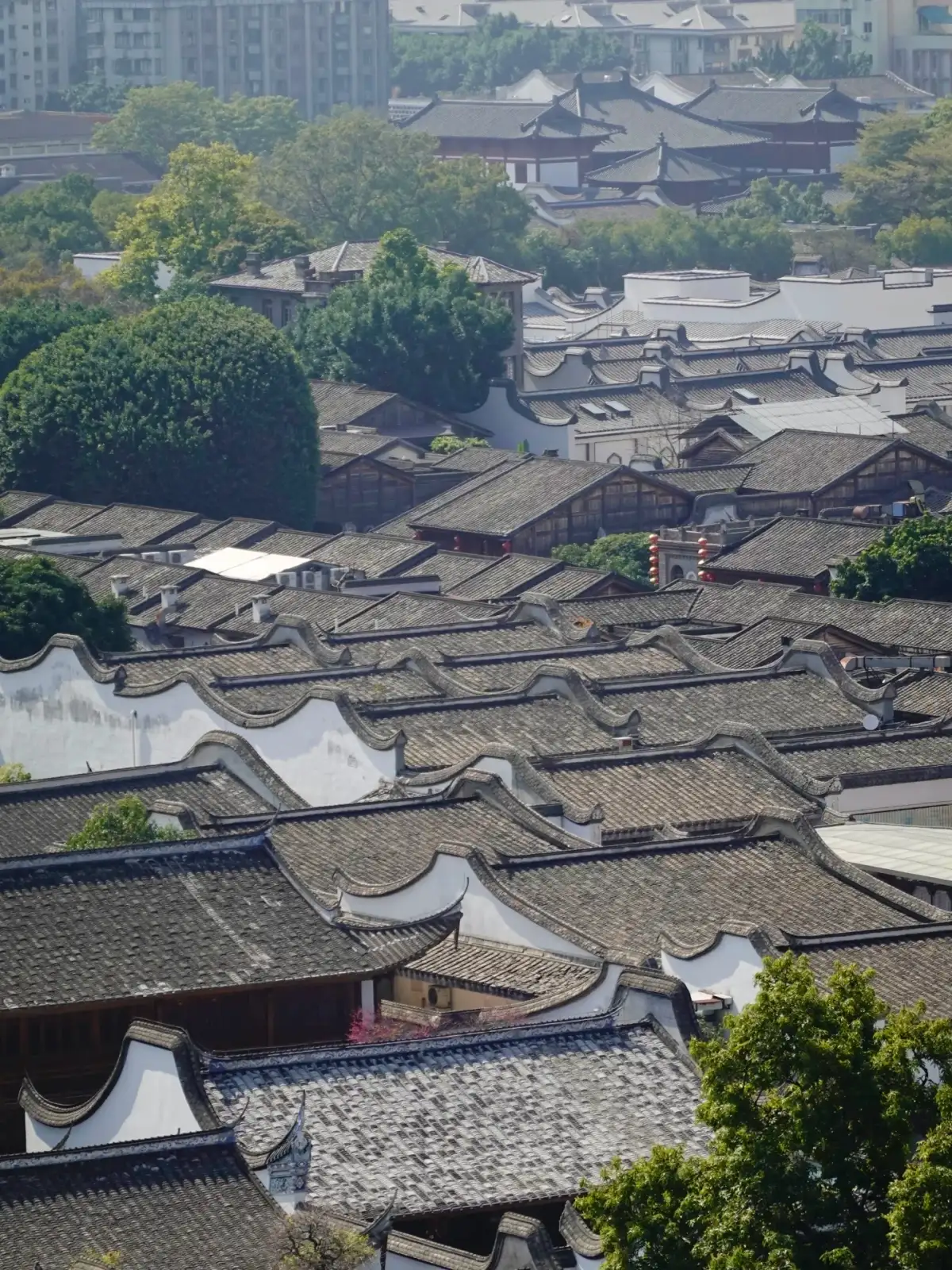
The layered roofs and fire-proof walls of Fuzhou’s Sanfang Qixiang.
The curves of the saddle-back walls give the sky its own shape
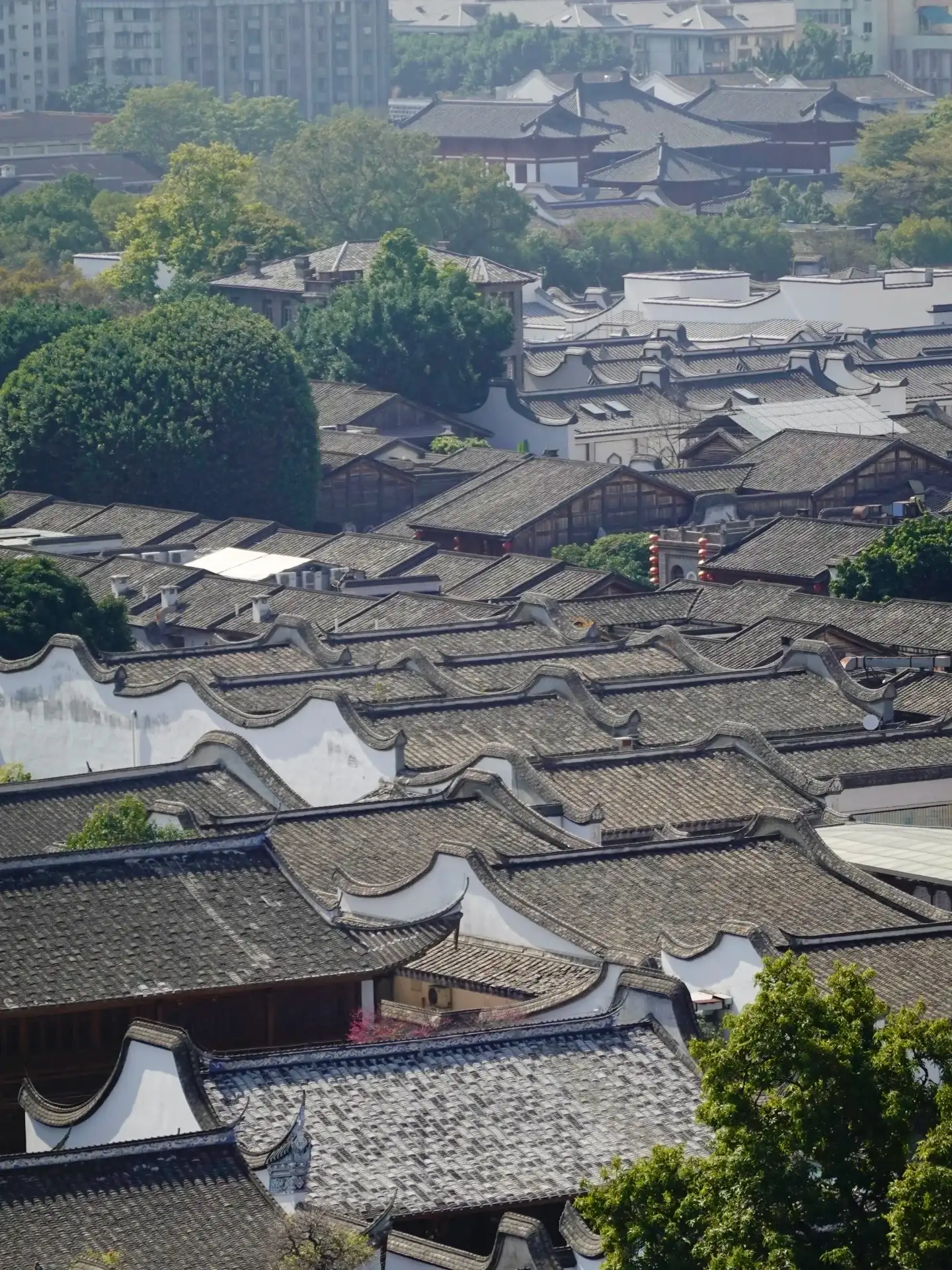
The roofs of these old houses are not simply black and white. The undulating firewalls separate adjacent buildings and carve the sky into different shapes; where the gray tiles meet the white walls, there are often subtle transitions. Looking up from within an alley, the curves are compressed into short segments; viewed from a more open vantage point, they merge into a rhythmic silhouette.
you can take a short detour to examine the wall tops: which side is higher, where it tapers downward, and how plants spill over the boundaries. Don’t rush to label all wall styles with the same name; on-site observation will help you distinguish specific forms. While roof photographs may appear similar, each one actually captures the unique spatial relationships between different houses—and it is precisely these differences that make the historic village so endlessly fascinating.
The courtyards of Yijin Fang are best appreciated through the interplay of light and shadow
and step into an open courtyard, the sounds and light from the street often gradually fade. The entrance hall, courtyard, and living quarters form a continuous transition: it’s darker under the eaves, brighter in the open areas, and the next set of doors leads into an even deeper space. Observing the architecture by following this rhythm often makes it easier to understand than searching for individual decorative elements.
structures such as the Yijin Fang, the Water Pavilion, and the Theater Stage offer further points of interest; actual visits depend on opening hours and exhibition arrangements. How the relationship between water, the stage, and the corridors shapes the viewing experience is a more concrete question than simply noting that “the lives of our ancestors were very poetic.” Even without entering every room, one can appreciate how the buildings manage light, air, and daily activities through the openings of doors and windows, the details of the wooden structures, and the proportions of the courtyards.
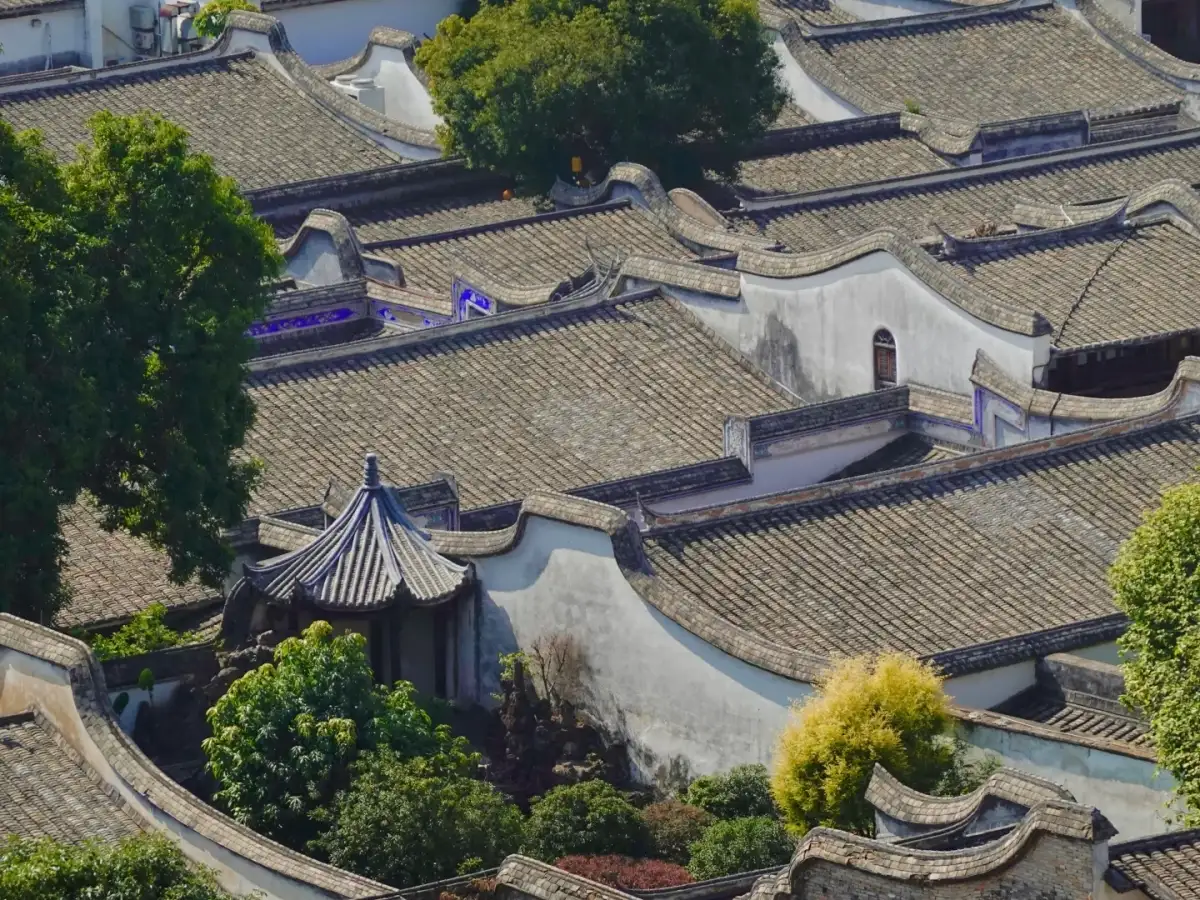
The rooftops, white walls, and green trees in the courtyards of Sanfang Qixiang.
Wenru Lane: Allowing Books and Streets Equal Time
Wenru Lane is situated in the center of the Three Lanes; the buildings along the street and the side alleys add twists and turns to the walk. Exploring Fuzhou’s ancient city shouldn’t stop at a list of famous figures—the living environments behind those names are equally worth examining: how far a door is from the main street, how courtyards give way within the alleys, and how tree shade covers the paths for pedestrians.
The literary bookstores and cultural spaces within the quarter also offer opportunities to linger. The municipal government has highlighted Wenru Quarter as a case study in the revitalization of historic houses, demonstrating that these buildings continue to be repurposed. During your visit, you can choose a shop based on its current operating hours, sit down, and flip through a few pages of a book on local culture; letting the words complement the architecture before your eyes is far more rewarding than simply adding ten more addresses to your list.
Reading the Exchange of Modern Knowledge from the House Numbers on Langguan Alley
Yan Fu’s former residence is located at No. 20 Langguan Alley. A clear street address brings the names of figures from the pages of history back to the scale of walkable streets and alleys. Yan Fu lived here during his later years. When visiting, it is best to view the figure’s life story separately from the courtyard itself: the exhibits help visitors understand his ideas and writings, while the architecture offers insight into the spatial forms of urban residences at the time; the two need not be woven into some fictional dialogue about daily life.
, upon leaving a former residence and glancing at the alley names, one discovers that exploring the “Three Lanes and Seven Alleys” can begin with a short detour. Nanhou Street offers a bustling commercial scene, while side alleys lead visitors to the former residences of notable figures; stepping into the courtyards transforms the experience into a quieter exhibition. During a single walk, the public and the private, the present and the past, constantly alternate. If you’d like to learn more, look for local books in the Wenru Fang area; the city of Fuzhou has highlighted revitalization projects such as “Useless Space” at No. 39 Wenru Fang, opening up new possibilities for bookstores and cultural activities within these historic residences. While specific operations may change, the question of how historic architecture can accommodate today’s reading culture is one you can always explore firsthand on-site.
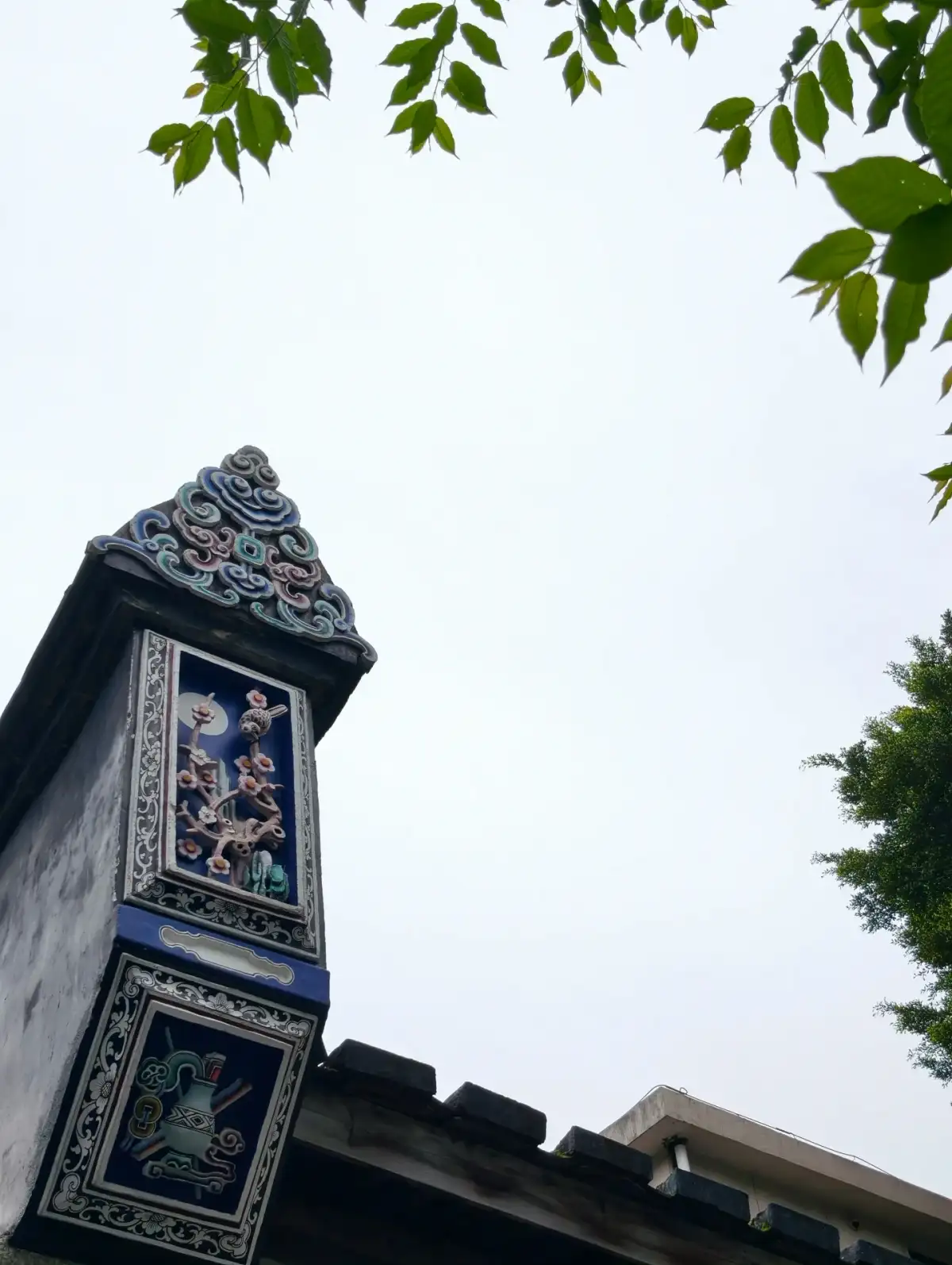
Detailed decorative elements on the tops of Fuzhou’s ancient houses’ walls.
The bookstores and lanterns of Nanhou Street have left behind distinct memories of the local marketplace
Nanhou Street’s commercial history is deeply intertwined with the life of reading. According to local records from the Fujian Provincial Library, during the Republic of China era, this area was still home to a cluster of antique bookstores and printing workshops, and the book mounting industry once flourished here as well. From production and sale to mounting, the book trade fostered a flow of activity within the immediate neighborhood, connecting residences and shops through specific trades. Looking at the storefronts on the main street today, one can juxtapose these historical functions with current businesses, rather than imagining that all shops have remained unchanged since ancient times.
Lanterns bring a different kind of seasonal liveliness. According to Fuzhou’s folk records, paper lanterns for the Lantern Festival were once sold on Nanhou Street; seasonal celebrations and artisanal skills together transformed the street’s appearance. While the lantern market is a memory tied to a specific season, the alleys on ordinary days still maintain their own rhythm. By weaving together the threads of the book trade and the lanterns, the “Three Lanes and Seven Alleys” reveal a dimension beyond architecture: how knowledge circulates, how festivals permeate the city streets, and how people carry out their distinct daily lives along the same path.
The old houses are still in use, and life continues in the alleys
Midway through a stroll through the alleys, common Fuzhou snacks like fish balls, meat-stuffed wonton skins, or “guobian” can serve as a gateway to understanding the local cuisine. Similar names do not necessarily mean similar flavors; when ordering, check the ingredient descriptions and preparation methods, then choose based on your appetite. Sitting down for a meal makes it easier to refocus your attention on the neighborhood than constantly buying snacks while walking.
Returning to the familiar Nanhou Street after dinner and looking up again at the eaves you just passed, the city’s layers become even clearer: above the rooftops lies the backdrop of the contemporary city, while below lies the historic district still in use. Sanfang Qixiang need not be imagined as a backdrop where time has stood still; the preserved layout, the ever-changing uses, and today’s street life can all be seen simultaneously.
Further Reading and References
Compiled by the Dongxing Travel Editorial Department based on publicly available travel notes and the references listed in the article, for pre-trip reading; accompanying images are sourced from the noted travel notes.
Fuzhou Municipal Government: Revitalization of the Wenru Fang Historic Houses
Fuzhou Municipal Data Administration Bureau: Exploring Sanfang Qixiang—Every Step Is “Data-Driven”
Fujian Provincial Library: Yan Fu and Langguan Alley