

Planning Your First Journey to China
Start with your interests, available time and the right combination of places.
Read guide
FROM INSPIRATION TO YOUR JOURNEY
A place you dream of. A journey shaped around you.
Plan my tripA deeper China. A journey of your own.
Find the right pace and practical starting points for your first — or next — journey to China.
FEATURED GUIDE
Start with your interests, available time and the right combination of places.
Read the guideStart with your interests, available time and the right combination of places.
Read guide
Plan by region and interest, rather than choosing one season for the whole country.
Read guide
Meet local life with curiosity, consideration and an open mind.
Read guide
Organise documents, transport, contacts and personal needs before departure.
Read guide
Location, comfort, character and your companions’ needs matter more than labels.
Read guideTravel less hurriedly, allow for rest and make space for every generation.
Read guideStart with the places you dream of, your interests and who is coming with you.
Connect your interests, available time and travel distances into a rhythm that feels right.
Review accommodation, transport, activities, quotation and conditions in practical detail.
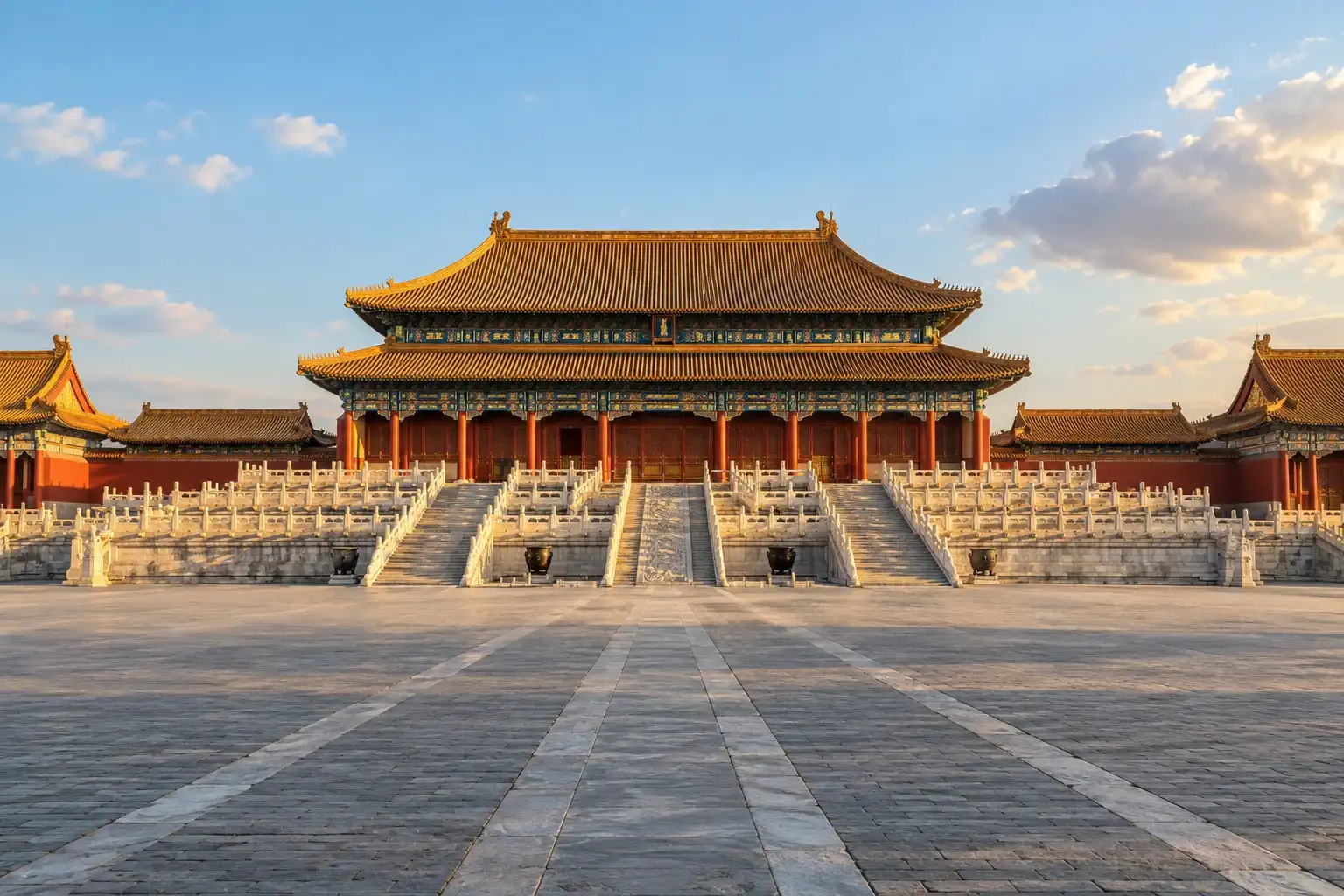
Imperial heritage, woven into everyday life.
Stay inspiration: 3–4 days · adapt to your itineraryA conversation between heritage and the future.
Stay inspiration: 2–3 days · adapt to your itineraryLimestone peaks, river light, a gentler rhythm.
Stay inspiration: 3–5 days · adapt to your itineraryMountain horizons and a rich tapestry of cultures.
Stay inspiration: 7–10 days · adapt to your itineraryMeet local life with curiosity, consideration and an open mind.
Plan by region and interest, rather than choosing one season for the whole country.
Guides support travel planning. Check time-sensitive information with the relevant official sources.
Find practical answers about entry, payments, transport, itineraries and choosing sights.
For a first visit to Changchun, one substantial museum followed by a short park walk is a workable structure. It suits travellers who want historical context without spending the day racing between institutions. If history is the main interest, drop the park and give the museum more time.
Qilou Old Street, the coast and Hainan Museum serve different interests and are not one continuous walk. With one day, choose two priorities. Combine old-town architecture with food, a museum with a short street visit, or a coastal period with fewer indoor stops.
Kashgar Old City rewards travellers interested in walking, architectural details, crafts and everyday street life. You do not need to cover every lane on a first visit. Choose a clear entrance, a resting place and an exit, then give half a day to a coherent route instead of repeatedly crossing the area for individual photographs.
Before buying a grassland excursion from Hohhot, obtain the complete destination or camp name and map pin. Hohhot, Ulanqab and Hulunbuir are not interchangeable bases. Two products described as a “grassland experience” can involve very different journeys and accommodation.
“We will adjust if it rains” is not yet a workable plan. Establish who decides, when, where you would go, whether another reservation is needed and how costs change. This matters especially for mountains, gorges, islands, cable cars and boats.
Slopes, navigation and the walk back to the pier matter more than the island's apparent size. With children or older companions, aim for one principal stop, streets and a seated meal. Sunlight Rock, several museums and a full island circuit do not all need to happen together.
Shapotou suits travellers who want to see the Yellow River beside desert dunes. With half a day, children or older companions, aim for the landscape and one suitable activity. Here, “half a day” describes time at the attraction, not the entire journey from a hotel, airport or station.
Starting in Hebei district, explore the Italian-style streets, reach an open riverside access point, cross one available bridge and finish around Jinwan. This suits visitors who want a walk without an entire day on their feet. Leave the Five Avenues and Tianjin Eye for another session rather than adding both.
Choose between a palace visit and a walk around its northern surroundings. Trying to fit Qianmen, Tiananmen Square, the Forbidden City, Jingshan and the Drum Tower into one half day leaves little room for security checks, rest or meaningful observation. A straight line on a map is not necessarily a walk-through route.
For a return trip from central Tianjin, choose an architecture-focused or mountain-focused day. Dule Temple suits timber structures, sculpture and old streets. Panshan suits scenery and physical activity. Calling each an easy addition hides both the city transfer and travel between attractions.
Choose the evening show you most want before filling the day with attractions. A full circuit of Kaifeng Fu, Qingming Riverside Landscape Garden and a night market can leave little energy for the performance itself. Families and older travellers benefit from a deliberately shorter daytime programme.
A short train ride does not necessarily produce the shortest day trip to Shilin. Compare hotel-to-gate travel, including station access, waiting and the final transfer. Road travel removes some changes but introduces traffic uncertainty. Avoid treating the Stone Forest as an easy extra before an important onward flight or train.
Whether a Lanzhou connection allows a river visit depends on when you must be back at the departure station. Do not simply subtract one taxi ride from the hours between trains. Leaving the station, storing and collecting bags, city travel and renewed security all need their own allowance.
Prepare Alipay, your own overseas bank card and a cash backup before visiting mainland China. Learn how merchant payments differ from transfers, what to check at checkout and how to handle a decline or refund.
This plan suits travellers already staying in Xiahe. It should not be added unchanged to a long arrival drive from Lanzhou. Count the entire hotel-to-hotel day, including parking, lunch, interpretation and rest.
The easily missed parts of a Mutianyu trip are the shuttle after descending and the journey back to Beijing. Confirm your return first, then site opening, uphill transport and walking distance. A slide experience may not connect with an existing return cable-car ticket.
Combining Sayram Lake, Yining and Nalati works best with several days and a willingness to change hotels. With one full sightseeing day, choose lake or grassland. Begin by locating overnight stops and transport connections rather than copying a large Xinjiang circuit into a short holiday.
An overnight stay in Hongcun or Xidi divides sightseeing into two shorter sessions instead of competing with a day's driving. It does not guarantee empty dawn streets or early access to closed interiors. Photographers may appreciate the extra time; light sleepers, travellers with heavy luggage and those needing vehicle access should compare accommodation outside the village.
When a driver is missing, a room differs from the booking or an attraction will not admit you, the first message should help someone act. This tool is for problems needing attention while the trip is underway. A full review or compensation discussion can follow once the immediate situation is stable.
To see both old Qingdao and Badaguan, plan two walking sections with a vehicle transfer or substantial break between them. You do not need to walk the entire coast. This suits first-time visitors interested in architecture without turning the day into an endurance exercise.
After the Summer Palace, lunch and a proper rest may be more valuable than another extensive garden. Keep Yuanmingyuan for a separate half day unless everyone has a specific interest in its ruins and still wants to walk. Being in the same part of Beijing does not make two large parks a short combined outing.
For a short beach break, repeated trips across the city can consume the time you intended to spend resting. Families and visitors staying only two or three nights can use one cross-area priority per day as a planning limit, leaving the rest for nearby meals, walks and downtime.
The Three Natural Bridges are about seeing huge natural rock arches from a valley and understanding the landscape shaped by water and stone. Choose them if you enjoy geology and can walk. An elevator does not make this a drive-up photograph stop. Wulong's tourism department identifies Tianlong, Qinglong and Heilong as the principal arches.
On arrival in Lhasa, commit to the transfer, check-in and rest. Do not attach Potala's stairs or a higher viewpoint at Yamdrok Lake to that day. This framework suits first-time high-altitude visitors, but one rest day does not guarantee acclimatisation.
On an Arxan Forest Park map, Tianchi and Tuofengling Tianchi are separately named attractions. Do not reduce both to a vague “Tianchi” in a pickup instruction. First decide how much climbing your party wants, then connect the chosen landscapes using the day's operating transport.
If you have already visited places such as Beijing, Shanghai or Xi'an, your next trip does not need to complete a list of major cities. Start with the experience you wished you had given another afternoon—and the part of the first trip you would rather not repeat.
“A day in Shannan” is not a transport plan. A hotel in Tsetang, an arrival at Gonggar Airport and a departure from Lhasa are different starting points, while Yamdrok has several possible stops. Use this worksheet when comparing transfers and trying to avoid an exhausting high-altitude day.
Before comparing two totals, rewrite every charge as quantity × unit price × billing unit. A hotel may charge per room-night, a ticket per passenger and a vehicle per service day. Multiplying everything by the number of travellers—or dividing everything equally—can both give the wrong answer.
Send this template to any travel provider you are comparing, or use it for independent planning. The first discussion does not need passport scans, a full medical history or payment details. Establish the dates, group, priorities and limits first, then exchange booking information through an appropriate secure process.
Start near Wukang Mansion, follow Wukang Road north and decide later whether to continue to Anfu Road. Do not automatically attach the Xuhui waterfront: it is a separate area requiring another transfer and walking budget.
Before Huashan or an early departure, the priority is a suitable meal available on time, not sampling every regional snack. Ask your hotel the previous evening when breakfast begins and whether a takeaway can be arranged. If service starts after departure, prepare clearly identified food rather than assuming the driver can find an open café.
The useful question for a day around Erhai is which side of the lake you will explore. Walking the western ecological corridor, visiting Xizhou and driving along the eastern shore involve different transport arrangements. Combining everything can turn a relaxed day into a sequence of transfers.
For two or more days, decide whether the priority is a seaside stay or convenient rail travel and Shanhaiguan sightseeing. Coastal accommodation suits travellers willing to leave free time. Frequent transfers call for attention to station access and luggage. A “sea-view room” does not guarantee direct beach access; ask about the entrance, road crossings and actual view.
If morning tea is a reason to visit Yangzhou, give it a proper place in the day rather than watching an admission deadline while queuing for breakfast. Choose morning tea plus Slender West Lake, or morning tea plus one private garden. Adding every garden and the canal defeats the purpose of a slower visit.
Keep your Shanghai hotel and make Zhujiajiao the day's main out-of-town activity. It lies in the Hongqiao direction, but that alone does not make it an easy stop before a booked train. Fixed departures and large luggage change the calculation.
Badaguan suits visitors who want shaded streets, villa exteriors and coastal walking. The old city offers denser streets, courtyard blocks and urban history. Choose Badaguan for a leisurely photographic walk, or one old-town district with a confirmed open historic interior for more context. Neither is a single ticketed enclosure where every building is accessible.
For two people, start with one starch and a vegetable dish, then decide whether to add fish or rushan. Treat Three-Course Tea as a separate cultural experience. Ordering a full meal, several Xizhou snacks and a tea package for each person often leaves little time or appetite to appreciate any of them.
Bamboo rice can serve as a starch or shared part of a village meal. Oil tea deserves an ingredient check before tasting. If two people order bamboo rice, they need not automatically add a large bowl of plain rice as well. Simple-sounding names do not establish simple recipes.
Donkey-meat huoshao can be a practical Baoding meal on a transfer day. An Xushui government account links the local tradition with Caohe donkey products and also mentions intestinal and starch-based preparations. Similar menu names do not mean identical all-meat fillings.
Baotu Spring suits visitors interested in visible springs, gardens and Jinan's spring culture. Daming Lake suits a flexible waterside walk with wider views and frequent rest options. With half a day, choose a main objective rather than trying to complete a famous-sights checklist. Spring flow and water levels can differ from promotional photographs.
Basum Tso is in Cuogao Township, Gongbo'gyamda County, Nyingchi. It suits travellers interested in a combination of lake scenery, forest and village culture. It is not a small park beside central Nyingchi: road travel, checks and internal transport belong in the day's schedule. Trees do not remove the need to consider altitude.
The main cancellation risk is often operational: did the provider receive a clear instruction, which bookings were cancelled, and which remain active? If you have already paid and are comparing cancellation with new dates, build a checkable list before deciding.
Use this checklist for family photographs, group trips or images a travel company would like to publish. Agreement to be photographed, permission to share in a private group and permission to appear in advertising are different decisions.
Before booking a Beijing transfer or airport hotel, read the three-letter code on your flight: PEK is Beijing Capital International Airport; PKX is Beijing Daxing International Airport. They are separate airports. Instructions for one cannot be applied to the other, and “Beijing airport” is not enough information for a driver.
Choose the main Capital Museum for a shorter city-history visit; give the Grand Canal Museum its own outing if the canal is your priority.
For a short winter look at Beijing's southern Central Axis, choose one gate area. You do not need to walk the entire distance between Zhengyangmen and Yongdingmen.
Choose lamb and sesame dip for a Beijing copper pot, or settle the broth and spice level for Sichuan or Chongqing hot pot.
Keep the Forbidden City and one Great Wall section on separate days, accounting for immigration, jet lag, station transfers and your final departure.
When Beijing museum opening days conflict, check the exact branch, a dated museum notice and the booking calendar before committing to transport.
At the National Museum of China, choose one period within Ancient China before adding another. A focused winter visit is more useful than rushing through every dynasty.
If you simply need a seated break, you do not necessarily need a performance package. If traditional entertainment is the aim, check the programme, seating and language before choosing the tea. Beijing's official tourism description of Lao She Teahouse illustrates how tea, meals and performances can coexist.
Compare spring and autumn for a first city-focused trip, then adjust for each region, mountain conditions and public holidays. Build a weather fallback before booking.
Choose autumn foliage, green valleys or winter ice according to your interests. Then account for the rail transfer, identity-based reservations and altitude, with separate time for Jiuzhaigou and Huanglong.
“Lift available” and “accessible room” do not establish that a room suits a particular traveller. Describe your equipment and transfer needs, then request current photographs and measurements of the proposed layout. Photos help identify questions; they do not replace personal assessment or a confirmed arrangement.
For a first visit focused on Tianchi, or Heavenly Lake, distinguish the northern, western and southern scenic areas. They have different entrances. Admission, internal transport and summit transport may be separate items, and a successful booking does not guarantee that the summit will open or the lake will be visible.
Before travelling to Mohe, turn arrival, transfer to accommodation and departure into three explicit arrangements. Asking only for a car price can leave flight delays, movement between villages and the final station transfer outside the agreement.
Use this checklist after choosing the Western Qing Tombs or Baishishan. A booking described simply as a “Baoding transfer” leaves important questions unanswered: the exact station, the attraction entrance and whether the journey can end somewhere different.
On a Huangguoshu day, breakfast should fit the departure: somewhere serving food, with understandable ingredients and no queue that threatens your pickup. Save a slower food walk around Gufu Street or Rulin Road for a separate period after returning to town.
Before ordering breakfast in Hohhot, ask how many shaomai come in the restaurant's unit and whether milk tea is sold by cup, pot or set. This prevents a traditional breakfast from being mistaken for a sweet café drink with a small familiar basket of dumplings.
Breakfast in Zhongwei need not begin with a large lamb platter. Before Shapotou or an early train, a noodle meal is easier to size than several shared dishes. Ask what the kitchen is serving at that hour: appearing on a regional food list does not mean every restaurant offers a dish early in the morning.
A light stroller can reduce carrying, but cabin acceptance, car luggage space and access to a hotel room are separate questions. Record folded dimensions, weight and folding method, then contact the operating airline, vehicle provider and hotel. “Can we bring a stroller?” is too broad to settle the journey.
Choose food near the day's activities before choosing a famous name. A Nanshan waterfront visit, Futian exhibition and Luohu arrival should not become a cross-city search for one drink. This approach suits short stays, families and travellers needing clear ingredient communication.
For a first walk in Harbin, combine Saint Sophia's exterior with a selected stretch of Central Street. This suits visitors who enjoy observing buildings at a relaxed pace. If the cathedral interior or a music programme is your main objective, verify that specific activity: an open square does not establish indoor access.
For two people, begin with two small beef cuts, one meatball portion and vegetables, then decide whether to add rice noodles. Smaller appetites can omit the balls or starch. You do not need one plate of every cut.
For two cities, decide between two nights at one hotel or one night in each. A single base avoids repacking but adds a return intercity journey. Separate stays make evening visits easier but require luggage storage and hotel transfers. Compare the actual arrival and departure arrangements before choosing.
Choose Chaozhou for Paifang Street, the Han River and historic monuments. Choose Shantou's Small Park district for arcaded streets and the city's trading-port history. These are two cities, not neighbouring districts. With one day, make one the priority; with two or more, visit them separately.
Once your dates are set, a statement such as “this is usually a good month” cannot decide next week's mountain walk or boat trip. Check the actual places you will visit, then review warnings and operating notices closer to the activity. Suitable weather, an accessible approach and an operating attraction are separate questions.
Choose Chen Clan Academy (陈家祠) for traditional architectural craftsmanship, or Shamian (沙面) for a gentler walk through a historic neighbourhood. With a tight half-day, one is enough. A full day can combine the academy, lunch and Shamian without adding every modern skyline attraction.
With one full day, pair the Mountain Resort with one outlying temple. Travellers who enjoy detailed architectural visits may prefer the resort alone and temples the next day. The historical term “Eight Outer Temples” is neither a one-day checklist nor a promise of shared admission and universal access.
After the Mountain Resort, two or three people do not need an elaborate “imperial banquet.” Start with an oat-based staple or another grain dish, meat or tofu, and vegetables; try a small pastry later. A Chengde government food introduction discusses oat dishes, buckwheat wantuo and rose pastries. It offers vocabulary, not proof that old restaurant listings still operate unchanged.
The Mountain Resort suits visitors interested in Qing history, gardens and unhurried walking. It is not a small garden that can be circled quickly. On a first visit, prioritise the palace area and lakes, leaving the hills optional. UNESCO's description connects the buildings with lakes and wooded terrain; understanding those relationships is more useful than collecting every named viewpoint.
See the Putuo Zongcheng Temple from afar at Chengde's Mountain Resort, then visit for a closer look at the slope, red terrace and courtyards.
Follow a winter route from the palace courtyard to the lakes at Chengde Mountain Resort, and decide whether to add the hills or an outer temple.
Choose one panda location, then combine Wuhou Shrine and a city or ancient Shu museum, allowing time for meals, rest and transfers.
The Chengdu Research Base of Giant Panda Breeding suits a half-day focus on pandas and conservation. Animal behaviour, rotating access and weather affect what you see. No particular panda, activity or photograph should be treated as a ticket promise.
Decide how to see the Buddha before booking the day's transport. Land entrances and boat piers are different destinations. “Take us to the Buddha” is too vague, and Leshan railway station still requires a local transfer.
A visit under ten days does not automatically qualify. Check genuine third-country transit, your passport, eligible ports, permitted areas and confirmed onward transport.
Choose a transfer that works when you actually leave the airport, with a clear hotel destination. Public transport, a licensed taxi and a pre-booked transfer may all be worth comparing. Your landing time is not your pickup time, and the first fare you see may not cover the whole journey.
Prepare genuine documents, transport to your address, phone verification and backup payments. Follow a clear arrival sequence and know which official channel handles a problem.
Your phone may hold your payment apps, directions, tickets and hotel contacts. Prepare its power supply before you pack. There are two separate questions: can your equipment use the local electricity supply, and can your power bank travel on every flight in your itinerary? A universal plug adapter does not answer both.
Compare roaming, travel eSIMs and local SIMs after checking your exact phone and verification needs. Prepare offline contact and transport information.
Choose fewer bases, one main daily experience and reliable rest, with separate checks for children’s rail tickets, passports, strollers, accommodation and attractions.
Prepare passenger verification, identify the actual stations and confirm issued tickets. Carry original documents and allow time for station checks.
Before comparing stars, answer three practical questions: is this the correct hotel branch, can you check in at your actual arrival time, and does the location fit your itinerary? These checks are more useful than an unexplained distance from the city centre.
A planning example for arriving in Beijing and departing from Shanghai, with separate days for the Forbidden City, Great Wall and Terracotta Warriors, plus transfer and booking advice.
Use Beijing, Xi’an and Shanghai as a framework, adding either Chengdu or Guilin and Yangshuo while accounting for transfers, nights and entry conditions.
Check both the locker rental and station access cutoffs before you leave your bag.
A failed visit is not always a sold-out visit. You may have selected the wrong branch, a closed day or a date not yet open for booking. You may also have created an account without securing admission. Identify the status first, then decide whether to change the date or the itinerary.
Before accepting a two-train itinerary, compare the full Chinese name of the arrival station with the next departure station. The same city name does not mean the same station. With luggage, children or mobility equipment, compare fewer changes and a generous connection against the shortest advertised journey.
Separate transport, accommodation, meals, attractions and payment charges. Compare quoted scope and keep accessible funds for changes.
Buying insurance does not establish that every activity or disruption is covered. Before departure, compare the travellers, dates, destinations and planned activities with the policy, then identify the contact procedure and evidence you would need. This guide does not recommend a product or determine whether a claim will be paid.
Prepare addresses, documents, verified transport and emergency contacts. Follow venue guidance, respect personal consent and check drones separately.
Plan around each person's mobility and preferences. Verify facilities, assistance and rest options, with clinician-guided preparation and practical backups.
Check the rule for your own passport before booking a China holiday. Bilateral exemptions, unilateral arrangements and visa-free transit have different conditions.
If members of your party cannot sustain a conversation in Chinese, an English-speaking guide for cultural visits is usually more practical than asking a relative to interpret everything. For airport transport, booking help or shopping translation, first define the task. An English-speaking driver is not automatically a licensed guide, and a guide is not automatically an all-day personal assistant.
Plan Chongqing by area and road level, combining Hongyadong, Liziba and a museum without treating short map distances as easy walks.
A day trip from Chongqing to the Three Natural Bridges needs more than a short train journey. Map the hotel-to-station transfer, the Wulong station-to-visitor-centre journey, internal transport and the return connection. With older companions, sensitivity to mountain roads or another attraction in mind, an overnight stay can be a better choice than removing meals and buffers.
Chongzuo city, the Daxin–Detian area, Jingxi city and Equan are not one hotel neighbourhood. Reaching a railway station may leave a substantial road journey. Comparing only intercity train time misses the last leg that often shapes the day.
The northern, western and southern scenic areas are not three short routes from one entrance. With one or two days, choose a side and matching accommodation before assuming you can switch entrances whenever the weather changes.
Huangshan rewards travellers who can give its pines, granite peaks and changing cloud conditions sufficient time. It is not one level viewpoint reached by cable car. If you must arrive late and leave the region the same day, reduce your objectives rather than trying to collect every summit.
Qinghai Lake is not a public park with unrestricted access wherever the road approaches the water. If you need toilets, defined paths and organised visitor services, compare officially operating sites. Even a brief scenic stop should use a permitted viewing place rather than an unverified track through pasture.
If coffee is a rest during sightseeing, choose a café in the area you are already visiting. Wukang–Anfu fits an architecture walk; Yongjia Road and Jiashan Road can anchor a separate neighbourhood outing; the Xuhui waterfront makes sense when river views are already planned. These are not one compact walking circuit.
Do not squeeze Wuzhen and Nanxun into one day simply to collect both names. Choose according to how you want to spend your time: evening canals, historic interiors or a quieter riverside walk.
A desert visit does not require every traveller to take a dune vehicle, ride an animal, slide down sand or join a river activity. First-time visitors, families and anyone sensitive to jolting should decide what they can comfortably accept before comparing packages. Similar resort names and the word “Tengger” do not establish a shared operator, entrance or service standard.
Secure your island crossing first, then choose attractions around your interests. With half a day ashore, one main attraction plus a street walk is usually a better fit than trying to use every part of a combined ticket.
Choose by walking demand before comparing price. West Peak return makes it easier to limit the area explored. West-up/north-down connects different mountain areas and still involves significant steps and descent. A North Peak return becomes more demanding if you also pursue the higher peaks. None is automatically suitable for every older traveller or young child.
Choose Zhenyuan for riverside streets and varied historic buildings, or Xijiang for the setting and life of a hillside Miao village. Xijiang is not a Dong village. One Miao experience cannot stand in for learning about Dong culture. A visit with time for questions is often more useful than collecting several village names in a day.
Pair Ciqikou with the Chongqing Memory Museum and the Shaci Administrative Divisions and Place Names History Culture Hall if you want more context than shopping alone. The city's 2026 opening report explicitly places the two exhibitions together. This makes a coherent local pairing.
Yanji's cold noodles and cafés can make a satisfying meal followed by a rest. Travellers managing sugar, dairy or wheat need to look beyond the dish name or a photogenic cup and ask about the actual recipe.
Chaka can be the main purpose of a day or one stop on a wider Qinghai–Gansu journey. Those are different schedules. Problems arise when repeated lake stops delay arrival, photography continues until the last moment and a long drive still remains. Set tonight’s accommodation before deciding how long to spend inside.
Two proposals covering Beijing, Xi'an and Shanghai may deliver very different trips. Compare hotel departure times, transfers, proper meal breaks, luggage moves and time at your priority sights. A longer list is not evidence of a better journey.
Two private China journeys are comparable only when dates, group size, accommodation and service coverage match. A low per-person daily figure may exclude hotels or transport included in the other proposal.
An airport pickup needs more than “the driver will wait.” Confirm the flight, local arrival date, terminal, meeting point and a fallback when you cannot connect. Overnight flights, baggage delays and terminal changes make those details essential.
Confirm the internal door, both bookings and the room assignment before a family trip.
A country-style restaurant can provide a welcome seated meal after Mutianyu, but strict dietary requirements should be explained before everyone is hungry. “Farmhouse” or “home-style” does not establish vegetarian, halal or allergy-safe preparation.
Choose a basic crossing-the-bridge noodle set at a restaurant that can explain the ingredients and help with preparation. The most elaborate tray is not necessarily the best first choice. A set commonly brings broth, noodles and several accompaniments; not every small dish is ready to eat.
Binhai Road offers sections of coastal walking; Lushun is a separate area requiring its own transport plan. With half a day, choose one coastal section near your base. Give Lushun an independent daylight visit when museums and history are a priority.
Menzi can be a small food stop; a seafood meal needs separate questions about species, portions and cooking charges. Two people might share menzi first, then decide whether to order a larger meal rather than combining full portions of starch, dumplings and fish immediately.
The Yalu River Broken Bridge suits visitors interested in wartime history and the riverfront. Visiting means staying within the authorised scenic area; it is not a route across the border. A half-day can combine the bridge with a short riverside walk without adding distant Hushan or Hekou.
Seafood barbecue fits a seated meal with time available. Before a train or an excursion pickup, choose breakfast from a confirmed open venue that can serve promptly. An evening-market menu does not establish morning availability.
Dapeng Fortress (大鹏所城) suits travellers interested in coastal defence, gateways and traditional lanes. If Shenzhen is only a short stop before a flight, compare the complete transfer first. It is not an effortless extra between Futian and Nanshan sights.
Treat Datong knife-cut noodles as a proper meal rather than a contest to join the longest queue. A 2026 Datong government report describes waits at popular restaurants. If visiting Yungang, protect your reservation and departure time; noodles can wait until your return.
If staying near Datong's old city, settle the return journey from Yungang before booking dinner or evening activities. The grottoes are an out-of-town destination. A train arrival, hotel luggage drop and attraction transfer are separate stages; carrying a suitcase straight into the first entry slot leaves little room for delays.
Dazhao offers temple architecture and an old-city setting; Inner Mongolia Museum offers a thematic introduction to regional history and nature. They can form two main visits in a day, but book the museum and verify its new address before arranging the temple. An old saved map pin can send you to the wrong building.
Choose Detian for a waterfall-centred outing where water levels and weather are part of the experience. Equan offers a shorter visit around spring water, a historic bridge and village scenery. They are in different local areas; a first trip works better across separate days than as a supposedly easy half-day combination.
In Zhangjiajie and western Hunan, “mild” expresses taste preference; it does not communicate an allergy, religious restriction or strict diet. Name the ingredient first, then explain whether stock, fat, marinades and shared equipment matter. Discuss chilli separately.
Share dietary requirements before your adviser fixes the route and restaurants. A vague message shortly before departure leaves too much interpretation. The aim is a consistent brief that reaches the adviser, guide and kitchen without being reduced to “use a little less.”
Arrange special meals when booking hotels and transport around Jiuzhaigou, Huanglong and Aba. Roadside stops and park options may be limited. Telling a consultant “vegetarian” does not settle every meal; ask the kitchen that will prepare it to confirm ingredients and alternatives.
A flight labelled “transit” does not establish that you can stay inside the international transfer area throughout. Collecting bags, checking in again, changing airports or using an outside hotel can change the required formalities. Resolve these questions before buying inflexible onward arrangements, then check eligibility for your passport and complete route.
A human guide is especially useful if Qin history is new to you and you want to ask questions while looking at the excavations. Independent viewing suits visitors who already have some background and prefer to linger. With children, hearing needs or mixed language abilities, choose according to whether everyone can understand and follow the visit.
If you change hotels tomorrow morning, plan laundry backward from the moment your bag must be closed. “The wash takes an hour” is not enough: a queue, drying, cooling and collecting clothes all belong in the same evening.
Jizhou offers both historic architecture and mountain scenery, but Dule Temple and Panshan are separate visits. For a first-time traveller interested in interpretation, give Dule a complete session. Panshan requires its own transfer, ascent, descent and weather assessment rather than a brief walk after the temple.
Dumplings can be a main meal. Chicken frames suit diners willing to eat slowly and handle bones. After an old-town walk, establish dumpling portions before adding a shared chicken snack rather than ordering several preparations because each looks inexpensive.
Treat travel between Dunhuang and Zhangye as its own itinerary segment, then place overnight stops around the confirmed Mogao reservation. Do not buy an apparently seamless attraction package before checking whether your arrival can actually reach its entry slot.
Before an early arrival, check when you can use the room, what it costs and whether it will be held.
On a Changbaishan sightseeing day, food needs to work around transfers and weather. Early starters, families and travellers with dietary restrictions should separate breakfast, portable supplies and the meal after returning, rather than relying on one famous stall for lunch.
A local meal in Guyuan can begin with one substantial bowl instead of a banquet. Recipes vary across southern Ningxia, so ask whether a speciality is served in soup, steamed or on a shared plate before ordering by name alone.
Meal arrangements in Arxan depend on whether you stay in town, inside the park or at another visitor base. Establish which kitchen actually operates before choosing a lunch stop. A restaurant symbol on a map does not guarantee hot meals throughout a quieter season.
Match meals to the day's activity in northeastern Jiangxi: a simple noodle bowl before the mountain, a seated homestyle meal after returning to town, and a separate tea break if time permits. A regional reputation for heat does not establish each restaurant's seasoning.
Enshi Grand Canyon is not completed simply by taking a cableway. Qixingzhai's high-level paths and Yunlong Fissure require separate decisions. With half a day or limited tolerance for stairs, do not buy the fullest bundle and hope to shorten it on arrival.
For a first visit to Dali, a short walk beside Erhai followed by Xizhou offers a workable balance of landscape and Bai architecture. With only half a day, choose the lake for an unhurried outdoor visit or Xizhou for streets, courtyards and food. Completing a circuit of the lake is not necessary to enjoy it.
A seated farm-style meal can work well after Panshan or Jizhou's historic sites. However, “farm,” “seasonal” and “local chicken” do not replace a clear menu. Two diners should ask about individual dishes, small portions and waiting time rather than automatically ordering a banquet. Beijing tourism's Jizhou introduction mentions badawan, gezha parcels and hubing, useful names to recognise.
Choose Fenghuang if you want riverside streets, bridges, a seated meal and an evening beside the Tuo River. Investigate Furong Town for a more concentrated waterfall-and-hillside-town visit. With one night, choose one rather than chasing both illuminated scenes and a final train.
Arxan names a city as well as a national forest park and a UNESCO Global Geopark. Separate the actual attraction, hotel and entrance before booking. A hotel marketed as being “in Arxan” is not necessarily beside the forest park.
Longji suits travellers prepared for mountain-road travel and walking in exchange for a working agricultural landscape. On a first day trip, choose one area—Ping'an or Jinkeng/Dazhai. Stay overnight if early and late light matter. “Longji Rice Terraces” is not a single platform reached immediately after leaving your car.
Wulingyuan suits visitors giving the sandstone landscape at least one full sightseeing day and accepting several transport changes. If your priority is Tianmen Cave, you need Tianmen Mountain instead. It is a different scenic area, not another entrance covered by a Wulingyuan ticket.
Ask what fish is being sold and how it is charged. “River fish,” “wild” and “original flavour” are not quality guarantees. Solo travellers or anyone leaving for a cruise should ask about a small fish portion or another simple meal; a whole shared fish fits better when there is time to sit.
For a small party, the expensive misunderstanding at a Jingpo Lake fish meal is reading a price per unit of weight as the price for the whole dish. Confirm the weighing method, unit and preparation charges before agreeing to a whole fish. An ordinary portion may suit two people better than a banquet.
For a Qinghai Lake drive, first decide which town or established service stop will provide lunch. Scenery alone is a poor restaurant criterion. Clear menus, seats, toilets and a workable onward route are more useful, especially with children or dietary restrictions.
Book through the Palace Museum international website with your passport. Check closure dates, keep the original document and plan for entry at the Meridian Gate.
One mini-program failing does not prove that foreign visitors cannot book. The problem may involve the account, phone number, identity document, availability or payment. Establish the official channel for your circumstances before submitting personal information, and treat admission as unconfirmed until you have the required confirmation.
Start departure checks before the final evening's packing. About two days ahead, confirm the airport, flight, baggage and hotel checkout, and save outstanding refund details separately. Forty-eight hours is an editorial planning interval, not a universal check-in opening time or legal deadline.
Combine an afternoon of facades with an evening around Jiefang North Road and Jinwan Square. Treat them as two walking sections connected by public transport or a car. The Five Avenues are not a direct continuation of the waterfront, and there is no need to walk the transfer simply to make the route continuous.
Guilin rice noodles make a practical meal between activities. For a slower meal in Yangshuo, two people might share a fish, vegetables and rice after confirming the total cost. A whole-fish order does not work like an individual noodle portion, and “rice noodles” does not establish vegetarian or allergen-free preparation.
Separate Guilin city, Li River routes and Yangshuo’s countryside, comparing boat and road transfers with pier, luggage and weather checks.
For a solo meal before sightseeing, a clearly explained bowl of rice noodles may be simpler than a whole fish hotpot. With companions and time to sit, consider sour-soup fish or another shared pot. Neither pale broth, rice noodles nor “not spicy” establishes that a meal is vegetarian, alcohol-free or suitable for an allergy.
Qilou Old Street suits a short architectural walk followed by tea or a meal. Start with Zhongshan Road and add Shuixiangkou if interested. This is a working neighbourhood of shops, homes and conservation projects, not one enclosed museum covered by a ticket.
Laoba tea describes an everyday tea-and-snack tradition, not one tea restricted to older men. Qingbuliang is a mixed dessert. Both fit a rest after an old-town walk; you do not need large servings of each after a full meal.
At a village restaurant near Nanjing's tulou, establish serving times and portions before ordering. Two people can start with one main, vegetables and rice. Solo travellers should ask for a small dish or individual meal rather than ordering a whole chicken because it appears on the group menu.
For a first Ningxia meal, start with one lamb dish rather than assembling a table of meat specialities. Shouzhua yangrou, usually translated as hand-grab lamb, suits diners who enjoy the flavour of lamb and accept bone and some fat. Eight-treasure tea invites a slower pause, but it commonly contains tea leaves and sweet ingredients: it is not caffeine-free water.
Spend one day on a selected West Lake shoreline and the city, then choose a tea-country focus for day two. Keep the lake loop and distant excursions optional.
Compare patterned silk and gauze, then trace the fabric back to the cocoon and the loom.
Harbin sausage, Russian-style bread and kvass often appear together in descriptions of the city's food. They require different ingredient and storage checks. If you are tasting near Central Street and considering gifts, buy a modest amount to eat first, then decide what can sensibly travel with you.
Confirm the current ice-park season before booking around it. Combine city walks with indoor breaks, practical clothing and a transport plan that allows for cold weather.
Follow the sleeve of a lamp, the peaks of an incense burner and the joins of a jade suit in Hebei Museum.
Between Zhangye and Dunhuang, a noodle name may describe its shape, preparation or accompaniment rather than its ingredients. Ask separately about the noodle, topping and broth, then the ingredients in a sweet drink. “Local speciality” is not an ingredient list.
With time for one village, choose Hongcun if water, reflections and the overall settlement composition appeal most. Choose Xidi if you want to concentrate on archways, ancestral halls, courtyards and carving. Both contain architecture, daily life and commercial activity; neither fits a simple “photographic” versus “authentic” label.
Choose Hongyadong for the illuminated riverside exterior and a busy commercial atmosphere; choose Shanchengxiang for hillside lanes, older buildings and river views. In both places, elevation matters more than a short distance on a flat map.
Do not book a hotel for its laundry facilities until you know whether “laundry service” means machines you can use or clothes collected by staff. For a multi-city winter trip, that distinction affects your packing, evening plans and bill.
Ask how heat works for your dates and room type, and what to do if the room stays cold.
A budget range is more useful than “luxury, but not too expensive.” Start with currency, party size, nights, rooms and whether international flights are included. A total for two travellers sharing a vehicle is not directly comparable with a per-person figure for four.
Make the main waterfall your first priority. Then decide whether to add Water Curtain Cave, Doupotang or Tianxingqiao. Families, older visitors and anyone with one day need not complete every area included in a ticket. Transfers and walking between viewpoints take part of that day.
Waterfall spray and rain are different problems. You can get wet near the falls on a sunny day; rain adds slippery surfaces, changing flow and possible closures. For children, sore knees or limited hill-walking experience, begin with a shorter route with a known exit before adding the cave or longer Tianxingqiao paths.
Choose Huangling for hillside buildings, crop-drying displays and a concentrated visitor experience. Choose Wangkou for a riverside settlement and its trading history. They are separate destinations, not two sections automatically covered by one admission product.
Compare an overnight mountain route with one mountain day and a lower-level cultural day, accounting for stations, lifts, steps, luggage and weather.
Huizhou's historic places are more than variations on white walls and dark tiles. Huizhou Ancient City in Shexian offers a former prefectural urban setting; Longchuan in Jixi offers a streamside village, ancestral architecture and carving. Choose one for depth unless comparing these settings is a clear priority.
Small Huizhou shaobing are useful snacks, but a bag of dry pastries alone is a limited breakfast before a mountain walk or long transfer. Have a seated meal first, then decide how much to carry.
Choose the Humble Administrator's Garden for a first encounter with water-centred garden space. Choose the Lingering Garden if halls, corridors, inscriptions and rock compositions particularly interest you. With half a day, one thoughtful visit and a meal are preferable to rushing both. They require separate admissions at different addresses.
When payments, hotel directions, tickets and contacts all live on one phone, losing it disrupts several things at once. Prepare contact information outside that device and a payment fallback you have checked. After a loss, protect accounts and recover the day's accommodation and transport arrangements before trying to save the sightseeing schedule.
“Vegetable”, “light” and “not spicy” do not automatically mean vegan or suitable for a food allergy. Ask about stock, seasonings, marinades, coatings and finishing ingredients, not just visible meat. This is a communication aid, not a safety certification for any restaurant.
An upgrade should solve a real travel problem: sleep, location, bathing, space or an early arrival. A change from “Superior” to “Deluxe” is not enough without written differences in beds, room layout and included services.
Do not book Beiji Village as a guaranteed natural-aurora product. First decide whether the village, forest, border-river landscape and seasonal scenery would justify the journey even if no aurora appears. That question is more useful than a promise attached to a dramatic photograph.
Chaka suits travellers interested in a salt-lake landscape, industrial heritage and open space who can accept changing weather. If the only acceptable result is a perfect blue-sky reflection photograph, expectations may be difficult to meet. Make the lake itself the objective and a reflection a possible bonus.
Ciqikou suits visitors who want Chongqing streets, snacks and a lively commercial atmosphere. It is less suitable if you expect an empty village without shops. One section of lanes, one open cultural venue and a seated break usually make a more coherent visit than inspecting every storefront.
Huashan suits travellers seeking dramatic mountain scenery who can manage mountain walking and steps. A cable car does not mean a vehicle-to-viewpoint, step-free visit. Personal medical suitability needs professional advice, not an itinerary recommendation.
Sanqingshan suits travellers who enjoy granite landscapes and can accept mountain walking and changing weather. Its value lies in the relationship between pillars, peaks and vegetation, not only a single rock resembling an animal or person. UNESCO's description explains that landscape significance.
Wukang Road suits travellers interested in neighbourhood architecture, street life and a café pause. It is less suitable if you expect a large ticketed attraction or a sequence of open historic interiors. Public street access does not grant access to residential halls and gardens.
Jade Dragon Snow Mountain suits travellers willing to devote most of a day to mountain transport and changing conditions. Baisha offers a more controllable outing for streets, architecture and a seated break. With only half a day, choose Baisha rather than compressing the mountain. It is not a substitute for glacier scenery, but neither is Glacier Park an ordinary city-park walk.
Tianmo, a Jinan breakfast speciality, is normally savoury and spiced rather than sweet. If you want a sweet breakfast, ask before ordering. The city's 2026 commerce-department response identifies tianmo, youxuan and bazi rou among local foods.
Jinci and Mount Wutai suit travellers interested in architecture and religious culture, but they are not neighbouring parks outside Taiyuan. Visit Jinci during a Taiyuan stay. Treat Wutai as a separate journey involving access, accommodation, weather and a choice of temples. With limited time, a complete Jinci visit is preferable to a rushed mountain drive.
Jingdezhen's snacks make a useful meal between exhibitions and ceramic districts. However, lengfen is not necessarily mild, and jiaozi ba are not simply ordinary wheat dumplings.
Choose a lake-and-waterfall day or a crater-forest day before booking transport to Jingpo Lake. These are different outings, not a compact collection of sights beside one parking area. Trying to include every landscape in one day can leave little time outside a vehicle.
With one full sightseeing day, choose by landscape: Jiuzhaigou for lakes, waterfalls and multiple valleys; Huanglong for travertine pools and mountain scenery. Give them separate sightseeing days if visiting both, with room for road transfers and how you feel. Huanglongjiuzhai is a railway-station name, not a shared park entrance.
Kaifeng Fu suits first-time visitors interested in Judge Bao stories, government-office culture and staged interpretation. Distinguish historical characters from exhibition narratives and modern performances. Travellers seeking excavated remains should reserve separate time for archaeological sites. The Henan tourism department discusses attraction expansion separately from heritage projects such as the Zhouqiao remains.
Begin with a seated order of soup dumplings, then use the night market for extra tastes. This is easier than buying a full meal while moving through crowds. China Weather's Henan tourism page identifies guantangbao as a traditional Kaifeng food, but fillings and steamer sizes still vary by restaurant.
To see more than façades in Kashgar Old City, build a half-day around one craft, a section of public lanes and a seated break. This suits travellers who enjoy observing and asking questions. A costume photography booking needs its own allowance for styling and waiting rather than absorbing everyone else's visit.
Kumbum, known in Chinese as Ta’er Monastery, rewards visitors interested in religious art. If you arrive only to photograph roofs and courtyards, it is easy to miss the craftsmanship. Choose a small number of accessible works and seek enough interpretation to understand them.
Look at the steam spout and ask when the dish is available, how long it takes and how many one pot serves.
Labrang is the stronger choice for travellers interested in a working Tibetan Buddhist monastery, its architecture and religious arts. Ganjia suits those willing to spend additional driving time on open grassland, cliffs and settlements. They are separate visits within the Xiahe area. With only half a day, choose one rather than reducing both to hurried photographs.
A plate of laghman-style mixed noodles followed by a large order of baked buns can easily become two meals. Solo diners should choose one as the main dish. Two people wanting both can ask to share noodles and add a small number of buns rather than automatically ordering two complete sets.
Work back from your airport departure time to choose between late checkout and storing bags.
Choose the daytime land visit to approach the statue and explore its hillside setting. Consider an operating boat tour for the overall silhouette without the long cliff-side stair section. Boat admission and land admission are different products, and land access does not guarantee that the route to the feet is open.
Choose how to spend half a day at Liangzhu by weather, walking time and what you want to see.
Map Huanglongjiuzhai railway station, both park entrances and each night's hotel before choosing the sequence. Rail reduces the journey into Aba, but does not remove road transfers. Aba's station information and Jiuzhaigou county guidance establish the hub and onward-coach connection.
A Li River cruise may suit travellers wanting a longer seated landscape experience combined with movement towards Yangshuo. A Yulong River raft may suit those already staying in Yangshuo and seeking a shorter outing. These are different products. The word “raft” does not establish suitability for a child, older traveller or someone with limited mobility.
If tea terminology is unfamiliar, pay for a cup before buying a large packet. Longjing, West Lake Longjing and tea from a named hillside are not interchangeable labels. Hangzhou's origin-label rules define the West Lake production area.
This combination works best for visitors staying in central Luoyang who want both sculpture and street life. The useful link between the two is a hotel break. With children, older relatives or a morning train arrival, choose a short evening walk around Lijing Gate or Shizi Street instead of adding every illuminated landmark.
For a first visit, concentrate on the West Hill rather than treating every section on a combined ticket as compulsory. The site involves riverside walking, bridge crossings and stairs. Travellers with older relatives will usually gain more from looking carefully at a few major carvings than from completing every section while tired.
Report lost property with your train and seat details, a distinctive feature and the last place you saw it.
For one or two diners, try a breakfast soup and a few water-banquet dishes at separate meals. A water banquet is a sequence of dishes with a strong emphasis on soups, not a single dish of boiled vegetables. A Henan food introduction published by Jiyuan's government identifies Mudan Yancai and Liantang Roupian as examples. Use those names to read menus without committing to a full banquet.
If literature is your priority, secure the Lu Xun Native Place reservation first. If you mainly want canal-side streets, choose a shorter walk around Bazi Bridge (八字桥). They are separate visits; seeing the bridge does not replace entering Lu Xun's former home or Sanwei Study.
You do not need sweet-skinned duck, boboji, qiaojiao beef and tofu pudding in a single sitting. For two, choose one main item, add a starch and a vegetable or small side. Solo diners should ask about small portions first.
For a winter outing in Mohe, put a proper meal and indoor break into the route before adding photo stops. This is especially useful with children, older companions or dietary restrictions. Knowing where you can eat matters more than finding a restaurant advertised as the northernmost.
Hand-served mutton, milk skin, dairy curds and milk tea can make a varied grassland-style meal without committing to a whole-sheep banquet. For a small party, establish portions and ingredients, then choose a few items. In particular, “milk tofu” is a dairy food, not ordinary bean curd.
Before a village meal, explain what you cannot eat and whether you drink alcohol. Miao and Dong are distinct ethnic groups, and practices differ between communities, households and tourism businesses. A commercial long-table banquet does not represent every local family's everyday meal.
Travellers who enjoy dairy flavours and are curious about salty tea or tart curds can make these part of breakfast or an afternoon break in Ili. They are not uniformly sweet drinks and sweets. Begin with a small serving rather than discovering that a large bag has a flavour or texture you dislike.
Choose Ming Xiaoling to understand an imperial tomb landscape, allowing time for the Sacred Way and mausoleum precinct. Choose a short Xuanwu Lake section for a city outing that is easier to shorten. With half a day, do not try to complete both. The full lakeside circuit approaches ten kilometres, so “park walk” does not automatically mean a gentle lap. Official Nanjing lake information
Mogao Caves are in Dunhuang; the Colourful Danxia scenic area is in Zhangye. They offer different experiences and are not neighbouring morning-and-afternoon attractions. With limited time, decide whether cave art or landforms matter more, then build the transport around that choice.
The key transport question for Jingpo Lake is whether you can get back to your Mudanjiang hotel, station or airport after the visit. Confirm the return before adding a cruise or a separate forest excursion. A short-looking map route does not cover the whole outing.
Seeing a production sequence before taking a pottery class helps you understand the task. With half a day, choose one exhibition and one short experience. A travel activity is different from sustained technical training.
Mutianyu suits visitors who want mountain-ridge views and can manage steps. A cable car reduces the climb from the valley; it does not make the wall step-free. Ask about the specific accessible area before booking if continuous stairs are a problem.
Both can suit a first Great Wall visit. Compare the complete return journey, stairs, lift tickets and passport booking procedures before deciding.
A meal in Kashgar Old City can begin with a modest amount of naan and grilled meat, with a teahouse used as a separate seated break. Bread sizes, skewer portions and teapot capacities vary too much for a generic online “cost per person” to settle your order.
Duck-blood vermicelli soup suits travellers comfortable with blood products and duck organs. If these are not for you, ask whether a duck-meat-only version is possible or choose salted duck with a starch. “Duck soup” on an English menu may conceal a more complex ingredient list; removing the visible blood does not change the original stock.
Pair the History Hall with a second gallery and leave time to look closely at Nanjing Museum.
To combine historic streets and lake scenery, plan two separate walks with transport and lunch between them. Qinhuai, Zhongshan and Xuanwu Lake have different scales and locations; a zoomed-out map can make an unrealistic continuous walk look simple.
Nanshan and Yalong Bay should not be treated as one convenient half-day. Choose Nanshan for a religious-cultural visit involving walking. Choose Yalong Bay for a bay setting, hotel relaxation and separately confirmed water activities. With one free day, choose the purpose before collecting famous names.
For a first meal, two people can start with a small chickpea-jelly dish, vegetables and a starch, adding a cured-rib hotpot if they want a larger dinner. Check ingredients before portions. Coffee works well as a break during an old-town walk; a mountain-view table need not dictate the whole day's transport.
Spend half a day in Chunxiao following cargo through a port and into the underwater archaeology gallery.
Meals should support different days in Qufu and Tai'an. A cultural day allows a leisurely noodle meal and tea break; breakfast before Mount Tai should be familiar and moderate. You can taste regional food without ordering a full table of specialities at every meal.
After visiting old-city architecture, a short riverside walk may provide all the night scenery you want. Choose a cruise if you prefer seated views and are comfortable organising the evening around a sailing. Boarding routes and the actual seat still need checking for mobility requirements.
Shaolin Temple, Songyang Academy and a mountain hike cannot all be treated as brief stops. They compete for the same daylight. Travellers with older relatives, an interest in guided interpretation or a fixed evening departure should favour the temple-and-academy combination. Those prioritising mountain scenery should select one confirmed open route and be willing to omit the academy.
A reserved garden plus one historic street area is a workable first day. Two gardens, a museum and a distant water town usually create more rushing than understanding. Pair the Humble Administrator's Garden with the Pingjiang area, or choose the Lingering Garden and then Shantang. Map the connection from the actual exit; pairing names does not make the transfer disappear.
Start by asking whether half a duck is available and what the price includes. Restaurant portions and packages vary, so a list of famous dishes is less useful than checking the duck, accompaniments and extras separately.
Chongqing noodles are useful when you want a quick local meal with chilli and Sichuan-pepper seasoning. Order in stages: soup or dressed noodles, portion size, heat level, then toppings. Copying the colour of someone else's bowl can conceal minced meat, peas or animal fat.
Huimian makes a warming main meal after sightseeing in Dengfeng. Vegetarians need to check more than the visible slices of meat. Official Henan tourism material describes noodles combined with meat stock and accompaniments. The less visible stock and cooking fat can determine whether the dish is suitable.
For Lanzhou beef noodles, choose the noodle shape first, state your chilli and herb preferences, then decide on extra beef, eggs or side dishes. At a sanpaotai tea stop, establish the per-person charge and refill arrangement before sitting down. The two meals use different ordering decisions.
Stone-pot chicken, matsutake dishes and Tibetan pork appear together in local food lists, but differ in price, preparation time and suitability. A small group can choose one main dish with clear ingredients, then add a staple and vegetables instead of ordering a full portion of every speciality.
The most useful seafood question combines species, pricing unit, net weight and cooking charge. Visitors unfamiliar with Chinese weighing terms may prefer clearly priced fixed portions. If selecting live seafood, establish the full calculation before it reaches the kitchen.
Before seafood reaches the kitchen, establish what you selected, its quantity, preparation and total cost. This matters especially when buying from tanks or paying a separate processing restaurant. A clearly priced set meal may be simpler, but still check portions and inclusions.
For two first-time diners, start with one portion of red-braised pork, one vegetable dish and rice, then add more if needed. Do not assume every Shanghainese dish is sweet, non-spicy or alcohol-free; recipes vary by kitchen.
Try the smallest serving before buying a bottle or jar of Shaoxing huangjiu. You can enjoy the city's food and streets without drinking. Huangjiu is fermented alcoholic wine; warming it, sweetening it or cooking with it does not establish that it is alcohol-free.
For a first Tibetan meal in Gannan, choose a filling base and one or two unfamiliar flavours. Ordering every dairy dish and meat speciality together can leave little room to appreciate them. Start with small servings of butter tea or tsampa, especially if your reference point is sweet milk tea.
For two first-time visitors, start with tofu shreds, a small selection of savoury pastries, one sweet item and tea. Check how many pieces come in a basket before adding more. Morning tea is a meal, but it does not require the largest set for every person, especially if you plan a Huaiyang lunch later.
Do not order 三下锅, sanxiaguo, from its name alone. It may contain offal, cured meat and several additions. For two people, ask what the smallest pot contains and how it is priced before choosing a large house special. Restrictions involving pork, organs or chilli need explicit checks.
Sort your suitcase, day bag and winter layers before boarding and check your seat area before leaving.
The two can share a day, but they are not adjacent walking stops. Treat the panda base as the main reservation and People's Park as a flexible afternoon rest. Morning admission leaves later time available, without guaranteeing more active pandas.
For two people, start with a small plate of beef, one noodle or grain dish and vegetables. Ordering beef hotpot, beef noodles and sliced beef together can make the meal repetitive. Pingyao beef is a specific regional product: a 2025 national intellectual-property notice records approved geographical-indication users, but a shop sign alone does not establish certification.
Spend half a winter day outside Pingyao looking at painted sculptures at Shuanglin or the timberwork of Wanfo Hall at Zhenguo.
For a first visit, use the walls, a remittance bank and the county government office as three themes: urban layout, commerce and local administration. You do not need every exhibition on a combined ticket. The Ministry of Culture and Tourism describes Pingyao through its streets, shops, homes and temples as well as individual attractions such as Rishengchang.
If you have two or more days in Lijiang, place the mountain on an early available day and keep the town day flexible. This gives you room to respond to a suspension. With only one day, accept that Baisha or Lijiang Old Town may become the main outing; avoid a chain of inflexible bookings built around one mountain photograph.
Begin a Sanqingshan circuit with your accommodation, pickup location and operating limits, not the longest route found online. For a first visit, choose a manageable open path and preserve a clear descent plan before adding viewpoints.
The important Qinghai Lake planning decision is where each day ends, not whether a map shows a complete circle. For a first trip from Xining, build around one main shore visit and a confirmed place to sleep. Add a wider circuit only when you have extra days and distinct reasons for several stops.
Both are in Lhasa, but they do not share a reservation and should not be rushed immediately after arrival at altitude. Potala Palace suits an interest in palace history and architecture, with substantial stairs. Jokhang centres on temple and religious culture, but still involves queues, standing and current access controls. With half a day, choose one confirmed visit that suits your condition.
Choose an exhibition, then explore installations, materials and light inside Shanghai's former power plant.
For Qingdao seafood, choose species and cooking method, then establish whether pricing is per dish, item or weight. With live seafood, confirm weighing, cooking charges and the total before preparation. Two diners can compare flavours more comfortably with a modest selection, vegetables and one staple.
The maritime museum helps explain Quanzhou's overseas connections and varied religious heritage. First distinguish its locations: the Donghu campus and the Ancient Ship Gallery inside Kaiyuan Temple are separate places, with separate operating arrangements.
Have mianxianhu as a small meal, then share ginger duck at lunch or dinner if the portion suits your party. Two people need not order a whole duck, two large noodle bowls and several snacks together. Tea works best as a separate seated break.
Divide an architecture-focused day between Kaiyuan Temple's neighbourhood and the Qingjing Mosque area, with lunch and a possible transfer between them. UNESCO describes Quanzhou as a serial heritage property: its components are not one ticketed park.
“Private” and “tailor-made” do not specify what will be delivered. Before paying, establish which services are confirmed, which are preferences and who is responsible. Use the same questions when comparing proposals.
Give Qufu's cultural sites and Mount Tai separate days. Sequence them around arrival arrangements and weather: if the better mountain conditions fall on day one, climb first and finish with a gentler temple visit. This suits travellers willing to transfer between cities without combining two major outings in one day.
Qufu's Confucius Temple suits an interest in ritual architecture, commemoration and intellectual history. Mount Tai combines mountain scenery, inscriptions and pilgrimage traditions with greater physical and weather demands. They form a meaningful Shandong pairing, but not a sensible rushed afternoon.
The most useful recommendation explains what your friend can reuse and what needs checking for their passport and dates. Your successful ticket purchase, card payment or attraction visit is not a guarantee for the next traveller. Copy this worksheet into a message without directing anyone to a particular company.
To judge a Hulunbuir itinerary, inspect where you sleep each night and the actual roads between visits. A long attraction list may conceal a great deal of time in the vehicle. Ask for a readable daily route before comparing packages.
In Fenghuang or Furong, start with one portion of rice tofu or sticky-rice cake. If considering rice wine, check the actual product and price first. Names translated as rice wine, sweet wine or fermented rice can describe different preparations. Sweetness, cloudiness or “very low strength” is not proof of an alcohol-free drink.
Sayram Lake and Nalati suit travellers wanting both lake and grassland landscapes. Their appearance on an “Ili itinerary” does not make them adjacent short stops. Sayram is on the Bortala side of the journey, while Nalati is in Xinyuan, Ili. Separate sightseeing days leave room for internal transport, walking and changing conditions.
Start with two cities for a seven-day trip, compare two relaxed cities with three cities for ten days, and consider one additional theme for fourteen days. These are planning suggestions, not targets. Arrival and departure are included: the useful comparison is how many full days remain after travel and recovery.
Noodles and roujiamo can each be substantial. Do not automatically order a large bowl plus a stuffed bread for everyone. Two people might choose small bowls, or share a bowl alongside two breads, depending on appetite. Ask about small portions and extra bowls first.
For Xiamen shacha noodles, the prepared broth matters as much as the toppings. Removing shrimp cannot remove dried shrimp from the sauce, and vegetable toppings do not make the bowl vegetarian. The Marco Polo Xiamen's dish description identifies peanuts, dried shrimp and chilli among shacha ingredients. Treat that as a warning to ask, not a recipe for every restaurant.
Choose Shanghai History Museum to understand how Shanghai developed as a city. Choose Shanghai Museum for Chinese ancient art, including subjects such as bronzes and ceramics. Their similar English names hide an important difference in purpose, location and collections; do not drop the word “History” when searching your map.
Organise Shanghai around the riverbanks, neighbourhoods and one museum, with separate checks for airports, museum buildings and evening bookings.
For a first introduction to Chinese ancient art, choose Shanghai Museum East. Choose the People's Square branch when a particular exhibition there is the reason for your visit. Confirm the exhibition and building before arranging lunch or the next stop: the two branches are separate destinations.
For a family half-day at Shanghai Natural History Museum, choose one question and two short viewing blocks instead of trying to complete every gallery. First check the address: the natural history museum is at 510 West Beijing Road in Jing'an. The science museum and astronomy museum belong to the same wider institution but are different destinations.
On a wet Shanghai day, visit the Urban Planning Exhibition Hall to understand the city, then add a short Bund walk only if conditions improve. This pairing suits travellers curious about urban growth. If your interest is ancient objects, choose an art museum instead of treating every indoor attraction as interchangeable.
Treat Shanhaiguan and Beidaihe as separate visits rather than attractions linked by a short walk. The former focuses on a fortified pass and city walls; the latter suits seaside walking and rest. Both can fit into one day only by reducing what you attempt at each.
You can begin exploring Shanxi vinegar with a noodle meal: taste it first without vinegar, then add a little. There is no need to buy a large container or detour to a factory immediately. Before a Wutai transfer, travelling light and eating on time may matter more than another shopping stop.
Visitors interested in religious architecture, martial culture and education can focus on Shaolin's main monastery, its pagoda forest and Songyang Academy. Completing the Sanhuangzhai mountain route is a separate ambition. Shaolin and the academy have different entrances; a product labelled “Songshan” does not necessarily cover both.
Choose shengjian for a crisp fried base and xiaolongbao for a thin steamed wrapper. Both can contain very hot broth. A solo traveller can begin with the smallest portion of one type; two people can share a small order of each before adding soup or more food.
Shenyang Imperial Palace suits visitors interested in early Qing architecture, government and court life. It is not simply a smaller Beijing Forbidden City, and Beijing's entrances and ticket rules do not apply. A half-day can cover principal buildings and one selected exhibition.
For a first visit without constant transfers, combine the Imperial Palace with Zhongjie and the old town. Give a museum farther away its own period. Each institution has separate admission, location and closure arrangements; palace tickets do not complete the whole cultural itinerary.
Choose one section of Shenzhen Bay for sea views, birds and the city skyline. The official park description describes roughly 13 kilometres of coastline and multiple themed areas, which is a reason to set endpoints rather than attempt it all.
“No compulsory shopping” and “optional extras” still leave practical questions: will the itinerary stop at a shop, for how long, and what happens to travellers who decline? Clarify these arrangements before paying.
Walk Binhai Road in sections. For a relaxed first visit or older companions, an out-and-back from one confirmed entrance is easier to manage than promising a continuous walk from Xinghai to Laohutan. Even strong walkers need a known exit and onward transport; any roadside point is not automatically a pickup point.
Explore Binyang Gate and take a short out-and-back walk on the wall when weather and access allow.
Judge preparation by completing real tasks, not by counting downloaded apps. Opening a screen at home does not establish that you can receive bank verification messages, find your hotel or reach a driver after landing. Run these six checks before departure and mark anything requiring a Chinese network for testing on arrival.
In Fenghuang or Furong Town, accommodation location affects the last stretch with luggage, evening noise and the effort of getting back to your room. A river- or waterfall-facing room may suit a view-focused stay. If sleep, heavy bags or easier access matter more, prioritise a reachable drop-off and fewer steps, accepting a walk to the view.
For a first visit, focus on the relationship between water, pavilions, Five-Pavilion Bridge and the White Pagoda. You need not traverse every gate. The visit suits an interest in garden composition; do not assume the admission model matches Hangzhou's West Lake simply because both names contain “West Lake.”
Nyingchi includes towns, lakes, forests, valleys and several counties. A destination described as “in Nyingchi” is not necessarily close to the city. For a slower first visit, choose an accommodation base, give each day one main direction and then decide whether another overnight stop is worthwhile.
An overnight stay removes the pressure to descend the same afternoon and gives you more chances to see the terraces in changing light. It also introduces luggage carrying, slopes and mountain transfers. If stairs are unsuitable, you have large cases for a short stay, or an early onward departure is essential, compare a Guilin-based day trip first.
An overnight stay can reduce same-day driving and allow a quieter village visit. But “tulou guesthouse” does not establish a private bathroom, air-conditioning, lift or step-free entrance. Confirm the actual room before choosing historic atmosphere over practical needs.
Once you have decided to stay on Huangshan, connect the exact hotel, luggage storage and ascent and descent points into one workable arrangement. A confirmed room does not settle transport, and sunrise is never guaranteed. This guide is for travellers ready to book, or already holding a summit-area reservation.
Northeastern stews suit an unhurried shared meal. For two travellers, however, ordering from photographs of a large group feast can produce far more food than expected. Start with the smallest pot and what it includes before adding other signature dishes.
Keeping a heavy coat in storage can make sense when you return to the same city and have a confirmed place to collect it. If your winter trip continues south and flies home from a different airport, carrying the coat is often the simpler arrangement.
On a Qaidam drive, supplies mean more than a few snack packets in the car. Before leaving a town with reliable services, know the next meal and rest stop and what happens if the planned place is closed. This approach suits travellers continuing from Chaka into other parts of Haixi.
Pair one main garden with Pingjiang Road, then choose another garden or a separate Tongli visit. Check reservations and station names before fixing the route.
A bowl of noodles with one topping makes a sensible Suzhou breakfast or lunch. Save Biluochun for a seated afternoon break. Neither experience requires ordering every topping or buying packaged tea merely because you tasted a cup.
A hotel booking does not mean your car can enter Mount Wutai. Foreign visitors and first-time drivers should treat personal admission, vehicle access and accommodation location as three separate arrangements. An unresolved item can change the final transfer.
Taoxichuan suits visitors interested in contemporary ceramics, reused industrial space and individual makers. The Ancient Kiln Folk Customs Museum area suits those wanting traditional production processes and kiln forms. They complement each other but are separate destinations. With half a day, choose the question you most want answered.
Huangshan Maofeng is a green tea. The Huizhou tourism department describes its regional background and appearance. For a newcomer, the useful exercise is comparing aroma, taste and aftertaste to find something enjoyable, rather than judging grade from leaf shape or price alone.
After Chongqing's hills, a comfortable seated tea break can be more useful than another photograph stop. A gaiwan is a brewing or drinking vessel, not a particular tea. Before sitting down, check whether charging is per person, cup or pot, and ask about minimum spend, refills and time limits.
A canal-side tea table and a proper meal are separate purchases. A pot of tea may pay for the setting and time at a table, without including food. “Water-town home cooking” does not automatically mean mild, vegetarian or free of alcohol.
Tea suits a slow seated break after an old-city walk. Choujiu (稠酒) is a local fermented drink to consider only when you want an alcoholic product and can establish what is being served. A milky appearance, sweetness or heating does not prove the absence of alcohol.
Reserve official museum admission with the correct passport details. Understand the Terracotta Army area and Lishan Garden, then plan entry, transport and a flexible return.
For views from both banks, plan one crossing: Bund → Jinling East Road ferry terminal (金陵东路渡口) → Dongchang Road terminal (东昌路渡口) → a short Pudong waterfront walk → hotel. A public ferry provides transport across the river; a sightseeing cruise is a different product with different boarding points.
With only half a day, choose the Bund for Shanghai's urban scale or Yuyuan for traditional garden spaces. Combine them only when you have enough time. Yuyuan Garden, the surrounding shopping area and the City God Temple are adjoining but distinct places; entering the shops is not the same as entering the garden. Shanghai government description
For a first visit focused on imperial architecture, give most of your half day to the Palace Museum. Jingshan is a useful extra viewpoint after leaving. They require separate tickets; a Jingshan ticket does not provide admission to the Forbidden City. Travellers limiting stairs should consider dropping the climb to Jingshan's hilltop pavilion.
For imperial gardens with less climbing, concentrate on the palace area and Long Corridor from East Palace Gate. Add Longevity Hill only if climbing is part of the experience you want. Arriving at a nearby metro station does not mean you have reached the sights you intend to visit.
These are separate attractions, not two entrances on one ticket. Choose the dam for engineering and interpretation. Consider Three Gorges Tribe, “三峡人家,” for a river setting with transfers, a ferry and walking. With half a day, choose one and include travel from your Yichang accommodation.
Tianchi and Jiaohe suit travellers interested in both Xinjiang's landscapes and its ancient settlements. Give them separate days. Tianchi is in Fukang, Changji Prefecture, commonly approached from Urumqi; Jiaohe is at Turpan. Combining them into one sightseeing day allows roads and transfers to consume the time needed for interpretation, walking and weather adjustments.
Find the Machang Road campus entrance and look closely at Beijiang Museum's historic displays.
A solo diner can choose either jianbing guozi or guobacai as the main breakfast. Two people can share a jianbing and add small bowls according to appetite. Despite the word cai, guobacai is not a vegetable bowl: it contains strips of pancake with gravy and seasonings. A 2026 Xinhua report documents that preparation.
Spend a winter half-day with fossils and suspended marine displays at Tianjin's National Maritime Museum.
Choose between the Cultural Center and Binhai by what you want to see and how much time you have.
For a relaxed break, buy a small pastry portion and choose a teahouse that permits outside food, or order its own snacks. Do not assume a performance ticket includes tea. A place to drink tea and a xiangsheng comedy venue can have different charging arrangements.
The Five Avenues suit visitors who enjoy architecture, café breaks and a manageable walk. You do not need every street. The Tianjin government introduction describes a district of historic garden residences. It remains a working neighbourhood, not a museum in which every building is open.
This district works well for a relaxed walk, especially on a transfer day near Tianjin railway station. Start at Marco Polo Square to establish your bearings, then explore neighbouring streets. Tianjin tourism information places the district north of the Haihe and identifies the square as its historic centre.
Read the fish, lotus and inscription in a Yangliuqing New Year print, then fit a gallery into your old-town walk.
Allow a full sightseeing day if Tianmen Cave and the summit are priorities. A few spare hours before an important flight are a poor fit. Cableways and escalators remove some ascent but do not guarantee a visit without steps, queues or exposed paths.
Separate staples, drinks and alcohol when trying Tibetan food in Shannan. Tsampa, meat dumplings, yogurt and butter tea can be sampled in modest combinations. You do not need a tableful of unfamiliar dishes, and a hot drink is not altitude-illness prevention.
Tibetan noodles and sweet tea can make a simple breakfast or a seated pause between visits. They suit travellers interested in everyday city life. Wheat, dairy, meat and caffeine requirements need a recipe check first; a hot drink is not automatically suitable for everyone.
Tonggu Ridge is in Wenchang; Shimei Bay is in Wanning. They suit different stages of an east-coast journey, not a casual walk between neighbouring attractions. Choose Tonggu Ridge for elevated views towards Moon Bay and accept slopes and steps. Choose Shimei Bay for a shorter coastal walk and time at your accommodation.
Fermented mandarin fish and mao doufu suit diners curious about fermented aromas. Your first Huizhou meal does not need both. For two people, choose one alongside vegetables, rice and a familiar dish. Ask about smaller portions rather than assuming a whole fish can be reduced.
Begin an Enshi meal with a modest portion of hezha or another clearly explained main, vegetables and rice rather than ordering several rich shared dishes immediately. Before canyon walking, prioritise breakfast that can be served on time. Leave a longer meal and tea tasting until the return to town.
Once you have chosen both Xumishan and Liupanshan National Forest Park, the main task is securing two workable transfer days. Staying in central Guyuan suits travellers who prefer a stable hotel and light day bags. An onward hotel can make sense on the second night, but only after checking the real road route and a written transfer quotation.
This pairing suits travellers who want to compare a historic prefectural city with a lineage village and can devote two days to cultural visits. Shexian first and Longchuan second is only one direction. Reverse it if your actual arrival and departure work better through Jixi. Choose the sequence around tickets and hotel addresses.
An overnight stay lets you divide the main sights into two manageable sessions. Travellers with luggage, older companions or light sleep should ask where a vehicle can stop, how far the remaining walk is and whether the room faces a busy street. Courtyard photographs do not establish sound insulation, lifts, private bathrooms or step-free access.
Use one day for the upper viewpoints and another for lower trails instead of repeatedly ascending and descending. This can suit an East-gate base and visitors comfortable with ordinary walking who want to avoid long climbing stairways. A wheelchair itinerary needs separate segment-by-segment verification.
Wuyuan's villages are dispersed. A two-day trip is not a walk from one hotel through every famous village. For a first visit, concentrate on Huangling and Wangkou in one direction, leaving arrival time, rest and limited additional stops elsewhere in the schedule.
Two days in Yinchuan need not become a race through every attraction near the Helan Mountains. Keep one day in the city and another for the Xixia tomb site. Reverse them according to opening arrangements and weather. This suits first-time visitors who want time to understand exhibitions without sacrificing meals and rest.
For a journey combining Urumqi, Turpan, Tianchi or Jiaohe, book intercity transport separately from attraction transfers and give each day one main outdoor objective. Train running time is only one part of a door-to-door journey; it does not describe travel from your hotel straight to the ruins.
This worksheet is for travellers who want to recognise good service or resolve a problem after returning home. A useful message identifies the service, explains what happened and says what response would help. It does not need to recount every day of the holiday.
A designated drinking-water dispenser can be a small addition to a Jinan sightseeing day. It suits visitors carrying a clean cup and passing a working facility. Keep a separate supply of drinking water, particularly with children or before a train journey. A dispenser inside a ticketed garden is not a reason to buy admission solely for a drink.
Prepare a personal food card, check ingredients with kitchens and plan travel-day meals. Keep allergy precautions separate from vegetarian preferences.
A polished website and responsive social account do not independently identify who is responsible for your trip. Before paying, connect the brand, legal contracting entity, relevant licence and payment recipient. Different names can be legitimate, but the relationship needs an explanation.
To see the Morigele River's bends, first establish which official visitor centre and viewpoints your booking covers and whether an internal vehicle transfer is needed. “Stop anywhere on the grassland” is not a reliable description of access rules.
This is a worthwhile main visit for travellers interested in northeastern China's modern history. The site was used by Puyi during the Japanese-backed Manchukuo regime. Reading it as an ordinary Qing imperial palace misses the context: architecture, domestic displays and the history of Japanese aggression need to be understood together.
For a first trip from Kunming, the Greater and Lesser Stone Forest form a sensible main visit. Travellers returning specifically for another karst landscape may prefer Naigu Stone Forest. They are not the same ticket gate: telling a driver only “Shilin” leaves an important decision unresolved.
This plan suits visitors staying in Yuzhong who can manage steps but want to avoid hours of climbing. Walk one section of Shanchengxiang by daylight, rest, then make one deliberate night-view stop at Hongyadong. Walking every connecting hill is optional. See the district's official overview for the neighbourhood background.
Treat the lake walk and tea-village visit as separate outings. Cycling can connect permitted roads, but it is not a promise that every lakeside path is rideable. For older companions or visitors unfamiliar with Chinese city traffic, a short walk followed by a transfer is easier to manage.
For a first riverfront visit, choose one open city-centre walking section and buy Broken Bridge admission separately if wanted. Hushan, Hekou and Lujiang are dispersed areas, not additions to one city walk. A river view does not establish access to every bank or pier.
Qixingzhai requires more than climbing a few stairs. Consider sustained walking, queues, descents and exposure to heights. Replace “I can take the cableway” with “I can complete the open route after the cableway and reach the exit.” Plan shared sections around the companion needing the most support.
A short walk is easier to combine with the old city on a first visit. Consider cycling when you are confident on a bicycle, the weather suits and rental conditions are clear. The officially recorded perimeter is 13.74 kilometres; a complete loop is not an effortless activity for everyone.
A wupeng boat is a different view of the canals, not an assumed transport link between attractions. Start with one walk that can return to its beginning, then add a boat only after establishing where it finishes.
Wash a down coat during your trip only when its care label, the available cleaning method and the time to dry it all agree. A dirty cuff does not automatically justify washing your only warm outer layer the night before a winter transfer.
Chat, menu access and foreign-card payments need separate checks. Verify the merchant order, funding source and charges, with a backup for failed payments.
Make chicken a meal during your Wenchang stay and coffee a break during the Wanning section. There is no need to cross cities twice to taste both on one day. Clear portions, ingredients and prices matter more than chasing a famous outlet.
For both Wenchang's coast and Wanning's Shimei Bay, split the stay rather than making repeated long returns to one hotel. This suits travellers willing to change accommodation once. With only two nights or a strong preference against moving bags, choose one base.
Between Chongzuo and Jingxi, a noodle breakfast with an identifiable broth and a modest freshly cooked lunch is often more practical than chasing a long food list. Western Guangxi does not have one uniform menu; rice dishes, noodles and banquets have different local and seasonal contexts.
The Western Qing Tombs suit visitors interested in ceremonial layouts and stonework. Baishishan suits those seeking dramatic rock scenery and mountain paths. Both are in the wider Baoding region, but they are not a compact pair. First-time visitors, older travellers and anyone catching an evening train should normally choose one. Visiting both deserves separate days and suitable accommodation.
With half a day in Hangzhou, choose one stretch of West Lake. Add Longjing Village only when you can give tea country its own half day. A lake circuit, island cruise, temple visit and tea walk make an uncomfortable short stop. The lake is a composition of causeways, gardens, islands and hills, as explained in UNESCO's heritage description.
“Five minutes from the cableway” is not enough to judge a hotel's convenience. During the main cableway suspension, staying beside the city station still requires reaching Mountain Gate. Staying in Wulingyuan adds another inter-area journey. For a day centred on Tianmen, a Zhangjiajie city base before and after the visit can simplify transfers.
A summer walking route does not become a good winter route simply by adding a coat. For visitors new to severe cold, especially families and older travellers, plan heated stops first and connect them with short outdoor sections. Temperature, wind, ice and individual comfort all matter.
Guozao means having breakfast in Wuhan. For a first taste of hot-dry noodles and sanxian doupi, two people can share one doupi portion and choose small noodle bowls according to appetite. There is no need to add every fried snack. A 2026 Hubei commerce-department introduction explains the sesame-paste noodles and doupi's combination of egg-coated skin, sticky rice and filling. Both are substantial staples.
Try one ordinary river crossing and a short East Lake ride to experience Wuhan's river and lake. They are not directly connected at the pier. The easiest plan uses the ferry during a cross-river outing and keeps cycling for another half-day. If combining them, consider which bank your hotel is on to reduce backtracking.
Wuyuan's red carp suits diners happy to share a whole fish and deal carefully with bones. For two people, ask about size and pricing before adding vegetables and rice. The Ministry of Culture and Tourism's Wuyuan itinerary identifies steamed local red carp, qigao, qingmingguo and local green tea as regional foods.
Choose Wuzhen's West Scenic Zone, Xizha (西栅), for an extended canal visit that can continue into the evening. Choose Nanxun (南浔) when merchant houses, gardens and book culture matter more. They are separate destinations with separate admission arrangements.
Choose a short wall visit to understand Xi'an's urban layout; give the Stele Forest more time if calligraphy, sculpture and historical writing interest you. They can share a day, but admission and entrances are separate. A complete wall circuit is unnecessary alongside a museum visit.
Give the Qin mausoleum museum a separate day, then combine city walls and museums by their actual locations and admission arrangements.
The Terracotta Warriors are an out-of-city excursion from central Xi'an. A reliable structure is hotel → museum → lunch and rest → return. Treat Lishan Garden or another Lintong attraction as optional rather than automatically combining the museum, Huaqing Palace, an evening show and a departing train.
Xiaoqikong suits visitors comfortable with shuttle rides and sections of damp walking trail. Allow a full daylight visit on a first trip, choosing among Wolong Pool, Cuigu and the area around the old seven-arch bridge. With only half a day before a train, remove sections instead of expecting fast walking to recover lost time.
The effort at Xiaoqikong includes queues, boarding vehicles, wet steps and the transfer after leaving the park. For families or mixed abilities, establish a short shared route first. Add walking only after everyone understands the exit options.
Xining’s noodle dishes, niangpi, yoghurt and tianpei serve different purposes. Plan a warm main meal and a separate tasting break rather than ordering several starches and desserts at once. This works particularly well for two people or before an afternoon drive.
A hotel-to-hotel day from Xining to Kumbum involves more than the driving estimate on a map. City pickups, parking in Lushar, any required shuttle and walking after arrival are separate parts of the journey. This plan suits visitors already staying in Xining. Keep an arrival day lighter if you are coming from elsewhere.
Three names need separating in Yinchuan: the Xixia Imperial Tombs are an archaeological landscape; the Xixia Museum belongs to the tomb-site visitor context; Ningxia Museum is the regional museum in the city. Treating them as one destination creates navigation and ticketing mistakes.
Guyuan offers two contrasting excursions for travellers interested in sculpture and mountain scenery. Xumishan focuses on Buddhist caves and Silk Road art; Liupanshan National Forest Park focuses on woodland, water and walking. Both involve outdoor movement. The caves are not simply an indoor museum, and the forest park must not be confused with the separate Liupanshan Long March attraction.
Yamdrok Lake suits travellers who have adjusted to altitude and want broad mountain-and-lake views. It lies in Nanggarzê County in Shannan, with the lake around 4,400 metres above sea level and access involving mountain roads and higher viewpoints. With only half a day, check the starting hotel and return route first; this is not a short urban walk from Lhasa or Tsetang.
Doing a cruise, rafting and cycling on the same day can turn a landscape trip into repeated pickups and queues. Choose around your party: investigate a cruise if seats and onboard facilities matter; a raft if everyone meets its conditions and wants a closer-to-water experience; a short bicycle ride if everyone can ride and wants control over stops.
See the tomb from above, look for the ends of the beams and finish with a walk through the grounds.
For one or two days in Yanji, give a concentrated cultural activity and ordinary city life their own time. A park photography session alone leaves little room for markets and meals; combining the park, Mao'er Mountain, several markets and night photography in one day can turn the visit into a sequence of transfers.
At the foot of Mao'er Mountain, the Chinese Korean Folk Customs Park presents Korean-Chinese architecture and household settings. It can suit a focused cultural visit, costume photography or a scheduled activity. It is a visitor attraction, not permission to enter private homes, and it is not a trip across the border into North Korea.
Yellow Crane Tower and East Lake can form an introductory Wuhan day, but East Lake is not a small waterside stop below the tower. The first offers a city landmark, poetry and elevated views; the second is a large recreational area. With children or older companions, choose a short lakeside walk rather than adding a full cycling circuit and several parks.
“Two Dams and One Gorge,” a Yangtze night cruise and a ship-lift excursion are different products. A city-lights evening is not a daytime gorge trip. Engineering enthusiasts should establish whether the experience involves Gezhouba lock passage, a ship lift, or viewing Three Gorges Dam from land rather than assuming a brochure includes everything.
Yum cha is a meal you can build gradually. Two people can start with two or three baskets and congee or rice rolls, then add more after seeing the portions. Tea on the table is not necessarily included in the food price.
Before ordering Chongqing hotpot, decide how you feel about beef fat, the tingling effect of Sichuan pepper and offal. “Mild” is relative to a restaurant's recipe. If two diners have different tolerances, ask about a divided pot, but check the plain side's stock: it may still contain meat.
A gaiwan is a lidded bowl with a saucer, not a particular tea variety. After choosing this serving style, you still choose the leaves. Sichuan's registered gaiwan-tea standard covers preparation and drinking techniques; it does not mean every teahouse provides identical service.
Yungang and Huayan Temple make a useful pairing: one directs attention to cliffs and caves, the other to halls and sculpture. With one day, make the reserved Yungang visit the anchor and Huayan a possible second stop after returning to town. Do not add a distant mountain attraction.
See how daylight shapes the open-air Buddha at Cave 20, then compare the small ceiling carvings in a cave open on your winter visit.
Use two bases for a week, leaving a transfer day and a genuinely optional Jade Dragon Snow Mountain visit alongside old-town and lakeside time.
Choose Tianluokeng (田螺坑) for the grouped earthen buildings and hillside views. Choose Yunshuiyao (云水谣) for riverside lanes, banyan trees and visits around Hegui and Huaiyuan buildings. On a day trip from Xiamen, select one principal area rather than assuming everything in Nanjing County is walkably close.
Separate the forest park, Tianmen Mountain and the Grand Canyon before planning two days among the peaks and one mountain or canyon day.
Choose Zhangjiajie for mountain viewpoints or Guilin and Yangshuo for river and karst-country options. Compare real walking, weather and travel time before adding both.
Check Zhijiang for history and special exhibitions, or pair Wenlan Pavilion at Gushan with a West Lake walk.
Spend half a day reading Mani Hall from the courtyard, then look for the seated Guanyin if the interior is open.
Zhenyuan and Xijiang are separate destinations. Choose Zhenyuan for riverside lanes and historic buildings; choose Xijiang for a hillside Miao village visit with walking and potentially an overnight stay. With one day, select one. Visiting both requires a separate transfer plan, even though both lie in Qiandongnan.
With one day in Lanzhou, secure the Gansu Provincial Museum reservation first, then add Zhongshan Bridge and a manageable river walk. The museum supplies historical context; the riverside shows how the city meets the Yellow River. You do not need every waterfront landmark to make the day worthwhile.
Zhujiajiao suits travellers who can give most of a day to a water-town outing beyond central Shanghai. If you have only two or three hours in total, transfers may consume the visit. The attraction is the relationship between canals, bridges and riverside buildings, not collecting every ticketed sight.