September 4, 2026 · Travel Diary
Count the time spent waiting for the scenery as part of the journey
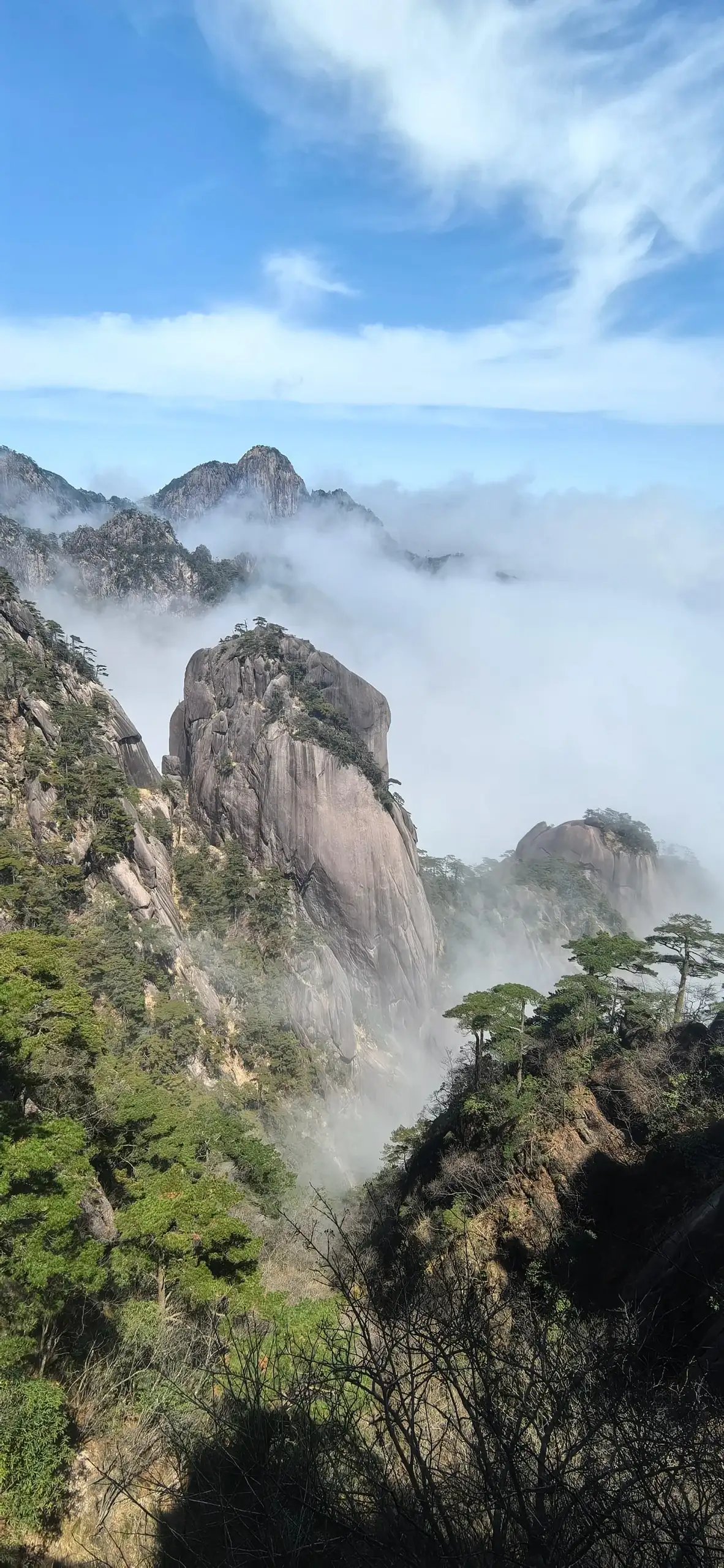
Photos of Huangshan often capture the most ideal moment: a sea of clouds spreading out, peaks emerging, and pine branches reaching into the void. Yet when you visit the mountain, you’ll discover that the scenery doesn’t always present itself in this perfect form. Sometimes only the nearby rock faces are clear, while distant peaks are veiled by mist the moment they emerge; at other times, the sky is bright, yet no sea of clouds has formed.
The best way to experience Huangshan is to first embrace this ever-changing landscape. Rather than spending just a few minutes at each viewpoint, choose a spot with a wide-open view where you can safely linger, and watch how a single peak transforms under the play of light and mist. Here, the granite peaks, pine trees, and mist combine to form the landscape; even if one element is missing, the other two are still well worth careful observation.
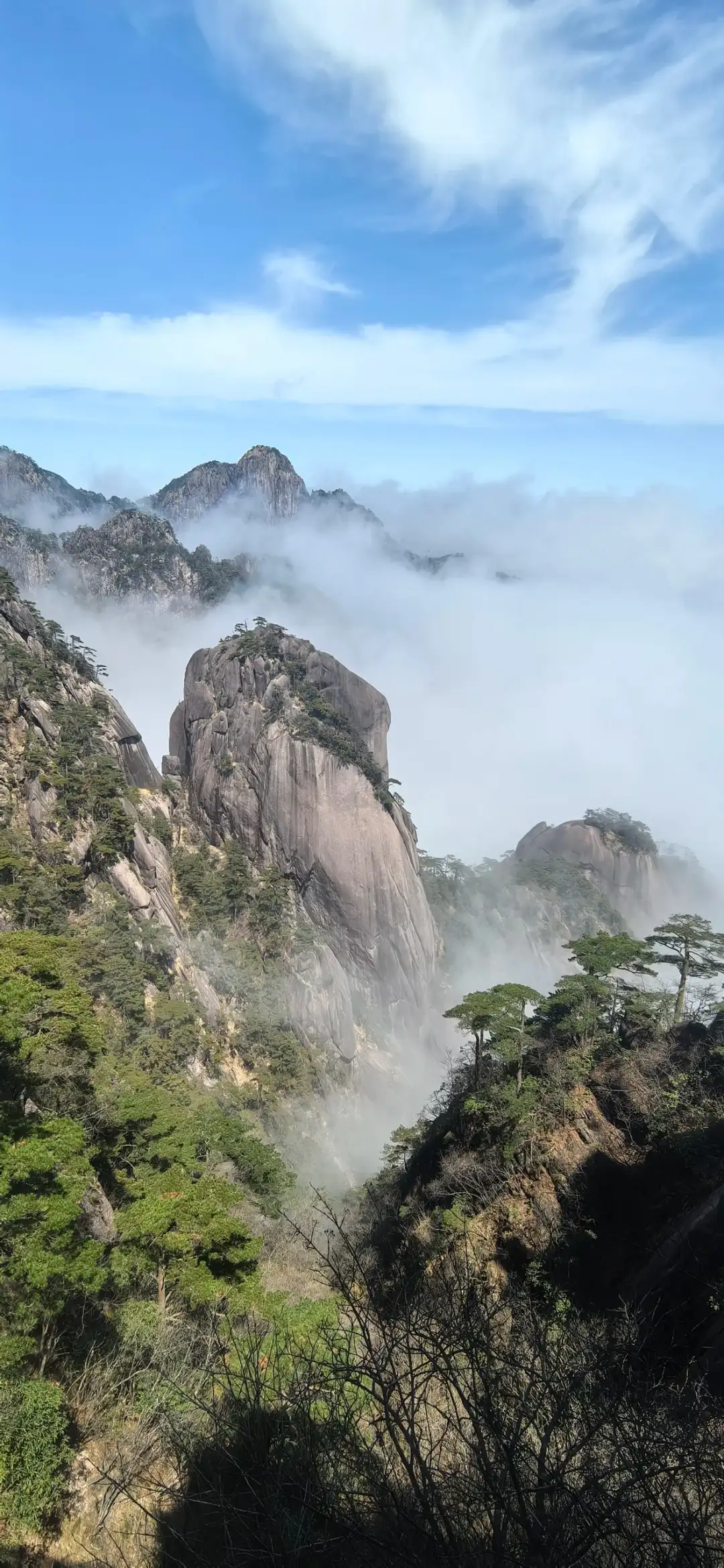
Huangshan pines and rocky peaks shrouded in mist. You
The contours of the rocks are seen before their names are known
Many mountain rocks have vivid, evocative names, but upon first sight, it’s best to set aside any preconceived notions. First, observe the vertical fissures in the mountains, the protruding rock formations, and the twists and turns of the peaks; then notice how plants grow along the crevices. In the distance, several peaks overlap, and the interplay of light and shadow distinguishes them from one another; upon closer inspection, you’ll discover that the rocks aren’t all the same smooth gray.
As a World Heritage Site, Huangshan’s defining landscape features include numerous granite peaks and the mountainous vistas created by mist and clouds. For the average traveler, there’s no need to memorize a string of geological terms; simply compare the rock walls before your eyes with the distant landscape: observe texture up close and lines from afar. It is through this alternation of the two distances that the mountains transform from a photographic backdrop into a place with structure.
Pine trees transform the rugged mountain into a rhythmic landscape
When viewing Huangshan pines, the most interesting aspect may not be capturing the entire tree in a single frame. The way the trunk twists, the branches reaching out from the rock face, and the shapes the needles form against the backlight—all of these can make an ordinary trail worth lingering over. A small patch of sky between the tree canopy and the peak may even offer more depth than a grand panoramic view.
In open areas, pine trees often serve as the foreground, giving the distant mountains a clear sense of distance; upon approaching, they stand alone as the main subject. If a photograph merely seeks to cram every peak into the frame, it risks losing this sense of breathing space. You can divide your observation into two parts: first, look at the relationship between the trees and the rocks; then, look at the empty space left behind the trees. You don’t need to step off the trail to make these detailed observations.
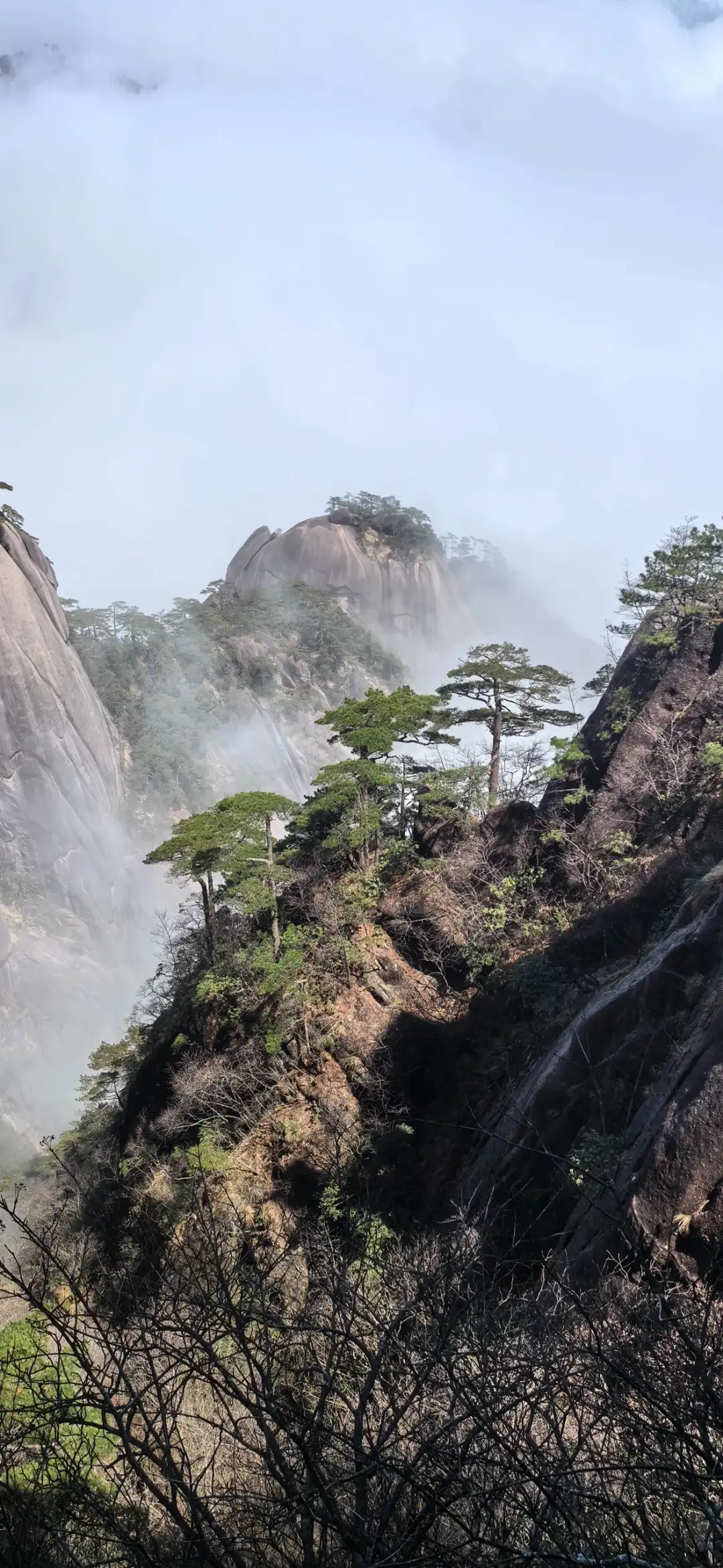
Yellow Mountain’s rock faces, pine branches, and the mist in the valley. You
When clouds roll in, observe the layers; when the mist is thick, look at your feet
As thin clouds drift through the valleys, the peaks—which were previously a continuous mass—gradually separate into layers of varying depth; when the mist grows thicker, the distant landscape vanishes, while nearby branches, leaves, and the rocks along the railings stand out in relief. This is also why the same mountain trail appears different on the way there and on the way back: the changes stem not only from the direction of view but also from the shifting light over a short period of time.
If you encounter foggy, white-out conditions, there’s no need to write off the day as a failure. Up close, you can observe water marks on rock surfaces, the outlines of plants, and the trail stretching into the mist; when the mountain scenery reemerges, lift your gaze to the distance. Black-and-white photography also offers a useful insight: if you temporarily set aside color, the light and shadow, texture, and density of Huangshan are rich enough on their own.
How do the rocks of Beihai derive their names from their shapes?
When the Huangshan Management Committee introduced the Beihai Scenic Area, it listed landmarks such as Shixin Peak, “Dream Brush Blooming Flowers,” and “Monkey Watching the Sea.” These provide more than just a set of place names; they offer a way to transform natural forms into memories. The name “Dream Brush Blooming” directs the gaze toward the interplay of rock formations and vegetation, while “Monkey Watching the Sea” draws attention to the relationship between an isolated rock and the vast backdrop; once you know the names, your imagination has a concrete point of reference when you look again.
the area around Shichixin Peak is ideal for observing the pines in conjunction with the peaks. The guidebook *Beihai* mentions various famous pines—such as the Black Tiger Pine, Dragon Claw Pine, and Intertwined Pine—indicating that the trees themselves serve as visual cues within this mountain landscape. There’s no need to keep backtracking just to identify every famous pine; simply take a close look at each one you encounter along the designated trail: how the trunk takes shape, how the branches fork, and how much space the rock face leaves for the roots. The names of the rocks add a sense of drama, while the fine details of the plants draw the gaze back to the slow process of growth. When rain and mist obscure the distance, these nearby distinctions become particularly clear; when a break in the clouds appears, the branches and leaves before your eyes naturally frame the distant peaks.
First, choose an area, then decide whether to continue walking
The interior of Huangshan is not a flat viewing platform. Between seemingly adjacent locations, there may be ascending and descending stairs and longer walks. Before your trip, choose a main area based on the actual cable car routes, accommodations, or your entry point into the mountain, then string together the scenic spots along the way; don’t try to visit every famous location on the map in a single day.
areas such as Beihai, Shixin Peak, or Yuping can all serve as entry points for understanding the mountain scenery, but they should not be haphazardly connected into a single, indistinguishable route. Specific connections require consulting the current scenic area map and access information. Choosing two or three spots where you’re willing to truly pause, while leaving some leeway for transitions, usually makes it easier to remember the mountain itself than simply calculating the next vantage point along the way.
After leaving the mountain, what remains is the interplay between pines, rocks, and air
The climbs and endless staircases can be mentally draining. Plan a sit-down meal with hot food; besides replenishing your energy, it also gives your eyes a rest: the peaks you saw before eating may have taken on different shades of light and shadow by the time you finish. Supply conditions on the mountain differ from those at the base, so you can organize your itinerary around the actual food and rest stops available, rather than squeezing meals into hurried breaks.
When leaving the mountain, it’s worth organizing three types of images: one capturing the mountain’s full panorama, one documenting the interplay between pines and rocks, and one preserving the texture of a specific detail. Together, they form a more complete picture of Huangshan than ten repetitive shots of a similar sea of clouds. Even without a sunrise or a majestic sea of clouds, the journey can still leave a clear impression: how this mountain was shaped by rocks, plants, and air working together.
Further Reading and References
Mount Huangshan · Destination Overview
Compiled by the Eastbound Travel Editorial Department based on publicly available travel journals and the references listed in the text, for pre-trip reading; accompanying images are sourced from the noted journals.