September 7, 2026 · Travel Diary
Read a preview of a winter mountain trek
The seven-day Changbai Mountain itinerary in Harbin connects the journey through Snow Village and the Jingbo Lake area before returning to the Harbin city section. This is a pre-trip guide tailored for winter: it helps you understand Changbai Mountain through its lake basin, snow-capped peaks, and mountain forests, while also allowing for flexibility regarding seasonal weather and park access changes.
When including Mount Changbai in a Northeast China itinerary for the first time, it’s easy to focus all your expectations on Tianchi Lake. While such anticipation is understandable, your travel plans must also account for weather, park operations, and transportation changes. In the reference notes, one visitor recorded their experience of seeing Tianchi Lake on a sunny day; this is a specific experience, not a basis for estimating how many times a month the lake is accessible. Before departure, you should verify the official information for that day, and let your travel advisor make arrangements based on actual conditions.
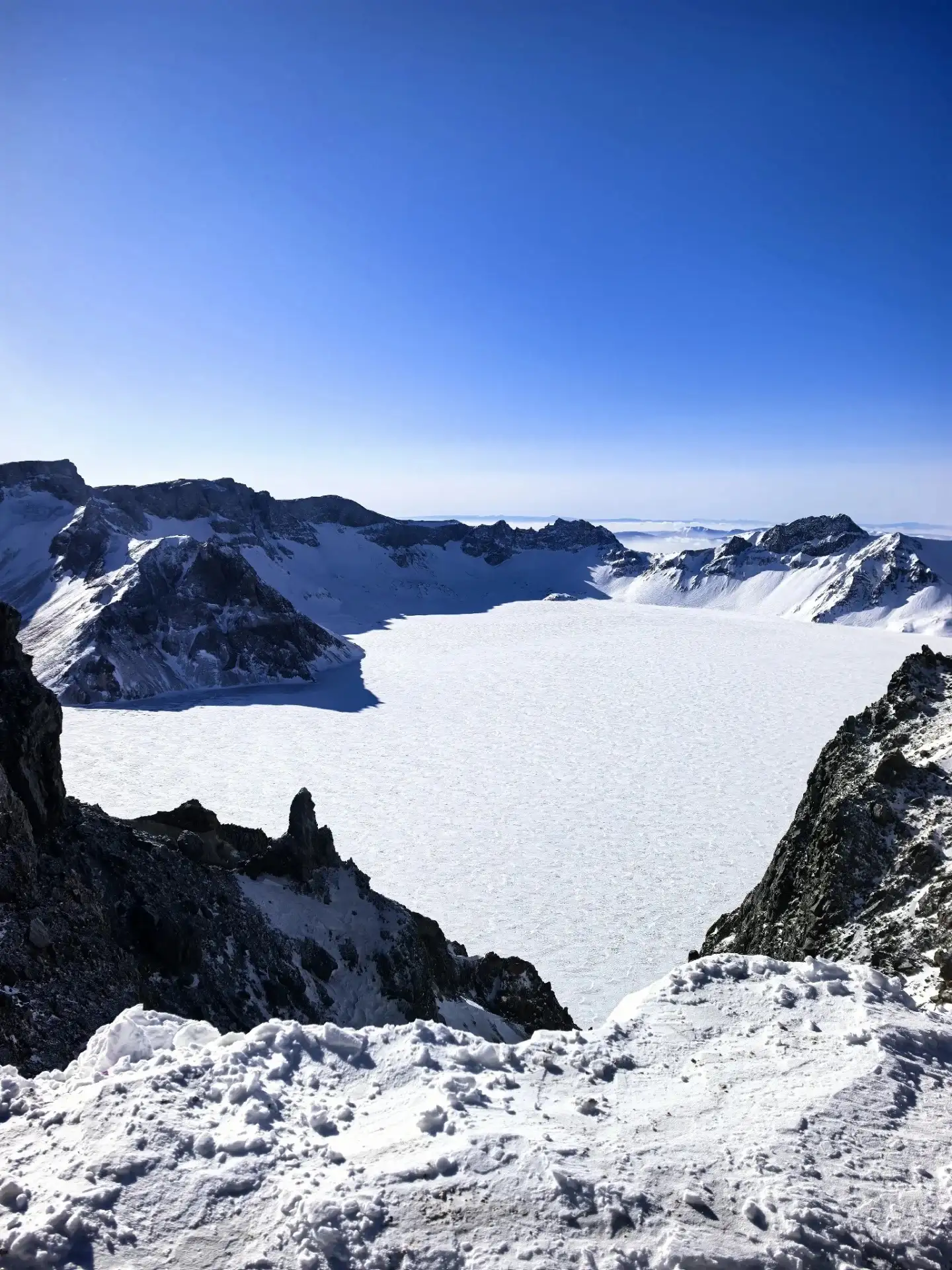
Tianchi Lake in Winter and Snow-Capped Mountains.
From the open Tianchi Lake to the details of the mountains
When weather and access conditions permit, the most striking feature of the Heavenly Lake area is the relationship between the lake basin and the surrounding mountains. Start by taking in the panoramic view, then focus on how the rocks, snow surfaces, and shadows create layers of depth. What appears to be a solid expanse of white in a photograph may actually reveal textures and variations in light and shadow from different directions when viewed in person. There’s no need to constantly chase after the perfect angle—give your eyes a moment to take it all in without the screen getting in the way.
Within designated viewing areas, follow on-site guidelines and stay within marked boundaries—do not cross them to avoid crowds. High-altitude winds and visibility may affect your experience. Prepare appropriate winter outdoor clothing before departure, and adjust the duration of your stay on-site based on conditions. If your companions require less walking or have specific physical conditions, discuss this with professionals and advisors in advance; a travelogue cannot replace your own assessment of personal suitability.
Snow covers the lake’s surface and outlines the contours of the mountains
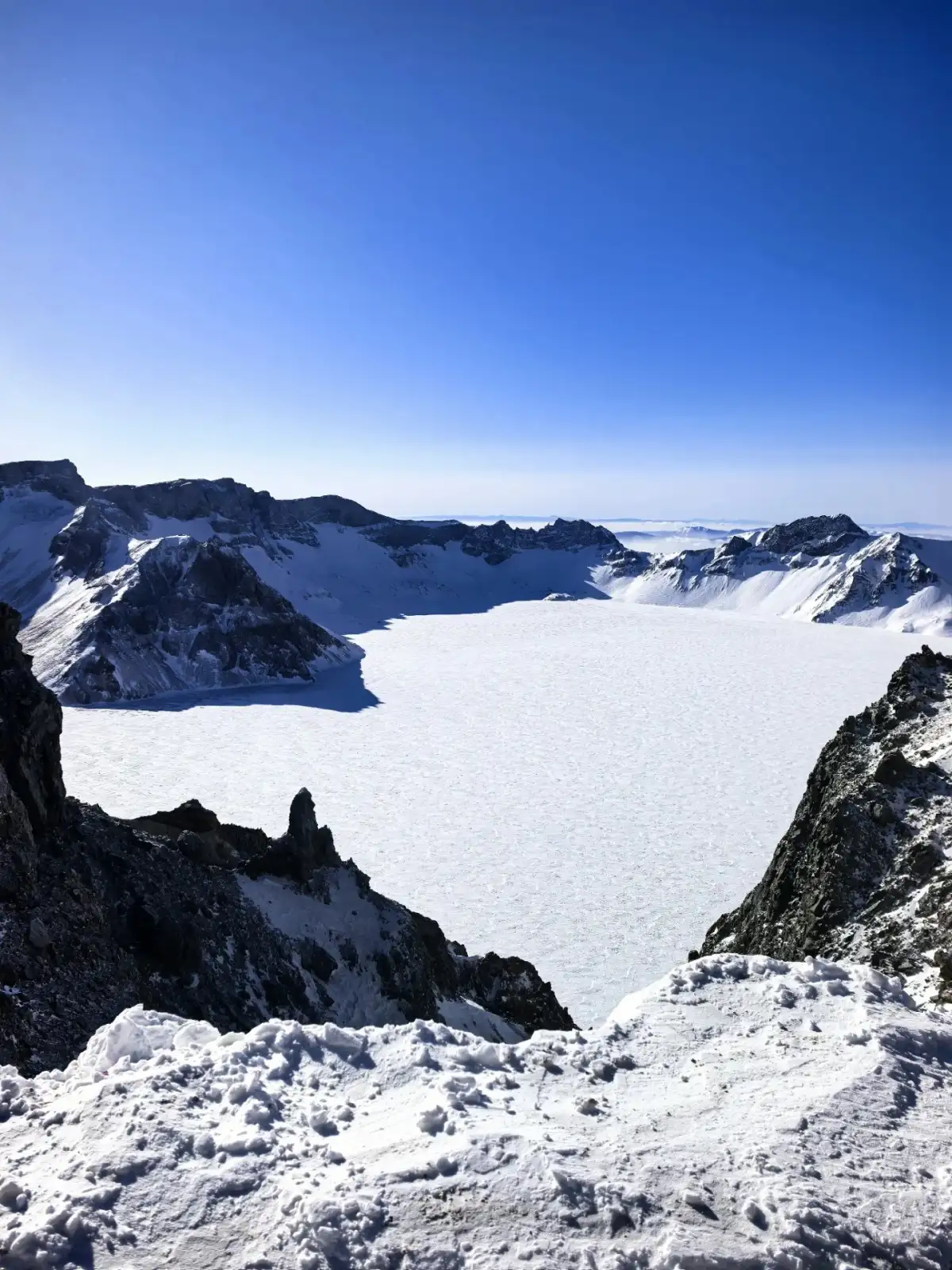
In the reference photo of Tianchi Lake, the snow causes the lake basin and the surrounding mountains to appear in similar tones, making the dark areas of the rocks particularly distinct. The nearby scree and undulating snow surfaces exhibit fine textures, while the distant ridges form relatively continuous lines. Under a clear sky, shadows help distinguish elevation—they do more than just make the photo appear bluer and whiter.
Another shot includes the sun in the frame, creating a greater contrast between the highlights and the shadows on the rocks. This reminds viewers that even from a similar vantage point, the experience can vary depending on the direction you’re facing. You don’t have to shoot directly into the light at all times; instead, you can turn to a position that’s more comfortable for your eyes and better suited for your equipment. Viewing Tianchi involves taking in both the lake surface and the surrounding terrain; even if you keep only a few photos, the contrast between distant vistas and close-up textures will still effectively convey the essence of this winter mountain landscape.
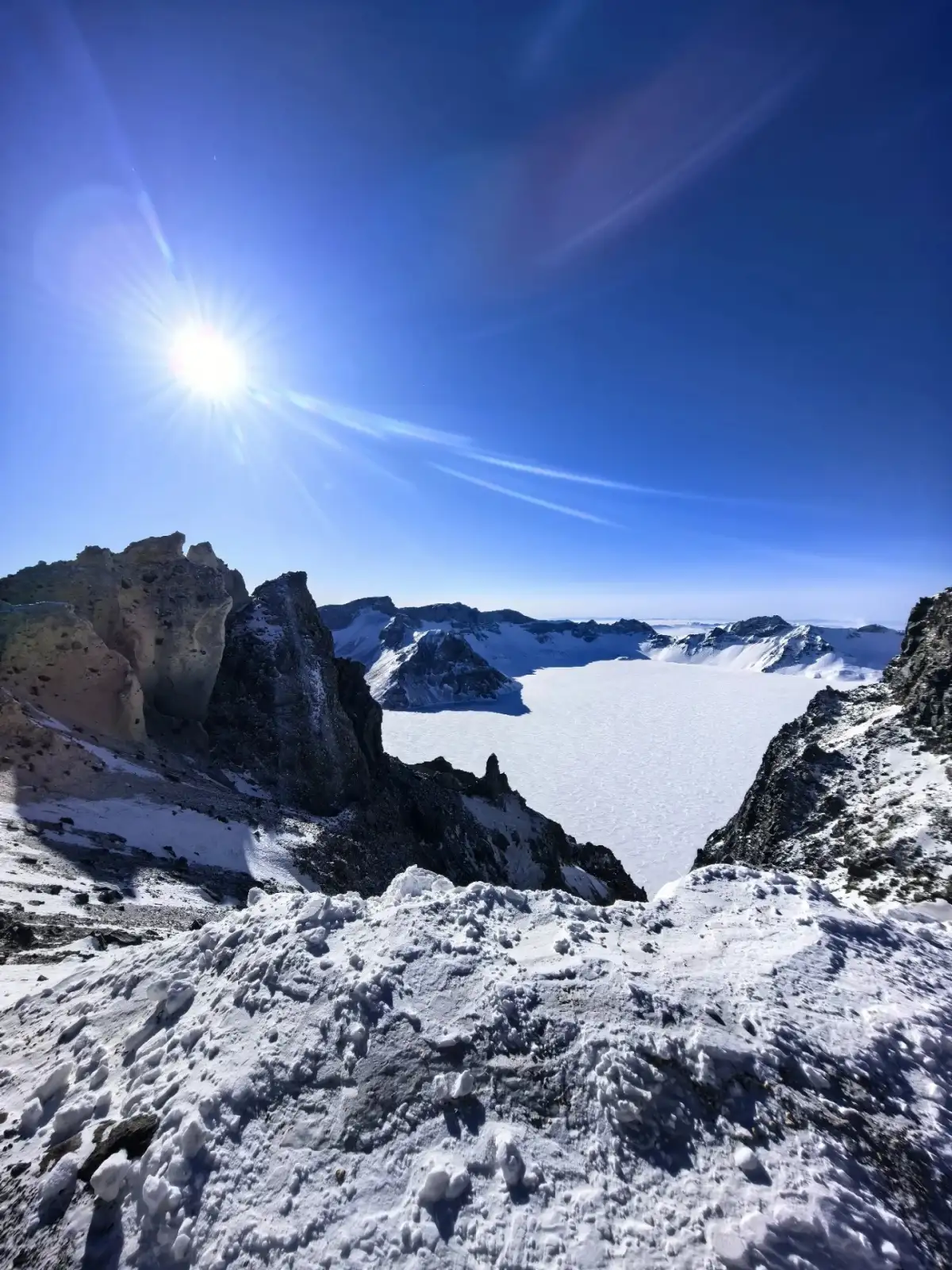
Snow-covered slopes and rocks on Mount Changbai under the sun.
Turn Waiting into a Structured Plan
Winter mountain travel requires patience, but that patience should have clear limits. Before setting out, clarify the following: Which parts of the itinerary depend on the day’s access conditions? If the main scenic areas are temporarily closed, can you adjust your plans to spend more time at the base? Is there enough buffer time for the subsequent drive and meals? Alternative plans must be practical arrangements—not just a last-minute string of unknown destinations tacked on.
The existing itinerary also mentions mountain attractions such as the hot spring cluster and Green Abyss Pond. Whether these can be visited on the same day depends on the day’s conditions and the stamina of your travel companions. Don’t treat them all as mandatory “check-off items” beyond Tianchi. If weather conditions limit your time at higher elevations, you can choose to set aside a reasonable amount of time for observing the snow-covered landscape and getting plenty of rest instead. The value of the scenery doesn’t need to be compensated for by cramming in extra sights.
After a seven-day trip to Northeast China, you’ll need some time to recover your energy
When planning a trip to Snow Village, ice and snow activities, and Mount Changbai in succession, you’ll need to organize your clothing, shoes, socks, gear, and stamina. Try to prepare everything you’ll need for the next day the night before. Separate outer layers that might get wet from your spare gear so they’re easy to access upon arrival. Coordinate breakfast, rest periods, and transportation arrangements with the scenic area’s schedule—don’t waste all your energy wondering whether the next day will be sunny.
Upon returning to Harbin, Central Street and the city’s architecture will offer a different perspective on the journey. This stretch of the Changbai Mountains offers the chance to capture the mountain silhouettes, the play of light and shadow on the snow, and a measured outdoor experience—there’s no need to define the worth of the entire trip by whether you manage to get a specific photo. By confirming what you can plan and accepting the unpredictability of the weather, a winter itinerary becomes a more authentic journey—rather than a race to replicate promotional images.
Related Routes and Reference Sources
Harbin and Changbai Mountain: 7 Days, 6 Nights · View Itinerary
Compiled by the Eastbound Travel Editorial Department based on itinerary materials and publicly available travel notes, for pre-trip reading; accompanying images serve as landscape references from the source notes. Specific itineraries will be confirmed by advisors based on travel dates and actual conditions.