September 26, 2026 · Travel Diary
Before entering, keep in mind that this is still an academy
Yuelu Academy is not merely a chapter of educational history that has come to an end. According to Hunan University’s official description, it was founded during the Northern Song Dynasty and remains today the university’s School of History and Philosophy. This fact changes the way one approaches the visit: the courtyards one sees are part of both cultural heritage and an ongoing academic tradition; there is no clear temporal dividing line between the academy and the university environment at the foot of the mountain.
Therefore, a visit can begin by exploring “how people studied and discussed here,” rather than merely seeking out the beautiful silhouettes of ancient architecture. Before entering, read the guide to distinguish between the visitor areas and the spaces used for teaching, allowing your tour to unfold along the designated route. Amid the bustling tourist scene of Changsha, this spot is particularly well-suited for quieting your voice and focusing your attention on the words.
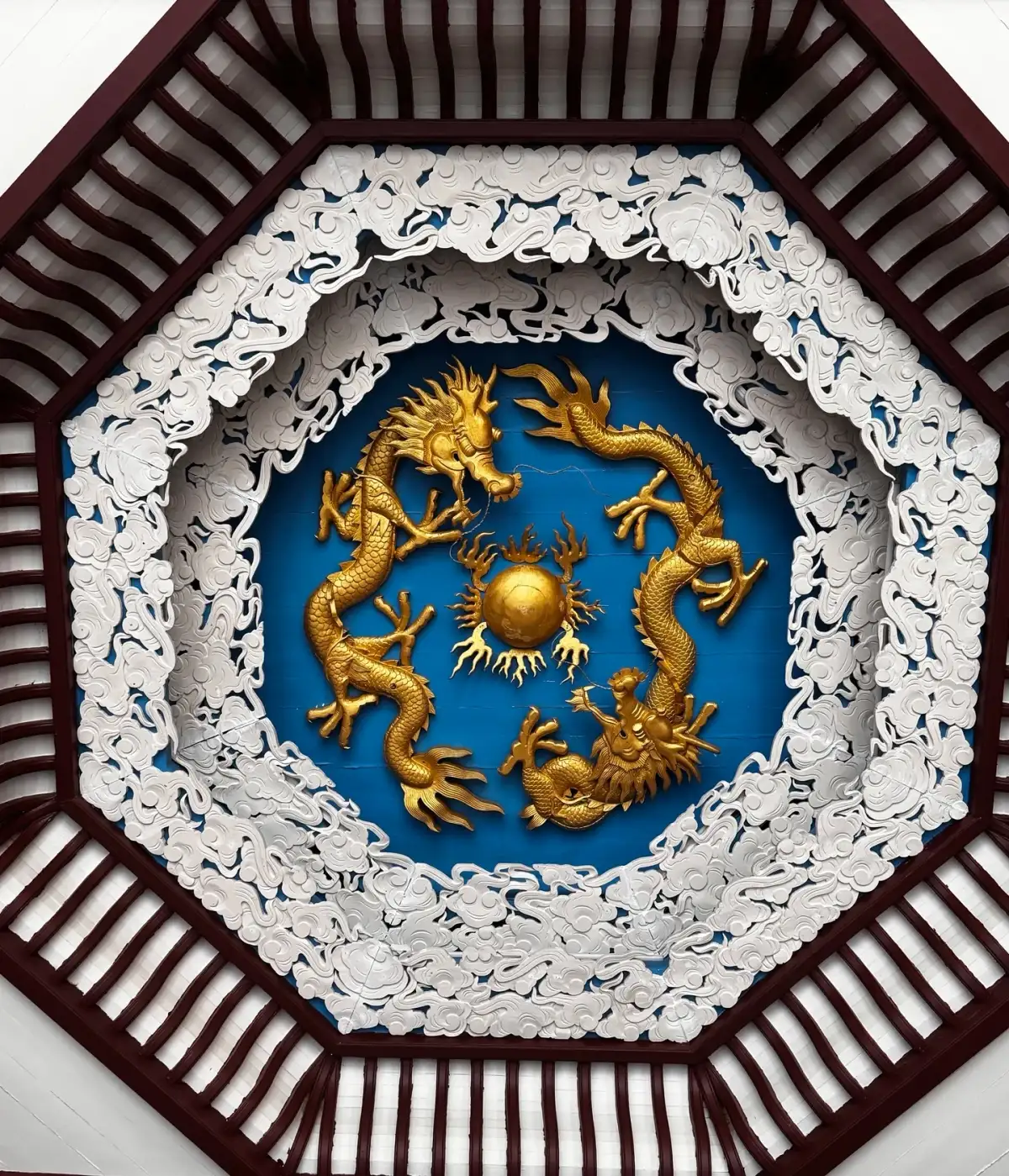
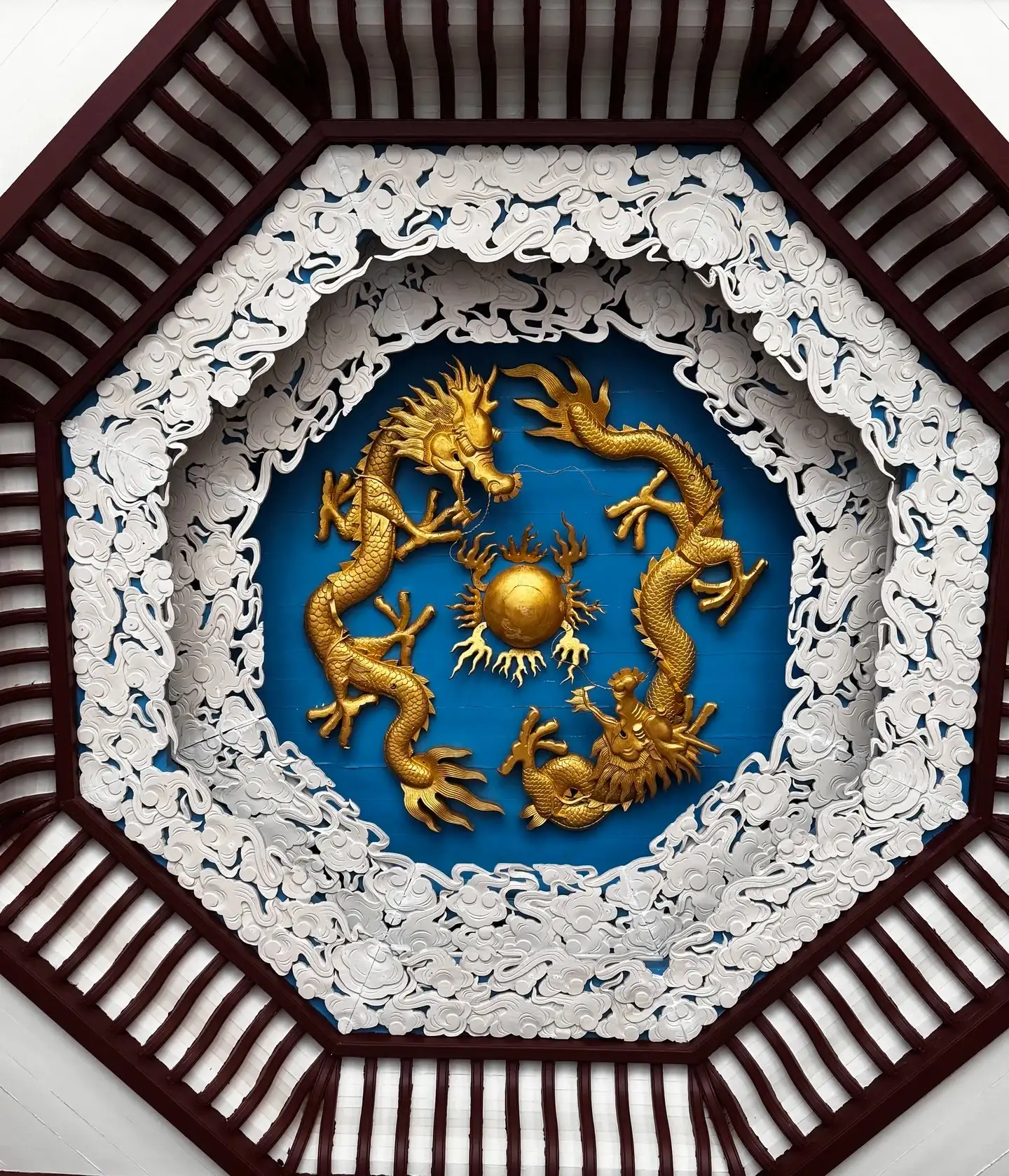
Dragon and cloud motifs adorning the rooftops of buildings within the Yuelu Academy grounds.
The eight characters on the gate are worth reading one by one
“Only Hunan has talent; here it flourishes most” is the most well-known couplet in front of the academy. Visitors often take a photo of the lintel and move on, but if you stand to the side, carefully note the placement of each character, and then observe the courtyards that unfold in layers beyond the gateway, you’ll discover that the text and the space together create a ceremonial entrance.
the gate is not merely an isolated photographic backdrop. The proportions of the roof ridges, walls, and gate arch determine how the viewer’s gaze converges from the street outside toward the interior. Start by taking a complete shot of the front view, then look for side lighting and wooden architectural elements. If there are many people in front of the gate, head to other open areas first and return later to take another look; there’s no need to spend a lot of time waiting for a photo of the main gate that’s completely empty of people.
Imagine discussions taking place in the lecture hall, rather than fabricating echoes
The “Zhu-Zhang Debate” in the academy’s history refers to the scholarly discussions between Zhu Xi and Zhang Shi that took place here. This historical context helps bring the general description of a “millennium-old institution of learning” to life: education is not merely about the number of books in its collection or the number of buildings it houses, but also about how ideas converge and how questions are debated. The on-site explanatory notes are worth a closer read than the legendary interpretations.
In the lecture hall, observe the open space in front of the hall, the orientation of the corridors, and the light streaming in through the windows and doors. Don’t rush to imagine which words the ancients spoke from a specific spot; the architecture provides clues for understanding their activities, but this does not mean that every scene has a voice that can be reconstructed. Only after reading the explanatory notes and then revisiting the space can history and the physical remains support one another.
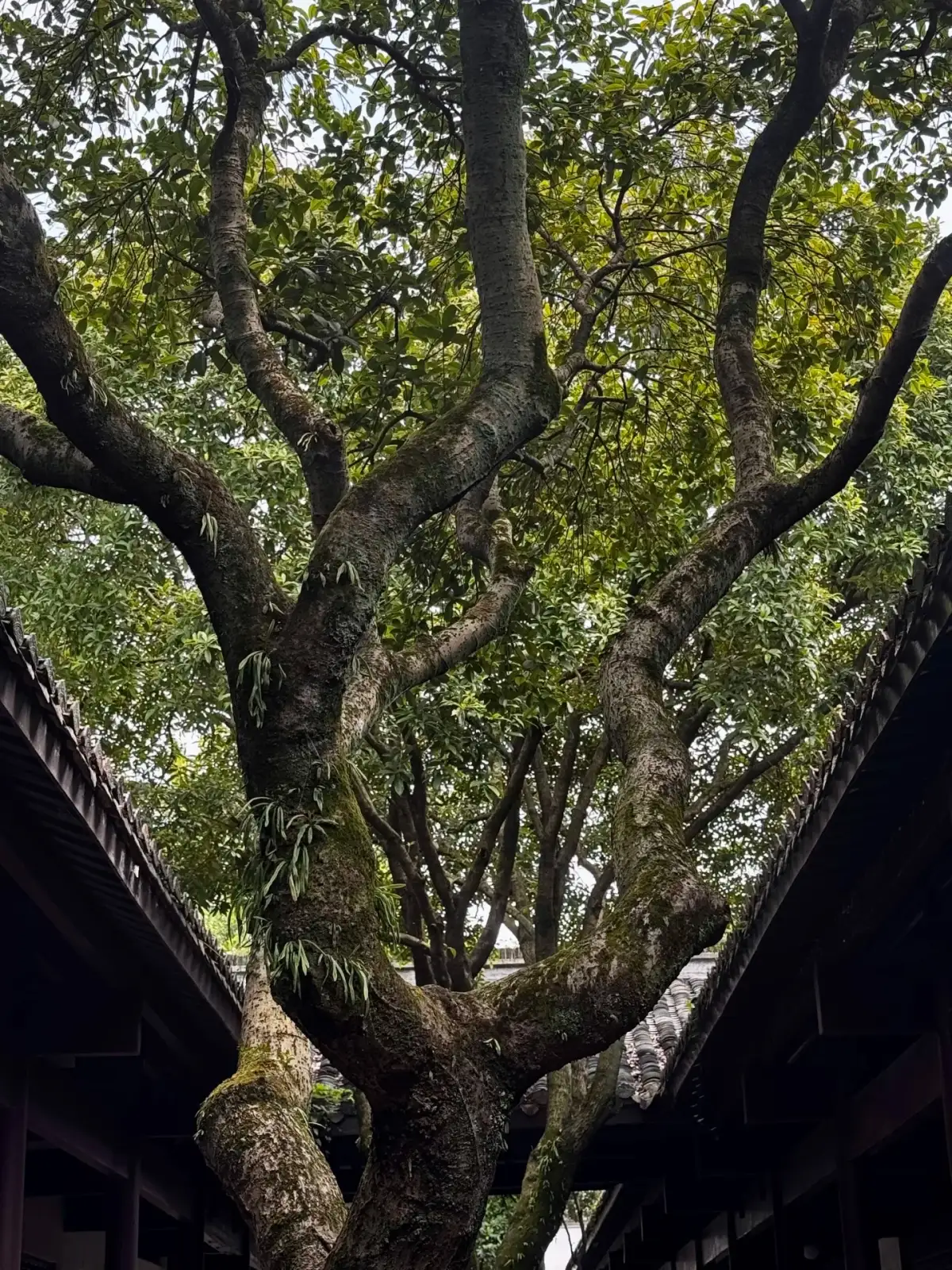
The tree canopies stretching between the eaves of Yuelu Academy.
Between the trees and the eaves, the courtyard comes to life
The academy is not defined solely by its central axis. Tree canopies spread out above the rooftops, bamboo shadows hug the walls, and the stone embankments by the pond, along with the floral windows, draw the gaze to the sides—thus, the courtyards shift between strict order and relaxed openness. When taking photos, looking up to see how the branches and trunks extend beyond the eaves is often more interesting than constantly searching for the center of the frame.
Latticed windows are particularly well-suited for understanding the concept of “how much one sees.” When you get close, the latticework takes center stage; step back a bit, and the pavilion inside and the outer wall rearrange themselves. There’s no need to frame this experience as some mysterious Eastern aesthetic—it’s simply about moving your body to see how one space is framed by another. On sunny days, observe the shadows; on cloudy or rainy days, notice the subtle color variations between the gray tiles and white walls—each offers its own rewards.
Examining the academy’s academic regulations to discover the everyday standards of education
a grand academic tradition can also be understood through its daily rules. If the on-site exhibits cover the academy’s academic regulations, take a moment to examine them—noting which aspects of study and daily life they address: reading, discussion, daily routines, or etiquette—and how these collectively shaped education in the past. The specific content is subject to the original exhibition text; there is no need to attribute all aphorisms circulating online to Yuelu Academy.
This kind of observation grounds generalizations like “a constant stream of talented individuals” in the ordinary rhythms of daily life. The corridors and rooms within the courtyard were not only used for historic events worthy of the annals of history but also served as the setting for countless repetitive, everyday activities. If a trip focuses solely on famous figures, one risks missing the long-term, everyday routines that are the very foundation of educational institutions.
You can make a small personal comparison: What similarities exist between the problems you encounter while studying today and the concerns addressed in ancient academic regulations? There’s no need to rush to a conclusion. As you walk through the gate and along the corridors with this question in mind, the academy’s spaces will take on a more human scale, and you’ll find it easier to connect them to your own life.
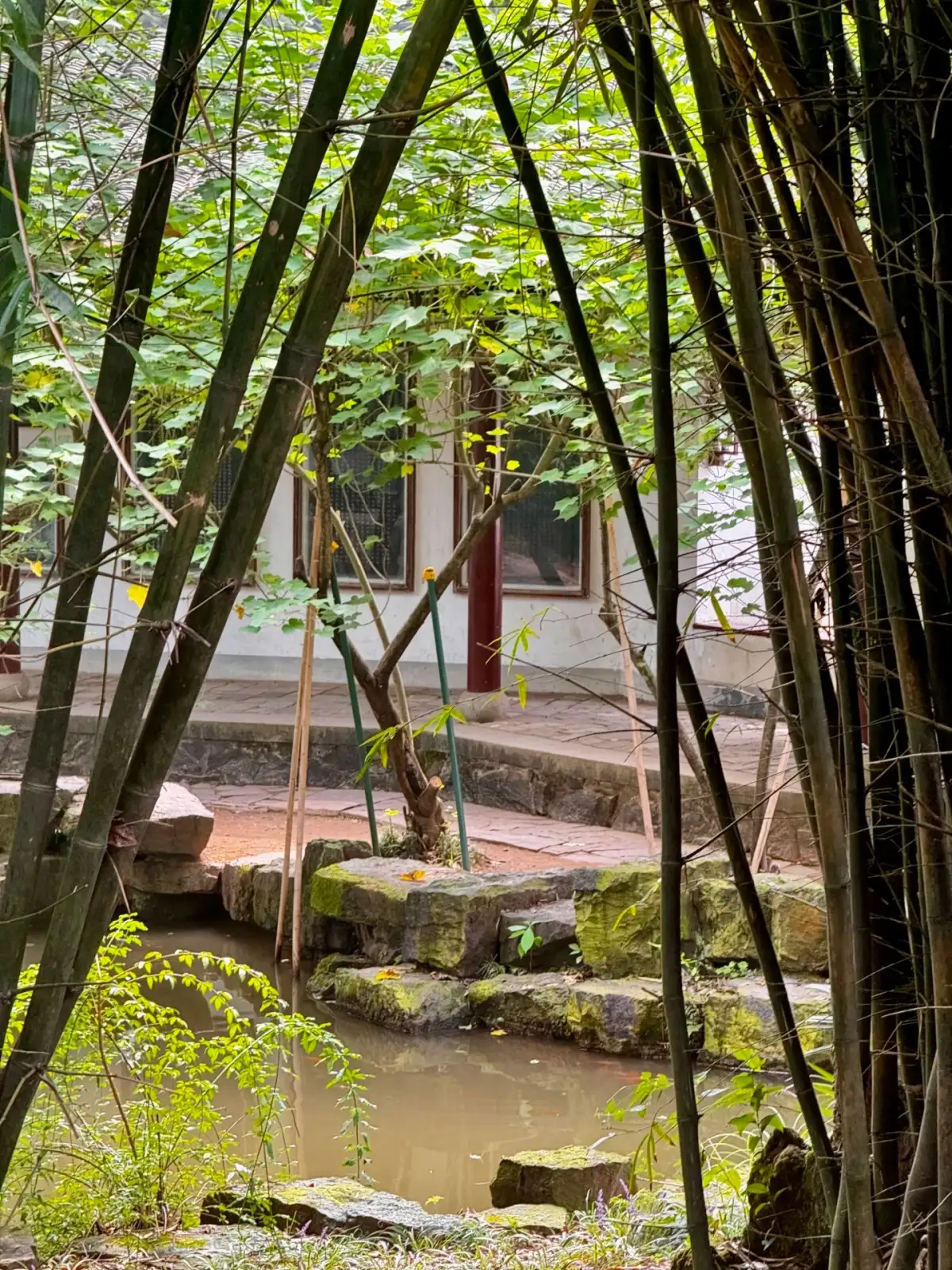
The pond and garden architecture of Yuelu Academy, bathed in the shadows of bamboo.
After exploring the academy, decide whether to climb the mountain
Aiwan Pavilion and Yuelu Mountain can be visited after the academy, but exploring the architecture and hiking the mountain require different levels of physical stamina and focus. If you’ve already taken the time to carefully explore the exhibits, taking a shorter path at the base of the mountain is often a better choice than adding a long hike on a whim just because “you’re already here.” For specific routes and opening hours, check the scenic area guide upon arrival.
When viewing the Aiwan Pavilion, one can compare it to the academy’s courtyard layout: the pavilion opens up to the surrounding mountains and forests, offering more viewing perspectives; the academy’s gates and walls, on the other hand, more clearly guide the path of visitors. Placing these two architectural forms along the same mountainfoot walking path allows one to appreciate the distinct spatial needs of mountain and forest recreation versus scholarly life without the need for an abundance of additional landmarks.
After descending the mountain, a meal brings the city back into focus
Dining options at the foot of the mountain can center around Hunan cuisine, rice noodles, or home-style dishes tailored to individual tastes. For first-time visitors to Changsha, it’s more practical to first confirm the spiciness and portion sizes of dishes than to fill a table by ordering everything from an online menu. The lively dining atmosphere transitions naturally into the quiet courtyard, reminding visitors that the academy is not far from the city—it has always been embedded within it.
If you’d like to read more, jot down a figure or concept from the exhibition before leaving to look it up later. Travel doesn’t require you to absorb all of history on the spot. Perhaps the most thought-provoking aspect of Yuelu Academy is that it turns an afternoon originally planned for taking photos into one filled with questions you’re eager to explore further.
Further Reading and References
Changsha · Destination Overview
Compiled by the Dongxing Travel Editorial Department based on publicly available travel notes and the references listed in the article, for pre-trip reading; accompanying images are sourced from the noted travel notes.