September 28, 2026 · Travel Diary
Fold the map into a 3D model
To truly understand Chongqing, one sometimes needs to set aside the flat map. Distances in Shancheng Alley cannot be calculated solely by the straight line between two points: a rooftop might appear to be right at the foot of another street, and the river’s surface, which seems close from the entrance of a house, may actually be separated by slopes, buildings, and roads. This is the perfect place for a stroll with a clear starting and ending point, allowing you to focus on the changes in elevation beneath your feet.
As you descend into the neighborhood from the Consular Alley area, you’ll gradually come to understand the relationship between the Upper City and the riverbank. Walking downhill makes it easier to maintain a steady pace, though there are some short uphill sections. Before setting out, take note of the two entrances and exits, and mark the arrival and departure routes on your map—this is far more useful than relying solely on the words “Mountain City Trail” as your only guide.
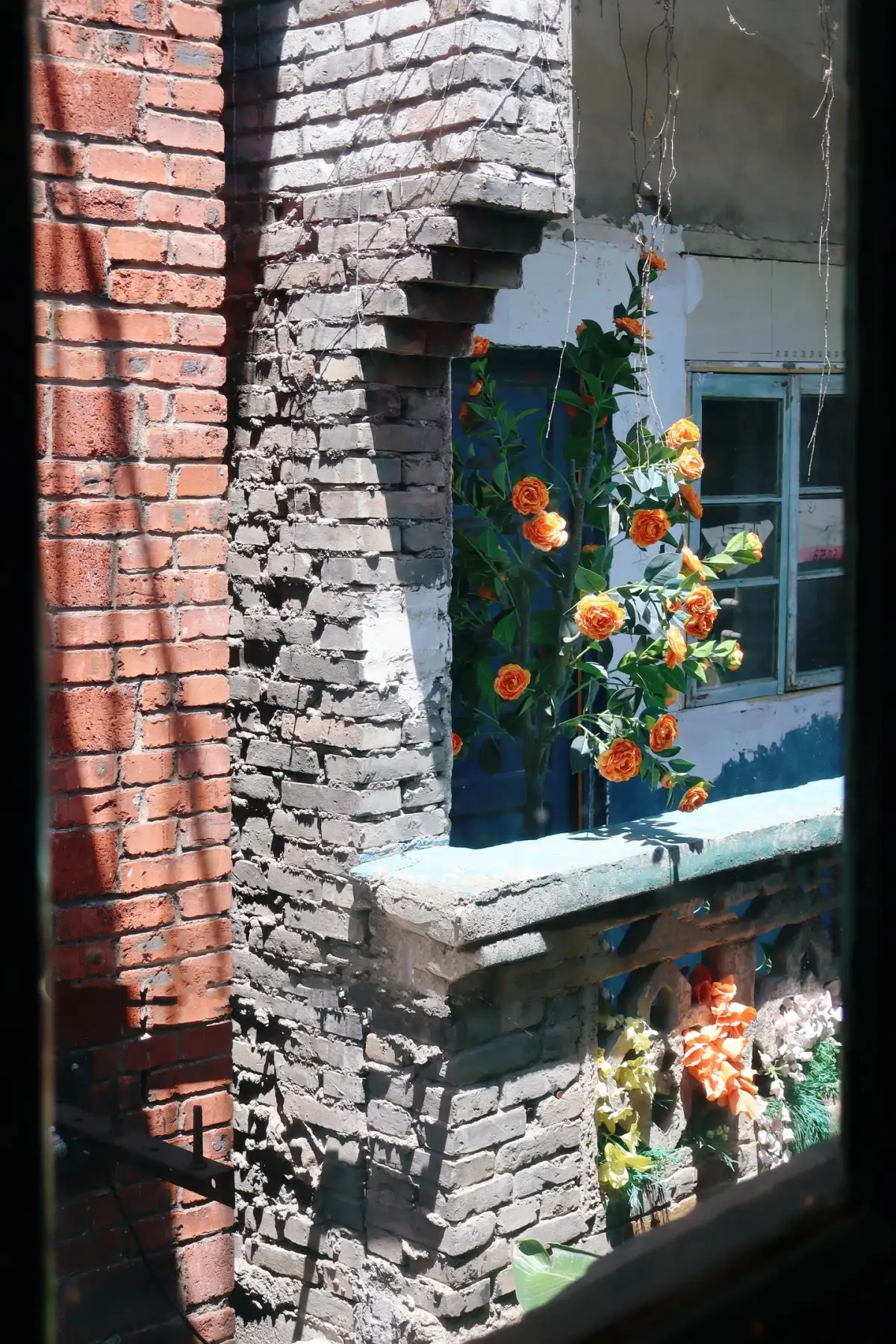
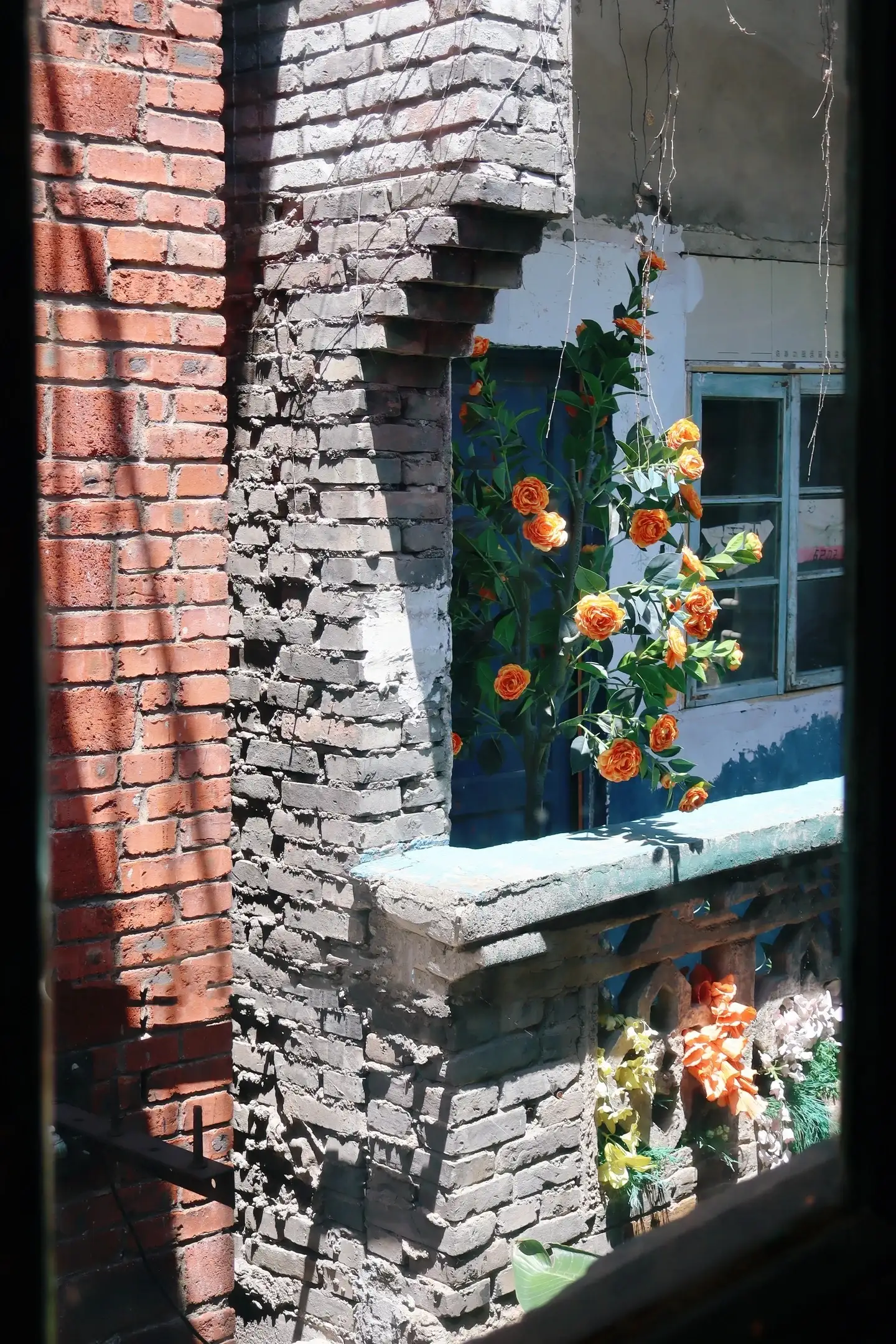
Brick walls, window sills, and flowering branches in Chongqing’s Shancheng Alley.
Beside the steps, each house has its own ground level
The most fascinating aspect of Shancheng Alley is how the houses are squeezed into the terrain. Walls at the turns of the steps, eaves jutting out over the street, and doorways arranged along the slope create uneven gaps between the buildings. While cities on flat land often present uniform facades along a single street, here, as you walk, new sections of the same wall are constantly revealed.
Choose a section of stone steps with a clear view: first look up at the doors, windows, and rooftops, then turn back to survey the path you’ve just walked. Details like railings, wall bases, and drainage systems all reveal how this sloping terrain has been utilized. There’s no need to walk down every side street; taking the time to study a single turn carefully often helps you remember Chongqing’s spatial character better than chasing after countless photo spots.
Pause for a moment in front of the former site of Ren’ai Hall
The history of Shancheng Alley extends beyond the image of stilt houses. According to a neighborhood guide for Yuzhong District, the area preserves historic sites associated with Ren’ai Hall, where arched windows and column-style decorations stand side by side with traditional Shancheng residences. Buildings of different purposes and eras converge along a single slope, shaping the complex character of this old street.
When you arrive near a historic site, start by reading the on-site explanation to confirm the building’s historical identity, then observe the proportions of the window openings, the traces left on the walls, and the surrounding courtyards. Some of these historic spaces are now used for leisure and cultural activities, establishing a new relationship between the space and its users. Old walls, new shops, and plants each exist in their own time; there’s no need to imagine every restored landscape as a street scene frozen exactly as it was a century ago.
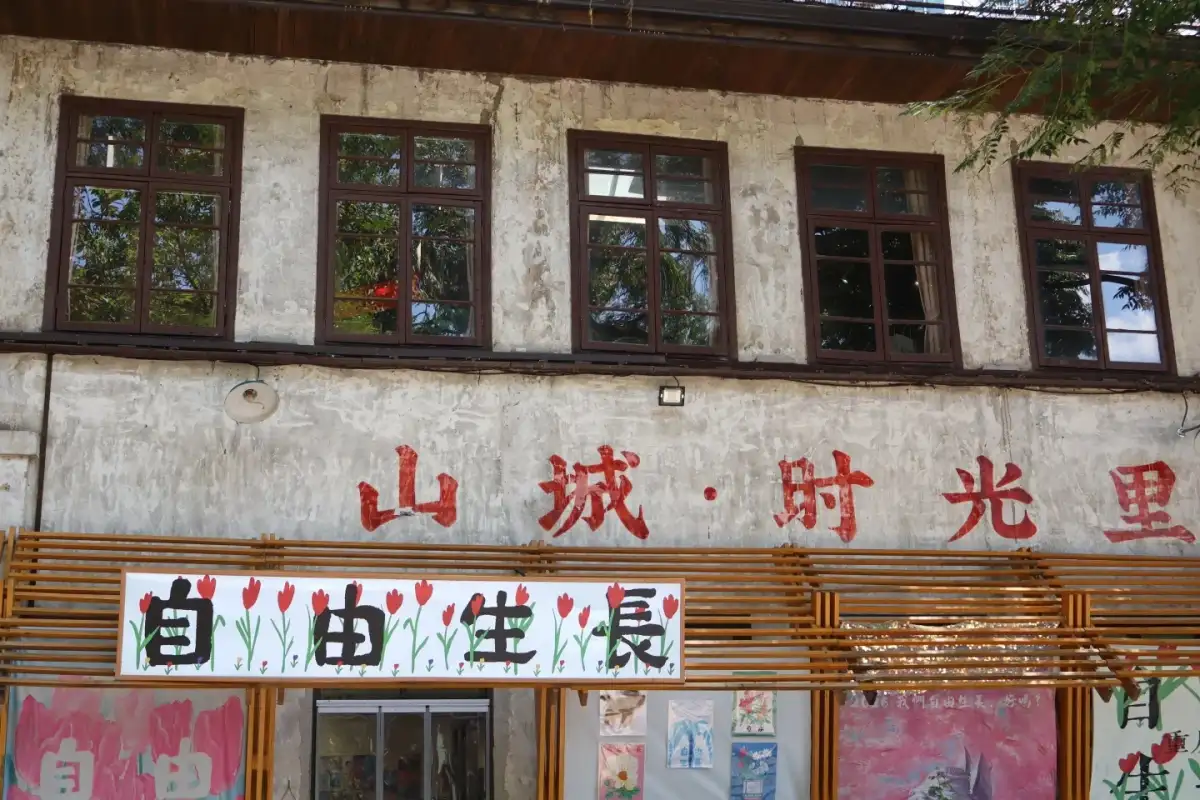
Windows of old buildings on Shancheng Alley and the sign for “Shancheng Times.”
As you walk to the riverside, the rooftops become the foreground
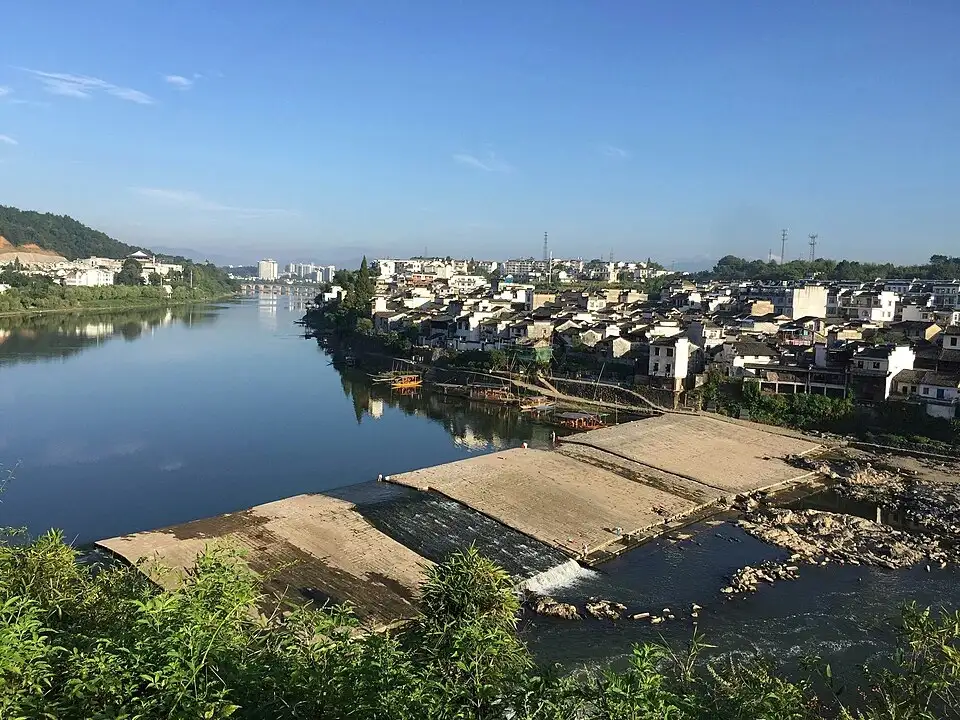
When the alley turns from between the buildings toward the river, the view suddenly opens up. The walls and steps that had previously hugged you close recede behind you, and the river, bridges, and clusters of buildings on the opposite bank all come into view at once. Chongqing’s sense of scale shifts with this single turn: the old alley is narrow, the city is vast, yet the two are not separated from one another.
When viewing the river, be sure to include the nearby rooftops in your frame. The tiled roofs, tree canopies, and railings help establish your vantage point, ensuring the distant water isn’t just a directionless landscape photo. On cloudy days, when the colors of the river and the sky are similar, the foreground actually gains more depth; on sunny days, you can observe how the sunlight cuts across the slopes. Different weather conditions reveal different facets of the city—there’s no need to wait for a predetermined “mountain city filter.”
Tree roots and old windows form another map of Shancheng Alley
In the accompanying photo, a tree grows upward between the brick walls, its roots of varying thicknesses stretching along the surface, with the window frame almost touching the branches and leaves. Another photograph captures red and gray bricks alongside weathered windowsills, with flowering branches peeking out from the courtyard. Neither image features a complete city skyline, yet both reveal the most intimate aspect of this mountain city’s space: houses and plants are not separate elements of the landscape.
Use this clue to spot details as you walk: where trees find room to grow, which gaps the windows face, and how light filters through the spaces between neighboring roofs. Don’t estimate a tree’s age based solely on the thickness of its roots, nor equate the mottled appearance of a wall with a specific era. Simply seeing how they coexist is rich enough in itself.
Memories of Shancheng Alley are woven from both the grand and the intimate scales. The river defines the city’s orientation, the stone steps reveal the topography, and the light on the windowsills transforms a stretch of slope into a tangible alleyway. These three elements need not appear simultaneously in a single photograph; seeing them in sequence allows one to establish the spatial relationships unique to this walk.
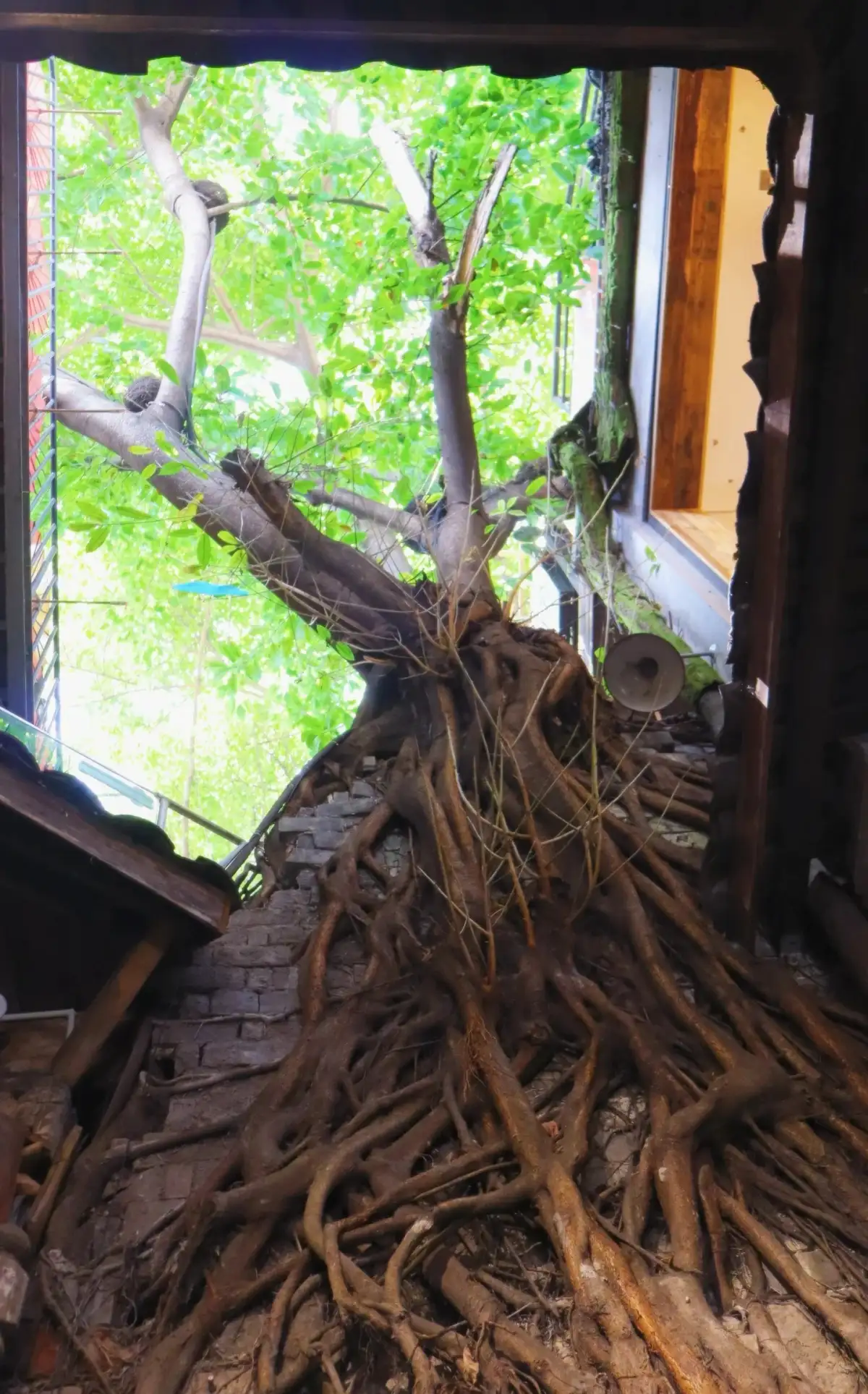
Tree roots and branches growing along the brick walls between buildings in Shancheng Alley.
Daily Life on the Old Street: Between Shopfronts and Street Corners
The revitalized Shancheng Alley serves as both a tourist destination and a space that preserves the intimate scale of neighborhood life. Restaurants, bookstores, and rest areas transform the way people spend time on a stretch of street: some come for the scenery, while others simply need a place to sit and have a drink. Choose a shop that’s open that day and in a convenient location, and set aside some time to take in the street—only then will your stroll shift from constant movement to a true pause.
Chongqing “xiaomian” (noodles) can serve as a culinary guide before and after this stroll; start by choosing the level of spiciness, numbing sensation, and toppings that suit your taste. There’s no need to turn a stroll through the old street into a challenge to conquer every restaurant on the “best-of” list; it’s much more leisurely to climb the steps after enjoying a bowl of hot food, or to sit down and eat after finishing the walk, rather than rushing along while searching for the rumored “most authentic” spot.
Looking back once more at the end of the descent
Before leaving the neighborhood, take a moment to look back up from below. The windows, courtyard walls, and corners you just passed will rearrange themselves into a facade where each element partially obscures the others. Spaces that seem hard to grasp while walking through them actually come together when viewed from a distance—which is why the Mountain City Trail is best enjoyed at a leisurely pace.
If you’d like to continue exploring Old Chongqing, consider adding Shibati as a separate stop on your itinerary. Be sure to check the connection between the two locations first—don’t mistake the similarly named old streets for a single, continuous walking route. Mountain City Alley alone is substantial enough to fill half a day: the value of the visit lies not in checking off landmarks, but in remembering how a city has arranged its doors, windows, streets, and daily life on steep slopes.
Further Reading and References
Chongqing · Destination Overview
Compiled by the Dongxing Travel Editorial Department based on publicly available travel notes and the references listed in the article, for pre-trip reading; accompanying images are sourced from the noted travel notes.
Yuzhong District People’s Government: Shancheng Alley
Chongqing Municipal People’s Government: Old Buildings Rejuvenated with New Vitality