September 19, 2026 · Travel Diary
Come down from the mountain, then decide how far to explore the ancient town
Zhangjiajie five-day itinerary—which, in addition to mountain excursions, also includes Furong Town and Fenghuang. While it’s easy to connect these places on a map, actually carrying out the plan requires careful consideration of travel time, physical stamina, and arrival times. In particular, if you’ve already visited the Forest Park or Tianmen Mountain earlier in the trip, you shouldn’t automatically assume that everyone will still be able to complete a full set of long-distance walks after arriving in Furong Town.
One reference note describes a tourist who arrived in Furong Town after touring Zhangjiajie and, due to fatigue, saved part of the daytime sightseeing for the next day. It reminds us that the town’s beauty and whether it’s suitable to continue walking that day are two factors that must be considered together. If the current five-day itinerary also includes a visit to Fenghuang, the focus of the stay in Furong Town should be determined earlier, rather than promising to leisurely experience both the daytime and nighttime sights, as well as the evening in another ancient town, all at once.
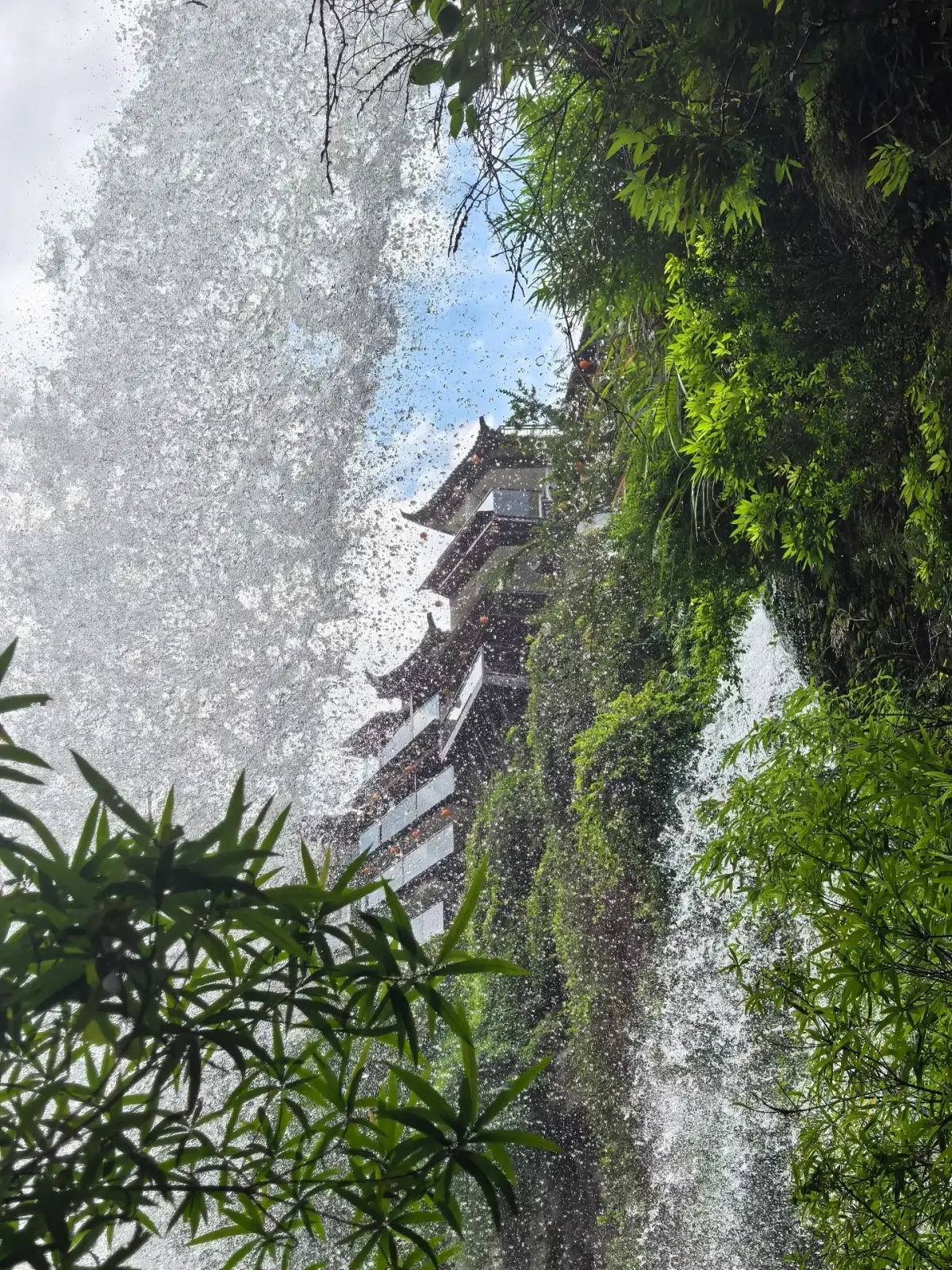
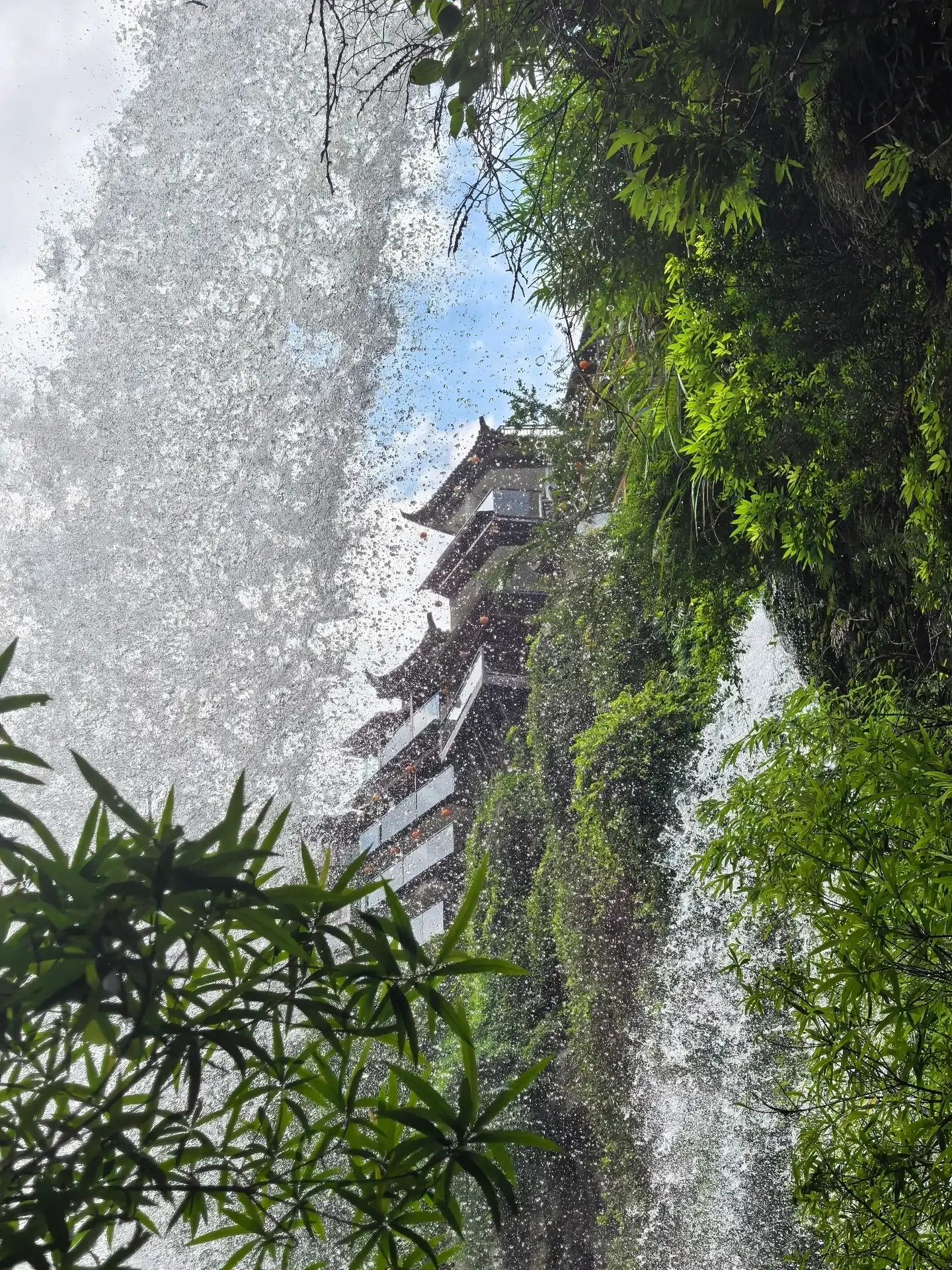
Plants and eaves beside the Water Curtain in Furong Town.
First, let’s see how the waterfall flows into the town
During the day, it’s easier to make out the positions of the buildings, rock faces, and water flow. Standing at an open viewing spot, you can first take in the overall topography, then observe how the waterfall cascades in tiers and how the architecture unfolds along the varying elevations. This spatial relationship is the most obvious difference between Furong Town and typical ancient towns built on flat land, and it better illustrates the local character than simply photographing a stretch of flowing water.
As you approach, pay attention to the slopes, steps, and slippery conditions along different paths. Whether a particular path through the waterfall or along the water’s edge is open should be determined by on-site instructions; do not enter on your own just because you see people walking there in a photo. Visitors wishing to minimize walking can focus on a single, comprehensive vantage point rather than attempting to walk to every angle from high to low.
A view of the building eaves from behind the Water Curtain
In this partial view of Furong Town, the Water Curtain occupies one side, while the other features vegetation and exposed eaves. Although the buildings aren’t fully visible, you can still discern their orientation from the layered eave lines. It offers a perspective distinct from the panoramic view: the waterflow is not merely the protagonist in the distance but can also serve as a boundary up close, making the town behind it appear to come and go.
In the nighttime photos of Furong Town, the purple and warm-toned lighting redefines the same water and rock surfaces. These colors come from the lighting used during the shoot, not the waterfall’s inherent hues. By observing the terrain during the day and how the lighting organizes the space at night, one can understand why the same path is worth revisiting under different conditions. Of course, whether to retrace your steps depends on the accessibility of the trail and your physical stamina; there’s no need to climb all the steps again just to capture two sets of photos.
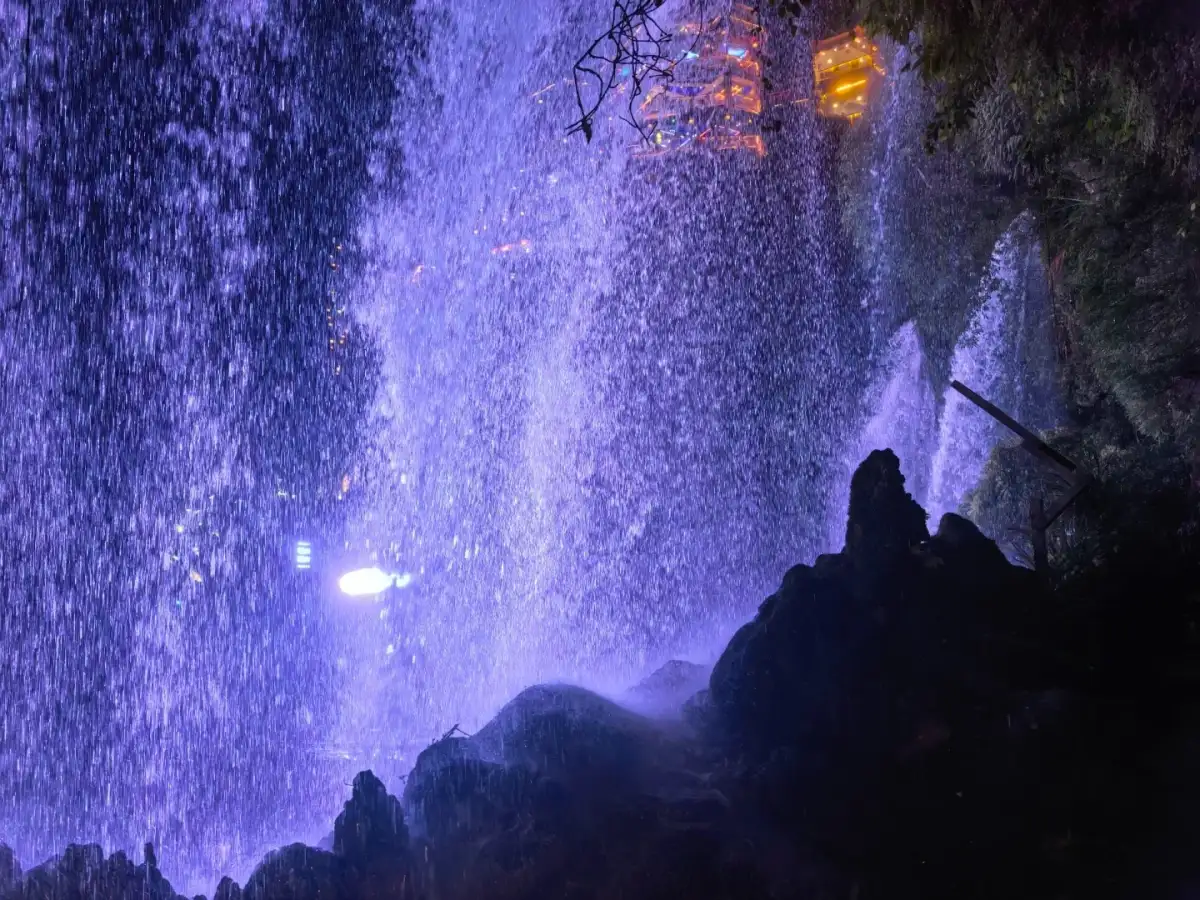
The Water Curtain in Furong Town illuminated at night.
Once the lights come on, you can also grab a bite to eat first
If you plan to see the night view, it’s more comfortable to drop off your luggage and have dinner upon arrival, then return to a familiar viewing spot as the light changes, rather than standing in one place waiting the whole time. At dusk, you can still clearly make out the buildings and the mountains; once night falls, the lights create a new interplay between the buildings and the waterfall. Each offers its own unique experience, and there’s no need to treat one as a substitute for the other.
Lighting conditions and event schedules may vary; this article does not specify a single “best” time. When taking photos, pay attention to highlights and shadows—there’s no need to brighten every shadow. Also, don’t cross safety boundaries just to fill the frame with the waterfall. When there are large crowds, break up your photo sessions into brief stops to leave space for others to pass; this will also make your nighttime experience more relaxed.
Where you stay depends on how you want to end the day
If you’re planning to stay in Furong Town, first confirm your vehicle’s drop-off point, the route for carrying luggage, any stairs, and the nighttime environment. Rooms with a direct view of the waterfall offer a unique perspective, but they aren’t necessarily the best choice for guests who go to bed early or are traveling with large luggage. If you’re not staying in the ancient town, be sure to plan your departure time and next leg of transportation, factoring in meals, the walk back to your vehicle, and retrieving your luggage—not just the sightseeing itself.
Furong Town: You can experience this section in three phases—during the day to understand the terrain, at dusk to see both the architecture and the water flow clearly, and at night to observe the changing lighting. If conditions on a given day allow for only one of these segments, you can still fully immerse yourself in that experience. The richness of Western Hunan doesn’t need to be proven by exhausting yourself rushing between two ancient towns in a row; allowing yourself a complete experience of arriving at and departing from a single place often leaves a much more vivid memory.
Related Itineraries and Reference Sources
Zhangjiajie 5 Days, 4 Nights · View Itinerary
Eastbound Travel Editorial Department, based on itinerary materials and publicly available travel notes, for pre-trip reading; accompanying images serve as landscape references from the source notes. Specific itineraries are confirmed by consultants based on travel dates and actual conditions.