September 5, 2026 · Travel Diary
Beyond the ancient bridge, there are several other types of water features
The five-day Guizhou itinerary places Liupo’s Xiaoqikong after Guiyang and before the Xijiang Miao Village. This entire stretch of the tour is dominated by water and forests; it’s not advisable to leave simply after photographing the ancient bridge. If you’ve only memorized a single photo of a bridge beforehand, you may tend to treat the other scenery as mere transitions once you arrive. The stillness of the pools, the continuous changes in the cascading waterfalls, and the streams winding through the forest actually require different paces of observation.
Both reference guides mention Wolong Pool, Cuigu Waterfall, the Water Forest, and the Ancient Bridge, and recommend a west-to-east itinerary. However, generalizations like “all downhill” or “easy for everyone” should not be taken as guarantees for your trip. Specific entry points, transportation options, and open sections of the trail should be verified before departure, and the walking ability of fellow travelers must also be factored into the itinerary. Even when following the same route, there can be different focal points for each stop.
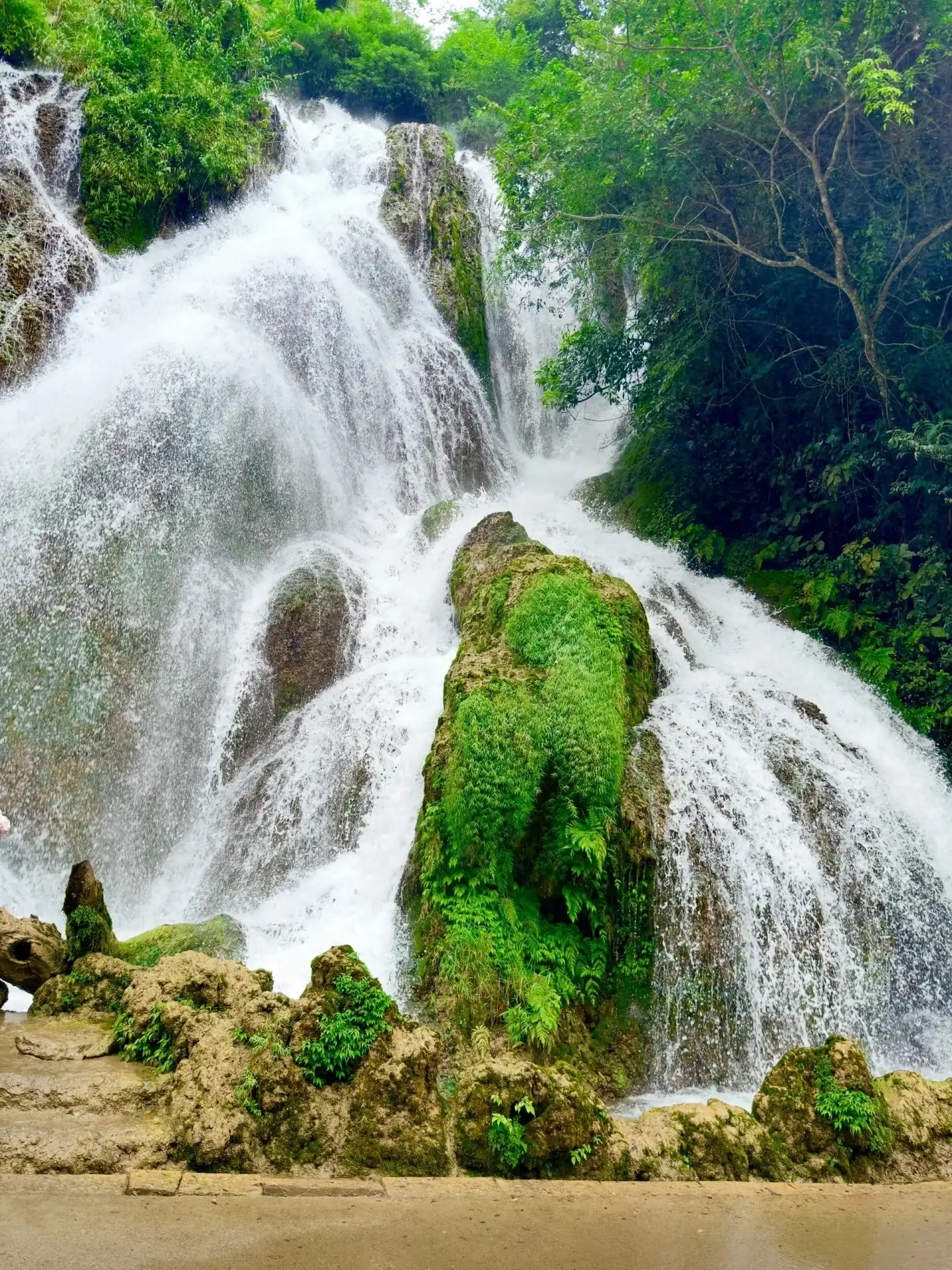
The Xiaoqikong Waterfall cascades down the rock face.
Still Waters and Cascades: A Different Perspective
At the edge of a calm pool, take a moment to observe the interplay between the water’s surface and the trees: Are the reflections clear? How do variations in depth along the shore affect the color? Is there a sense of depth as your gaze moves from near to far? Don’t judge a waterscape solely by whether it matches the blue-green hues seen in photographs. Light, weather, and water conditions all alter the visual experience; the reality on-site is often more complex than what a filter can capture.
Near rapids and waterfalls, shift your focus to the tiers through which the water flows and the shapes of the rocks. Move slowly along the open trail; there’s no need to stop for a long photo session at every short stretch. Agree on a few meeting spots with your group so that photography enthusiasts can focus on the details while others get a chance to rest. When you encounter crowded areas, prioritize keeping the path clear first, then find a suitable spot for a brief stop—this is much more pleasant than constantly rushing each other along.
How does white water create different layers?
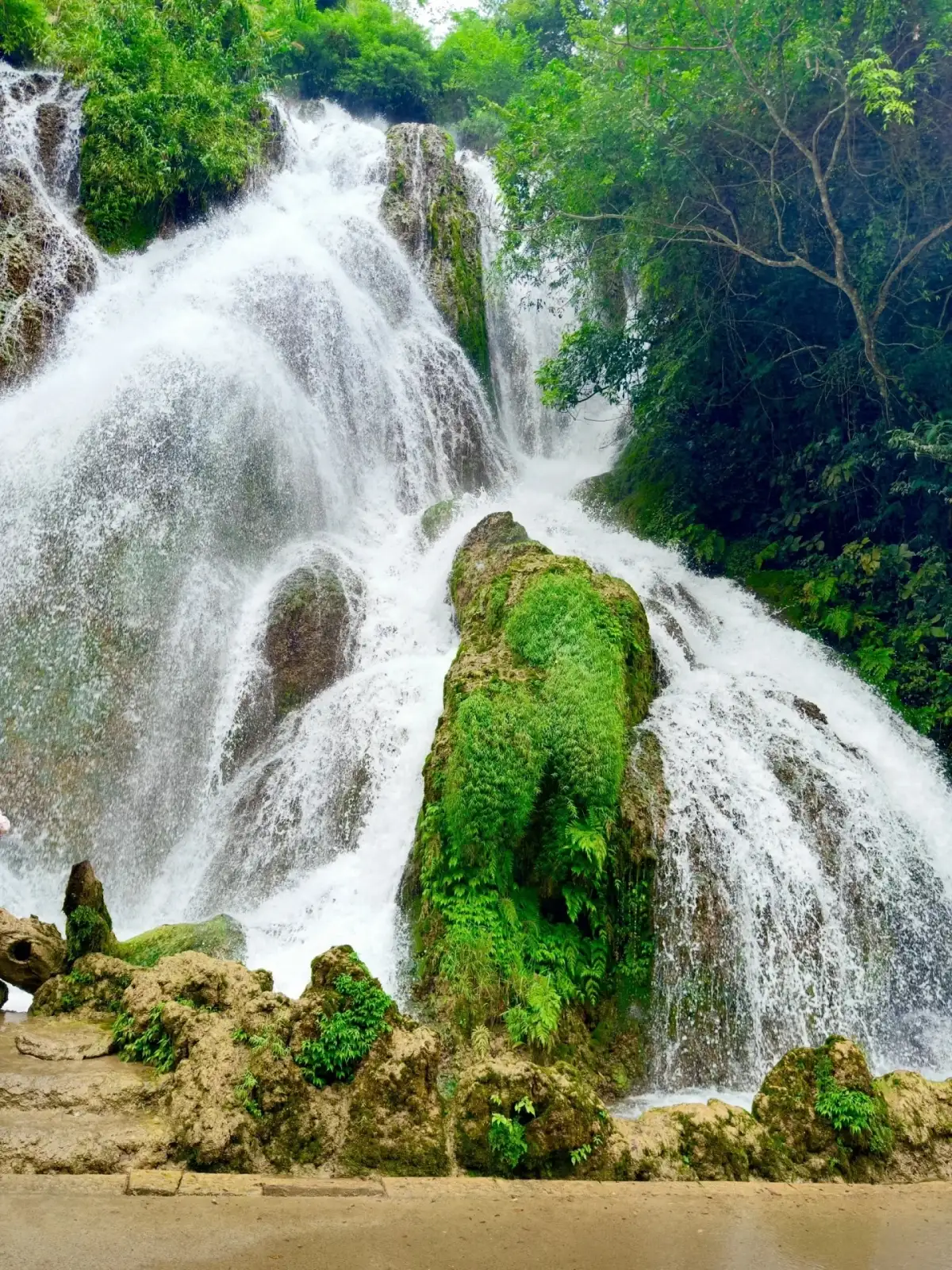
In this waterfall photo, the white stream is split by prominent rocks, with a green-covered rock face in the center serving as the focal point. The water doesn’t form a uniform curtain; in some places it slides down the slope, while in others it fans out at the drop-off. If you look at the photo for a little longer, you can make out the different paths within the vast expanse of white.
Another close-up of the rock surface scales down the scene significantly: shallow water flows from the edge toward a depression, creating a contrast between the rough texture of the rock and the flowing water. This illustrates that exploring Xiaoqikong doesn’t always have to mean chasing the largest waterfalls. A wide-angle view captures the water and forest, while a close-up shows how the water flows over the rocks; linking these two perspectives creates a dynamic rhythm to a day’s experience of the mountain scenery. When shooting, stay on the designated trail; use your lens to zoom in for closer details—there’s no need to physically approach dangerous edges.
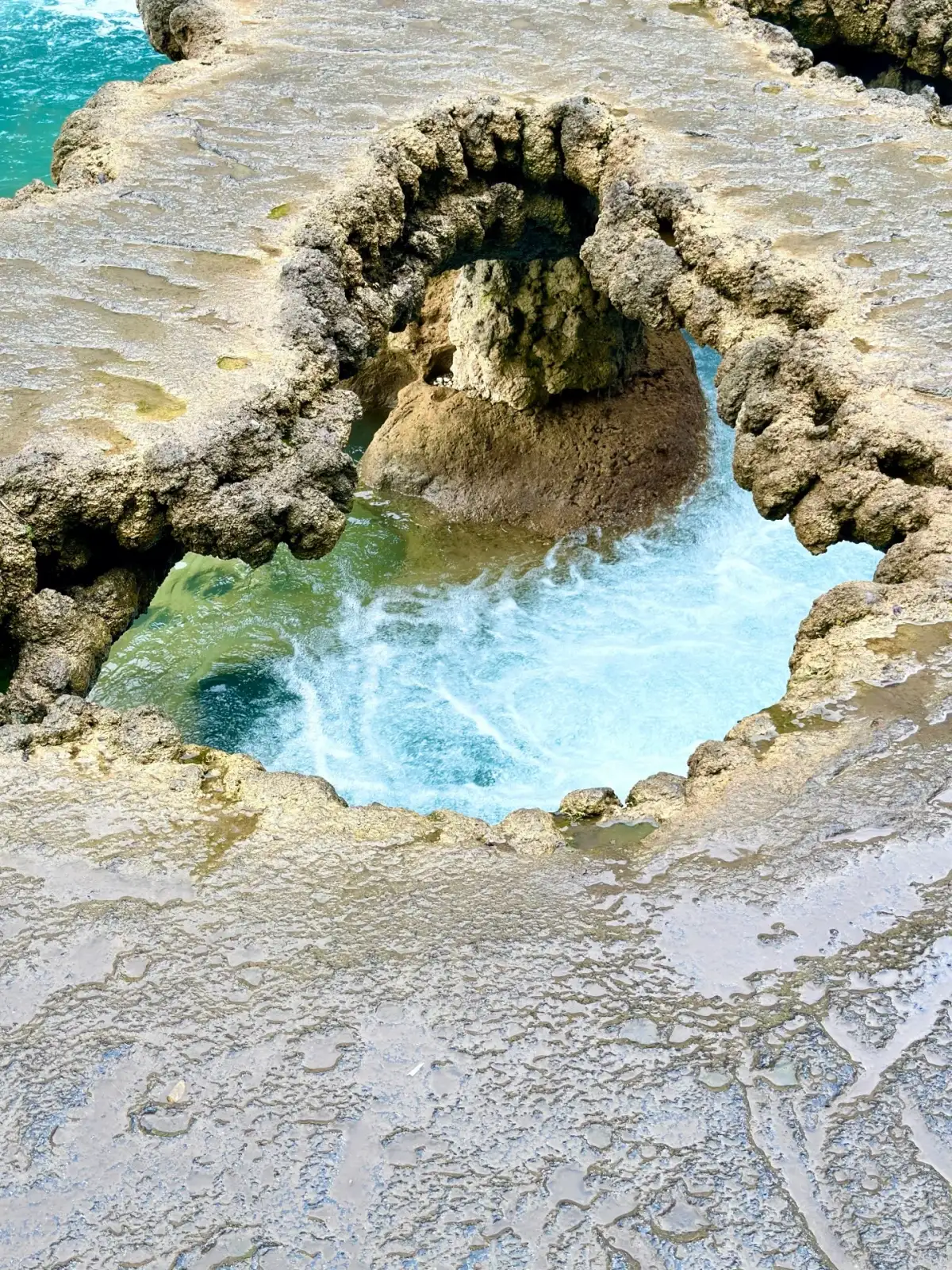
Local landscapes formed by water flowing over rocks.
The Water Forest: Observing the Interplay of Water, Rocks, and Trees
In the Water Forest, pay special attention to the spaces formed by the interplay of tree roots, rock surfaces, and waterways. You don’t need complex equipment—you can capture the environment with a wide-angle shot and then use close-ups to highlight textures. Stick to the designated trails within the scenic area and do not leave the paths to get a low-angle shot. Just because you see people wading through the water online doesn’t mean all areas are permitted or suitable for such activities on the day of your visit.
In damp environments, the traction of your shoe soles and whether your hands can grip surfaces securely are more important than whether your outfit looks good in photos. Choose rain gear that doesn’t hinder movement, and ensure electronic devices have basic waterproofing. For guests who need to minimize stairs, use a stroller, or require mobility assistance, have an advisor verify the specific route—don’t let the phrase “family-friendly” replace actual accessibility information.
Divide your day between exploring the scenery and taking breaks
First, determine the main sights and total walking distance, then work in transportation, lunch, and rest breaks. If water activities or additional side trips will cut into your meal time, consider making trade-offs—don’t assume you’ll experience everything. Those who enjoy forest walks should spend more time on the forest trails, while those primarily interested in classic water views can reduce the number of back-and-forth trips. Neither preference is better than the other; just make your preferences clear before setting out.
After leaving Xiaoqikong, there are still attractions like the Xijiang Miao Village and Huangguoshu Waterfall to explore. Walking until you’re completely exhausted on this day will affect the following days. A proper way to wrap up the day is to confirm the meeting point before leaving, pack up your wet items and personal belongings, and then proceed to your next mode of transportation. If your memories capture the varied sights of the pools, forests, and cascading waterfalls all at once, then Xiaoqikong will have fully revealed itself—rather than being reduced to just a brief stop in front of the ancient bridge.
Related Itineraries and Reference Sources
Guizhou: 5 Days, 4 Nights · View Itinerary
Compiled by the Eastbound Travel Editorial Department based on itinerary materials and publicly available travel notes, for pre-trip reading; accompanying images serve as landscape references from the source notes. Specific itineraries will be confirmed by a travel consultant based on travel dates and actual conditions.