September 16, 2026 · Travel Diary
From the lake valleys of Northern Xinjiang to the grasslands of Ili
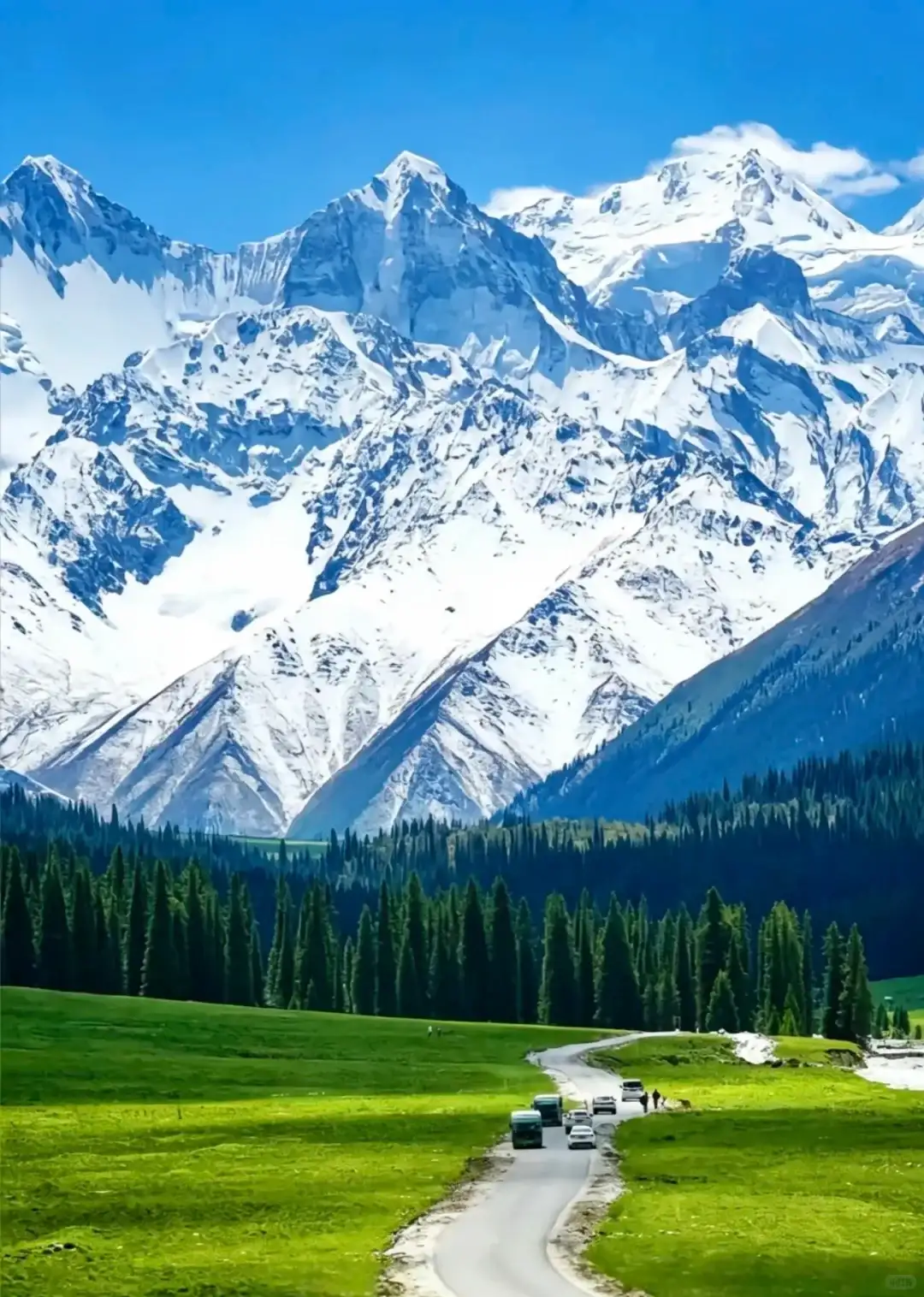
The 10-day Xinjiang itinerary passes through Hemu, Kanas, and Lake Sayram before heading to Yining and Nalati. Having seen many vast landscapes, once you arrive at the grasslands, you can temporarily set aside the question of “which spot makes for the best photo” and instead observe how the hills undulate and how the forest forms a boundary along the slopes. Naratai’s distinctive character often lies in the layers created by the alternating patterns of grassland and woodland.
In these reference notes, one entry documents how the grass color begins to change in late September, while another showcases different slopes and forest belts. They illustrate that the same location can present different seasonal appearances, but one cannot infer the temperature or flowering period on a specific day based on a single record. When planning your own trip, first confirm the travel season and open areas, then choose a suitable observation theme. Lush green grassy slopes are not the only scenery worth seeing.
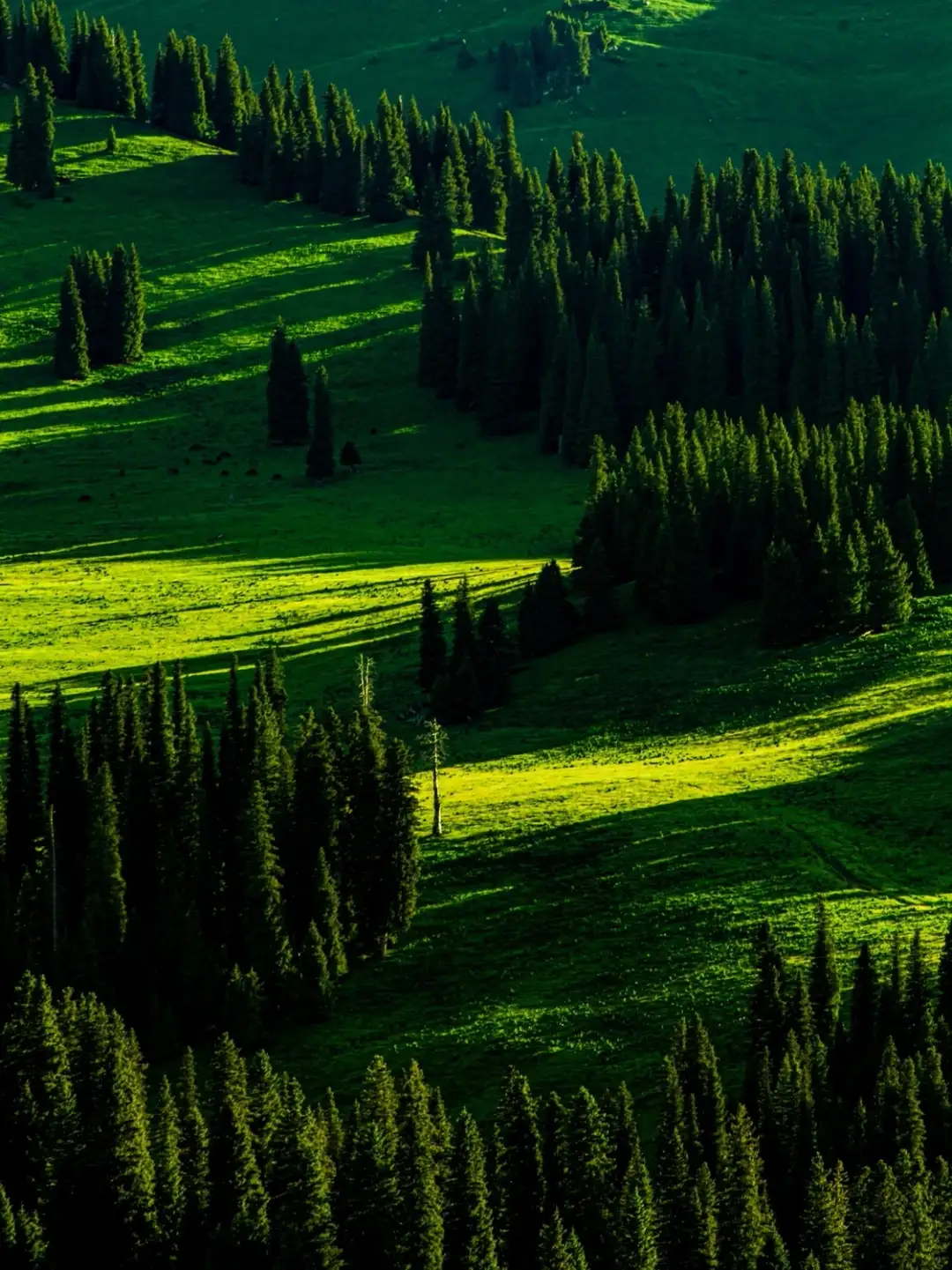
Forests and Play of Light on the Nalati Grasslands.
Start by choosing a main tour route
Descriptions of Nalati often mention terms like “Sky Grassland” and “River Valley Grassland.” When planning your first visit, ask your travel advisor to explain exactly which areas the selected route covers, the primary modes of transportation, and the amount of walking involved. Do not assume that these different names refer to a series of small spots that can be quickly and easily connected once you arrive. Reservations, vehicle availability, and operating hours collectively determine how you’ll be able to explore the area on the day of your visit.
Those who prefer open, sweeping views of the slopes can prioritize the corresponding scenic areas; those who prefer the details of forests and river valleys can choose to spend more time there. If you try to cover too many areas at once, you may end up wasting time waiting and traveling. Selecting one main route first and then considering additional stops based on how much time you have left will give this leg of the trip a clear rhythm and make it easier for your travel companions to gauge their stamina.
The dark borders drawn by the forest against the grassy slopes
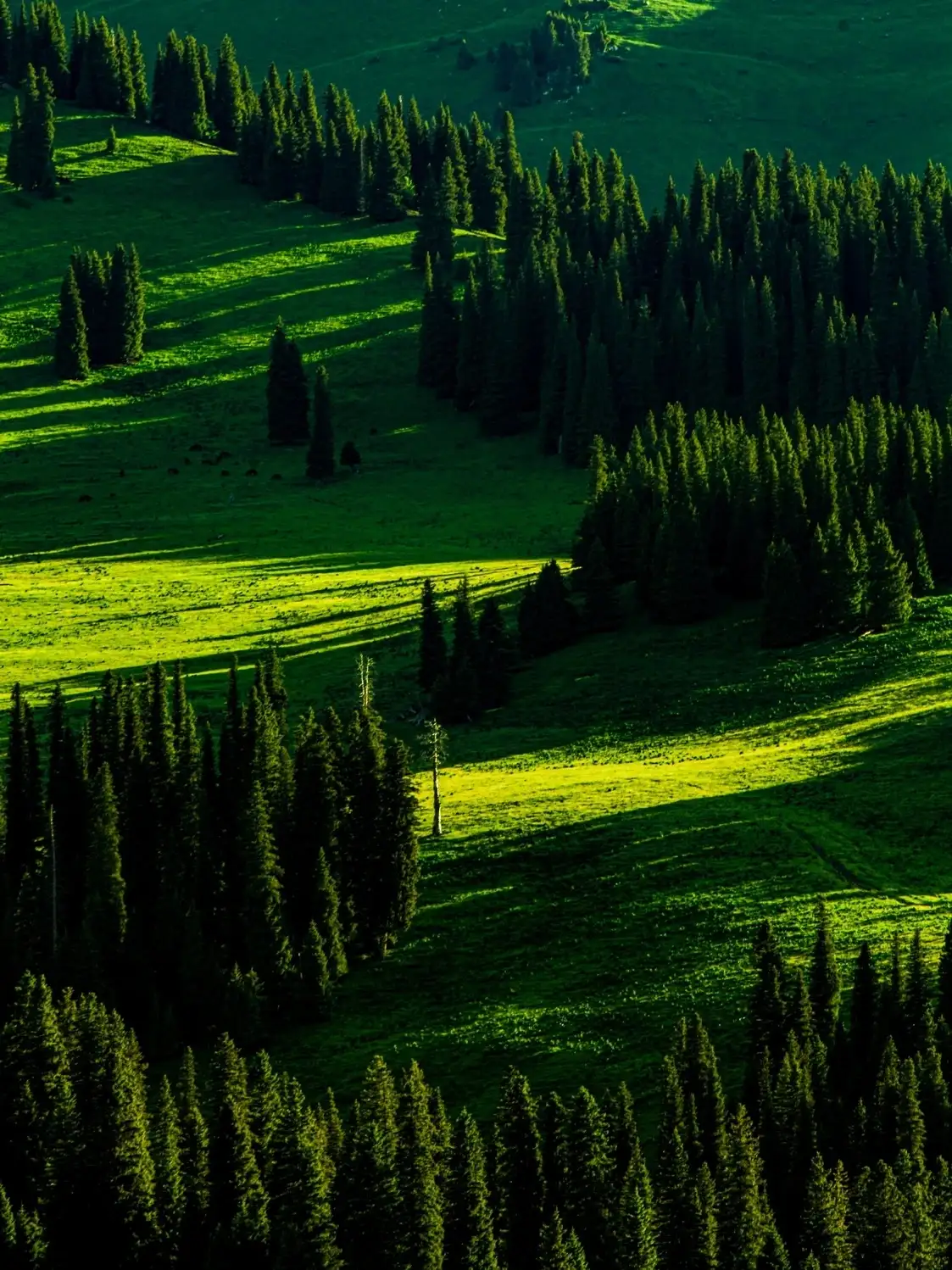
In reference photos of Nalati, trees are sometimes clustered in dense stands and other times arranged sparsely along the slopes. Dark bands of trees divide the grasslands into distinct sections, while variations in slope create light and shadow contrasts within the same shade of green. If you look at the trees first and then at their shadows, you’ll discover that the lines in the scene don’t come solely from the road—they also stem from the interplay of light and terrain.
This type of landscape is best enjoyed by lingering a bit longer: as clouds drift by, a slope that had been in shadow may brighten again, and the outlines of the trees shift accordingly. When taking photos, there’s no need to push the colors to the extreme; preserving the true gradations between the grass and the forest makes it easier to recall the scene later. If your travel companions aren’t interested in photography, you can simply choose one direction to observe and treat this time as a quiet interlude during your entire Xinjiang trip.
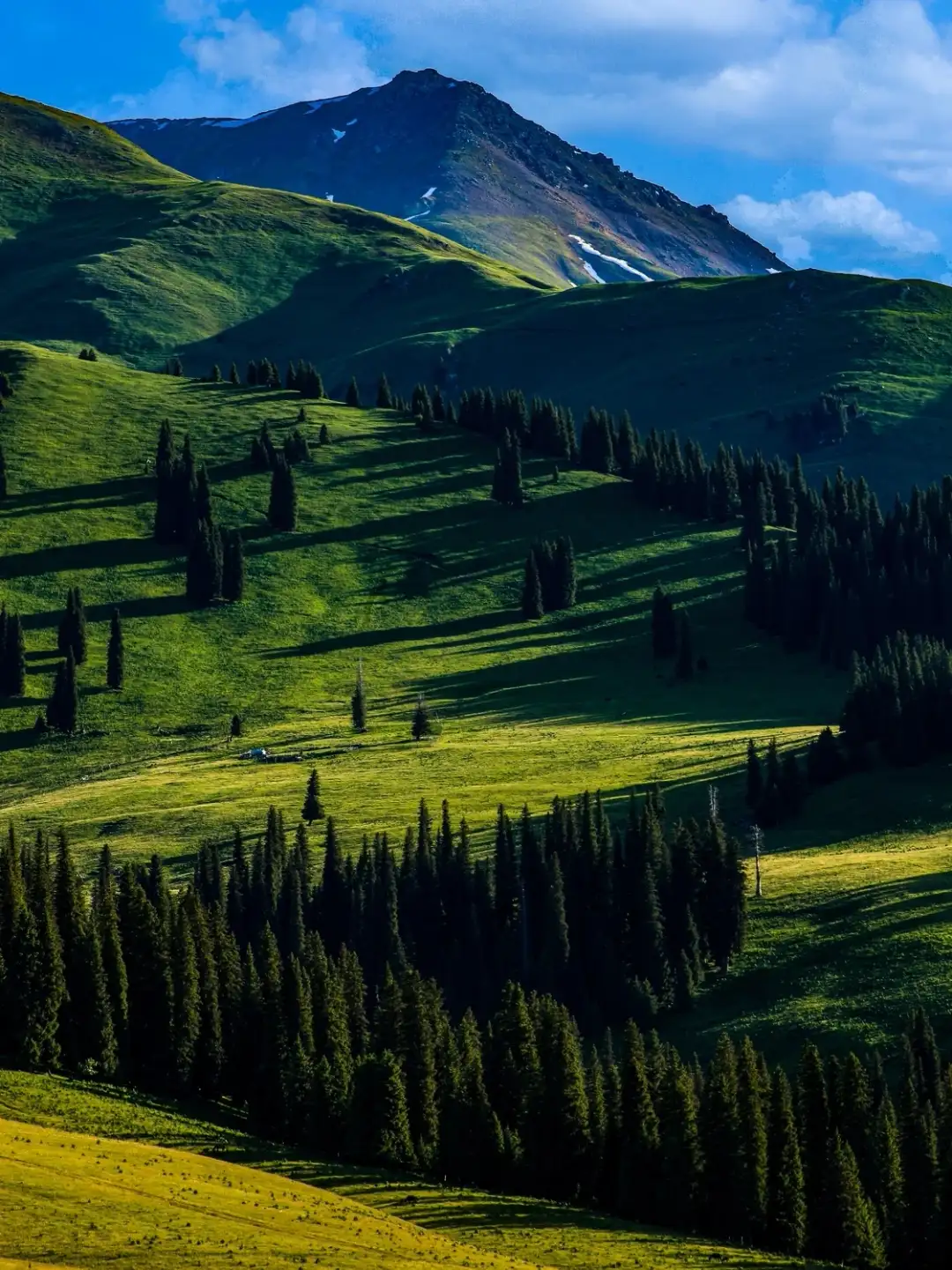
The undulating grasslands and forest belts of Nalati.
watch the shadows of the clouds drift across a grassy slope
While photos of the grasslands appear static, the light on-site is constantly changing. As clouds pass by, areas of light and shadow will appear on the slopes, and the boundary between the darker forest belts and the brighter grasslands will shift accordingly. You can wait a moment at designated stopping points to observe how the same scenery changes, rather than rushing from one viewpoint to the next as soon as you arrive.
Composition can range from wide to close-up: one shot capturing the hillside and forest belt, another focusing on the arrangement of trees, and a third highlighting a detail of the grassland. When livestock appear in the distance, treat them as a natural part of the scene—do not chase after them or approach them just to take a photo. Grasslands and pastoral areas are not always open to the public; staying on designated paths minimizes disturbance and preserves the landscape’s natural order.
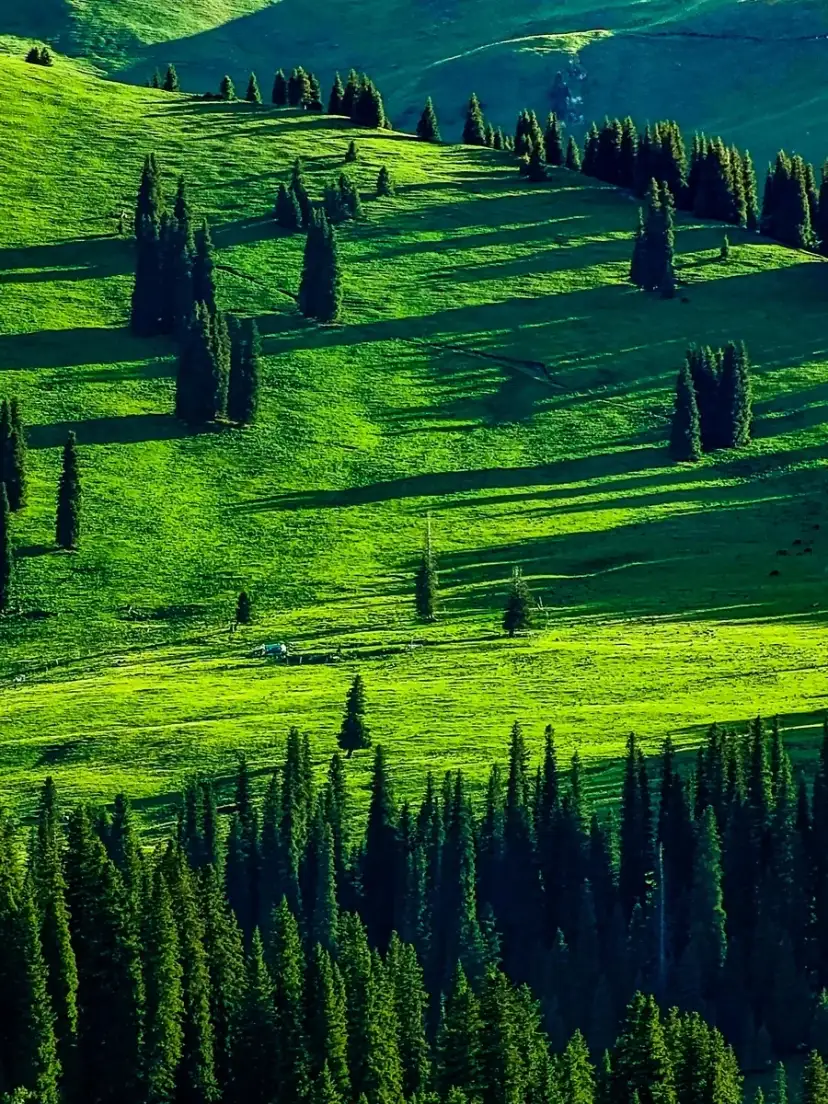
The arrangement of grasslands and trees in Nalati.
Toward the end of the trip, don’t let your road itinerary end up rushing your grassland experience
The existing 10-day itinerary also includes sections of the Duku Highway. Its seasonality and real-time traffic conditions require separate verification; you cannot rely on a travel log from a previous trip when the road was passable to guarantee that this trip will be exactly the same. If your travel dates or weather conditions are unsuitable, you should clarify alternative transportation and accommodations during the planning stage—don’t wait until you’re touring the grasslands to make last-minute decisions about where to stay the following night.
Be sure to set aside time for regular meals and rest on this day in Nalati; don’t keep cutting back on your stay just because the previous days’ itineraries were packed. When sorting through photos in the evening, perhaps the most worthwhile shot isn’t the widest one, but rather the shadow of a cloud that happened to pass over the grassy slope. It transforms this ten-day journey through Xinjiang from a mere string of place names into an observation of diverse landscapes: lake valleys, grasslands, and highways each have their own rhythm and each requires an appropriate amount of time.
Related Routes and Reference Sources
Xinjiang 10 Days, 9 Nights · View Itinerary
Compiled by the Dongxing Travel Editorial Department based on route information and publicly available travel notes, for pre-trip reading; accompanying images are landscape references from the source notes. The specific itinerary will be confirmed by your travel consultant based on your travel dates and actual conditions.