September 26, 2026 · Travel Diary
First, let’s ask why these books have survived
When visiting Tianyi Pavilion, the most important question to bring with you is: Since paper is so perishable, how have these books survived for centuries? An entry from the Palace Museum lists Tianyi Pavilion as the private library of Fan Qin from the Ming Dynasty. Its significance stems not only from the era in which the building was constructed, but even more so from the work of collecting, preserving, organizing, and restoring carried out by generation after generation.
If you treat this place merely as a Jiangnan garden, your visit will certainly be enjoyable, but you’ll miss its most distinctive theme. It’s best to read the introductions about the book collection first, then explore the architecture and gardens. In this way, the rooms, courtyard walls, and pond become more than just compositional elements in a photograph; they also prompt you to reflect on how people in the past arranged a place where books could be safely housed for the long term.
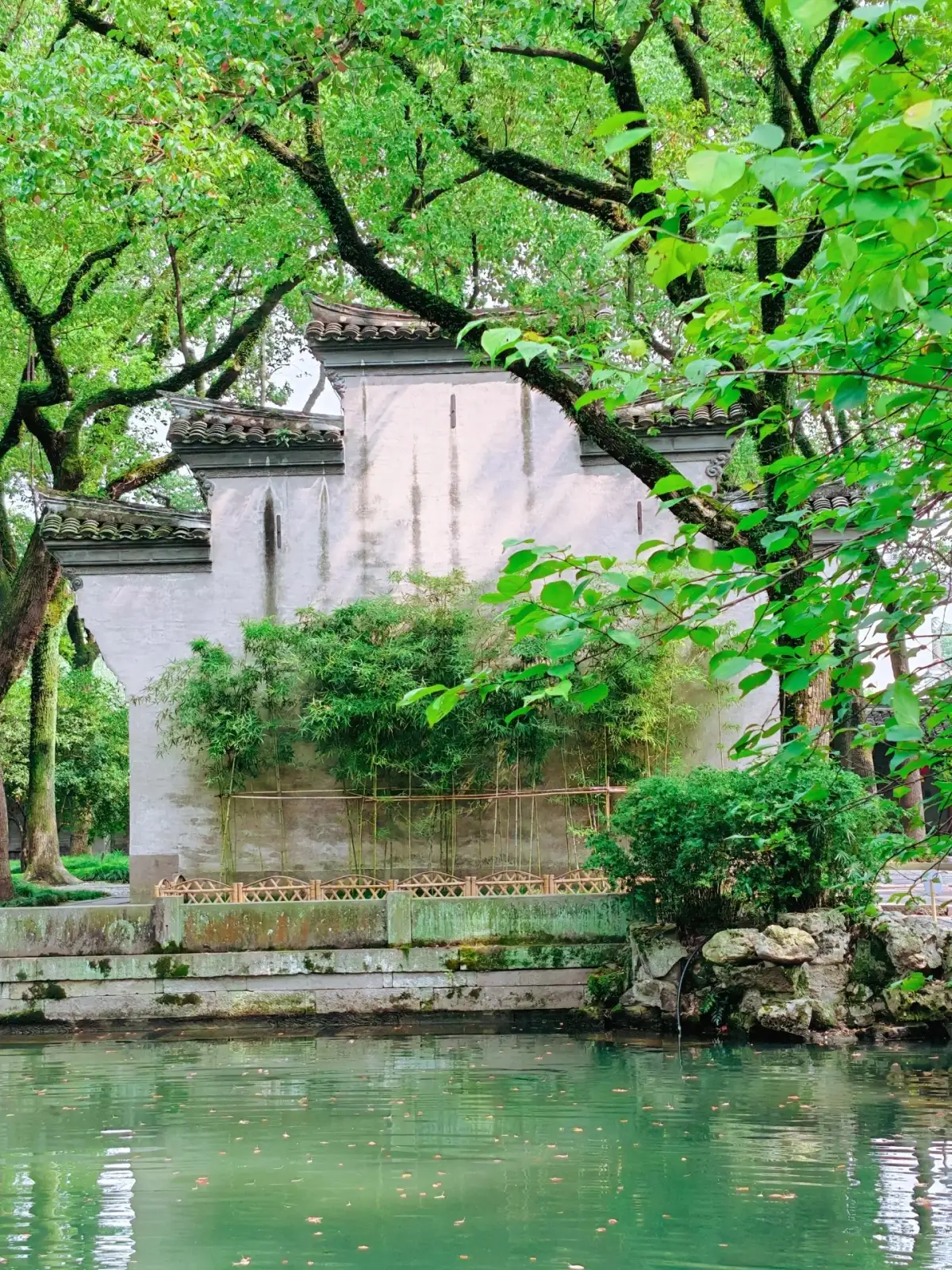
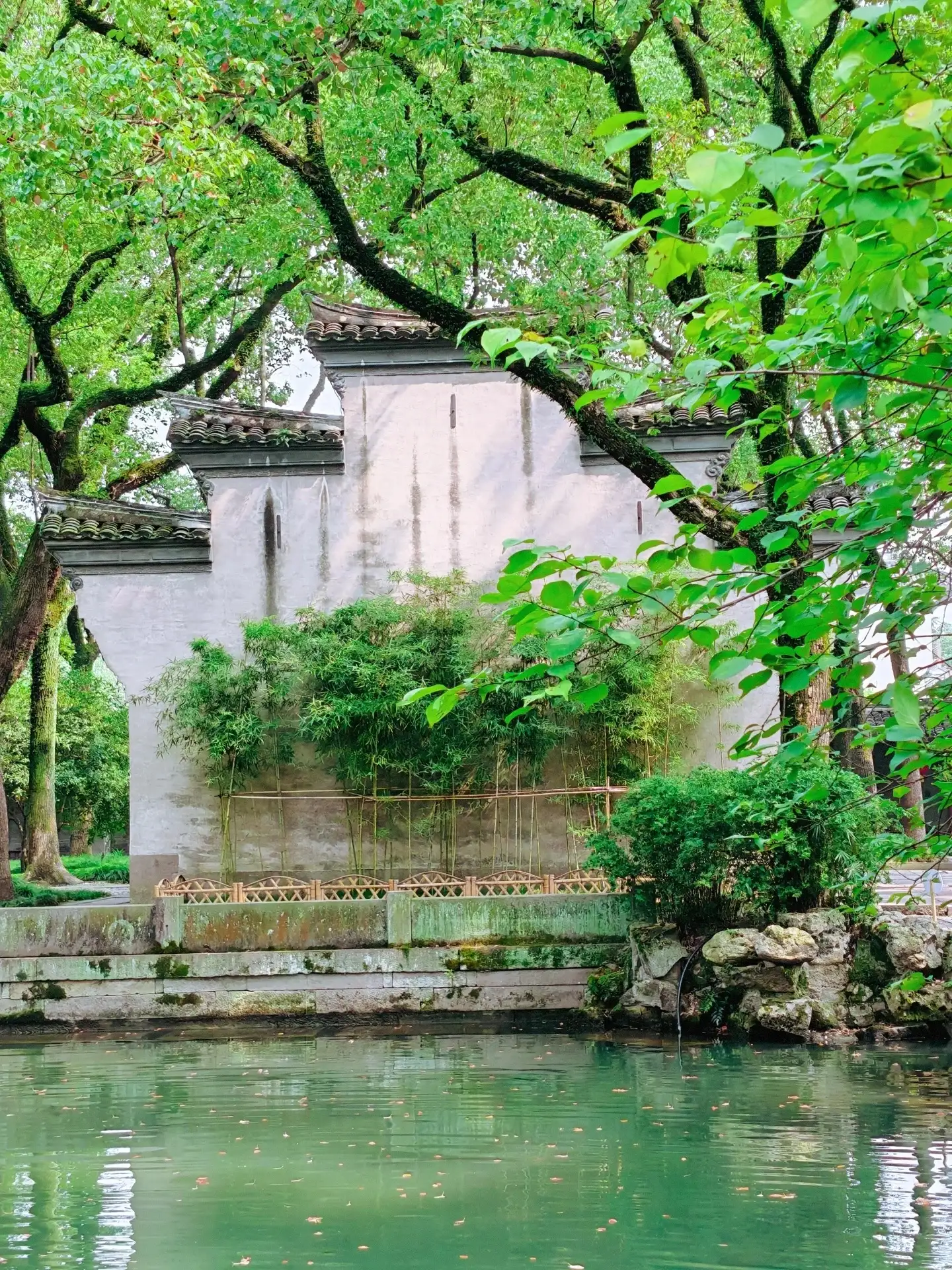
A pond, white walls, and green trees within the Tianyi Pavilion grounds.
Fan Qin’s name gives the building a specific owner
Fan Qin’s book collection is not merely an abstract example of “ancestors’ love of reading.” Through related exhibits, visitors can gain deeper insight into the collector’s life, the subjects of his collection, and the subsequent fate of the books. Documents such as local annals and imperial examination records are valuable precisely because they preserve the minutiae of local societies and institutions—it is not only famous poems and prose that are worth preserving.
When visiting, there’s no need to rush past book titles you’re unfamiliar with. It’s more meaningful to first identify the book’s category, understand why it was collected, and consider what research insights it offers today—rather than simply noting its quantity. Reading while traveling doesn’t require you to understand everything. If you can reflect on a single exhibit and ask yourself, “What would we lose if such materials were to disappear?” then the story of Tianyi Pavilion takes on a tangible, real-world significance.
“Heaven gives birth to water” is both a wish and a clue
The name “Tianyi Pavilion” is linked to the concept of “Heaven gives birth to water,” and fire prevention for the book collection serves as an important context for understanding its cultural significance. Standing at the spot where the pond faces the pavilion, one can see how the name shapes people’s understanding of the architecture. At the same time, truly protecting books requires long-term, concrete systems and technologies—it cannot be achieved by a mere symbolic meaning alone.
Therefore, when viewing the pond, one can engage in two layers of interpretation simultaneously: on one level, it is a garden landscape, where reflections merge the eaves with the tree branches; on another level, it represents a culture of book collection, as the water is imbued with the significance of safeguarding the library. These two perspectives coexist—neither reducing the entire landscape to mere utilitarian features nor reducing it to nothing more than a charming legend.
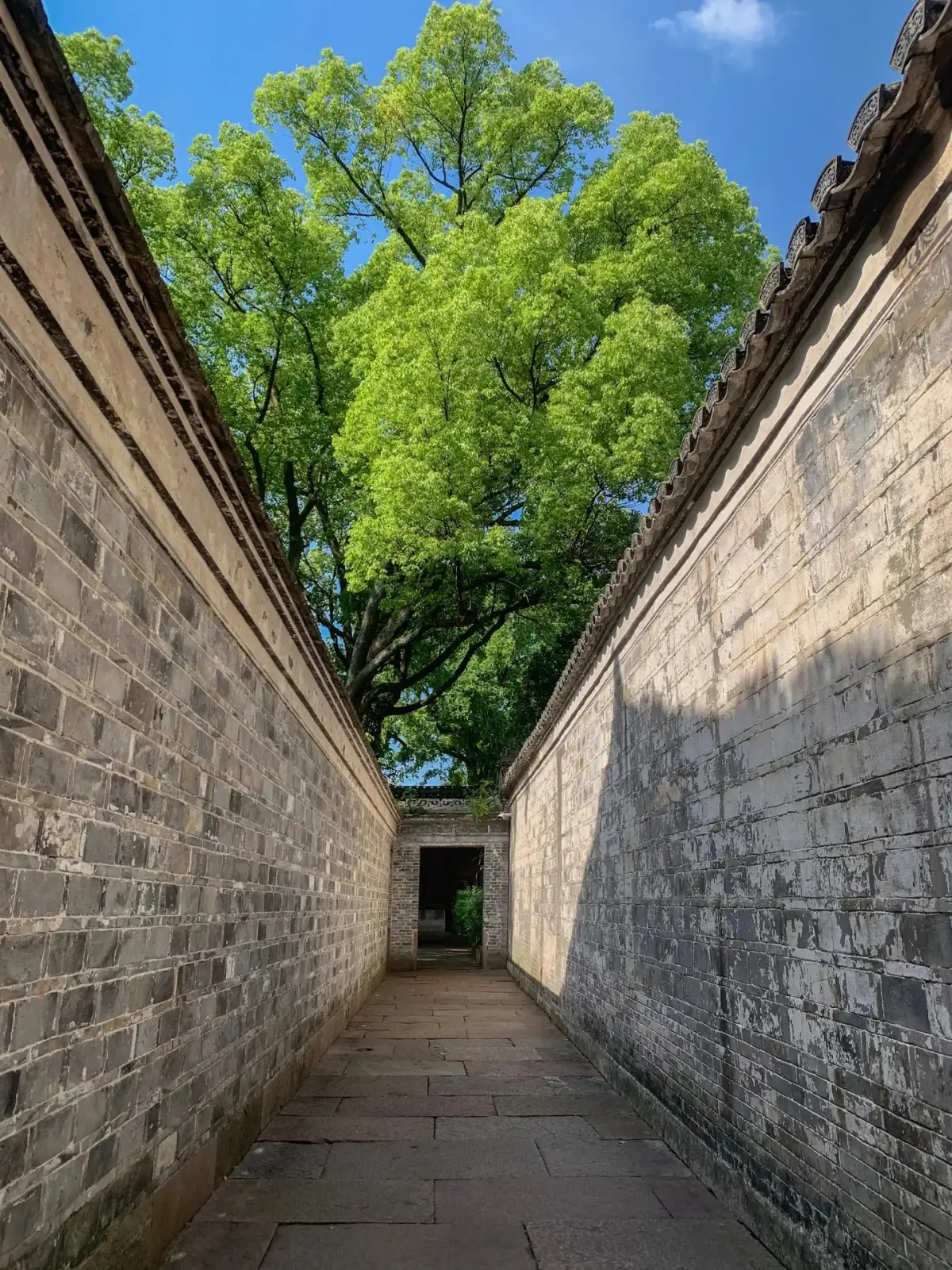
A stone-paved path between the high walls on either side of Tianyi Pavilion.
Narrow alleys and high walls allow light to take shape
The courtyards of Tianyi Pavilion are connected by passageways of varying scales. Walking into the narrow alleyway flanked by high walls, the sky narrows to a slender strip overhead, and tree canopies peek in from beyond the walls; then, turning toward the pond, the light and the view suddenly open up. Architectural depth does not necessarily stem from grand scale; even a single opening or closure within a limited width can be strikingly vivid.
This kind of space is particularly suited for slow, leisurely exploration. The patches of light on the walls, the continuous lines of the roof tiles, and the depth of the doorways all convey a sense of place far better than a wide-angle panorama. By including the relationship between the baseboards and the ground in the photograph, readers can see that this is a walkable passageway—not just two abstract walls.
Reading between the lines of a single restoration is also a way of reading the future of the collection
The preservation of ancient books cannot be achieved simply by locking them away forever. Materials on Ningbo’s intangible cultural heritage introduce the ancient book restoration techniques of Tianyi Pavilion, which draw on a long-standing local tradition of book repair. For visitors, this highlights another aspect of the experience: the continuity of knowledge depends on the meticulous labor that may not always appear in souvenir photos.
If the current exhibition features a section on restoration, pay attention to the materials, processes, and documentation methods—and consider why restoration efforts strive to preserve as much of the original information as possible. “Integrity” here does not necessarily mean making old books look like new ones; preserving the traces of age and use can also hold significant research value. While specific restoration decisions are made by professionals, travelers can begin their reading journey by understanding this approach to restoration.
Looking back at the old walls and the restored wooden components within the garden, although the materials addressed by these two approaches to preservation differ, they both raise the question of how to ensure the past continues to be understood. The tranquility of Tianyi Pavilion does not signify stagnation; the acts of collecting, restoring, and reading books ensure that the story of this building remains an ongoing narrative.
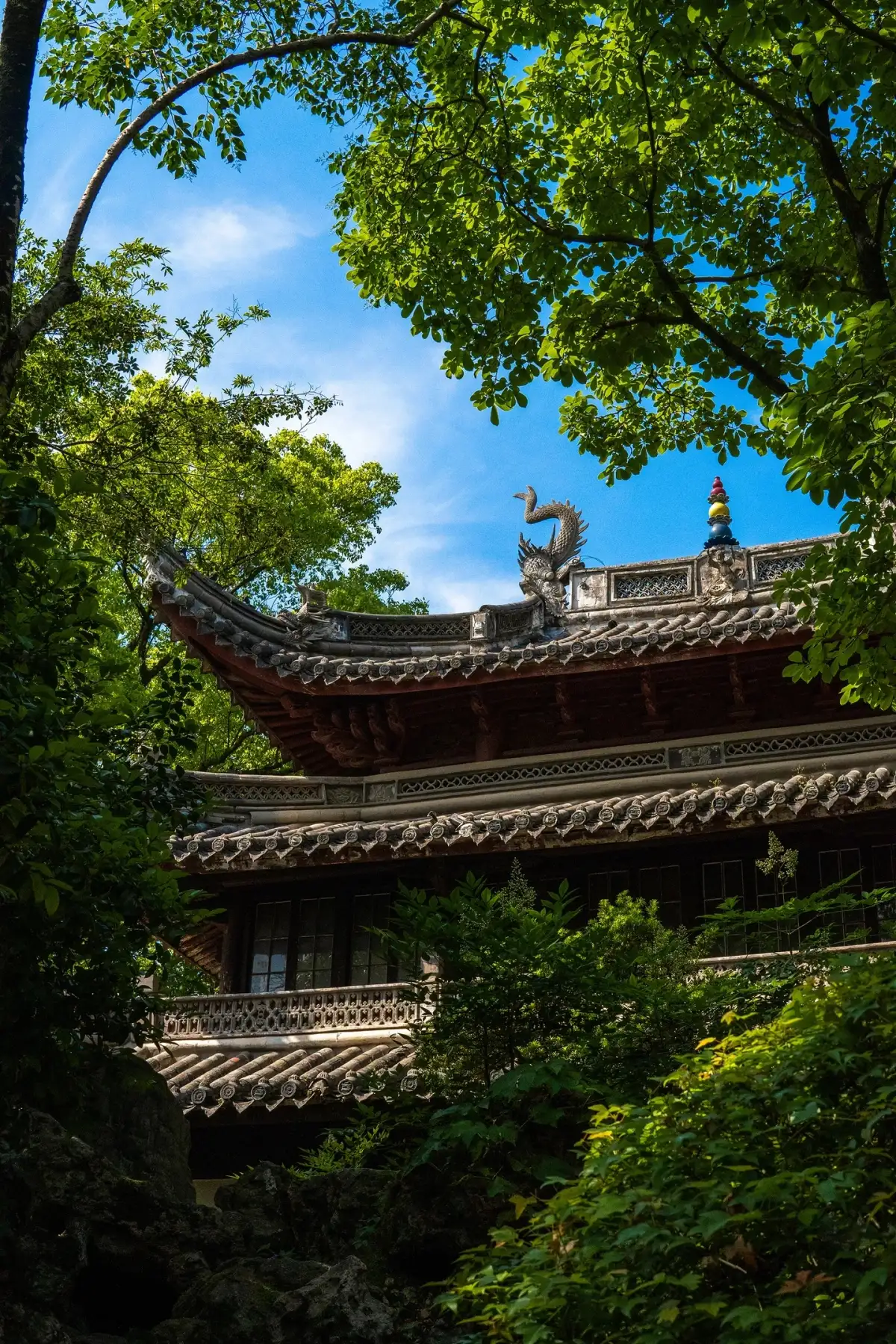
The eaves of the pavilions, shrouded in the dappled shade of trees, within the Tianyi Pavilion grounds.
Gardens and opera stages: Distinguishing Their Distinct Identities
Today, the Tianyi Pavilion Museum encompasses multiple dimensions, including book-collecting culture, gardens, and architecture. When visiting, one should not refer to every building seen as the original library. By following the signage to identify the various courtyards and paying attention to information about relocations, restorations, or new exhibits, visitors can gain a clearer understanding of the site’s historical layers.
The Qin Clan Branch Ancestral Hall and its opera stage offer a visual experience distinct from that of the book tower. Here, visitors can observe how carvings, decorations, and performance spaces are organized together, contrasting this with the book tower’s relatively restrained exterior. Although both are included in the same museum tour, they possess their own distinct historical identities; by not conflating them, one can instead appreciate the diversity of Ningbo’s architectural culture.
From ancient books to today’s reading, the story continues
Tianyi Pavilion’s contemporary work encompasses the preservation and research of ancient books, as well as public cultural activities. An official report from Ningbo on the “Show Your Books” event highlights the shift from private collections toward exchange and sharing. You may not happen to be visiting during an event, but before you go, check the library’s current exhibitions and incorporate topics that interest you into your visit, rather than simply following the names of special exhibitions listed in old posts.
If you still have time after leaving the library, Yuehu Lake offers a leisurely stroll that provides a welcome contrast to the compact spaces within the courtyard. The questions raised by the library continue to follow us: How can the texts we casually preserve today be understood by future generations? From this perspective, Tianyi Pavilion is not so distant. It addresses the issues of memory and preservation that every era must confront.
Further Reading and References
Compiled by the Dongxing Travel Editorial Department based on publicly available travel journals and the references listed in the article, for pre-trip reading; accompanying images are sourced from the noted travel journals.
The Palace Museum: Tianyi Pavilion
Ningbo Culture and Tourism: Tianyi Pavilion Book Showcase
Ningbo’s Intangible Cultural Heritage: Tianyi Pavilion’s Ancient Book Restoration Techniques