September 2, 2026 · Travel Diary
The body of water on the grassland marks a pause in this journey
The five-day Gannan itinerary travels from Tangke through the Ruoergai Grasslands and Huahu Lake, then on to Zhagana. Along the way, you’ll encounter monasteries, mountains, rivers, and villages. Huahu Lake offers a different perspective: the nearby herbaceous plants, the expansive water surface, and a horizon that seems both low and distant. It’s the perfect place to let your eyes rest, rather than constantly searching for the highest vantage point as you might at a mountain pass overlook.
The records of Huahu Lake found in this search include one featuring the wetland on an overcast day and another capturing the water’s surface after the clouds had cleared. Both are worth referring to, but you shouldn’t use them to predict the weather for your own trip. When planning this stop, focus on the things you can control: which section of the boardwalk to walk upon arrival, how long you plan to walk, where to meet up, and your onward transportation to Zhagana. For a tight five-day loop itinerary, your stop at Huahu Lake needs to be coordinated with the day’s driving schedule.
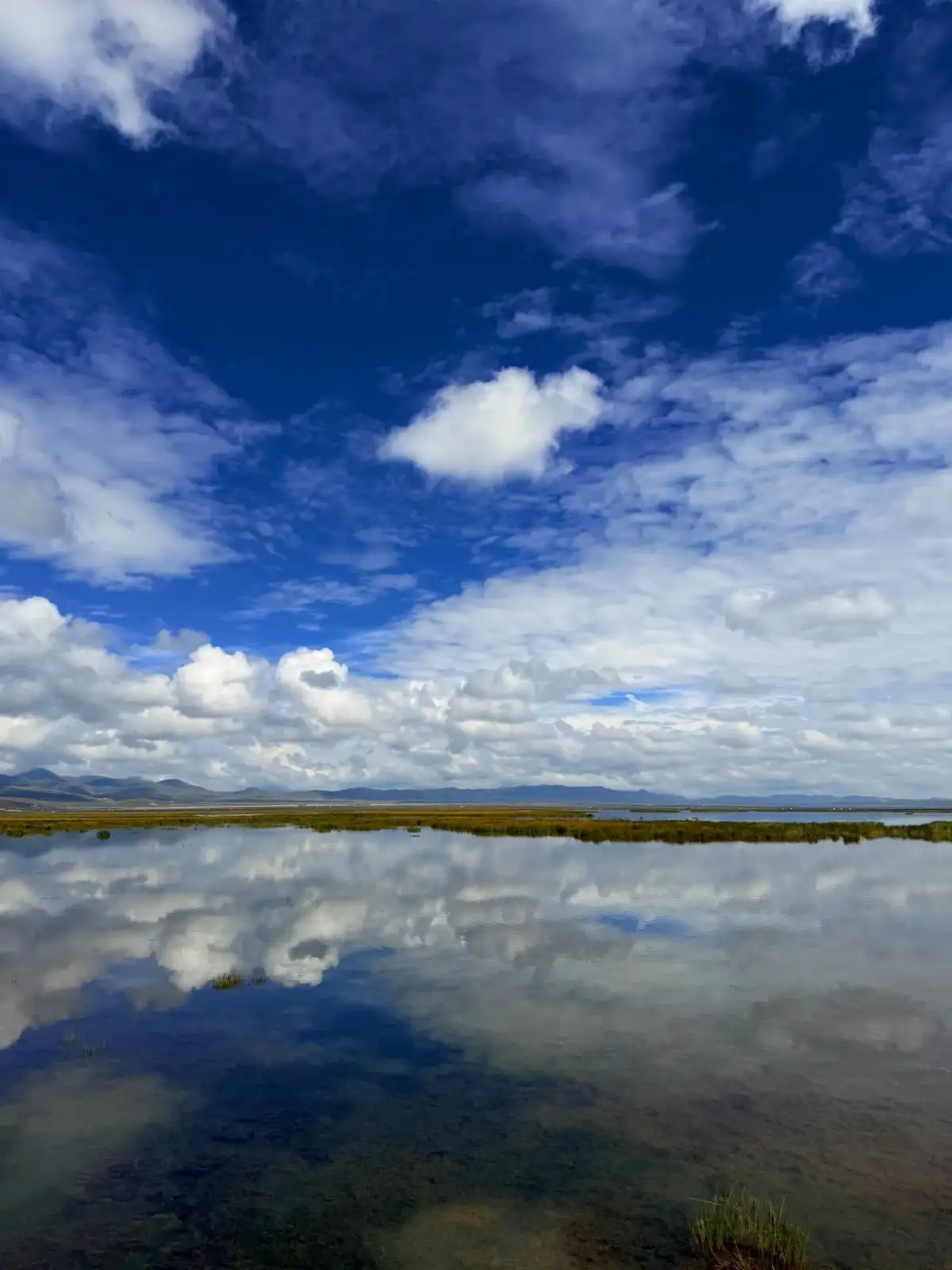
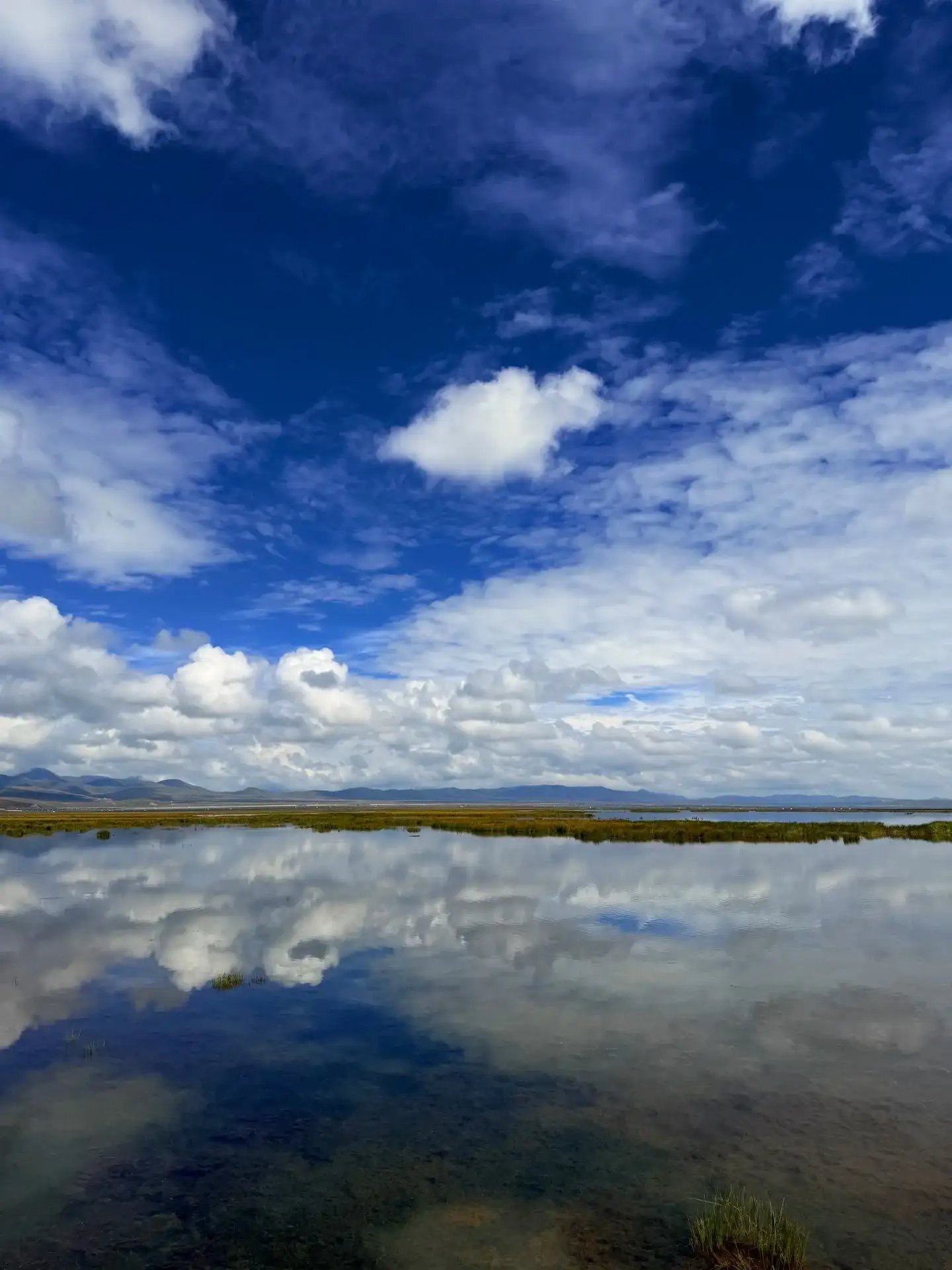
The surface of Huahu Lake reflects the clouds.
Look at the near, then let your gaze wander to the far
Photos of wetlands often end up showing nothing but the sky and a horizon line. When visiting in person, start by observing the boundary between the aquatic plants and the water’s surface near the boardwalk, then look at the waterways intermittently visible between the vegetation, and finally gaze toward the distant grasslands and mountain ridges. Observing from near to far allows the same landscape to reveal different layers of depth. When there is a breeze on the water, the reflections are scattered by ripples; when the cloud cover is thick, the colors become softer, and the textures of the grass and water are actually easier to distinguish.
The boardwalk provides a viewing path into the wetland while also defining the distance between visitors and the ecological environment. When taking photos, stay on the open boardwalk; do not climb over the railings to get a low angle, and do not throw food to attract animals. If you encounter birds, observe them from a distance as they rest and move about, and do not make whether or not you photograph a particular animal the measure of success for the day. This is a place suited for quiet, sustained observation.
Beneath the reflections lie the edges of the wetland
In photos of Huahu Lake, the sky isn’t always distinct from the ground. As the clouds reappear on the water’s surface, the true horizon becomes very narrow; it is only the tufts of grass visible in the foreground that draw the viewer’s gaze back to the shore. Compared to sweeping panoramic views, the interplay between aquatic plants and shallow water better captures the texture of the wetland: some areas form continuous meadows, while others are cut through by narrow waterways.
In this reference photo of autumn scenery, the grasslands alternate between yellowish-brown and green, while the water’s surface still retains the cool hues of the sky. In another shot, a bird perches near shallow water, with only a ring of small ripples separating its body from its reflection. Such details are best observed after you’ve come to a stop; there’s no need to chase after moving animals. The richness of Huahu Lake lies not in taking in the entire grassland at a glance, but in gradually discerning the boundaries between water, grass, and sky within a seemingly tranquil landscape.
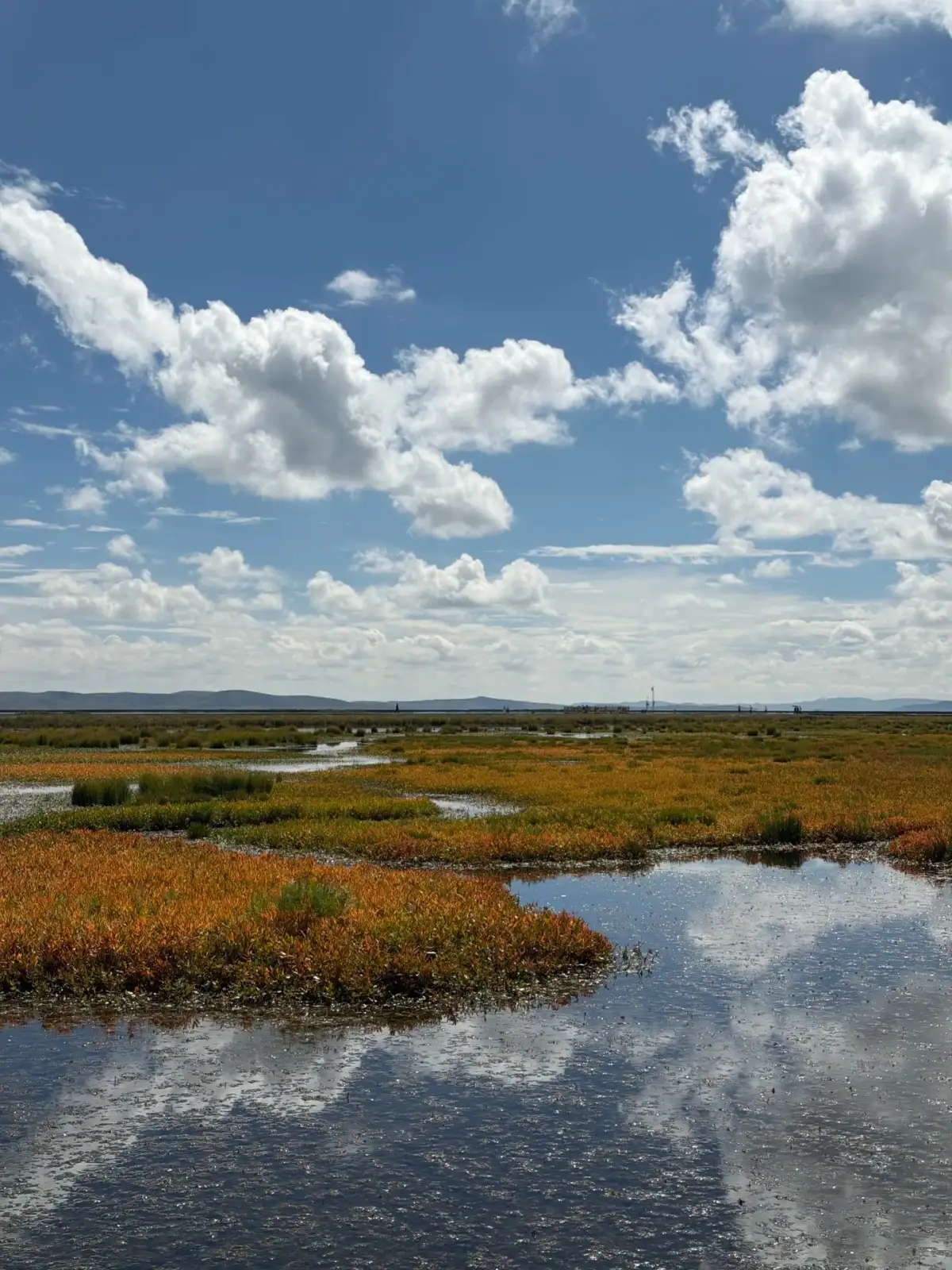
Wetland waterways and the edge of the meadow.
Even on a gentle boardwalk, allow extra time for walking
The wide-open vistas at Huahu Lake can easily lead visitors to underestimate how long they’ll be outdoors. Before setting out, clearly communicate the walking distance, rest stops, and the day’s weather—especially if anyone in your group isn’t accustomed to extended outdoor activities. Don’t assume that everyone can easily complete the entire route just because the steps aren’t visible in photos; guests who require mobility assistance or wish to minimize walking should confirm the actual facilities and shuttle arrangements in advance.
Your outfit should also be suited for stopping to take in the scenery. A windproof outer layer, sun protection, and shoes suitable for slippery surfaces are more practical than simply choosing clothes for the sake of photos. Don’t squeeze lunch into a hurried meal in the car; be sure to include stops for water, rest, and restroom breaks in your daily plan. If you’re not feeling well, shorten your walk and inform the tour leader or guide—don’t push yourself to keep moving just to complete the itinerary.
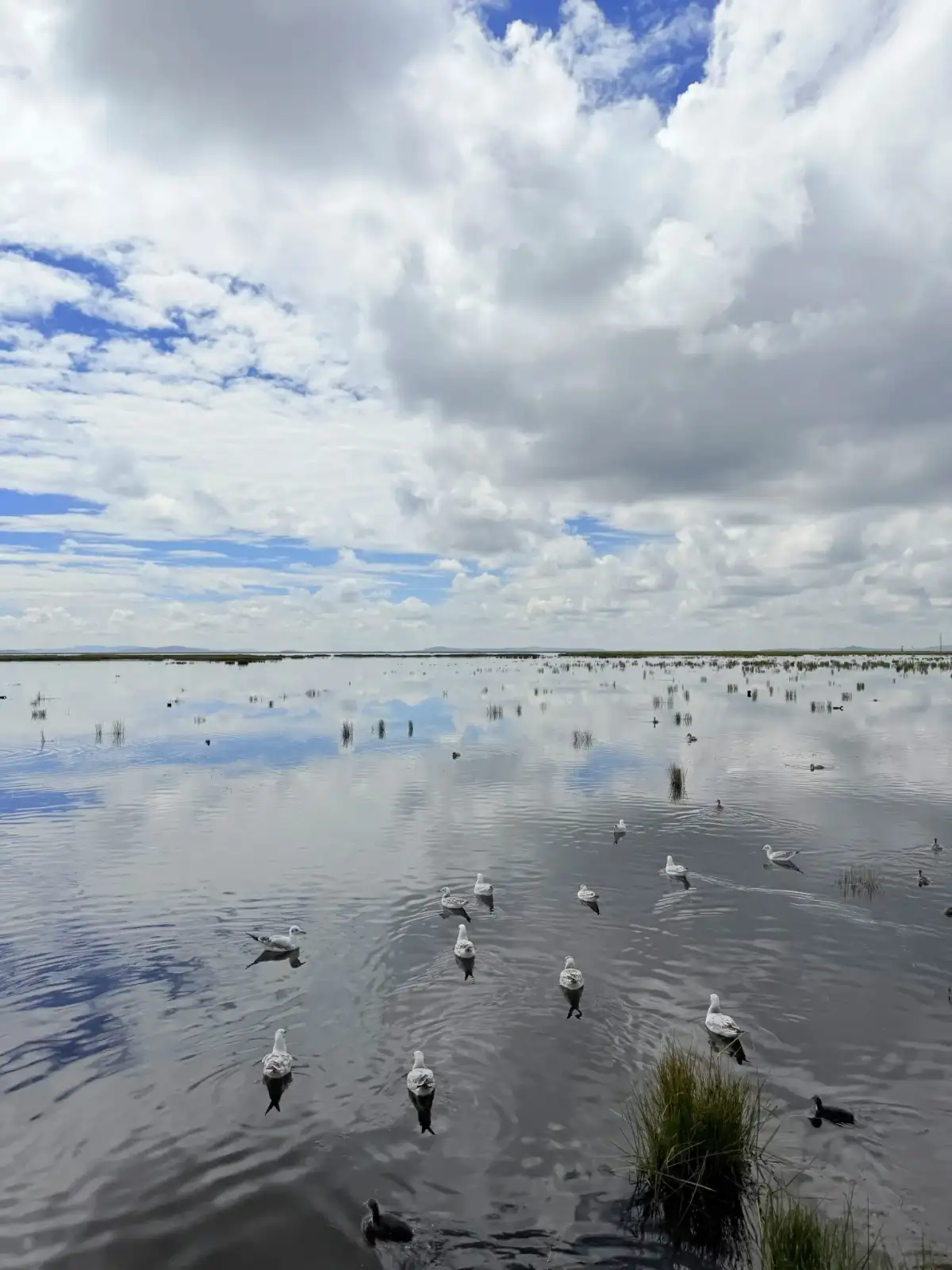
The surface of Huahu Lake and the distant grasslands.
Dusk at Huahu Lake vs. Nighttime in Zhagana: Which to Choose?
Social media often suggests waiting for the sunset at Huahu Lake, but this advice typically applies to a standalone visit. Within the context of a five-day itinerary—which also includes a trip to Zhagana that same day—it’s not feasible to cram in all these desires: watching the sunset at Huahu Lake, enjoying a leisurely dinner, and arriving at the village before dark. A more prudent approach is to first decide which experience is most important to you that day: whether the wetland walk takes center stage, or the time spent in the village after arriving in Zhagana; then plan the rest of the day around that choice.
If you’re particularly fond of wetland photography, you can ask your travel advisor to rearrange your accommodations and stops to avoid last-minute overnight drives. If you wish to enjoy a leisurely stay in Zhagana, set aside a sufficient—but not excessive—amount of time to observe Huahu Lake. At the end of the day, being able to recall the changes in the aquatic plants, the shadows of the clouds, and the horizon is far more rewarding than constantly rushing yourself to cover every photo spot. This is also the significance of including Huahu Lake in the Gannan itinerary: to let the vastness become a tangible experience of time, rather than just a photo taken through a car window.
Related Itineraries and Reference Sources
Gannan 5 Days, 4 Nights · View Itinerary
Compiled by the Eastbound Travel Editorial Department based on route information and publicly available travel notes, for pre-trip reading; accompanying images serve as landscape references from the source notes. Specific itineraries will be confirmed by our consultants based on travel dates and actual conditions.