September 17, 2026 · Travel Diary
Two visits to the lake can each have a different theme
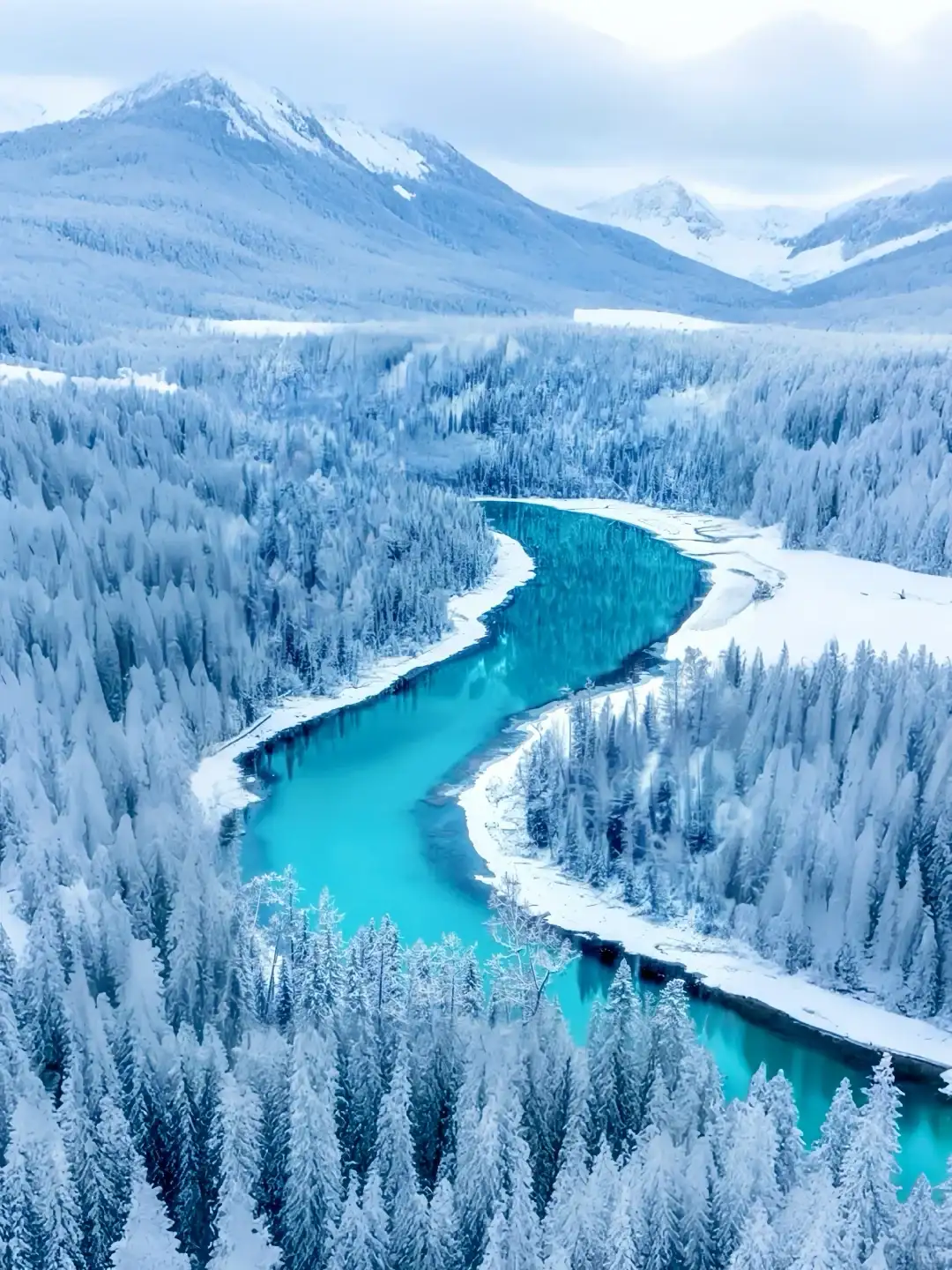
The eight-day Xinjiang itinerary moves from the valleys of Northern Xinjiang and the Karamay area to Lake Sayram, with a second visit to the lake scheduled for the following day before returning to Urumqi. The value of these two stops lies not in mechanically repeating the same circuit, but in allowing for some flexibility regarding weather and lighting conditions. The first visit offers a view of the overall shoreline and mountain contours, while the second allows you to decide whether to conduct additional observations based on accessibility and your physical condition.
In winter, Lake Sayram may feature various combinations of snow, ice, and unfrozen water. When reviewing photos before your trip, pay attention to the season they were taken in, the direction of the shoreline, and the position of the distant mountains to choose observation themes that interest you. Where you actually stop will depend on road conditions and access during your trip; it’s more relaxed to clearly state what you want to see and then adjust based on the day’s conditions than to plan your entire trip around a single popular photo.
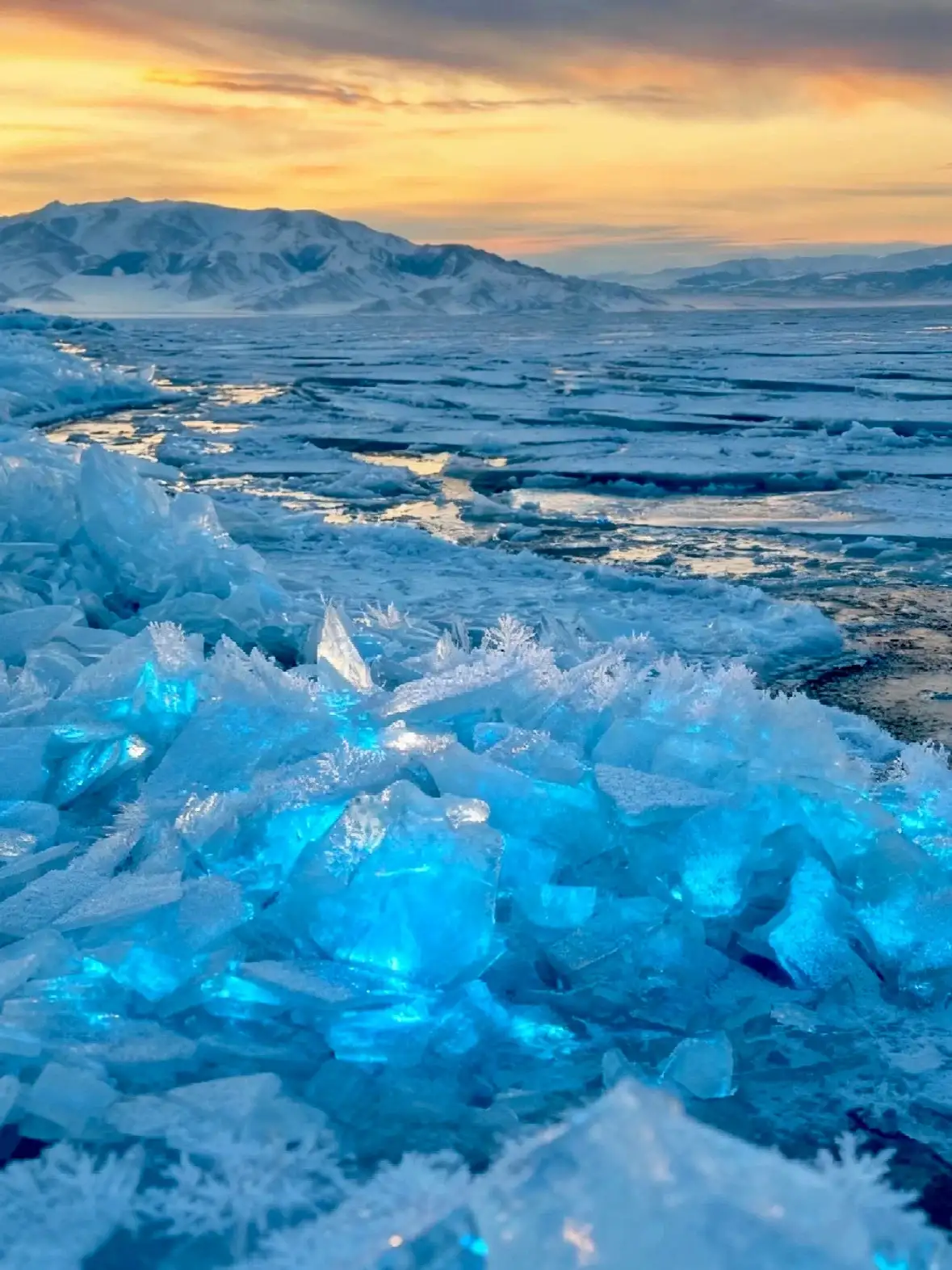
Winter ice scenery along the shores of Lake Sayram and distant mountains.
Snow-capped mountains and the shoreline are more reliable than a single piece of ice
Winter lake scenery can be appreciated by starting with the distant ridges, then shifting your gaze to the lake surface and the shoreline. The interplay of light and shadow on the mountains, the snow-covered slopes, and the reflections on the water’s surface can create different atmospheres in the same spot. Even if the blue ice you were hoping for isn’t there, you can still observe the interplay between the snowline, the rocky shore, and the open water—there’s no need to immediately conclude that this stop was a waste of time.
Please note that the blue ice, bubbles, and ice floes shown in the reference photos are phenomena that occur under specific conditions; their presence cannot be guaranteed during your visit, and you should never rely solely on photos to determine accessible areas. Photographing ice landscapes should be done within areas authorized by the management; do not treat activities such as standing on ice, lying on ice, or chasing ice blocks at close range—as seen on social media—as operational advice. Allowing safety boundaries to determine your viewing position is a fundamental prerequisite for winter activities near the lake.
A close-up of the ice and the empty space on the lake’s surface
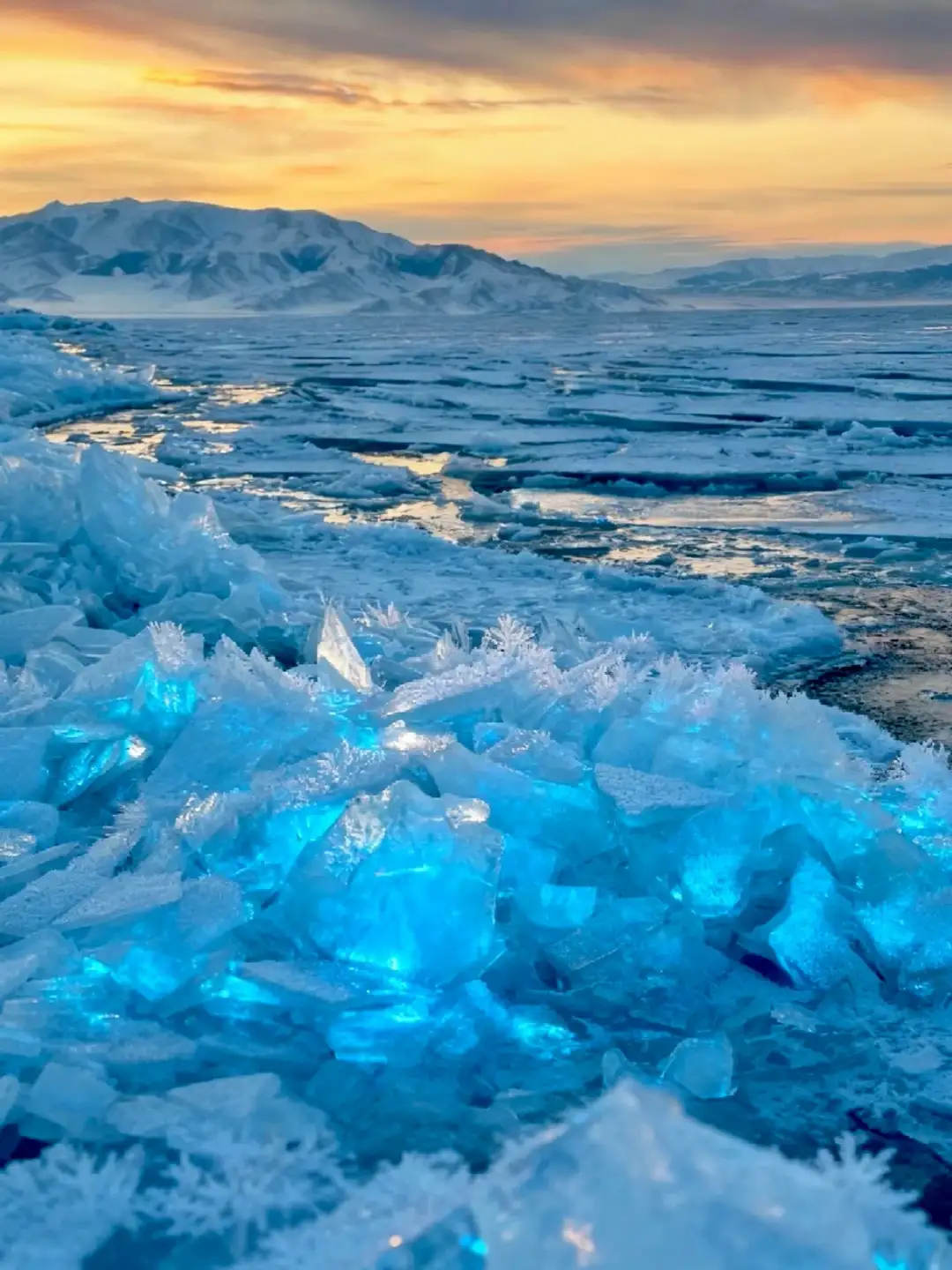
Winter ice landscape photos often feature the edges of nearby ice blocks prominently, while still retaining the lake surface and ridges in the background. Their appeal lies in the contrast of scale: the delicate, translucent textures coexist in the same frame with the complete mountain massifs in the distance. Another photo, however, captures a vast expanse of relatively calm water and a soft sky, presenting a completely different rhythm.
There’s no need to chase every winter phenomenon at once while traveling. Being able to clearly see a particular ice pattern in a designated area, or observing the reflection of the mountains along the shore, is already a meaningful experience in itself. The shooting angle, weather conditions, and post-processing of the reference images may affect the colors; what you see in person should be taken as the standard. Spending some time admiring both the wide-angle view and the details can also help reduce your fixation on a particular popular ice-viewing spot, giving you more flexibility to linger along the lakeshore.
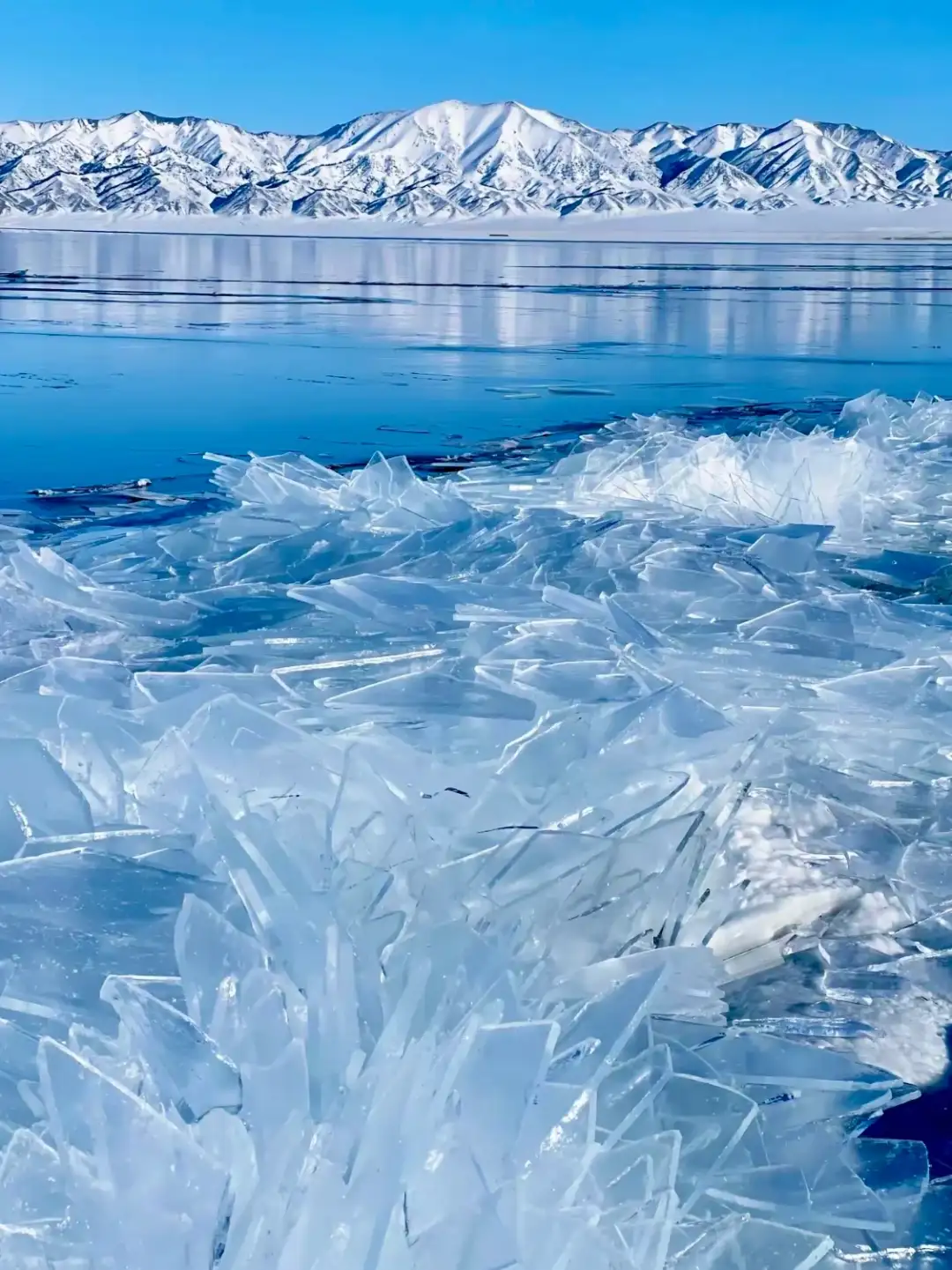
The texture of Lake Sayram’s ice and snow-covered ridges.
A trip around the lake isn’t just a drive without stopping
When planning a vehicle tour, start by selecting a few designated stopping points and clearly defining what to see at each one. One spot offers a panoramic view of the mountains and lake, while another allows you to observe the textures along the shore—this alone creates a distinct experience. Frequent stops to get in and out of the car not only waste time but can also tire your fellow travelers. If road conditions, snowstorms, or management regulations change, reduce the number of stops or adjust the route; don’t make completing the entire loop your sole objective.
Before getting out of the car each time, confirm the meeting point and ensure you have all necessary clothing and equipment. When taking photos, be mindful of the vehicle and road boundaries; do not stop in the lane to achieve a symmetrical composition. For guests who require minimal walking, check in advance the conditions from the parking spot to the actual viewing location; “vehicle access” does not automatically mean that all viewing paths are suitable.
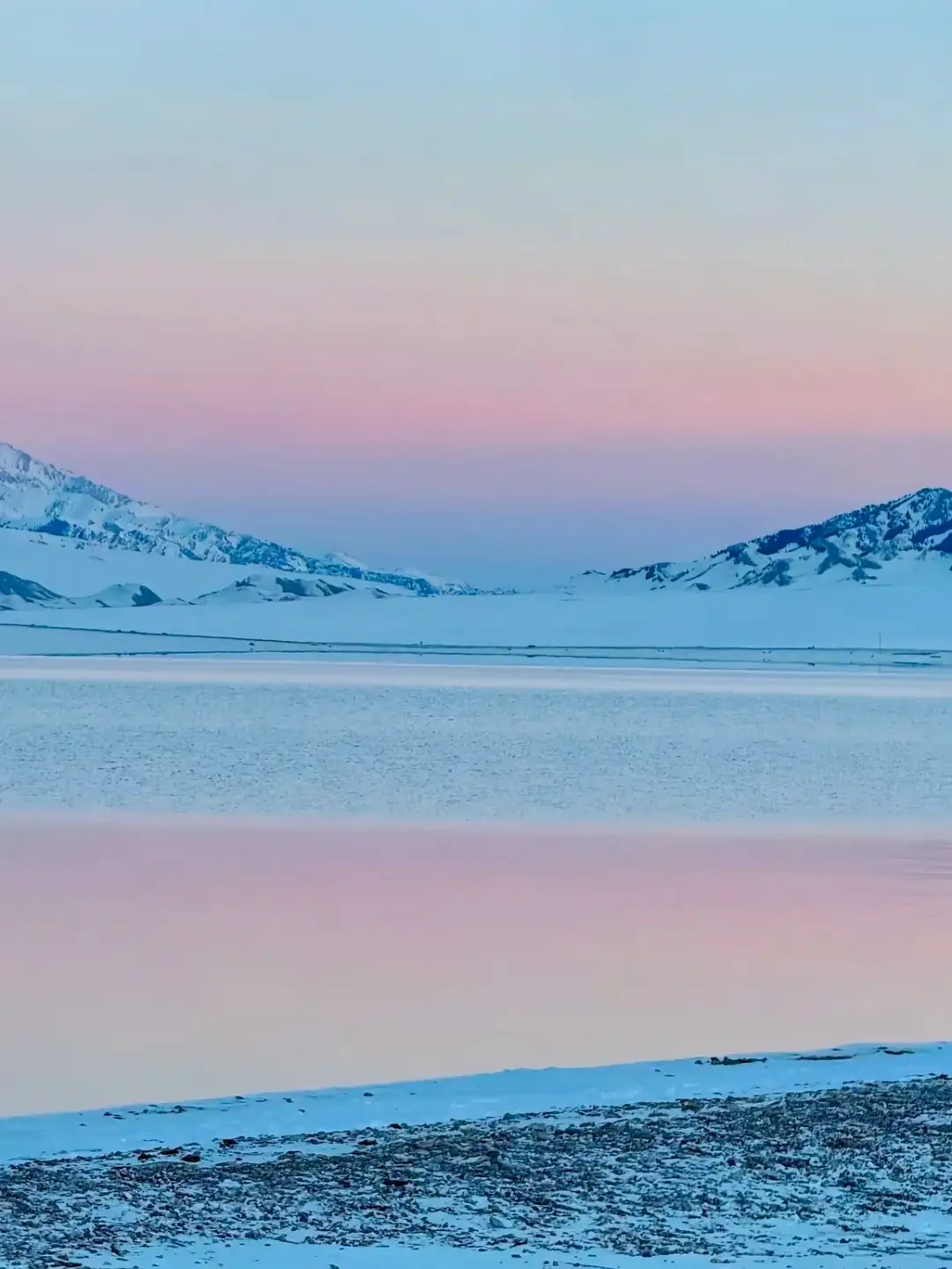
The shoreline and sky of Lake Sayram in winter.
Watching the sunrise is one option, and taking a break is also part of the itinerary
If you plan to wake up early the next day, first confirm transportation from your lodging to the viewing spot, breakfast arrangements, and that day’s operating information. The visual impact of the sunrise is weather-dependent and cannot be accurately described in terms of a fixed number of minutes or a percentage. If conditions—such as wind or snow—are unsuitable, you can continue enjoying the lake view during the usual viewing hours and then return to Urumqi as planned, ensuring that a missed sunrise doesn’t ruin your entire day.
Since the eight-day itinerary has already featured snowy landscapes and valleys, Lake Sayram offers a simpler way to wrap things up: a stretch of open lakeshore, a view toward the snow-capped mountains, and a leisurely stop without rushing. Photographs capture moments when conditions happen to be just right, while travel plans must account for all the ordinary moments. By clearly distinguishing between the two, your expectations for a winter trip will feel more grounded, and the scenery you see will more easily become part of your own memories.
Related Itineraries and Reference Sources
Xinjiang 8 Days, 7 Nights · View Itinerary
Compiled by the Dongxing Travel Editorial Department based on itinerary materials and publicly available travel journals for pre-trip reading; accompanying images serve as landscape references from the source journals. Specific itineraries will be confirmed by our consultants based on travel dates and actual conditions.