September 27, 2026 · Travel Diary
Don’t cross the bridge just yet—see where it leads
To truly understand Bazi Bridge, start with the path beneath it. While ordinary bridges typically connect the two banks along a single, clear line, the slopes of the Ba Zi Qiao Bridge fan out in several directions, making the relationship between the bridge and the street more complex than the silhouette visible from a distance. Standing in a spot that doesn’t obstruct traffic and clearly distinguishing the paths on the bridge, alongside it, and by the river, one can see how this bridge responds to the practical needs of a water city.
According to official records from Shaoxing, the Ba Zi Bridge was first documented during the Southern Song Dynasty and was rebuilt in 1256. While its age provides a historical context, what truly makes people want to linger is the fact that the stone bridge remains seamlessly connected to the surrounding streets and alleys. It is not a standalone exhibit isolated from the city; the people crossing the bridge and the life unfolding along its banks continually illustrate why it was built here.
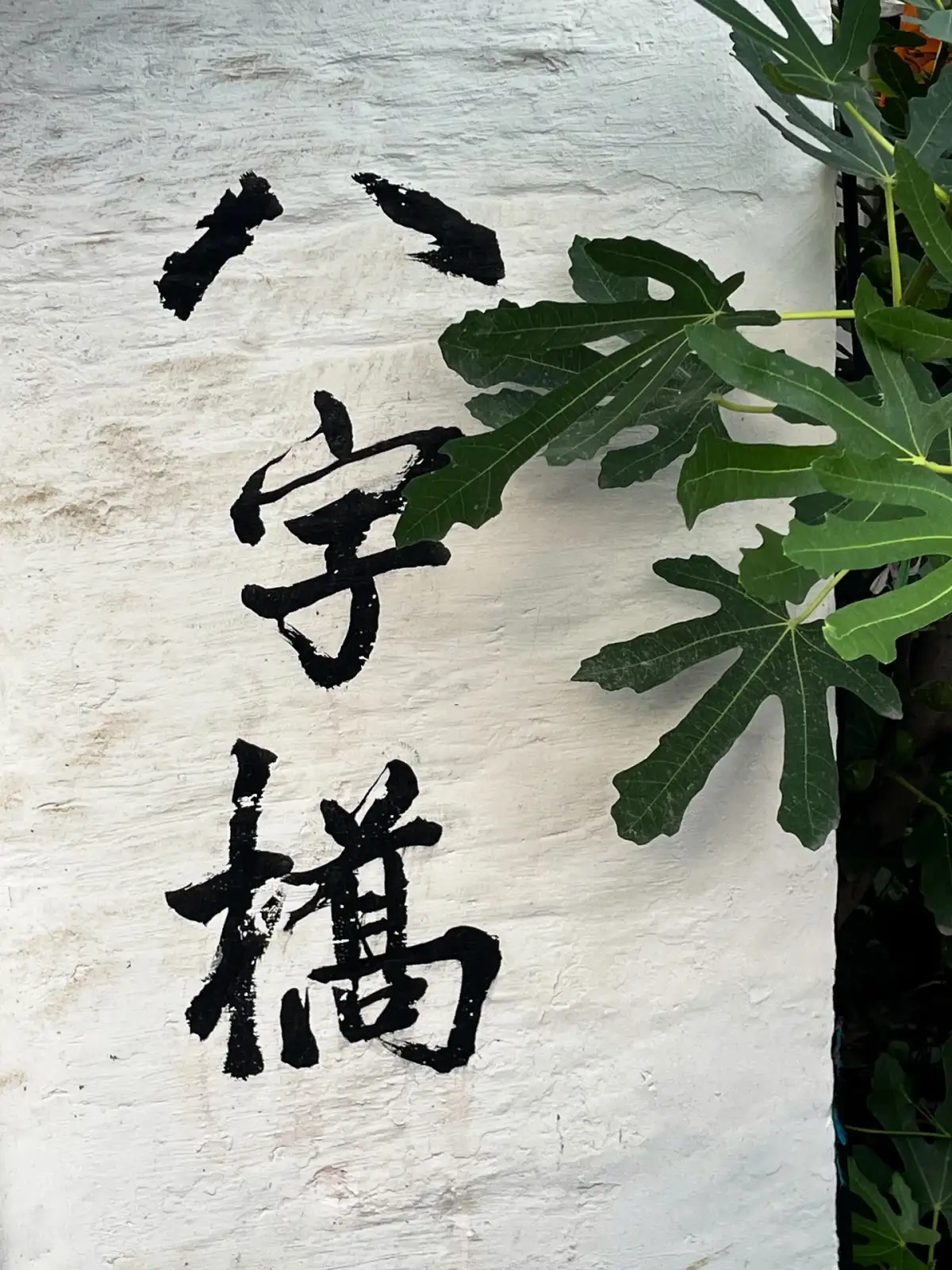
Place-name inscriptions and foliage on the white walls of the Ba Zi Qiao neighborhood in Shaoxing.
Where the stone steps descend, the waterway flows into daily life
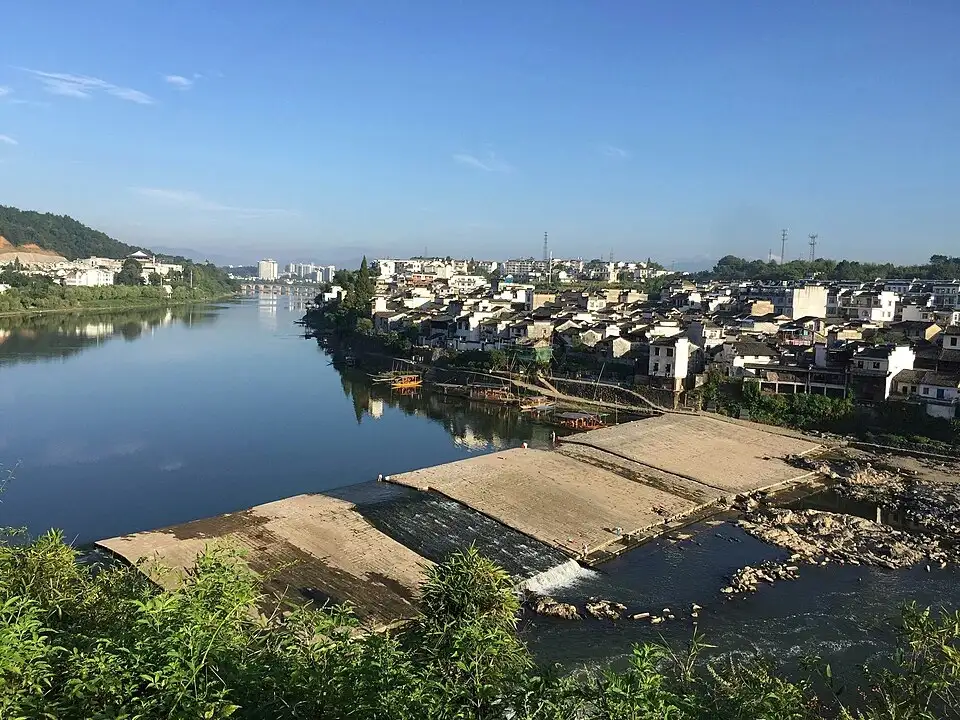
On the riverside path, take note of the stone steps extending toward the water’s edge. They create numerous small connections between the street and the river’s surface, transforming the phrase “homes nestled by the river” from a mere description into a visible structure. The houses do not always abut the water directly; some leave a passageway in the middle, while others use river jetties to bridge the height difference—these nuances are worth taking the time to observe.
but you don’t need to step inside anyone’s home to observe them. Standing on the public road, you can already see how the steps descend, how the stones are joined, and how the walls change color as they approach the water. The river pier should not be treated merely as a casual viewing platform for the water’s edge; maintaining a proper distance actually makes it easier to take in its relationship with the entire neighborhood.
but a single floral window is easier to remember than the entire street.
and the Bazi Bridge neighborhood does not rely on uniform, orderly facades to define its character. The weathered marks on the white walls, the edges of the gray tiles, the delicate lattice windows, and the potted plants by the doors—all these elements combine to create architectural expressions that are slightly different from house to house. Rather than summarizing the entire street as “rustic,” it’s better to choose a single window and examine the relationship between its pattern, frame, and the wall.
but the window panes serve both as decoration and as an interface between the interior and exterior. They let light in, offer points of visual pause, and preserve the privacy of the home. When photographing these details, focus on the stone and the lines; there’s no need to peer through the window openings to glimpse the residents’ lives. In a neighborhood that’s still in use, a restrained approach to observation also makes for more accurate photographs: it leaves room and avoids turning residents into mere supporting characters in the scenery.
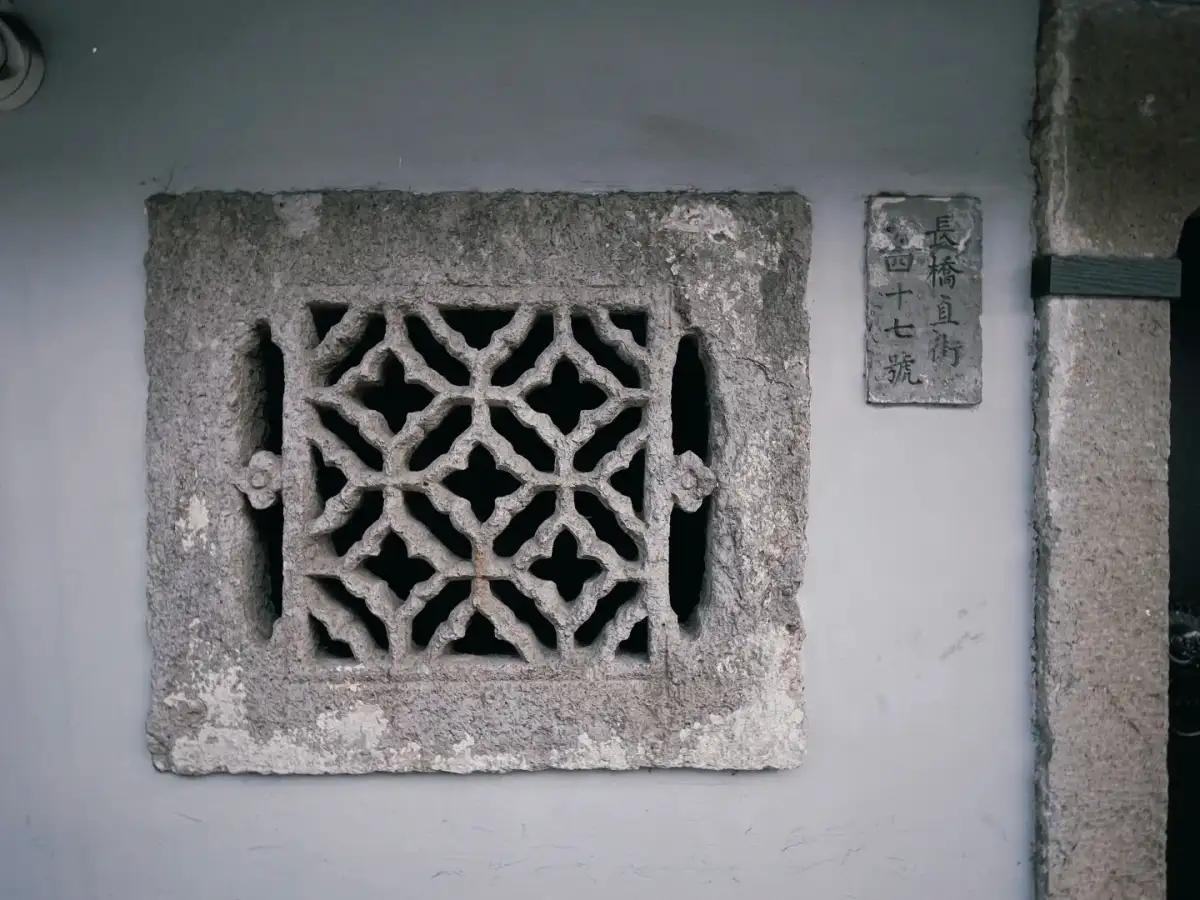
Openwork stone floral windows on the old walls of Shaoxing’s Bazhiqiao neighborhood.
Walking along the river to Guangning Bridge, compare the two ways of crossing the water
but if you’d like to extend your stroll a bit, you can connect to the Guangning Bridge area with the help of on-site guided tours and accessible walking routes. Compared to the beam-style structure of Bazi Bridge, the arched design of Guangning Bridge offers a different visual focus. While both bridges span the water, the bridge’s form, the width of the river, and the surrounding roads collectively determine how one moves along them.
so there’s no need to turn this section into a contest over the number of ancient bridges. After observing these two types of bridges, return to the riverbank and compare the positions of the bridge arches, balustrades, ramps, and street intersections—this alone offers a wealth of insights. The reason Shaoxing’s bridges are worth a special trip is not only because they make for beautiful photographs, but also because they connect the city’s transportation, residential areas, and waterways into a functional, everyday whole.
Keep the relationship between the street and the river in mind, then identify the orientation of the ancient city
The Bazi Bridge Historic District is located in the northeastern part of Shaoxing’s ancient city. Official records explain the layout of streets and waterways here through the intersection of the Jishan River and the Dusi River. Before setting out, you might mark the locations of these two waterways along with the Ba Zi Bridge and Guangning Bridge on a map; once there, observe how the roads follow the curves of the water. While the names of the bridges can be easy to confuse, the relationship between the waterways and the alleys helps establish a solid sense of direction.
There’s no need to wander far: first, take in the branching slopes around Bazi Bridge; then, follow the walkable riverside path to a spot where you can look back at the bridge; finally, decide whether to continue based on your stamina. Each time you pass through a small cross-alley, note whether it leads to another street, a residential courtyard, or the riverbank. By this point, the map will gradually align with the path beneath your feet.
but this way of understanding the water city also prevents photos of different locations from being pieced together into a vague impression of Jiangnan. Bazhiqiao has its own street layout, while the Hometown of the Sage of Calligraphy and the Hometown of Lu Xun each have their own distinct spaces. By distinguishing them clearly, Shaoxing’s richness won’t be reduced to a mere phrase like “white walls and black-tiled roofs.”
but the presence of black-canopied boats does not mean one must take a boat ride
but the black-roofed boats moored or passing through the waterways serve as an excellent reference for understanding the scale of Shaoxing’s waterways. When a boat passes under a bridge, the proportion between the buildings and the water’s surface becomes more intuitive; when a boat is moored at the riverbank, the waterway reverts to a tranquil backdrop for the neighborhood. Even without taking a boat, one can explore these relationships on foot.
If you wish to explore the river, be sure to verify the official boarding points, actual route segments, and embarkation/disembarkation locations separately—avoid assuming that the stretch of river visible in a single photo represents a sightseeing route where you can board a boat anywhere. Walking and boating offer different perspectives: the former allows you to see doors, windows, and walls, while the latter makes it easier to appreciate the continuous shoreline. Both have their own value, and there’s no need to do both at the same time just for the sake of completeness.
Continue reading about the essence of Shaoxing beyond the streets and alleys
dried mustard greens, Shaoxing rice wine, and local Shaoxing snacks can serve as culinary cues after a stroll. When choosing a restaurant, first assess your tolerance for fermented flavors, saltiness, and alcohol before deciding which dishes to try. Huangjiu doesn’t have to be a “must-try” experience; simply understanding its connection to the local cuisine already adds another layer of depth to your trip.
If you wish to explore Shaoxing further, consider setting aside Lu Xun’s Hometown or the Birthplace of the Sage of Calligraphy for a separate visit, rather than lumping together the bridges and architecture from different neighborhoods. The theme of this section on Bazi Bridge is clear: observe the roads through the bridge’s forks, the water through the river wharves, and the dwellings through their windows and doors. As you continue walking with these specific questions in mind, the next water alley will become easier to interpret.
Further Reading and References
Compiled by the Dongxing Travel Editorial Department based on publicly available travel journals and the references listed in the article, for pre-trip reading; accompanying images are sourced from the noted travel journals.