September 18, 2026 · Travel Diary
As you head further from Lijiang, the landscape begins to change
seven-day Yunnan itinerary described in the original post starts in Dali, proceeds to Lijiang, then passes through the First Bend of the Yangtze, Tiger Leaping Gorge, and Pudacuo National Park, followed by activities in Shangri-La. Tiger Leaping Gorge is well-suited as a highlight during this transition: the mountains on both sides converge, and the river’s scale within the gorge is entirely different from that of Erhai Lake or the waterways in the Old Town. You don’t need to memorize a lot of adjectives before arriving; just observe how the water and rock walls constrain each other, and you’ll understand its sheer power.
two travel notes referenced in this post primarily focus on the scenic viewing areas within the park and are not comprehensive reports on the high-altitude hiking trails. This distinction is important. When searching for “Tiger Leaping Gorge” before your trip, you may come across information about scenic overlook tours, walks of varying difficulty levels, and long-distance hikes; these activities have different time, gear, and transportation requirements and should not be lumped together as a casual one-hour outing.
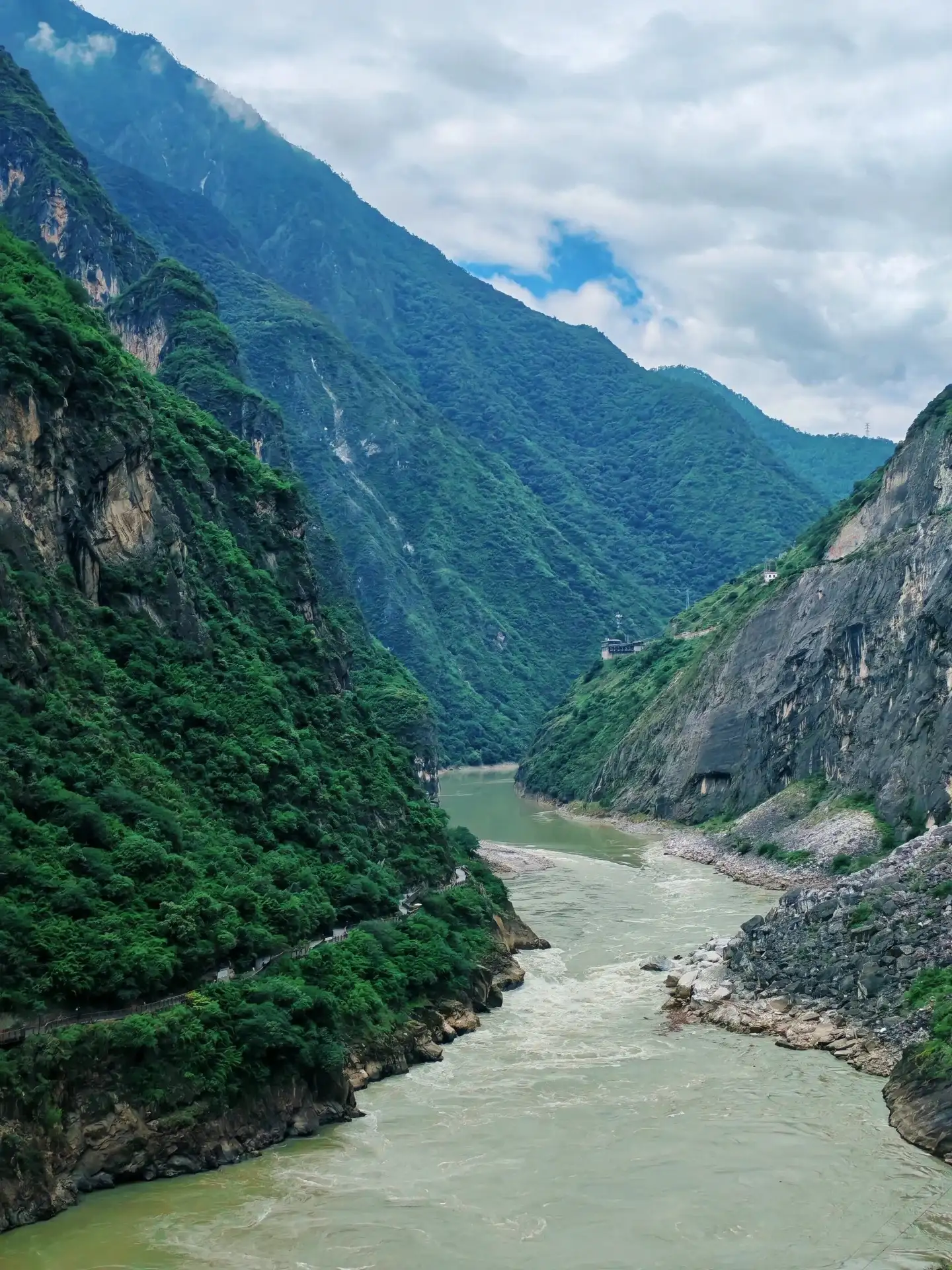
The Jinsha River flowing between the cliffs of Tiger Leaping Gorge.
First, clarify where you’re going; then discuss how far you’ll walk
When communicating with a consultant, you should specify which open area you wish to enter, where you’ll start and finish, whether you need fewer steps, and whether you plan to visit other attractions afterward. The personal time estimates in the original post should be viewed as a single experience and cannot be applied to all fellow travelers. Regarding mechanical assistance facilities, you should also verify operating schedules and ticketing arrangements in advance; do not present them as a guarantee that direct access is available at all times.
If the focus of this trip is to view the river from the open viewing areas, there’s no need to add a long-distance hike. If you truly wish to hike, you should plan a separate date, route, and logistics—rather than adding it as an afterthought to the existing seven-day itinerary. By clearly defining the scope of the activity, you can ensure a fulfilling experience without disrupting your subsequent plans to visit Pudacuo or Shangri-La.
After the river narrows, the rock cliffs dominate the scene
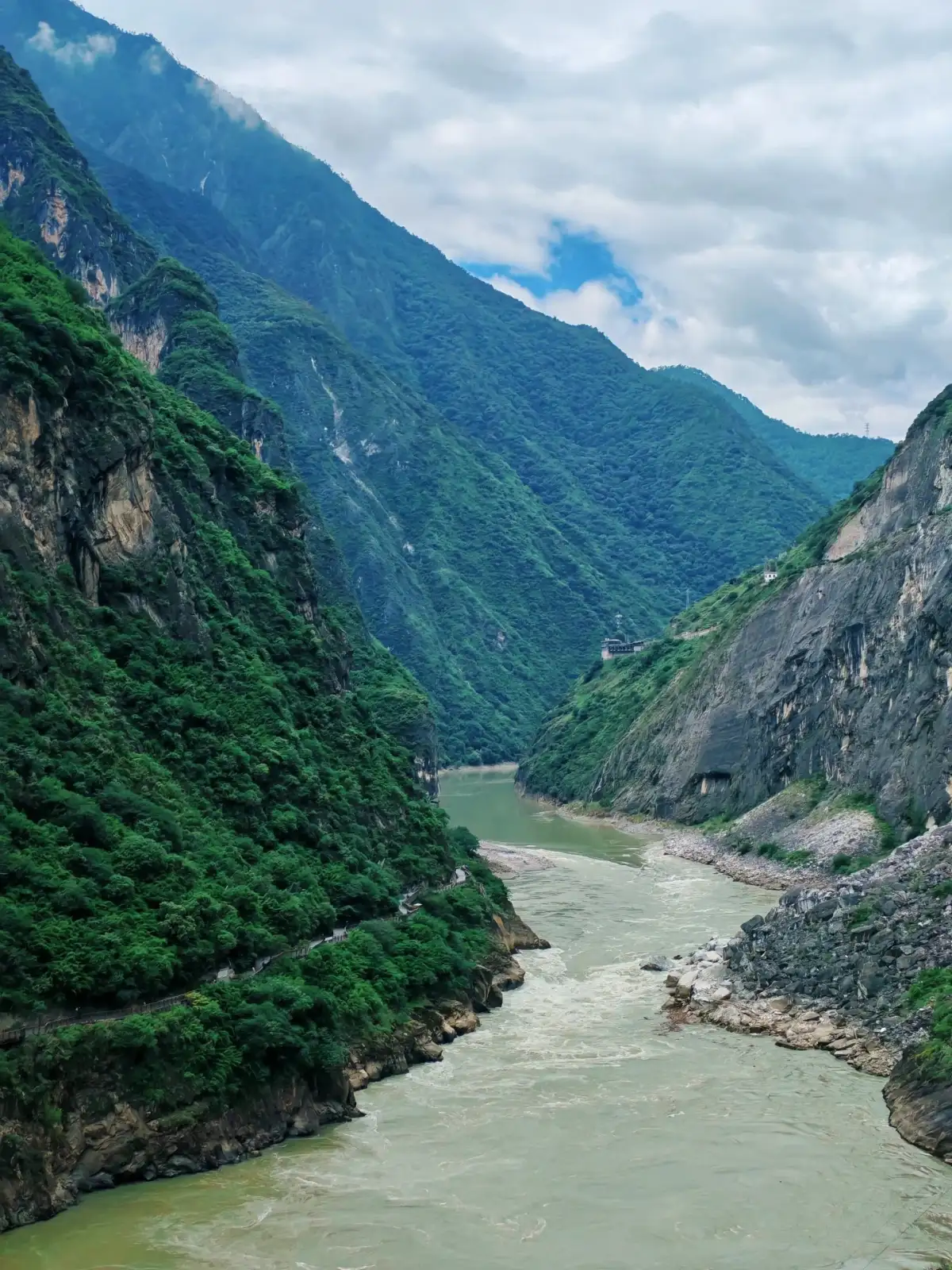
photo of the Tiger Leaping Gorge in the original post shows the mountain walls on both sides converging in the distance, with the river carving out a winding, ribbon-like space in the middle. One side of the cliff face is brighter, while the other features denser vegetation and deeper shadows, creating a clear sense of direction. By first observing this overall relationship from an open vantage point, the scale of the white waves in the foreground becomes apparent.
when photographing the water flow, the rocks serve as a very useful reference point. They allow you to see clearly how the water splits, turns, and converges, rather than just seeing a blurry white mass. On-site, you can substitute brief, continuous observation for holding your phone up for long periods, comparing how different water patterns change as they flow over the same rock. The sense of power that the gorge conveys stems precisely from the relationship between the stationary mountains and the constantly flowing water—it doesn’t need to be amplified by getting dangerously close.
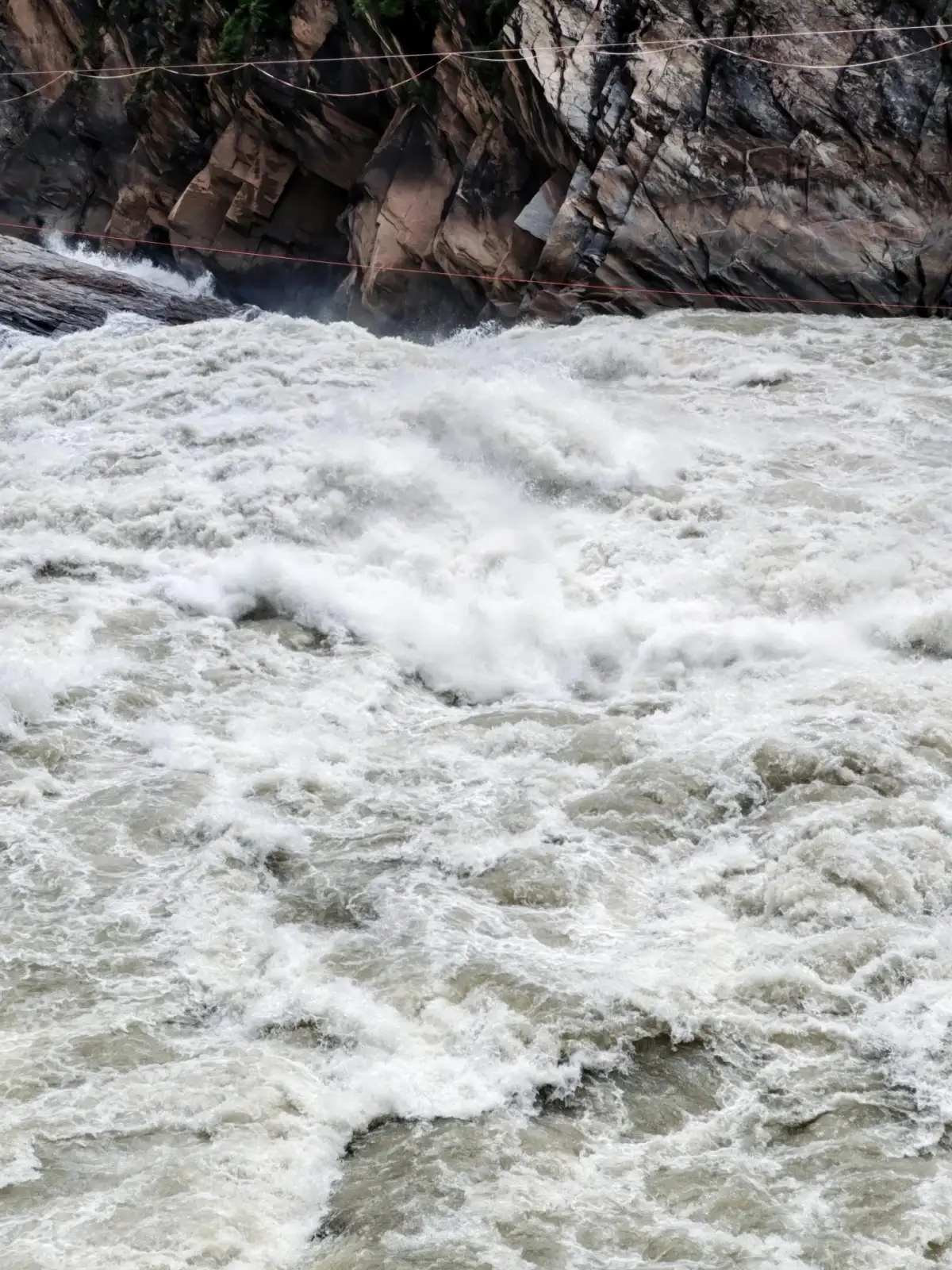
Detailed view of the river and rock face at Tiger Leaping Gorge.
The rocks and river water in the original post provide a sense of scale for the scene
Once you arrive at the gorge, start by observing the mountain cliffs on both sides, then examine the patterns and bends formed as the river flows over the rocks. Wider shots illustrate the gorge’s shape, while close-ups capture the interplay between the water and the rock surfaces. Placing these two types of photos side by side provides more information than taking a series of shots from the same angle. The color and volume of the water vary depending on conditions, so don’t use the conditions described in a single post as a benchmark for your visit.
viewing platforms and railings in the original post define the appropriate viewing area. When taking photos, do not cross the boundaries, do not extend your equipment into areas that obstruct traffic, and do not enter closed paths to avoid crowds. When it’s crowded, step back to a wider area to take in the overall view, then wait for a brief gap in the flow of people. The sound of the water and the mountains themselves are already the focal points—there’s no need to add dangerous stunts.
The fact that this day is packed with activities doesn’t mean every stop has to be crammed full
the “First Bend of the Yangtze,” Tiger Leaping Gorge, and subsequent mountainous scenic areas are connected by actual transportation routes—don’t just rely on the consecutive place names on the map. Start by identifying the stop you value most, then let the rest of the itinerary serve the overall pace. If you want to spend more time at Tiger Leaping Gorge, you should ask the consultant to verify whether subsequent stops need to be cut or adjusted, rather than constantly shortening meal times along the way.
On the way back to your accommodation, take a moment to reflect on how the landscape has changed over your few days in Yunnan: the open waters of Dali, the streets and alleys of Lijiang, and the river flowing through the canyon—each calls for a different viewing distance. Tiger Leaping Gorge offers more than just “awe”; it provides a distinct spatial transition. Knowing which section you’ve walked and why you’ve stopped here is far more rewarding than simply following every travel guide with the same name to the letter.
Relevant Routes and Reference Sources
Yunnan 7 Days, 6 Nights · View Itinerary
compiled by the Dongxing Travel Editorial Department based on route information and publicly available travel notes, intended as pre-trip reading; the accompanying images serve as landscape references from the source notes. The specific itinerary will be confirmed by the travel consultant based on your travel dates and actual conditions.