September 13, 2026 · Travel Diary
Getting to Know Donghu from a Short Stretch of Lakeshore
The map of Wuhan’s East Lake is vast. On my first visit, I tried to fit all the attractions—Tingtao, Moshan, Luoyan, and others—into a single day, but that only made the lake appear as a fleeting view through the car window. Luoyan is best suited for a standalone walk: choose your starting and ending points, then slowly make your way through the woods and along the lakeshore—without rushing to complete a full loop around East Lake.
The sense of distance from the city’s commercial streets is first evident in the view. Roofs and store signs give way to tree canopies, and the path begins to curve along the water’s edge. Before setting out, you can treat “viewing the lake” and “viewing the forest” as two simple goals; once you arrive, choose which paths to take based on the on-site guide. Rather than trying to memorize the names of all the attractions at once, this approach makes it easier to create a cohesive memory of your time by the lake.
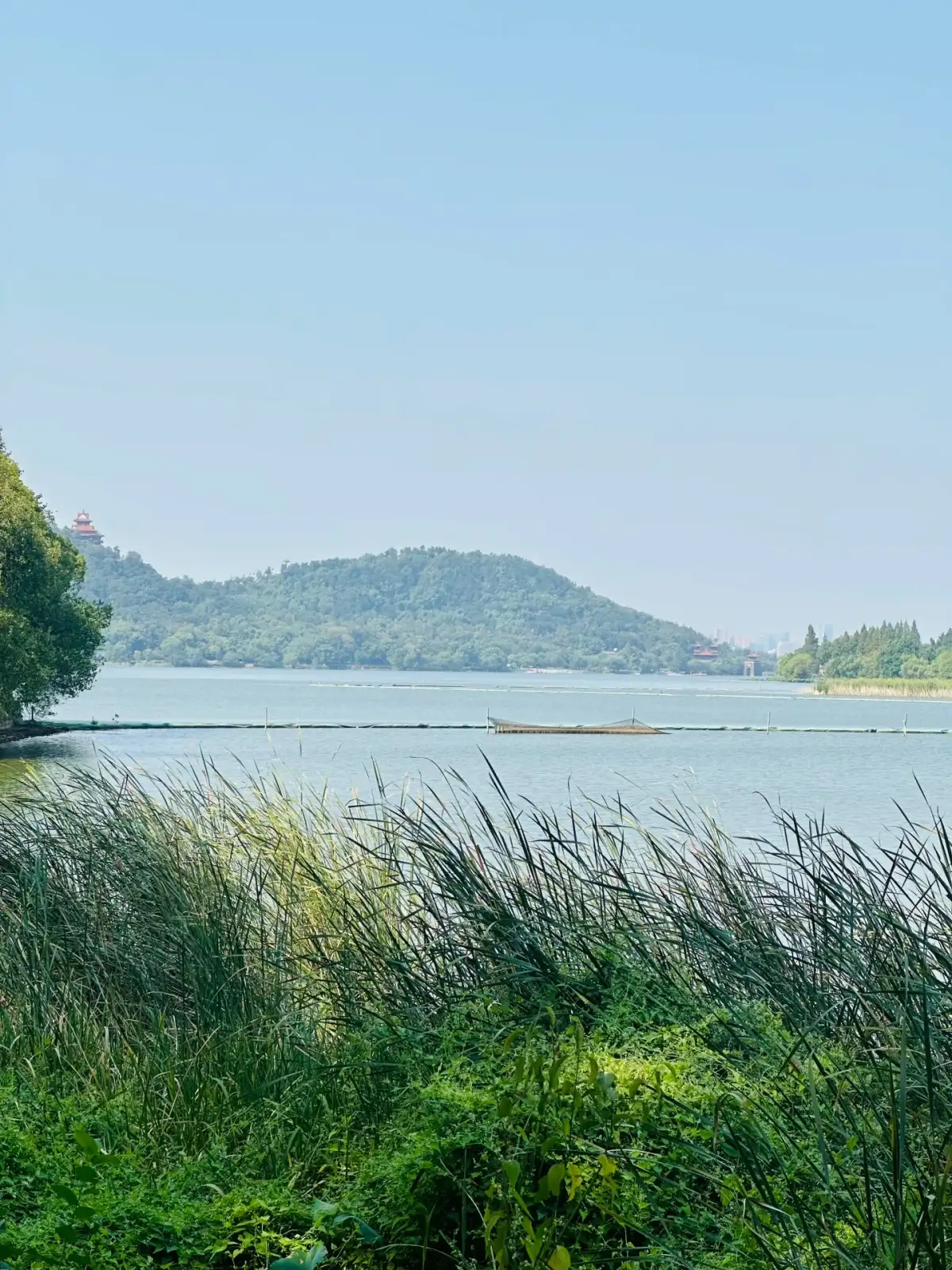
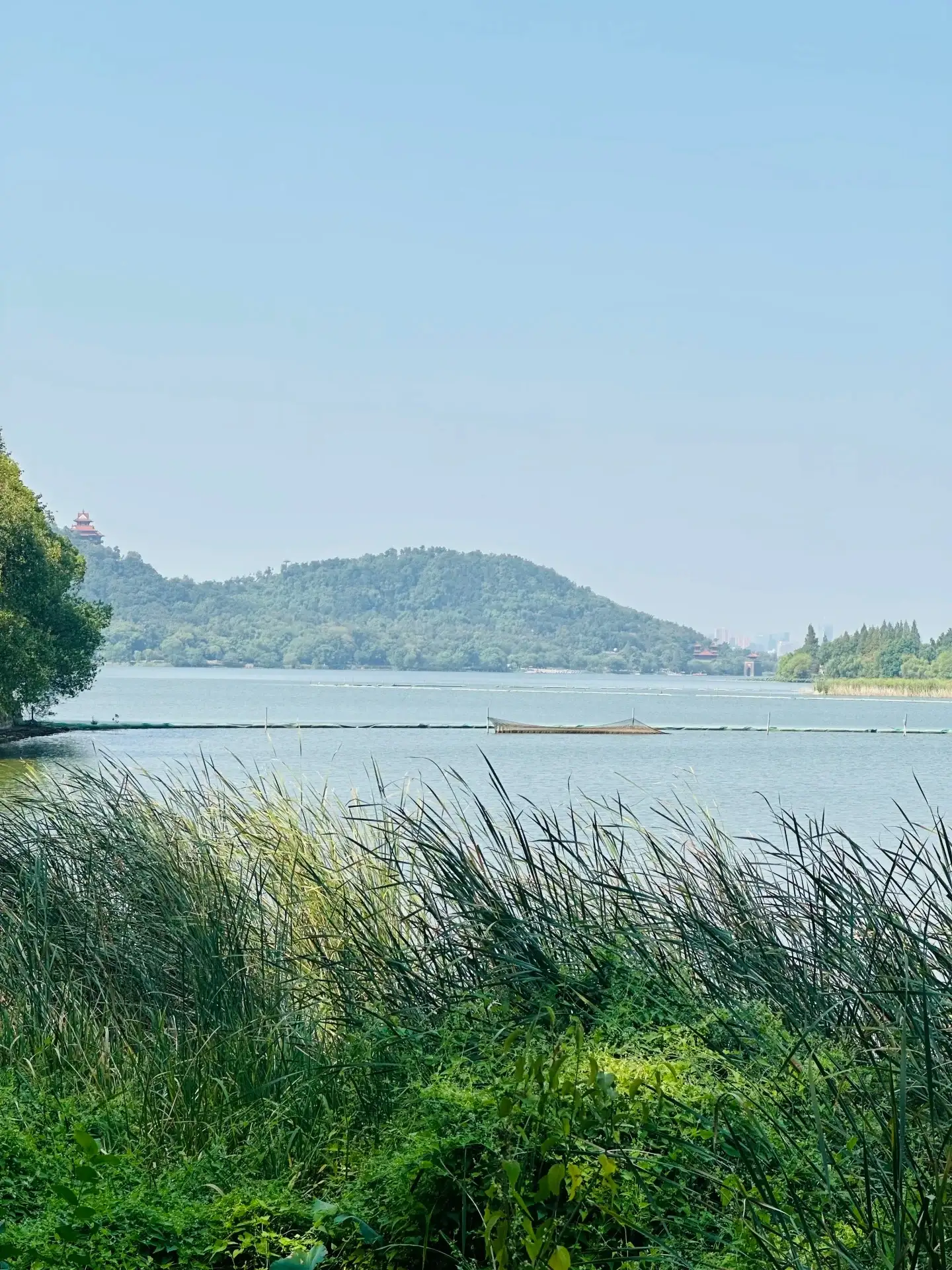
The vegetation along the Luoyan Shore of East Lake, the lake surface, and the distant mountain contours. It’s Dai Dai, Not Dai Dai
The Nine-Turn Bridge brings the water and the trees to the same level
The area around the Nine-Turn Bridge is perfect for observing how tree trunks rise straight up from the water’s surface. As your gaze follows the twists and turns of the bridge, it is constantly interrupted by the vertical trunks, only to catch glimpses of the distance again through the gaps. When the water is still, the reflections intensify these lines; when the wind blows, the reflections blur, and the boundaries of the forest become less defined.
Wuhan’s official description refers to the trees here as a metasequoia grove. When observing, focus on the roots, the water level, and the colors of the branches and leaves—rather than just the mist commonly seen in social media photos. The site may feature landscaped elements, and the mist isn’t present at all times; even without the effects seen in photos, the bridge, trees, and water themselves still form a complete landscape. Grounding your experience in what you actually see will prevent disappointment.
The forest boardwalk is the perfect place to hear your footsteps slow down
Turning from the waterside bridge path into the forest, the viewing distance shortens. The forest, which previously appeared as a single, uniform backdrop, now reveals the texture of the bark, the layers of fallen leaves, and the spots where light filters through the canopy. The boardwalk clearly defines the walking path, allowing your attention to shift from navigating the route to observing the details.
Along this stretch, take fewer panoramic shots and instead pause at two or three spots to compare how the same patch of water appears as it peeks through different gaps between tree trunks. A foreground that partially obscures the background does not hinder your perception of the surroundings; rather, it helps you grasp the depth of the forest. Dead branches and fallen leaves along the water’s edge are also part of the composition—don’t expect every natural space to look like a neatly manicured garden.
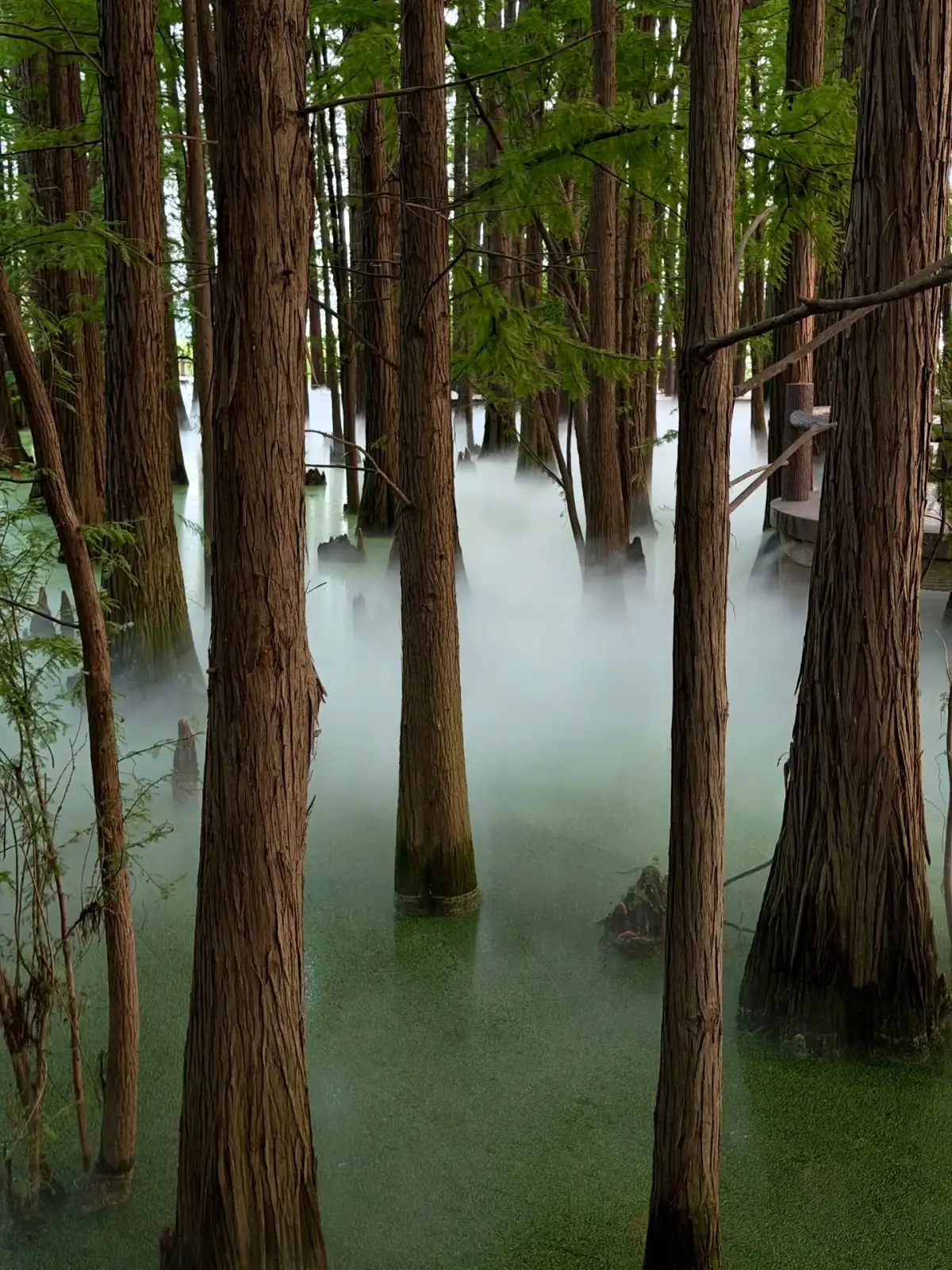
Tree trunks, mist, and wooden walkways in the Luoyan Water Forest at East Lake.
It is only when you reach an open area that the true scale of the lake becomes apparent
The forest path makes it easy to forget you’re at East Lake. Upon reaching the open lakeshore, your gaze suddenly sweeps across the water’s surface, and the distant tree line unfolds alongside the shoreline—only then do you truly appreciate the breadth of this urban lake. You might plan to stop here after a walk through the woods, allowing the transition from intimacy to expansiveness to unfold naturally.
Place names such as “Stacked Stones Viewing the Waves” and “Luzhou Ancient Ferry” serve as identifiable clues when consulting the scenic area guide, rather than mandatory stops to be visited in sequence. Simply choose a section that is open that day and suits your walking distance. If you spot a bird, treat it as a chance encounter; quietly observing from a distance better preserves the lake’s natural rhythm than getting too close, chasing after it, or feeding it just to capture a photo.
A stroll through Luo Yan should be considered separately from a bike ride along the East Lake Greenway
Seeing the greenway on a map, it’s easy to assume that cycling and sightseeing at Luoyan are one and the same. When planning your trip, however, you should separately confirm the walking trails, entrances, and exits within the scenic area, as well as the outer sections suitable for cycling. The Nine-Turn Bridge and Shuilin are best enjoyed by dismounting and taking your time; for longer greenway routes covering a wider area, you’ll need to plan separately for bike drop-off locations, the return trip, and provisions. These two experiences have their own distinct rhythms, so it’s not advisable to estimate travel time based solely on a single navigation route.
If your focus is on photography and plant observation, you can center your day’s activities within Luo Yan Park, following the on-site signs to explore the water-forest area, the forest trails, and the lakeshore. If you prefer open vistas while on the move, set aside additional time specifically for the Donghu Greenway. With this arrangement, cycling won’t become merely a means of rushing to the next photo spot, and walking won’t lose its leisurely pace simply because a long return journey lies ahead.
Before leaving, double-check the actual exit and shuttle pickup point to ensure your lakeside stroll ends naturally at the agreed-upon location. Donghu is worth exploring in stages; even if your first visit leaves you with just a single grove of trees you can clearly identify, it’s still a fulfilling journey.
Green, brown, and the water level—each has its own season
Photos of Luo Yan often feature lush green water and forests, as well as warm-toned scenes after the leaves have changed color. These two scenes belong to different seasons and weather conditions, so it’s best not to expect to see both on the same day. When planning your trip, first decide whether you want to see lush tree canopies or the structural beauty of branches and trunks in fall and winter, then make your choice based on the latest weather forecasts and scenic area updates.
Overcast skies don’t necessarily detract from this stroll. Diffused light makes it easier to distinguish tree trunks from foliage, and the reflections are less intensely glare; sunny days, on the other hand, create a sharper contrast between light and shadow within the woods. You can treat the weather as part of your observation method, rather than simply a “plus” or “minus” on a rating scale for your outing. What really needs adjusting is the length of your stay and what you wear—not the expectation that the lake will always appear the same color.
Bringing another side of Wuhan’s vibrancy to the dinner table
If you plan to visit Luo Yan in the morning, start your breakfast with a bowl of hot dry noodles or a serving of doupi. Choose a restaurant based on your accommodation and departure direction—there’s no need to cross the city just for breakfast. After spending half a day by the lake, return to a neighborhood with convenient dining options to sit down and enjoy a meal. This way, Wuhan’s lakes and the city’s culinary scene each have their own distinct space.
The best way to conclude a “Wild Geese” stroll is to leave with a few distinct images still fresh in your mind: the bridge curving around a tree trunk, fallen leaves beneath the trees, and water in the open spaces. These don’t need to be captured in a single photograph. If you’re willing to break your visit to East Lake into several distinct walks, you’ll discover that lakeside life in this city has enough layers to warrant revisiting time and again.
Further Reading and References
Compiled by the Dongxing Travel Editorial Department based on publicly available travel notes and the references listed in the article, for pre-trip reading; accompanying images are sourced from the noted travel notes.