September 4, 2026 · Travel Diary
After exploring the river, spend the rest of the day taking in the rice paddies
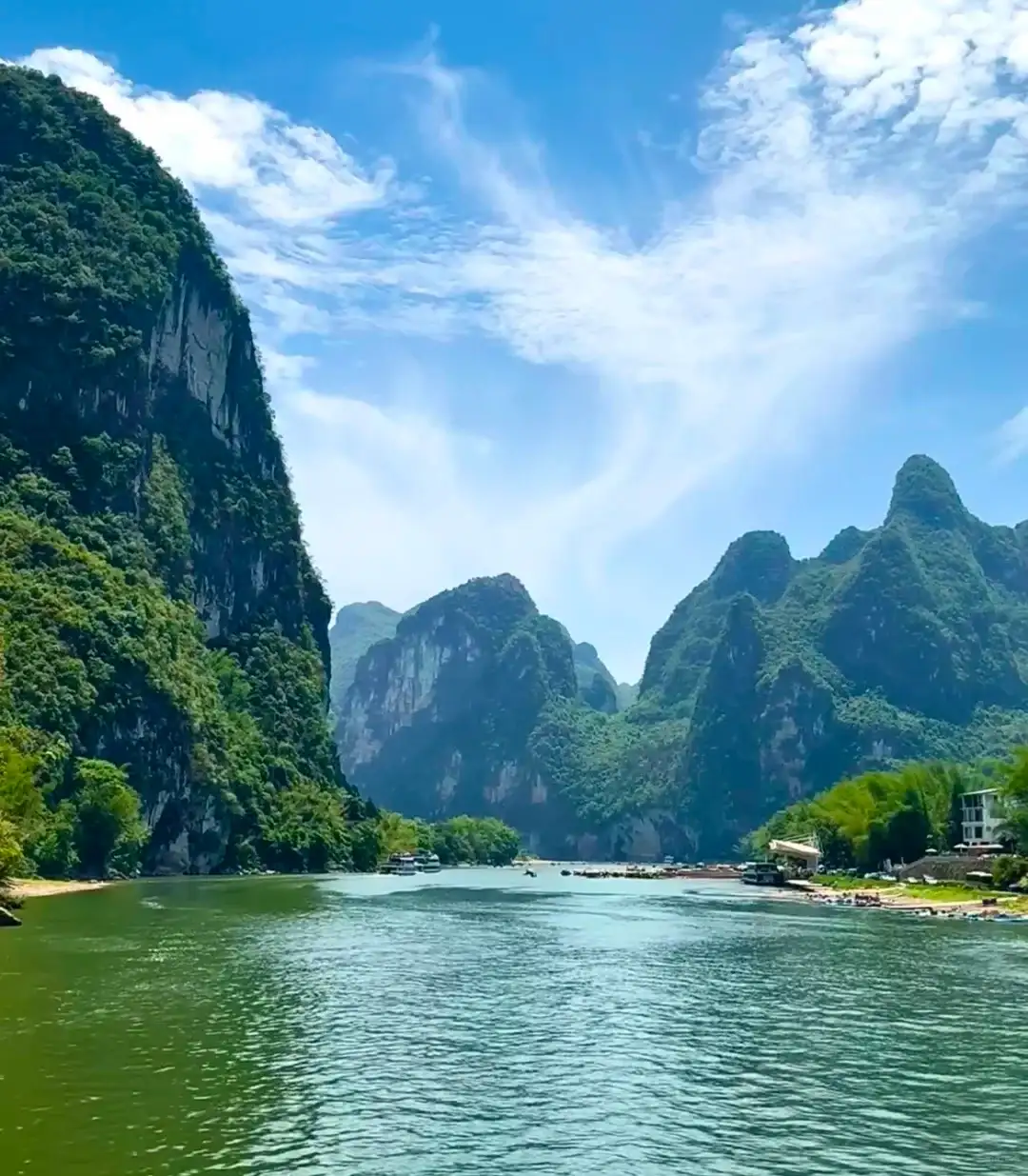
The five-day Guilin itinerary begins with the Longji Rice Terraces and city sightseeing, moves on to the Li River, and concludes with pastoral scenery before heading home. Once in Yangshuo, there’s no need to keep searching for a panoramic view that captures every single mountain peak. Lower your gaze to the field ridges, riverbanks, and village roads, and you’ll discover a different scale of life: the spaces between the mountains aren’t empty—they’re filled with fields, houses, and the paths people walk every day.
In this guide, the rural scenes of the Ten-Li Gallery will help you understand this section. The Ten-Li Gallery isn’t a self-contained attraction where you can simply walk through the gate and see everything in order; the scenery along the way and your mode of transportation will influence your actual experience. Therefore, it’s better to choose a specific, feasible activity rather than cramming a riverside stroll, a bamboo raft ride, a bike ride, and visits to several coffee shops all into the time before heading back. The final half-day of the trip is also worth taking at your own pace.
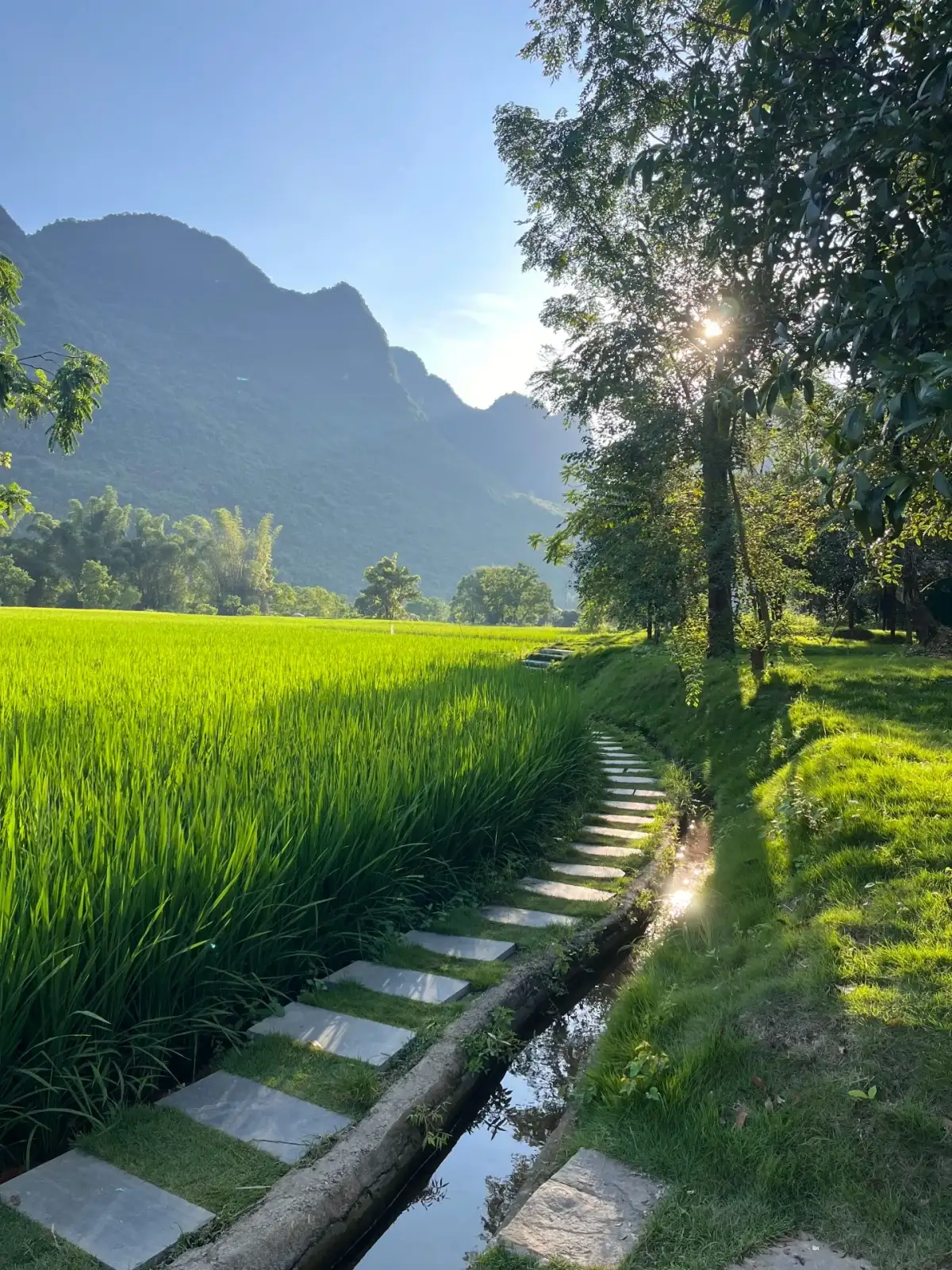
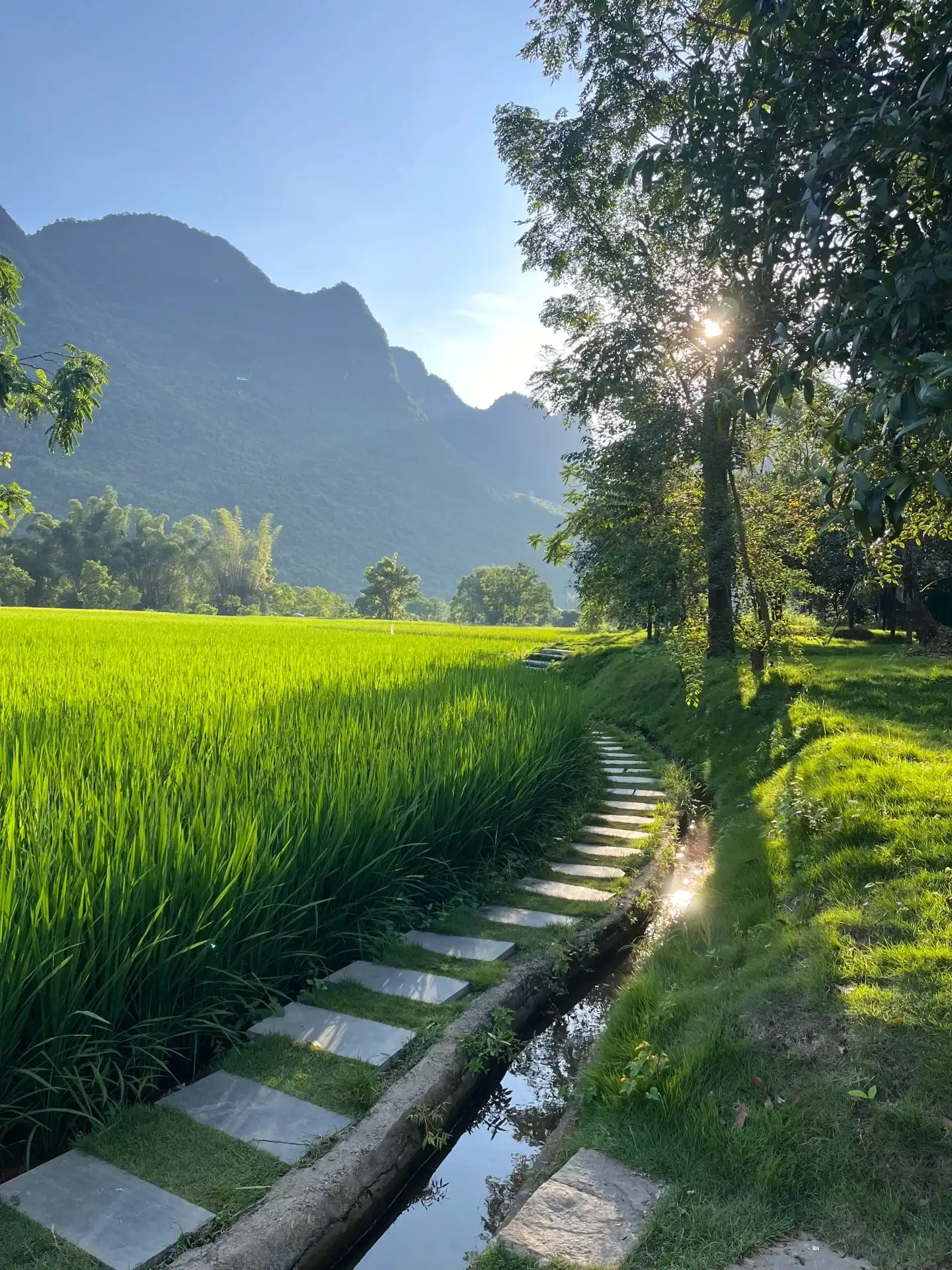
Stone-paved paths and mountain peaks beside the rice paddies in Yangshuo.
First, choose how you want to experience the mountains and rivers
If you’d like to view the riverbanks from the water, you might want to prioritize water activities on the Yulong River; however, you’ll need to confirm the specific river section, operating status, participation requirements, and pickup/drop-off locations in advance. Different piers aren’t interchangeable, and the drop-off location will also affect your next leg of transportation. Don’t assume that just because someone else’s travel notes mention a particular section, it’s suitable for all ages, all weather conditions, or your return schedule that day.
If you prefer to stop and observe at any time, short walks offer more freedom. Start by deciding on a starting point and pickup location, then watch how the peaks emerge from among the trees and fields along paths open to pedestrians—without venturing into farmland just to replicate photos from the internet. If you’re considering cycling, first check the route, the condition of your bike, and the experience level of your companions; village roads are used by regular traffic and are not necessarily dedicated bike paths. Choosing one method that suits you best allows for a deeper experience than trying every option.
A view of the gaps between the peaks through a window
In the scene from Lintian Courtyard in Yangshuo, the foreground features window frames and flowers and trees, while the distant peaks do not fill the entire sky. The gaps left between the mountains make room for fields, groves, and low-lying houses. This is closer to the typical pastoral way of viewing—starting from a small living space right beside you and gradually taking in the terrain behind it—rather than simply photographing mountain peaks.
You can continue observing even while taking a break. Though trees obscure the mountain’s base, its outline remains discernible through the canopy; dark clouds soften the peaks’ edges, yet nearby vegetation stays sharp. This interplay of near and far connects the pause of sipping a drink with the landscape as a whole. The flowers, plants, tabletops, and seasonal decorations in the shop belong to a specific photo shoot and are not part of the itinerary’s guaranteed arrangements; the true lesson to take away is to settle in, focus on one direction, and not rush off to find the next shop.
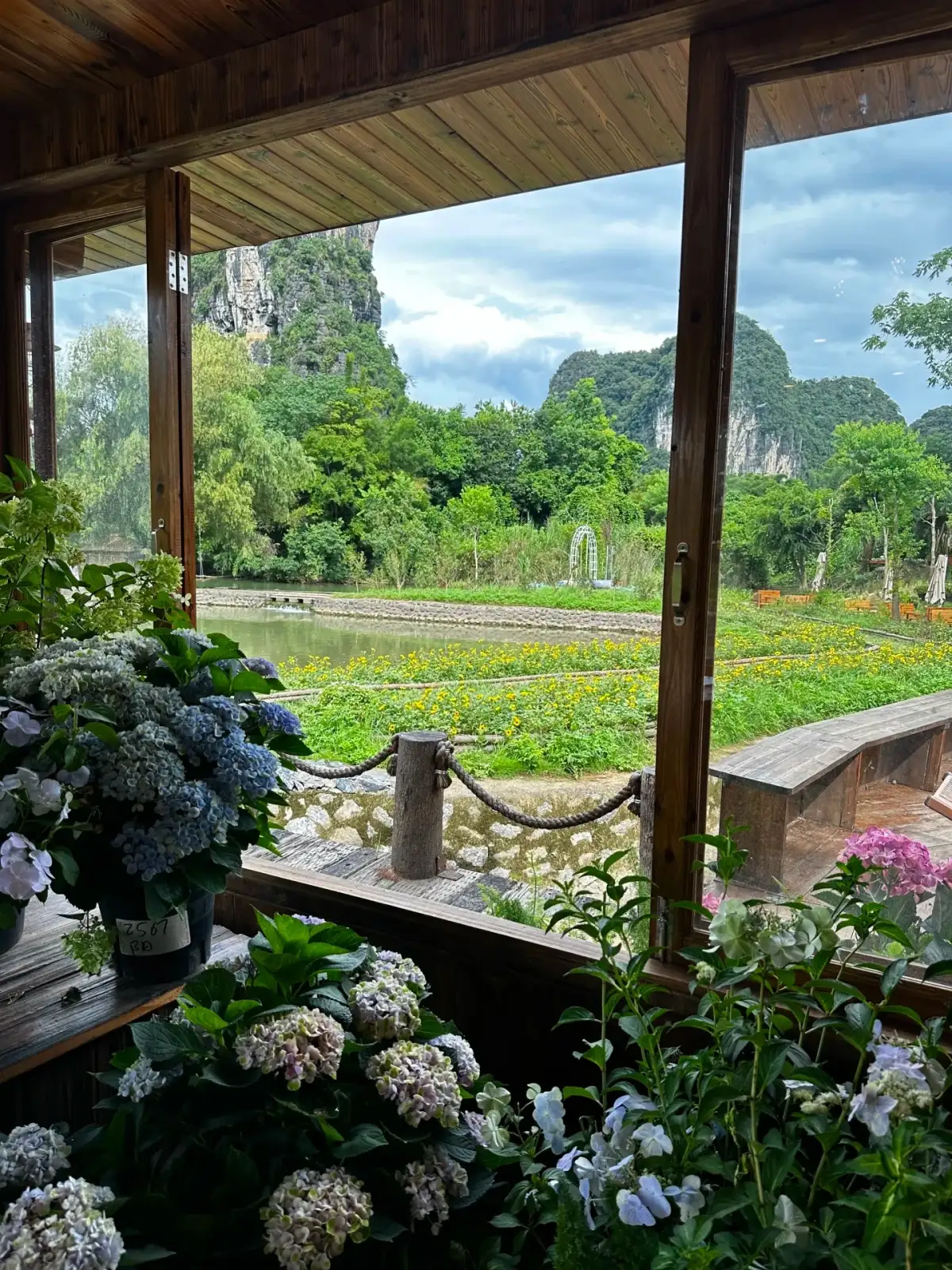
Mountains and rural scenery outside the window of a Yangshuo courtyard.
The colors of the countryside change with the crops and the seasons
The vivid green rice paddies in the photos simply reflect the condition of the fields at the time of shooting. During your trip, you may encounter crops at different stages of growth or fields that have already been harvested; the contours of the mountains also look different after rain versus on sunny days. In photography, you can focus on the interplay between mountains, fields, trees, and water as your subject—rather than chasing a single color. Even if you don’t encounter the exact scene shown in the photo, you’ll still have a clear direction for your observations.
Small courtyards and coffee shops along the way can serve as rest stops, but first check if they’re on your route, have suitable seating and restrooms, and meet the needs of your travel companions. A scenic spot doesn’t have to define the value of the entire trip. Choosing a place that’s easy to stop at—to have a drink, organize your photos, and then continue on—is a better way to create lasting memories than constantly moving around in search of the next picturesque courtyard.
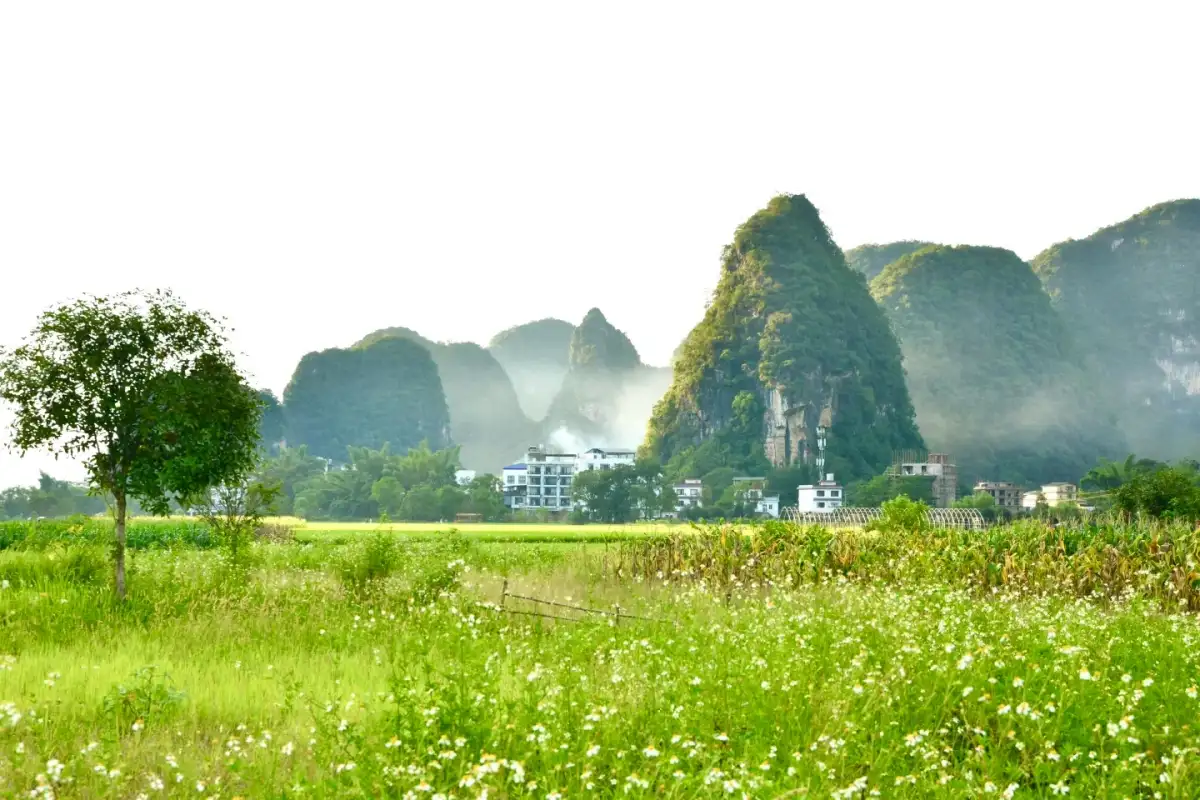
Yangshuo’s fields and distant peaks.
Plan ahead to ensure a leisurely return day
Save the rural section for the last day—the advantage is that the pace can be a bit more relaxed than the previous days, provided you’ve worked out the transportation connections clearly. Ask your travel advisor to clarify luggage storage, vehicle pickup and drop-off points, arrangements for getting to the train station or airport, and alternative plans in case of changes in weather or road conditions. This article does not substitute fixed time estimates for on-the-ground transportation decisions, nor does it recommend scheduling the final water activity immediately before your return trip.
If this is your first visit to Guilin, think of the final half-day as a wrap-up: earlier, you observed mountainous farming from Longji; then, you took in the unfolding landscape from the Li River; and finally, in Yangshuo, you’ll see the pastoral scenery nestled among the peaks. Each of these three segments offers its own unique perspective—there’s no need to chase after more sights. With time limited, set aside a stretch of riverside or village path for a walk, enjoy a leisurely meal, and then depart at your own pace. Focus your attention on the moment at hand rather than constantly checking the clock—only then will your five-day journey come to a relaxed and satisfying conclusion.
Related Itineraries and Reference Sources
Guilin 5 Days, 4 Nights · View Itinerary
Compiled by the Dongxing Travel Editorial Department based on itinerary materials and publicly available travel notes, for pre-trip reading; accompanying images are landscape references from the source notes. The specific itinerary will be confirmed by a travel consultant based on travel dates and actual conditions.