September 23, 2026 · Travel Diary
First, look at the city’s boundaries; then, seek out the courtyards
Pingyao’s appeal lies not merely in the well-preserved condition of any single building, but in the way the city walls, roads, and residential buildings continue to tell a story together. Upon arrival, you can first linger near the city gate to identify the gateways, the walls, and the direction of the streets leading into the city. The space outside the city walls is relatively open, but once you pass through the city gate, the rooftops and storefronts gradually draw closer together, marking the beginning of the ancient city’s shift in scale.
World Heritage documentation regards Pingyao as a well-preserved example of a traditional city, making special mention of its commercial and financial architecture. With this insight in mind as you enter the city, the storefronts, counters, and multi-courtyard compounds you encounter will no longer be merely “quaint” decorations: together, they once organized the work and daily life of an entire city.
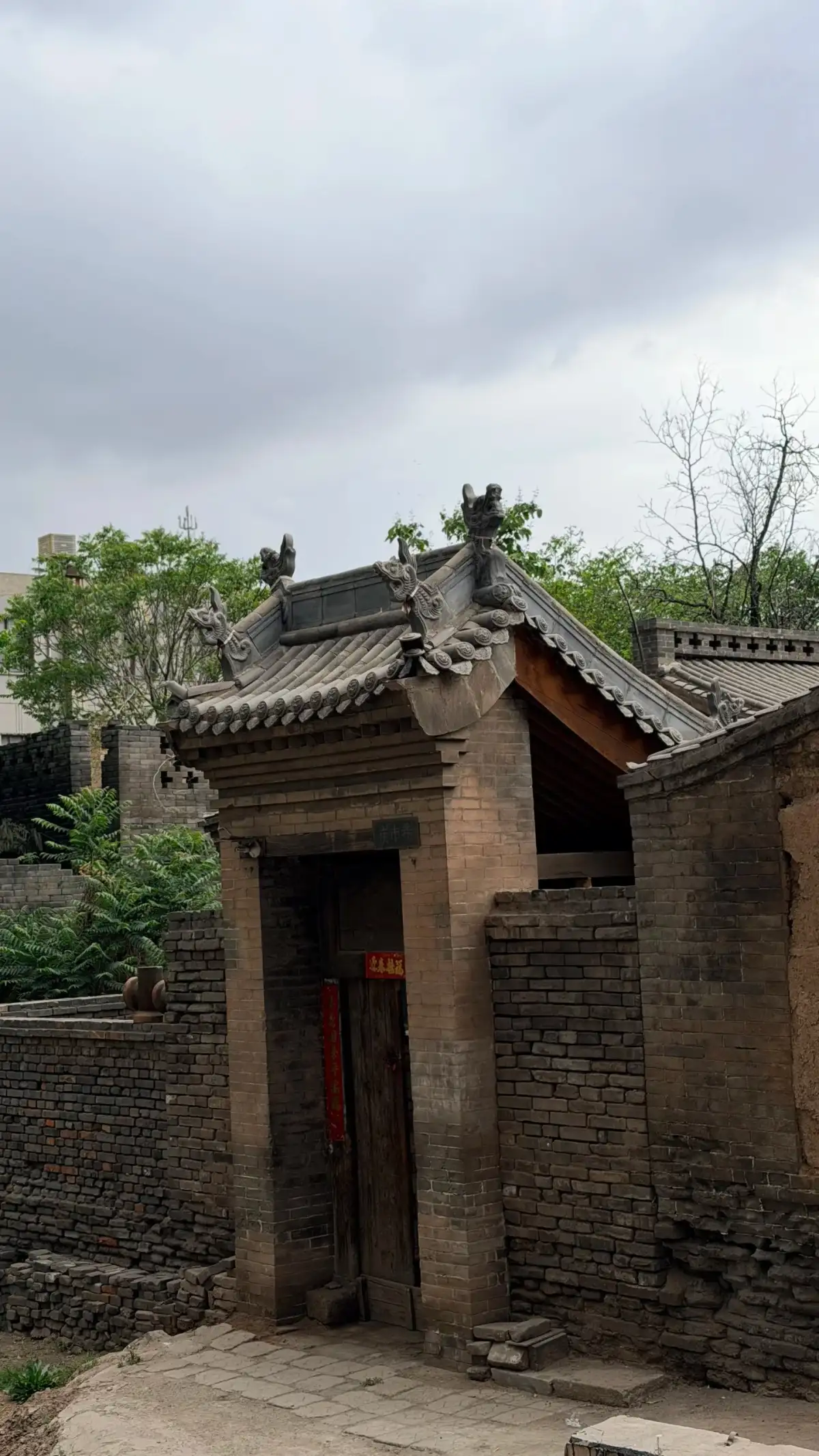
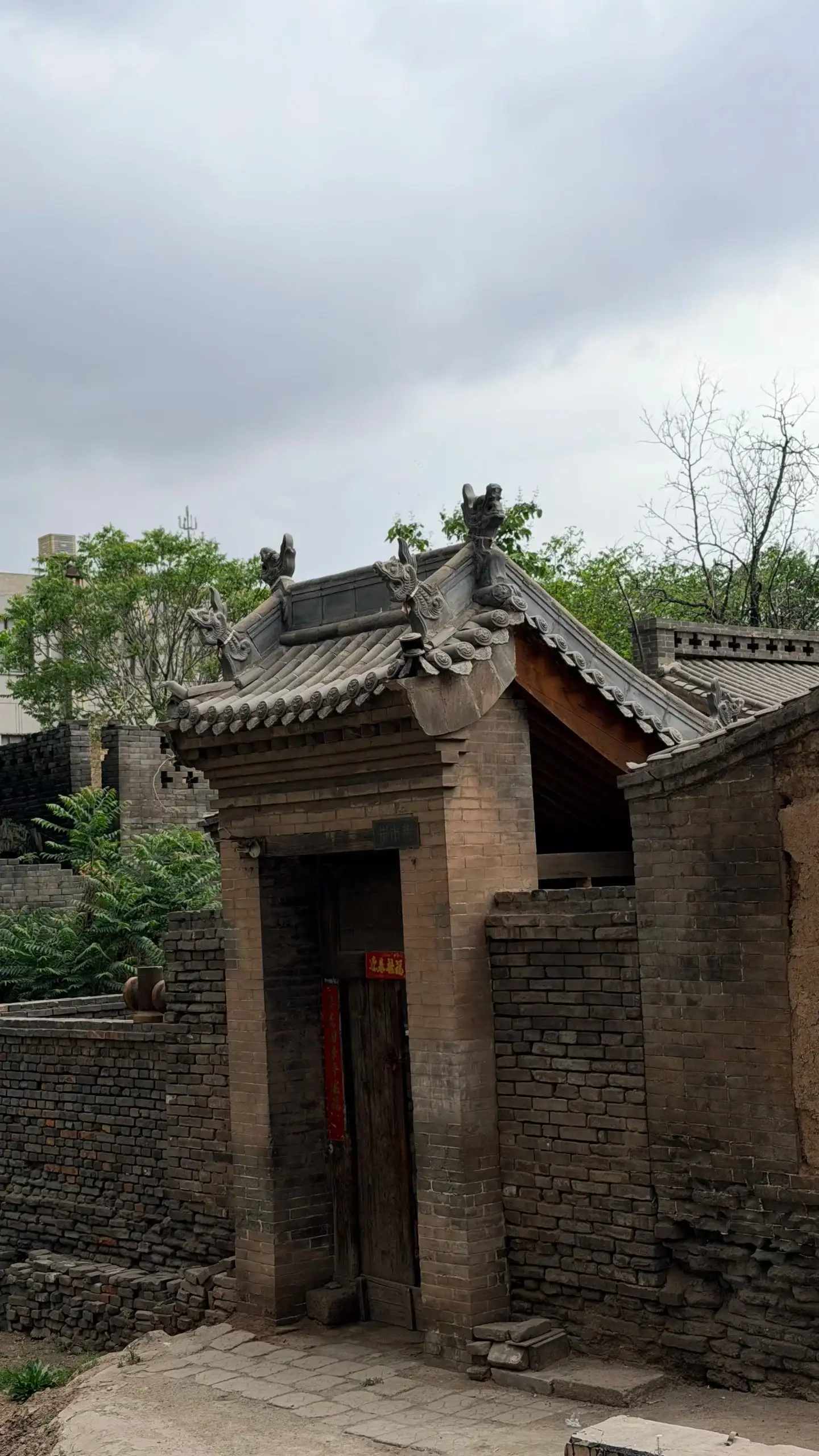
the brick walls and courtyard gates of Pingyao Ancient City.
The bustle of South Street calls for both looking up and looking back
Walking along South Street, the first things to catch your eye are the shop signs and merchandise. If you raise your gaze slightly, the continuous eaves, building facades, and street curves gradually come into view. If you stop in a spot that doesn’t obstruct traffic and look back, you’ll discover the depth of the street: the shops in the foreground are clearly visible, while the buildings in the distance are compressed into dense lines.
This main street is ideal for creating an impression of an ancient city, but it need not be the sole focus of your entire itinerary. After taking in a stretch of the bustle, turn into the nearby alleys to compare the width of storefronts, the setbacks of courtyard gates, and the materials of the walls—this will give your eyes a much-needed rest. “Strolling at a leisurely pace” means carefully observing and understanding a section of the street, rather than stopping in front of every single shop.
A money exchange house can embody the city’s history in its very structure
exhibits related to banking houses like Rishengchang, and serves as a key gateway to understanding Pingyao. When reading the informational signs, one question stands out: Before the advent of modern banks and electronic transfers, how did merchants handle financial transactions across different locations? Examining the division of labor among the teller counters, accounting offices, and courtyards in light of this question yields greater insight than simply memorizing all the dates and names at once.
From the 19th to the early 20th century, Pingyao was a major financial center in China—a fact emphasized by UNESCO in its description of the ancient city. Here, grand economic history takes shape in the size of rooms, the orientation of doors, and the layout of workspaces. When visiting, there is no need to treat every exhibit as an original artifact; original structures, restored sections, and reconstructed displays should be distinguished according to the venue’s labels.
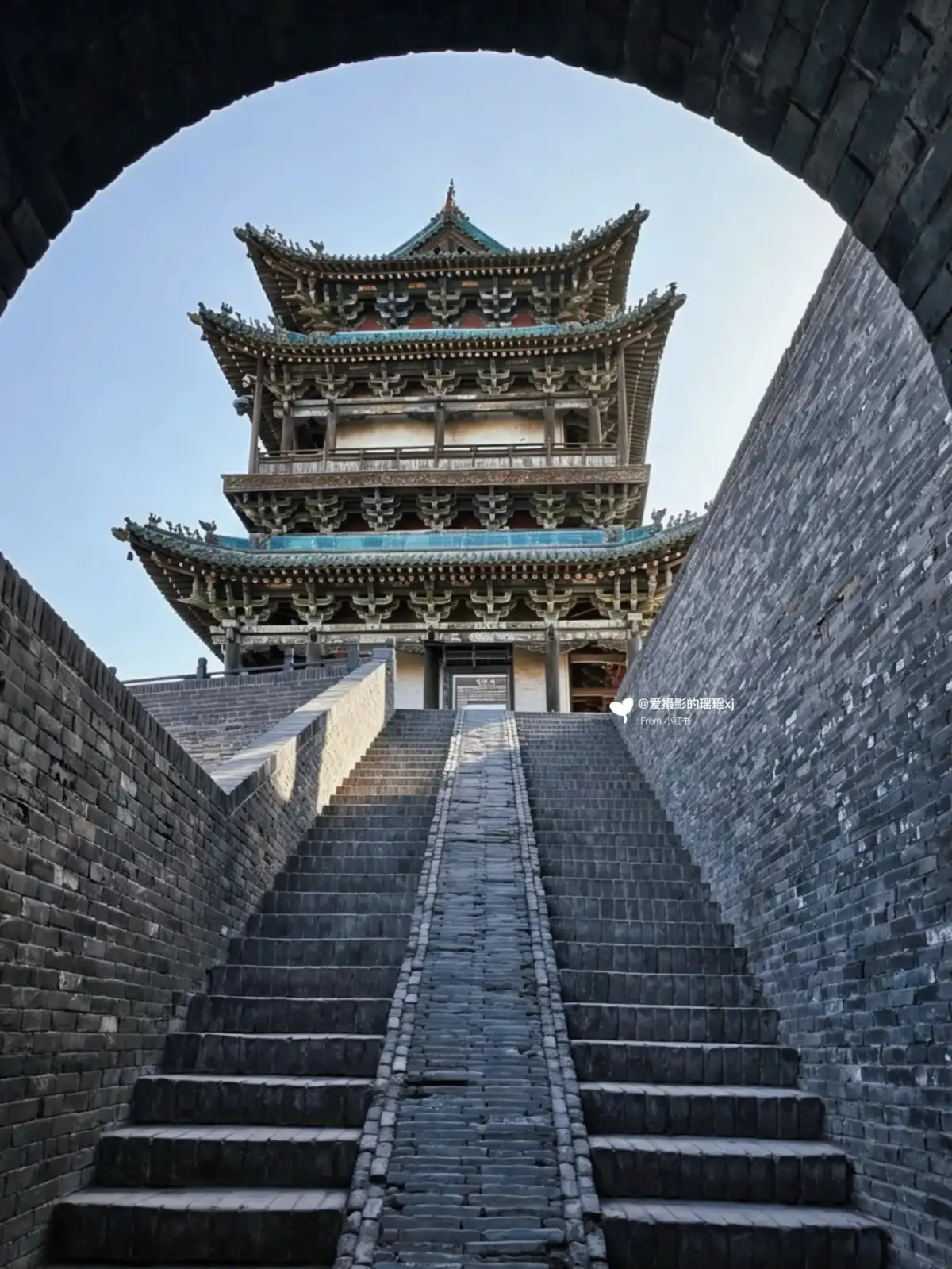
the city gate towers atop the steps of the Pingyao City Wall.
The light within the courtyards is even more serene than that on the street
As you move from the brightly lit street into a courtyard, the light is typically divided into segments by eaves and doorways. First, look at the next space within the doorframe, then observe how the buildings on either side enclose it—this often reveals the courtyard’s depth. The same bricks, wood, and stone serve different functions in different locations: some bear weight, some provide shelter, and some are used for decoration and to express status.
What’s worth observing closely is the interplay of details, rather than simply seeking out the most intricate carvings. How window panes filter the light, how steps elevate the buildings, and how drainage slopes are designed—all these are examples of everyday architectural wisdom. Even if courtyards are temporarily closed to the public, viewing the gate towers and eaves from the public streets and alleys offers plenty to see; there’s no need to search for private access points just to get the perfect shot.
money exchange houses within the ancient city and temples outside it—two distinct eras
The Pingyao World Heritage Site encompasses more than just the neighborhoods within the city walls; Shuanglin Temple and Zhenguo Temple are also integral parts of the site. Located outside the ancient city walls, they warrant setting aside separate time for travel and visits—they should not be treated on a map as just another courtyard off the street that you can casually pop into. The fact that both the city and the temples are listed as part of the World Heritage Site reminds travelers that the value of this place lies not only in its commercial and daily life but also in its enduring architecture and religious art.
If you have only one day to explore the ancient city, focus first on the inner city to understand the relationship between the banking houses and residential dwellings; if you have another day, supplement your visit with temple tours to experience different types of spaces. Courtyards also have gates, eaves, and enclosed spaces, yet the way they organize people is not necessarily the same. Merchant houses are designed to manage entry, exit, and business affairs, while temples center around rituals and statues to create focal points for viewing. Such comparisons do not require memorizing every historical date; one need only ask the same specific questions at each site: What is directly opposite the entrance? Where would one pause while walking? And how are the rooms on the sides connected? Pingyao’s layered character is precisely shaped by these differences in function; beneath the similar appearance of gray brick, it actually encompasses distinct orders of daily life.
city wall perspective, allowing you to place the street you’ve walked along back onto the map
If access to the city walls is permitted that day, you can arrange a tour to view the rooftops you were just walking beneath from a new perspective. From above, the turns in the streets become mere lines, and courtyards transform from a single gate into fully enclosed spaces. At this point, try to retrace the general direction you just walked and observe the differences in density and noise levels between the bustling commercial street and the quieter neighborhoods.
There’s no need to make the entire circuit of the city wall a must-see. Choosing a section that aligns with your route into or out of the city—or toward your lodging—is sufficient to complete the journey from the outside in, and then look back from a higher vantage point. The beauty of Pingyao lies in its relatively compact scale; passing the same spot multiple times isn’t a waste of time. As the light changes, eaves and brick joints you may have overlooked earlier might suddenly stand out.
After dinner, set aside a street where you don’t have to rush.
Pingyao’s culinary culture can be explored through its noodle dishes: local snacks like “Kaolao” and “Wantuo” each have their own distinct shapes and textures; when choosing, read the menu descriptions carefully and pair them according to your appetite. Rather than ordering every dish on the menu at once, it’s better to fully savor one noodle dish and pay attention to how the seasoning transforms the originally simple grains.
After dinner, take a short stroll down a familiar stretch of street and observe how the lighting alters the colors of the gray bricks and wooden doors. The ancient city isn’t quiet everywhere at night; bustling sections and alleys each have their own atmosphere, so choose where to linger based on the actual flow of people. By this point, Pingyao has become more than just a photo taken in front of the city gate; it has evolved into a series of interconnected memories: the city’s boundaries, the commercial spaces, the light in the courtyards, and the footsteps returning to the streets after dinner.
Further Reading and References
Pingyao Ancient City · Destination Overview
Compiled by the Eastbound Travel Editorial Department based on publicly available travel journals and the references listed in the text, for pre-trip reading; accompanying images are sourced from the noted references.