September 28, 2026 · Travel Diary
The twin towers appear first, and only then does the ancient city gradually unfold.
In Quanzhou’s Old City, the twin towers often come into full view before the temple itself. They might peek out from behind a roof eave or be fragmented by tree branches; you don’t need to see the full view every time—the way the buildings obscure one another speaks to the city’s density. On your first visit, you can use Kaiyuan Temple as a reference point and then slowly form an impression of the surrounding neighborhoods as you stroll along West Street.
The Quanzhou World Heritage Site focuses on the urban system of maritime trade during the Song and Yuan dynasties, with Kaiyuan Temple serving as a key heritage site within it. This context does not require visitors to explore every heritage site in the city one by one, but rather offers a way of interpreting the site: temples, streets, and the urban economy are not isolated from one another; together, they constitute the historical life of a port city.
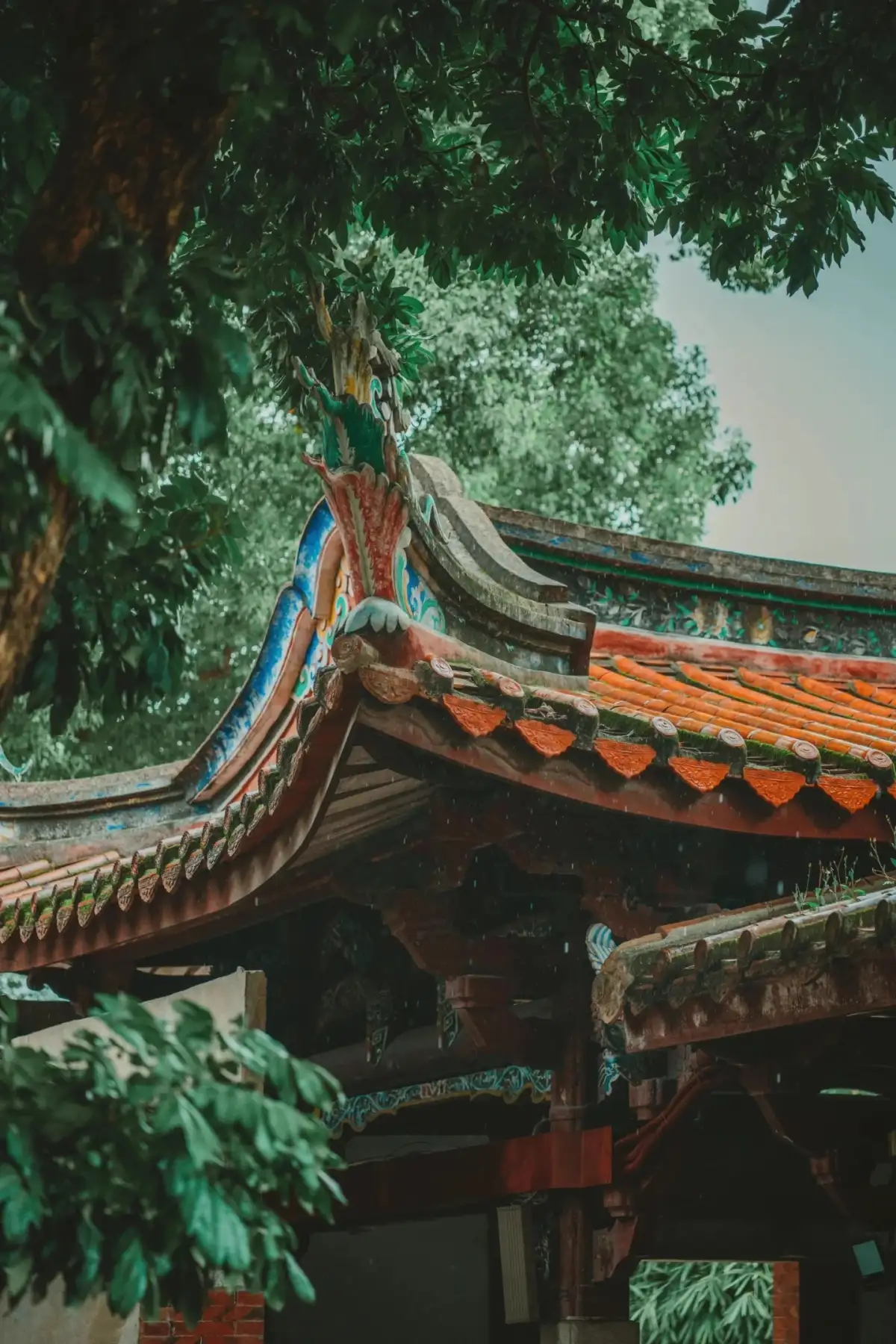
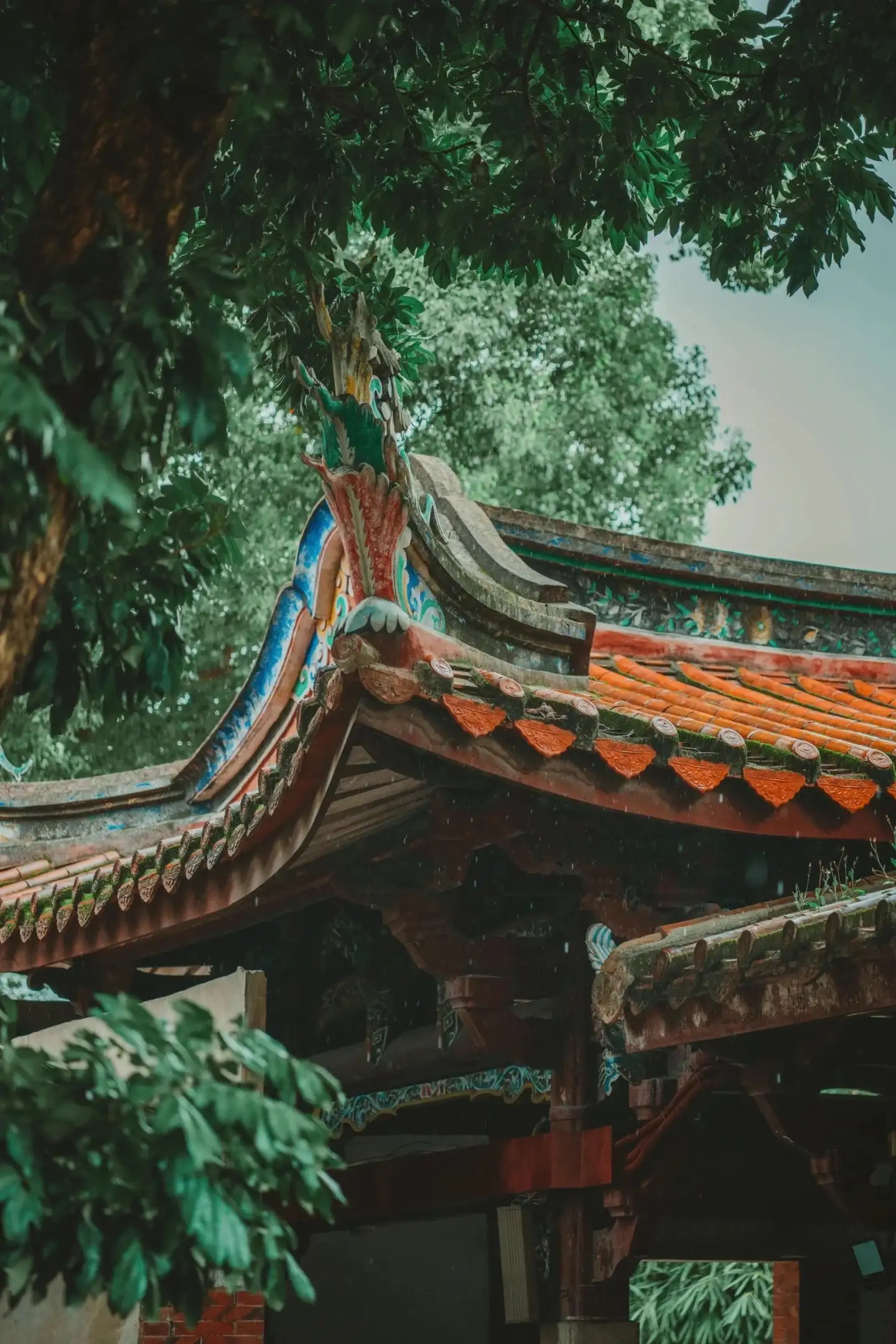
Eaves under the shade of trees at Kaiyuan Temple in Quanzhou.
Walking beneath the towers, even the stone takes on the rhythm of a pavilion
The twin towers to the east and west are the Zhen Guo Pagoda and the Ren Shou Pagoda, respectively. Viewed from a distance, the tiered eaves give the stone pagodas a distinct upward rhythm; upon closer inspection, one’s gaze shifts to the door niches, figurative reliefs, and the joints between the stone blocks. The fact that this hard material conveys an order reminiscent of wooden pavilions is a point well worth noting when observing them.
There’s no need to rush to memorize the names of all the statues; instead, start by comparing the repetitions and variations between different levels: where horizontal lines are emphasized, where vertical directions stand out, and how the figure carvings are arranged within the overall structure. If no explanatory materials are available, describe what you see to the extent that it can be verified—do not guess identities based on clothing, nor treat folk tales as definitive conclusions.
The open spaces within the temple grounds allow you to slow down and take in the view.
Entering the temple from West Street, your attention shifts from the shops and signs to the trees, courtyards, and halls. The open spaces between the buildings are crucial; they allow the twin pagodas to be viewed from a distance and let visitors gradually approach the finer details. Rather than rushing to find the “perfect” photo spot right at the entrance, take a walk along the designated paths first to experience how distance alters the architectural presence.
The light under tree shade and eaves is usually softer than in open areas. On sunny days, you can observe the interplay of light and shadow, while overcast or rainy weather is ideal for appreciating the colors of the walls and stonework. Religious activities and routine maintenance still take place on-site, so it’s possible to observe the architecture while respecting the space’s current use; by lingering quietly, both your photographs and your experience will be more vivid.
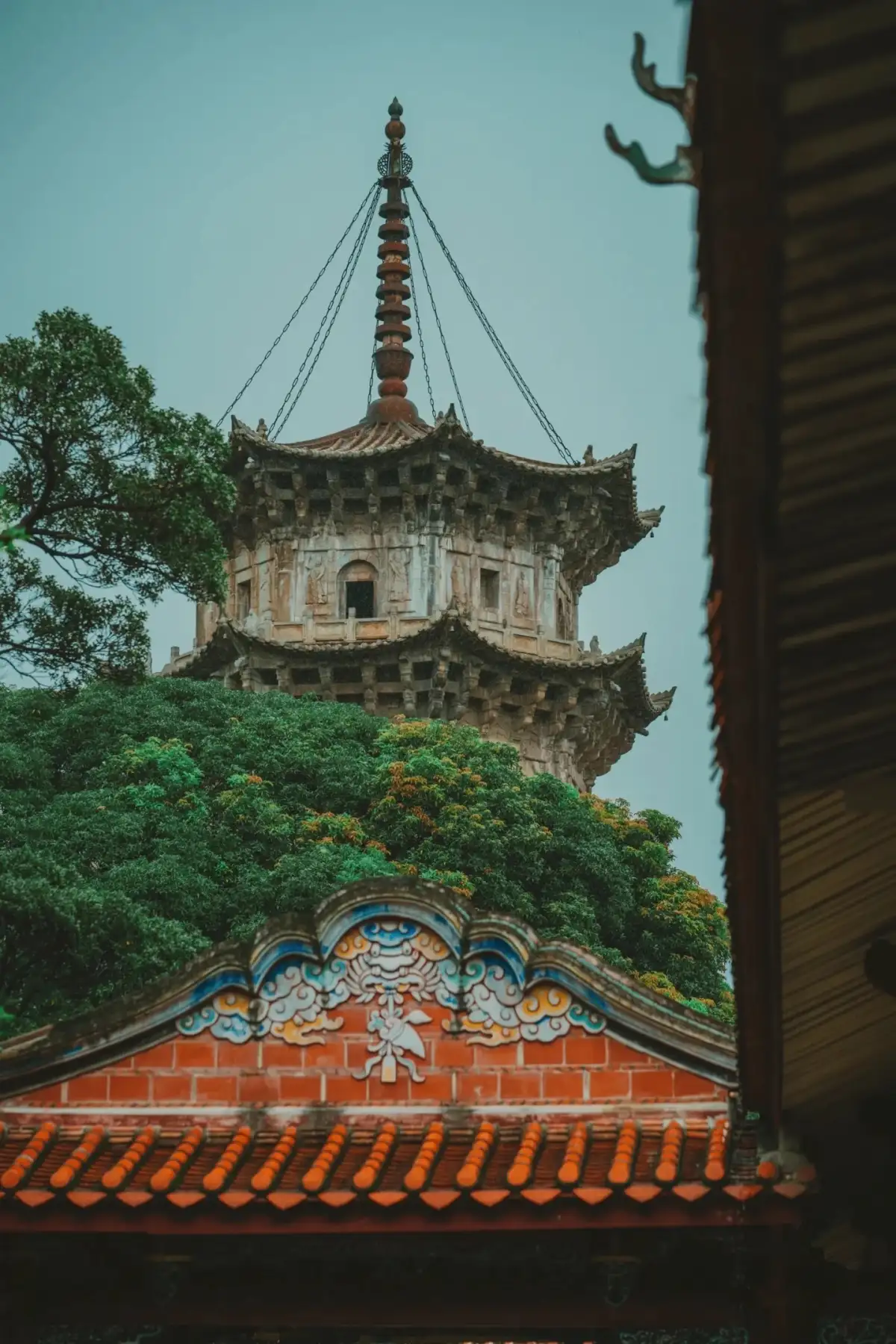
The stone pagodas of Kaiyuan Temple and the roof ridges in the foreground.
Returning from the stone pagodas to West Street, the rooftops bring the scale back down to earth
Leaving the temple and walking down West Street, the towering twin pagodas you saw earlier may now recede behind the rooftops. This shift is worth a glance back: the temple provides a stable silhouette, while the street is pieced together shop by shop and house by house. There is no clear-cut boundary between the two; within a few minutes’ walk, their relative positions are constantly shifting.
West Street is ideal for observing the depth of the facades and the connections between the eaves, as well as for viewing the main street from the quieter side alleys. Some photos were taken from the upper floors of commercial establishments; since the viewing angles and access conditions may vary, these should not be treated as public observation decks. You can still observe the relationship between the twin pagodas and the old town from locations where you can walk and linger freely—there’s no need to plan your entire itinerary around a single window.
Why do stone pagodas resemble wooden pavilions? The answer lies beneath the eaves of each level.
The East Tower of Kaiyuan Temple is called the Zhen Guo Tower, and the West Tower is called the Ren Shou Tower. According to official information from Quanzhou City, the existing twin towers are octagonal, five-story stone towers from the Southern Song Dynasty modeled after wooden structures. This “imitation of wood” is well worth noting when visiting the site: while the stone bears the structural load, the exterior retains the rhythm of a wooden pavilion—with layers rising upward and eaves extending outward. From a distance, it’s easy to focus solely on the height of the tower; but upon closer inspection, it is the transitions between the layers that create the rich interplay of lines.
The arrangement of doors and niches on each level can also serve as a guide for observation. As you walk around the towers, the adjacent facades are not merely repetitions; doorways, niche figures, and carvings distinguish each side. There’s no need to identify every detail—simply focus on one level clearly, then shift your gaze back to the overall silhouette emerging from behind the treetops. In this way, the stone pagodas reveal both their intricate details and their monumental scale. The temple complex also includes structures such as the Great Buddha Hall, where the images of celestial beings between the beams offer another perspective: while the pagoda’s lines emphasize an upward movement, the architectural elements inside the hall draw the eye toward the space beneath the roof. When entering the open halls, observe how the columns and beam frameworks work together to define the space; here, stone, wood, and light each have their own distinct roles.
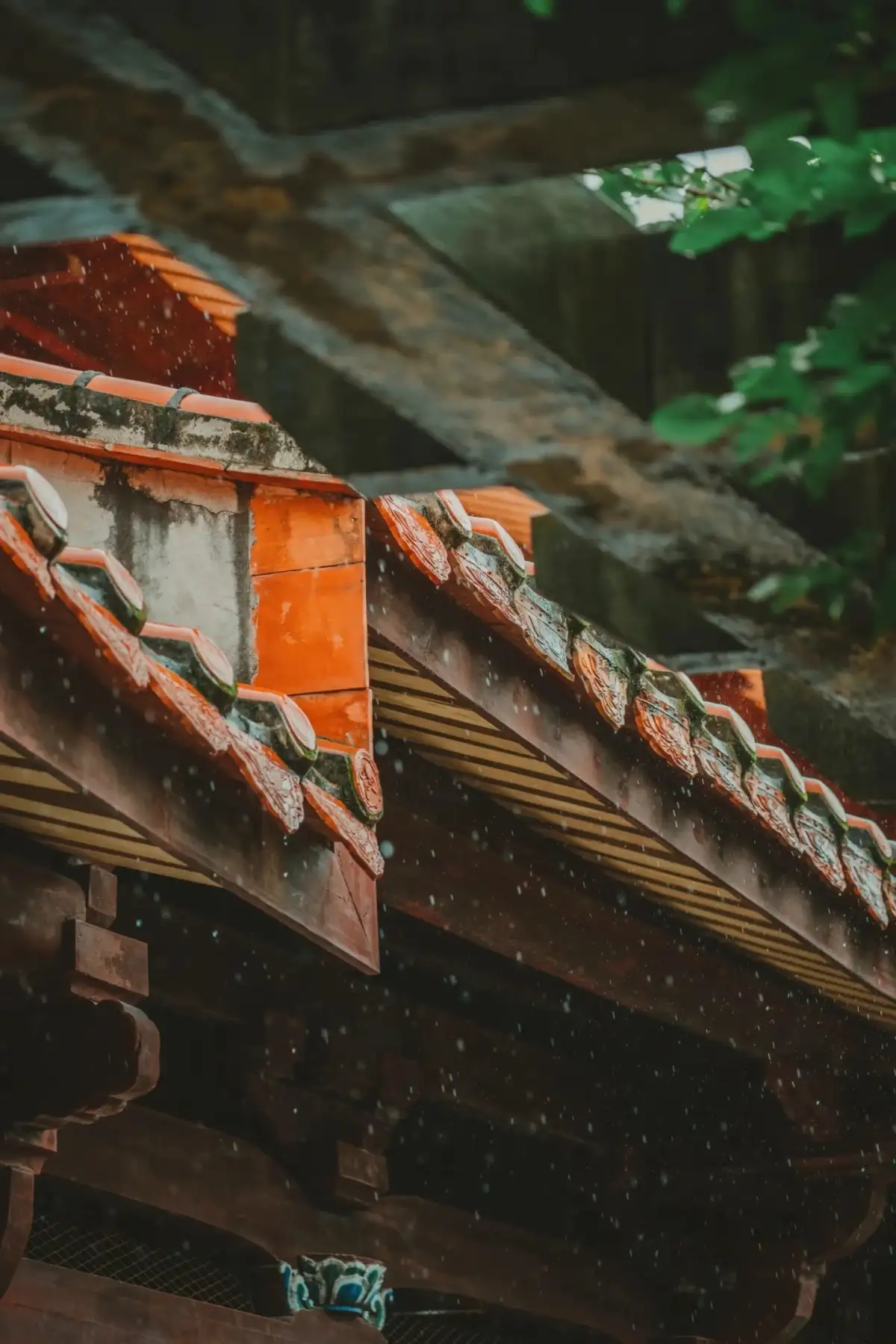
Detailed eaves of Kaiyuan Temple in the rain.
Street food gives this street a different way of experiencing it
Quanzhou has many snack names; you can start by getting to know the textures and flavor combinations through common dishes like mianxianhu or runbingcai. The soft, delicate texture of mianxianhu and the way the runbing wrapper encloses various fillings are both perfect for savoring slowly while strolling. Ingredients may vary by shop, so it’s more helpful to ask for specifics when ordering than to mechanically choose based on rankings.
A meal can also serve as a time to reflect on your observations: what distinctions do the red walls, gray stones, and rooftops you just saw leave in your mind? The culture of travel isn’t limited to stone inscriptions; it also exists in how shops and streets connect, and how food is prepared and shared. You can savor and observe, but there’s no need to attach unverified, century-old stories to every bowl of street food.
Take a moment to look back and take in the layers of the ancient city.
Even if you set aside just one day for Kaiyuan Temple and West Street, it’s enough to form a complete snapshot of Quanzhou. Start by examining the stone carvings at the base of the towers, then wander into the alleys, and finally look back at the twin towers from the street—this itinerary offers a journey of gradually shifting perspectives. If you wish to delve deeper into the history of maritime trade, set aside additional time to visit relevant exhibition halls; this way, you won’t have to squeeze in in-depth exploration between rushed visits.
What makes Quanzhou so captivating is precisely the juxtaposition of historic sites and city streets. The lines on the towers may be very precise, yet the heights of the eaves next to them vary; there are open spaces within the temple grounds, while the streets resume their dense layout. By preserving these contrasts, Quanzhou reveals its distinct character: it is a city that can be explored on foot, not merely a pair of famous towers captured in photographs.
Further Reading and References
Compiled by the Dongxing Travel Editorial Department based on publicly available travel notes and the references listed in the text, for pre-trip reading; accompanying images are sourced from the noted references.
UNESCO: Quanzhou, the World Maritime Trade Center of Song and Yuan China
Quanzhou Municipal Government: The tallest pair of stone pagodas still standing in China