
Water and buildings sharing the slope
In daylight, study the overall positions of waterfall, rock and buildings before looking at eaves on different levels. The meeting of natural terrain and streets gives Furong its distinct setting.
Furong Town's distinctive feature is the close relationship between waterfall and buildings on sloping ground. It can join a Zhangjiajie or Xiangxi journey, with a focused half-day to day for terrain or an overnight stay to separate daytime and evening. Attractive photographs do not justify squeezing Furong and another town such as Fenghuang into the same night. After earlier mountain walking, account for energy and luggage; the town also has steps and height changes. Decide whether overall terrain, lanes or illuminated falling water matter most, then shape arrival and departure around that priority. A smaller plan can still be complete.
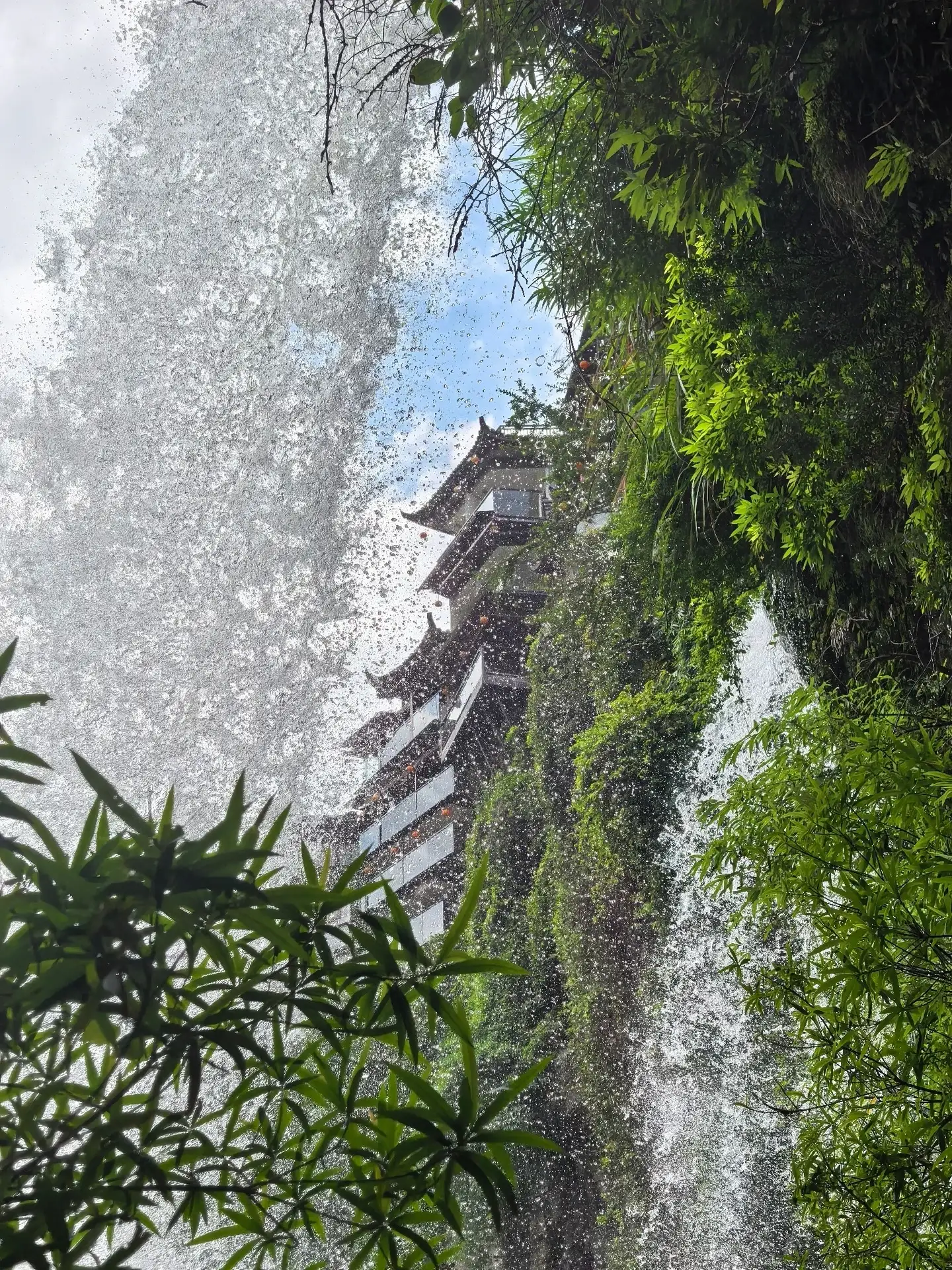
Daylight clarifies where buildings, rock faces and waterfall meet. Begin with the whole from an open viewpoint, then see how water falls through levels and how eaves connect across height differences. Closer routes may include slopes, steps and wet stretches, so choose according to current access and your companions rather than covering every angle. The two matched photographs show plants and eaves beside falling water, and illuminated water and rock at night. They are partial views, not a complete town panorama. For a wider perspective, have your adviser check accessible public positions instead of searching for a private window from one picture.
Close waterfall images can obscure access conditions. A passage through falling water, beside the stream or at a lower level must follow on-site management. Particularly after rain, someone else's past visit does not establish present permission. Grip, rain protection and free hands matter more than styling, while equipment should not obstruct others. Travellers reducing walking can focus on one comprehensive view, making other angles optional. Flow and spray change with weather and season, so a maximum-flow promotional image is not a daily promise. An authorised upper or side position can explain water and buildings without risky close-up access.
For illumination, settle luggage and eat along the route before returning to a familiar viewing area. This is more comfortable than waiting continuously at one camera spot. Dusk still reveals buildings and slopes together; night lighting differentiates water and rock. Both have content, and neither photograph is the required answer. Light, activities and access times vary with operation, without a particular minute's colour guaranteed. Do not cross barriers to fill the frame with water. Keep photography pauses short where crowded. A daylight-only or evening-only visit can still be meaningful; two sets of photographs do not require repeating every stair.
For lodging, ask about vehicle access, luggage carrying, stairs, noise and dining distance. A waterfall-view room offers perspective, but water sound, evening conditions and walking access may affect sleep. Do not choose from the window photograph alone. Confirm passport and reception arrangements for international guests. Without overnight lodging, establish departure, luggage retrieval and vehicle meeting points before continuing to Zhangjiajie, Fenghuang or elsewhere. A railway station sharing the town name is not the attraction entrance, so check the final transfer after selecting services. Choose meals by spice, ingredients and allergies rather than treating one posted bill as a standard price.
Flow, vegetation and surfaces change with weather. Check announcements and actual conditions once dates are set. Warmer periods need allowance for sun and rain; cooler periods call for layers. Evening walks need lighting and return buffers. The place combines scenic operation with residents and businesses. Do not demand an empty frame from passers-by or enter private spaces. Use formal sources for history and local accounts rather than inventing a hosted encounter or fixed traditional performance. This guide gives no unchecked prices or compulsory night-view promises. Select one or two feasible stretches of daytime terrain, dusk relationships or lighting to create a clear Xiangxi rhythm.
In daylight, study the overall positions of waterfall, rock and buildings before looking at eaves on different levels. The meeting of natural terrain and streets gives Furong its distinct setting.
Two short visits can offer different readings of the same waterfall: terrain in daylight and water-and-rock contrasts in the evening. An overnight stay places both naturally around meals and rest.
Separate Furong from surrounding Zhangjiajie or western Hunan activities, leaving time for streets, dinner and accommodation. One main viewing theme and a gentle walk can make a complete stop.
Notice the plants and eaves beside the waterfall, beginning with nearby leaves before looking between the falling water and buildings. Mist, rock and roofs offer contrasting textures, layered by the slope. Start with this detail, then use a wider view to understand the town’s terrain.

After dark, see how lighting brings out the falling water and rock face in different ways. Look up to the neighbouring buildings so the waterfall remains part of the hillside town. A short visit after dinner gives a familiar daytime position a different spatial character.
Arrive in Furong and settle luggage → view the waterfall terrain and streets by day → dine → add a short evening visit if staying → continue through Zhangjiajie or western Hunan the next day.
Settle your luggage, then view the waterfall and buildings from an open viewpoint. Choose a street section suited to your energy, followed by a meal and the agreed departure. Keep the focus on water, rock and hillside architecture.
Study the waterfall terrain in the afternoon, then rest and dine near your accommodation before a short evening walk on a familiar route. The next morning, prepare luggage and add a nearby view if departure time allows before continuing through Zhangjiajie or western Hunan.
Confirm the final transfer from your station or road arrival point to the town and hotel, checking stairs, luggage help and vehicle meeting points. Agree on bag collection and pickup before a same-day departure.
Wear shoes with grip and prepare rain protection and dry equipment storage, adjusting after rain to surfaces and management arrangements. If fewer steps are preferred, choose one broad viewpoint and keep other angles optional.
Ask about insulation, waterfall sound and nearby evening activity before choosing a room for its view. Fit lighting observation around actual access, explain spice and dietary needs at dinner, and allow rest before the next transfer.

Start with your interests, available time and the right combination of places.

Plan by region and interest, rather than choosing one season for the whole country.

Meet local life with curiosity, consideration and an open mind.
YOUR JOURNEY
Share the places and timing you have in mind, then discuss a suitable route with a guide or travel adviser. Services and availability need confirmation.
Contact a guide about this place
FROM INSPIRATION TO YOUR JOURNEY
A place you dream of. A journey shaped around you.
Plan my trip