
Nanhou Street as a starting point
Use Nanhou Street for orientation, then choose nearby lanes according to your interests. Link a former residence and a courtyard visit with small shops and a meal along the way.
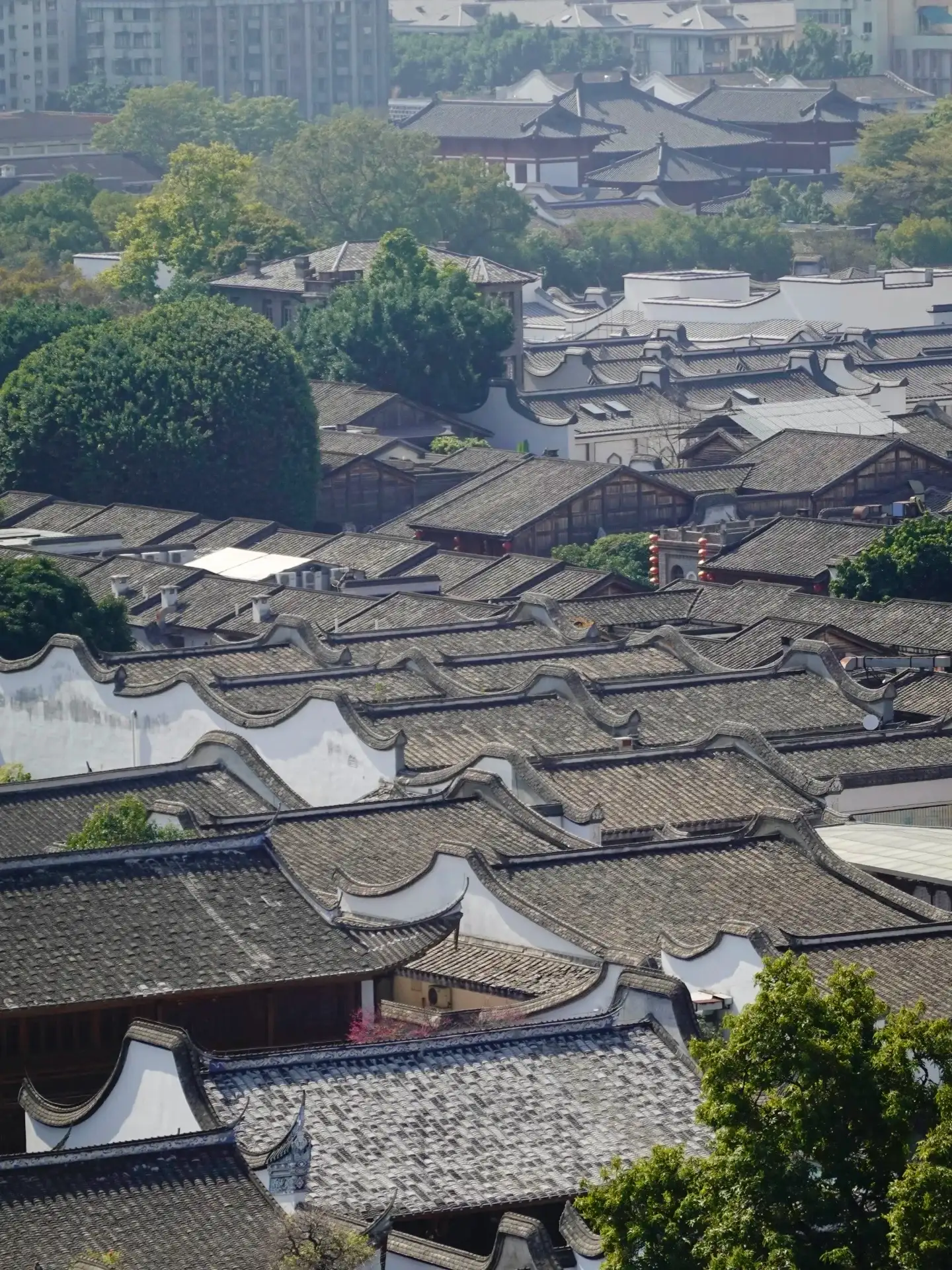
A Fuzhou stop adds urban culture to a Fujian journey, with Sanfang Qixiang as a starting point for houses, streets and local history. Its three lanes and seven alleys need not become a checklist to finish at once. Nanhou Street gives clear orientation, while side lanes lead to courtyards and former homes. Select two or three spaces that interest you and walk between them rather than collecting ten doorway photographs. Look beyond the number of old buildings to how contemporary shops, bookshops and restaurants use them. Combining history with current use prevents the mistaken impression of a city frozen in time.
Take time to distinguish the roofs of Sanfang Qixiang. Grey tiles, white walls and curved fire walls cut the sky into changing shapes; narrow lanes and open spaces show them at different scales. In an accessible historic home, notice how entrance halls, sky wells and inner courtyards move from brightness to shade. Decoration rewards attention, but the relationship between light and space helps explain how the house functions. Use on-site descriptions for wall types and structural names instead of giving every similar curve the same label. The roof and wall photographs offer observation prompts, not a promise that every camera position is publicly accessible.
Langguan Lane, Yijin Lane and Wenru Lane offer different starting points. Former residences work best with exhibition interpretation, courtyards reveal domestic scale, and cultural venues around Wenru Lane show contemporary uses of old homes. Personal histories such as Yan Fu's require accurate sources and should not become invented everyday dialogue. Understand the period first, then walk from the house back into the lane to place a familiar name in an actual city setting. Open rooms, exhibitions and businesses change, so verify them before departure rather than promising that a previously reported bookshop will always operate. Buildings and streets remain a useful route if plans change.
A full day can combine one open historic home in the morning, a seated lunch and another lane with an exhibition or bookshop in the afternoon. With half a day, reduce the plan to one courtyard and part of the main street. Trying to include every former residence, lane and snack shop leaves little time to look. The neighbourhood is easy to pass through but deserves pauses. Allow another day for other parts of Fuzhou after your adviser checks transfers and access. Evening commerce on the main street feels different from daytime courtyard interpretation; an overnight stay gives room for both rhythms.
Two nights provide a useful starting point for a Fuzhou city stay with room to rest, adjusted to actual arrival times and interests. For flights or trains, identify the arrival point before confirming the hotel transfer; sharing a city name does not mean distances are short. Accommodation inside and outside the historic quarter has different conditions. For a traditional-house stay, check stairs, luggage handling, sound insulation and vehicle access. Travellers needing step-free access should check individual courtyards and walking stretches in advance; the whole area cannot be given a blanket accessibility promise. Keeping meals, lodging and the main visit close together reduces backtracking.
Allow for humidity, heat and rainfall on a Fuzhou walking trip. Summer needs more shade and indoor breaks, and spring or autumn still require weather checks. Rain changes the sheen of tiles and walls, but slippery paving is not a place to linger for a photograph; use suitable covered or indoor spaces. Fish balls, rouyan dumplings and guobian rice-flour soup are approachable local foods, but ask about ingredients and stock, especially for allergies or vegetarian requirements. Confirm charges for actual food, exhibitions and houses instead of copying old guidebook prices. The lasting impression comes from understanding how the quarter lives today, beyond its appealing roofscape.
Use Nanhou Street for orientation, then choose nearby lanes according to your interests. Link a former residence and a courtyard visit with small shops and a meal along the way.
In an open house, entrances, light wells and inner courtyards change the light and view in sequence. Understand these spaces before reading the displays: the building helps place a former resident’s story in a domestic setting.
Look for exhibitions, bookshops or cultural venues that are open during your visit and notice how they use the old buildings. A reading or rest stop makes a historic house part of your day rather than simply a facade you pass.
Start in a lane by following the curves above the white walls, then find a more open position to distinguish the layers of roofs. Fire walls separate neighbouring homes while grey tiles link the courtyards into a broader pattern. Bring your gaze back from the wall tops to the entrances to connect roof shapes with the direction of the street.

Notice the treetops between roofs, then enter an open historic house to see how its light wells and courtyards make room for light and greenery. The continuous roofscape outside becomes a series of domestic spaces indoors. Focusing on one courtyard makes the houses easier to remember than passing a string of door plaques.

Pause at a wall-top detail to compare its turning curves and the junction between pale surfaces and tile edges. View the feature within the whole wall before using on-site interpretation to understand its name and purpose. Continue along the lanes to compare it with a different roof or wall outline.
Get your bearings on Nanhou Street → enter an open historic house → walk neighbouring lanes and stop for a meal. With more time, add another exhibition or cultural venue and a separate short evening stroll.
Orient yourself on Nanhou Street and choose an open courtyard in Langguan Lane, Yijin Fang or Wenru Fang as the main visit. Continue nearby to examine roofs, doorways and wall-top details, then stop for a meal. Keep the walk centred on one resident or domestic-architecture theme.
Visit another historic house or display in the morning. After lunch and a break, choose an open cultural venue and a nearby walk. If staying in Fuzhou, save a short stroll on Nanhou Street for after dinner to experience its evening atmosphere at a gentle pace.
Check access to your preferred houses, displays and cultural venues, choosing one or two main stops for each half-day. Connect neighbouring lanes through Nanhou Street and allow time for interpretation and lunch. If access changes, adjust the visit around the streets themselves.
In summer, break outdoor walking with indoor rest stops and carry water and light rain protection. On a rainy day, visit an open house or exhibition first, walk carefully on wet stone, and choose your next lane according to conditions.
For a historic-house stay, ask about stairs, luggage assistance and vehicle access, checking specific spaces if mobility is a concern. Before ordering fish balls, rouyan dumplings or guobian soup, ask about fillings and broth and explain allergies or vegetarian needs.

Start with your interests, available time and the right combination of places.

Plan by region and interest, rather than choosing one season for the whole country.

Meet local life with curiosity, consideration and an open mind.
YOUR JOURNEY
Share the places and timing you have in mind, then discuss a suitable route with a guide or travel adviser. Services and availability need confirmation.
Contact a guide about this place
FROM INSPIRATION TO YOUR JOURNEY
A place you dream of. A journey shaped around you.
Plan my trip