
Water and woodland together
Follow open Xiaoqikong routes to see the relationship between pools, cascades and trees. Reflections on still water contrast with the texture of flowing sections, giving a clear theme in different weather.
Libo offers a natural-landscape chapter within Guizhou, with Xiaoqikong's pools, cascades and forest providing a change from cities and villages. Look beyond the familiar bridge photograph: how water passes over rock and how trees meet river channels become clear on individual stretches of the route. For a Xiaoqikong-focused visit, leave a full sightseeing day and one or two nights in an appropriate base so transfers do not consume the main visit. Add Daqikong, Maolan or other themes only after separately checking access, visit formats and driving time; distinct natural areas do not automatically make one half-day attraction.
Confirm the entrance, shuttle arrangement and open route before departure. Guides may favour one direction, but that does not guarantee an entirely downhill route or an easy day for everyone. Choose two or three landscape priorities, then check walking, steps and waiting, adding lunch and breaks. With strollers, walking aids or a wish to reduce walking, ask your adviser about individual stretches rather than relying on a vague accessibility label. Meeting points matter too. Agreeing on photography and resting needs in advance creates a better rhythm than repeatedly searching for one another inside the area.
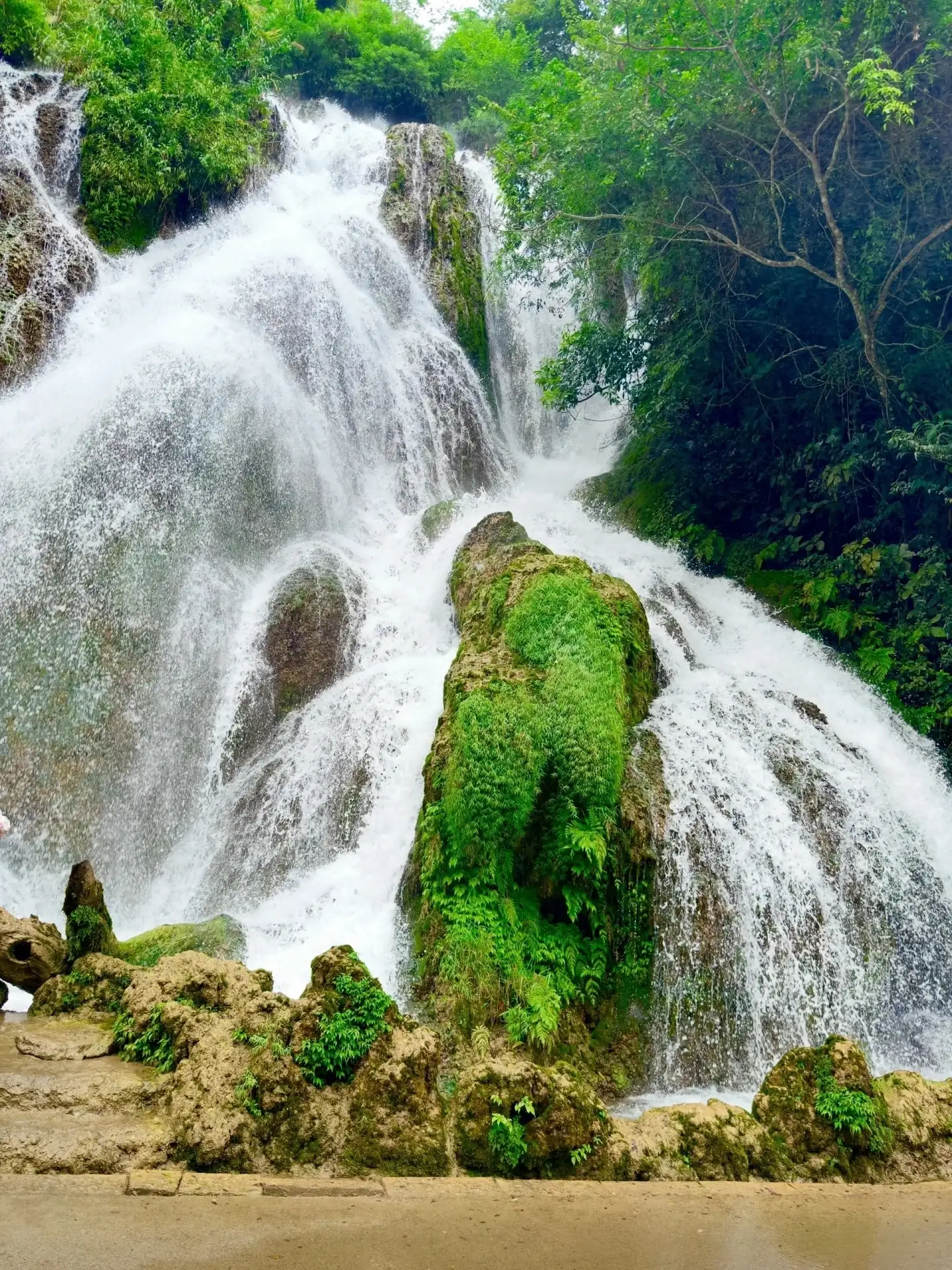
At still pools, observe reflections, bank-side trees and changes in depth instead of judging whether the water matches a promotional colour. Weather, sun and water conditions alter the view. Near waterfalls and cascades, follow how flow divides, crosses different levels and joins again around rocks. Broad views explain water and forest; details reveal rock texture and flowing paths. The two matched photographs here show a waterfall and water-and-rock details from Xiaoqikong sources, not a complete view of the old bridge. A destination guide can be layered without including every iconic photograph.
In woodland waterways, look at the relationship between roots, stone and channels from open paths. You do not need to enter the water for a low camera angle. Wading in someone else's post does not show that every area allows or suits it on your travel date. On wet surfaces, grip and free hands matter more than photographic clothing, and rainwear should not obstruct others. Prepare device protection, spare clothes and storage for damp items before meeting the group. Respect the natural area's boundaries: do not climb slippery rocks or barriers, and do not assume waterside selfies are an included activity. Pathside observation still reveals detail.
If arriving from Guiyang and continuing elsewhere in Guizhou, identify the rail or road arrival point and hotel and scenic transfers before choosing the full visit day. A station, county town and attraction entrance sharing the Libo name are not interchangeable. After a late arrival, rest first and keep the natural area for the next day rather than sacrificing meals to catch a final entry slot. Travel onwards to Xijiang, Zhenyuan or elsewhere should be an independent segment, without guaranteeing a drive time reported by one traveller. Choose lodging around the next departure point, quietness, meals and luggage access as well as its claimed proximity.
Warmer periods often suit water and vegetation viewing, but rainy-season flow, heat and temporary management can change routes. Colder dates require their own checks of weather and access; spring or summer pictures do not describe year-round conditions. Once dates are set, read announcements and leave a rest alternative, without assuming every water activity or side route will operate. Prepare drinking water, suitable wet-path footwear and portable rainwear. This guide supplies no unverified ticket prices or fixed service promises. With cloudy weather or less clear water, shift attention to forest, rock and flowing structure. Libo's interest extends beyond a filtered turquoise colour.
Follow open Xiaoqikong routes to see the relationship between pools, cascades and trees. Reflections on still water contrast with the texture of flowing sections, giving a clear theme in different weather.
Near a waterfall or cascade, look for where the flow divides, passes over steps and gathers again. Sound and nearby rock details add different impressions to a single path section.
Give Xiaoqikong a complete day supported by accommodation, transfers and rest on either side. Choose two or three landscape themes together, then arrange the sequence around actual shuttles and walking conditions.
From the open path, follow the waterfall as it divides across the rock face and comes together again. Including the surrounding trees in your view gives a reference for the width of the flow and the shape of the cliff. Pause to listen and watch the mist and leaves before moving on.

Where water passes through a rock hollow, its direction and speed change in small ways that can be watched from a permitted stopping place. Trace the flow from above the hollow to downstream, comparing smoother water with white foam. Study one detail before returning to the broader water-and-rock scene.
Libo arrival point → accommodation and transfer preparation → a full Xiaoqikong visit → rest before moving on. Consider Daqikong or another natural area as a separately checked extension.
According to the entrance and shuttle arrangements that day, choose two main themes from waterfalls, cascades and pools. Follow open paths at an easy pace, allowing a meal and rest before meeting again. Use the other half-day for woodland and water sections that are available.
Settle into the Libo area and prepare for damp paths after arrival, making Xiaoqikong the main activity the following day. Leave food and rest afterward, then continue your Guizhou journey the next day. Check the entrances, transport and time separately if adding another natural area.
Check your entrance, shuttle route and open sections before connecting the main stops with a meal. Discuss steps and specific paths if using a pushchair or needing less walking, and agree on meeting points in advance.
Wear shoes with suitable grip, carry light rain protection and keep electronics and spare clothing dry. Watch the water from open paths and adjust sections of the visit to management arrangements if water conditions change.
After choosing transport, confirm transfers to the hotel and scenic entrance as separate journeys. Rest after a late arrival and visit the next day; leave a distinct travel segment for onward Guizhou stops rather than following the final walk immediately with a long journey.

Start with your interests, available time and the right combination of places.

Plan by region and interest, rather than choosing one season for the whole country.

Meet local life with curiosity, consideration and an open mind.
YOUR JOURNEY
Share the places and timing you have in mind, then discuss a suitable route with a guide or travel adviser. Services and availability need confirmation.
Contact a guide about this place
FROM INSPIRATION TO YOUR JOURNEY
A place you dream of. A journey shaped around you.
Plan my trip