
Mountain scenery alternating between grass and forest
Follow one main Nalati route to compare vegetation across different slopes. Broad grassland views and short walks together reveal more than a single impression of open, level country.
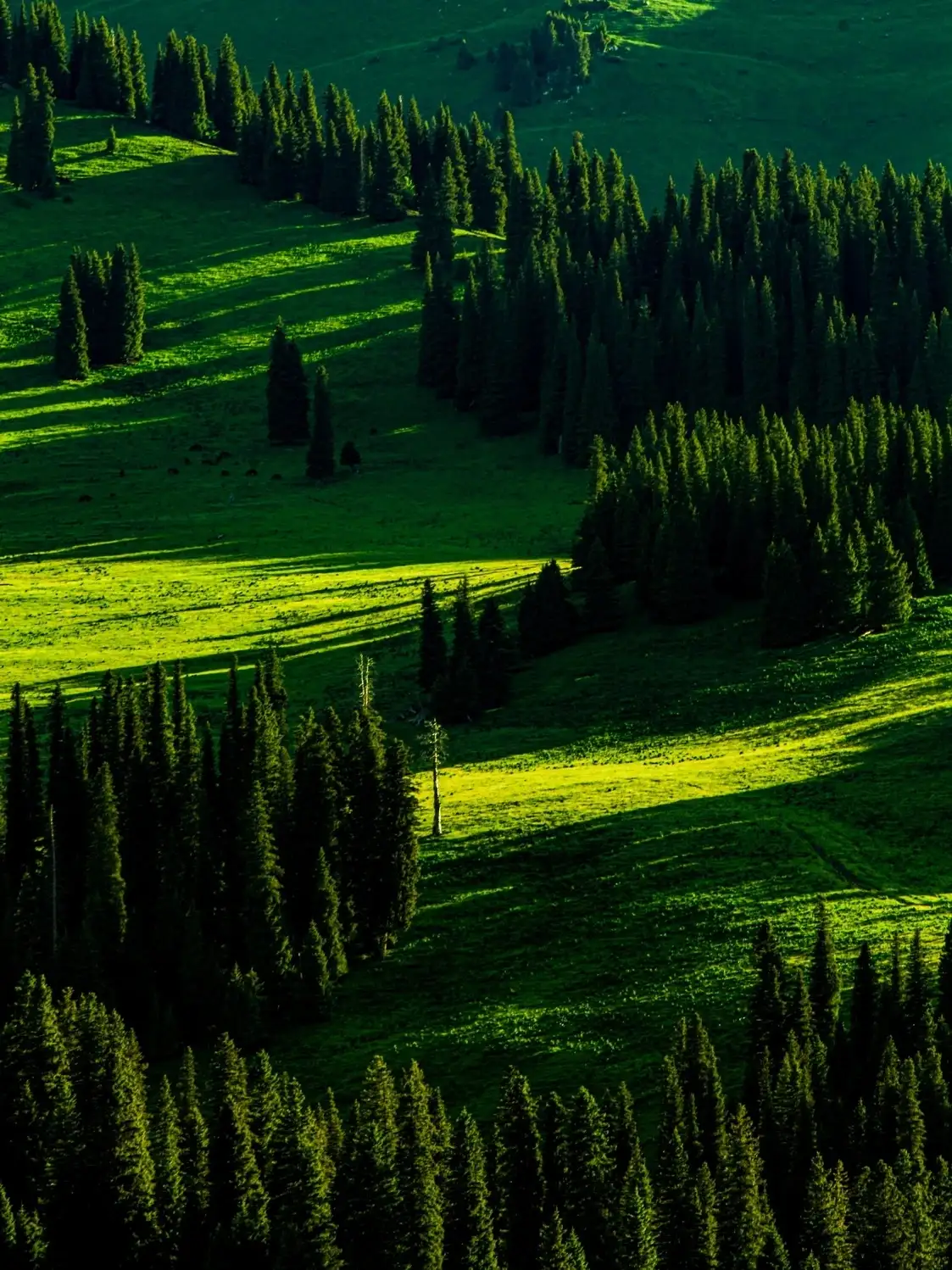
Nalati is distinguished by alternating grass and forest, not simply an impression of vastness. Rolling slopes give similar vegetation different tones, while dark forest belts divide the hills. One or two nights can create an unhurried stop in an Ili Valley journey, with longer stays depending on arrival. International visitors planning Xinjiang for the first time should understand actual road relationships between Yining, Nalati and other places, rather than treating famous grassland names as neighbouring walks. Depth in one main area often offers more than changing between similar grasslands each day. Pastoral work and local life also use the landscape and deserve respect.
Names such as Sky Grassland and River Valley Grassland describe different terrain and viewing subjects, rather than small points that can be freely joined at speed. Reservations, shuttles and current access determine movement. Ask about principal stops, walking and the endpoint before choosing. Rolling hills may suit one priority; woodland and waterways another. Additional sections need checks of extra time and transport without cutting ordinary meals or breaks. The three matched photographs show Nalati grass slopes and forest belts, illustrating landscape layers rather than prescribing a particular ticketed route from an image.
A grassland photograph looks still, but light moves continually in the landscape. From a permitted stopping place, watch one slope brighten and darken as cloud shadows pass, then notice how tree patterns meet rolling ground. Wide views explain forest belts; closer observation distinguishes tree shadows and grass tones. Every viewpoint need not become another long session of the same composition. Autumn colours have their own layers, and vivid green is not the only worthwhile state. The photographs reflect their source's conditions, not promised temperatures, flowering or light on an exact date. Quiet observation also offers a meaningful break for companions uninterested in photography.
Xinjiang distances belong in the timetable first. From Yining or another base, establish actual departure, meals and arrival before protecting a full scenic time slot. If the route involves Duku Highway or another seasonal road, check live access and alternative transport separately. A past successful trip does not guarantee the next one. Choose lodging by entrance, the next day's direction and dining convenience as well as a grassland view. Settle in after a late arrival instead of rushing into an area only to wait for transport. An additional night generally serves a second scenic route better than fitting every section into arrival day.
Animals, yurts and pastoral structures help explain grassland use, but are not automatically activities visitors may approach freely. Do not chase animals, cross fences or enter occupied spaces for photographs. If horse riding, a household visit, crafts or a performance interest you, have your adviser confirm real operators, participation conditions and reception. A cultural description is not a service available to every visitor. Communicate food needs too, asking about meat, dairy and allergens rather than relying on dish names. This guide invents no story of being hosted by residents and does not use scenic pictures as a substitute for service agreements.
Warmer periods often favour grass and forest observation; cooler dates bring different colours and operating arrangements. Check actual conditions for your date. Bring walking shoes, sun protection and a wind layer, following open routes after rain rather than crossing damp slopes for a camera angle. Open grassland does not make every path flat, and walking from shuttle stops to views counts towards energy use. If weather changes, reduce repeated stops, keep one place with clear forest-and-grass layers, and leave meals and rest. No unchecked prices, fixed services or flower-field guarantees are offered. Nalati is remembered through slopes, forest and moving light, beyond reproducing one vivid photograph.
Follow one main Nalati route to compare vegetation across different slopes. Broad grassland views and short walks together reveal more than a single impression of open, level country.
Choose a clearly shaped slope and watch cloud shadows alter the grass and woodland. Photography and a quiet rest can share this time, with a few stops providing plenty of detail.
Separate arrival, grassland visiting and onward travel, using local meals and rest to support a full outdoor segment. Connect other Ili stops in road order, choosing places with contrasting themes.
Begin with the boundary between bright and shaded grass, then follow the woodland as it extends along the terrain. Passing cloud shadows make the slopes easier to read than a still panorama. Spending time with the changing light reveals the relationship between forest and hillside.

Along an open visitor route, notice how forest belts form dark edges beyond the rolling grass. Slopes facing different directions create distinct layers, with trees helping to separate them. Two stops at different distances offer a useful comparison of the overall terrain and its details.

Look at tree spacing together with the texture of the grass and the direction of shadows on the slope. Nearby grass and distant woodland offer different scales within a short walk. Looking back during a seated break gives shape to scenery that might first seem like a simple background.
Ili base → settle in and arrange Nalati transport → follow one main route through grass slopes and forest → dine and rest → continue through Ili in road order.
Arrange shuttles and a few stops around your chosen route, beginning with broad slopes and adding an available short walk. Compare woodland, cloud shadows and tree spacing, with a break before returning to your accommodation area for a meal.
Use arrival day for accommodation, transfer arrangements and dinner, then give the following day’s main segment to one grassland route. If another valley or hillside theme interests you, add a separate half-day before continuing along the roads through Ili.
Check reservations, transport, walking and the endpoint for the area you actually choose, such as the upland or river-valley grassland. Give the main theme a full visit and allow additional time for another route.
Include driving, meals and hotel transfers when arriving from Yining or another base. For seasonal roads such as the Duku Highway, check access and alternatives for the day; rest first after a late arrival.
Bring wind protection, sun protection and walking shoes, adjusting open-route stops after rain. Confirm actual reception and participation conditions for horse riding, home visits or crafts, and explain meat or dairy requirements when dining.

Start with your interests, available time and the right combination of places.

Plan by region and interest, rather than choosing one season for the whole country.

Meet local life with curiosity, consideration and an open mind.
YOUR JOURNEY
Share the places and timing you have in mind, then discuss a suitable route with a guide or travel adviser. Services and availability need confirmation.
Contact a guide about this place
FROM INSPIRATION TO YOUR JOURNEY
A place you dream of. A journey shaped around you.
Plan my trip