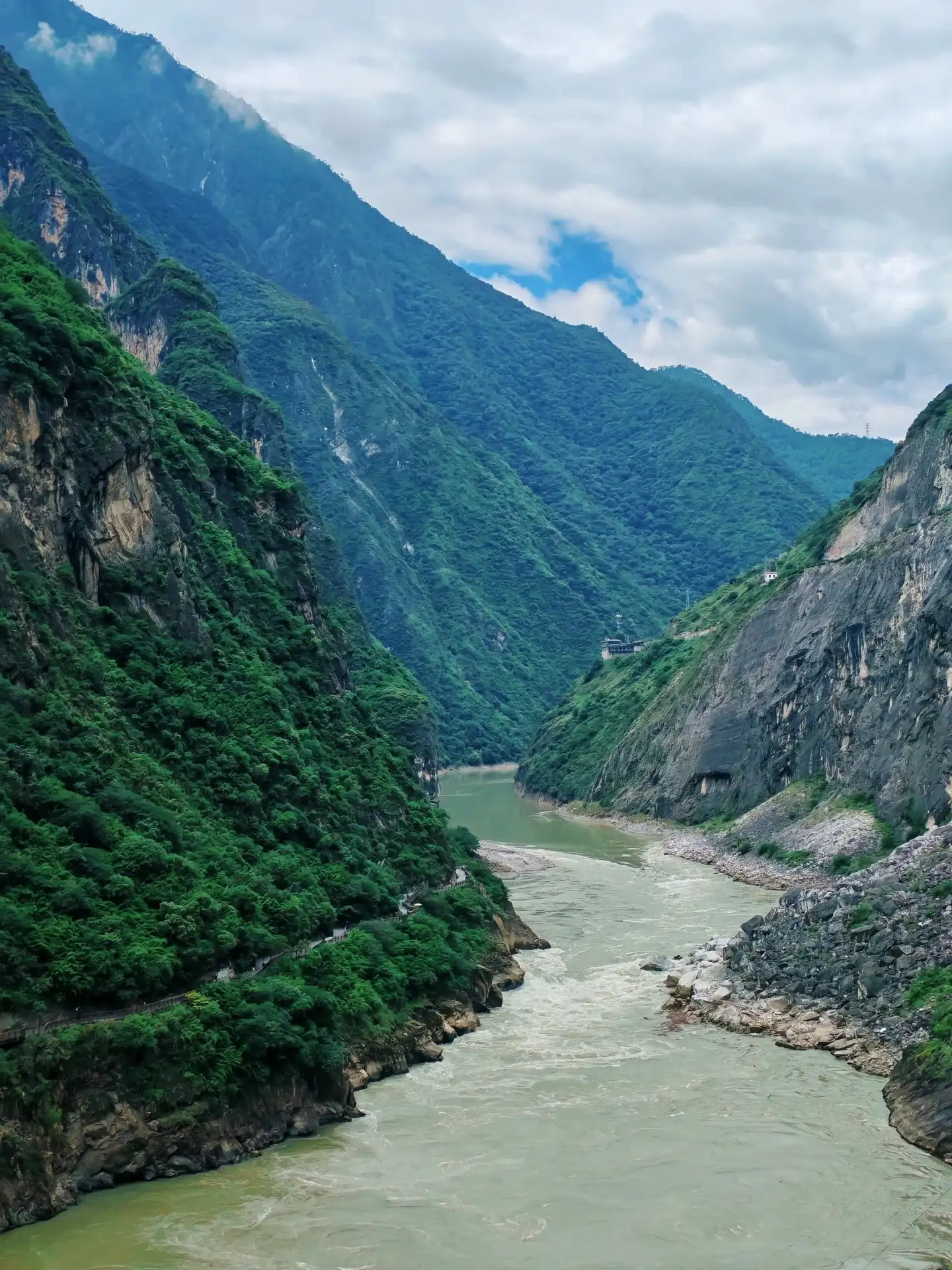
Tiger Leaping Gorge can connect Lijiang and Shangri-La, changing the view from old-town lanes or open lakes to a narrowing canyon. Water forms a clear direction between mountains; rock and river explain the place better than dramatic adjectives. First decide whether this is authorised scenic viewing or a separately planned trek. They should not be merged into a supposedly easy one-hour activity. An explicit half-day to day is an editorial starting point for ordinary viewing, with road transfers counted separately. A longer trek needs its own dates, equipment and pickup checks. The matched images and sources concern river observation, not a complete high-trail trekking account.
From an authorised viewing place, begin with mountains converging in the distance, then follow nearby turns of water and rock. Broad frames explain the gorge; details show how flow divides and reunites around stone. Colour, volume and white water change with conditions, so one post cannot establish your arrival standard. Watching a short stretch of moving patterns can reveal flow better than continually seeking a closer angle. Platforms and barriers define normal access. Do not cross them or enter closed paths to avoid crowds. The forceful impression comes from fixed mountains and moving water, without risky actions.
Searches combine viewpoints, short walks, high-trail treks and side routes of different intensity. They have different access, duration, surfaces, lodging and exit conditions, and should not be assembled from several guides into one default route. Travellers reducing steps need specific information on their chosen area's descent and ascent; operating aids must be confirmed rather than assumed available at all times. Trekkers should state experience, energy and luggage requirements so an adviser can check the route and accompaniment. Follow management and notices especially after rain, without adding unchecked side paths to finish a popular online route. Clear activity boundaries make planning practical.
For a day combining the First Bend of the Yangtze, the gorge and later mountain content, count roads, meals and breaks individually rather than reading consecutive names. If the gorge is the priority, protect viewing and meeting time and remove other stops if needed. A longer stay should change the next segment in advance rather than leading to rushed companions or shortened dinner. Travel between Lijiang and Shangri-La also requires adjustment and rest; an additional busy evening after arrival is not standard. A well-defined half-day viewing route can fully explain the gorge. Variety comes from terrain changes rather than collecting more similar pictures.
Confirm entrance, pickup, luggage and the next base before departure. Similarly titled guides do not mean every route ends in one place. For scenic viewing followed by city lodging, arrange the final walk and transfer together. Trekking accommodation needs additional checks of rooms, meals, luggage transport and the following day's exit. International reception and passport details should be settled in advance, alongside genuinely available foreign-language interpretation. Mountain views cannot replace hot water, heating or quietness. This guide quotes no unchecked drive times, prices or difficulty promises and does not turn a blogger's lodging recommendation into an arranged website service.
Rain and season change the river view. Check roads, your chosen route and weather before departure, reducing the plan when management conditions change. Bring walking footwear and light rainwear, keeping equipment clear of other users. Do not step backwards for pictures on cliff-side paths or block a passage for long. This guide guarantees no particular colour, extreme flow or empty platform, and photographs do not show unrestricted access to every bank. Discuss specific routes beforehand for health or mobility needs; an account cannot replace personal judgement. Knowing which stretch you will follow and why makes the gorge a clear, measured transition within Yunnan.