
Houses following the slope
Start on an open village route and notice how entrances, steps and roofs respond to the hillside. Looking back from a different level reveals new relationships between the same buildings.
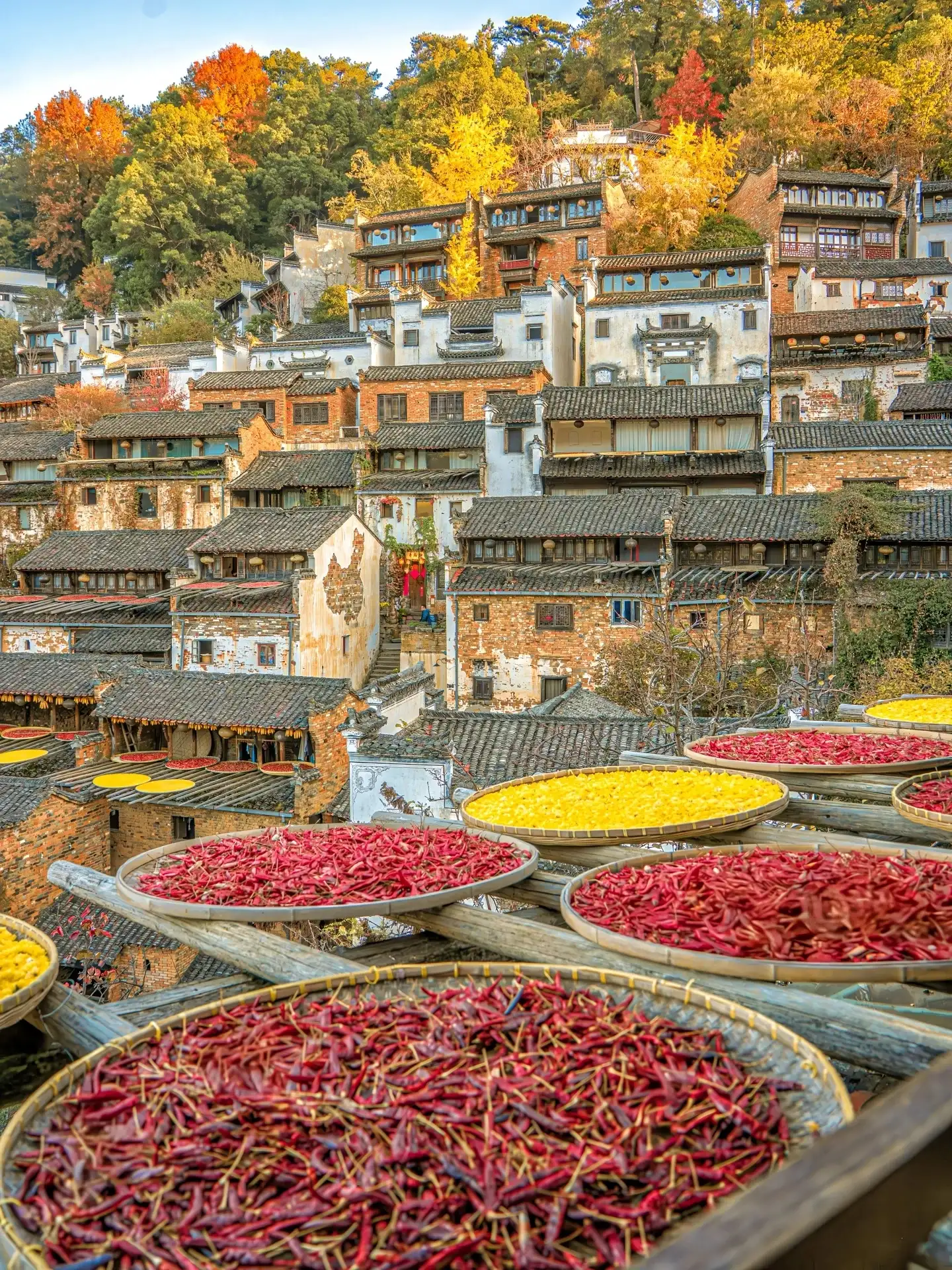
Two or three nights in Wuyuan can add villages, slopes and seasonal scenery to a Jiangxi or Jiangnan trip. Wuyuan is not one old town covered in a single walk; different villages require real transfers across the county. First-time visitors can focus on Huangling and add one stop suited to their interests instead of putting every popular village name into a day. Architecture enthusiasts may choose courtyards and lanes; landscape interests may favour fields and hills. Build the combination around personal preferences. The matched photographs mainly show Huangling's roofs, drying trays and fruit trees, not a uniform appearance shared by every Wuyuan village.
In Huangling, first see how homes follow the slope, then notice trays and eaves. White walls, grey tiles and changes in height create layers, while drying structures use space beyond scarce level ground. Rather than immediately seeking the exact colours and tray numbers in a photograph, understand how a hillside settlement uses space around its houses. Walking includes slopes and steps; a cableway or convenient shuttle does not mean no walking effort. Follow open routes for broad views and materials, without entering private spaces for an angle. Contemporary management and display coexist with genuine terrain and architecture, and both can be described accurately.
Harvest drying is an important Huangling visual theme, but crops, colours and arrangements depend on season, weather and scenic operation. No exact date guarantees full red-and-yellow trays outside a window. Spring flowers also follow actual growth and weather; verify the season near departure instead of turning past posts into a fixed calendar. Under cloud, focus on building density and slopes; in rain, adjust to management and path conditions without entering fields for photographs. Trees, crops and fields belong to production or display, not activities visitors can assume they may join. Particular workshops and events need separate confirmation.
Settle in on arrival and take a short walk near your lodging. Give a full day to Huangling or another main village, then choose one complementary theme. Count transfers from Jingdezhen, Huangshan or elsewhere separately; related regional culture does not make distances short. Travel time, depth and weather determine how many villages fit, and repeated vehicle changes between similar sites rarely add much. For one night, reduce the plan to a core place and a relaxed dinner rather than importing a three-day checklist. Put lunch and rest in the middle of the route so photography enthusiasts and lighter walkers can share a manageable pace.
Stations, county-town hotels and village entrances need connecting transport. Confirm services and your base before setting a detailed itinerary. For a historic-village or hillside stay, ask how luggage is moved, about stairs, parking and breakfast before comparing roof views. International guests should confirm passport and reception details. Request foreign-language guiding beforehand instead of assuming immediate availability in each village. Choose food by ingredients and preference, explaining spice, meat and allergy requirements; one online bill does not establish a fixed price. Quietness and sleep deserve equal attention to a camera position. A rested departure can be more useful than another scenic window.
Wuyuan's villages are not entirely open photographic spaces. Respect courtyard entrances, fields and working paths. Do not ask residents to clear a supposedly empty scene, climb roofs or drying racks, or assume permission to reproduce aerial views. Prioritise suitable footwear, rain protection and clothing for slopes, with shade breaks in heat and layers in cooler conditions. Check the actual date's weather. This guide promises no simultaneous flowers, red leaves, drying displays or mist, and quotes no unverified prices. Understanding one village's roofs, terrain and use of space creates a more accurate memory than rushing to collect more colourful pictures.
Start on an open village route and notice how entrances, steps and roofs respond to the hillside. Looking back from a different level reveals new relationships between the same buildings.
Use the trays and eaves as clues to how space is used, observing the placement of equipment and viewing areas. Materials and practical arrangement provide a way into the drying theme alongside the displays present during your visit.
Give Huangling a substantial visit with meals, seated breaks and shorter walks between observations. If adding another village, choose a contrasting architectural or countryside theme so the two stops offer different experiences.
Begin with the positions of drying trays and racks, then follow the hillside to distinguish roofs at different heights. Round trays contrast with straight tile lines, while white walls separate the houses. A slow village walk shows how a sloping settlement uses the limited space beyond its eaves.

The fruit tree beside the eaves brings attention from the wider roofscape to nearby branches and leaves. Compare their colours with the wall and tiles, then look outward toward the hillside houses. This pause within a lane walk alternates intimate details with broader views of the settlement.
Wuyuan arrival point → settle into your accommodation → Huangling roofs and drying racks → one additional village suited to your interests and the roads → a separately planned onward transfer.
Walk an open route centred on roofs and drying racks, allowing time for wall, tree and eaves details. Sit down for food or a break, then take a neighbouring route to look back across the sloping settlement. Keep the half-day focused on one village.
Use arrival day to settle in, then give Huangling the larger part of the next day. Add one village or country stop chosen to fit the roads and your interests. Connect with onward transport on the final day, keeping the main visit and complementary theme distinct.
Check travel separately between the station, county town and villages. Choose your accommodation and main village first; transfers from Jingdezhen or Huangshan need their own time, including arrival and meals.
For flowers or drying displays, consult information and weather for your actual dates, checking booking and crowd arrangements during holidays. Bring layers in spring or autumn, plan shade in summer and take care on wet slopes and steps.
Confirm vehicle access, luggage transport, stairs and breakfast before booking, including arrangements for international guests. If less walking is preferred, check the slopes and rest points that remain after a shuttle or cable-car journey.

Start with your interests, available time and the right combination of places.

Plan by region and interest, rather than choosing one season for the whole country.

Meet local life with curiosity, consideration and an open mind.
YOUR JOURNEY
Share the places and timing you have in mind, then discuss a suitable route with a guide or travel adviser. Services and availability need confirmation.
Contact a guide about this place
FROM INSPIRATION TO YOUR JOURNEY
A place you dream of. A journey shaped around you.
Plan my trip