
Bridges shaping a canal walk
Choose a section of bank and a few neighbouring bridges, observing how the houses and canal change direction after each crossing. Return through a connecting lane to form a clear loop between water and street.
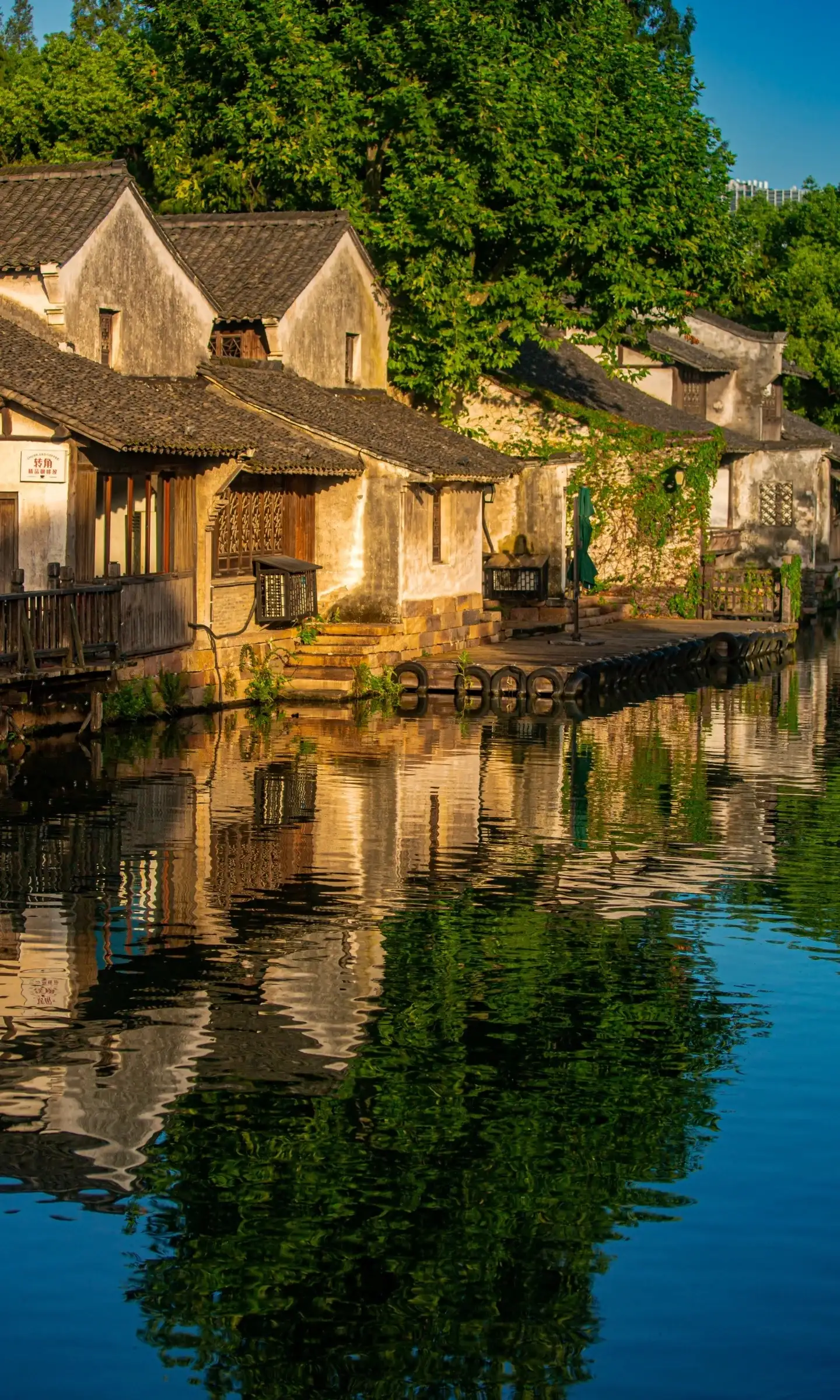
Wuzhen can follow Shanghai, Hangzhou or Suzhou, with one or two nights shifting the pace towards waterways and smaller-scale buildings. Do not begin by trying to fit every bridge and exhibition into one day. Banks, lanes and eaves overlap; crossing a bridge and looking back changes your view of the same houses. Wuzhen has separately managed areas, with distinct entrances, visits and accommodation arrangements in Dongzha and Xizha. The town name cannot replace an actual route. First-time international visitors can explore one area slowly before adding another, creating a connected visit rather than a memory of ticket checks and shuttles.
Waterside buildings offer more than reflections. Notice how walls meet the bank, roofs recede in layers and bridges connect the shores. Choose one stretch, first seeing the whole, then looking at windows, galleries and eaves. Still water reflects clearly; wind or a passing boat breaks the image into ripples, which need not mean a failed photograph. The sourced pictures here match Wuzhen's waterside buildings and tree reflections under different light. They do not promise empty streets or access through every pictured doorway. Keep routes clear and observe from suitable stopping places.
For content beyond architecture, select a cultural venue or exhibition with confirmed access, using craft, literature or water-town life as a theme. Exhibitions deserve more than a quick passage, and performances or workshops should not be assumed in every day's plan. Check opening and language interpretation beforehand and arrange guiding if you want depth. Shops and museums have different purposes; respect their separate rules for purchases, visits and photographs. Spending enough time on one theme before returning to a familiar river stretch makes information easier to connect with place. Activities in an older official guide still require current checks.
An overnight stay creates space between an afternoon walk, dinner and evening observation; it does not require everyone to join a night activity. After arriving from another city, settle your luggage and choose a route near your lodging, then return to a familiar riverbank after dinner. Leave breakfast and another short walk before onward travel. Two nights suit a second managed area or deeper cultural interests. Any entry, luggage or shuttle arrangement attached to lodging must be checked with your chosen property and current rules, rather than copied from old guest-benefit descriptions. Evening illumination depends on operation and weather.
Identify the rail or road arrival point, then arrange the final connection to your actual Wuzhen entrance and hotel. Station, visitor centre and room are different locations; carrying luggage over bridges and through lanes can be harder than the map suggests. Ask about stairs, luggage handling, sound insulation and dining distance before comparing river-facing windows. Families and travellers requiring step-free access should check bridges, steps and routes individually rather than assuming the entire town is convenient. Public transport, inter-area shuttles and evening return services may change, so check actual dates. Confirmed transport should shape the itinerary.
Spring and autumn often suit longer walks. Summer needs shade and indoor pauses; winter calls for warm layers against damp cold and earlier sunset. Check weather in every season. Wet paving and bridges may be slippery, and clear reflections in photographs do not mean calm water daily. Choose local dishes according to appetite, asking about river fish, stock and allergens instead of relying only on menu pictures. A scenic table and suitable food are separate considerations; no unverified standard prices are quoted here. Wuzhen rewards seeing how water organises movement and buildings, even under cloud, wind or a revised plan.
Choose a section of bank and a few neighbouring bridges, observing how the houses and canal change direction after each crossing. Return through a connecting lane to form a clear loop between water and street.
Visit an open exhibition or cultural space devoted to crafts, literature or waterside life. Return to the canal afterward and connect what you read with the surrounding buildings, giving the visit a memorable theme.
Get to know the riverbank near your stay in the afternoon and return for a short stroll after dinner. Breakfast and a morning walk offer another view of the water and streets, with each part enjoyed at its own pace.
Cross a bridge and look back to see the waterside houses shift into a different arrangement. Notice how walls meet the water and windows face the canal, then compare the real facade with its reflection. Ripples from wind or a passing boat break up the reflected eaves, adding movement to the scene.

Follow the grey roofs as they recede from the bank, then examine the connections between walls, windows and eaves. Much of the town’s layering comes from small differences in roof height, with several combinations visible on a short walk. A lane leading away from the canal reveals the street pattern behind the waterside fronts.

Spend a quiet moment watching tree shadows stretch, separate and gather again on the water. Light filtering through leaves creates bright and dark details within the same stretch of canal. Place this pause between a cultural visit and a meal to give the walk an easy rhythm.
Choose Dongzha or Xizha as your base → walk a canal-and-bridge loop → visit one cultural space and stop for a meal → stay overnight for a morning stroll. Allow separate time for the other area.
Start at a recognisable bridge in your chosen area and follow the bank to examine houses and roofs. Use a lane to connect an exhibition or a meal, then return to a familiar canal stretch. The sequence links architectural detail with the waterway pattern.
Settle your luggage first, then walk near your accommodation in the afternoon and take a short stroll after dinner. After breakfast, choose another nearby lane. A second night allows a separate visit to the other managed area or a more detailed cultural stop.
Confirm whether Dongzha or Xizha is your focus, then check entrances, lodging, ticketing and transfers. Give both areas separate time if visiting each, and arrange the final journey from your arrival point to the hotel.
Ask about steps, stairs, luggage help and vehicle access before booking, checking individual walking sections for mobility needs. Store bags before sightseeing and agree on a clear point for evening returns or next-day pickup.
In summer, carry water and sun protection and break longer walks with exhibitions or meals. Prepare for damp cold in winter, take care on wet stone and bridges, and adjust the evening walk to the weather.

Start with your interests, available time and the right combination of places.

Plan by region and interest, rather than choosing one season for the whole country.

Meet local life with curiosity, consideration and an open mind.
YOUR JOURNEY
Share the places and timing you have in mind, then discuss a suitable route with a guide or travel adviser. Services and availability need confirmation.
Contact a guide about this place
FROM INSPIRATION TO YOUR JOURNEY
A place you dream of. A journey shaped around you.
Plan my trip