
Bays shaped by mountain terrain
Explore the relationship between bays, peninsulas and ridges through a small number of viewpoints. Comparing outlines at different distances gives the day a clear mountain-and-lake focus.
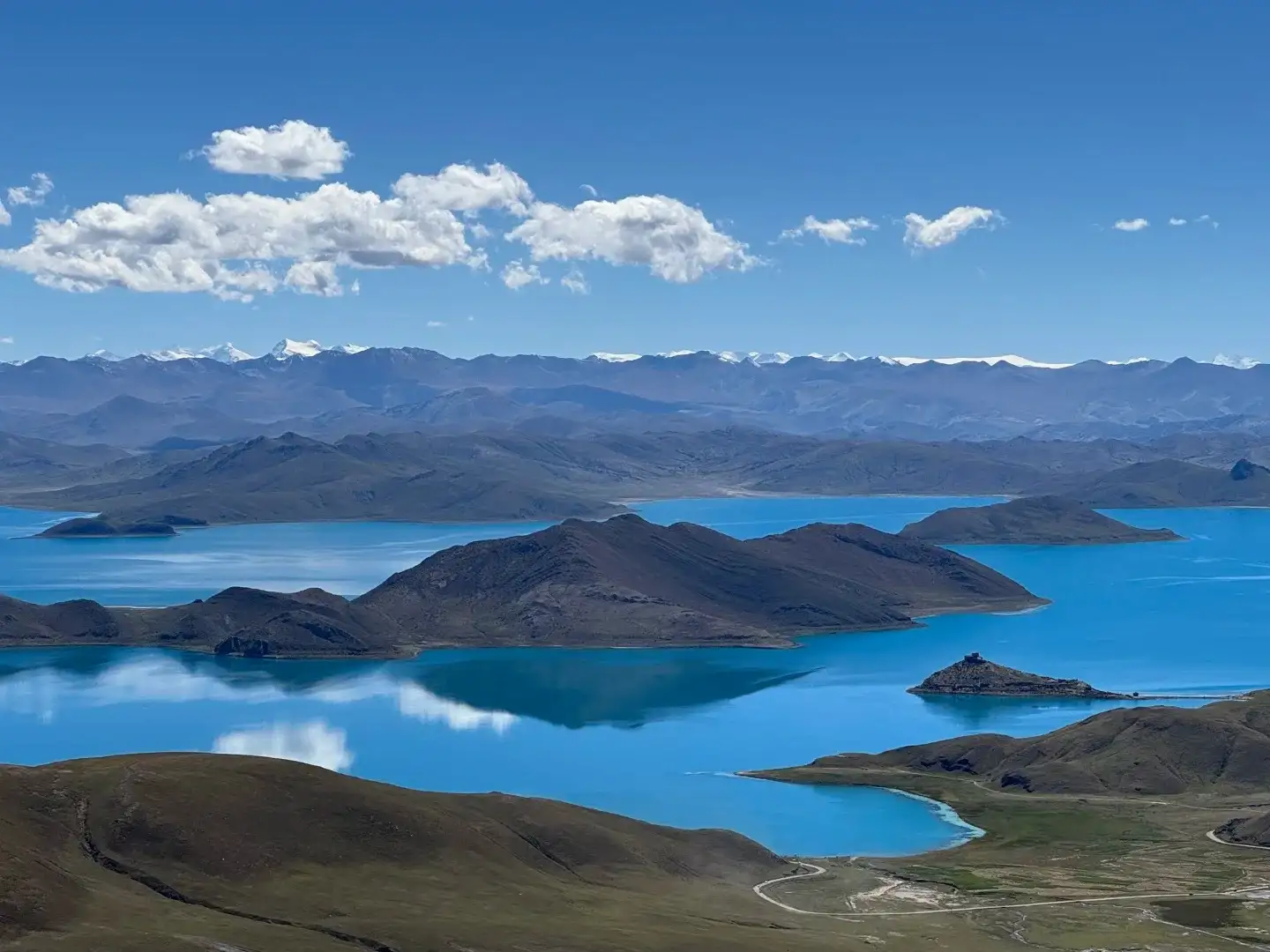
Yamdrok Lake adds winding bays and mountain ridges to a confirmed Tibet itinerary, contrasting with Lhasa's urban cultural visits. It is not a casual lakeside walk from the city or an experience defined by one blue photograph. High viewpoints, shore observation and onward travel involve different distances. An adviser should plan them around authorisations, roads, weather and your party's needs. A day visit from a suitable Lhasa base or an onward travel segment may work, but not every lakeside road is freely accessible. International visitors should first establish a lawful, executable whole itinerary, then discuss their preferred lake views.
From authorised high viewpoints, bays and peninsulas divide the water into sections while differently lit ridges create depth. Near the shore, notice transparency, bank texture and distant reflections, without continually seeking the highest point to see every outline. The three sourced photographs match Yamdrok Lake and show bays, winding banks and nearby water. Their colours reflect shooting conditions, not guaranteed travel-date light. High views explain spatial structure; low views reveal texture and ripples. Two feasible distances can make a complete theme. Do not label another lake, blue ice or an unrelated snow peak as content shown in these images.
The lake involves mountain roads and actual viewing points; straight-line distance does not replace driving time. Confirm departure, meals, permitted stops and return or onward arrangements before deciding how much observation fits. Do not copy a private driving account as an international visitor's travel method, or guarantee one number of hours for every date. An attractive roadside location is not necessarily a legal parking place, and transfers should follow local management. Continuing towards Shigatse or elsewhere requires checks of the whole route and arrangements. A half-day lake visit is not an automatically available multi-day circuit. Road buffers matter more than extra photo stops.
Before confirming transport, your adviser should check Tibet travel formalities, reception and itinerary requirements against nationality, documents and the actual route. Mainland China entry conditions do not automatically confirm access to every Tibetan area. Requirements can change by policy and route, so consult competent authorities and recheck before departure. This is travel inspiration, not a substitute for arranging formalities, and it guarantees no processing period or approval. Passport names, dates and party details must be accurate. Do not add unconfirmed remote or lakeside routes at the last moment. Establish actual access before choosing lodging and photo stops.
The Yamdrok area is a plateau environment. Its place in the itinerary should reflect earlier Tibet travel and personal condition rather than a low-altitude city's activity intensity. Seek professional advice beforehand for health concerns and share reduced-walking or other requirements with your adviser. This guide offers no medication, treatment or prevention-effect promises. Wind and sunlight at viewpoints can change how conditions feel quickly, so prepare warm wind protection and walking equipment. Shortening a stop according to your condition is reasonable. Confirm food and drinking-water arrangements rather than assuming full services at every stop. A plateau day needs room for rest as well as roads and photographs.
Sun can intensify water colour, while cloud emphasises mountains and banks. Neither is the only worthwhile condition. Cold-season dates require special checks of roads and access; a photograph of ice does not recommend walking onto it. Shorelines, pastures and homes have practical and cultural boundaries. Do not approach animals freely or expect residents to pose, and follow rules in religious spaces. This guide promises no blue ice, glowing snow peaks, empty camera positions or unchecked prices. Understanding how bays fit the terrain, then observing nearby water from permitted places, creates a concrete memory shaped by both scenery and actual conditions.
Explore the relationship between bays, peninsulas and ridges through a small number of viewpoints. Comparing outlines at different distances gives the day a clear mountain-and-lake focus.
A higher view reveals the overall course of the water, while the shore offers ripples and nearby materials. Together they bring terrain, light and surface detail into the visit alongside lake colour.
Add the lake to an already confirmed Lhasa journey for a change from city architecture to mountain water. A day built around a few stops, a meal and rest can form a complete travel segment.
From a viewpoint, trace the bays and distant ridges to see how the water turns with the terrain. Nearer and farther mountains have different tones, adding layers to the lake colour. Read a few outlines slowly before bringing your gaze toward the shore to understand the mountain-and-water relationship.

Start with one projecting section of shore and follow the meeting of land and water to its next turn. Peninsulas, bays and slopes divide the continuous lake into different spaces. Viewing from another suitable stop changes how those same bends overlap.

Near the shore, look at fine ripples and changes of depth suggested by the water’s colour before turning to the distant mountains. Wind gradually alters surface shine and reflections. Giving this closer view time after a broad panorama adds texture to the lake’s larger shape.
Confirm the complete Tibet itinerary and arrangements → depart from your Lhasa base → a few broad and nearshore lake views → food and rest → return or continue along the confirmed route.
Leave your confirmed Lhasa base and follow the arranged route to one broad viewpoint and one nearshore stop. Study bays and ridges first, then ripples and shoreline details, with a meal and rest between observations before the agreed return.
If the lake forms part of a journey to another area, select a few viewpoints in road order. Continue after a meal according to confirmed transport and accommodation, giving both observation and the transfer their own time. Treat the wider lake road as a journey rather than a short walk.
International guests should have their adviser check entry arrangements, reception and accessible areas according to nationality, documents and route before confirming transport. Recheck requirements before departure and review any proposed remote extension separately.
Set out the departure from Lhasa, meals and return or onward journey, stopping vehicles only where permitted. For travel toward Shigatse or elsewhere, check the entire road route and transfers with flexibility for conditions.
Plan walking in relation to your previous stay and how you feel, carrying warm wind protection, sun protection and water. Adjust viewing time to the wind, weather and roads, checking access especially in cold periods.

Start with your interests, available time and the right combination of places.

Plan by region and interest, rather than choosing one season for the whole country.

Meet local life with curiosity, consideration and an open mind.
YOUR JOURNEY
Share the places and timing you have in mind, then discuss a suitable route with a guide or travel adviser. Services and availability need confirmation.
Contact a guide about this place
FROM INSPIRATION TO YOUR JOURNEY
A place you dream of. A journey shaped around you.
Plan my trip