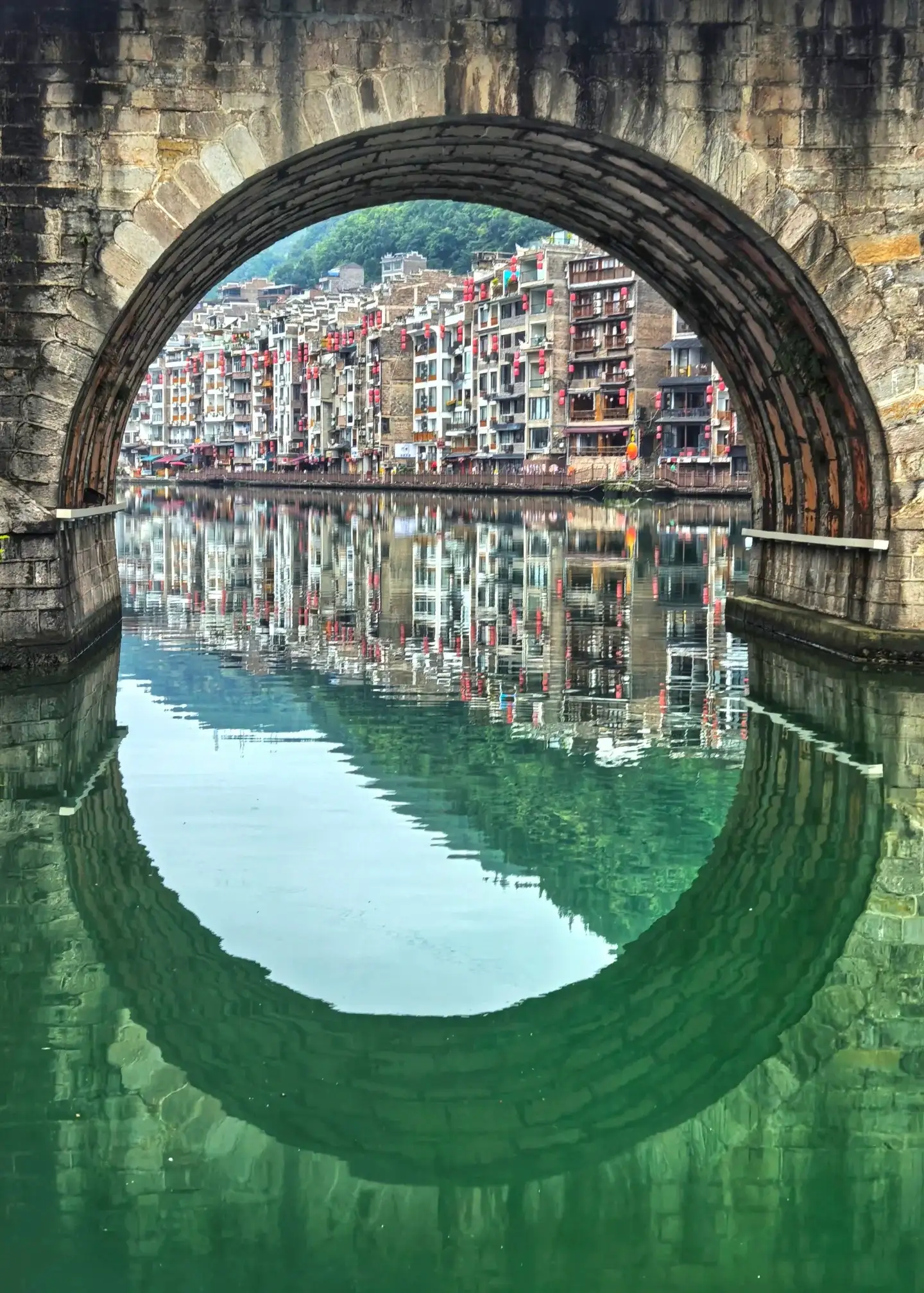
Zhenyuan makes a useful old-town stop within Guizhou, turning travel between villages or natural mountain areas into unhurried riverbank time. The Wuyang River organises the view: slopes rise on either side, buildings line the water and bridges join streets facing different directions. Identify your hotel, riverbank and meeting point on arrival before chasing a social-media angle. Understanding the structure by day makes an evening return for reflections more meaningful. At least one night is an editorial suggestion, with two for more lanes and morning river views. It is a pacing recommendation, not a guarantee that every sight or event fits a fixed timetable.
Choose a recognisable bridge or entrance, follow an open riverbank to a wider view, then return through streets. A short loop reduces backtracking and lets companions decide whether to continue according to their energy. Look at bridge arches, the height of buildings opposite and mountain slopes behind instead of repeating identical panoramas. Keep crossings clear and take photographs only where stopping is appropriate. Riverside and street-side views explain the same town differently: one shows continuous façades, the other doors and windows. Connecting the two creates more than a picturesque scene with water.
Evening light rearranges the relationship between buildings and river, but illumination times and activities vary with operation. Old photographs cannot guarantee a matching scene at a particular hour. Return after dinner to a familiar daytime section, watch bridge and building reflections, then go back to your hotel at an agreed time. If the next day includes Fanjing Mountain or a long transfer, give the walk a clear endpoint and keep time for sleep and breakfast. Light is only one state of the old town; morning and overcast views also explain the river and slopes. Staying late is not a requirement for a meaningful visit.
For a deeper stay, choose cultural buildings, exhibitions or nearby water scenery with confirmed access in another time slot, with guiding and transfers arranged by your adviser. A town walk, boat excursion and mountain trail have distinct conditions; sharing a Wuyang River connection does not make them one entrance or route. Use formal sources for historical accounts instead of turning a traveller's legend or interpretation into established fact. With one night, riverbank time, lanes and a relaxed dinner are enough. The matched arch, gateway and wall photographs show architectural details rather than comprehensive coverage or a fixed night-tour activity.
A river-view room adds perspective, but first check vehicle access, luggage distance, stairs and proximity to evening dining or entertainment. Early sleepers may prioritise sound insulation; mobility needs require specific checks of walking and entrance steps. International visitors should confirm lodging arrangements and passport information rather than relying on general platform descriptions. Place dinner along the walking route, clarifying spice, ingredients and portions. A river-facing table and suitable food are separate questions. Keeping hotel, dinner and the principal walk close together helps restore energy between mountain segments.
Warm-season river walks need allowance for sun, rain and slippery surfaces; cooler dates call for outer layers, with actual conditions checked for your trip. Confirm the connection between your station or road arrival and hotel. After a late arrival, settle in and eat instead of trying to execute a full-day plan. Before departure, establish breakfast, luggage and pickup arrangements. This guide does not quote unchecked prices, drive times or service guarantees, or promise an empty viewpoint. Zhenyuan rewards attention to how water crosses the town and bridges join its streets. An unhurried stretch is enough to see those relationships clearly.
After a mountain village such as Xijiang, Zhenyuan shifts attention to continuous riverbanks and bridges; before another mountain area, it offers dinner, street interpretation and rest. Every stop need not have the same intensity. Variety comes from changing experiences rather than equal numbers of sights each day. Architecture enthusiasts can add guiding; photographers can revisit one river section by day and at dusk. Both should respect residents and normal traffic. Street life is not a performance backdrop, and visitors should not expect businesses or passers-by to clear their view. Understanding the quarter as a working town makes the visit more accurate.