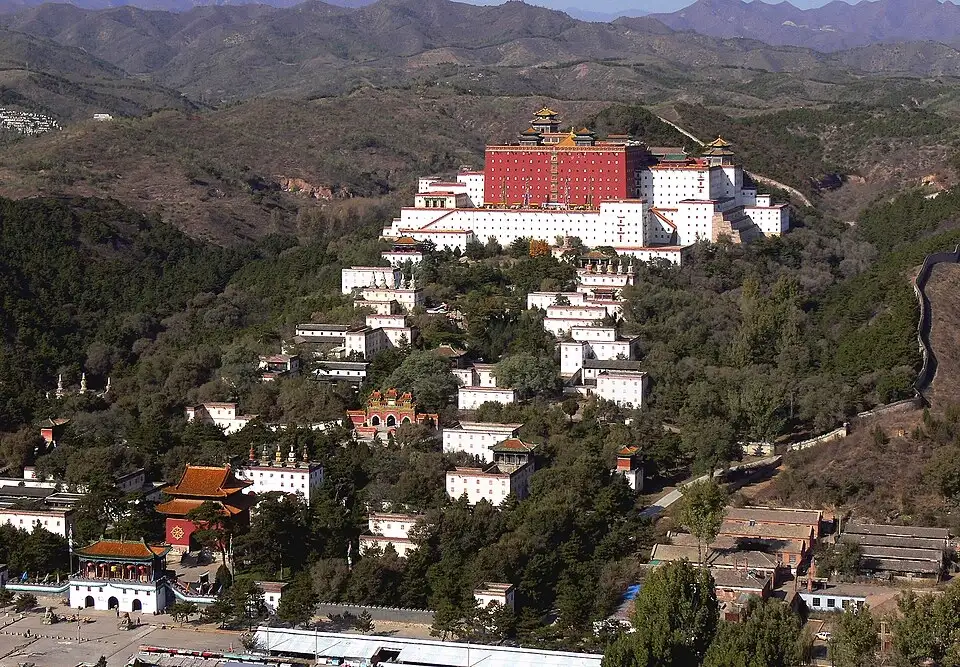
Two visitors in the trip archive remember spotting a cluster of red and white buildings from high ground at Chengde's Mountain Resort. One saw it from a summit, the other from near the rear wall. The buildings climbing the hillside belong to the Putuo Zongcheng Temple. Give the temple time of its own and you can see what a distant view leaves out: how you approach the main building uphill and how gates, steps and courts change the view as you walk.
Read the outline from a distance and the slope from inside
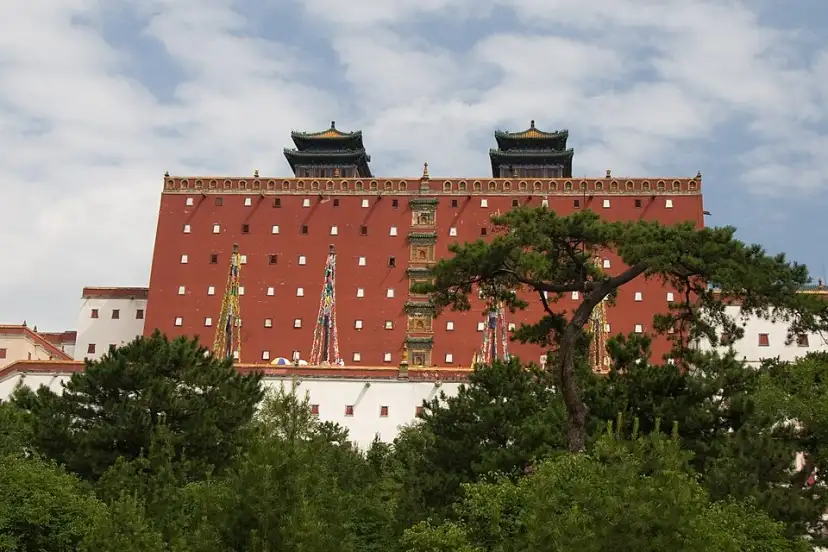
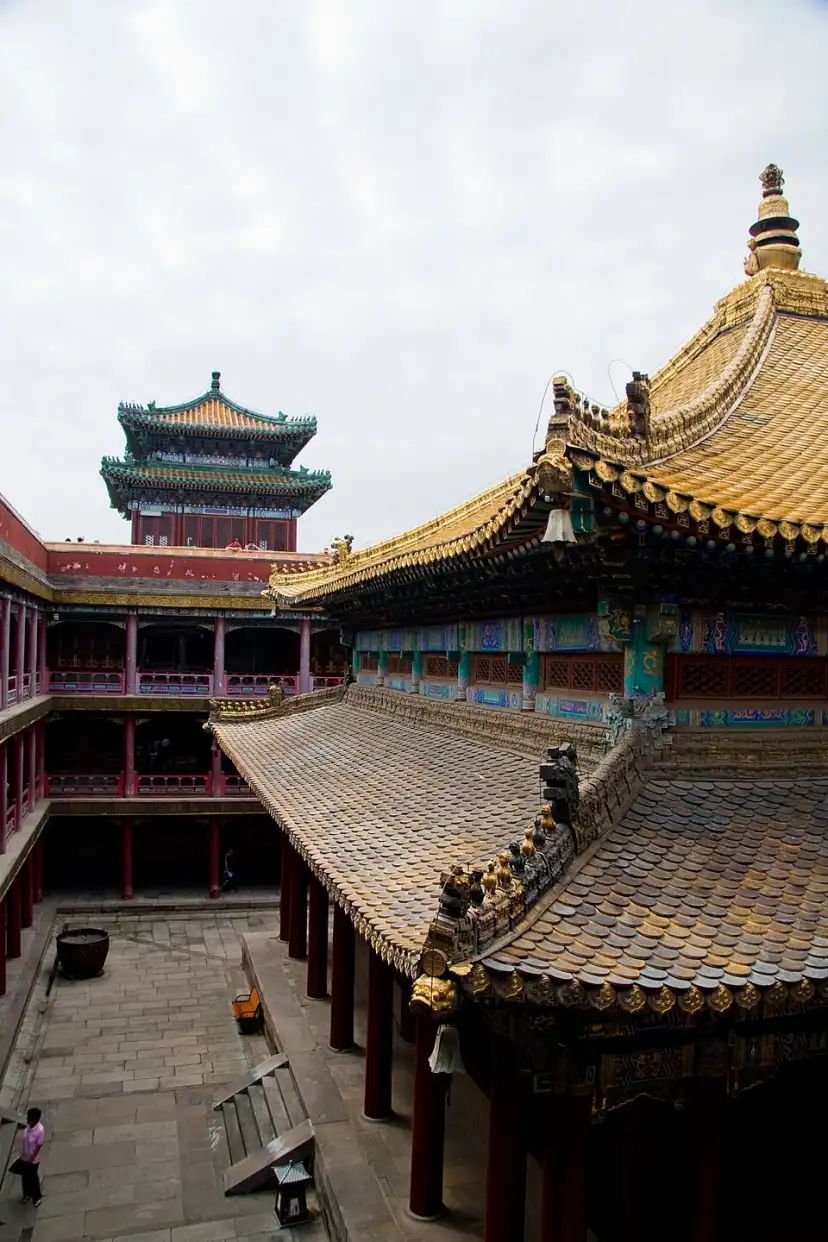
From the entrance in use, notice how the first gate and the rising ground direct your eye upward. From farther back, see how the red structure rises above the nearby white buildings. Up close, repeated openings divide the tall facade into smaller sections. If the steps are icy or someone in the group has had enough climbing, stop somewhere you can stand safely and look back. An oblique view often makes the change in height easier to see than a front-on photograph.
Use the Potala Palace as an architectural reference
The temple is often called the Little Potala Palace. It was built in Qing-era Chengde and drew on the form of the Potala Palace in Lhasa. Compare the red and white blocks, the position on a hillside and the distant outline, then return your attention to Chengde. Here you can look at how a Qing imperial temple fits into a northern mountain landscape. Give the Potala Palace its own visit if you want to understand its spaces and their history in Lhasa.
Connect the two stops around winter conditions
If you want to see both the Mountain Resort and the temple, check which higher paths at the resort are accessible for your date, then confirm the temple entrance, visitor areas and transport between the two. Shorten the uphill walk at the resort if you want to save your energy for the temple. When the light fades or the ground gets slippery, a short visit that takes in the red structure and surrounding courts from an open lower level is enough to make the stop worthwhile.