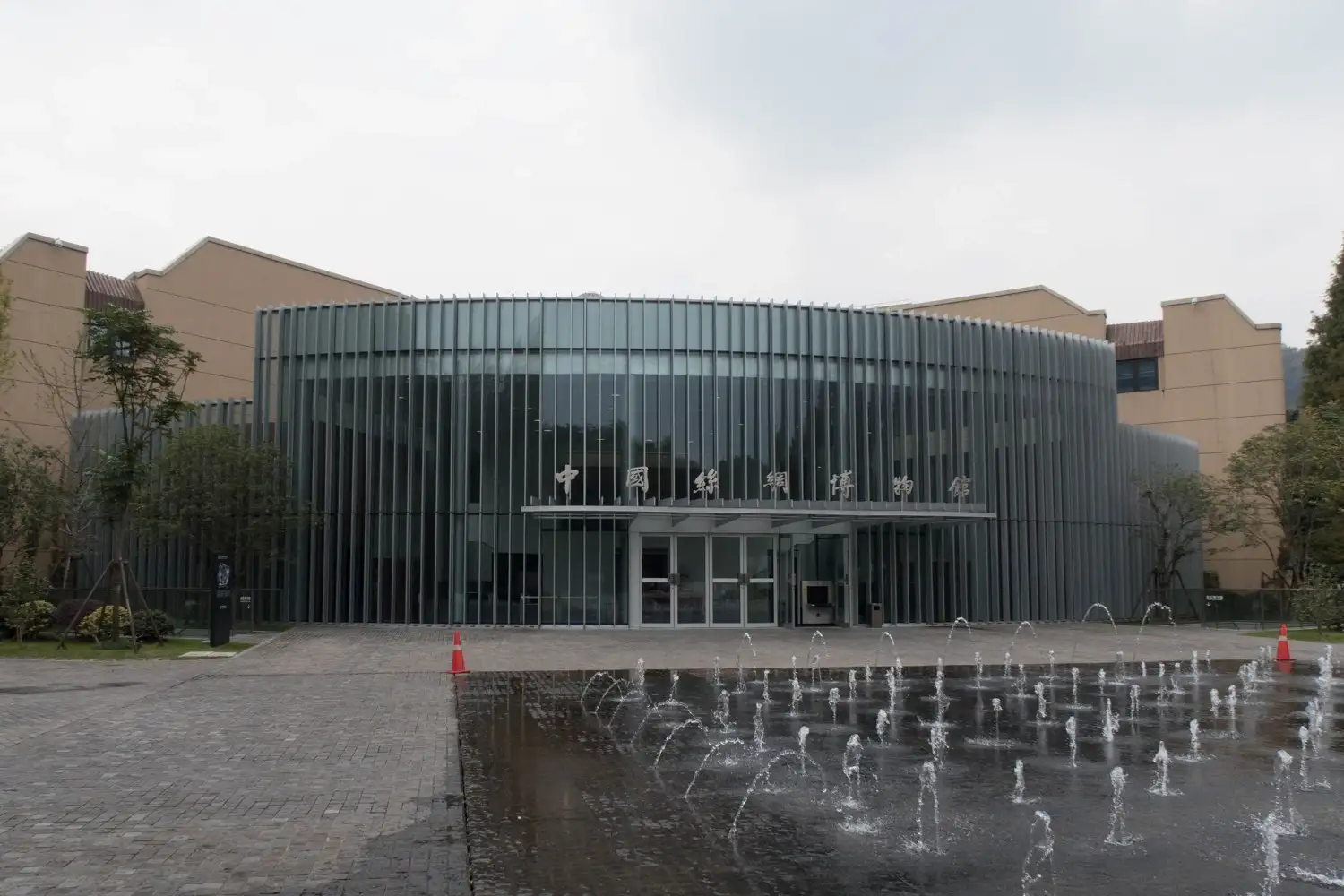
A trip note about Shanxi follows historic buildings from central Shanxi to the south and north. Around Pingyao, try giving that curiosity to one place. Shuanglin and Zhenguo lie in different directions outside the old city. Choose Shuanglin to see how painted figures tell stories through posture and drapery. Choose Zhenguo to follow the timberwork that holds up a hall's deep eaves.
At Shuanglin, take in a group before looking at a detail
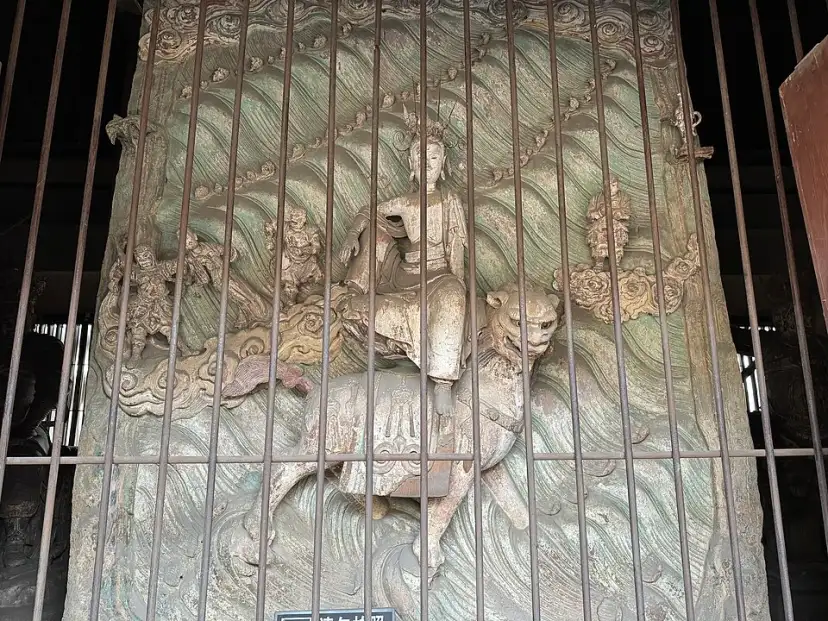
In the areas open to visitors, see how sculptures are arranged in a hall. Notice how the central figure relates to the smaller figures at its sides and behind it. Then pick one detail to follow: the line of a sleeve, a bent arm or the way a figure stands. In the reference photograph of Guanyin on the south wall of Shijia Hall, the figure is set into a larger sculpted scene. Read the group first. If a barrier limits the view or the light is low, stay in the visitor area and give your eyes time to adjust. Follow local rules on photography and lights.
At Zhenguo, look under the eaves from a corner of the court
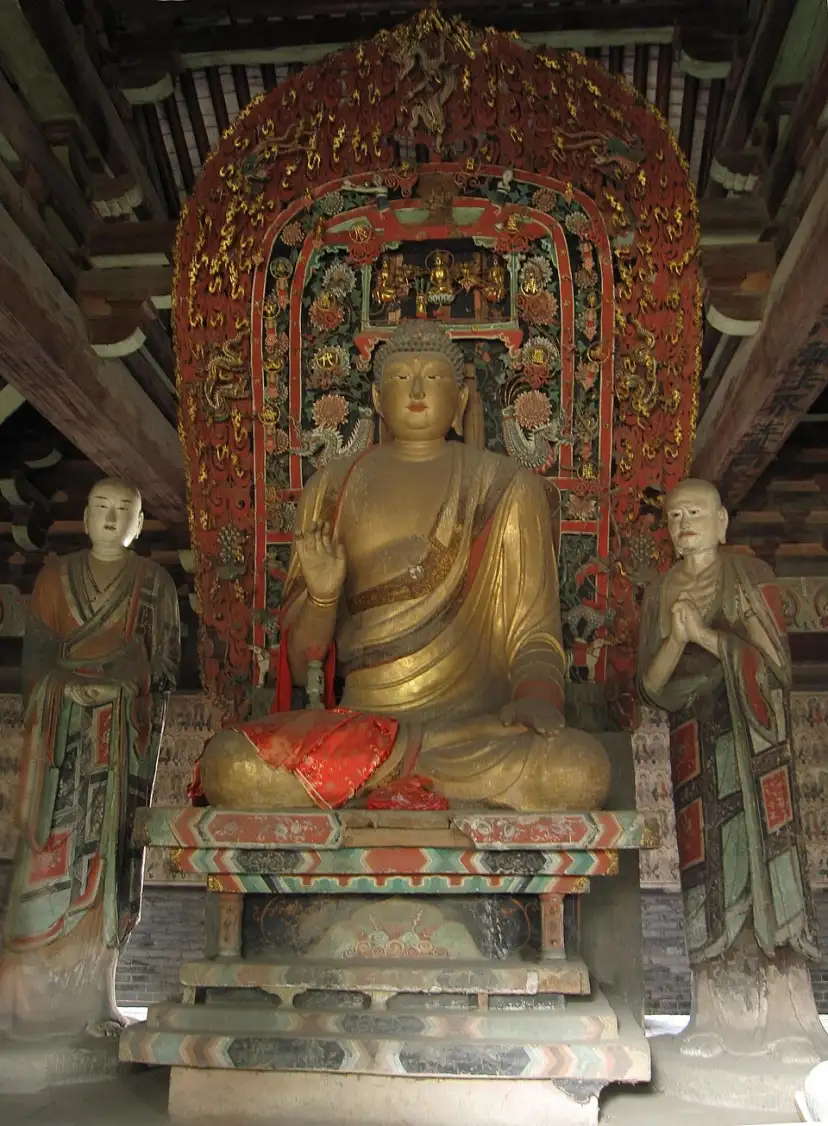
Look at Wanfo Hall from an angle that puts the roof, brackets and row of columns in one view. Follow the timber from the top of a column out toward the eaves. Then look from the front and see how the columns divide the facade into bays. If the interior is accessible that day, notice the space between the statues and the roof structure. The reference image of the hall's interior helps locate that space. When the interior is closed, the eaves and corners still give you a view of the structure.
Budget time to get out of town and back
Save the temple entrance and your return pickup separately, then confirm the areas you can visit. With shorter daylight or a group that gets cold easily, use an earlier slot for the temple and save a walk in the old city for after you return. If both subjects interest you and you have two half-days, give each temple its own slot. One fold of a robe, one doorway or one set of brackets you saw clearly can be what you remember from the trip.