Dongxing Travel Editorial Department · Travel Diaries and Pre-Trip Reading
A bustling street doesn’t need to be portrayed as a hidden ancient town.
Ciqikou is a place in Chongqing that’s easy to reach—and just as easy to find crowded during holidays. The streets are lined with snack stalls, souvenir shops, teahouses, and tourist-oriented stores—commerce is inherently part of the neighborhood today. Acknowledging this before you arrive means you won’t need to constantly search for a “true ancient town” devoid of signs and tourists once you get there. What makes it worth exploring is how commerce and residential life coexist on the slopes.
For international visitors coming to Chongqing for the first time, this tour can serve as a textbook-free lesson in urban geography. The main street helps you orient yourself; the steps transform a flat map into a three-dimensional route; and heading toward the river allows you to rediscover the connection between the old wharf and transportation. You can choose a focal point—whether a cultural space, a teahouse, or a spot along the riverbank—based on your interests, adjust your stops around it, and ensure your stroll has both a clear direction and time for deeper exploration. Two points that appear close on a map may be separated in Chongqing by slopes, staircases, and roads at different elevations. Before setting out, check the entrances and exits; once you arrive, look for street signs. This approach is more suitable for first-time visitors than simply wandering down alleys in the “quietest” direction.
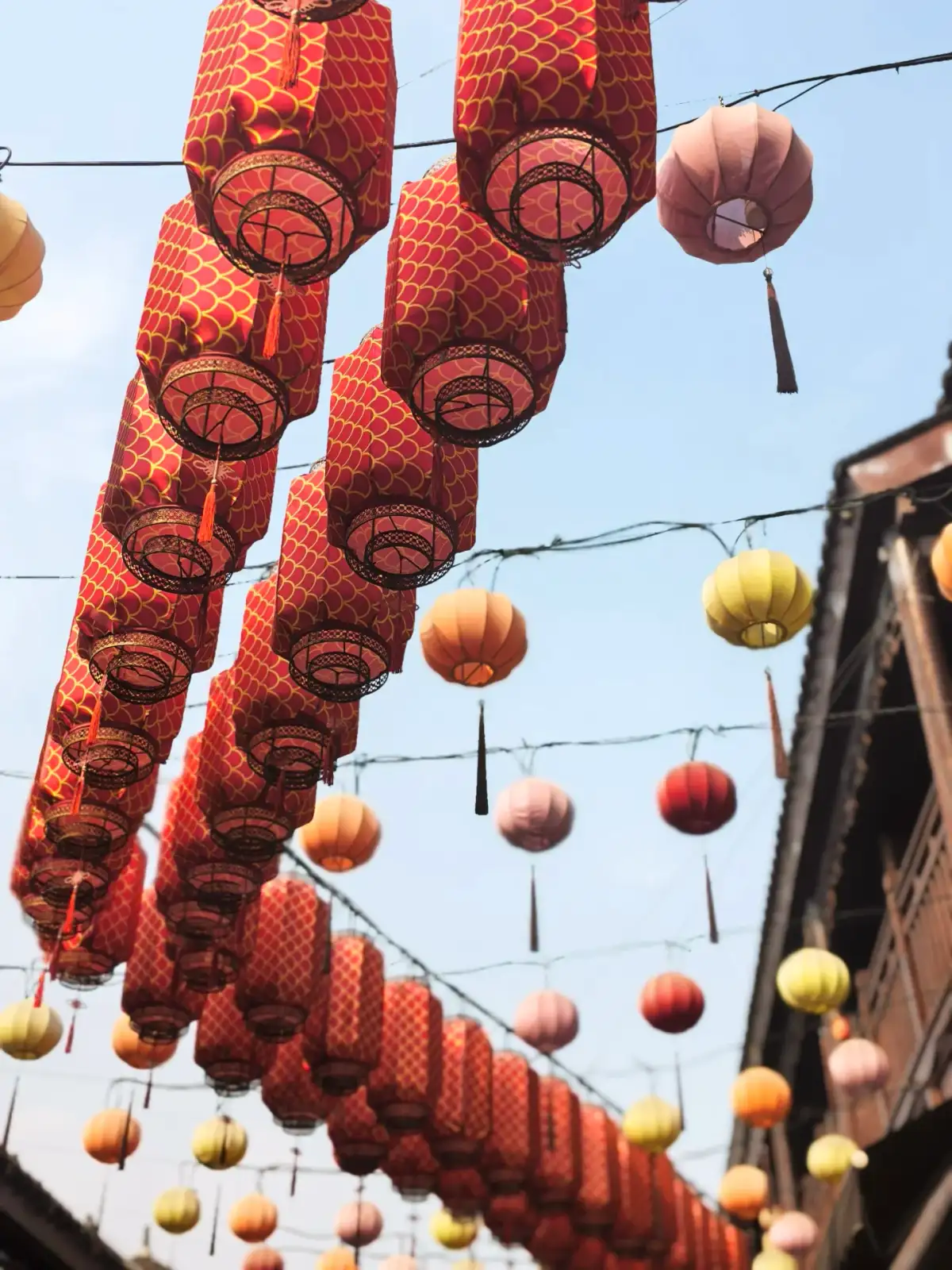
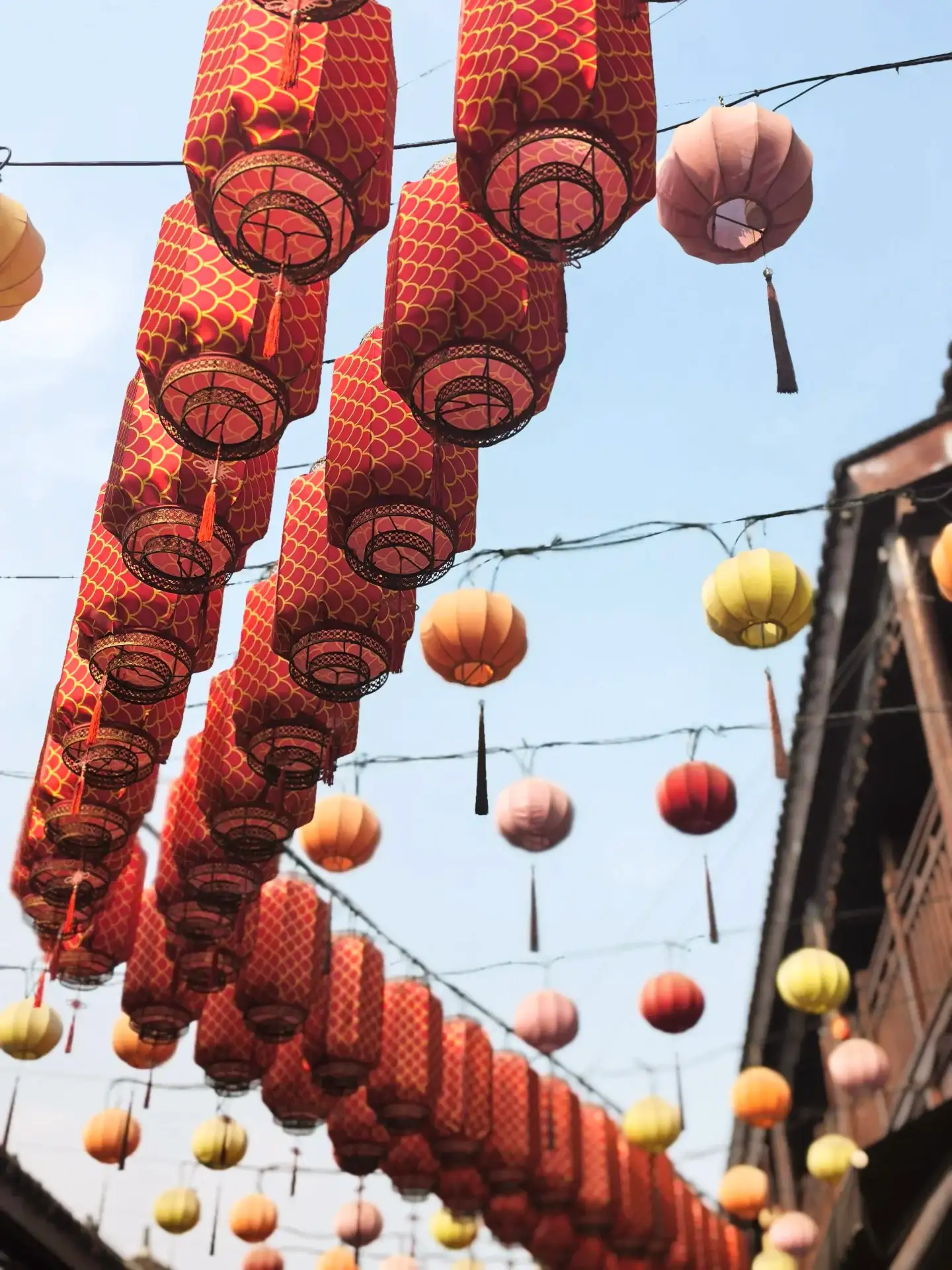
Colorful lanterns hanging above the wooden row houses in Chongqing’s Ciqikou.
Porcelain and the Wharf: Placed Within the Same Chapter of History
Ciqikou is located on the banks of the Jialing River, where the historic wharf trade laid the foundation for the neighborhood’s development. Chongqing’s civil affairs department’s toponymic records mention the area’s historical name—which is linked to the production and sale of porcelain—and trace the connections between the surrounding kiln industries and riverside trade during the Qing Dynasty. With this background in mind, a stroll down the streets now lined with food stalls and handicraft shops reveals a place where people have long gathered, traded, and lingered.
The name “Cizhi” does not prove that every building here once dealt in porcelain, nor does it mean that every ceramic item on the street is locally made. History should be understood through specific historical records and exhibitions, while for merchandise, it’s important to inquire about its origin, craftsmanship, and price. Stories about emperors in hiding, temple legends, or mysterious figures—if heard on the spot—can be treated as local folklore; there’s no need to present them as established facts. The direction of the Jialing River serves as a geographical clue for understanding this area, but the riverbank and traffic patterns will change with urban development; the docks seen in old photographs may no longer be accessible to the public. Today’s neighborhoods, past trade, and contemporary tourism each have their own distinct functions. By distinguishing between these three, a stroll gains a more concrete meaning than simply experiencing “old-world charm.”
Walk along the main street for a while to get your bearings.
After entering via a rail transit or road entrance, start by walking along the main streets for a while to familiarize yourself with the archways, key intersections, and public signage. Officials have recommended landmarks such as the Huangjueping Archway, Zhongjiayuan, Hanlinyuan, and Baoshan Palace as key points along a cultural walking route through the neighborhood; however, your actual selection of stops should be based on which sites are open that day and the on-site map. Just because a name appears on a recommended route does not mean that all courtyards are accessible at any time.
The food stalls, shopfronts, and calls to customers along the main street of Ciqi demonstrate how the tourism industry manages foot traffic. Take a moment to observe the scene, then pause to decide where to go next—this will help you avoid being swept along by the flow of people in line. If your travel companions want to buy different snacks, agree on a clear meeting spot beforehand—don’t wait while eating at the narrowest intersection. Lanterns, power lines, and wooden storefronts together make up today’s streetscape. You can observe how decorations are incorporated into the original row houses, or how shop signs and eaves divide the view on either side of the street. Focusing on one or two details is sufficient; too many “must-photograph spots” will force you to keep backtracking. When it gets crowded, you can also leave the main street for a public rest area and decide later whether to return to the shops, rather than feeling compelled to complete your checklist.
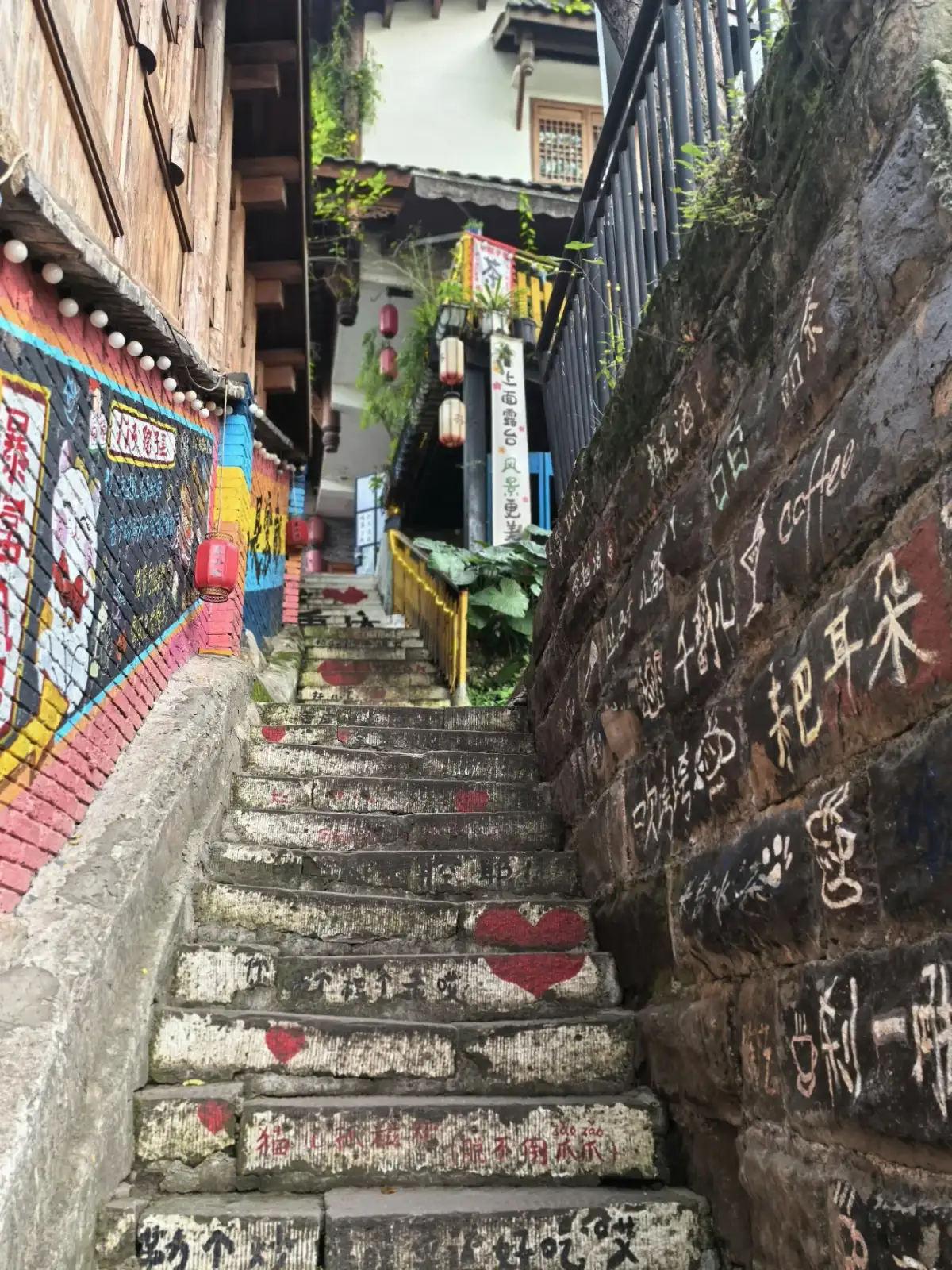
Stone steps rising between the colorful murals in the side alleys of Ciqikou.
Walking through side alleys, observe how the sloping terrain accommodates daily life
The side alleys of Ciqikou are best explored after you’ve walked the main street. Choose a public alley marked as accessible and free of “closed” signs, and observe how the stone steps run along the walls and how the plants at doorways, teahouse signs, utility lines, and residential fixtures all share the limited space. Electric meters, windows, and potted plants give concrete form to the needs of both living and business; observing these details also reveals how hillside neighborhoods integrate everyday amenities into limited spaces.
Just because you’ve veered off the main street doesn’t mean you can enter every small doorway. When you encounter private residences, staff-only entrances, maintenance areas, or obvious living spaces, simply stop at the edge of the public road. The painted stairwell walls in the photos are decorative elements visible in the street scene; they do not imply that tourists are encouraged to write on or post stickers on other walls. When taking photos, leave a clear path for local residents, delivery vehicles, and other pedestrians—don’t ask them to wait just to get an unobstructed shot. If the number of steps becomes overwhelming or your companions need a break, return to the main road you’re familiar with—don’t make “the deeper, the more authentic” your goal. The value of walking on sloping terrain lies in understanding how the streets are used: over the same distance, carrying goods, walking home, and sightseeing offer completely different physical experiences.
When it comes to food, ask about the ingredients first, then discuss the Chongqing flavor.
The cuisine of Ciqikou is a key clue to the neighborhood’s character. Local historical records in Chongqing link dishes such as mao xue wang, qian zhang pi, and salt-and-pepper peanuts to the area’s culinary culture, and teahouses also hold a special place in the city’s collective memory. Choose a dish you’re familiar with or find interesting to try, then sit down for a meal that suits your taste—there’s no need to sample everything labeled as a “Chongqing specialty.”
The display of chili-based condiments offers a gateway to understanding local flavors. Start by asking about ingredients and preparation methods, then choose your meal based on your preferences—rather than judging the spiciness solely by the color of the dish. For travelers unfamiliar with Sichuan and Chongqing cuisine, even “mildly spicy” may not match your tolerance level. Before ordering, ask whether the spice level can be adjusted and whether the dish contains peanuts, meat, offal, or other ingredients you need to avoid. The name and photo of a dish like “Mao Xue Wang” may not reveal all its ingredients, and menu translations are no substitute for confirmation. When purchasing packaged foods, check the labels, storage conditions, and whether they can be brought along on the next leg of your journey; entry regulations for foreign countries should be verified separately. Street food tastings don’t have to become a social obligation—simply state clearly whether or not you intend to buy. The culinary experience of travel can come from understanding a particular cooking method or patiently placing an order—it doesn’t have to rely on exaggerated descriptions like “so spicy it brings tears to your eyes” to prove you’ve been to Chongqing.
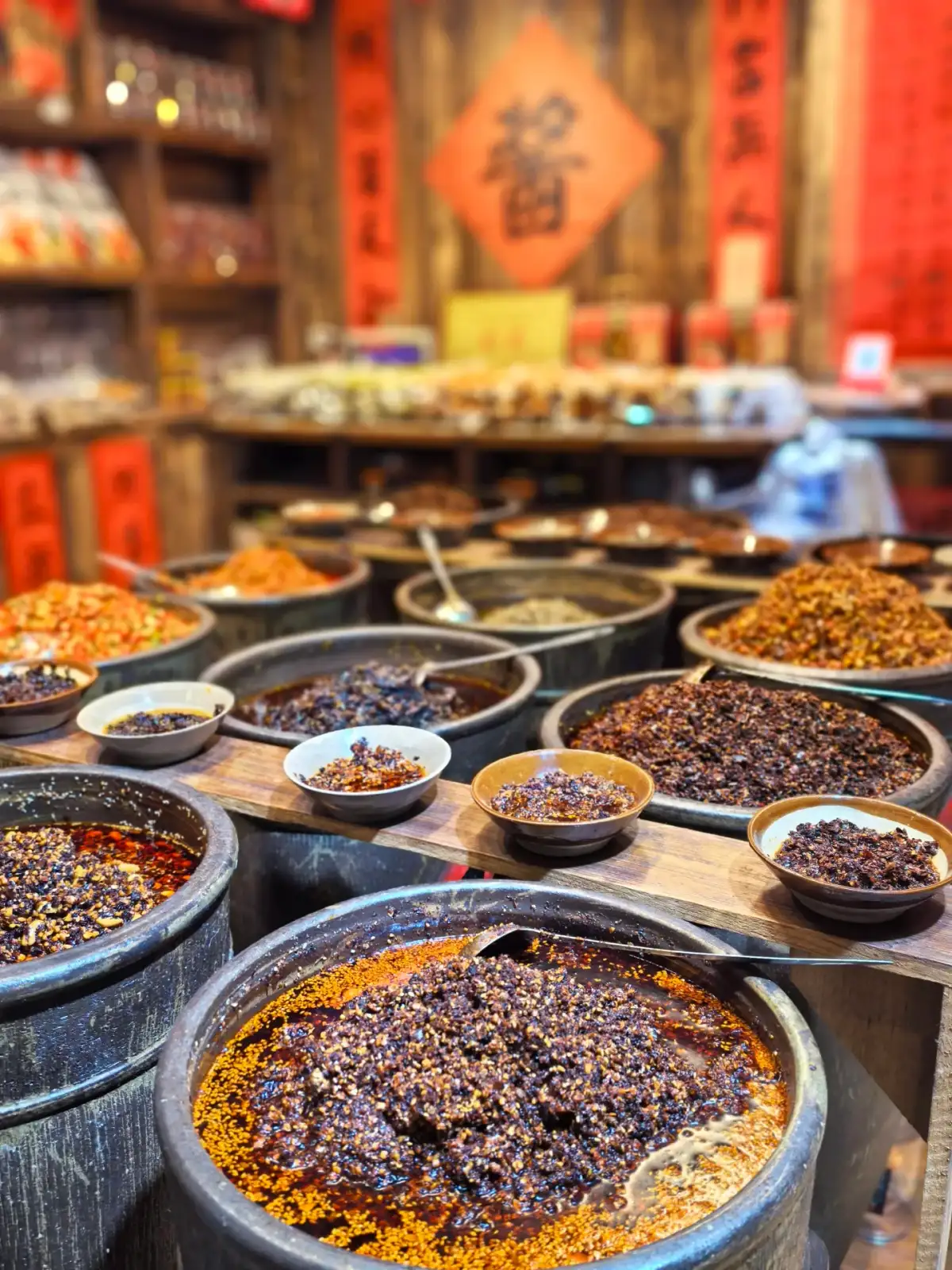
Chili-based seasonings displayed on wooden shelves in a shop in Ciqikou.
Teahouses, courtyards, and performances—choose based on what truly interests you
If you plan to spend a little more time in Ciqikou, set aside some time for a teahouse or an open courtyard. Before sitting down, be sure to ask about the pricing structure, whether there’s a minimum charge, how long you can stay at a table, and whether a performance is included. Some establishments bundle tea, music, or Sichuan opera performances into a single package; the specific program and timing are arranged by the venue on the day of your visit. Just because the neighborhood has this cultural tradition doesn’t guarantee that you’ll be able to watch a performance as soon as you arrive.
Zhongjia Courtyard, Baoshan Palace, or other cultural venues are best chosen based on your interest in their exhibitions and displays. When exploring courtyards, pay attention to the relationship between the exterior facade and the interior, and consider how an old space has been repurposed for new exhibitions, cultural activities, or commercial use. At religious sites such as Baolun Temple, be sure to follow their visiting and photography guidelines; if the site is closed, do not attempt to enter through side doors. For international visitors, arranging a guided tour with a clear focus is more rewarding than spending an entire hour searching for the “most authentic teahouse.” Sitting down is also part of the itinerary, especially on summer afternoons or rainy days. Tea, conversation, and people-watching each have their own rhythm; the services provided by businesses should not be misconstrued as locals actively inviting tourists to participate in their private lives.
Head toward the Jialing River to pinpoint the boundary between land and water
If time and weather permit, you can extend your walk toward the Jialing River after exploring the neighborhood. The riverfront provides a clearer geographical context for the stories of the old docks and opens up the view beyond the narrow alleys. Which specific route to take, whether you can reach the riverside promenade, and whether there are any temporary restrictions depend on the on-site signage that day. Road construction, river water levels, and urban management can all affect the accessibility of a particular section of the riverfront.
Chongqing’s official riverside tourism information in recent years has also covered Ciqikou and other riverside destinations, but water-based tours and riverside walks require different planning. If you plan to take a cruise, you’ll need to verify the operator, departure and arrival points, sailing conditions, and the day’s schedule separately—don’t assume you can board just because a pier icon appears on the map. When walking along the river, do not enter closed-off riverbanks or climb over guardrails to get close to the water; adjust your route promptly if you encounter rain, slippery sections, or closure notices. If you plan to visit downtown locations such as Hongyadong later that day, consider the public transportation options and foot traffic between the two sites, and allow enough time for dinner and your return trip. Ciqikou doesn’t need to be “complemented” by rushing to another popular destination—a stroll through the neighborhood, a meal, and a walk along the accessible riverbank are more than enough to fill half a day.
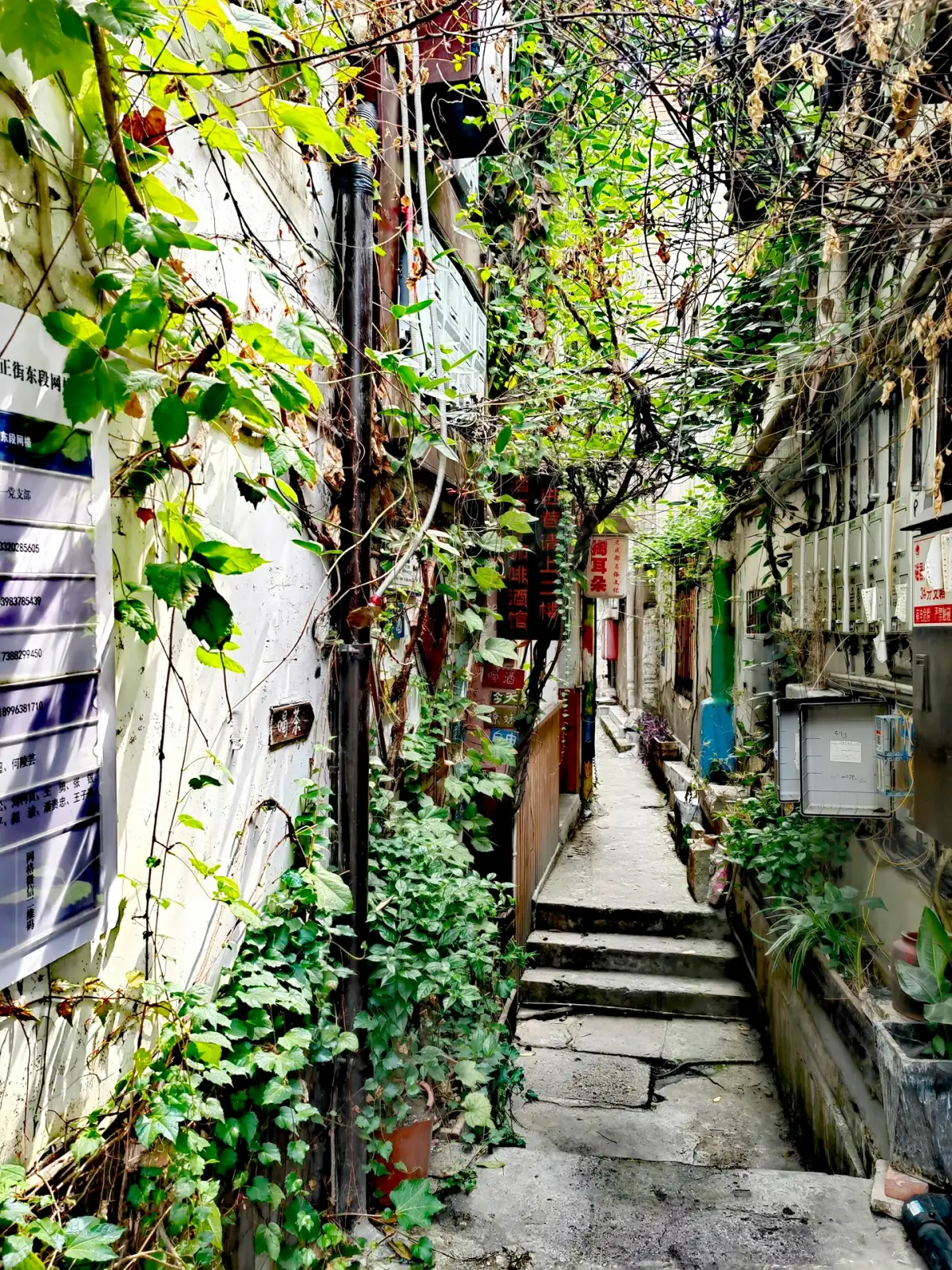
The narrow stone-step alleys of Ciqikou, nestled among vegetation, utility lines, and shopfronts.
In Chongqing, allow a little extra time for slopes and rain
The subway is a practical way to reach Ciqikou; for specific transfers, exits, and walking distances from the station, refer to a map on the day of your visit. Don’t assume that “right outside the station” means the entire route is flat; choose your entrance and plan for the final flight of stairs based on the needs of your companions. When booking a ride-hailing service, provide a location where the vehicle can park to pick you up or drop you off, as the check-in points along the main street may not be suitable for vehicle access. Returning to your original entrance on foot may not be the most convenient route, so it’s best to decide on your departure direction in advance.
First-time visitors should set aside half a day. Plan your itinerary in the following order: “Orient yourself on the main street—visit a cultural space—explore a public side alley—dine or take a tea break,” and then decide whether to add a visit to the riverfront. During hot weather, avoid rushing along steep slopes for extended periods; on rainy days, bring a lightweight umbrella, and walk slowly on the stone pavers and steps. Peace and quiet cannot be guaranteed on holidays, and shops and courtyards may adjust their operating hours. The main street, side alleys, and riverfront each have their own pace for exploration; reviewing the route you’ve actually walked before leaving will help you better understand how elevation changes, commerce, and traffic collectively shape the neighborhood. If, upon leaving, you can recall a particular turn in the steps, the actual ingredients of a dish, or the direction of the riverbank, it will demonstrate your understanding of this Chongqing neighborhood far better than a whole set of “must-visit” photos.
Further Reading and References
Chongqing · Destination Overview
Compiled and organized by the Eastbound Travel Editorial Department based on publicly available travel notes and listed information. Intended as pre-trip reading; this is not a personal account of firsthand experience. Please verify opening hours, transportation, reservations, and service arrangements according to your actual travel dates.
Chongqing Municipal Government: Ciqikou Cultural Tour Route
Chongqing Local Chronicles: Cuisine and Teahouses in Ciqikou
Chongqing Municipal Government: 2026 Riverside Tourism Information
Is it worthwhile if shopping is not your focus?
A Ciqikou Chongqing walk can use the main street for orientation before turning to Ciqikou public side lanes to examine steps, thresholds and sloping buildings. Read the port and pottery themes through reliable interpretation rather than presenting the town as undiscovered. Where lanes serve residents, observe briefly from a stable position without entering private doorways for pictures.
Making food and a teahouse more specific choices
Ask about Ciqikou snack ingredients such as chilli, meat, broth and nuts before choosing around dietary needs. Check what a teahouse or performance actually offers that day rather than inferring a traditional experience from its decor. Verify permitted access separately if heading towards the river. Slopes and rain affect pace, making an agreed return point more useful than adding more lanes.
Planning references
Planning reference: Ciqikou Chongqing walk 1
Planning reference: Ciqikou Chongqing walk 2
Planning reference: Ciqikou Chongqing walk 3