
East Travel Editorial Department · Travel Diaries and Pre-Trip Reading
Start by exploring Xizhou through its streets, then walk out to the fields
In travel photos, Xizhou is often reduced to a picturesque rice paddy, yet the town’s streets, courtyards, and commercial history are equally worthy of your time. For international visitors visiting Dali for the first time, start by getting your bearings near Sifang Street, choose a officially open Bai ethnic residence or exhibition space, and then walk along the public roads toward the fields. Once you understand the relationship between the houses and the town, the rice fields will become more than just a backdrop for photos.
Xizhou is situated within the geographical landscape of Cangshan Mountain and Erhai Lake in Dali, but arriving in town does not mean you’ve reached the lakeshore, nor should you assume that the distant mountain views represent hiking trails you can set out on immediately. It’s best to spend a half-day or a little more than half a day here, observing how life in the town intertwines with the surrounding agricultural landscape. The townhouses, fabric dyeing workshops, and farmlands each offer a distinct theme. By first exploring the courtyards and shops within the town, then walking along the public roads to observe the agricultural landscape, the various elements of the experience will gradually come together. If you’re seeking a more immersive experience during your trip, you can book visits to venues with clearly defined open hours and guided tours, or participate in verified craft workshops. Casually wandering into a family’s courtyard simply cannot replace this kind of carefully curated cultural encounter.
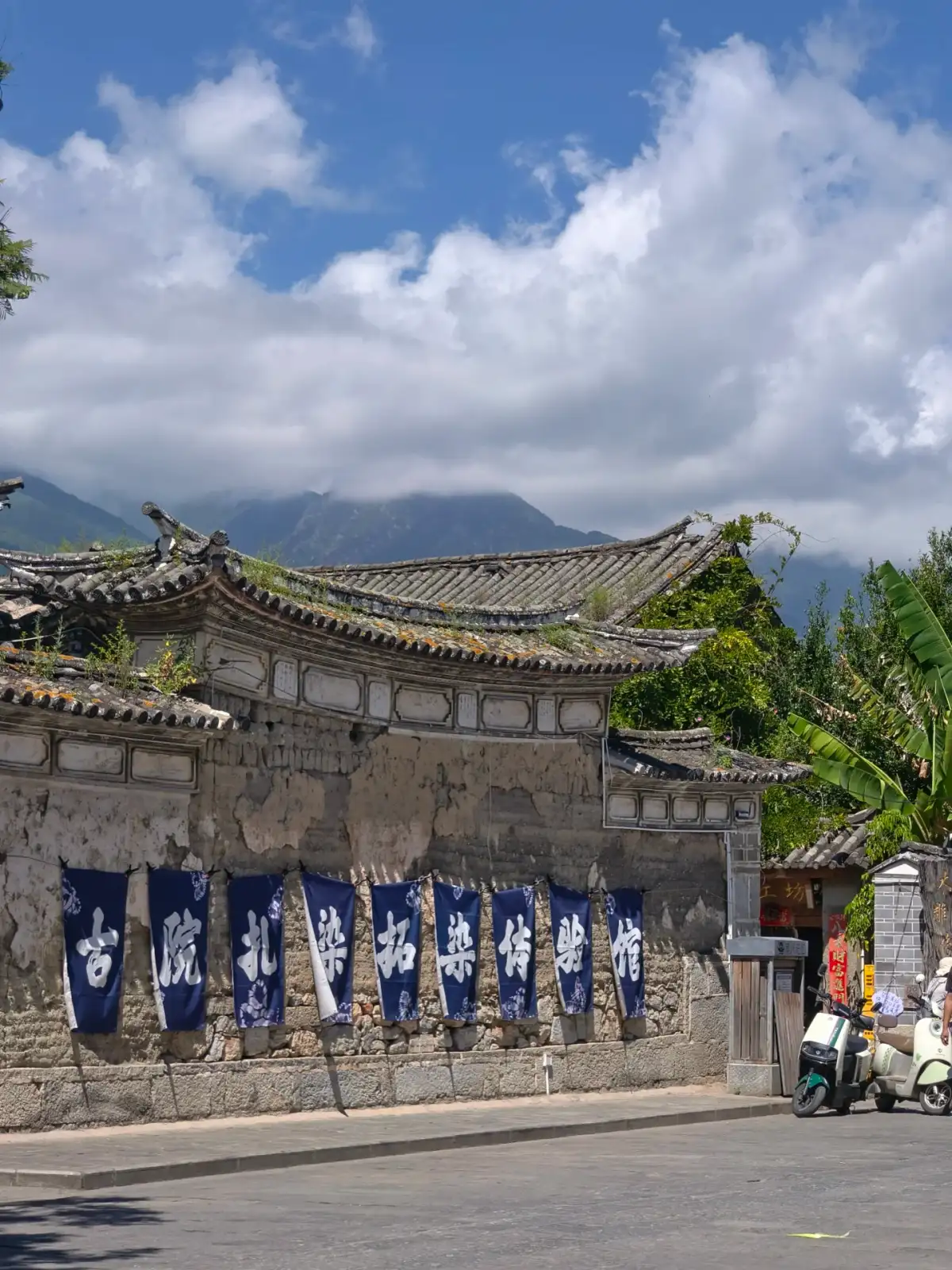
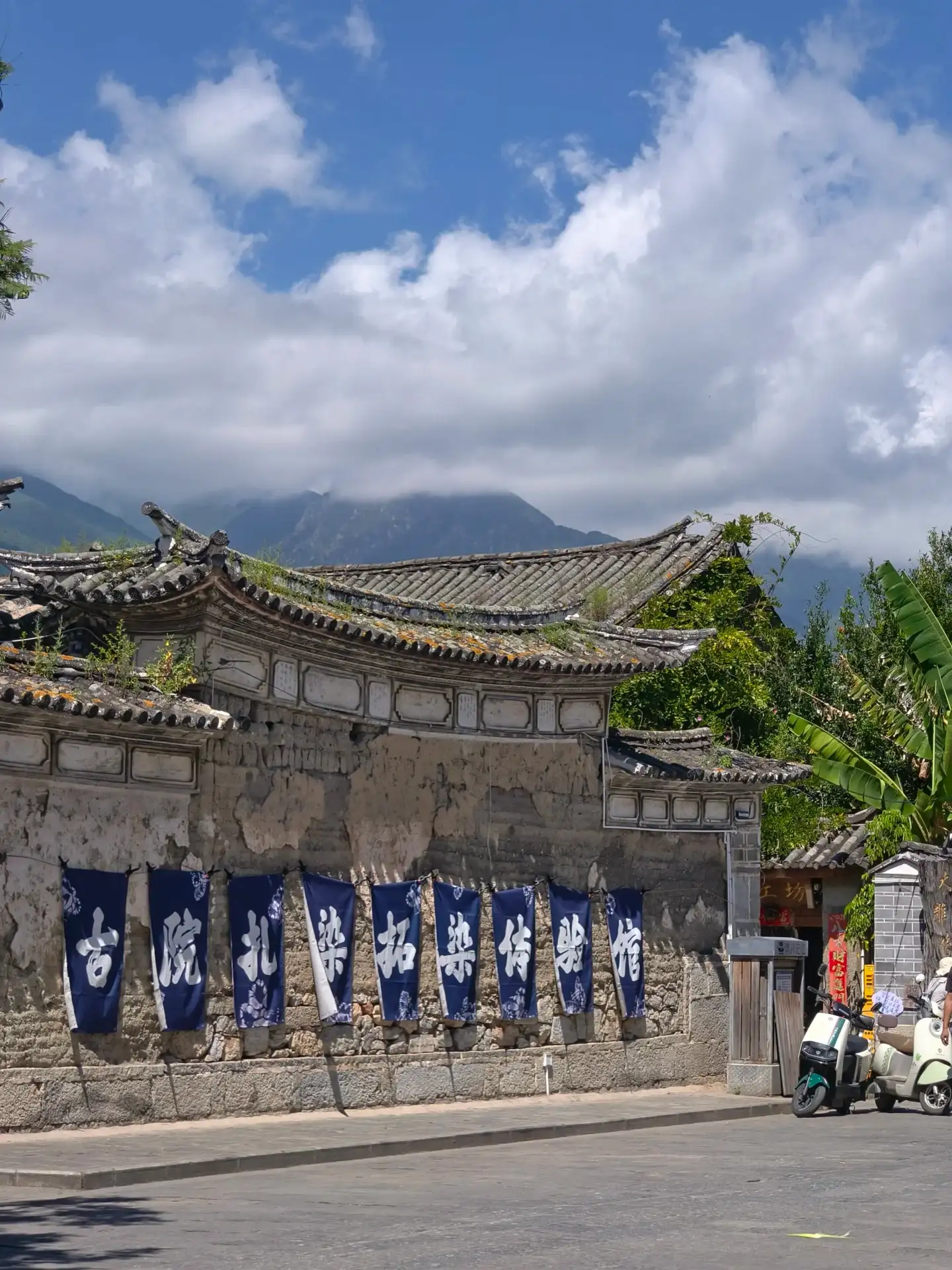
The gray-tiled courtyard walls, fabric banners, and distant mountain views of Xizhou.
Within these white walls lies a system of residential organization.
Bai ethnic dwellings are not merely white walls, gray tiles, and decorative gate towers. Official Dali materials on residential murals describe layouts such as “three wings and a screen wall” and “quadrangle with five courtyards,” which illustrate how houses, courtyards, and light-filled spaces are organized together. When visiting an open courtyard, start by observing the floor plan and the location of the gates, then examine the main hall, side rooms, and the decorative wall, and finally take a close look at the murals and inscriptions.
The “Three Courtyards and a Partition Wall” concept can help you understand enclosed courtyards, but don’t assume that a building conforms to this complete layout just because you see a white wall. Residential buildings vary depending on when they were built, family needs, and subsequent use; exterior photos are usually insufficient to judge the entire internal structure. For foreign-language readers, guides can explain that a “fang” refers to a row of houses forming a courtyard, specify the exact location of the “zhaobi,” and then discuss the decorative motifs. This approach is easier to understand than presenting a barrage of architectural terms all at once. When visiting, stay within designated areas; do not climb stairs or access the second floor simply because they are visible. If a building is still used for residential, office, or commercial purposes, respect the occupants by allowing them unobstructed access to their living and working spaces.
The paintings on the courtyard walls, juxtaposed with modern-day life
Many buildings in Xizhou feature colorful paintings, calligraphy, and geometric patterns on their facades and walls. Upon closer inspection, note where the artwork is placed—whether above the gatehouse or in the center of the screen wall—and how the borders connect to the tiled eaves. These details integrate the decoration into the architecture itself, rather than treating it as a painting casually hung on the wall. Official Dali sources describe the painted decorations of Bai ethnic residential architecture as a living cultural tradition, and even today, there are still people who maintain and create them.
In photographs, modern windows, water tanks, store signs, and vehicles may appear alongside traditional rooftops. These elements demonstrate that the dwellings are actively in use; there is no need to mentally erase all contemporary features. The specific meaning of a particular pattern on a wall should be confirmed based on on-site signage or an appropriate explanation; one should not automatically apply a generic interpretation of good fortune simply because it depicts flowers and birds. Even when a building is undergoing maintenance or repainting, do not immediately dismiss it as a “fake historic building” just because the colors are bright. The value and state of preservation of historic buildings require more comprehensive information. To understand a building, start with its exterior, then use nameplates and guided explanations to learn about its construction, use, and preservation; it’s also worth observing its historical context alongside the neighborhood’s current environment. Reading a nameplate carefully before photographing the corresponding building will make it easier to recall exactly what you saw when reviewing your photos later.
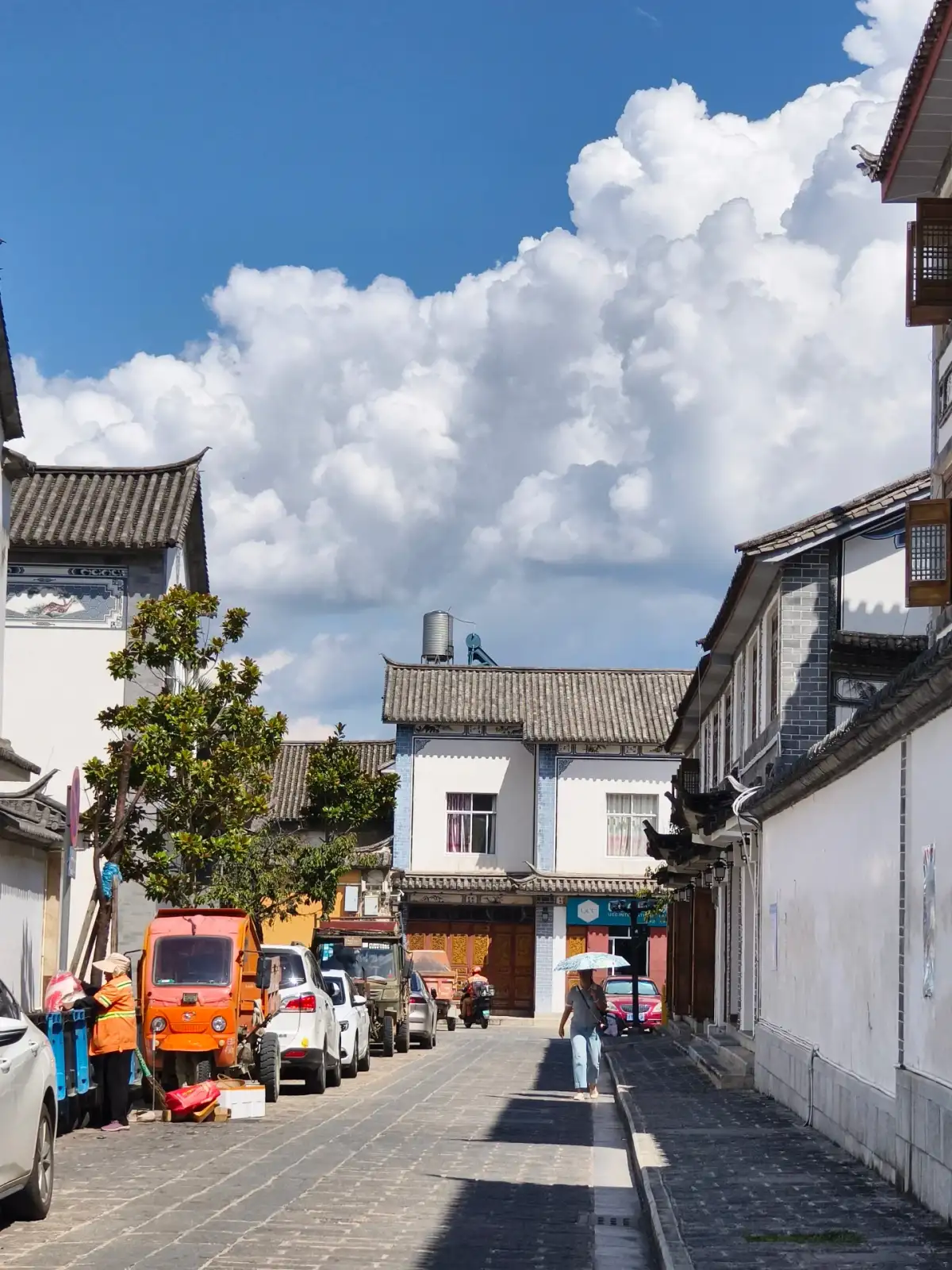
The white-walled, gray-tiled townhouses of Xizhou and the streets where people go about their daily lives.
Spaces related to the Yan family are ideal for exploring the interplay between commerce and family life.
Xizhou’s commercial history offers another lens through which to understand Bai ethnic courtyard complexes. Official Dali documentation on preservation and utilization covers the cultural exhibits at the Yan Family Compound, incorporating trade, family life, and related educational concepts into the narrative. Travelers interested in courtyards can choose to visit the officially open areas of the Yan Family Compound; first, verify its full name and tour details, then use the exhibits to understand the connections between the figures and the architecture.
Similar names found online, such as “Yan Family Compound” or “Yan Family Mansion,” may refer to different specific sites and operational programs. When making reservations or arranging transportation, be sure to confirm the address; do not assume that every photo of an ornate gatehouse depicts the same Yan family compound. Once you’ve identified the specific site, connect the gatehouse and courtyard layout with the provided explanations; this will help you form distinct impressions of the various buildings associated with the same family name. If there’s a commercial history exhibition on-site, focus on how trade influenced family life and how the buildings balanced residential and hospitality functions—rather than just looking for the perfect wall to take a photo against. The business ventures and wealth of historical figures should not be exaggerated into success stories with no basis in fact. Allow sufficient time for each guided tour; if you’ve already examined a courtyard in detail, there’s no need to enter multiple similar spaces just to check off the “list of all the town’s grand courtyards.” A visit focused on understanding the layout and the people involved is usually more meaningful than simply collecting admission tickets one after another.
Xizhou Baba: A Delicious Start to Lunch
When it’s time to eat, try Xizhou Baba as a way to experience the local cuisine. According to the Dali Tourism Group’s official website, it is a flaky pastry available in both sweet and savory varieties, traditionally baked by heating from both the top and bottom. Once at the restaurant, you can review the menu, ask about the day’s offerings, and then decide whether to order a serving for yourself or to share with your companions—there’s no need to judge the quality of every establishment based solely on online rankings.
For travelers with dietary restrictions, “sweet” does not automatically mean vegetarian or free of animal fats. Traditional recipes mention the use of fats, and recipes may vary by vendor; be sure to ask about the flour, fats, fillings, and other ingredients you need to avoid. If the shop is busy, do not block the workstation while taking close-up videos; if you’d like to learn about the preparation process, ask politely without disrupting business operations. Xizhou also offers other everyday dining options; pair staple foods with a full lunch as needed—do not assume that eating a single pancake will be enough to sustain you for the long walk ahead. When choosing a restaurant, consider hygiene, seating, the menu, and your return route, and allow time to sit down and rest. Ask about portion sizes and preparation methods before ordering, and confirm your return plans after you’ve been seated. This way, you can integrate local cuisine into your entire trip, rather than simply adding another line to your list of places to “check off.”
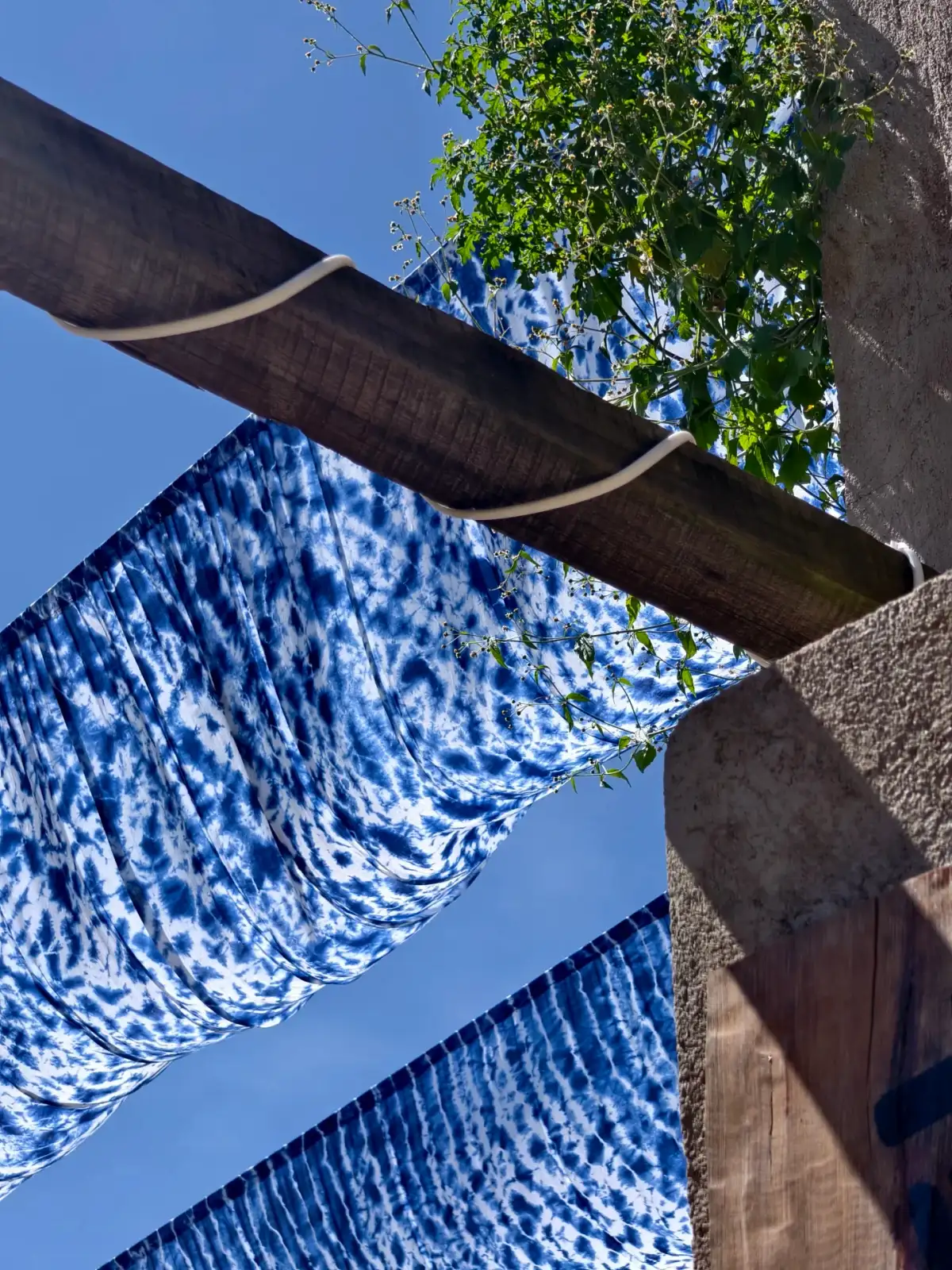
Blue-and-white dyed cloth hanging beside buildings in the Xizhou district.
Textile dyeing can be observed, or you can take the time to learn the craft in depth.
The blue-and-white dyed fabrics in the neighborhood add vivid color to photos of Xizhou. You can start by observing the patterns, colors, and drying methods of the fabrics hanging beside the buildings; to understand the production process, however, you’ll need to consult shop descriptions or participate in authentic, open-to-the-public craft activities. If you’re interested in tie-dyeing, look for shops or workshops with clear explanations and ask specifically what the finished products and hands-on experiences entail—rather than assuming that any blue-and-white printed cloth is proof of authentic, handcrafted work.
Before participating in an activity, confirm how long it will take, whether you can take your creation home the same day, if any follow-up cleaning or shipping is required, as well as the materials used and any clothing care instructions. For international travelers, allowing the finished product to dry is also related to luggage arrangements for departure, so don’t leave this experience until the last ten minutes before you leave. If you’re buying just a single piece of fabric, ask about the material, production method, care instructions, and dimensions, and choose items you’ll actually use. When observing artisans at work, respect their wishes regarding photography and avoid turning unauthorized close-up shots of their faces into travel souvenirs. The value of a handicraft experience lies in understanding how a specific step forms a pattern and how much patience it requires; there’s no need to portray a brief experience as having mastered an entire traditional craft, nor should you ask the shop to perform a story packaged as a “chance encounter” for tourists.
Head out to the fields to see the relationship between crops and villages
After leaving the town center, you can follow the roads accessible that day to explore the surrounding fields. The appearance of the rice paddies changes with the agricultural seasons: the green of the growing season, the gold of the ripening season, and the bare fields after harvest each represent a distinct part of the agricultural cycle. A festival from a particular year or photos found online cannot guarantee that you’ll encounter the exact same conditions on your next visit. Dali authorities have previously publicized events related to the Xizhou rice paddies, but the dates and scope of these events apply only to the announcements in question.
Standing on a public road and observing the fields—noting the distribution of irrigation channels, field ridges, village houses, and the surrounding hills—provides a deeper understanding of the environment than stepping into the crops to find a photo angle. Farmland is a productive space; do not trample rice seedlings, do not tamper with agricultural facilities, and do not assume a field ridge is open to visitors simply because you see others walking on it. For commercial projects such as sightseeing facilities and trains along the fields, verify their operating hours and fees separately; do not confuse them with traditional agriculture itself. When choosing activities near the fields, first clearly distinguish between activity areas, cultivated areas, and public roads to accommodate the needs of observation, rest, and local production simultaneously. If you encounter farmwork, vehicles, or transport equipment, yield the path first. If rain or wind is approaching, or if the ground is muddy, view just a short stretch near the town’s edge and then return—you don’t need to walk the farthest distance to prove you’ve been there.

The green fields surrounding Xizhou, with distant mountains and clouds in the background.
When planning your return to Dali, don’t fill up your schedule with the West Lake route.
Xizhou can be planned as part of a trip to the west of the lake, where Dali Old Town is located, but the final leg of the journey—the walk to the town and the fields, as well as the return trip—will take time. When choosing public transportation, a taxi, or a pre-arranged vehicle, confirm the day’s route, pick-up and drop-off locations, and the pickup point after the tour ends. Send the driver the address in Chinese along with the location coordinates, and be sure to specify whether you’re heading to the town center, a particular courtyard, or the entrance to the rice paddies to avoid confusion, as “Xizhou” can refer to different destinations.
First-time visitors may follow this suggested itinerary: “Orientation near Si Fang Street—one open courtyard—lunch or a craft activity—the road alongside public fields.” The estimated half-day to just over half-day is only a rough guide; adjust your schedule based on the exhibits and how long you wish to linger at each location. If you plan to visit Zhoucheng, the Erhai Lake shore, or other villages, you should reduce your itinerary accordingly for each additional destination, so that your stroll through the town doesn’t become a mere interlude in a rushed tour around the lake. When the sun is strong, bring sunscreen and water; on rainy days, watch out for water running off eaves and slippery surfaces; Market days, festivals, and weekends may also affect foot traffic. For the latest information on openings, events, and transportation, please refer to official sources and the organizers. What Xizhou truly offers is a concrete understanding of the structure of a courtyard, the ingredients of a flatbread, and the seasons of a rice field—rather than simply collecting every white wall and rice paddy as a uniform form of nostalgia.
Further Reading and References
Compiled and organized by the Dongxing Travel Editorial Department based on publicly available travel notes and listed information, this guide is intended for pre-trip reading and does not serve as a personal travelogue; opening hours, transportation, reservations, and service arrangements should be verified according to your actual travel dates.
Dali Municipal Government: Preservation and Cultural Utilization of the Yan Family Compound
Dali Prefectural Government: 2025 Xizhou Rice Paddy Events
Dali Tourism Group Official Website: Xizhou Po Su Ba Ba
How can one courtyard offer more than white walls?
Begin a Xizhou village walk around Sifang Street, then enter a building that is actually open to visitors. Xizhou Bai courtyard observation starts with how walls, gateways and the court are organised, comparing decoration's position with present use. Spaces associated with the Yan family can add a commercial and domestic subject; use interpretation for names and dates rather than inferring them from appearance.
Must fields and craft both join the visit?
A Xizhou field-edge walk can follow public roads to compare crops with the village, without entering planted ground for portraits. Textile enthusiasts can shorten the field section and leave uninterrupted time to ask about dyeing. Landscape enthusiasts can move from the open building towards the fields. Ask about ingredients when trying Xizhou baba, and allow separate transport time back towards Dali.
Planning references
Planning reference: Xizhou village walk 1
Planning reference: Xizhou village walk 2
Planning reference: Xizhou village walk 3


