planning their first visit to the Dazu Stone Carvings, the most common question is, “Can I see both Baoding Mountain and Beishan in a single day?” A more useful question, however, is: What do you hope to understand on this day, and can you balance guided tours, travel time, and rest periods between the sculptures? Dazu is not a cave complex with a single entrance, nor are Baoding Mountain and Beishan the first and second halves of the same tour route. Only by understanding them separately can you determine how much of the experience is worth dedicating a day to.
它显示出一种内容很满的一日组合,同时也提示:城际到达之后还需要区内移动。本文不沿用个人笔记的车次、费用与时间表,而从官方文化资料和实际需求出发,比较三个可执行方向。
it is helpful to first understand that “Dazu Rock Carvings” is a general term.
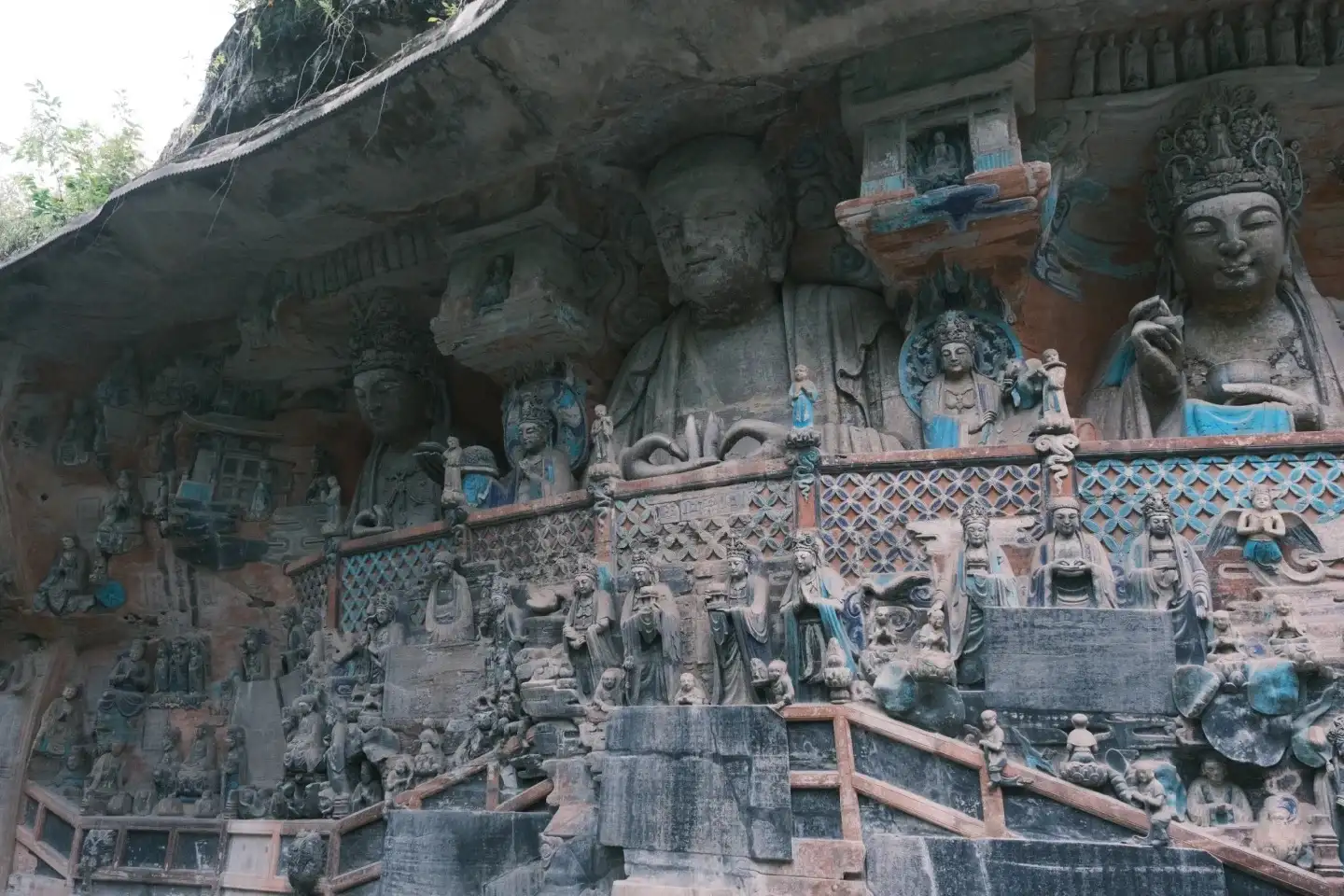
According to a 2026 explanatory note from the Chongqing Municipal Government, the “Dazu Rock Carvings” is the collective term for the grottoes and stone carvings within Dazu District, among which Beishan, Baoding Mountain, Nanshan, Shimen Mountain, and Shizhuan Mountain are the most distinctive. This area is much larger than what is depicted in those two popular photos, and the value of this World Heritage Site cannot be reduced to a single, most famous statue. For first-time visitors, choosing one of these sites to explore in depth can certainly make for a meaningful cultural journey.
Official materials highlight the lifelike nature of the sculptures; their themes extend beyond religious concepts to convey ideas through depictions of family life, labor, and everyday scenes. For international visitors unfamiliar with Chinese grottoes, this serves as an excellent entry point: first observe how the figures live and interact, then understand why they are incorporated into religious imagery. Here, stories and doctrine are intertwined, rather than being two unrelated sets of ornamentation.
Baoding Mountain is characterized by the thematic connections between its sculptures. Municipal government materials list subjects such as the “Sutra on the Deep Gratitude of Parents” narrative scene, the “Cattle Herding” scene, the “Flute-Playing Girl,” and the “Drunkard” scene, illustrating the possibility of a continuous narrative. If visitors merely seek out a few well-known sculptures to photograph, they may easily overlook the organizational structure linking the scenes; following a reliable guide to view a series of interconnected scenes often deepens understanding far more than adding a single distant sightseeing stop.
Beishan should be treated as a separate destination. For those wishing to visit both sites, it is advisable to first research Beishan’s transportation, opening hours, and guided tour options separately, rather than making assumptions based on Baoding Mountain’s booking and entrance information. Although both sites are located in Dazu, this does not mean you can simply walk from one to the other after getting off the bus; a “one-day round trip” includes the journey from Chongqing, travel within the area, and the return trip.
Option 1: Make Baoding Mountain the focal point of a full-day cultural tour
this itinerary is ideal for first-time visitors to the grottoes, those requiring an English-language tour, families with children, or anyone wishing to take their time exploring. Upon arrival, first complete park admission and confirm the day’s itinerary, reserving the most uninterrupted time for the guided tour, then revisit a few of your favorite scenes at suitable rest stops. Arrange for lunch or a rest stop during the day, and in the afternoon, choose additional sites based on what’s actually open—there’s no need to rush to the North Hills.
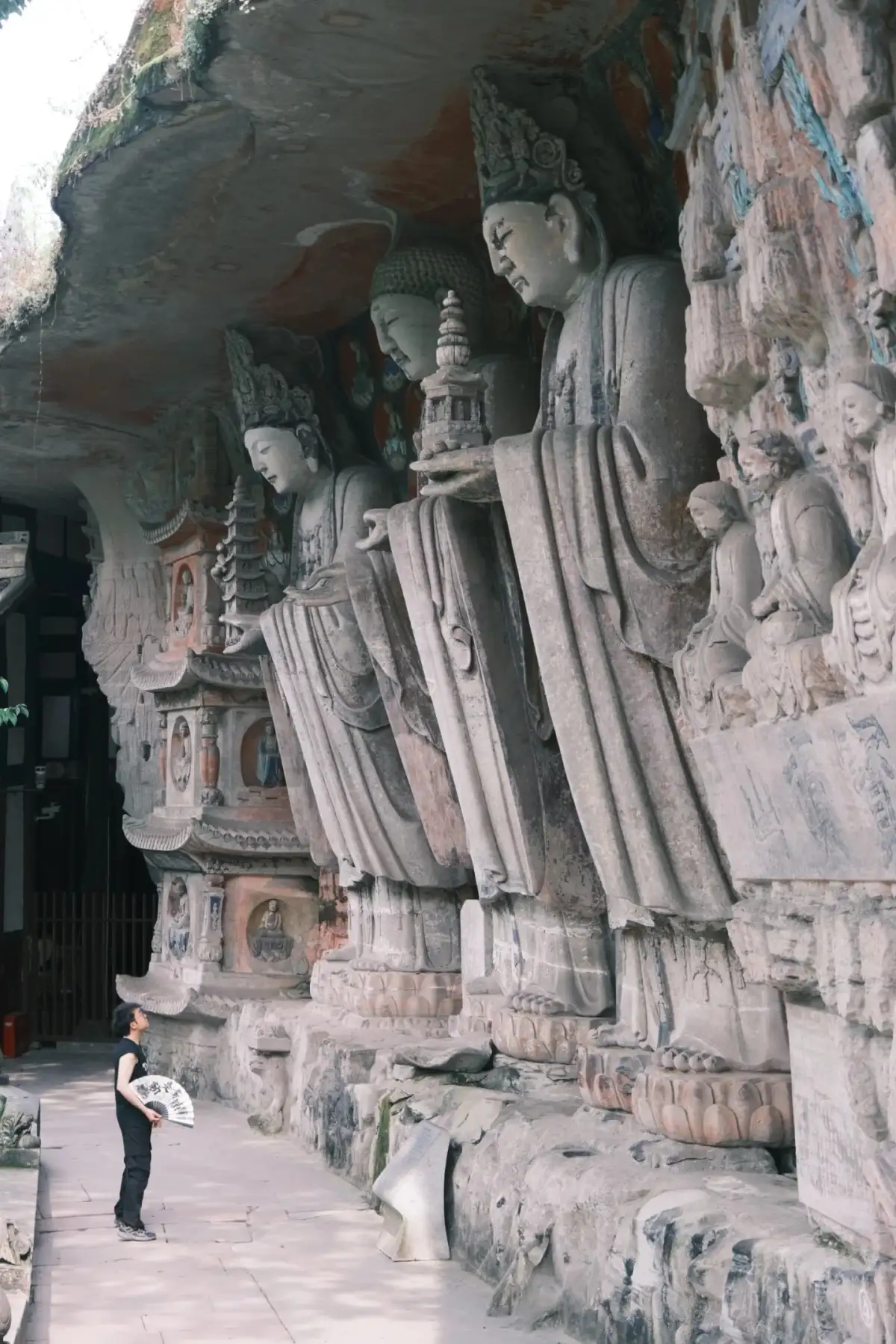
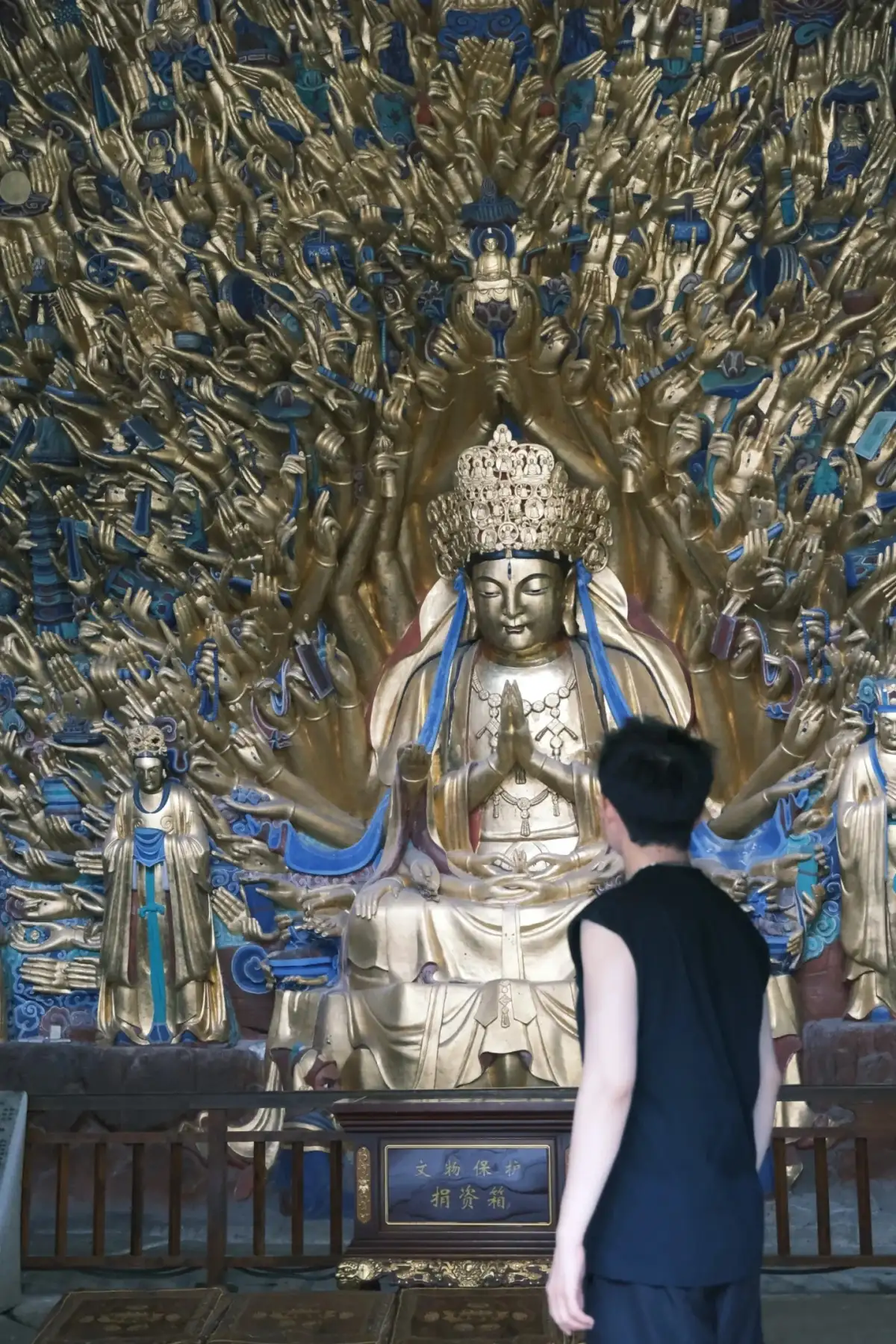
the Thousand-Armed Guanyin featured in “Where to Go, Xiao Yan? 🌈” serves as a memorable starting point. Chongqing’s official introduction highlights the layering and interplay of the arms in space; visitors can first observe how the composition unfolds as a whole, then listen to the guide’s explanation of the themes. When viewing the sculptures, “counting the arms” need not be your sole focus—the outlines, postures, and visual focal points are equally worth noting.
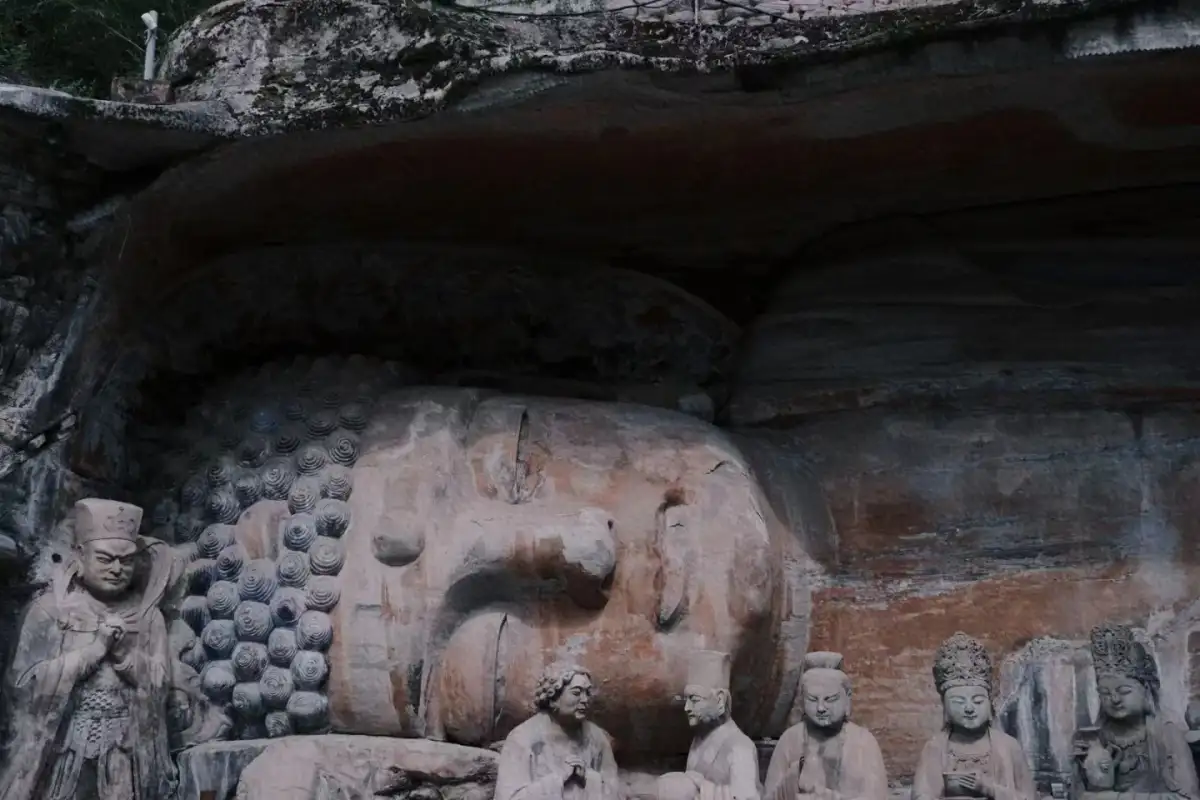
the Reclining Buddha offers a different spatial experience. An article on Baoding Mountain by the Chongqing Municipal Bureau of Civil Affairs explains that the statues are carved into the rock from the knees down, with the artistic treatment conveying a sense of serenity. This example helps visitors understand that cliff-face sculptures and the rock itself are not separate, static objects; artisans utilized the existing mountain terrain to shape the figures, resulting in compositions that differ from sculptures displayed in glass cases.
For scenes densely packed with concepts such as the Six Realms of Rebirth, it is recommended to first have a guide explain the overall organizational structure before selecting a portion to examine in detail. When faced with complex religious content, visitors do not need to grasp the entire system in a single morning; being able to explain how figures are arranged in a particular scene and how a concept is expressed is already a meaningful insight to take away.
prioritize setting aside a full guided tour for the family; when children become tired, you can limit repeat viewings rather than adding more sites to the itinerary.
photography enthusiasts should observe the site first before framing shots from permitted locations; follow on-site regulations regarding photography and equipment use.
who are interested in artistic details, it’s best to set aside time to revisit a single site and compare the facial expressions, drapery, and overall composition of the figures.
Option 2: Visit Baoding Mountain and Beishan on the same day, each with its own distinct theme
this is best suited for adult visitors who already know what they want to see and are willing to make multiple trips between sites. The key is that each site has its own distinct theme; they shouldn’t be reduced to mere “check-in” spots. At Baoding Mountain, focus on the continuous scenes and everyday narratives; at Beishan, select specific niches based on the day’s open areas and guided commentary, avoiding the temptation to cram all the details into a list of names.
a same-day itinerary should be planned in reverse order, starting with the return trip. First, confirm the actually available transportation options for returning to Chongqing that day, then allow for some flexibility regarding the end of the Beishan tour, the arrival at your destination within the area, and dinner. The intercity rail arrival station, the visitor center, and the sculpture area are separate locations, and Xiao Yan’s notes also include multiple subsequent trips; when choosing between rail and road travel, one should not merely compare travel time but rather evaluate the entire journey from the hotel entrance to the actual entrance of the site.
scheduling a regular meal break between the two sites helps restore focus after the continuous viewing at the first location. The most taxing aspect of viewing stone carvings may not necessarily be the number of steps taken, but rather the constant effort required to process unfamiliar names and images. During the meal, each person can choose a scene they’ve just memorized and approach the next site with new questions in mind. This pause allows for a comparison between the two locations, rather than blending them into a single, crowded memory of the day.
If the morning proceeds more slowly than expected, you can scale back the Beishan itinerary in the afternoon or skip the second site altogether. The conditions for changes to your ticket type must be handled according to the official booking instructions; the availability of ticket combinations does not mean visitors should aim to cover every single attraction. Especially when traveling with parents or children, ensuring a comfortable return trip is often more important than checking off the second icon on the map.
Option 3: Stay one night and visit the two sites on separate days
this itinerary is ideal for those continuing on from Chongqing to other destinations, those who enjoy exploring details, or those hoping to take their families on a leisurely tour. Accommodation choices should be based on practical transportation and dining needs. Visiting one site on the first day and another on the second allows each cultural experience to have its own distinct beginning and end. Compared to an “all-day in-depth tour with an evening return,” this arrangement alleviates the stress of constant travel.
staying overnight also provides a natural opportunity for pre-trip reading. On the first night, you can review a page or two of the official materials to match the themes encountered that day with their precise names; on the second day, you can adjust your questions based on new discoveries. Reading doesn’t have to be lengthy—focusing on a single specific work is sufficient. For families with children, this discussion can be turned into a simple drawing activity, where children sketch the outlines they remember and explain why a particular work is special.
However, staying overnight does not automatically guarantee access to all attractions. The cinemas, museums, and sightseeing routes mentioned in official reports are subject to the specific offerings and operating hours available on the date of your visit. The 2022 Visitor Center Operations Announcement explains the historical context distinguishing reception facilities from the sculptures themselves; previous discounts, pandemic-era conditions, and the full itinerary from that time should not be applied directly to today’s bookings.
How to communicate your needs to your host before the trip
International visitors should provide their ID type, name spelling, actual travel dates, and language requirements. Confirm ticket booking and boarding procedures through official channels; when arranging transportation, provide the exact Chinese destination: Baoding Mountain Visitor Center and Beishan are separate destinations, so do not simply write “Dazu Rock Carvings.” Each adult must keep a record of their accommodation and meeting location so they can present this information even if their phone temporarily loses internet connectivity.
, please have the guide clarify the language of service, duration, and scope of coverage before the tour begins. For English-speaking visitors unfamiliar with the Chinese religious context, it is advisable to prepare brief definitions of key terms beforehand and then use specific statues as examples, rather than relying on a long string of transliterations in place of explanations. Some families are more interested in art, others in religious history, and still others want the tour to be accessible to children; choosing a guided tour that suits your specific needs is more helpful than trying to cram in as much content as possible for the same price.
, dietary requirements should be clearly communicated. Vegetarian options, restrictions on eggs and dairy, and other dietary needs should be listed separately; one should not assume that “there should be vegetarian meals available near the temples.” A full day of cultural sightseeing requires proper provisions; reservations for guided tours, transportation, and meals should be coordinated. Shopping can be scheduled after the tour so that explanations of unfamiliar merchandise do not distract from the experience of viewing the original works.
Two Common Questions
would visiting only Baoding Mountain count as having seen the Dazu Stone Carvings? Of course, it can constitute a complete visit. The term “Dazu Rock Carvings” covers a vast area, so any visit with limited time requires careful selection; understanding the organizational structure of a single site aligns better with the purpose of a cultural journey than rushing through multiple sites. For those interested in all five mountains, it’s better to plan a separate multi-day themed trip rather than endlessly extending a single day on a first visit.
Do children need to understand religious concepts to appreciate the site? Not necessarily. They can start by observing facial expressions, gestures, and the interactions between people and animals, with the guide providing additional context later. If children are unwilling to listen for long periods, focus on examining one or two specific scenes in detail; more in-depth questions from adults can be addressed at a later time. Avoid having the entire group walk at the pace of the person who reads the fastest.
the most valuable memory after completing the tour may be how an ordinary detail of daily life finds its way into religious art. Dazu translates abstract concepts into figures and scenes; visitors, in turn, can tailor their itinerary to their actual needs: how long to stay, what to listen to, how to get around, and where to rest. Once these four elements are clearly defined, a one-day trip, a visit to two sites, or a two-day itinerary ceases to be a race for quantity and instead becomes a culturally meaningful choice with its own distinct substance.
—for example, when viewing a scene depicting cattle herding—it’s helpful to first ask a guide to explain how the images form a continuous narrative, then compare the distances, movements, and directions of the figures and the cattle. Children focus on the animals, while adults focus on the narrative; these two perspectives can be discussed together while viewing the same set of works, eliminating the need to split a family visit into unrelated activities. If everyone points out one detail, the content of the artwork will become clearer than it would be from a single panoramic photograph.
Sources and Editorial Notes
They do not serve as proof of actual travel experiences or services provided by Dongxing Travel.
Chongqing Municipal People’s Government · Dazu Rock Carvings Scenic Area · Official Materials; Verified/Compiled on: October 3, 2026.
Chongqing Municipal Bureau of Civil Affairs · Dazu—Baoding Mountain · Official Materials; Verified/Compiled on: October 3, 2026.
Chongqing Municipal People’s Government via the Dazu Rock Carvings Research Institute · Announcement on the Operation of the New Visitor Center at the Dazu Rock Carvings · Official Materials; Verified/Compiled on: October 3, 2026.
UNESCO World Heritage Centre · Dazu Rock Carvings · Official Materials; Verified/Compiled on: October 3, 2026.
Conditions for seeing both
For a Dazu Rock Carvings day trip combining Baodingshan and Beishan, give each a separate theme and allow for transfers, food and walking. A Dazu cultural itinerary focused on close interpretation may use Baodingshan alone. Stay overnight if comparison matters and you want a slower pace.
Brief the reception team
Specify language, subjects of interest, stamina and return timing, then confirm current access and guiding arrangements. Outdoor carvings can still involve steps and weather exposure. Follow photography rules and use reliable interpretation, prioritising a few understood relationships over photographing every figure.
Planning references