Dongxing Travel Editorial Department · Travel Diaries and Pre-trip Reading
In the western part of Guangzhou, start by locating Shaji Creek
Shamian is located in Liwan District, Guangzhou. To the north, it is separated from the city streets by the Shaji Creek, while to the south it borders the open waters of the Pearl River and Bai’e Tan. For first-time visitors, start your walk from the Huang Sha area and take in the island’s boundaries before crossing the bridge: to the north lies a narrow waterway, while to the south stretches the river connecting Guangzhou’s river port to urban life. It takes two to three hours to get to know Shamian; after that, decide whether to continue to the Xiguan neighborhood or rest by the riverbank, depending on the weather. Its street grid is relatively straightforward: start by walking along a main street for a while, cross a cross street to reach the southern side, and then loop back toward the bridge—this will help you visualize how the architecture relates to the water. After exiting the subway station, you’ll still need to navigate city roads and bridges, so if you’re traveling with luggage or children, plan your route across the street in advance. Don’t assume that several adjacent place names refer to the same entrance; be sure to confirm the specific street corner for vehicle drop-off and pick-up. In the morning, when the shade still offers a refreshing coolness, take your time to appreciate the architectural details; in the afternoon, as the sun grows stronger, plan to enjoy tea and snacks or visit an open indoor space midway through your walk to better adapt to Guangzhou’s climate.
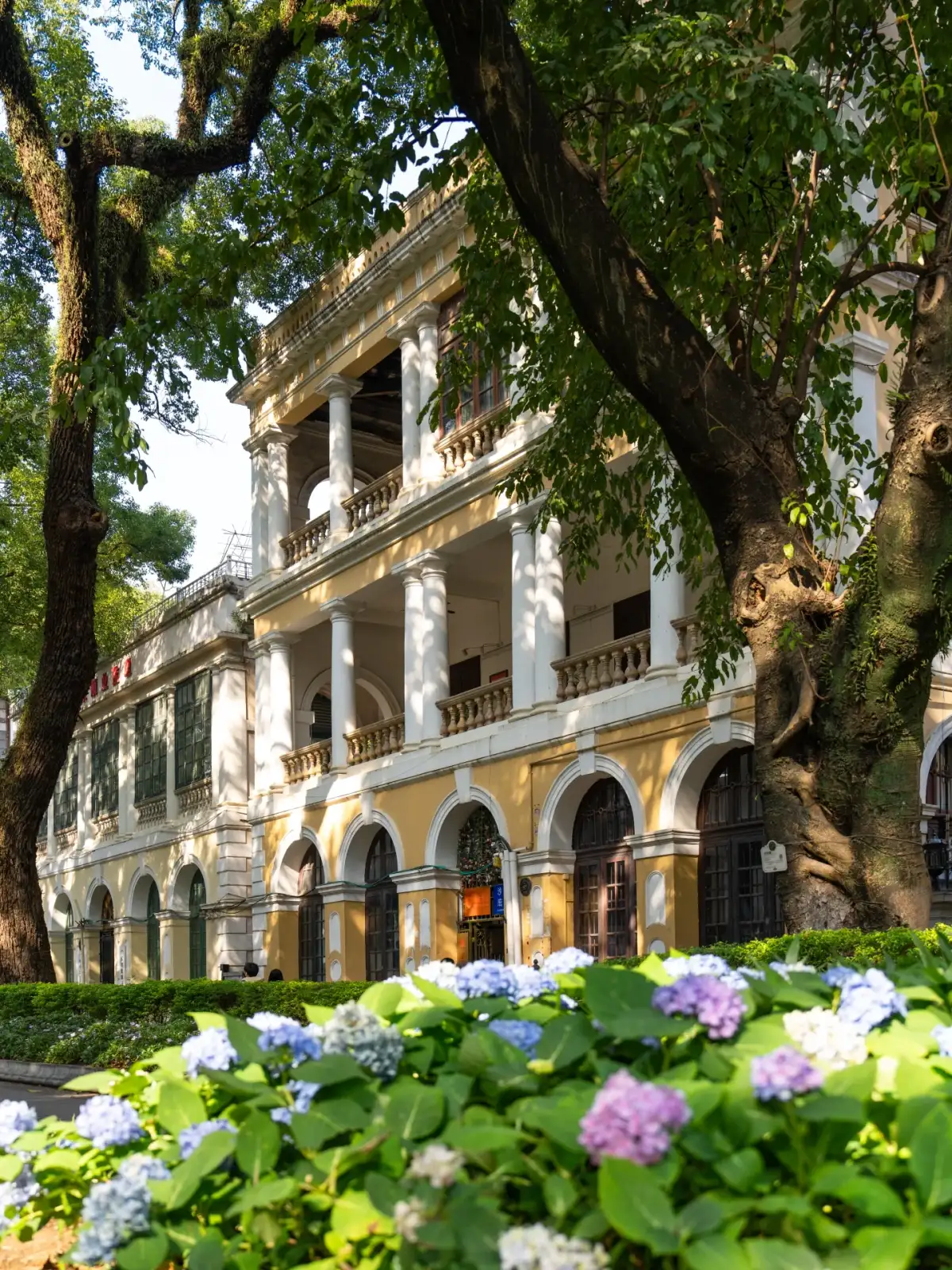
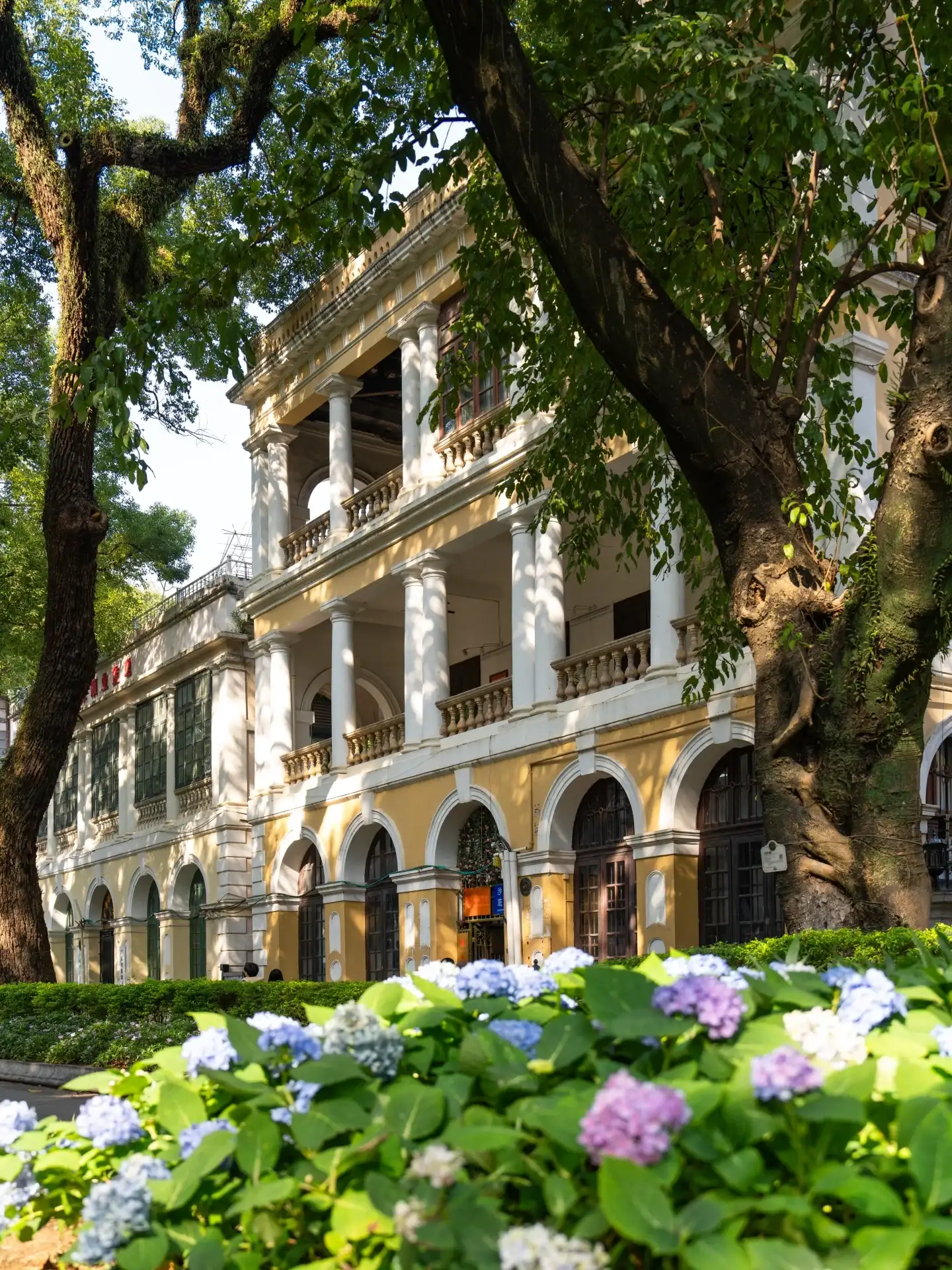
Colonnades, balconies, and flower beds of modern buildings under the shade of trees on Shamian Island, Guangzhou.
Street Names and Historic Buildings: History at Your Feet
Shamian’s modern history is intertwined with Guangzhou’s foreign trade and the history of the concessions; when walking the streets, it’s important to understand this context alongside the tree-shaded surroundings. When you encounter architectural preservation plaques or historical site descriptions, first read the name, original use, and era of the building, then observe its current operations and usage. Former banks, consular offices, churches, and residences served diverse purposes; even if their exteriors resemble one another, they cannot all be lumped together as “old consulates.” The international connections evident here encompass not only commercial exchange but also the power imbalances experienced by modern China; simply describing European-style architecture as “romantic” risks oversimplifying the origins of these spaces. A guide can use a specific historic site with a detailed plaque to explain Guangzhou’s location as a port, why foreign institutions established themselves here, and how the neighborhood has changed over time. There’s no need to read every architectural plaque in half a day; simply select two or three sites to examine closely. For visitors from different countries, familiar clues may sometimes be found in place names or institutional histories, but one should still cross-check with on-site signage and reliable sources—rather than judging a building’s country of origin based solely on the color of a flag or the decorations on its façade.
Break down a row of facades into several observable elements
Official Guangzhou sources describe the Shamian architectural complex as featuring a variety of styles. When actually strolling through the area, there’s no need to rush to label every building with an architectural style; instead, start by observing four key elements: entrances, windows, floors, and roofs. How deep is the porch? Do the columns stand freestanding or are they attached to the wall? Is the window lintel arched or straight? And how do the balconies and railings integrate with the facade? Adjacent buildings may share similar colors but differ in the rhythm of their window placement; walking around to the side reveals a length of the building hidden in front-view photos. When stepping back to observe from the other side of the street, pay attention to traffic first before deciding where to stop; tree branches obscuring part of a building aren’t obstacles to be cleared away—they are an integral part of the tropical cityscape. If a preservation plaque indicates that the building has been restored, the fresh paint and the original structure can coexist before your eyes; there’s no need to imagine the entire visible surface as an antiquity that has never changed. By selecting a building with available information for closer observation and then comparing it to another nearby structure, visitors can move from the building’s name to its structure—rather than simply collecting similar front-view images as they stroll down the street.
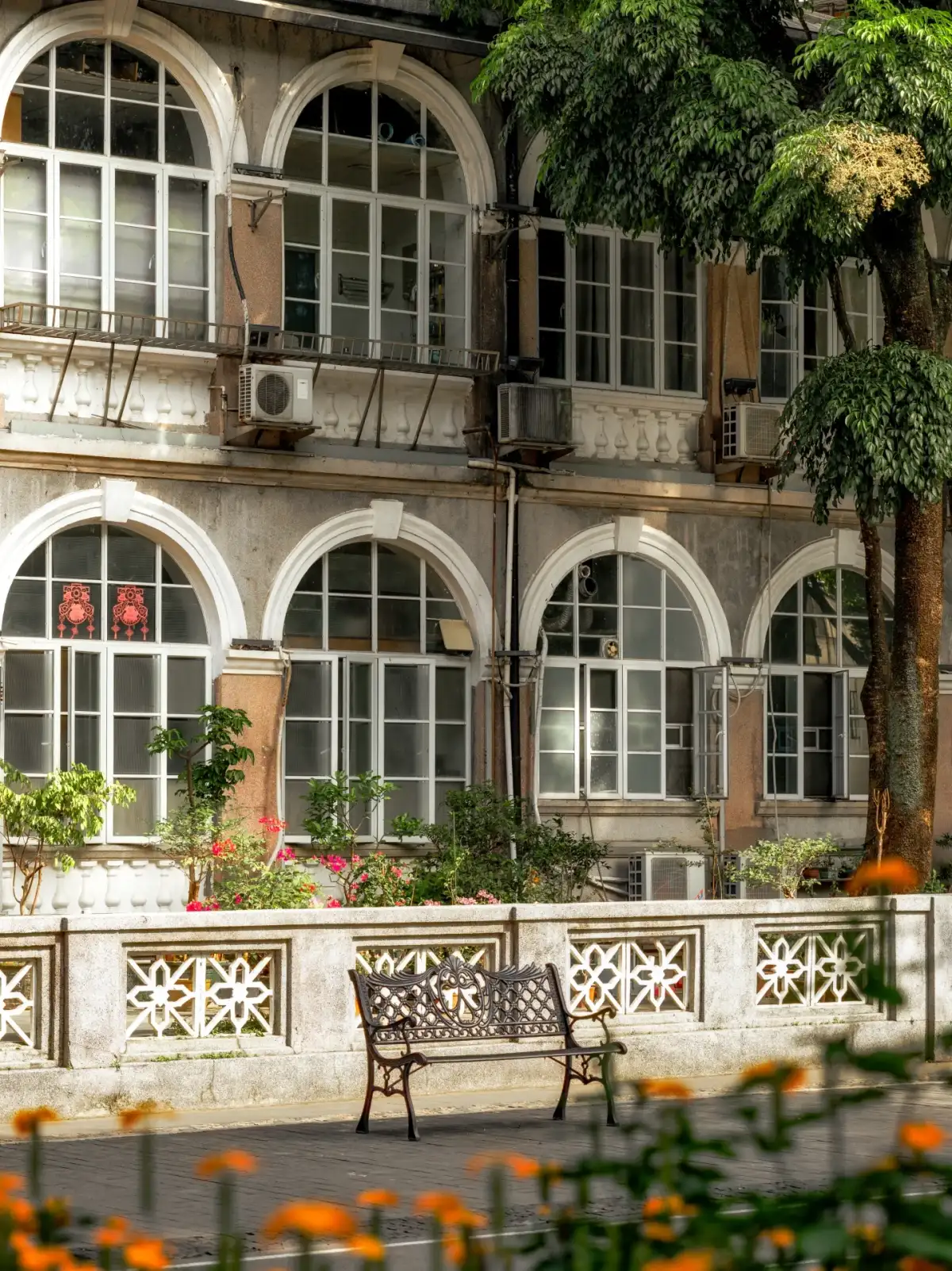
Arched doors and windows, railings, and street benches at architectural sites on Shamian Island, Guangzhou.
The two churches have different names and boundaries
Our Lady of Lourdes Church and the former site of the Anglican Church are two clearly identifiable religious buildings along the Shamian Island walking route. Municipal government records list Our Lady of Lourdes Church at No. 14 Shamian Street, detailing its modern construction history and stained-glass windows; while cultural heritage department records confirm that the former Anglican Church at No. 60 South Shamian Street belongs to the Shamian architectural complex. When visiting, retain their full, distinct names, understand their religious traditions and historical uses, and do not treat both sites as a single “church” photo opportunity. Begin by observing the exteriors—entrances, walls, window shapes, and courtyards—from the outside, then determine whether entry is permitted based on the day’s schedule. During religious services, visitors should comply with on-site instructions regarding staying on-site and photography; even if the doors are open, do not assume that all rooms or seating areas are available for unrestricted viewing. If you are unfamiliar with the patterns on the stained-glass windows, ask a tour guide for an explanation; do not speculate on the meaning of religious imagery based solely on the colors in the images. The neighborhood tour can be completed without entering the buildings; the locations of the two structures within the street grid and the differences in their exterior facades provide substantial material for observation. There is no need to wait for specific opening hours and spend half a day circling just one entrance.
Daily Life Under the Banyan Trees Keeps the Neighborhood Running
The shade on Shamian Island is perfect for pausing to observe urban life. The foliage divides the ground into areas of light and shadow, while benches, narrow paths, and building entrances offer various ways to linger. Morning strollers, shopkeepers setting up for the day, and couples taking wedding or travel photos may all appear here, with the rhythm of the scene shifting with the time of day. Find a spot that doesn’t block any entrances or exits, sit for a few minutes, and observe where people at the same street corner are coming from and where they’re heading—this offers a deeper understanding of how this space is used than waiting a long time for an empty street. When a photography team is occupying a portion of the area, follow the open pathways to get around them and avoid entering the set-up zones; always ask for permission before photographing people, though ordinary passersby in the distance can be observed as part of the street scene. If you want to buy a drink or rest inside a shop, check the menu and seating rules first—the beauty of historic buildings doesn’t mean the interior is a public lounge. The pavement under trees may be raised by roots, and slippery patches may remain after rain. The comfort of a neighborhood stems from the combined effects of architecture, greenery, and ongoing maintenance; once you recognize this, modern architecture will no longer be merely a display detached from daily life.
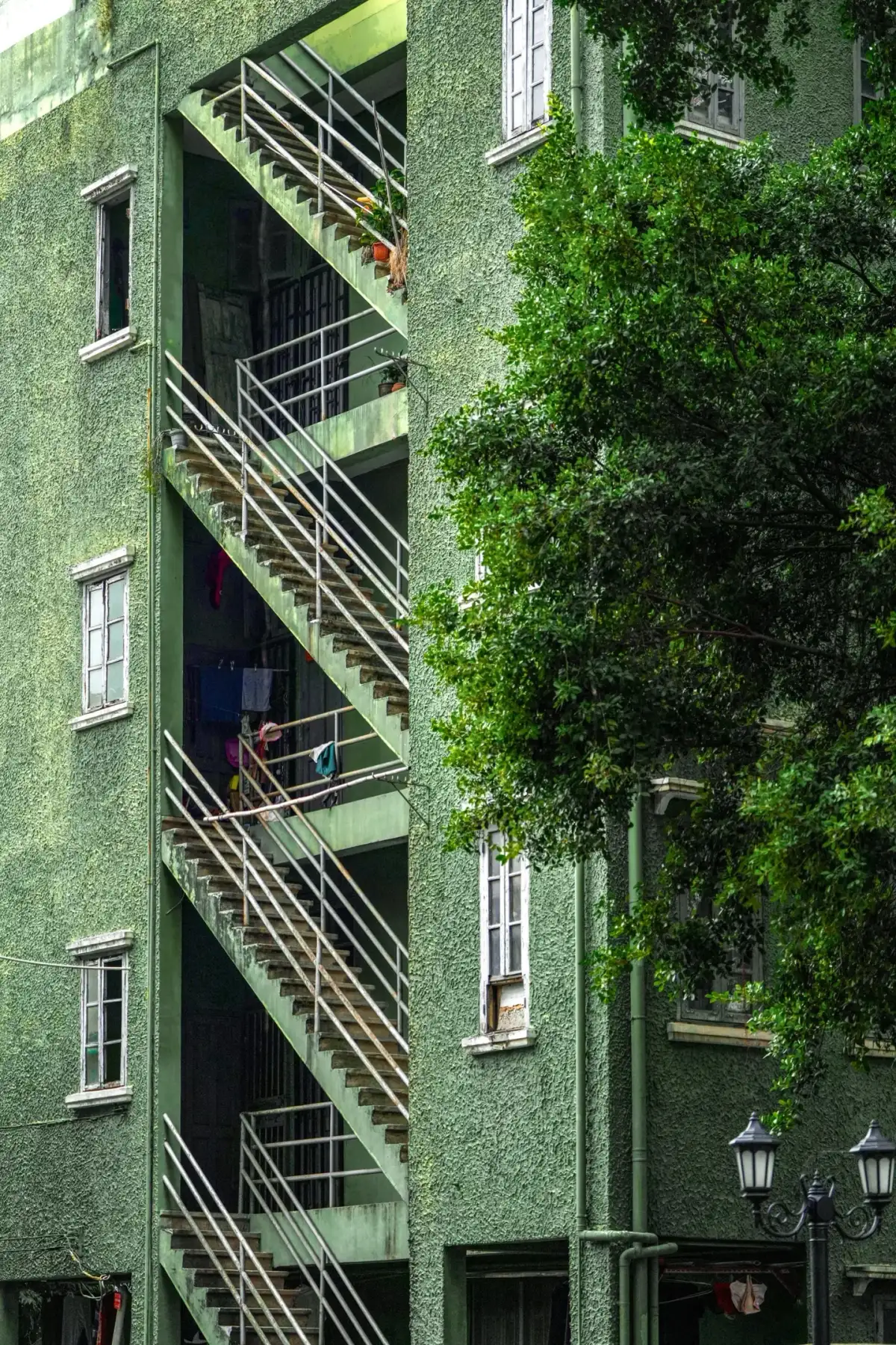
Green building facades, outdoor staircases, and trees on Shamian Island, Guangzhou.
Head south, where the river provides a new backdrop for the architecture
Walking from the main street through the cross streets to the open riverside space on the south side, the view opens up from between the trees and buildings to the Bai’e Tan area. Here, you can place the neighborhood you just saw back into the context of Guangzhou’s waterways: the roads on the island serve the buildings, while the river beyond connects to the wider city. Choose a spot with railings and clear access to view the river; do not get too close to the closed-off steps along the shore. The buildings, bridges, and boats on the opposite bank form a contemporary landscape—there’s no need to view them all through the lens of the old port era. If you wish to include water transportation in your itinerary, first verify which piers, destinations, and schedules are operating that day; note that the routes around Huang Sha and the night cruise programs are not the same. Exploring Shamian itself does not require boarding a boat; simply sitting by the river for a while or walking along the open shoreline can offer a different perspective beyond the architecture. On humid, hot afternoons, the sun can still be intense here; imagining a sea breeze is no substitute for seeking shade and staying hydrated. As the sky darkens, the lighting creates a different effect on the building facades than during the day. Those willing to wait until later in the evening can shorten other parts of their itinerary and save their rest time for the riverfront, rather than repeatedly crisscrossing the island’s roads.
Plan a mid-tour break with a cup of tea and some dim sum
A Cantonese dim sum meal can serve as a midpoint in your itinerary around Shamian. Guangzhou’s cultural and tourism materials highlight the “one pot, two dishes” culture of tea houses, with shrimp dumplings, steamed siu mai, char siu buns, and egg tarts as common dim sum staples. Specific tea house operating hours, wait times, and menus are subject to the day’s circumstances. Shops both on and off Shamian Island vary in their business models, so there’s no need to expect every café to serve traditional morning dim sum. When ordering, first ask about the tea service, the quantity per serving, and the ingredients used. Then select one or two baskets of savory dim sum to pair with congee or other staples, and save the sweet dim sum for later—this makes it easier to accommodate the appetites of your companions. If dietary restrictions involve ingredients such as shrimp, pork, eggs, or dairy, confirm them directly, as the appearance of the buns does not reveal their fillings. When your teapot needs refilling, signal according to the shop’s customs. If you’re interested in learning the “knocking-the-finger” gesture, ask a local to explain it—but there’s no need to turn every action into a ritual that travelers must perform. Sitting down to enjoy tea provides a natural setting for conversation after admiring the architecture. This allows everyone to discuss the window designs, preservation plaques, or river views they’ve just noticed, rather than treating the meal as merely a hurried task to be completed before moving on to the next destination.
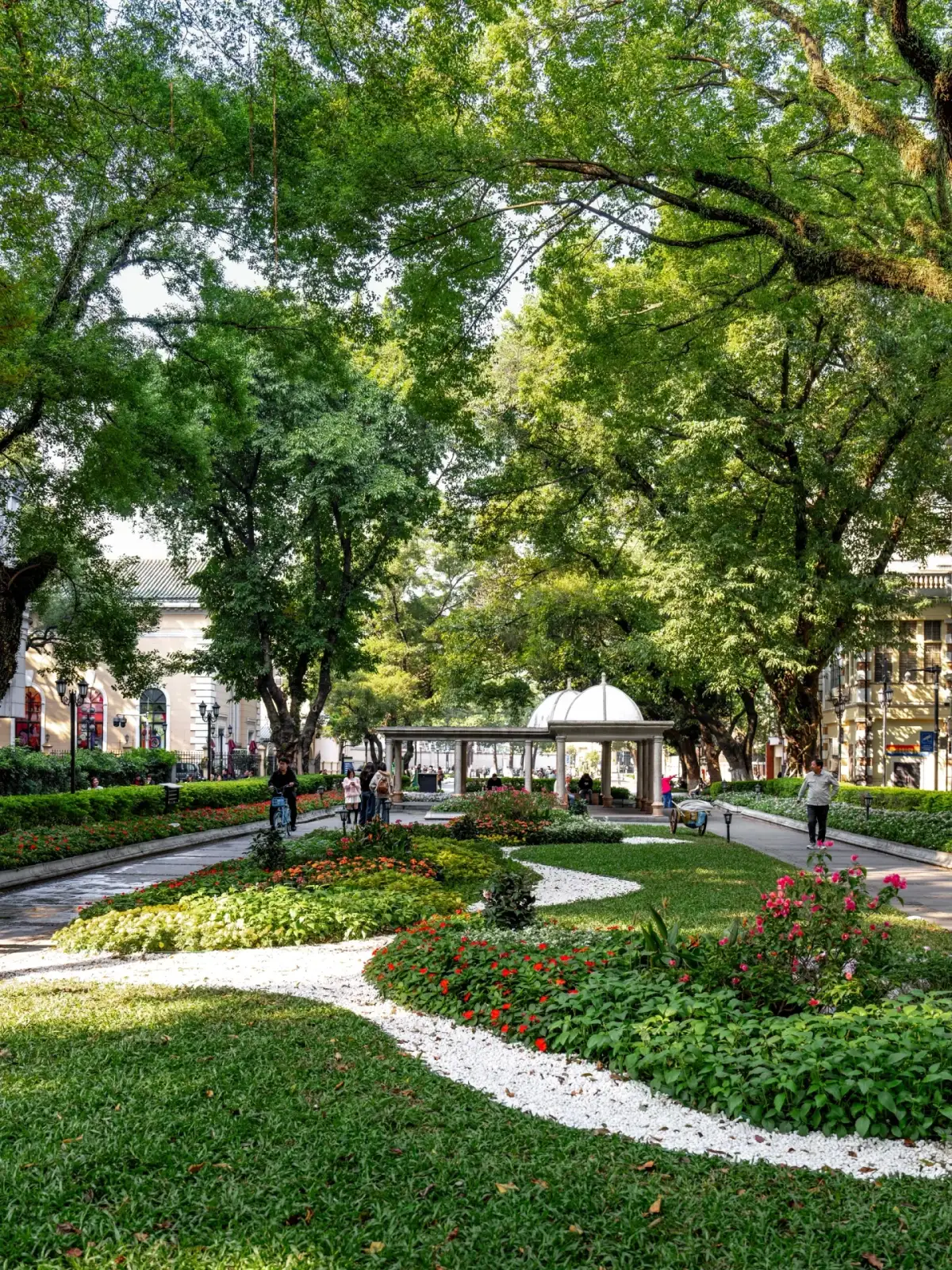
Flower beds, tree shade, and pavilions in a street garden on Shamian Island, Guangzhou, with visitors serving as a non-dominant background.
Between Xiaoshamian and Xiguan, choosing just one route to connect them is sufficient.
If you’d like to extend the tour by half a day, you can return from Shamian to the north and continue toward Enning Road and Yongqingfang to explore more typical Xiguan streets and Lingnan architecture; alternatively, you can conclude the tour with a rest along the riverbank without adding any additional neighborhoods. These two routes require different levels of physical stamina and involve different transportation options. Once you leave the island, city roads must be connected based on actual crosswalks—you cannot simply draw a straight line between building clusters on a map. If you plan to visit the Chen Clan Ancestral Hall or the Cantonese Opera Art Museum as well, confirm the visiting hours and reservation policies in advance, and treat them as a separate, clearly scheduled segment of your itinerary—don’t let all your cultural visits boil down to merely rushing to the entrance. Compared to the modern institutional architecture of Shamian, the residential, commercial, and local art of Xiguan present a different set of questions: how do covered walkways provide shelter from the rain, how do living spaces open onto the street, and how do traditional crafts adorn eaves, doors, and windows? This comparison is best suited for visitors with a guided tour; if it’s already hot or your feet are tired, selecting just one of these areas is sufficient. International visitors should prepare the identification information required for real-name reservations before departure; if necessary, ask your host to assist with verification. Arrangements for strolling on public streets and entering specific exhibition halls should be made separately.
Leaving from the bridge, save your next meal for Xiguan
At the end of the tour, walk back along the now-familiar streets to the bridge on the north side to take one last look at the relationship between Shaji Creek and the neighborhood. Upon entering in the morning, you may have viewed the bridge merely as a passageway, but after passing by the buildings, the church, and the riverbank, the island’s boundaries have become clear: on one side lies the great river, on the other a network of small urban waterways, with a walkable street grid and expanses of tree shade in between. Meet at a spot convenient for parking or continuing on foot, as agreed, to avoid lining up and waiting on the bridge. If you’re heading to Xiguan for dinner afterward, first confirm the street where the restaurant is located and allow time for navigating city traffic; if returning to your lodging, walk to a transportation hub before organizing your photos and notes. If it rains, you can shorten your stay by the river and save the buildings you haven’t finished viewing for your next visit during the day—there’s no need to wait in a thunderstorm for a street scene without an umbrella. Your takeaways from Shamian can be very concrete: identify the two churches, compare the facades of the two buildings, understand the description of a historic site, and then take another look at the water at Bai’e Tan. Take these recognizable details with you to enjoy a meal of Cantonese cuisine—this walking tour of Guangzhou will then be both steeped in history and connected to the city’s present-day life.
Further Reading and References
Guangzhou · Destination Overview
Dongxing Travel Editorial Department, originally compiled based on publicly available travel notes and listed information, intended for pre-trip reading and not as a personal account of the experience; opening hours, transportation, reservations, and service arrangements should be verified according to the actual travel date.
Guangzhou Municipal Government: The Shamian Architectural Complex and the Bai’e Tan Urban Space
Connect the walk to a meal
A Shamian architecture walk can combine shade, facades and southern river views on Shamian Island. Afterwards, place lunch or tea within a Xiguan itinerary instead of adding a distant attraction. Choose one bridge connection and adjust the pace to your group.
Check church access separately
Confirm each church's name, visitor notices and current use. Seeing the exterior does not guarantee indoor access. Respect religious activity, workplaces and residents when photographing the neighbourhood. Use an actual bridge entrance or street address for pickup.
Planning references