Dongxing Travel Editorial Department · Travel Diaries and Pre-Trip Reading
Before reaching the city gate, first familiarize yourself with Qingyan’s mountainous location
Qingyan is located south of Guiyang, and the ancient town’s stone fortifications and streets create a striking impression. Local historical accounts link the town’s founding to the military context of the Ming Dynasty; when exploring, begin by understanding the relationship between the city gates, the walls, and the surrounding undulating terrain, rather than treating Qingyan merely as a street food market. Upon arrival, first confirm the entrance, the areas open to the public that day, and your subsequent pickup point; the road network outside the city walls does not always align with the pedestrian routes within the town. Vehicles typically need to park in designated areas, and visitors with a lot of luggage should arrange for storage or parking before entering the town. Standing in front of the city gate, observe the archway, the structure above it, and how the wall lines extend to both sides; once you enter the town, your sense of direction will become clearer. The buildings before you are a blend of ongoing maintenance, restoration, and tourism development; one cannot assume that every section of the wall is an original Ming Dynasty structure simply because the town has a long history. The stone alleys, main street, and steps along the walls each offer distinct sights; you can connect them with a single walk or choose to explore them separately depending on the weather and your energy level. Understanding how these spaces are used today and their historical context is more helpful than simply pursuing their ancient appearance.
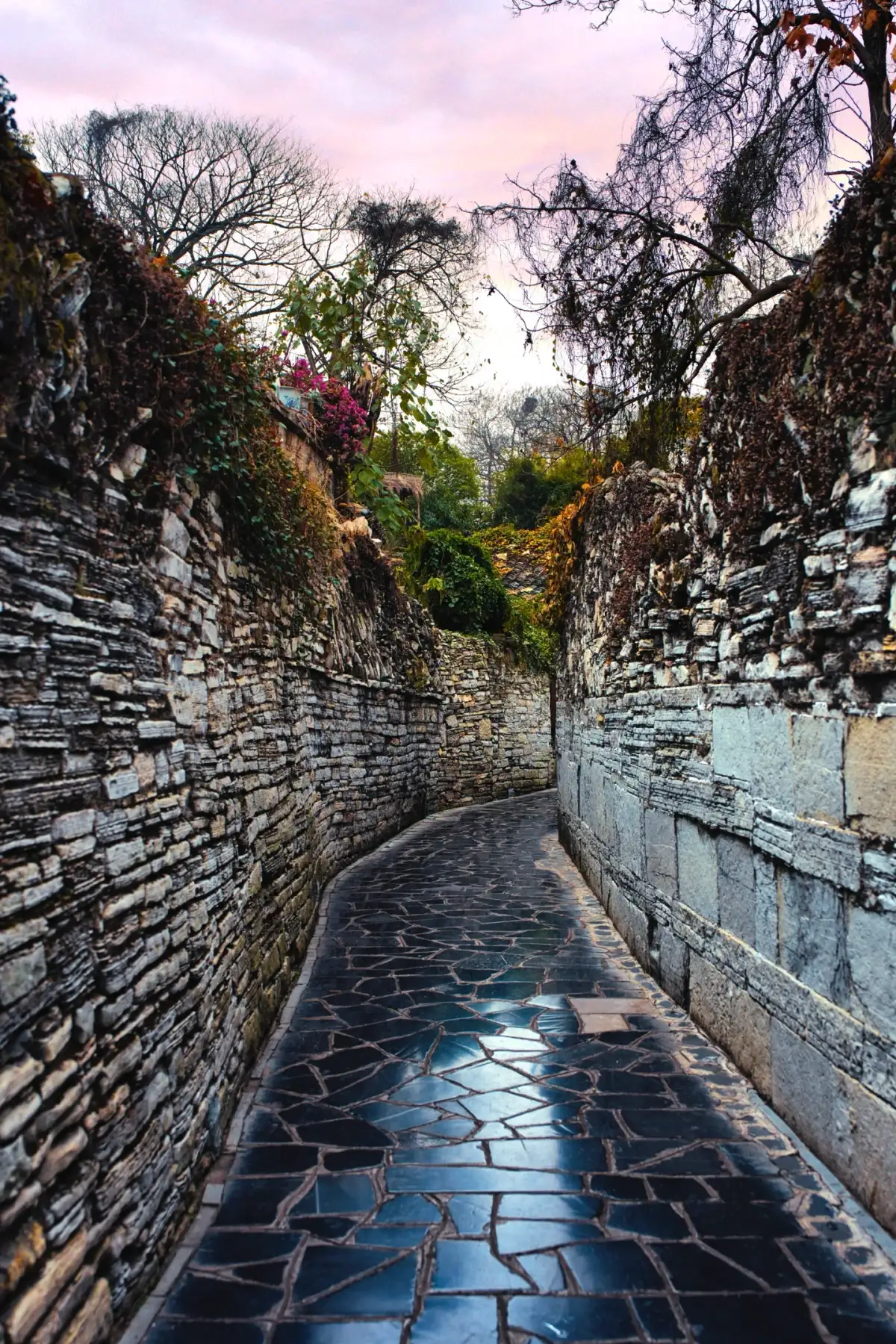
Stone alleys winding between the stone walls of Qingyan Ancient Town.
As you walk from South Street onto the main thoroughfare, take note of how the gate towers connect to the shops.
one recommended route, as described in local cultural reports, is to enter near Guangmen Gate and explore the main thoroughfare along South Street. In practice, however, you should adjust your route based on your entry point and the day’s conditions—there’s no need to enter the town from another location and then backtrack to the gate just to mark the start of your tour. On the main street, it’s best to first observe how the road connects the city gate to the town’s interior, how the eaves of the buildings stretch out in a continuous line, and how shops display their merchandise and set up seating along the street. During peak hours in the afternoon or on holidays, it’s advisable to first navigate the longer stretches of the route and then stop to look around in wider areas, rather than crowding under the gate arches to wait in line. The food, souvenirs, and tourist photography services sold along the way are part of contemporary commerce; they coexist with the historic architecture, and there’s no need to ignore them to observe Qingyan. When taking photos, include the gate towers, the street scene, and the crowd in the distance to capture the true scale of the setting; Paying attention to how pedestrians pass by shops and turn at intersections also reveals that the main street serves not only as a commercial space but also as a daily thoroughfare for the town. For international visitors coming to Guizhou for the first time, a guided tour that explains how the military town evolved into today’s neighborhood is more effective in establishing a holistic understanding than simply listing the names of several gate towers one after another.
side streets—allowing you to appreciate the details of the stone alleys while actually walking through them.
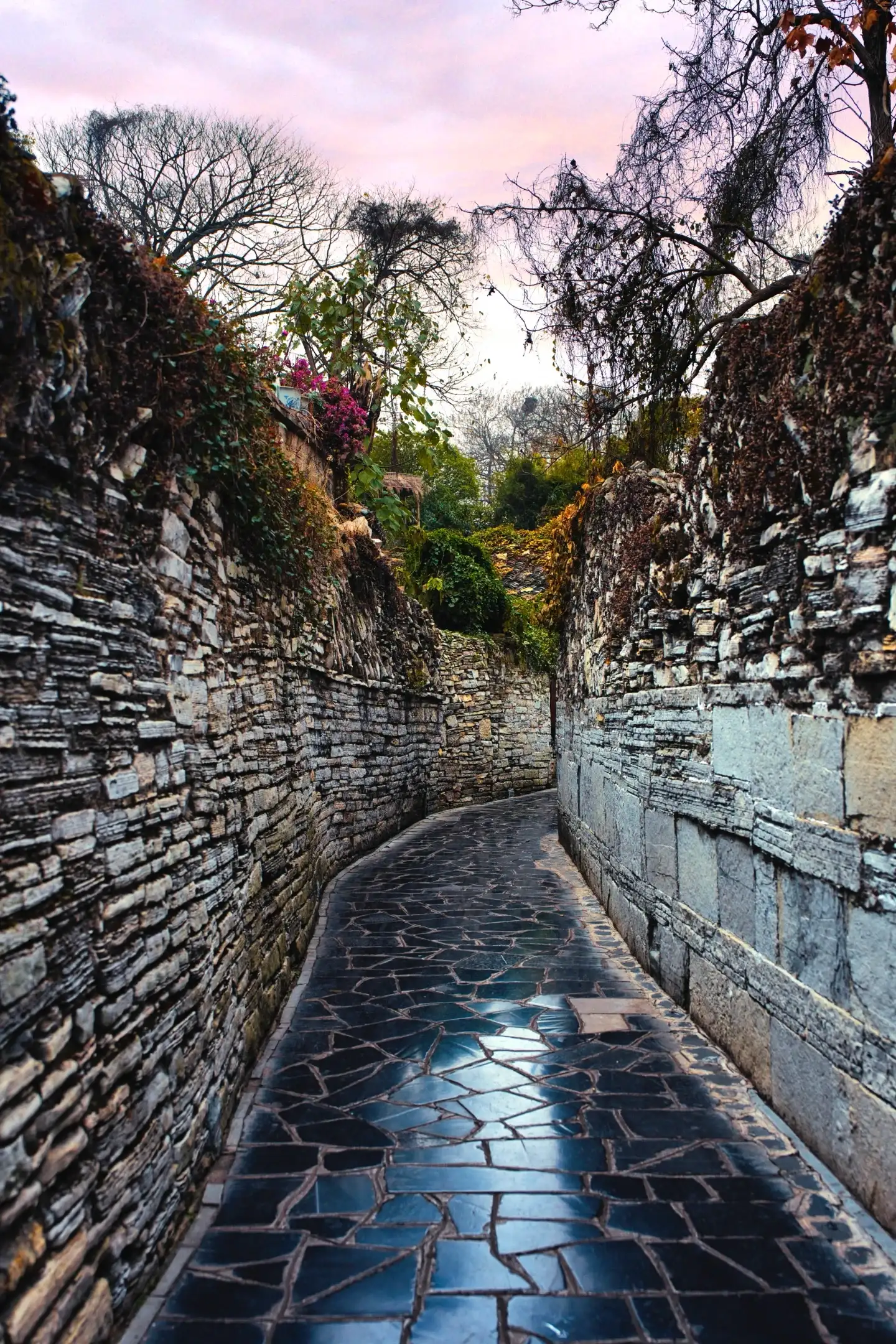
The backstreets of Qingyan are often featured in photographs; the narrow alleys, stone walls, and stone pavements offer a visual experience distinct from that of the main street. When you reach this area, start by observing how the base of the walls meets the ground, how sightlines are blocked at turns, and how doorways connect private spaces with public passageways. The alleys aren’t always quiet; tourists, residents, and business owners all use these paths, and the empty scenes seen in online photos are just a fleeting moment. If you wish to stop, step to one side first and check for delivery vehicles or people needing to pass through. After taking your photo, move on—there’s no need to block the entire entrance with bulky equipment. After rain, the stone surfaces may appear darker, so pay extra attention to where you’re stepping; increased glare does not mean it’s safe to run, walk backward, or climb onto the wall for a shot. The texture and twists of the stone alley are worth a closer look, while residential and commercial spaces each have their own designated areas. When passing an entrance, first check for signs indicating access or whether the space is open before deciding whether to stop. If you see laundry, plants, hanging corn, or household items in front of doors, treat them as personal belongings of residents and shop owners—do not touch or rearrange them without permission. Capturing these ordinary details to convey daily life is more accurate than portraying the entire street as a frozen moment in the past.
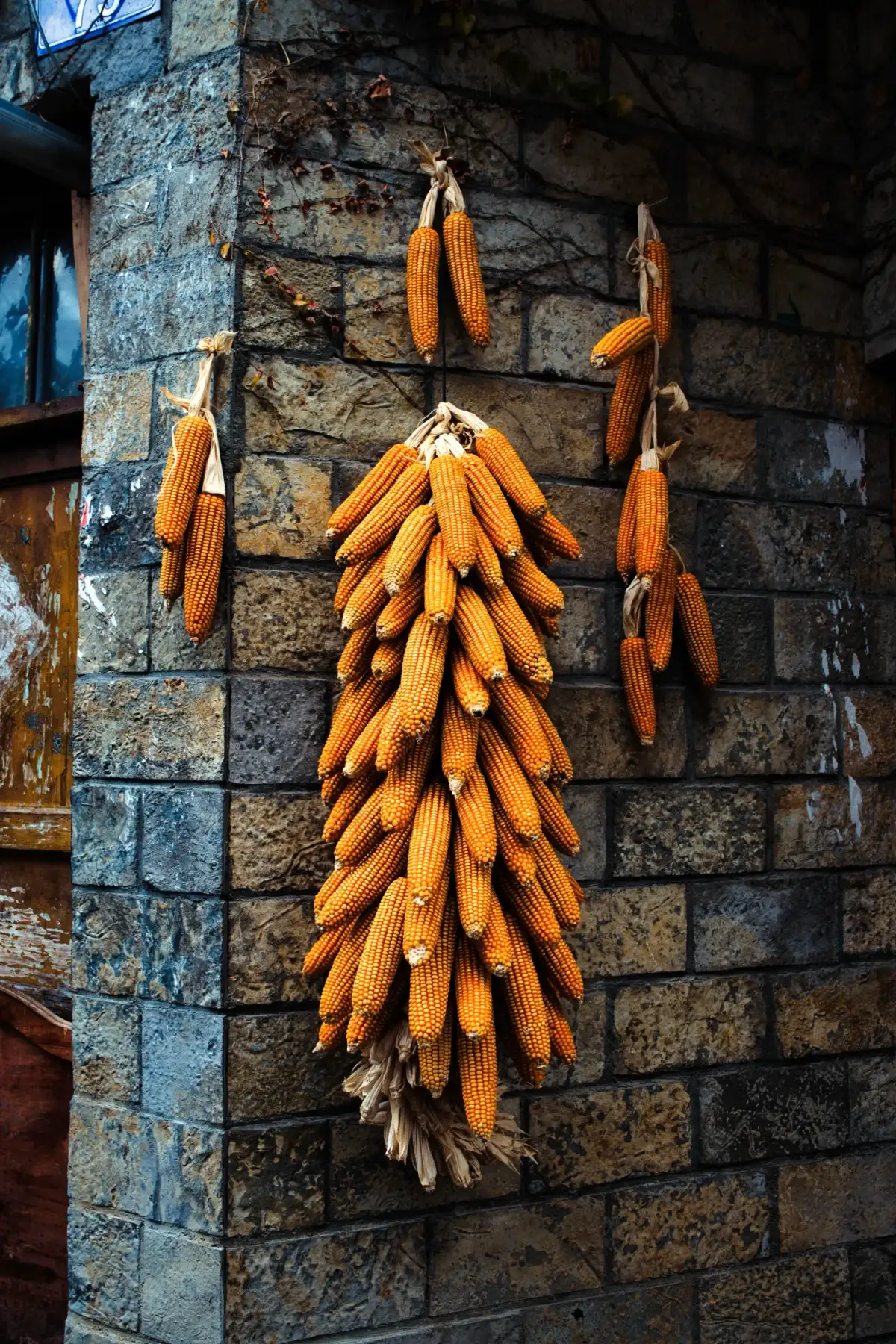
Corn hanging beside the stone walls of Qingyan Ancient Town.
Understanding Local Education Through the Culture of the Top Scholar
Qingyan is linked to local figures such as Zhao Yijiong; the spaces associated with the Top Scholar’s Mansion allow the theme of education to be incorporated into a walking tour of the ancient town. When visiting, it is advisable to first read the biographical introductions, historical periods, and family backgrounds of these figures, and then observe how the courtyards and exhibits organize this information. The role of the imperial examination system in traditional society went beyond a mere test; local education, family resources, and officials’ career experiences collectively shaped a town’s cultural memory. If the guided tour’s explanation is limited to the phrase “produced a top scholar,” visitors might ask further questions about how the figure pursued his education and what connections he had to the local community. The Wenchang Pavilion offers another avenue for understanding the connection between education and faith; please check the day’s information for details on whether it is open and which tour route is available. There’s no need to rush through both sites; choose one to read the explanations carefully, then observe the other from the outside. To connect the biographical narratives with the architectural details of the courtyard complex, observe how the rooms are arranged around the courtyard and how the entrances connect to the street, then use the exhibits to understand the relationship between educational activities and daily life. For children or visitors unfamiliar with Chinese history, you can begin by asking, “Why would a town remember a scholar?” to establish a clear connection between the historical figure and the streets before them.
The undulating terrain of the city walls requires you to pace yourself accordingly.
Qingyan’s defensive walls meet the mountainous terrain; certain sections open to visitors feature steps and noticeable elevation changes, so they should not be treated as flat city wall walking paths. Before entering, check the route and exits to confirm whether it’s suitable for your companions; if you only want to explore a short section, choose a spot from which you can easily find your way back. While climbing, observe how the wall’s line follows the contours of the terrain and how the city gates connect to the surrounding neighborhoods; when stopping to look around, avoid narrow staircases. Look up at the direction where the steps meet the wall line to determine whether the path ascends or turns next; on gentler terraces, looking back at the path you’ve already traversed makes it easier to understand the relationship between the wall and the mountainous terrain. On sunny days, the stone surfaces may be hot, so taking breaks and staying hydrated is especially important when ascending at midday; on rainy days, factor in slippery conditions when making your decision. Even if you choose not to climb the wall, there is still plenty to see outside the city gates and within the streets; you can devote your time to exploring courtyards or cultural exhibits. The length of your tour of the ancient town can be adjusted according to your personal needs; age or regular exercise habits alone cannot guarantee that everyone is capable of completing the entire climb. Treating the city wall as a separate, optional segment is easier to plan than unexpectedly incorporating a series of steps into a casual stroll.
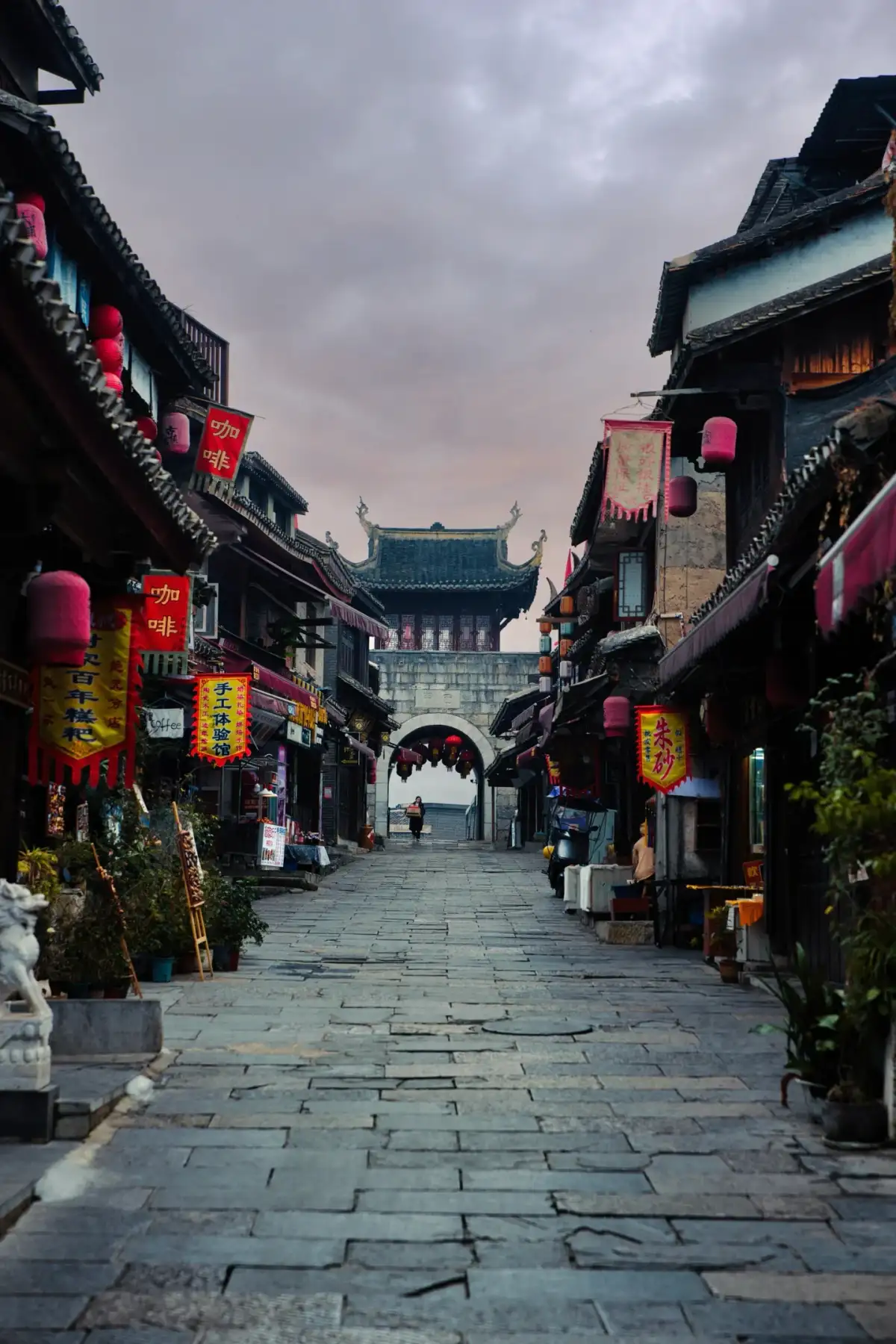
The streets and shops of Qingyan Ancient Town with the city gate in the distance; tiny pedestrians can be seen in the background.
A meal—learning both the names and the cooking methods
Common culinary highlights in Qingyan include braised pork trotters, rice porridge with steamed rice cakes, potato cakes, and pickled radish. You can enjoy a simple meal on the main street or at any other licensed establishment. First, check the portion sizes, ingredients, and whether the dishes are suitable for sharing, then order as needed to avoid turning the snack list into a “must-try-everything” mission. Braised pork trotters are also known as “Zhuangyuan Tui” (Top Scholar’s Trotters), but there are differing accounts regarding the story linking the name to historical figures; this should not be presented as a verifiable fact about its origin. For visitors unfamiliar with local cuisine, it’s especially worth asking about the ingredients and flavor of “rice porridge with glutinous rice cakes” beforehand, as the name doesn’t always directly explain what’s in it. If you need to limit sugar intake, have dietary restrictions, or wish to avoid certain ingredients, please confirm with the shop owner; a travel advisor can help translate your specific requests. When sitting down to eat, observe how the street and shops arrange seating to appreciate the interplay between commerce and public passage. Practices and portion sizes vary by establishment; start by reviewing the menu and observing the dishes currently being served. Choosing a place where you and your travel companions can sit and rest is more practical than deciding solely based on the shop’s exterior. If you plan to buy food to take with you, it’s more practical to understand storage conditions and transportation restrictions than to focus solely on the local stories featured on the packaging—this is especially important for those who still have a long drive ahead.
When traveling from Guiyang, be sure to allow half a day for travel time.
Traveling from downtown Guiyang to Qingyan requires planning based on your accommodation address, transportation method, and traffic conditions; you cannot simply get off in the city center and walk directly into the ancient town. If using public transportation, first verify the current route, transfer points, and the final leg of the return trip; if being picked up by a vehicle, clarify the driver’s waiting location and meeting time—don’t rely solely on a vague “South Gate” location for communication. For a half-day itinerary, focus on the main street by the city gate, the back alleys, and one cultural landmark, then plan your meals around these stops; for a full day, it’s best to include accessible sections of the city wall and longer visits to courtyards. If you have other plans in the Huaxi area, factor in travel time between locations separately; don’t assume that because everything is in southern Guiyang, you can skip planning for travel time and parking. International visitors arriving in China for the first time should confirm payment, internet connectivity, and admission procedures before departure so they can focus on exploring the town once they arrive. Visitors who wish to minimize walking can choose a shorter route between the main street and a specific attraction, though the condition of steps, thresholds, and stone surfaces should still be assessed on-site. Clear transportation arrangements ensure a seamless experience from the first stop to the last.
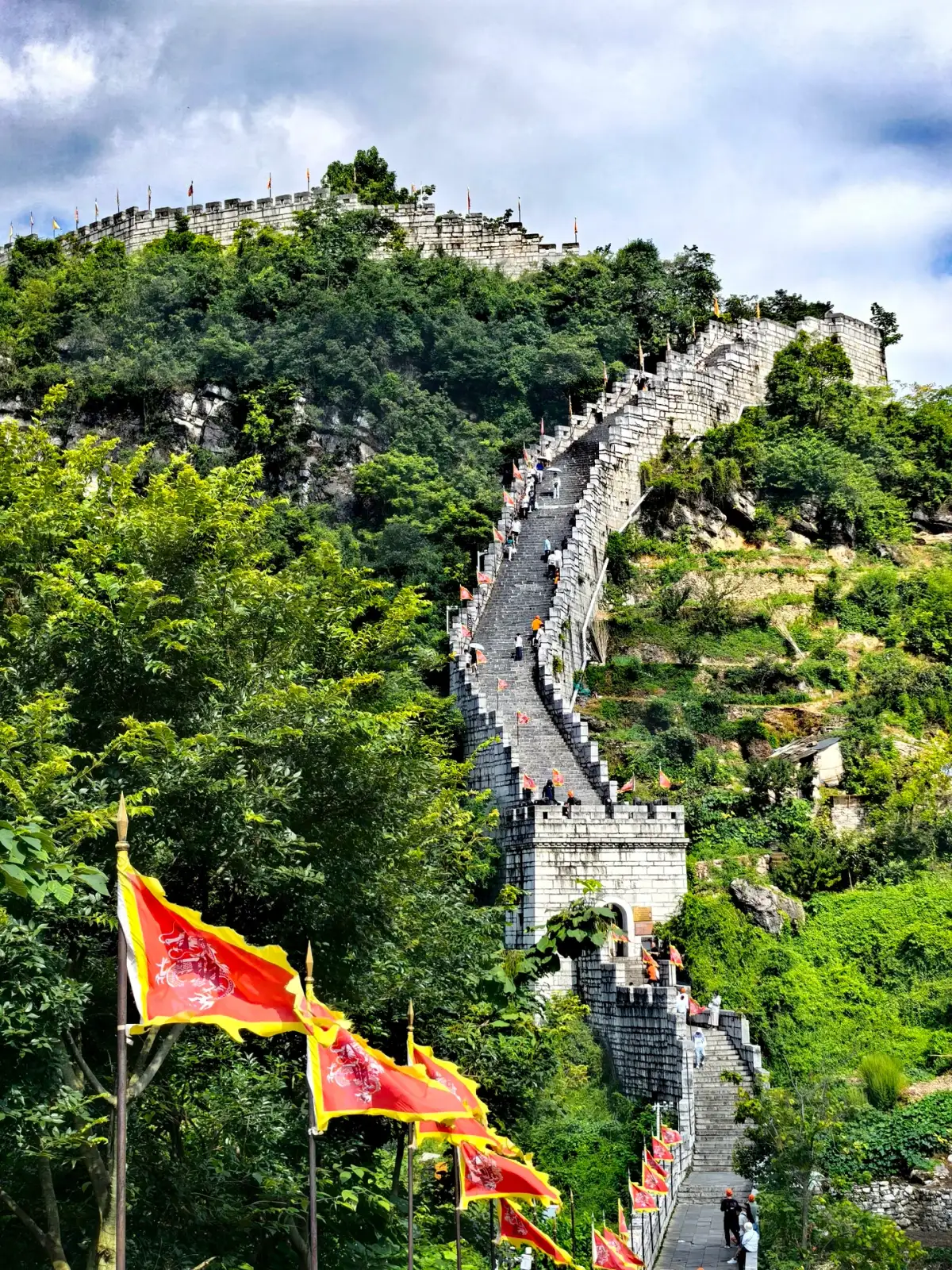
The winding stone steps along the walls of Qingyan Ancient Town, following the undulating terrain, with tiny figures of tourists visible in the distance. You
The integrity of Qingyan lies beyond the stones
Memories of Qingyan can begin with the stones, but they should not end there. The city gates and the wall lines tell stories of defense and transportation; the main street showcases today’s commercial activities; the back alleys reveal the scale of residential life; and the culture of the top imperial examination scholar, along with spaces associated with Wenchang, open up clues to the town’s educational history. These elements collectively make up the ancient town, rather than serving as a few isolated photo spots. At the end of your visit, reflect on three questions in the order you explored the town: Which gate did you enter? What types of buildings did you see? On which street did you linger the longest? Label photos with locations you can definitively identify; for scenes where the specific name is unclear, simply describe them as “stone alley in the ancient town” or “distant view of the street,” avoiding the use of made-up names just to make the caption sound better. When selecting a travel photography service, familiarize yourself in advance with public space usage and permitted shooting areas, and respect residents’ doorways, religious sites, and normal pedestrian traffic; Do not infer a person’s identity based on their clothing or appearance. Finally, board the vehicle at the designated location, taking with you a concrete understanding of the neighborhood. Even if you don’t manage to visit every courtyard and section of the city wall in a single day, this structured and focused tour will clearly demonstrate why Qingyan is worth setting aside time for during your trip to Guiyang.
Further Reading and References
Guizhou · Destination Overview
Compiled and organized by the East Travel Editorial Department based on publicly available travel notes and listed materials; intended as pre-trip reading and not as a personal account of firsthand experience. Please verify opening hours, transportation, reservations, and service arrangements according to your actual travel dates.
Guizhou Radio and Television Station: Qingyan’s Military History and City Defenses
Guizhou CPPCC News: Walking in Qingyan and Educational Culture
Guizhou CPPCC News: The Zhao Family and Qingyan Ancient Town
Guizhou Radio and Television Station: Qingyan Cuisine
Have you seen Qingyan after finishing the main street?
A Qingyan Ancient Town half-day can start with the gate and main street, then turn to Qingyan Back Street observation of stone surfaces, thresholds and changing building heights. Do more than seek an empty photograph: how people pass and how rain changes pace also reveal daily scale. Leave residents room to move and study one secure stopping point rather than entering every branch.
Sharing time between cultural space and a meal
A Qingyan Wenchang Pavilion visit shifts attention from defence to education and writing. Read public interpretation before looking at the courtyard's organisation. If champion-scholar spaces also interest you, choose one subject for deeper study. Ask about food ingredients before a meal. In rain, shorten stone-lane retracing and use confirmed indoor access as an alternative instead of depending entirely on photographic light.
Planning references
Planning reference: Qingyan Ancient Town half-day 1
Planning reference: Qingyan Ancient Town half-day 2
Planning reference: Qingyan Ancient Town half-day 3