Yingguo Dongxing Travel Editorial Department · Travel Diaries and Pre-Trip Reading
First, familiarize yourself with the three scenic areas, then decide on the day’s priorities.
Travel to Huangguoshu is often summarized by a single photo of the Grand Waterfall, but actual planning requires first understanding the different sightseeing areas, such as the Grand Waterfall, Doupotang, and Tianxingqiao. Moving between them involves shuttle services, entry points, and specific trails; you cannot simply walk a few steps from one waterfall to naturally reach all the scenic spots. Upon arrival, first check the official guide, the day’s open areas, and shuttle schedules, then allocate your available time to the main attractions. For first-time visitors, make the Grand Waterfall the centerpiece and select one additional area; those wishing to walk the entire upper and lower sections of Tianxing Bridge should set aside a more uninterrupted block of time for this route. When relaying the scenic area’s visitor guidelines, Guizhou Radio and Television Station also noted the varying time requirements for each area, indicating that completing all three sites is not a quick or easy stop. Allocating two days allows for more flexibility regarding walking and waiting times, though the specific schedule still depends on transportation, accommodations, and access conditions. When planning your itinerary, mark the entrances and exits of each area on the same map and verify the connecting routes to avoid discovering—only after a long walk—that you haven’t yet arranged transportation to the next destination. Water flow at the waterfalls and weather conditions should also be factored into your daily route decisions.
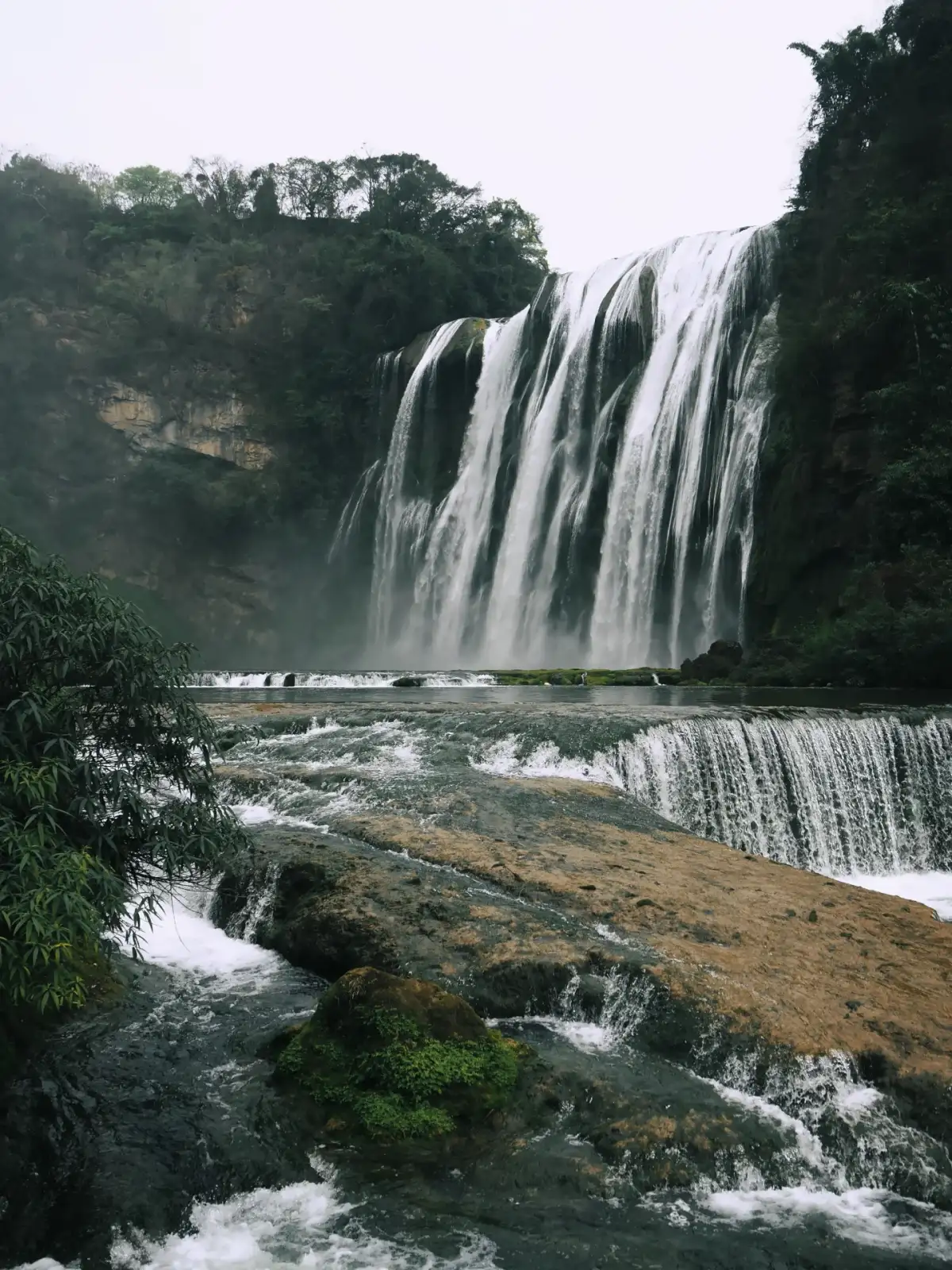
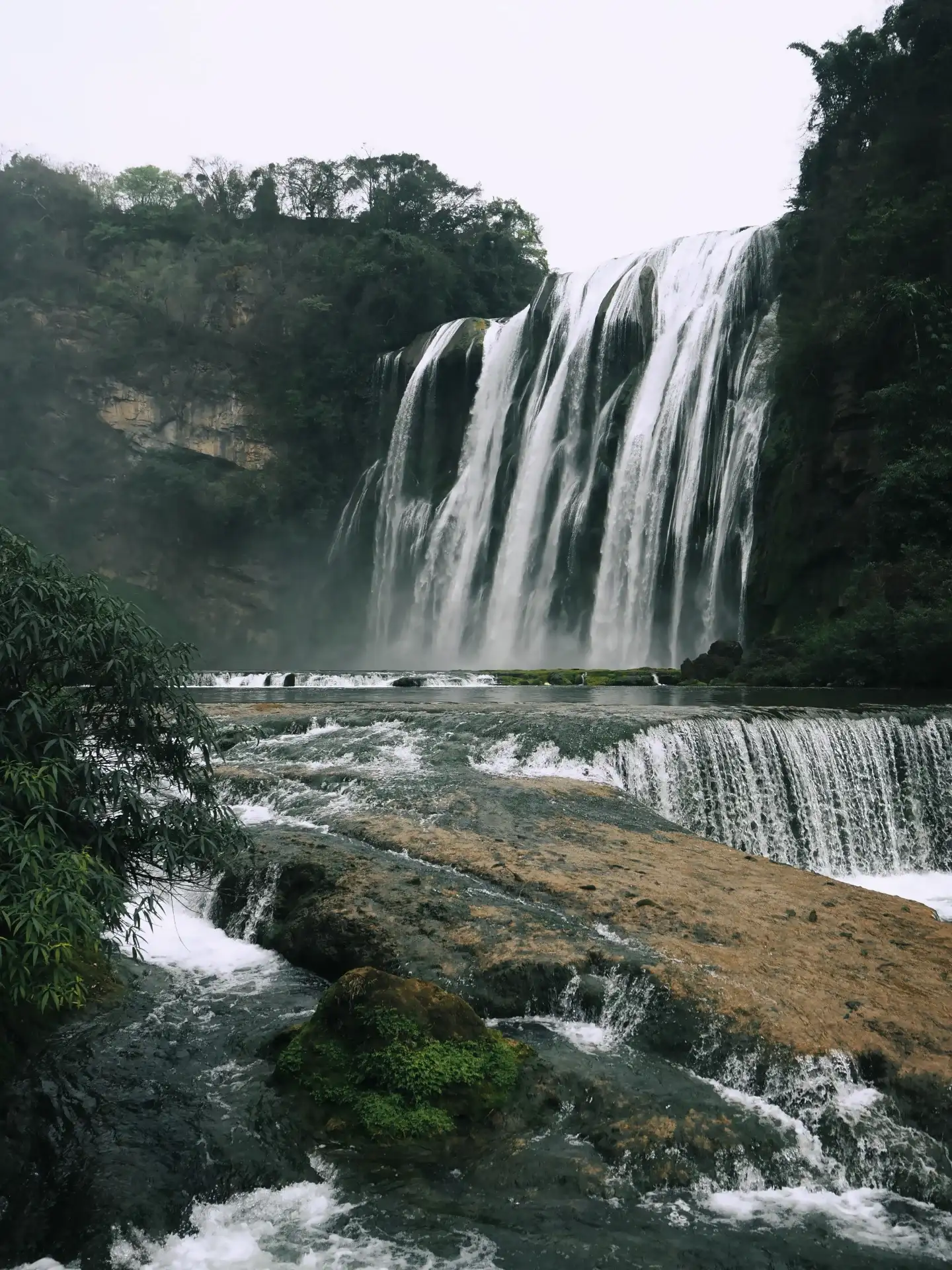
Huangguoshu Grand Waterfall and the vegetation on the rock face on a cloudy day.
A panoramic view from afar, first capturing the interplay between the water and the valley
, start by stopping at a distant, open viewing point to familiarize yourself with the water flow, cliff faces, vegetation, and the location of the pool below. A distant view helps you identify the terrain and understand the direction of the steps ahead; even before you reach the waterfall, the sound of the water may already reach your ears. Water volume, color, and the mist created by the falling water are influenced by the season, rainfall, and the day’s lighting; even photos taken from the same spot can have completely different textures. The blue skies or lush greenery in the photos do not guarantee the weather on the day of your visit; this is especially important to keep in mind when viewing images that have been color-adjusted by the photographer. When taking photos, start by capturing a wide-angle shot of the surroundings, then refocus your attention on the scene itself—there’s no need to constantly change your position just to fill the frame with the waterfall. Both distant and close-up views offer their own unique perspectives; standing closer does not automatically mean you’ll see the entire scene. If you’re traveling with children or companions who prefer not to descend too many steps, focus on the accessible viewing areas and decide whether to proceed based on the on-site trail information. The truly useful approach is to know how to proceed and how to return, rather than simply labeling every viewing platform as a “must-see.”
Head toward the nearby area—the mist is part of the experience.
When viewing the waterfall up close, the stairs, railings, turns, and viewing platforms determine the actual distance between you and the water. First, identify the descent route and the return path, then adjust your rain gear and camera in a more open area; avoid opening a long umbrella or rummaging through your backpack while walking on narrow sections. Water mist may dampen your clothes, camera lens, and the ground, so lightweight rain gear and non-slip shoes are more practical than bringing multiple changes of clothes for photography. Up close, you can observe how the water spreads out after falling, the reflections on the pool’s surface, and the details of the cliff face, as well as how the sound intensifies or fades as you round corners—details that cannot be fully captured from a distance. If a viewing platform is crowded, follow the staff’s directions to move along the path, then take your time to look around at designated stopping points, without blocking the steps so that people don’t appear in your frame. Be sure to factor in the physical exertion required for the return hike; do not treat “going down to see the waterfall” as a one-way, effortless journey. In the event of last-minute adjustments, stick to viewing from the open observation areas; the natural conditions on-site and access arrangements will determine where you can go. There’s no need to force yourself to alter your walking pace just to take a photo that matches one you saw online.
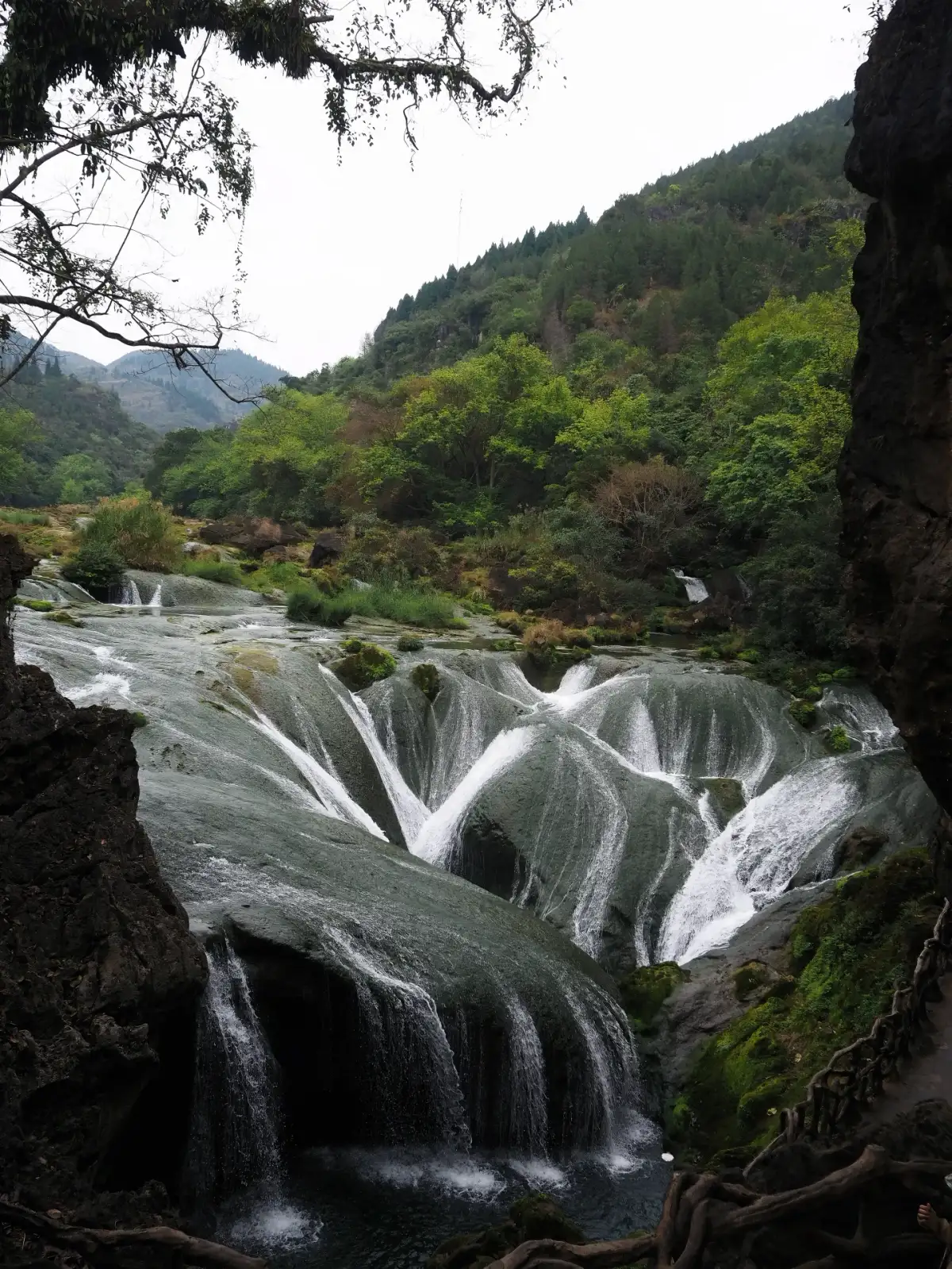
At Huangguoshu’s Tianxing Bridge, the “Silver Chain Plunging into the Pool” cascades into the water below among the rocks.
Water Curtain Cave on a cloudy day: Follow the one-way trail to view the back of the waterfall
Water Curtain Cave offers visitors the opportunity to experience the Grand Waterfall from a different angle, but it is primarily a walking trail subject to on-site opening hours and crowd control measures. Important notes from the scenic area: The space here is narrow, with one-way traffic, and a real-name, time-slot reservation system is in place; check the Water Curtain Cave time slots separately from the scenic area admission ticket. Whether it is open and the reservation rules are subject to the information available at the time of your visit. Photos taken at the cave entrance and exit can help illustrate the relationship between the rock face and the waterfall; however, they do not guarantee that you will be able to enter, stay, or capture uncrowded shots on every visit. If the cave is open on the day of your visit, follow the queue and wait to stop only at designated areas further ahead when passing through narrow sections; lighting, humidity, and mist may also affect your shots. If you choose not to enter, viewing the Grand Waterfall from the outside still constitutes a complete tour; there is no need to take a detour to approach the closed entrance. Water Curtain Cave is a separate location from the caves and other cave formations within Tianxing Bridge; be sure to check the specific names when reviewing your itinerary. As you approach the Water Curtain Cave, the name sign, rock walls, and water flow will help you identify your location. After completing this section and returning to the external viewing point, the relationship between the back and front of the waterfall will provide a more complete understanding of the terrain.
Tianxing Bridge: Shifting Focus from the Drop to the Rocks and Water
Xingqiao offers a viewing experience distinct from that of the Grand Waterfall. The scenery here is shaped by the limestone terrain, water flow, vegetation, and winding walking paths. You can select a relatively complete section from the official open routes to observe how the rock surfaces divide the water, how tree roots abut the rocks, and how the trails wind through them. Traditional guides divide the area into different sections, but accessible sections and some facilities may change; following the day’s guided tour is more reliable than memorizing outdated guides. If you’re only walking a shorter section, be clear about which subsequent routes you haven’t completed to avoid confusing the exit direction with the path to another section. For longer hikes, plan meals and water in advance, and once inside, don’t save all your breaks for the very end. This isn’t a quick few-minute detour near a big waterfall; to truly appreciate the rocks, water, and vegetation, you’ll need to set aside time for yourself. Since fellow hikers may have different tolerance levels for stairs and walking distances, it’s best to agree on a plan before setting out, rather than constantly debating whether to continue halfway through the trail. Areas near the water, rock crevices, and vegetation zones outside the designated trails are not shortcuts for taking photos; you’ll find plenty of rich details simply by following the open paths.
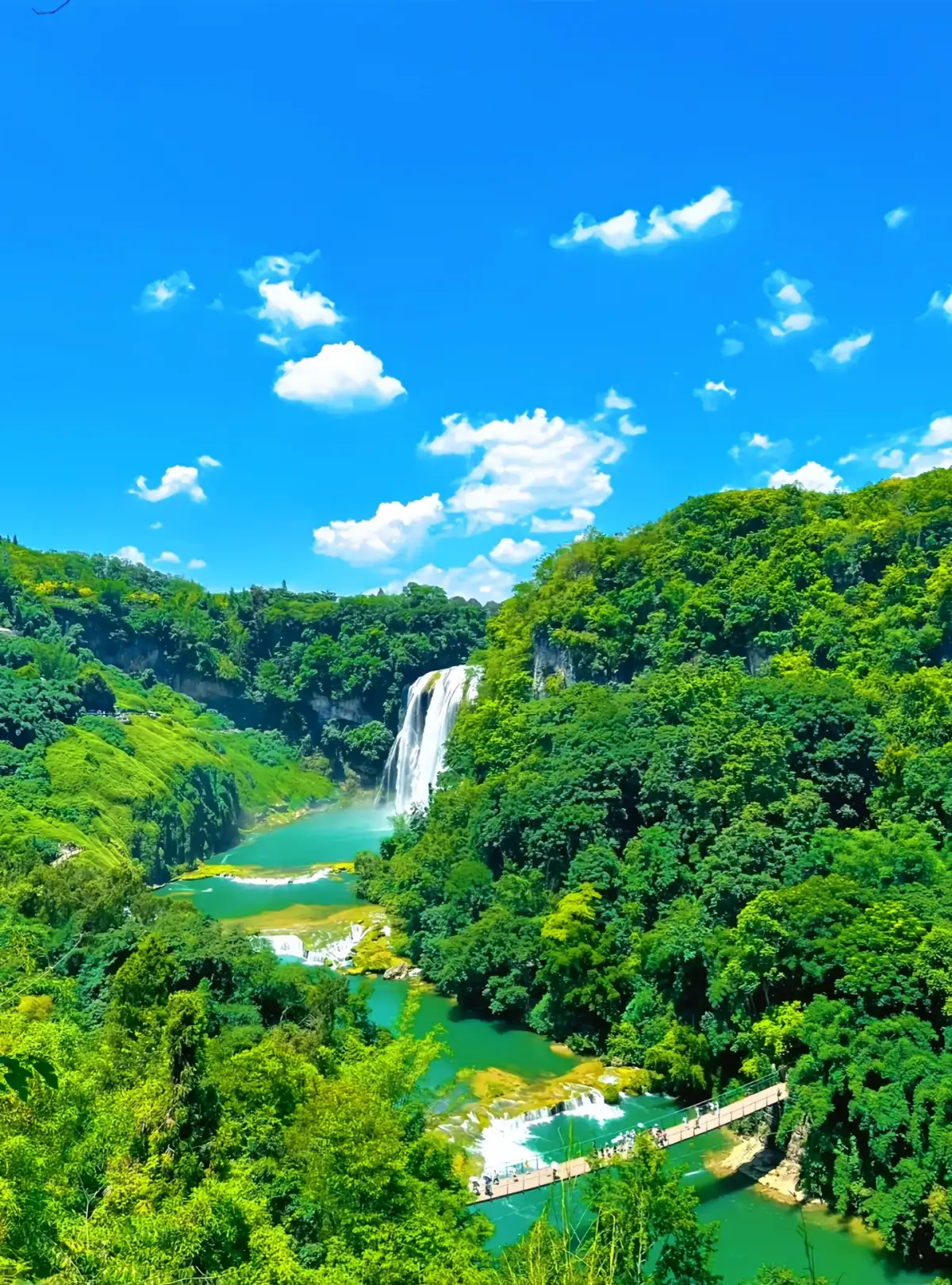
A bird’s-eye view of the Huangguoshu Grand Waterfall, the pools, and the valley walking trails.
A silver chain plunges into the pool: Understanding a name through the specific terrain
Yingyin Chain Plunging into the Pool can serve as a clear highlight of the Tianxingqiao section. The China Meteorological Administration’s local tourism guide links the water flow here to funnel-shaped rock formations, trough-like terrain, and karst pools; the name itself offers clues about the water’s form. On-site, start by observing how the water flows over the rock edges, then note how streams from different directions converge at lower elevations; as your gaze moves from the upstream to the convergence point, the landscape’s structure becomes clearer than if you were simply pursuing a slow shutter speed effect. Varying water levels may alter the visible rock surfaces and flow patterns, so avoid moving on slippery surfaces just to find the exact same texture as in a photograph. The converging water and the rounded rock surfaces are distinctly different from the broad, cascading form of the large waterfall; after viewing both sites, you can compare the paths the water takes over different rock formations and understand why a single scenic area offers such diverse viewing experiences. Long exposures taken with a smartphone or camera will render the water flow as soft white lines, but the movement and sound perceived by the naked eye offer another layer of information. Take one photo to capture the overall scene, then another to focus on a detail, and then set your phone aside for a few minutes without looking at the screen. This way, you’ll remember the water in this specific landscape, rather than just a detail of a waterfall that doesn’t reveal its location; on your return trip, continue along your chosen Tianxingqiao route—don’t assume that finishing your photos means you’re close to the exit.
Calculate transportation to Anshun separately from transportation within the scenic area
Huangguoshu Falls is within the Anshun travel area, but the train arrival city, the journey to the scenic area, and internal transportation within the park constitute three distinct stages. When departing from Guiyang or Anshun, confirm the actual train station, vehicle meeting point, and designated entrance, and list travel time and walking time within the scenic area separately in your itinerary. Visitors changing accommodations with luggage should first confirm storage or shuttle arrangements; do not begin a long staircase hike while pushing suitcases. During peak tourist season, reservations, ticket checks, and waiting times may disrupt the original schedule, so it is best to allow extra time for dinner and the return trip. When booking with foreign identification, have the host verify available booking channels and required entry documents; ticket prices and package combinations are subject to current official regulations. If you need to catch intercity transportation on the same day, it’s advisable to limit your itinerary to one area; if your primary goal is to complete the longer Tianxingqiao trail, consider staying nearby to reduce the pressure of an early start the next day. The purpose of this planning is not to guarantee absolutely no waiting, but to ensure that waiting times and weather changes do not turn the entire day into a rushed affair. The final decision on which section to hike should still be based on your companions’ needs and the confirmed operating conditions.
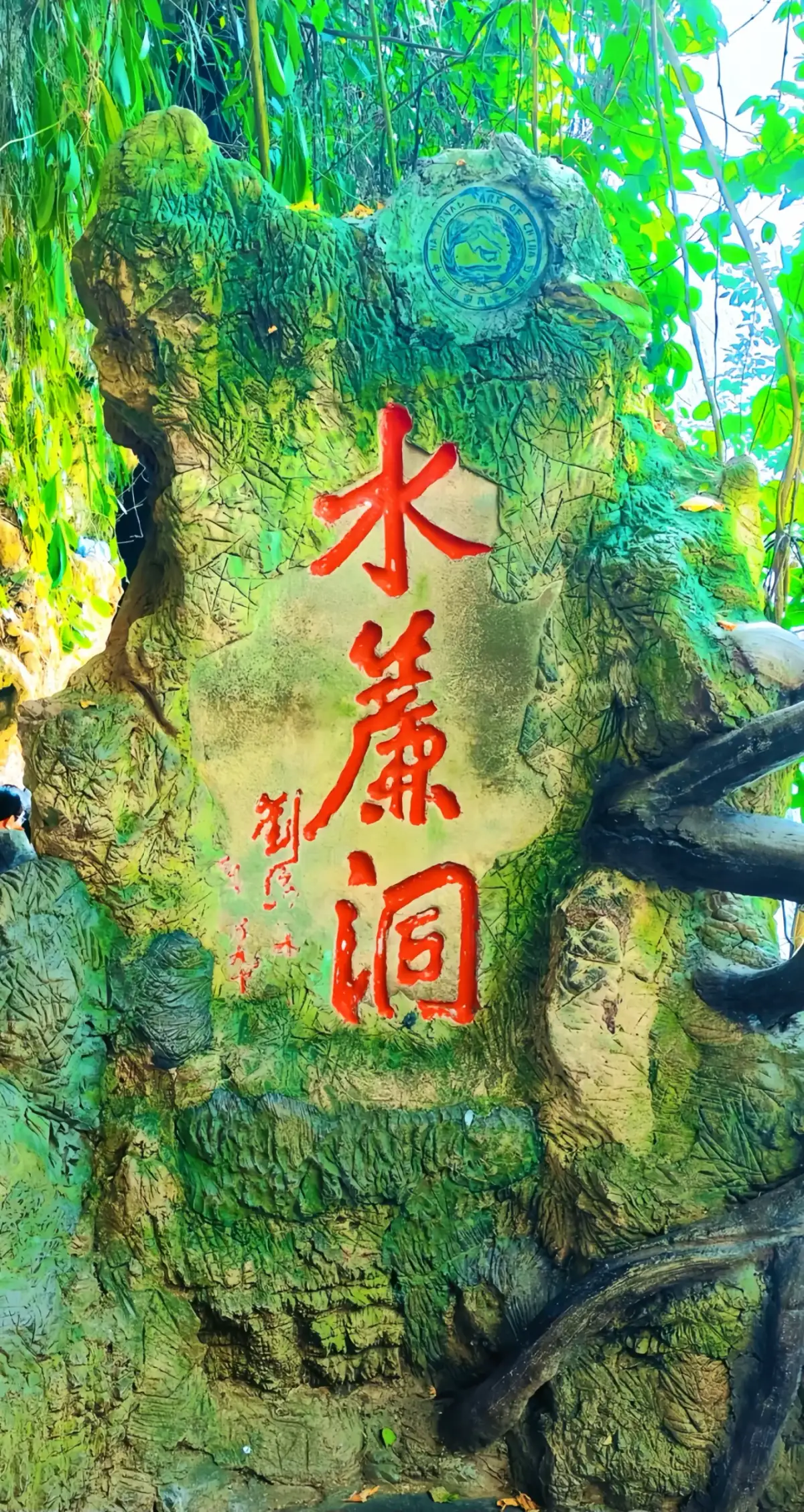
The sign for Huangguoshu Waterfall’s Water Curtain Cave against the rock face.
Seasonal changes affect the water flow, and so can the way you view it
, the Grand Waterfall and the water flowing over the rocks will appear quite different; rainfall and changes in water levels may also affect certain walking trails, so be sure to check the scenic area’s real-time information before your trip. Those hoping to see a more dramatic flow shouldn’t rely solely on the month to guarantee it, while those wishing to examine the rocks up close shouldn’t view lower water levels as a failed trip. When choosing clothing, consider both the heat generated from walking and the sensation of being dampened by water mist; rain gear should be lightweight, and electronic devices should be adequately protected. Families with mobility needs should confirm in advance with the tour operator which viewing points are accessible, what alternative transportation options are available, and which staircases they will need to navigate—do not assume that “scenic area shuttle service” means no walking is required throughout the entire trip. After the tour, organize your photos by specific locations—such as the Grand Waterfall, Tianxing Bridge, and the Silver Chain Plunging into the Pool—and note which sections of the trail you walked that day. This not only makes it easier to reminisce but also helps future travelers estimate the actual time needed for each area, grounding recommendations in clear geographical context. Huangguoshu offers enough to support trips of varying lengths; the distant views, the mist up close, and the trickling streams between the rocks each have their own viewing merits. By choosing what matters most to you, you’ll be able to appreciate the specific topography beyond just the sound of the water.
Further Reading and References
Guizhou · Destination Overview
Compiled and organized by the Eastbound Travel Editorial Department based on publicly available travel notes and listed information. Intended for pre-trip reading; this is not a personal account of firsthand experience. Opening hours, transportation, reservations, and service arrangements should be verified based on the actual travel dates.
Guizhou Radio and Television Station: Huangguoshu Scenic Area Issues Visitor Guidelines
Eco-China: Topography and Regional Composition of Tianxingqiao
Choosing between areas with limited time
Begin a Huangguoshu Waterfall route with the main falls, then choose Doupotang or Tianxing Bridge around your interests. If a Tianxing Bridge walking plan focuses on Silver Chain Falls, identify its actual route rather than mixing names of different caves and waterfalls. Broad-water enthusiasts can linger over the overall view; those interested in smaller flows can reduce other areas to protect continuous walking time.
Do internal transfers remove the need to plan steps?
Transfers cover only part of the movement; confirm steps and return routes for closer viewing. Check Water Curtain Cave access separately rather than assuming an area ticket guarantees entry. If the cave route is unsuitable that day, exterior viewpoints still explain waterfall and cliff. Distinguish travel from Guiyang or Anshun, vehicle waits and walking within the site so companions' needs can be addressed.
Planning references
Planning reference: Huangguoshu Waterfall route 1
Planning reference: Huangguoshu Waterfall route 2