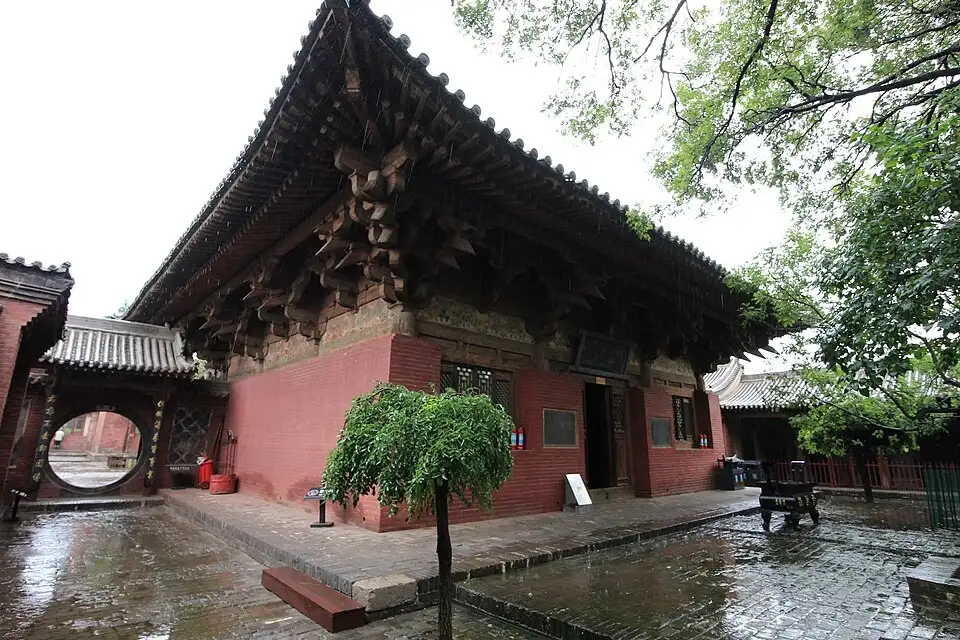
Including Huangguoshu and Xiaoqikong on the same Guizhou itinerary is often justified with just one phrase: “They’re both beautiful.” This assessment is enough to inspire the desire to visit, but it’s not enough to determine how each site should be experienced. The former allows visitors to focus on the power of water plunging from great heights, while the latter unfolds the water’s surface, ancient bridges, forests, and multiple stretches of streams within a continuous landscape. Both sites attract visitors with water, but the act of viewing and the focus required are quite different.
这是个人审美的表达,不是水量与水色的保证。若从这个差别继续展开,贵州自然路线可以从“连续看两处水景”变成比较水如何改变空间的一场旅行。
waterfall to convey its direction and drop
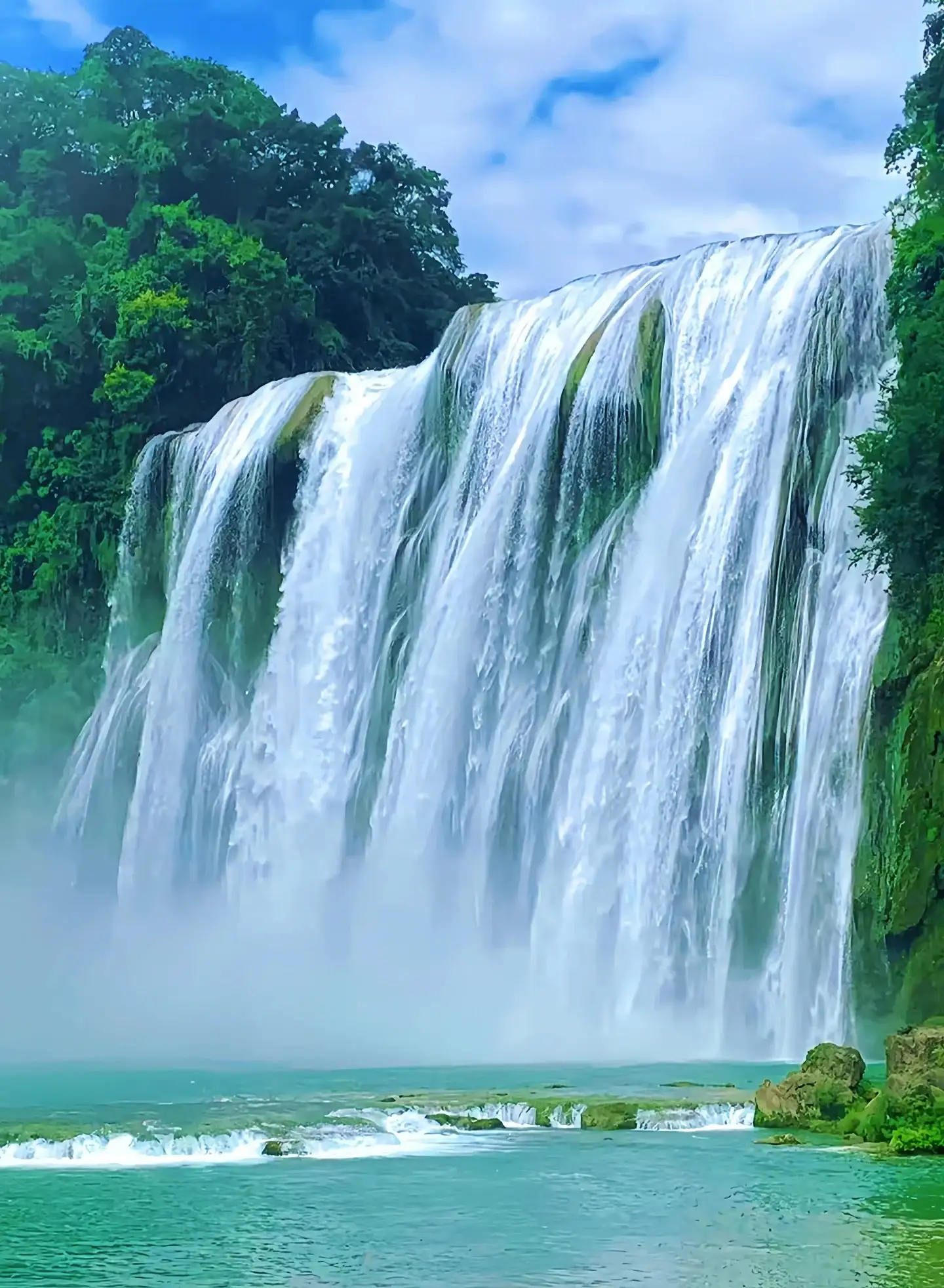
At Huangguoshu, start by observing the overall direction of the waterfall’s flow, then select a viewing spot where you can linger to understand the interplay between the pools, cliff faces, and the water’s surface. The official portal of the Guizhou Tourism Group highlights the Grand Waterfall, Water Curtain Cave, Doupotang, and Tianxing Bridge separately, explaining that the Huangguoshu landscape is more than just a single waterfall. Each section offers its own unique features; you should choose your focus based on the day’s theme, rather than taking the same front-view photo everywhere.
If you’re most eager to experience the main waterfall, save it for a time when you’re still full of energy. Start by taking in the panoramic view, listen to the sound of the water, and then focus on the mist up close and the surrounding vegetation; there’s no need to rush through these three steps. Photographers can also include the cliff face in the frame to provide a sense of the water’s direction, preventing the photo from becoming nothing more than a vast expanse of white without any sense of scale.
The open expanse of Doupotang and the varied topography of Tianxing Bridge provide the water with distinct settings. The official Tianxing Bridge route includes rock formations, forests, caves, and the “Silver Chain Plunging into the Pool” waterfall, among other features, and is suitable for those willing to take their time; if your companions are primarily interested in seeing the Grand Waterfall, there’s no need to automatically add a long stretch to the itinerary just because “you’ve already bought the ticket.” Your purpose for visiting should take precedence over the number of attractions.
When visiting with children, start with sound and movement. Help them compare the continuous sound of the water they hear with the frozen moment captured in a photograph; observe where the water enters and exits the frame. Parents don’t need to arrange for the children to walk closer—the open viewing area is sufficient to spark these questions. If a child is sensitive to the sound of water, they can step back to a comfortable spot and use the distant view to grasp the overall scene.
At Xiaoqikong, lower your viewpoint and get closer
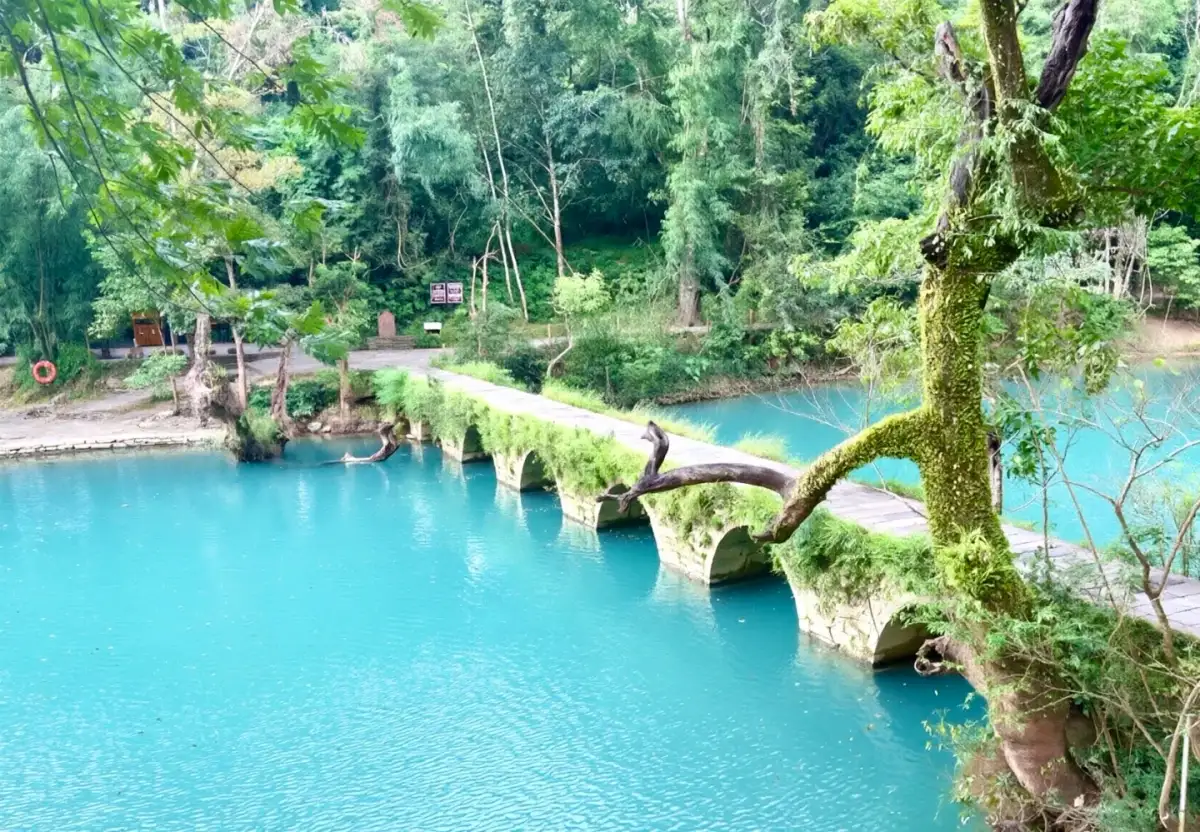
The official description of Xiaoqikong highlights ancient bridges, the water forest, and Wolongtan as distinct scenic features. Compared to the visual focal point centered around a single large waterfall, this area is better suited for constantly shifting your focus along the trail: a stretch of calm water, a cascade, an environment where tree roots and streams intertwine, and the interplay between the bridges and the vegetation on both banks.
When photographing, alternate between capturing the whole scene and focusing on specific details. Start by observing the water’s surface and the mountains and forests from designated viewing spots, then shift your attention to the details among the trees, rocks, and flowing water. The ancient bridge doesn’t have to be the sole subject at the center of every frame; the relationship between the bridge and the surrounding space can also convey why this particular landscape exists here. Different lighting conditions alter reflections and colors, so the green hues in your photos shouldn’t be treated as a fixed, daily effect.
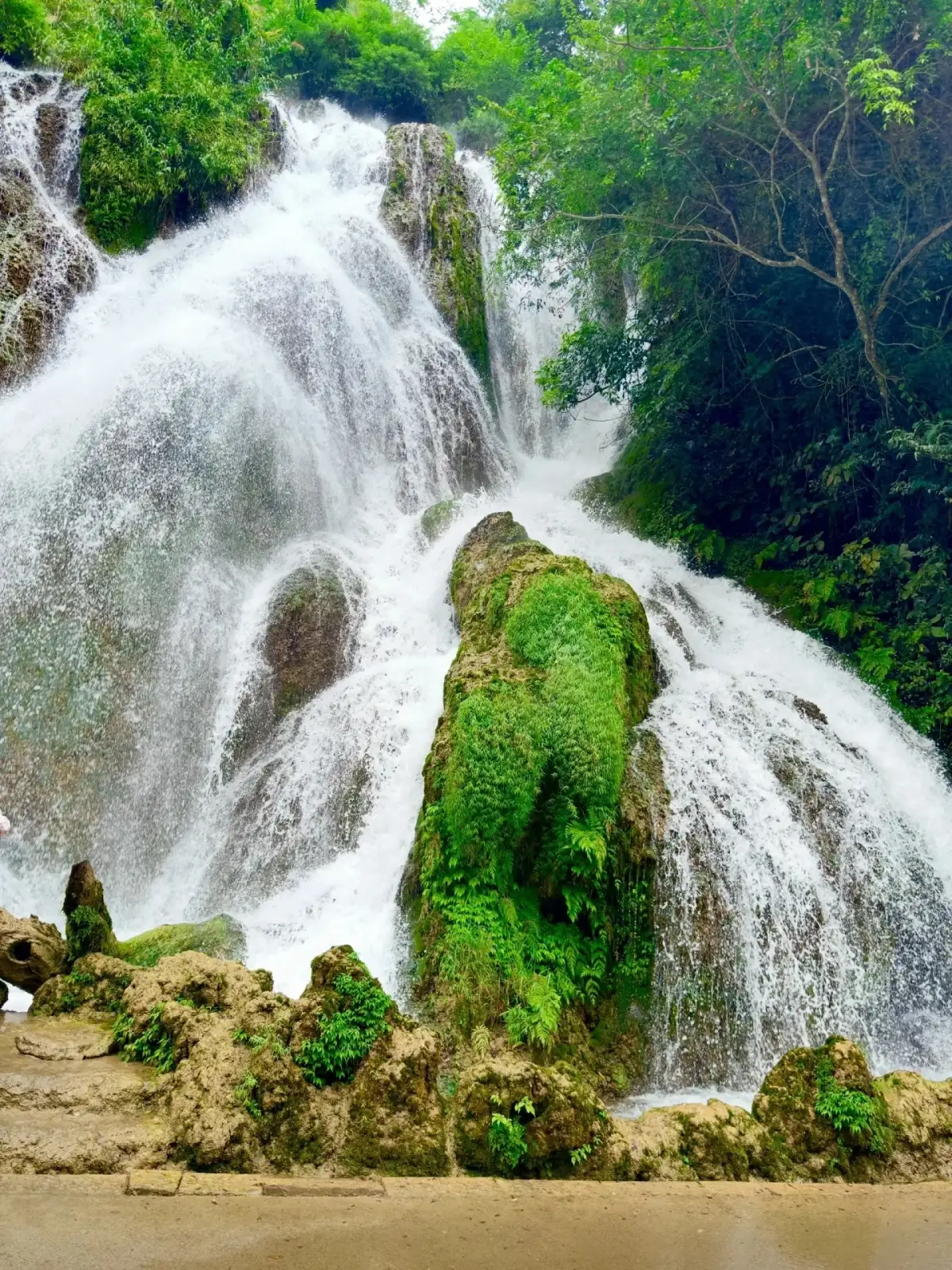
For visitors who love forests, the Water Forest offers a different perspective: first observe the trees’ support structures and the environment around their roots, then understand how the trails allow you to get close to these sights. Specific walking routes and access to the water’s edge are subject to on-site management; do not mistake wading photos on social media for permission to enter freely. A respectful visit to nature allows you to stay close to it while remaining aware of your footing.
For children, a visit to Xiaoqikong is best framed around the question: “It’s all water—why does this spot sound quieter?” As the combinations of water surfaces, rocks, and plants change, so does the atmosphere of the scene. Let the child choose a subject they want to linger with; this gives adults a chance to step away from shooting distant views for a moment and notice the nearby details that are often easily overlooked.
Visiting Both Spots: How to Keep Your Memories from Blurring Together
I recommend setting different themes for each of the two days. At Huangguoshu, focus on the direction of the water, its sound, and the height of the falls; at Xiaoqikong, focus on the relationship between the water, the forest, the bridges, and the streams. With different themes, even if you take many photos of water surfaces at both sites, your photos and memories will still have distinct elements. The itinerary doesn’t need to include the same amount of walking or the same length of guided tours every day.
Before setting out, ask each family member to choose one area of interest: some prefer sweeping vistas, others quiet details, and still others enjoy continuous shooting. Share these preferences with your tour advisor, and the itinerary can be tailored so that different people get dedicated time at different locations to focus on their chosen subjects. If one member has less interest in natural landscapes, arrange meals, rest breaks, and group photos during the shared segments that are easy for everyone to participate in.
At the end of the day, try comparing two photos: one highlighting Huangguoshu’s waterfall and cliff face, and another showcasing the trees and water surface at Xiaoqikong. Asking yourself why each photo needs that particular background is often more interesting than simply comparing “which spot is more beautiful.” Children can also use a simple drawing to record the direction of the water, linking family discussions to what they’ve actually seen.
Trying to visit two sites in a single day will consume a significant amount of time just on travel. Since these are two distinct destinations, plan your itinerary to account for park entry, meals, luggage retrieval, transportation, and check-in—don’t assume they’re close just because they’re in the same province. If time is very limited, choose one based on your primary interest and save the other for a future trip; there’s no need to rush through both to prove your Guizhou nature tour is complete.
If you can only choose one spot
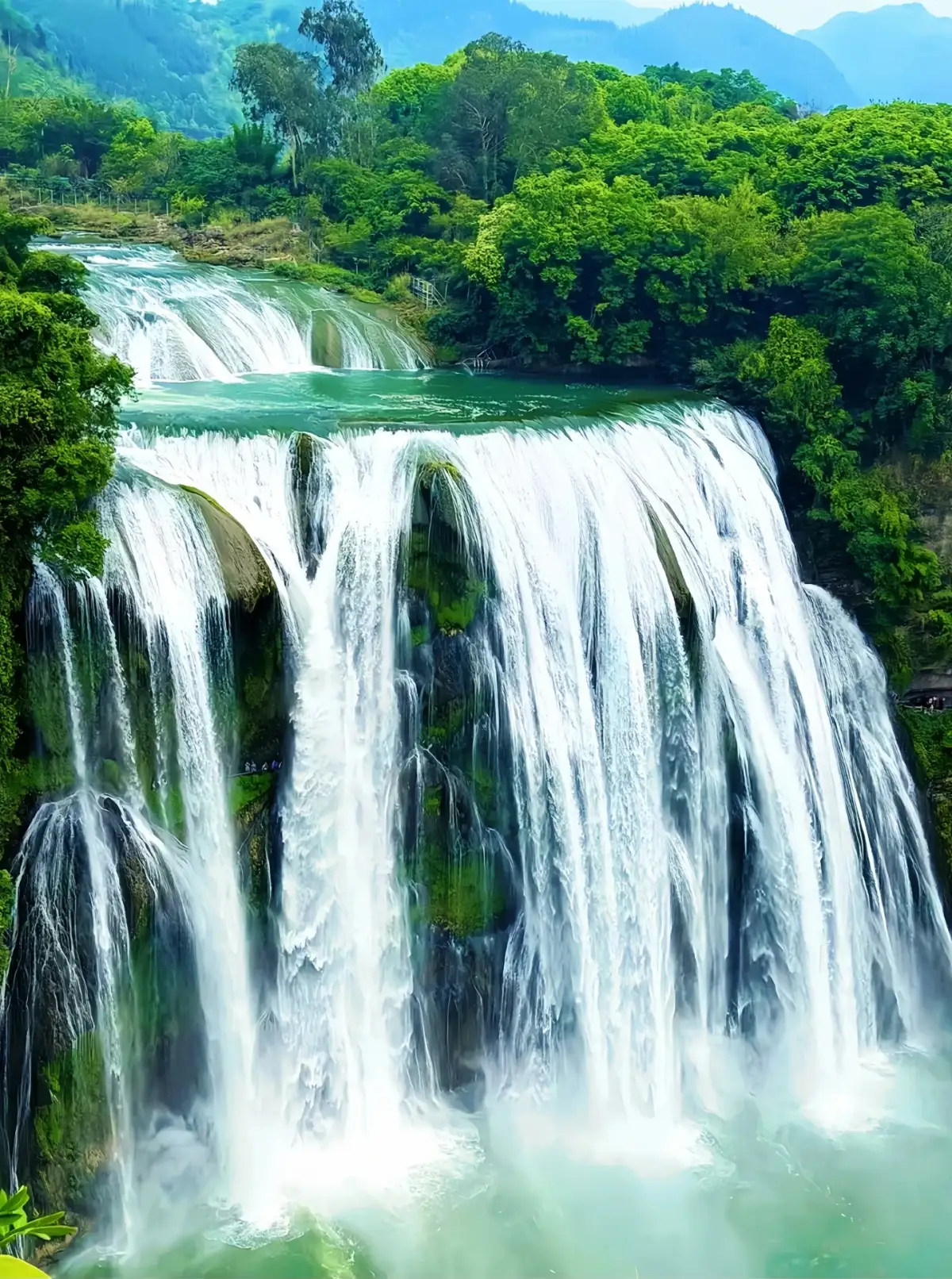
Those who prefer concentrated, dramatic scenes should prioritize the Huangguoshu Grand Waterfall as their main subject and then select other areas based on the time available. Those who enjoy the changing scenery along the trail, the forest, and close-up views of the water may want to consider Xiaoqikong first. This choice is based on personal preference but should still be considered in conjunction with walking habits, accommodations, and the season of travel; no single location can be described as suitable for every family.
If your travel companions are particularly concerned about stairs or extended walking, you should describe your actual physical capabilities to the tour operator so they can explain the trails and transportation connections based on official guide information. Tourist facilities can handle part of the travel, but they cannot eliminate the need for walking at all natural attractions; each day’s exit points, rest stops, and meals should be arranged separately from the main theme, serving as the foundation that supports it.
When it rains or the water flow changes, the viewing experience may also shift. Please check the official daily opening information, be prepared for temporary route adjustments, and focus your attention on the areas that are open to the public. Your photography doesn’t have to be limited to a single water color or waterfall width; the relationship between the water and its surroundings naturally changes with conditions, which is why you’ll always discover something new on subsequent visits.
Huangguoshu and Xiaoqikong need not compete for the title of “most beautiful water scene.” By clearly observing the drop, the sound, the forest, and the bridge separately, travelers can take away a set of concrete experiences: how water concentrates its force and how it unfolds across multiple spaces. Such a Guizhou itinerary features not only two destinations but also a thread of nature observation running through them.
Source and Editorial Notes
They do not serve as proof of actual travel experiences or services provided by Dongxing Travel.
Guizhou Provincial Tourism Industry Development Group’s Official International Tourism Portal · Huangguoshu Waterfall · Official source; Verified/compiled on: October 3, 2026.
Guizhou Provincial Tourism Industry Development Group’s Official International Tourism Portal · Libo Xiaoqikong · Official source; Verified/compiled on: October 3, 2026.
What matters when choosing one?
When choosing Huangguoshu or Xiaoqikong, compare the experience rather than photograph colours. These Guizhou water landscapes offer different interests: waterfall scale and sound, or water, vegetation and bridges seen closely during a Xiaoqikong slow walk. Include hotel and transport connections in the decision.
Make two visits distinct
Assign a different observation to each place: sound and falling water at one, waterside plants and layers at the other. Check weather and access separately, follow local instructions for caves and waterside sections, and do not expect identical flow or colour throughout the year.
Planning references