Eastbound Travel Editorial Department · Travel Diaries and Pre-Trip Reading
Leaving the lakeshore behind, Hangzhou takes on a different shade of green
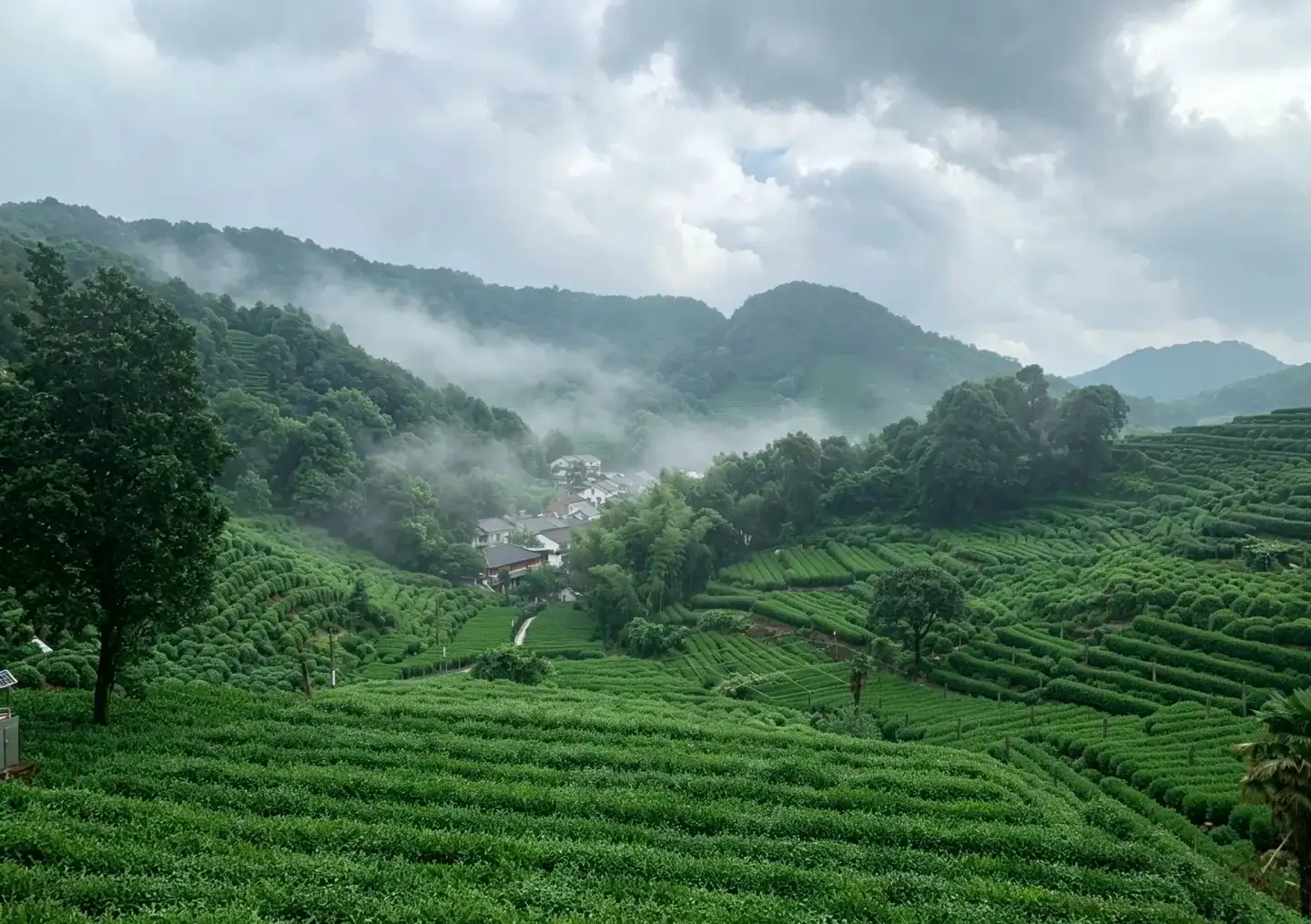
Hangzhou’s scenic beauty isn’t limited to the shores of West Lake. In the Longjing area, tea terraces carve the slopes into dense, orderly lines, while trees and village houses further divide these lines into distinct sections. To plan a half-day trip to the tea mountains, start on the village roads. Choose a public path that you can easily return from, and set aside time to sit down and enjoy a cup of tea. It’s best to schedule this trip separately from your West Lake itinerary, so that the city and the mountain village each have their own distinct themes during different parts of the day.
Do not assume that all tea-related place names—such as Longjing Village, Meijiawu, Longwu, and Jiuxi—refer to the same location. The tea garden hiking routes listed in Hangzhou’s cultural and tourism materials include connections between villages and mountain ridges, but a full hike differs from a short stroll along village roads in terms of distance, slope, and exit points. First, determine your actual scope of exploration by checking maps, weather conditions, and trail accessibility. For a half-day outing, stick to the area around the village; if you plan to hike longer mountain trails, be sure to bring appropriate footwear, water, and arrange return transportation in advance—do not impulsively turn a short tea-viewing walk into a full-fledged trek.
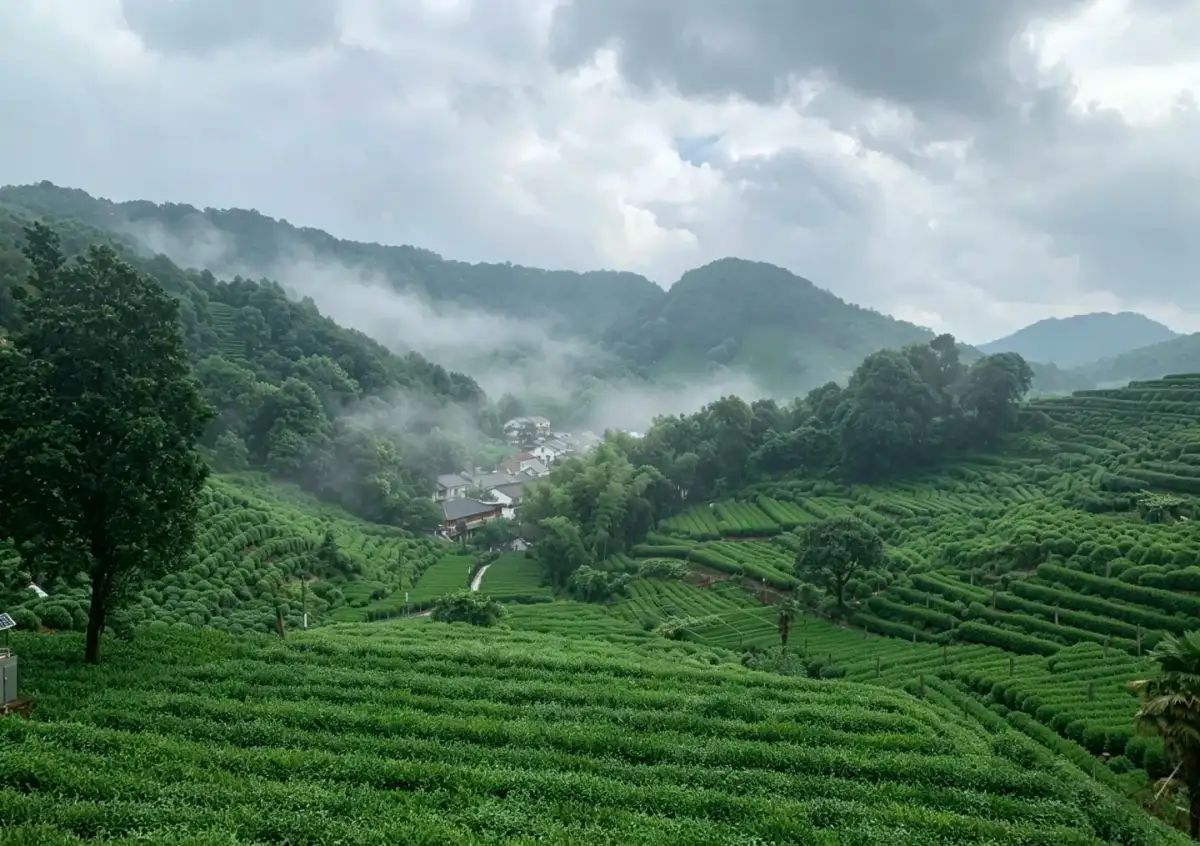
Village houses nestled among the tea terraces and trees in Longjing Village.
The lines of the tea terraces are the shapes left behind by labor
When viewing tea gardens from accessible roads, you can begin by observing three types of lines: the upper edges of the pruned tea bushes, the spacing between the tea ridges, and the undulations of the entire hillside. Up close, they are leaves and branches; from a slight distance, they resemble repeating green ripples. They give the tea garden a blend of natural and human-made characteristics—the mountain has not been completely leveled, nor has the planting pattern formed through random growth.
When taking photos, including a section of the road or the boundary of a tea plot in the frame better illustrates spatial relationships than simply capturing a patch of greenery. Tea gardens are production areas; seeing a narrow gap does not mean you are allowed to enter. Do not step onto the tea ridges, trample the soil, or pick leaves just to capture a photo of yourself “amidst a sea of tea.” If there are organized tours, confirm the operator, permitted access areas, and specific arrangements before participating. Visitors can still observe many details from the roadside; respecting field boundaries does not limit your observation—rather, it shifts your focus to the actual slope, layout, and management practices.
Between the village houses and the tea hills, observe the seam
Looking back at the village from the tea gardens, the interplay between rooftops, walls, and green slopes is fascinating. Village houses often temporarily block the view, only to reveal another tea garden at a crossroads; tea gardens do not necessarily extend all the way to the front door—trees, courtyards, or roads may lie in between. Instead of sticking to a single wide-angle vantage point, walk along an open village road and observe how the mountain scenery reappears after each turn.
These connections serve as a reminder that the Longjing area is not only a tourist destination but also a place where people live and work. Tea shops, restaurants, and residences may be located side by side; be sure to confirm the purpose of a building before entering its courtyard. Maintain a respectful distance when photographing residents and workers, and avoid assigning identities to them based on their clothing or tools. If you wish to learn about the process from tea cultivation to processing, feel free to ask questions at exhibition spaces or business premises with clear explanations; you can ask the operators about tea varieties, harvest times, and tea grades, then cross-reference this information with the specific product descriptions.
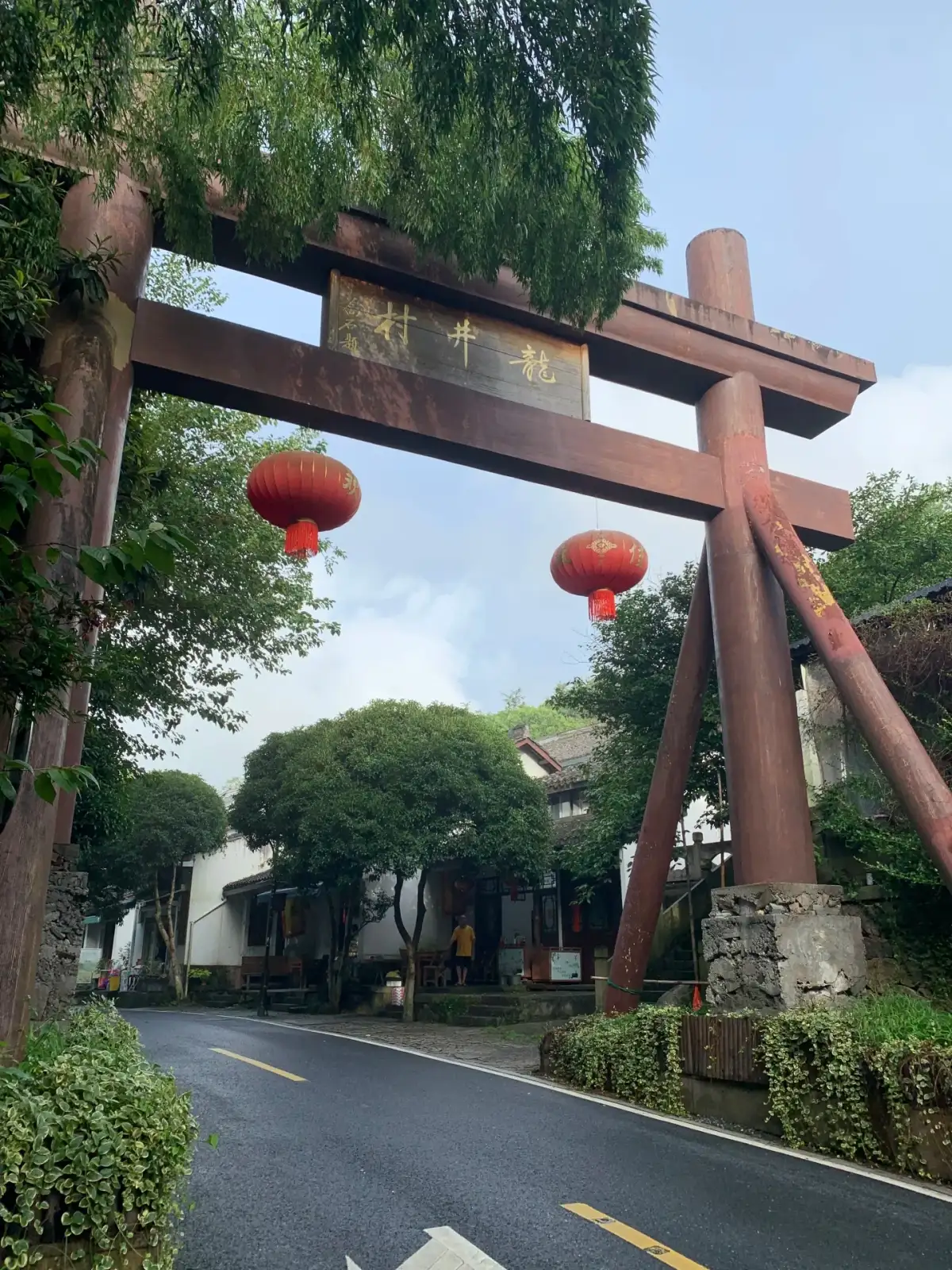
The village entrance sign and road in Longjing Village.
Before sipping a cup of tea, first ask what exactly you’re drinking
When sitting down for tea, ask about the tea’s name, origin, brewing instructions, and price before deciding whether to taste or purchase it. “Longjing” is a widely recognized name, but the village’s fame cannot substitute for specific product information. What travelers can truly experience is the aroma, taste, and temperature of this cup of tea; the origin, grade, and batch should be clearly provided by the seller. It is not advisable to draw your own conclusions simply because the tea leaves appear flat.
When tasting, pay attention to the changes from the first sip to when it cools slightly; there’s no need to rush into evaluating it with complex terminology. Watching the leaves unfurl in a glass cup is also a visually engaging process; if using other vessels, observe the rhythm of pouring water and pouring out the brew. International visitors more familiar with coffee can treat this as a new experience with an everyday beverage, rather than an exam requiring mastery of the entire tea ceremony. Before purchasing, ask about packaging, storage, and weight; when carrying tea across borders, double-check the customs regulations of your destination—recommendations from tea shops cannot replace border regulations.
A tea-tasting break can also begin with the water temperature. Let the cup cool slightly first, then compare the crisp freshness upon sipping, the aftertaste after swallowing, and the changes after refilling with hot water—a single cup of tea unfolds a brief yet nuanced journey. If you’re with friends, simply describe the sensations you find easiest to identify; there’s no need to rush to find a “correct” answer. The outdoor breeze and indoor temperature can affect how quickly the tea cools, and seats with mountain views aren’t always the most comfortable. Choosing a quiet, shaded table with clearly marked prices allows you to truly connect the steep path you just walked with the drink before you.
Decide between a short stroll and a long hike before setting out
To gain a deeper perspective of the mountain’s contours, choose a clearly marked public uphill trail; for a leisurely hike, turn back once you’ve reached a vantage point where you can make out the overall layout of the tea terraces. Distances in the mountains aren’t as easy to estimate as on flat city streets; slopes, steps, and stops will all add to the time required. A route that appears short on a map may actually involve constant ascents and descents, so it’s not advisable to judge its suitability for fellow hikers based solely on the number of kilometers.
If planning a long hike, first confirm the starting and ending points, trail junctions, weather conditions, and evacuation points, and allow ample daylight hours for the descent. Routes that alternate between tea hills and forests will vary in sun exposure and slipperiness; pay special attention to muddy areas or fallen leaves after rain. Do not use unmarked field paths as shortcuts; follow on-site guidelines regarding restricted areas and agricultural operations. Scenic walks along village roads can easily be a standalone outing; whether to climb higher depends on your interest and preparation—there’s no need to replicate someone else’s physical exertion just because they took a particular mountain trail.
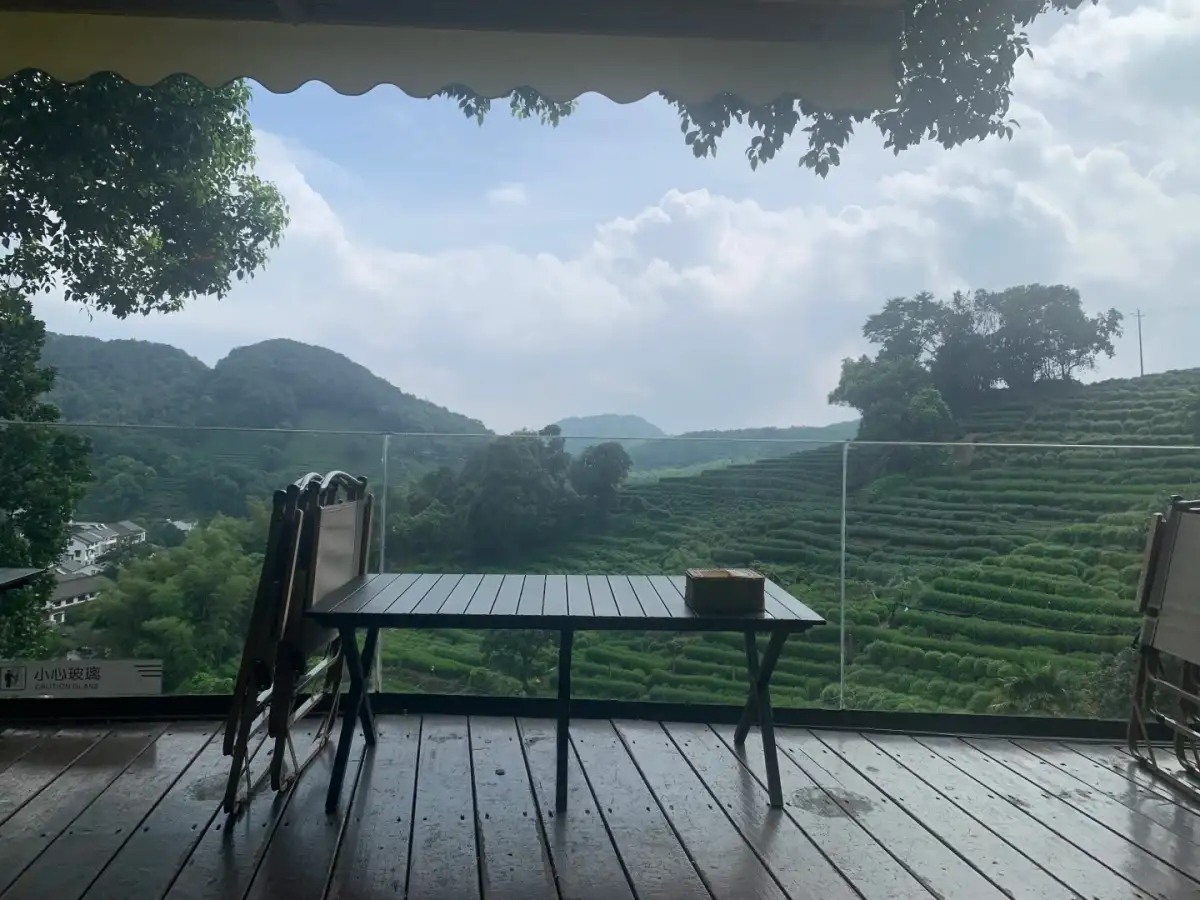
Terrace seating in front of the Longjing tea slopes.
Beyond the spring harvest, the hillsides also have their own seasons
In spring, it’s easy to focus on new leaves and tea picking, but since the harvest period depends on the tea plants, weather, and production schedules, there’s no guarantee you’ll see workers at work or be able to participate in a tea-picking experience during your visit. In summer, the lush greenery is at its peak, and the heat outdoors is more intense; a short stroll followed by indoor tea-drinking offers a more leisurely experience. In fall and winter, the hues of the branches, leaves, and tree lines shift, yet the structure of the tea terraces remains clearly visible—though the scenery may not match the tender green of promotional photos.
Overcast days are ideal for observing the layered contours of the slopes, while sunny days often produce stark bands of light and shadow. If you encounter rain or fog, limit your viewing to village roads and nearby tea gardens—do not venture onto slippery mountain trails in search of open vistas. Adjust your activities according to management recommendations during thunderstorms, strong winds, or other weather alerts. When viewing the slopes through fog, pay close attention to road conditions and visibility; spending a little extra time in the tea house can also enrich your experience of this mountain village journey.
When planning transportation to and from the village, leave some leeway for the final leg of the journey
When traveling from the city to the Longjing area—whether by public transportation, taxi, or pre-booked ride-sharing—be sure to confirm specific pick-up and drop-off locations in advance. Scenic area roads and village roads may have temporary traffic arrangements during holidays, so stop locations and schedules from older travel guides cannot be relied upon directly. For international visitors, having Chinese versions of the village name, accommodation address, and return destination on hand will make transportation coordination clearer; you should also consider the difficulty of finding a ride on the spot along mountain roads.
There’s no need to rush straight to another distant attraction after your tea tasting. You can first have a simple meal, confirm your return trip, and then decide how to spend the remaining time. If this half-day falls on the day you arrive in or depart from Hangzhou, be sure to allow ample time for the journey between the station and the mountain village; don’t assume that the time you get up from the tea table is the same as the time you’re already on the bus. Only by sorting out your transportation arrangements clearly can you truly pause by the tea terraces; otherwise, before you’ve even finished taking in the mountain scenery, your attention will keep shifting to the ride-hailing results on your phone.
Take one last look back, and let the lines reconnect
Before leaving, take one last look at the entire hillside from the public intersection. What appeared as a sea of green upon arrival now reveals, upon close observation, the distinct orientations of the tea ridges, paths, and village houses; the tea leaves, too, transform from an abstract local specialty into objects intimately connected to the hillside and the spaces where they are cultivated. Capturing three photos from different distances—a close-up of the leaves, a mid-range view of the tea ridges, and a wide shot of the village and mountains—conveys more information than continuously photographing the same angle.
The key question to consider when visiting the Longjing tea mountains is how natural slopes are cultivated and integrated into daily life. While these relationships can be compared to other tea-producing regions in China, one should not conflate different origins and tea varieties into a single cultural category. Returning to Hangzhou, when I see a teacup or the silhouette of West Lake’s hills again, a concrete geographical connection comes into view. The reward of travel lies in understanding the space behind a cup of tea, as well as in recognizing the distinct boundaries between appreciating the scenery, savoring the brew, and the process of production.
Further Reading and References
Hangzhou · Destination Overview
Compiled and organized by the Dongxing Travel Editorial Department based on publicly available travel notes and listed information. Intended for pre-trip reading; this is not a personal account of firsthand experience. Please verify opening hours, transportation, reservations, and service arrangements based on your actual travel dates.
Hangzhou Municipal Bureau of Culture and Tourism: Tea Garden Hiking Route Information
Do tea-field views require a full hike?
A Longjing Village walk can follow permitted village roads to observe rows of tea, slopes and houses without committing to a long mountain route. A Longjing tea hill hike requires a separate effort and return plan; establish both endpoints before starting. Tea fields are working agricultural spaces, so viewing differs from picking. Entering planted areas or joining a harvest requires clear permission.
Questions before sitting down for tea
For Longjing tea tasting, ask where the tea was grown, when it was harvested and processed, and which tea is being brewed. The name alone does not establish quality. Before buying, check packaging information and purchasing conditions, then choose an amount. Treat tea as a rest and conversation: comparing flavour and successive brews does not require making a purchase.
Planning references