Opening dates: use this season’s announcement
If Ice and Snow World is the reason for the trip, confirm the current season’s operating announcement before selecting dates. Reports of past openings and closures establish only what happened in those editions. They do not prove that the next season has opened or is selling admission. This guide was checked on 4 October 2026 and does not supply an unconfirmed opening date, price or performance schedule. Recheck the operator before committing to non-refundable travel.
For dates earlier than a confirmed opening, plan a winter city visit or change the dates. Snowfall does not mean every ice structure, slide and show is ready. City architecture can be part of the trip in its own right. Ice and Snow World, other sculpture parks, city activities and distant ski areas require separate checks and are not all included in one ice-themed ticket.
Make arrival day an orientation day
After arriving, settle luggage and check hotel heating, nearby food and the route back indoors before a short city walk. Travellers arriving from warmer places, recovering from a long flight or setting up payments and connectivity benefit from handling these basics first. Do not make the only arrival-day plan several uninterrupted outdoor hours waiting for night views, particularly with children or people unfamiliar with severe cold.
Select part of the Central Street area and add architecture or a confirmed cultural venue according to energy. Government English reporting provides context on the street’s buildings and commercial culture, not a guarantee that a sculpture, shop, exhibition or performance exists every season. Learn the route to lodging and meals in daylight, then add a manageable evening section if you are comfortable.
A short city route still needs real indoor stops
Group Central Street, nearby architectural exteriors and meals geographically instead of changing vehicles for every photograph. Assess slippery surfaces, wind and companions’ fatigue before deciding to walk farther. A short map distance can still feel demanding in winter. Identify an actual open restaurant, café or cultural venue for a break; an indoor map symbol is not a free warming room.
Distinguish exterior views from interior access at religious and memorial buildings, and read photography rules. At the river, remain on authorised land routes. The sight of other people on ice or a video of an activity does not establish safe access that day. Follow local boundaries and operating instructions. Allow a proper meal and warming break between city walking and an ice-park visit; a vehicle transfer is not necessarily enough rest.
At an operating ice park, choose priorities before queues
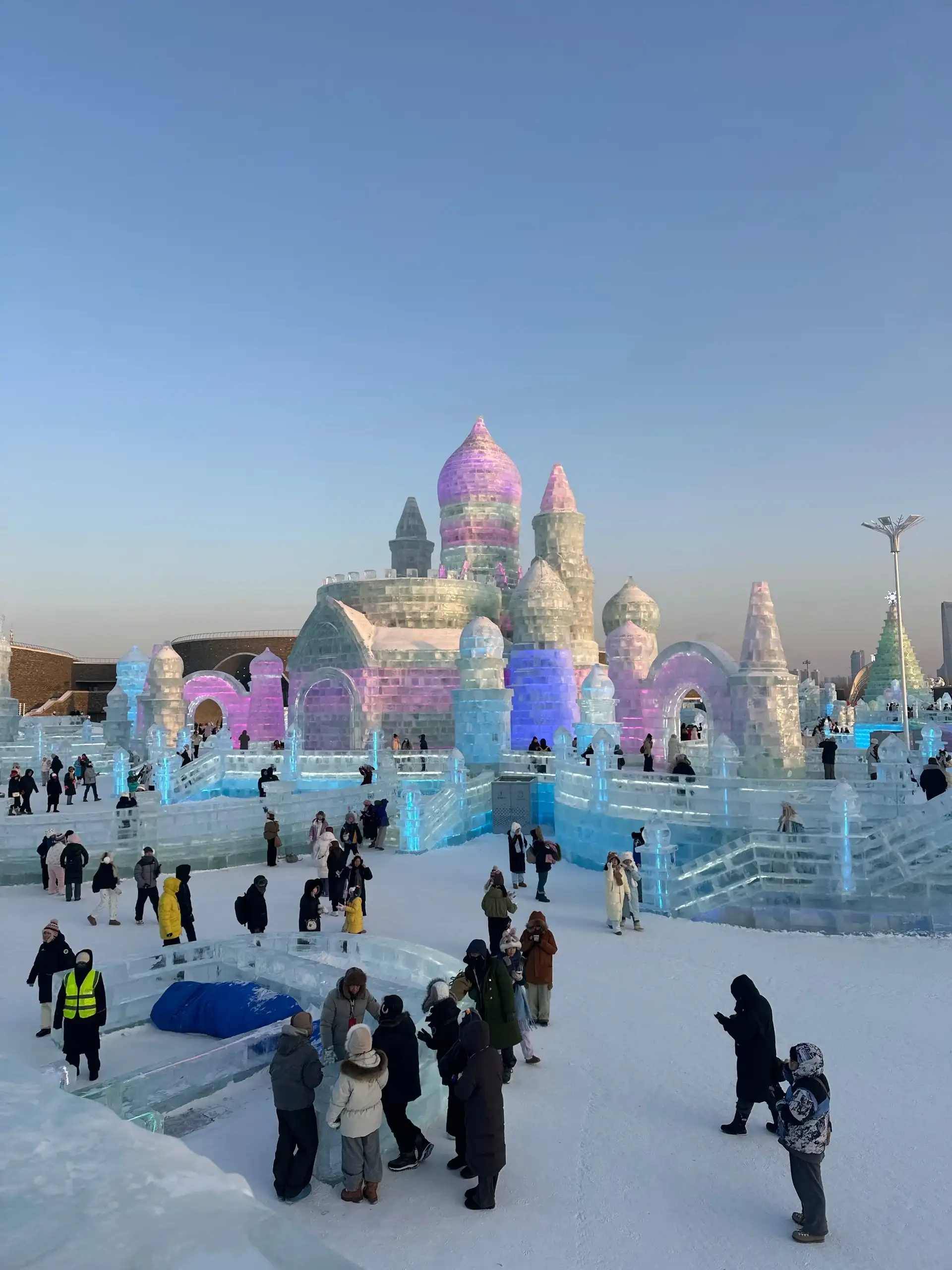
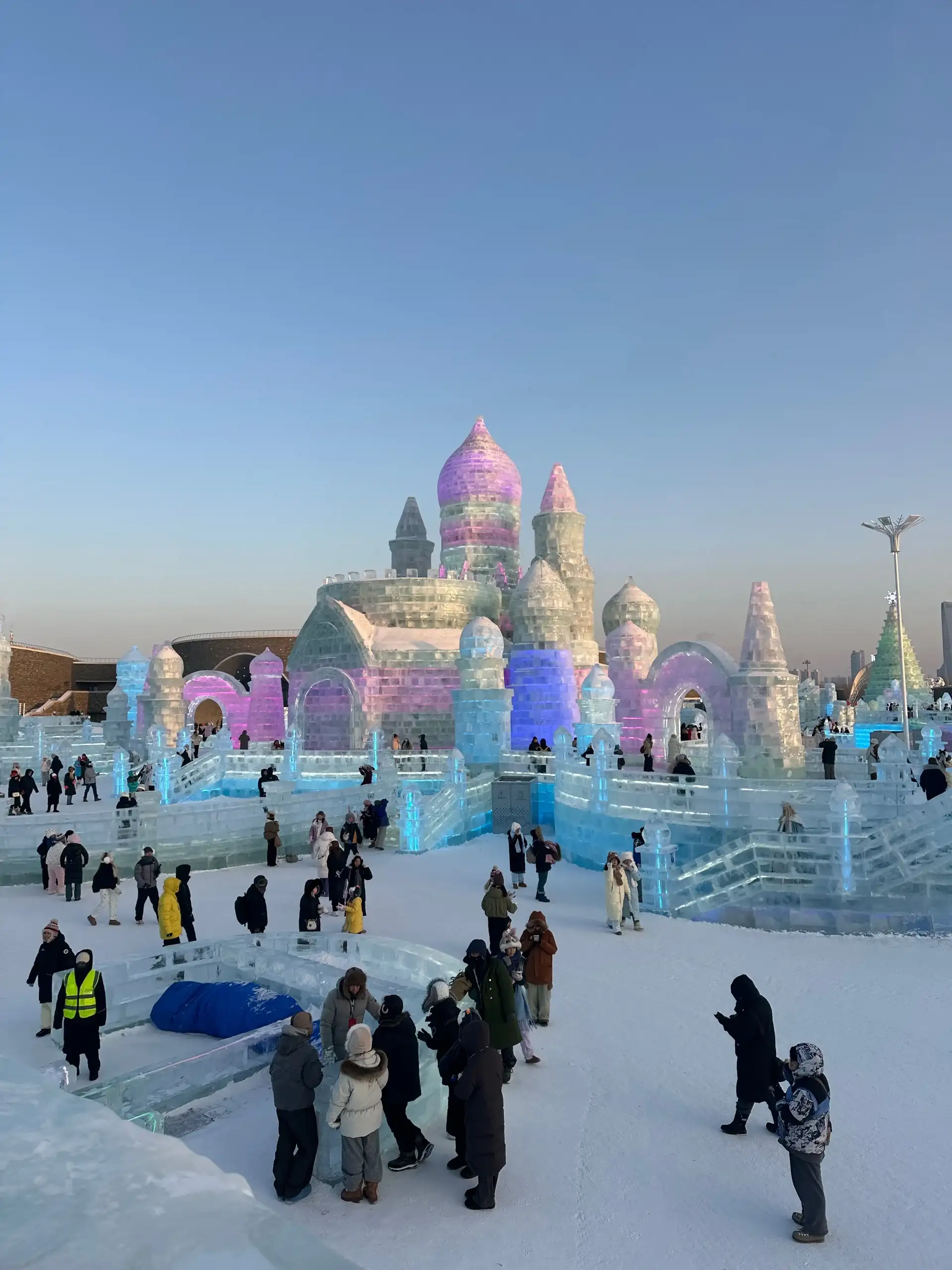
Once opening is confirmed, inspect the day’s map, access rules, activities and weather. Choose the two or three things you most want. Large ice structures, evening lighting and slides have different waiting and exposure demands, so one promised visit duration cannot describe everyone’s experience. Popular activities may have separate reservations, queues or height and age conditions; verify the operator’s current rules.
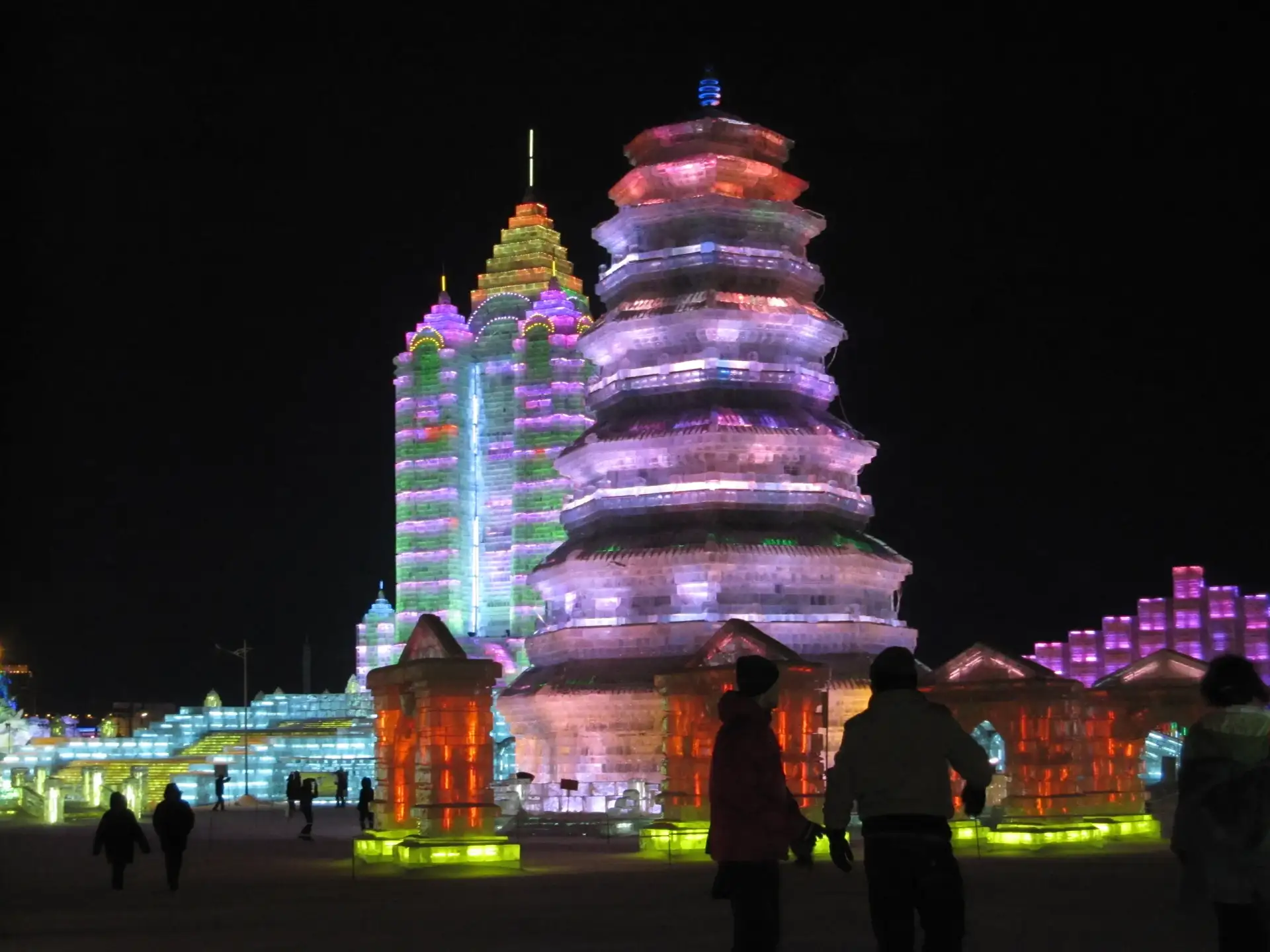
If you want daylight and night views, consider whether you can remain outdoors that long and ask about available warming services and re-entry. Old visitor photographs do not establish the current layout. Limit uninterrupted phone use outdoors, then return it to a protected place. Save offline booking references, meeting information and the hotel address. Stop when tired or uncomfortable; paying admission does not oblige you to complete every queue.
Check hands, feet and moisture, not only the coat
Prepare layers that work together: a comfortable base, insulation and an outer layer appropriate for exposure to wind. Footwear needs suitable grip and warmth, while socks, gloves, a hat and scarf cover areas a coat cannot. An attractive outfit photograph is not an equipment test. Consider sweat and damp clothing as well as thickness. This guide does not promise that one product works at every temperature.
Check comfort and shoe fit before leaving, and carry dry spare items if the route needs them. Use warming products only as directed, not directly against bare skin or in an unapproved position, and stop if uncomfortable. During indoor breaks, assess damp clothing and hands and feet, allowing normal food and drink stops. People with particular health or care needs should build the trip around their own professional advice, not a generic visitor checklist.
Keep backups for passport booking, payment and connectivity
Choose the correct passport option in the relevant booking system and check the name, number, date and entry conditions. Keep the original-channel confirmation. Different winter venues can use different systems; a payment at one does not prove another mini-programme will work. If passport or overseas-phone options are unclear, ask official support rather than using another identity or an unexplained booking account. Check concession terms individually.
Prepare charging and payment alternatives. Outdoor cold can make phone, payment and map use less convenient, so do not store every essential detail on one page that requires a connection. Save the hotel address, meeting point and order reference offline, and agree a regrouping method that does not depend on instant messages. Handle identity, card and verification details only through appropriate official processes. Confirm larger payments or deposits before committing.
Treat Yabuli skiing and distant snow villages as separate trips
Decide whether you want a real ski lesson, a short introduction or only snow scenery. An out-of-city ski destination such as Yabuli requires its own transport, equipment, accommodation and venue decisions. “From Harbin” does not make it another city walking stop. Ask about instruction language, equipment, suitable ability levels and insurance. A video does not qualify a beginner to choose an unsuitable slope.
Distant snow villages likewise need a separate route with the exact destination, lodging, journey and weather implications confirmed. Do not add an unchecked same-day return promise to a two-day city visit. If the goal is ice architecture and winter neighbourhoods, staying in the city is a valid choice. Use a confirmed operating day when you feel ready for the main experience; adding a distant outing means removing city activities, not intensifying every day.
Protect the departure margin and allow a smaller winter plan
For the airport or station, include the actual distance, winter road conditions, waiting, luggage and security. Confirm changes through official airline, rail and service channels. This guide does not guarantee normal transport after snow or provide a minimum journey time. Avoid connecting an international departure tightly to a distant ski or snow-village trip; favour a city-based final day.
A workable winter checklist includes confirmed seasonal opening, a usable passport booking route, clothing suited to the person, warming breaks, phone and payment backups and a protected return margin. If one part is missing, solve that part before adding attractions. You can preserve the appeal of an ice-and-snow trip without relying on old photographs, unpublished dates or an overcrowded itinerary.
Continue planning your China journey
More practical China travel guides
Official references and verification date
References checked on 4 October 2026. Recheck current rules before booking and departure.
State Council English Portal: Ice and Snow World Opening in December 2024
State Council English Portal: End of the 26th Ice and Snow World Season
State Council English Portal: Harbin Central Street Architecture and Culture