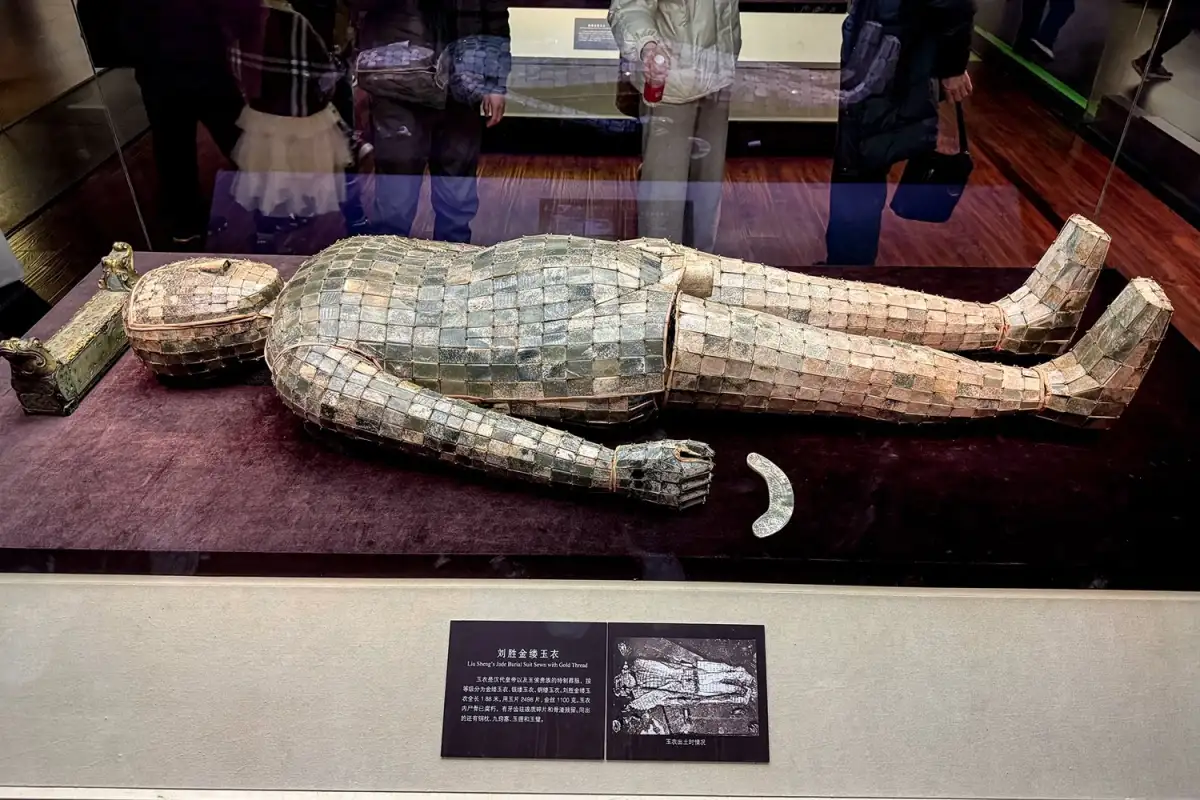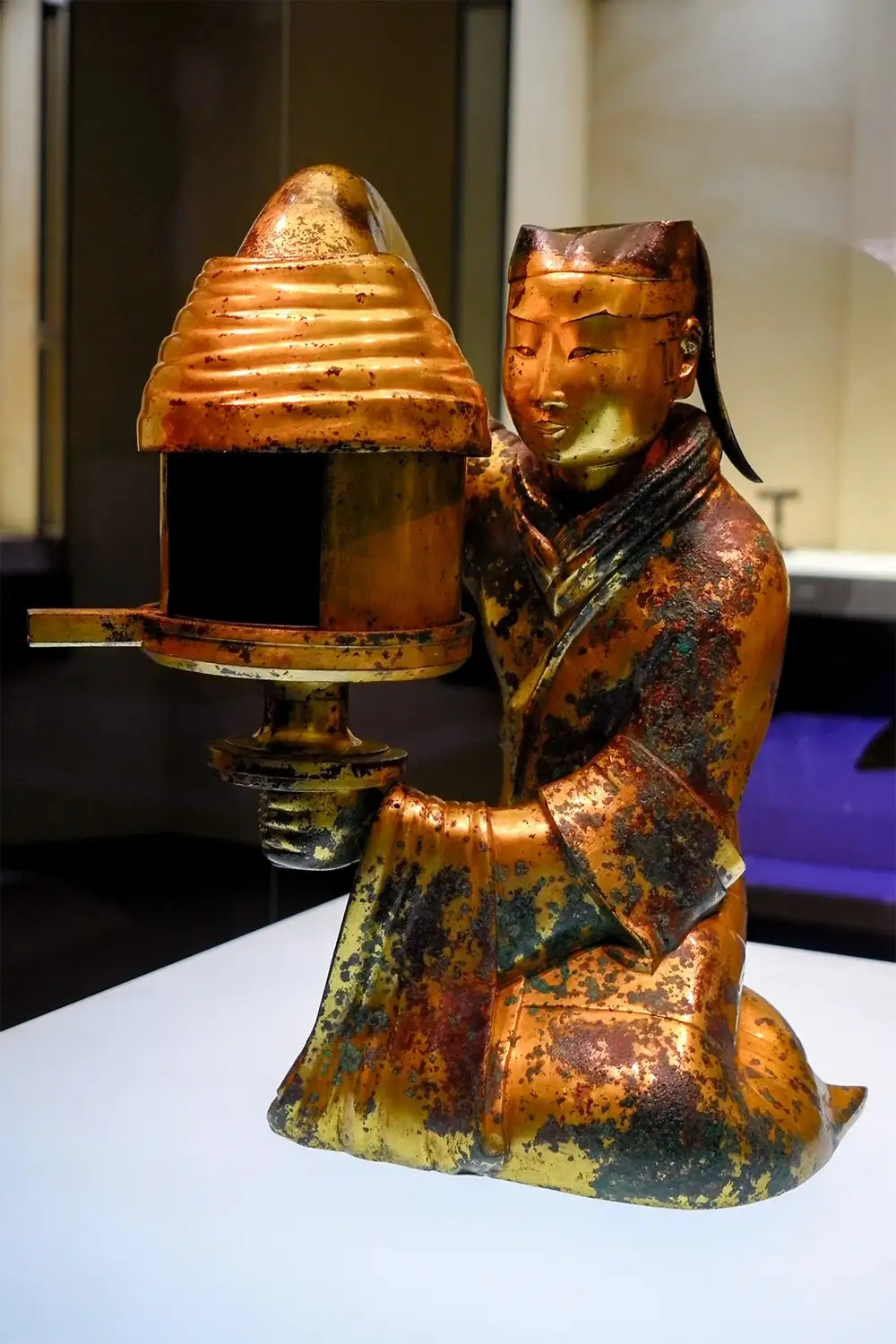
At Hebei Museum in Shijiazhuang, find 大汉绝唱——满城汉墓 on the gallery map. Three objects give a first visit a focus: the Changxin Palace Lamp, the gold-inlaid Boshan incense burner and Liu Sheng's jade burial suit. A lamp, an incense vessel and a suit made from small jade plaques let you see how different materials were joined into complex forms.
Move to the side of the lamp
The Changxin Palace Lamp takes the form of a kneeling figure holding a light. Start in front, looking at her bowed head and the hands supporting the lamp. Then move to the side and follow the raised sleeve toward the shade. Use the label to connect the figure, the lamp's structure and its purpose. With children, first ask which hand holds the lamp, then look together at how the sleeve rises.
Find the mountains on the incense burner
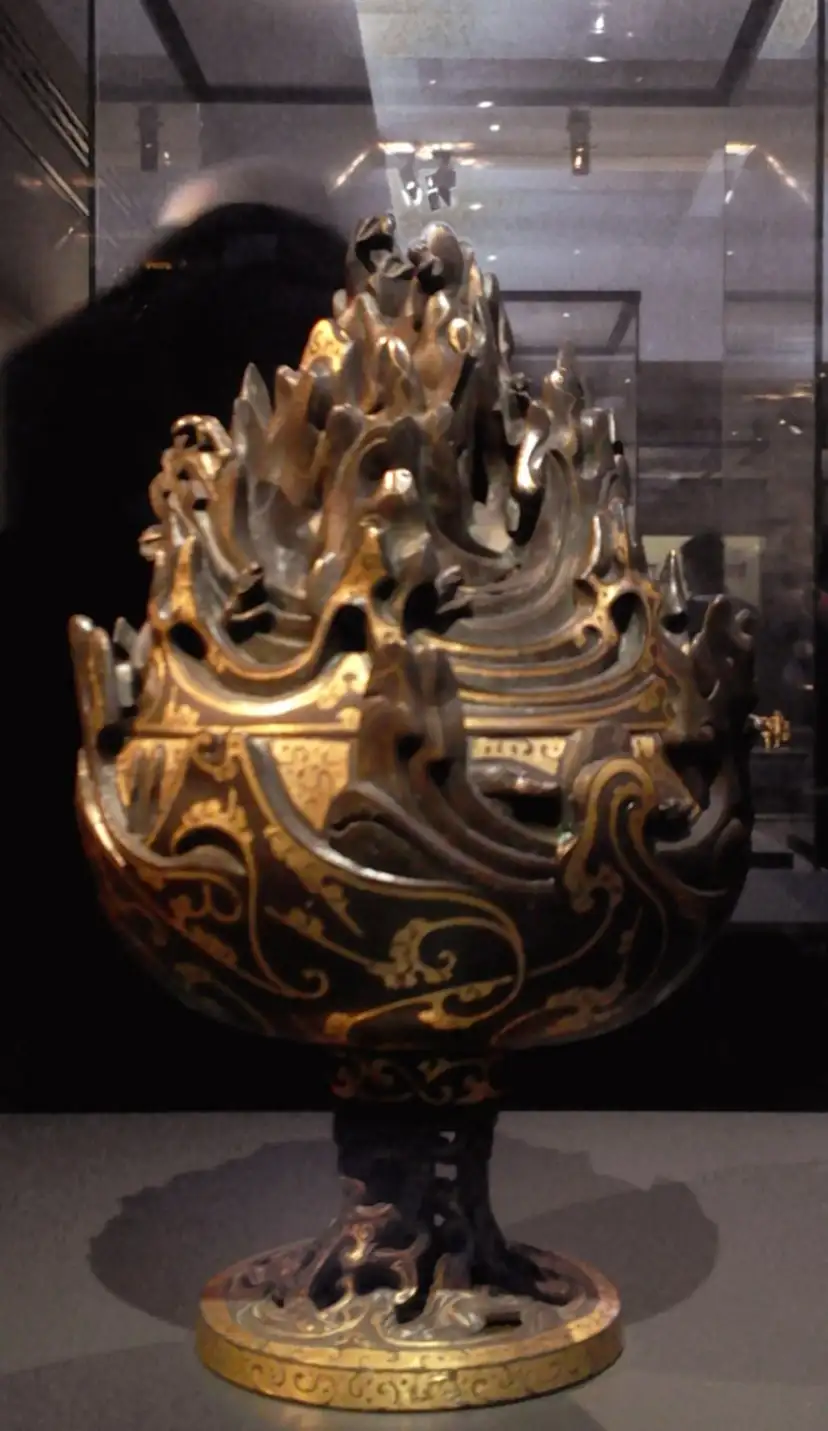
On the gold-inlaid Boshan burner, follow the peaks around the lid. Move closer to see the gold lines across the body, then stand back to take in the support beneath it. If a diagram shows how incense was burned, imagine the smoke rising through the vessel. Follow the gallery's photography rules and choose a position with less reflection. Leave a few moments to look directly at the object.
Trace the joins in the jade suit
From a distance, Liu Sheng's jade burial suit has a recognizable human outline. Close up, it resolves into many separate plaques. Look at a hand or foot to see how small pieces form the bends, then read the label about its burial purpose. Think back to the lamp and burner and compare how the three objects were assembled. Before visiting, check reservations, opening arrangements and collection notices, since objects may be on loan. If a favorite is away, use the objects on view to explore the same theme and save it for another visit.