
East Travel Editorial Department · Travel Diaries and Pre-Trip Reading
Treat the river as the first clue to the grasslands
The Morigele River is an ideal starting point for a trip to Hulunbuir, as it gives the vast landscape a sense of direction. Standing at a standard viewing spot, what first meets the eye is an unbroken expanse of grassland; only after your gaze locates the river channel can you discern the differences between the near and the far. One bend unfolds to the left, another curves back to the right, and the water’s surface reveals the subtle elevation changes within the gentle terrain. The grassland thus takes on definition, and the sky is no longer just a vast expanse of blue.
you can arrange a round trip from Hailar or incorporate the river into a journey continuing northward—though these two approaches require different end times. If you plan to change accommodations that same day, first determine your final stop and driving route; if you’re traveling back and forth to the city, you can focus your attention on the changes within a single stretch of the river’s meanders. On your first visit, there’s no need to rush to the farthest observation deck. Start by finding a stable vantage point to figure out which direction the river bend is heading—this will make it easier to understand the view from the next spot.
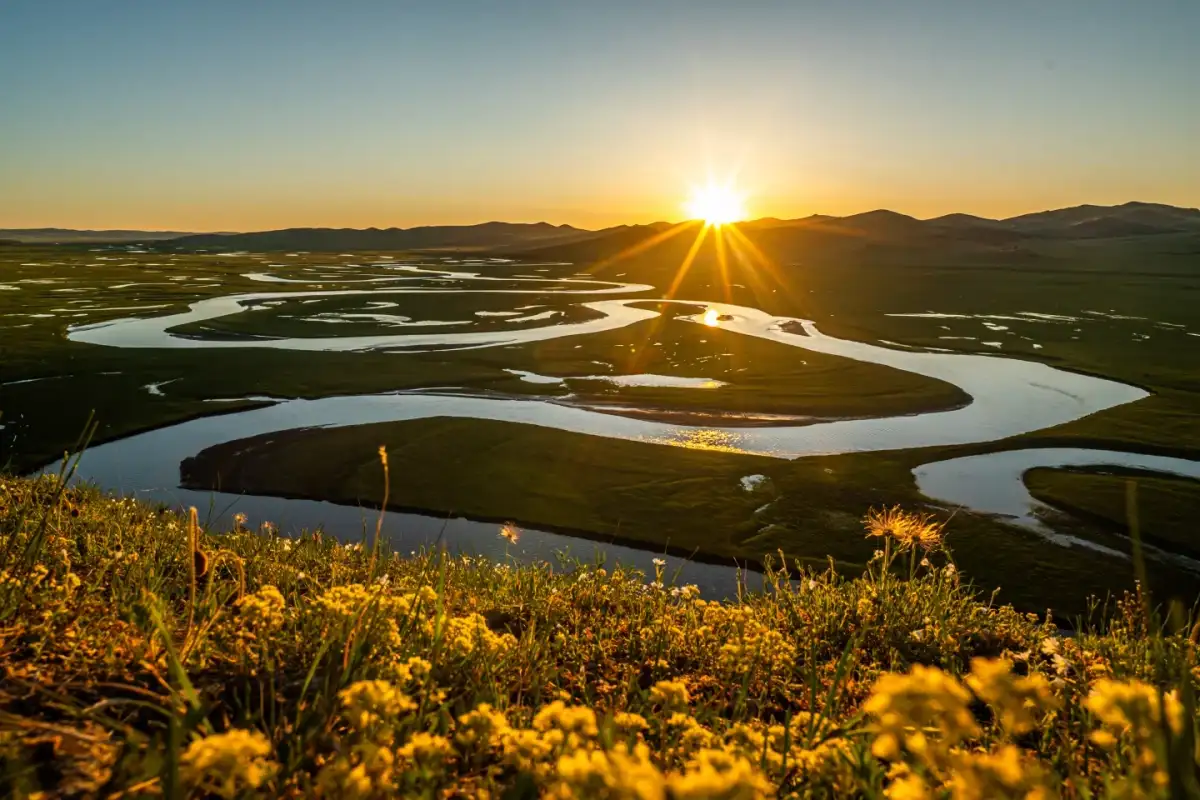
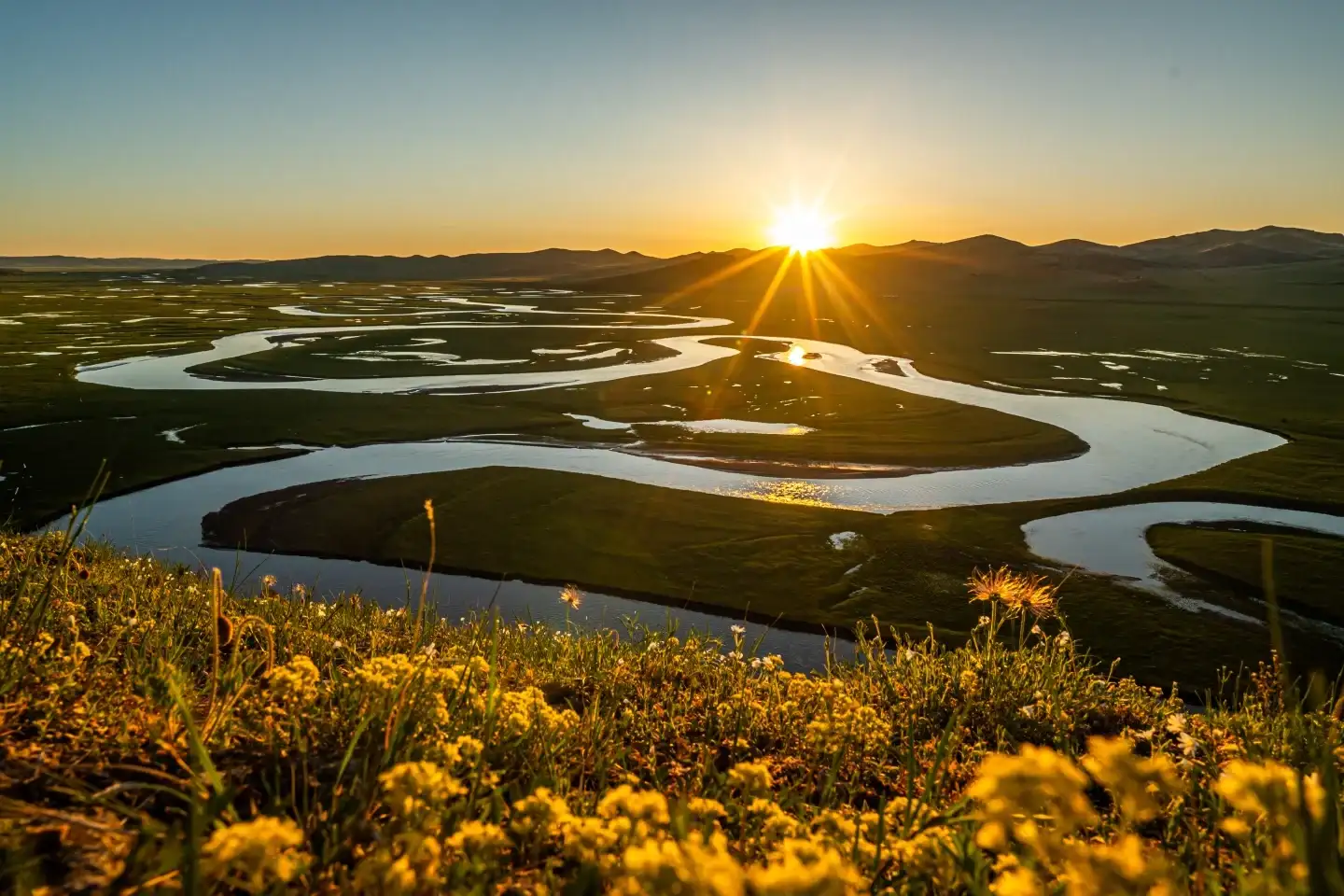
Morning light illuminates the continuous meanders of the Morige River.
View the curves from above; view the riverbanks from below
The appeal of viewing from above lies in the continuity of the river’s course. While several sections of the water’s surface may appear separate at first glance, following the shoreline reveals how they are interconnected. When observing, choose a bend that’s easy to identify: first, note how the outer edge hugs the steeper bank, then examine the shape of the grassy area or exposed shallows on the inner side. River bends are not patterns designed for photographs; water levels, lighting, and the seasons all alter their boundaries, so there’s no need to expect every bend to display the same vivid colors.
lower vantage points are ideal for observing the transition between the water, the muddy banks, and the grassy areas. View the landscape only from designated walking paths or permitted stopping areas, and maintain a safe distance from soft, wet ground and the river’s edge. Grasslands that appear gentle may not be safe to cross at will, and small ditches can be hidden by the grass. These two vantage points—high and low—complement each other: the higher vantage point reveals how the river winds its way across the landscape, while the closer view makes it clear that this slender line actually has width, banks, and its own variations.
Herding horses puts the scale into perspective
when a herd of horses comes into view in the distance, the grassland suddenly takes on a human scale. They appear tiny amid the vast expanse of green—one horse lowers its head to graze, another moves slowly—making it easier to gauge the width of the river channel and the distance to the hillside. You can observe the positions of the herd and the riverbank from the viewing point without having to stray from the main trail to get closer to them. Even when no animals are passing by, you can use fences, bales of hay, or distant structures to gauge scale; the scene remains visually compelling.
The grasslands are places of production and daily life; animals are not props to be moved around for tourists. Do not use food to lure them closer, honk your horn to startle them, or chase them for photos. To understand pastoral life, build context through appropriate local introductions and interactions. Seeing a herd of horses does not immediately reveal who owns them or what they are doing. Observe the visible actions clearly, and leave the untold stories of daily life to those who truly know this land—only then will your observations as a traveler avoid imposing your own imagination onto others’ lives.
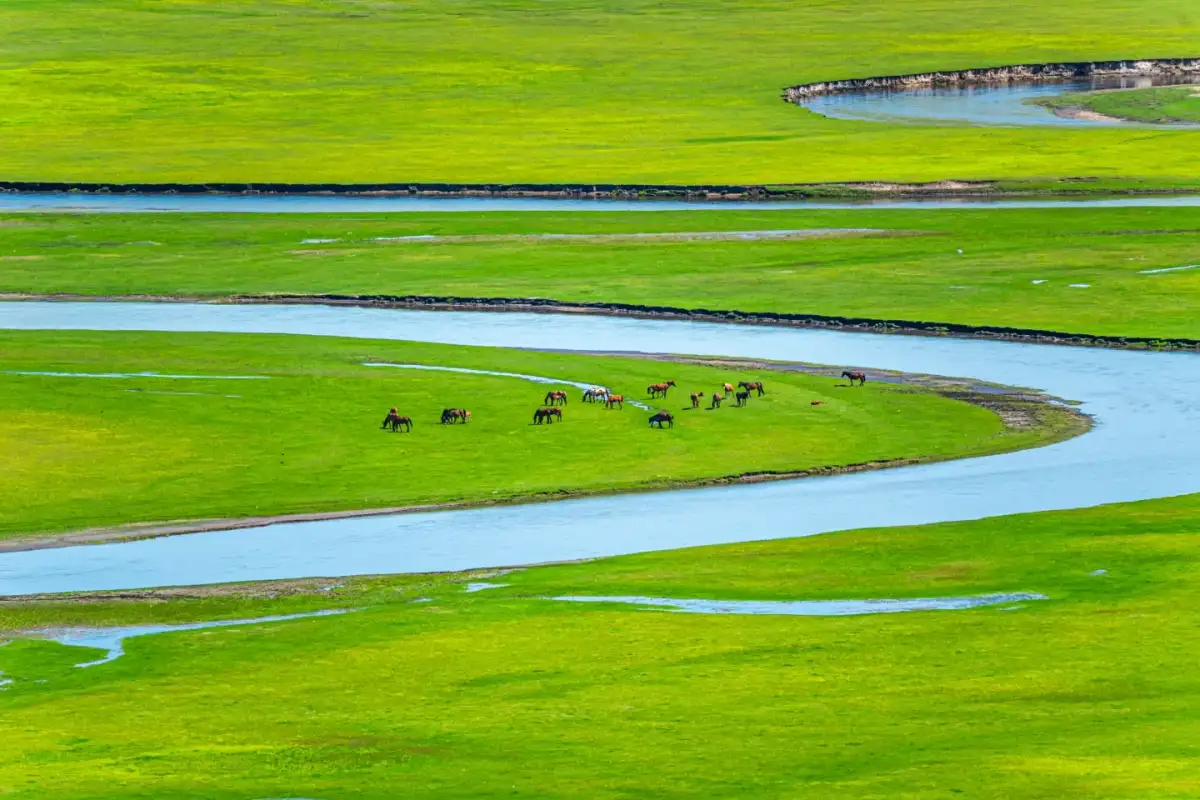
Horses grazing on the grassy inner banks of a river bend against the blue water.
Watching the shifting shadows of the clouds is more interesting than waiting for a clear blue sky
You don’t have to follow the sun’s path to appreciate the river bends. As clouds drift across the grasslands, one part of the slope darkens while another remains bright, and the river’s color may shift from blue to silvery-gray. If you stand in the same spot for a few minutes, the position of the scenery remains unchanged, yet the relationship between foreground and background rearranges itself. This kind of observation is best scheduled between two walks: first, put away your phone and let your eyes follow a passing cloud; wait until it moves away from that stretch of the riverbank, then watch as the colors return.
Weather on the grasslands can change rapidly. When the wind picks up, clouds roll in, or signs of thunderstorms appear, follow on-site instructions to leave exposed areas and return to appropriate shelters or vehicles. After rain, if there is new standing water or soft ground, continue to follow the designated trails. Overcast days offer their own viewing experiences; soft light can make the continuous terrain more distinct. As long as the actual weather conditions are suitable, there’s no need to interpret a gray sky as meaning you’ve missed out on the entire journey.
The river in the morning light paints a different picture than it does in broad daylight
the low morning sun illuminates the water’s surface while the grasslands remain in shadow, making the river appear as a distinct, clear line. Up close, the grass stalks glisten against the backlight, while the distant hills gradually reveal their contours. This kind of scene requires the right weather and vantage point; it’s best approached as a chance encounter rather than treating morning light photography as a mandatory task. First, confirm the scenic area’s opening hours, accommodations, and transportation options, then decide whether you can comfortably get up early.
After enjoying the morning views, set aside time for breakfast and a rest—especially avoid combining an early start with a long-distance journey. A regular daytime visit is also worth the stop: as the sun rises higher, the texture of the grass becomes easier to discern, and the color of the water and the shape of the banks are no longer merely a reflection. If you can only choose one time slot for a trip, a daytime itinerary that matches your stamina and transportation options is sufficient; gaining a clear view of a genuine stretch of river is more rewarding than collecting multiple fleeting moments of light without pausing to appreciate them.
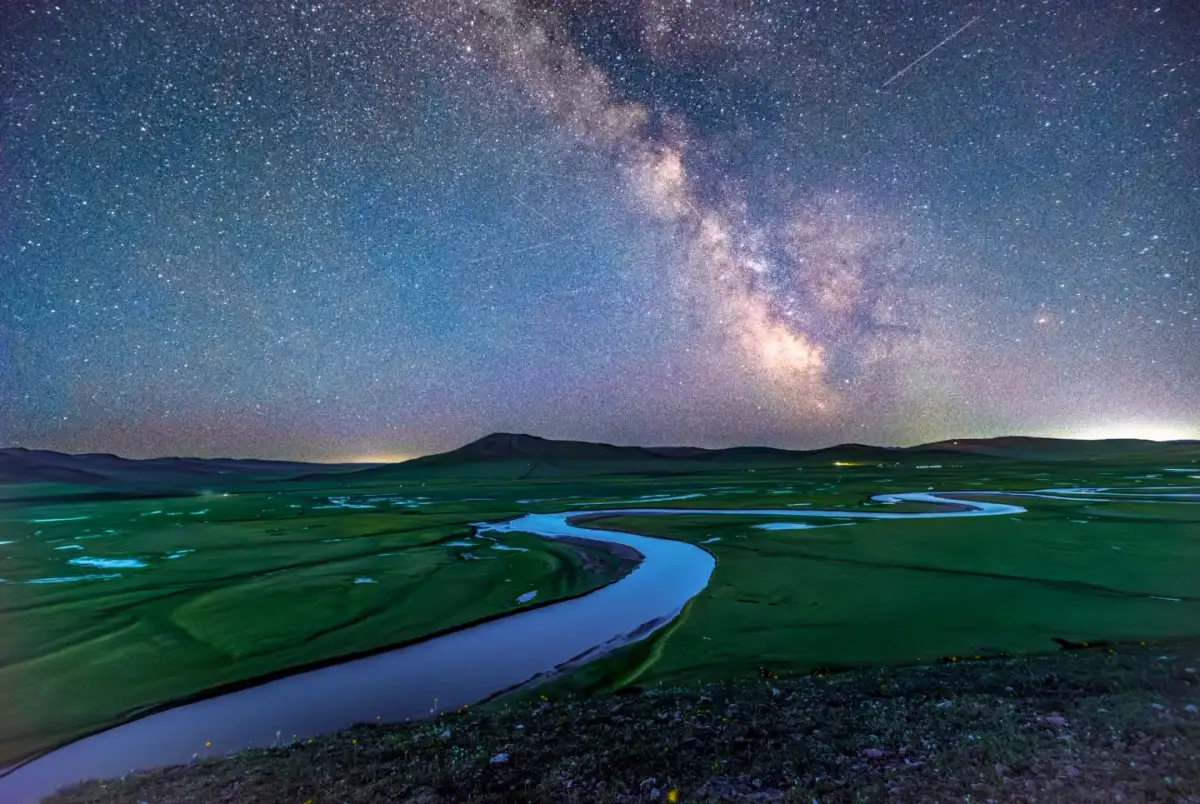
River bends and the Milky Way captured in a nighttime long exposure.
The night sky stretches far away, yet the journey back at night must be well-planned
astrophotography transports the Morige River into a different realm of imagination: the sky unfolds, the ground darkens, and the river bends retain only faint outlines. The long exposure of the camera and the resulting post-processing produce colors and brightness that differ from what the naked eye sees on the spot. If you’re interested in stargazing, be sure to confirm your accommodations, the areas where nighttime activities are permitted, transportation arrangements, and weather conditions in advance—and don’t automatically assume that viewpoints accessible during the day are open at night.
At night, it’s harder to distinguish between ditches, wetlands, and roads on unfamiliar grasslands, so randomly searching for a vantage point in the dark isn’t suitable for the average tourist. You can opt for organized stargazing tours that clearly define the activity boundaries, or stay in designated areas near your lodging to view the stars. Even if clouds or moonlight interfere, quietly observing a section of the sky remains meaningful. Staying alert for the next day’s journey is just as much a part of this experience—don’t let a single distant photo of the Milky Way drain your energy for the entire day.
The journey along the river requires a flexible driving itinerary
the different viewing areas along the Morigele River are not equivalent to the contiguous attractions found in a city. Before setting out, use the official scenic area guide to verify entrances, viewing stations, and vehicle arrangements, then limit the number of stops to allow for some flexibility. A road on the map that appears to be close to the river may pass through pastures, commercial areas, or temporarily restricted zones; existing tire tracks are not proof of passability. Road signs and on-site management are better guides for planning your day’s route than so-called “shortcuts” found online.
it takes time to park, walk to a viewing spot, return to the car, wait in line for the shuttle, and take a break to hydrate. Agree on a clear meeting point and end time with your driver, and make sure to exchange contact information with fellow travelers when splitting up to take photos. On the grasslands, your sense of direction can easily be thrown off by similar-looking slopes. On the return trip, try to memorize the road and fixed landmarks rather than just “that patch of green.” By taking care of these details, you can take your time parking by the river and won’t have to rush when it’s time to leave.
Dining and lodging—giving the vast landscape a place to settle
On a long-distance trip, sitting down for a meal can help stabilize your journey across the grasslands. Meal choices should be based on the actual route, business hours, and personal dietary preferences; do not neglect dietary restrictions, hydration, or mealtimes in pursuit of a so-called “most authentic local experience.” Before continuing along the scenic route in the afternoon, take a moment to recall the direction of the river bends from the morning to assess whether a new vantage point offers a truly different perspective—then decide whether to extend your trip or save some time for check-in.
If you choose to stay on the grasslands, be sure to check the specific location, bathroom facilities, heating or cooling, dinner options, and luggage transport before booking. The tents, log cabins, and distant grasslands shown in the photo only illustrate the exterior and do not reflect the actual living conditions. Staying in the city also has clear advantages: convenient access to and from your destination, and a more concentrated selection of places to rest and dine. Let your accommodation serve the specific times of day you wish to view the river; this way, the scenery and your daily needs will complement each other, and you won’t have to treat any one type of lodging as the only solution for a grassland trip.
from lush green grass to withered yellow, the theme of a single river remains consistent
the colors of the grasslands shift with the seasons and water levels. During the warmer months, note the sharp boundary between the grasslands and the water’s surface; in autumn, the river’s contours stand out against the withered, yellow slopes. In colder seasons, wind, ice, snow, and road conditions further affect the feasibility of standard sightseeing. Before planning a trip, check for park openings and weather conditions; do not assume that a single seasonal photo indicates the roads are passable, the riverbanks are safe, or that it will be warm enough at night. Clothing and footwear should also be appropriate for the wind and ground conditions.
regardless of the abundance of greenery, this journey can unfold across both near and far vistas. Before leaving, take one last look at that initial bend: which slope lies behind it, on which side the shadows of the clouds rest, and whether the herd of horses has moved on. When you return to the map, the Morigele River will no longer be just a name to check off after taking a photo, but a stretch of riverbank that continues to extend in your memory. For the longer journey that lies ahead after Hulunbuir, this experience will provide a foundation for recognizing the terrain and planning where to stop.
Further Reading and References
Compiled and organized by the Eastbound Travel Editorial Department based on publicly available travel notes and listed information. Intended as pre-trip reading material; this is not a personal account of firsthand experience. Please verify opening hours, transportation, reservations, and service arrangements according to your actual travel dates.
Ministry of Culture and Tourism: Hulunbuir Grasslands · Morigele River Scenic Area
River bends from above or details at the water's edge?
Choose a formally open viewpoint for Morigele River views, using the overall bends to establish direction before observing water and cloud shadows. Hulunbuir grassland photography benefits from scale references such as horses or the riverbank, but never chase animals or leave permitted routes for a composition. One extended stop can reveal changing light more clearly than repeated moves between parking places.
Fitting morning light and a night sky into the day
Arrange meeting points, vehicles and rest separately for morning viewing and a grassland night return. If the daytime river is your focus, reduce extra evening activities; if you hope to watch the stars, establish how you will return to your accommodation. A wide landscape photograph says little about access, and weather does not promise visible stars. Keep a practical rest alternative.
Planning references


