
East Travel Editorial Department · Travel Diaries and Pre-Trip Reading
Chaoyang Tower: First, Take Note of Both Sides of the City Gate
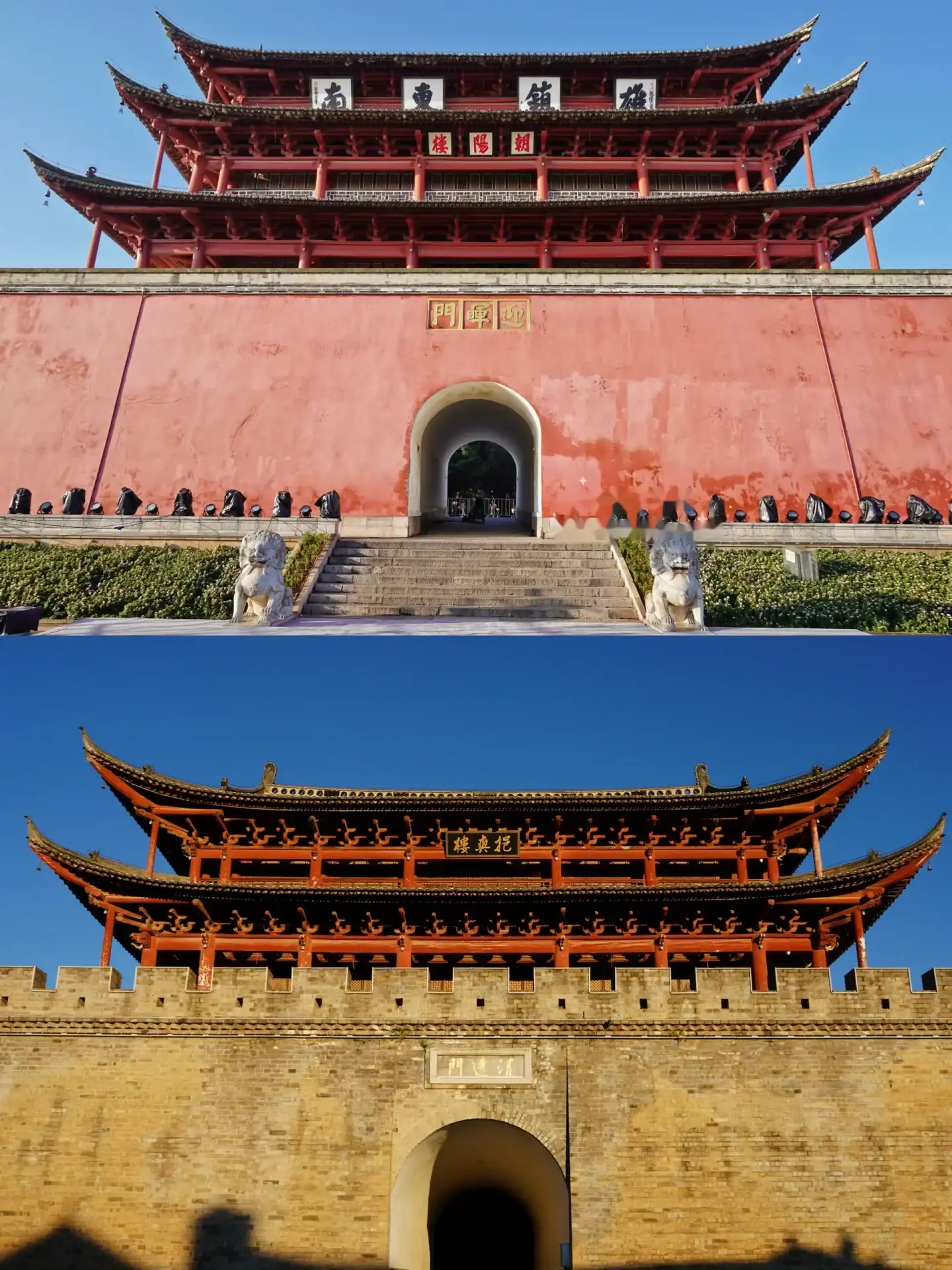
Upon arriving at Jianshui Ancient City, Chaoyang Tower serves as an easily recognizable starting point. Its red facade, tiered eaves, and sturdy city gate form a striking silhouette; viewing it from both the exterior and interior reveals its distinct connections to the streets and squares. It has served as a symbol of the ancient city for centuries, but what you see today is also the result of long-term maintenance and restoration; therefore, it’s best not to assume that every layer of color or every architectural element is an original from the Ming Dynasty. Start by viewing the tower from a spot that doesn’t obstruct traffic or pedestrians, then enter the neighborhood via permitted pathways to avoid getting lost among the dense array of shop signs right from the start. Check on-site for information regarding whether the exhibition inside the tower is open and what the ticketing policies are; even if you only stay outside, observing the gateways, the corners of the eaves, and the column grid offers plenty to see. It’s worth slowing down to examine the inscriptions on the city towers; names such as Chaoyang Tower and Yinghui Gate hint at the connection between the towers and the city gates. When you reach the other side and look back, the relationship between the gateways and the direction of the streets becomes much clearer. Upon arrival, first note the meeting point and exit direction for later, then begin your walk—this will ensure you navigate the first section of the ancient city with ease.
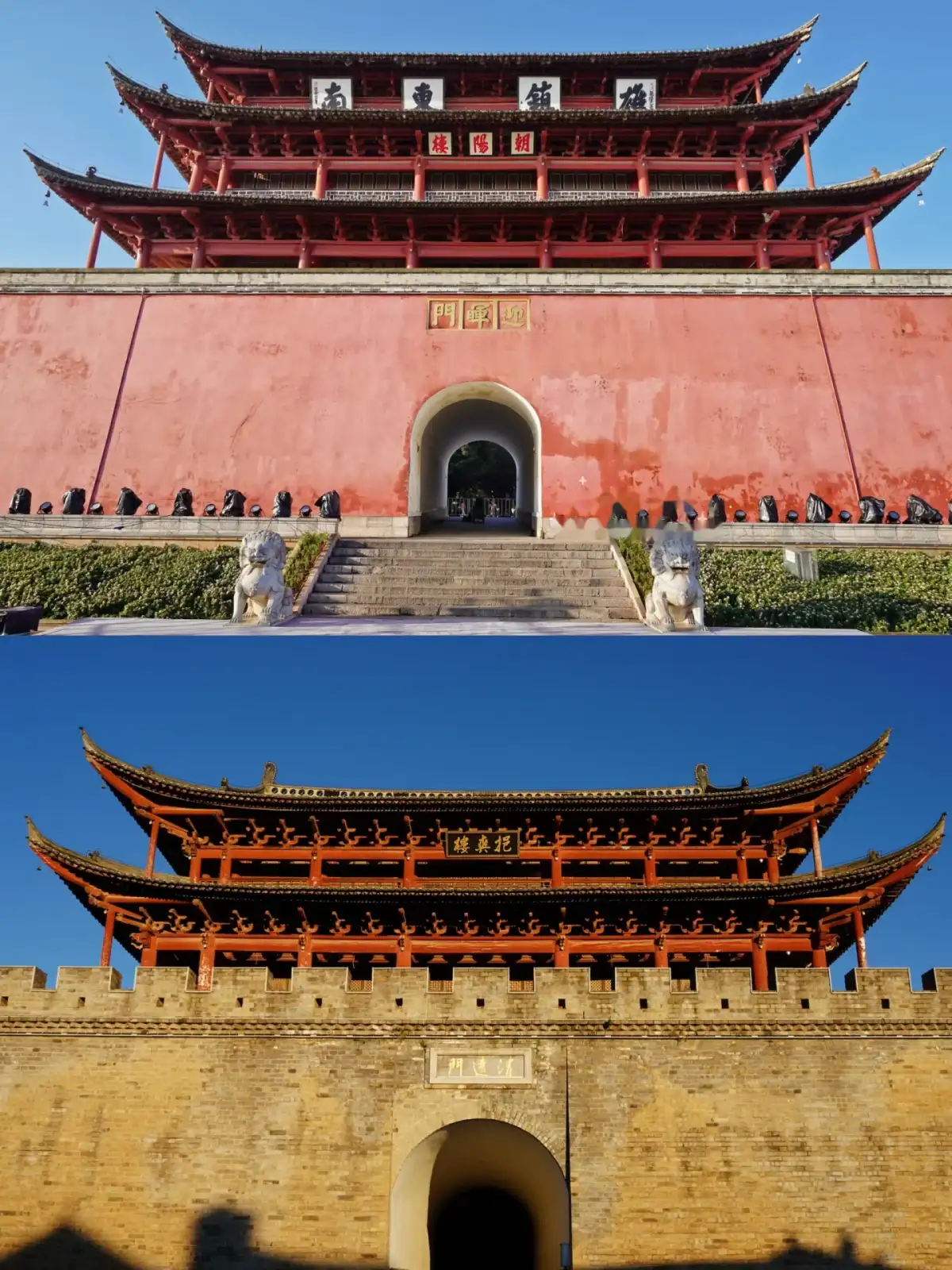
The city gate and archway on both the inner and outer sides of Jianshui’s Chaoyang Tower. . Li Doesn’t Talk
Walking from Lin’an Road toward the Confucian Temple, treat the street as a connecting
Between Chaoyang Tower and the Confucian Temple, you can plan your walk through the ancient city around Lin’an Road. The street features modern shops, local residents going about their daily lives, and tourist services; once you turn into a side alley, you’ll encounter smaller storefronts and courtyard walls. As you walk, pay attention to the width of the streets, the continuity of the eaves, and the spacing between shopfronts to understand how the buildings collectively form a street. When you see areas that have been noticeably renovated or newly decorated, don’t exclude them from your observations simply in pursuit of an “old-world charm.” Before heading to the Confucian Temple, confirm which entrance is open that day—the edge of the courtyard wall shown on the map isn’t necessarily the visitor entrance. If it’s hot at midday or if it rains, take a break on the main street before tackling the Confucius Temple section all at once to avoid wearing down your patience with constant stops and starts. If you have half a day, focus on Chaoyang Tower, the Confucius Temple, and a light meal as your main itinerary; if you have a full day, you can include the Zhu Family Garden as another highlight featuring traditional courtyard architecture. The latter is a separate attraction in its own right and deserves its own dedicated time; avoid mixing the architectural functions of this private garden with those of the Confucius Temple in the same section of your tour.
Confucian Temple: Combining Worship and Education in One Place
The Jianshui Confucian Temple was first built during the Yuan Dynasty and has long been associated with the worship of Confucius and local education. Upon entering, first review the axis, pond, memorial archway, courtyards, and main halls on the guide map, then decide on the order in which to explore each section. The Confucian Temple’s spatial layout is not defined solely by the main hall; the distances between gates, the open squares in front of the buildings, and the water features all play a role in guiding visitors’ movement. When reading the inscriptions on the lintels, visitors can jot down unfamiliar characters and then consult the explanatory notes to understand their connection to the Confucian tradition; for foreign visitors, appropriate Chinese terms paired with clear explanations are more helpful than a string of English transliterations that they cannot comprehend. The ritual buildings also embody the local history of education; if exhibits introduce the imperial examination system, academic officials, or local figures, you can connect this content to the courtyards you’re currently viewing. There’s no need to prove the site’s importance by ranking it as “the Xth largest in the country”—the space and culture accumulated over time are sufficient to sustain a thoughtful visit. Exhibition arrangements and entry rules may vary by area; by following the actual open route, you can devote your limited time to the exhibits that are truly worth seeing.
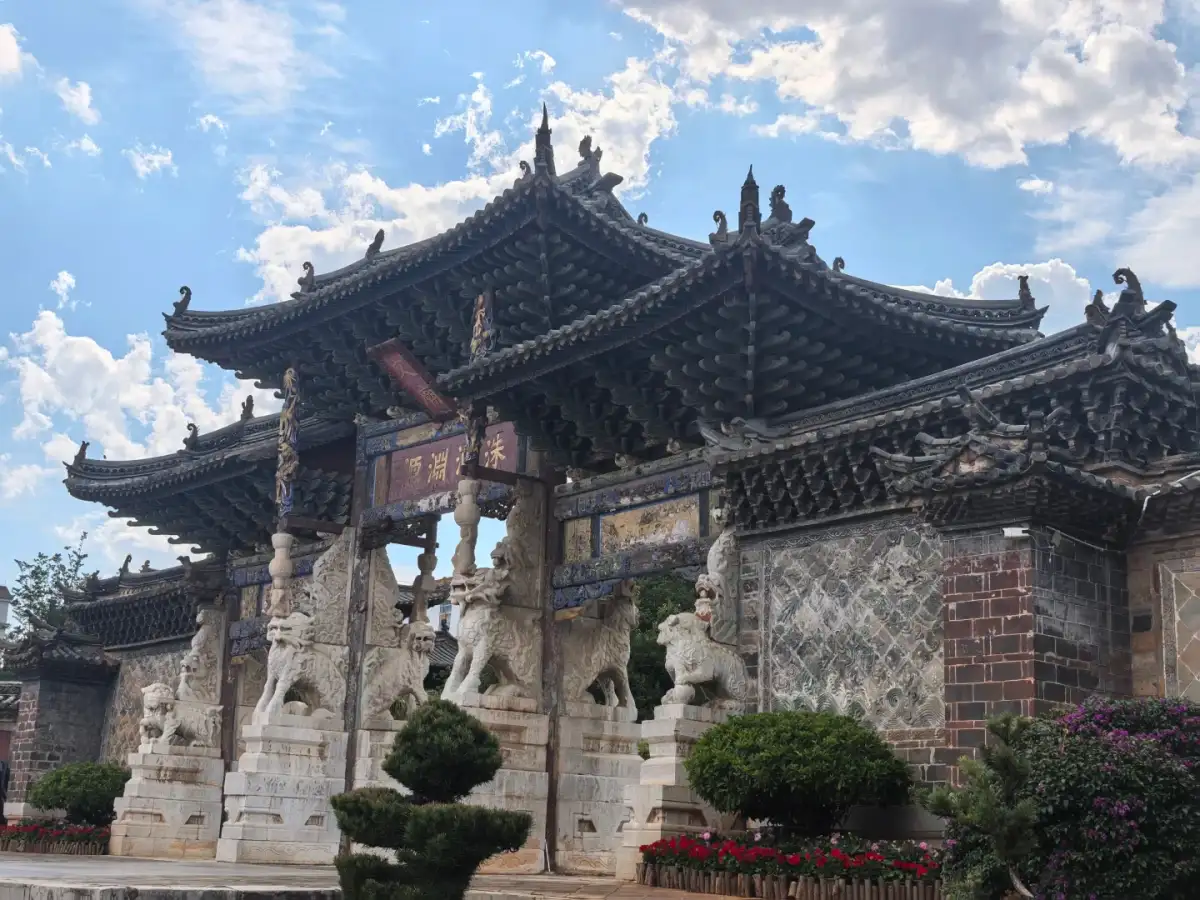
The archway and courtyard of the Jianshui Confucian Temple, featuring an inscription reading “The Deep Roots of the Shu and Si Rivers.”
Pond water, gate panels, and ritual and musical instruments: three ways to interpret these details
At the Confucian Temple, you can choose three specific objects for in-depth observation. First is the water surface and the archway behind it. Start by observing how the banks, bridges, or railings guide foot traffic, then examine the inscriptions and decorations; the reflections in the water shift with the breeze, reflecting the natural conditions of that day. Second, examine the wooden doors and carvings. Observe how the lines are arranged around the door panels and how the patterns handle turns and negative space; different restoration phases may have left distinct textures, so do not rely solely on photographs to determine the age. Third, examine the ritual and musical instruments on display, such as the suspended chime-bell-like objects. Use the exhibit labels to learn their names, purposes, and whether they are replicas or originals; do not assume that a performance will take place on-site based solely on the display arrangement. The archways, carved wooden doors, and suspended artifacts each serve distinct purposes: the former organize the visual flow of the courtyard; the door panels reveal details at eye level; and the artifacts highlight the connection between ritual music and the exhibition. Pause briefly before examining the details, then step back into the courtyard to observe their placement; these two perspectives—up close and from a distance—complement one another. If you’re guided by a docent, you may ask them to focus their explanation on one or two specific objects, rather than listening to a long list of names that may seem unrelated when taken in a short period of time.
The West Gate and Daban Well: Bringing Water into the Life of the Ancient City
Returning from the ceremonial spaces to everyday life, the Daban Well outside the West Gate offers a concrete entry point. According to the Honghe Prefectural Government, this well is also known as Pubo Spring and is closely tied to Jianshui’s local cuisine and residents’ memories of water use. If you plan to make this your destination for the second half of the tour, you’ll need to decide in advance whether to walk from the Confucian Temple or arrange a short ride—you shouldn’t overlook the distance your companions have already covered just to complete the route. Once at the well, simply observe the water-drawing facilities, surrounding buildings, and the pathways used by locals; avoid blocking areas actually used by residents, and don’t treat the act of drawing water as a mandatory photo opportunity. The history of the ancient well and the flavor of its water can be understood through local sources, but tourists should not assume from this that they can drink the untreated well water directly. Observing the well differs from viewing the water at the Confucian Temple—one is connected to residents’ daily lives, while the other is part of the courtyard layout; By placing these functions back in their specific contexts, one can gain insight into the various aspects of water use in the ancient city. If time is limited on the day of the tour, it is also appropriate to rearrange this segment into a short, standalone walk around breakfast time the following day; the culture of the ancient city extends beyond the ticketed courtyards—wells, street corners, tofu stalls, and the paths walked by residents all offer clues to understanding Jianshui.
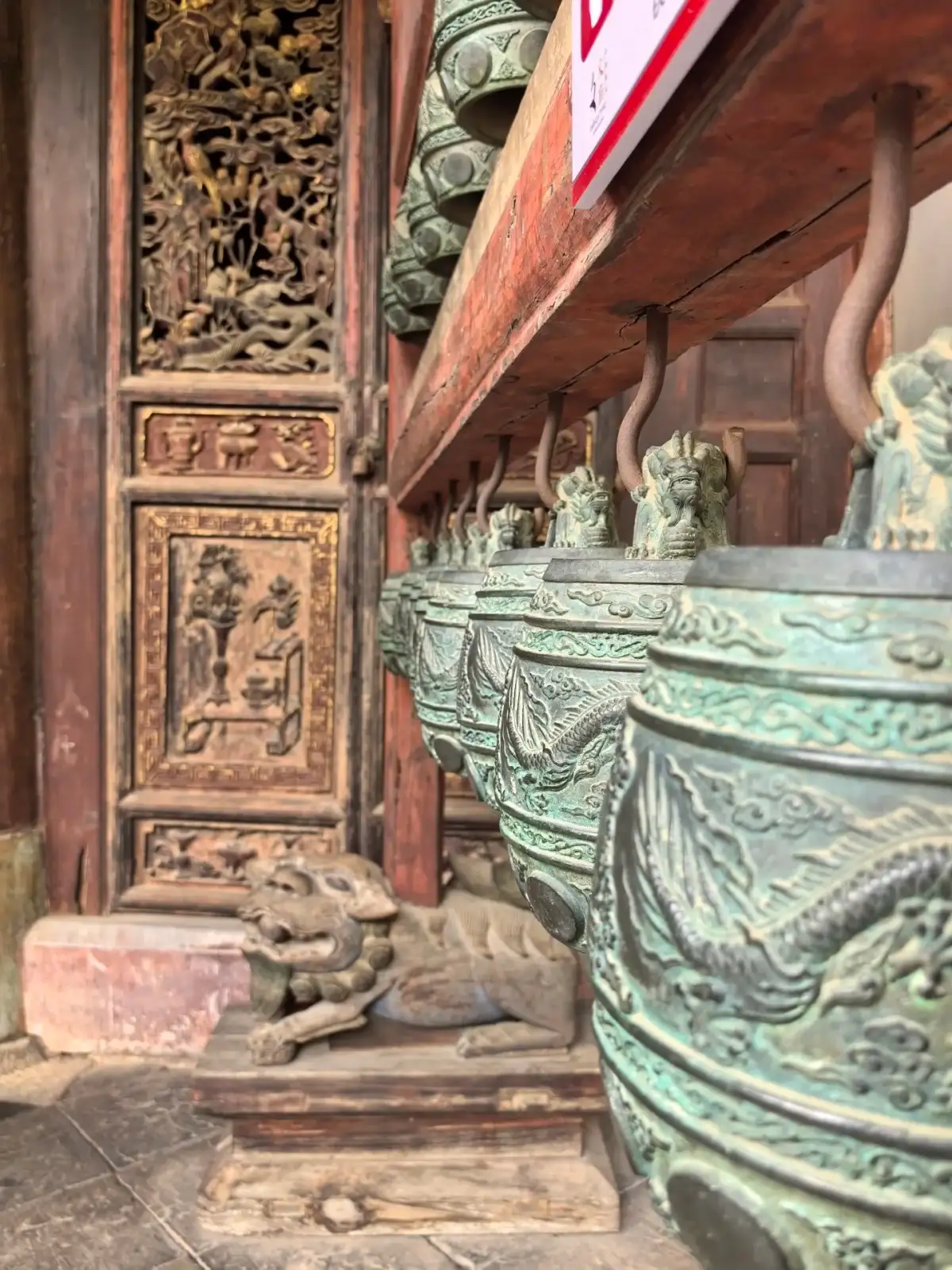
Bell-like artifacts displayed at the Jianshui Confucian Temple.
Roasted Tofu and Purple Pottery: Different Craftsmanship Presents Different Challenges
Jianshui “roasted tofu” can be enjoyed as a meal during your stroll through the neighborhood, rather than as a separate “must-visit” destination. Local government materials describe the tofu-making process—including the use of sour whey, wrapping, pressing out water, and fermentation—and well water is an integral part of the local tradition. When you reach a stall, ask about how the dish is served, the dipping sauces, and the level of spiciness. If you have concerns about the fermented smell or food allergies, confirm these details before ordering. Tasting a serving of tofu does not prove which well water a particular shop uses; do not automatically assume that every vendor follows local traditions. When exploring Jianshui purple pottery, start by examining the weight, surface, shape, and decoration of the pieces, then inquire about the clay, production methods, and usage requirements. The finished products in stores and hands-on workshops differ from the actual production process; if arranging a workshop visit, have the host confirm in advance exactly what you’ll be able to see. When purchasing tea sets or tableware, also consider their intended use, packaging, and subsequent shipping. Clarifying the details of culinary arts and pottery separately not only enriches your travel experience but also prevents the term “intangible cultural heritage” from replacing a genuine understanding of the products themselves.
One or two days to explore different spots within and outside the ancient city
For first-time visitors to Jianshui, you can spend a day exploring Chaoyang Tower, the Confucian Temple, the streets, and the West Gate—there’s no need to cram in all the attractions outside the city walls at once. If you plan to stay for two nights, you can save the Zhu Family Garden and the purple pottery theme for another time, and then choose either the Tuanshan Folk Residences or the ancient bridges separately. Transportation is needed to travel between Shuanglong Bridge, rural villages, and the old town neighborhoods; they cannot be strung together into a continuous walking route simply because their names are similar. The Jianshui Tourist Train is a separate tourist product; unlike the passenger rail service arriving in Jianshui, its schedules, stops, and ticketing should be checked separately. When arriving from Kunming or other locations, confirm the shuttle service from the train station to your accommodation—the train’s arrival time should not be taken as the exact start time for exploring the city. It is recommended to visit only one main attraction on the first day and decide on the next day’s highlights after becoming familiar with the area. This allows for flexibility in case of closed exhibits, weather changes, or unexpected lines. A rich itinerary stems from clear connections between different activities, not merely from the number of attractions visited in a single day.
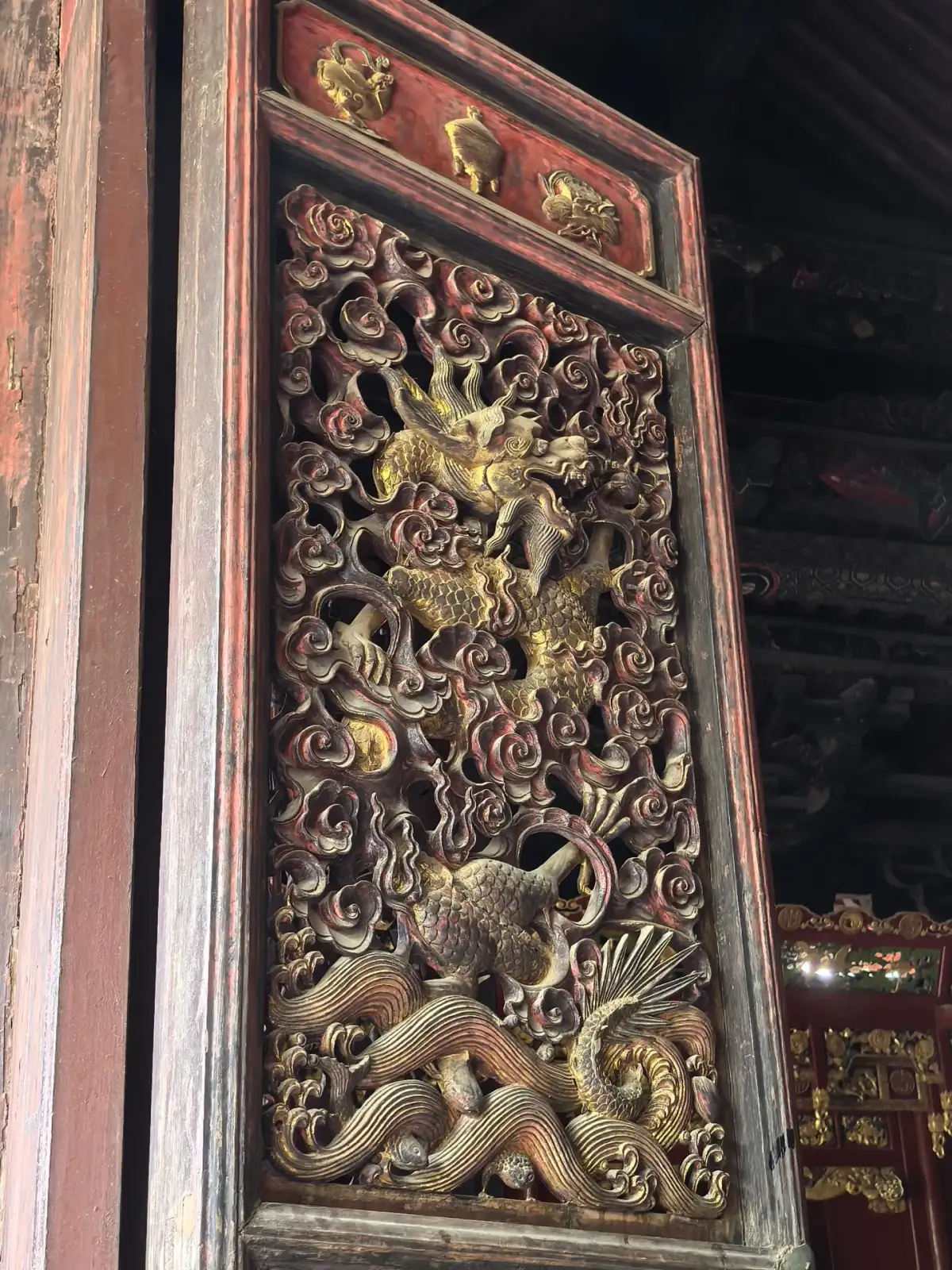
Carved patterns on the wooden door of the Jianshui Confucian Temple.
Wrapping up the day between courtyards and streets
The beauty of Jianshui lies in the fact that ritual architecture and street life can be understood on the same day. Chaoyang Tower helps one recognize the connection between city gates and streets; the Confucian Temple integrates education and ritual worship into its courtyard structure; and Daban Well and the tofu-making process ground abstract local culture in the materials of daily life. In the evening, when you return to familiar stretches of the streets, find a spot that doesn’t obstruct traffic to take another look at the eaves and storefronts, or rest at a restaurant while organizing the names you jotted down during the day. In summer and on rainy days, pay special attention to sun protection, staying hydrated, and slippery stone surfaces. Since the interiors of historic buildings feature steps and thresholds, if your travel companions need to minimize walking, you can reduce activities outside the city walls and arrange pick-up and drop-off at locations accessible by vehicle. Do not assume that just because the ancient city’s roads are paved, every courtyard is barrier-free. Before leaving, double-check your return stop, transportation, and luggage, then select one or two souvenirs whose purpose you truly understand. A journey like this will leave you with concrete knowledge and details, rather than just the impression that this place “resembles some other, more famous destination.” Jianshui’s own urban history, crafts, and cuisine offer more than enough substance to warrant being documented in its own right.
Further Reading and Reference Sources
Compiled and organized by the Dongxing Travel Editorial Department based on publicly available travel notes and listed materials. Intended for pre-trip reading; this is not a personal account of a firsthand experience. Please verify opening hours, transportation, reservations, and service arrangements according to your actual travel dates.
Jianshui County Government: 2026 Jianshui Overview
Honghe Prefectural Government: History and Functions of the Jianshui Confucian Temple
Honghe Prefectural Government: Dabanjing, Jianshui
Honghe Prefectural Government: Jianshui Tofu Production
Honghe Prefectural Government: Jianshui Zitao Pottery Craftsmanship
Linking Chaoyang Tower with the temple
Use Chaoyang Tower to establish direction for a Jianshui Old Town walk, then follow public streets towards the temple. A Jianshui Confucian Temple visit can begin with successive courtyards and gateways, using interpretation to understand local education and ritual rather than assigning every hall the same function. Read one group of spaces fully before choosing a smaller detail.
Are wells and tofu only a food stop?
Jianshui well-water tofu observation can ask how making connects with local life. Begin with public displays, then ask the vendor about the ingredients and dips in the food offered. Use reliable explanation for links between water and craft without assigning every shop the same process. With half a day, select one focus inside the old town and another beyond the west gate, allowing proper time for food and return.
Planning references
Planning reference: Jianshui Old Town walk 1
Planning reference: Jianshui Old Town walk 2
Planning reference: Jianshui Old Town walk 3
Planning reference: Jianshui Old Town walk 4


