
East Travel Editorial Department · Travel Diaries and Pre-Trip Reading
the spring water to guide the flow of the path
A journey to explore Jinan’s springs can begin at Baotu Spring, but it doesn’t have to end at the main spring pool. Plan your day to gradually move toward the streets and alleys: spend the morning at Baotu Spring and the smaller spring pools nearby; in the afternoon, depending on your energy levels, choose between Wulongtan and the south side of Daming Lake; then save the slower-paced segment for Qu Shui Pavilion and Baihuazhou. Those who wish to continue can set aside additional time to visit Heihu Spring, while those who are tired from walking can rest in the Old City. The spring-touring route recommended by Jinan’s Water Authority connects these locations, but when actually walking the route, you can select just a portion of it—don’t treat the official list as something you must complete in a single day. On the map, parks, lakeshores, and historic streets are close to one another, but entrances and detours can still add to the distance. It’s more practical to note the specific entrances and exits you’ll need than to simply mark a few central points. For first-time international visitors, the appeal of this route lies in the ever-changing forms of the water: first, named spring pools; then, more open bodies of water; and finally, a clear stream flowing past people’s doorsteps every day.
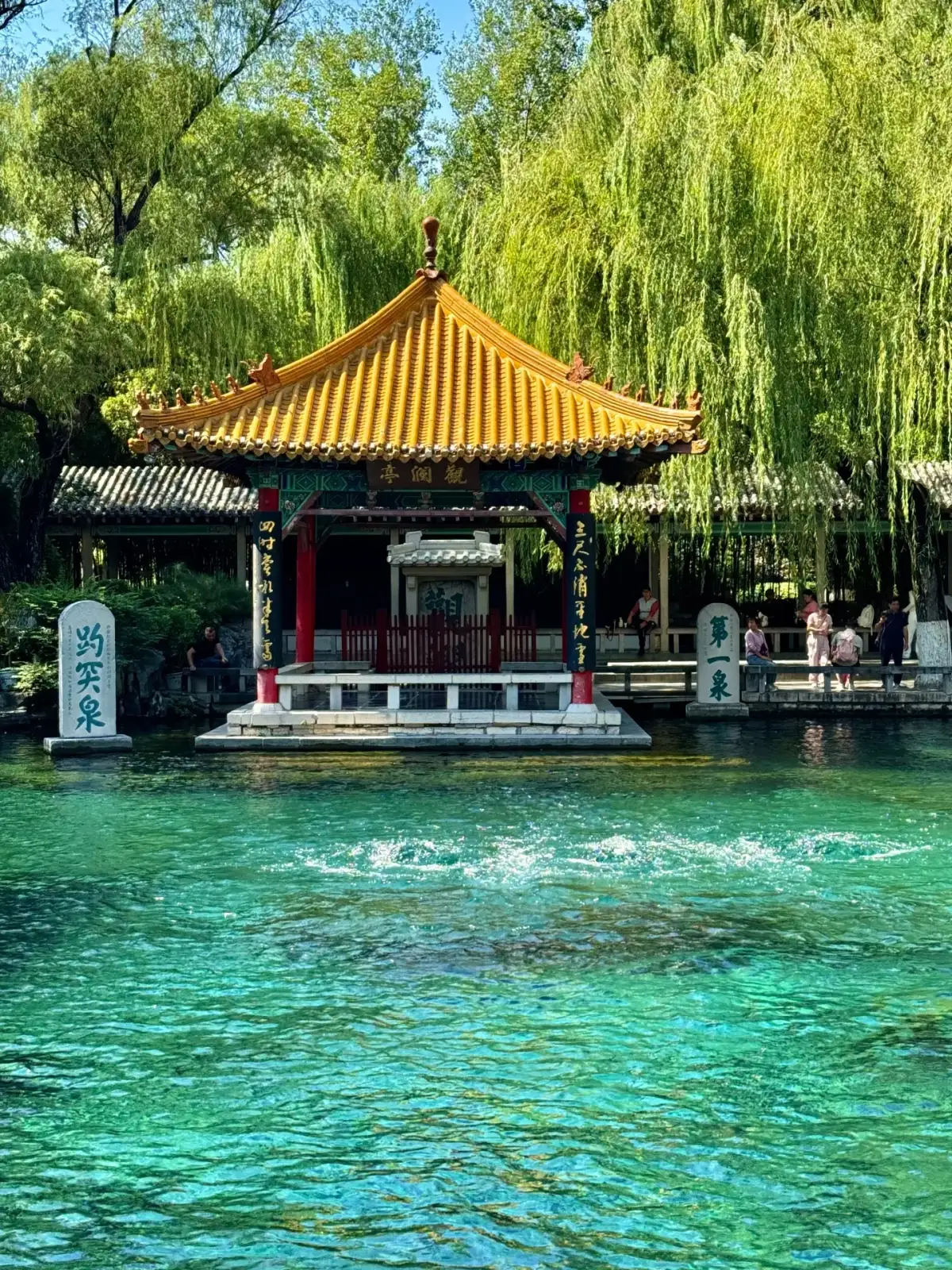
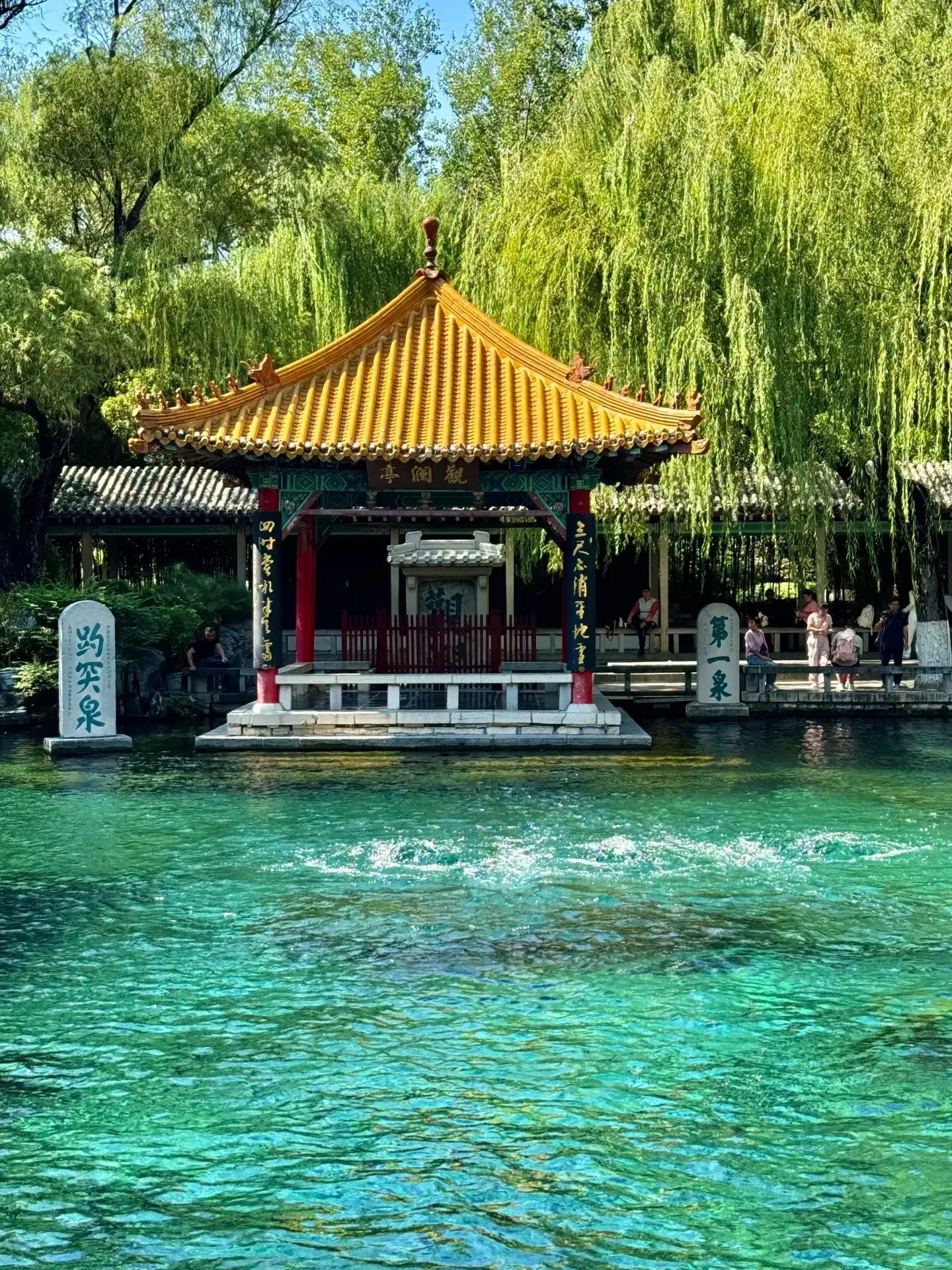
The main spring pool of Baotu Spring and the Guanlan Pavilion.
Baotu Spring: First, Watch How the Water Gushes Up
At the edge of Baotu Spring’s main pool, the most fascinating sight is how the gushing water pushes against the surrounding water surface. On the side where crowds gather, you can first make your way through, then find a spot that doesn’t obstruct the flow of foot traffic to linger. The water’s force varies with the seasons and water supply conditions; what you see before you may not match promotional photos, so true observation should begin with the water’s surface on that particular day. When observing the color of the water, try to distinguish between the water itself, its reflections, and the ripples: the shadows of trees may darken certain areas, while the light-colored pool bottom and sunlight may make other areas appear brighter. Moving to different edges of the same pool reveals varying visual effects. Inscriptions, pavilions, and stone railings along the shore offer cultural clues, but don’t let the text distract you from observing the water. Linger for a few minutes—you’re more likely to discover the patterns of the water’s flow than if you simply snap a photo of the spring’s name and leave immediately. Clear water does not mean it’s safe to wade in or collect water; stick to the designated paths for your visit. The shade by the pond offers comfort in summer, but waiting in line and walking around in the sun can still be hot; be sure to bring water and sun protection before entering.
take a quick look at the smaller springs next to the main spring
the main spring first, allowing some time for the nearby smaller spring pools. The Baotu Spring complex includes springs with different names, such as Shuyu Spring and Jinxian Spring; on-site maps can help you locate the open areas, so there’s no need to walk back and forth repeatedly just to see all the springs. You can choose one or two to compare with the main spring: is the water surface larger or smaller? Is the sound more distinct or quieter? How is the shore shaped? Which side do pedestrians walk along? Spring names often carry stories or poetic imagery; after reading the descriptions and then observing the water, the names will take on a more concrete meaning. For visitors unfamiliar with Chinese, simply memorize the layout and locations first; looking up the names after your trip won’t diminish the enjoyment of the experience. If you’d also like to explore garden spaces like Wan Zhu Yuan, check the day’s open areas first and then decide based on your energy level—don’t try to fit every courtyard into the morning. Walking between the springs and pools provides a welcome transition; the attention that was just drawn to the main features will naturally slow down again as you focus on the smaller details. The variety of water surfaces transforms Jinan’s springs from a single famous landmark into a collection of distinct, comparable sites.
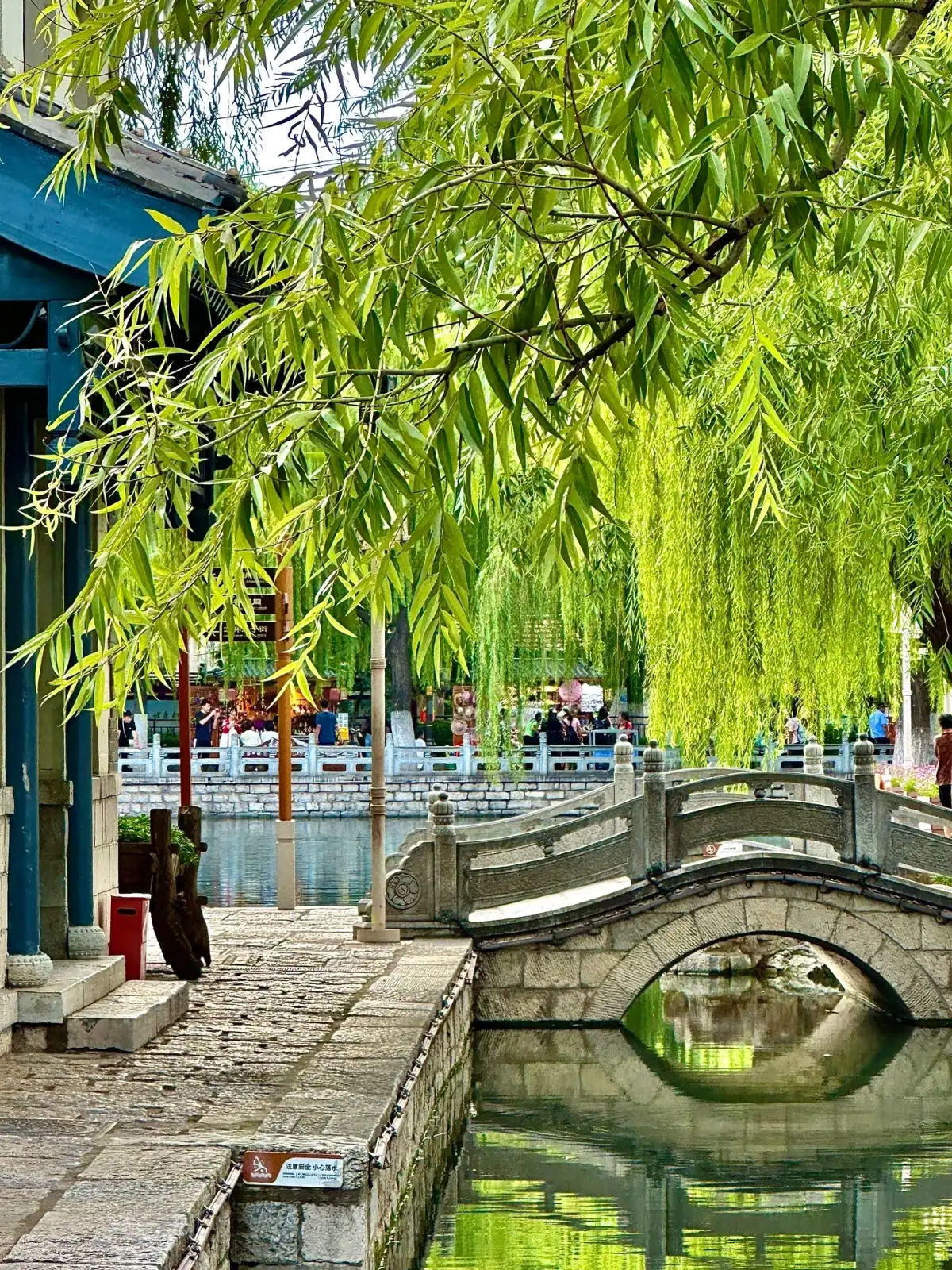
Jinan’s small bridges, willow trees, and alleyways with waterways.
Wulongtan or the lakeshore—choose one of the two.
before or after noon to decide whether you’d rather see the details of the spring pool or move on to the more open water area. If you’re interested in the former, choose Wulongtan; if the latter, spend your time on the south side of Daming Lake. Those with plenty of energy can combine both sections, while if your companions need a break, skip one section—the time saved is perfect for lunch. The shade of the trees and benches along the water’s edge in the park make for a relaxing viewing experience, but when looking for a place to rest, be sure not to block the bridgeheads or entrances and exits. Daming Lake offers expansive views, making it ideal to observe the interplay between architecture and water along a single stretch of shoreline—there’s no need to insist on walking the entire circumference of the lake to feel like you’ve truly been there. The plants, reflections, and boats on the lake change throughout the day; simply choose a comfortable spot and linger for a while. Before entering different park areas, check their respective opening hours and ticket information—don’t assume that because they’re all part of Quancheng’s waterfront, the visiting conditions are the same. You can plan to have lunch on your way from the park into the streets and alleys; sit down and finish your meal before continuing on—this will give you the patience to enjoy the small waterways in front of the gates later in the afternoon.
the Water Pavilion and continue along the water in front of the pavilion
the area around the Meandering Water Pavilion—where the water runs very close to the everyday street. Stroll slowly along the public walkway, observing how the small bridges connect both sides, how the potted plants and tables and chairs in front of the houses leave a clear path, and where the water reappears after passing under the bridge. The viewing distance here is closer than at the lake shore, so there’s no need to constantly search for higher vantage points. Those who enjoy photographing details can pay attention to the interplay between the stone railings, bridge arches, door thresholds, and the ripples on the water’s surface; those seeking to understand daily life can observe how people conduct business, pass through, and rest along the narrow banks. The seating in front of residents’ homes is not automatically open to visitors—you should ask before sitting down, and seek permission before photographing people who are chatting. The path along the water is narrow; give way to people carrying goods or riding bicycles, and walking at a natural pace is best. Jinan is often associated with northern Chinese cities, but these small waterways running right alongside residential areas offer a different experience. Their gentleness stems from the physical proximity: the flowing water is very close to people’s doors, and the streets are very close to daily life—so travelers need to tread lightly here.
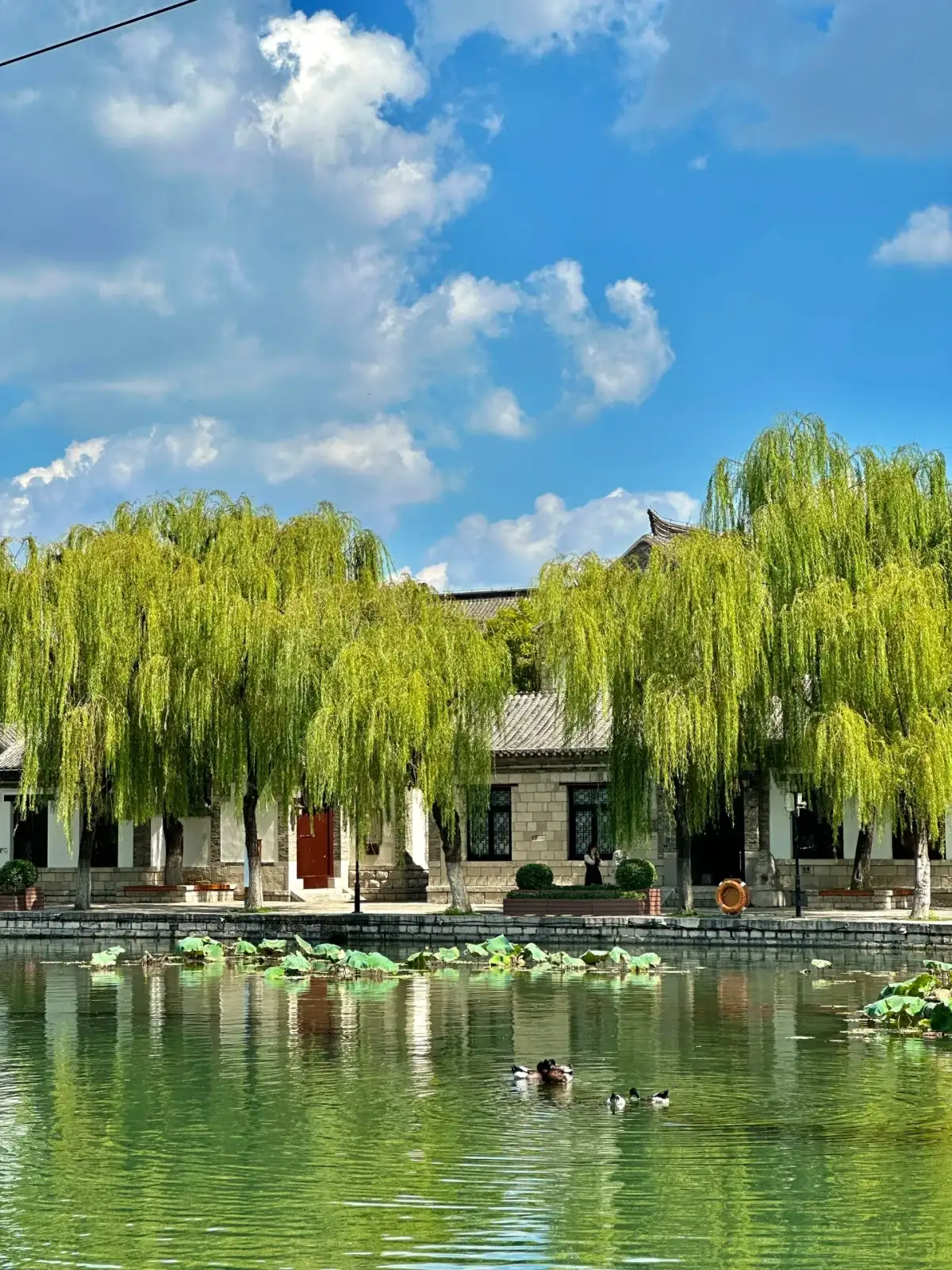
Houses along Jinan’s Willow Tree by the Water Street.
Baihua Island to set aside some time when you’re not in a rush
walk from the Meandering Water Pavilion toward Hundred Flowers Isle, where you can continue to observe how the small body of water expands into a more open space. Bridges, the shoreline, street-front buildings, and willow trees connect different vantage points; simply choose a section to walk through—there’s no need to stop in front of every shop. When the water’s surface is calm, the rooftops and tree shadows appear together; when the wind blows, the reflections scatter, drawing your gaze toward the actual buildings along the shore. This is a good spot to split your afternoon into two parts: first, walk along the public paths, then find a shop you like and sit down. Before ordering a drink, check the price and your seat location; if you’re sitting by the water, be careful not to place your bag or camera on the edge where they might fall. Some visitors like to compare this place to the water towns of Jiangnan—this comparison can spark a conversation—but Jinan’s springs, the streets of the old city, and local life have their own unique character; there’s no need to define them by reference to another city. By the time you’ve slowly finished your drink and step back outside, the water and light may have already changed. This time spent at Baihuazhou isn’t enriched by adding more attractions, but by truly lingering to create memories.
those who want to collect water, then head to Heihu Spring
Heihu Spring, which offers another vantage point for observing the spring—particularly suitable for those interested in understanding the relationship between locals and the spring. Before adding it to your itinerary, consider the walking distance from the Old City’s streets and alleys as well as your stamina; you can also schedule a separate visit on another afternoon. When viewing the springs, follow the open walkways to observe the water outlets and surrounding shoreline, taking care not to encroach on the space where locals normally collect water. Seeing people filling containers may naturally make you want to taste the spring water, but be sure to distinguish between untreated spring water and clearly marked drinking fountains. The spring water drinking stations officially designated by Jinan are equipped with appropriate treatment systems. If you wish to drink the water, look for stations that are clearly marked and operational on that day, and follow the on-site instructions; alternatively, you can purchase bottled water. Do not fill containers with water for drinking simply because the water in the pool appears clear. If you plan to photograph the process of drawing water, first respect the individual’s wishes; the architecture and public spaces themselves sufficiently illustrate the distance between people and water. This passage connects the appreciation of the spring pools with their everyday use, giving the name “City of Springs” real-life meaning.
After walking along the water’s edge, wrap up the visit according to the season
The pavement along the alleys near the spring is sometimes wet, so wear non-slip shoes, and when near the shore, shift your attention from your phone to the ground. In summer, break up long outdoor walks into shorter segments, taking breaks in the shade or indoors; in winter, it may be colder by the water than in the streets, and it gets dark earlier, so you should plan your return trip by the afternoon. On rainy days, check road conditions first; if there’s standing water in low-lying areas or the shore is closed off, take a detour via wider public roads—don’t force your way through just to complete the route. The flow of the springs and the color of the water can change; if the weather doesn’t match your photographic expectations, you can shift your focus to bridges, street-side buildings, and park signage. Finally, when leaving the Old Town, find a spot on the road where it’s easy to catch a ride, or save the Chinese names of appropriate bus or subway stations—avoid setting meeting points at the narrowest alley entrances. Reflecting on the day, Baotu Spring reveals the power of water gushing from the ground, while the Curved Water Pavilion and Hundred Flowers Isle show how water becomes an intimate part of the streetscape once it flows into the city. The walks, lunch, and pauses between these two sites collectively define Jinan; there’s no need to constantly chase the next spring—the clear streams themselves already connect so many places.
Further Reading and References
Compiled and organized by the Dongxing Travel Editorial Department based on publicly available travel notes and listed information. Intended for pre-trip reading; this is not a personal account of the experience. Please verify opening hours, transportation, reservations, and service arrangements based on your actual travel dates.
Jinan Municipal Water Affairs Bureau: Spring Tour Route
Jinan Municipal Government: Spring Water Direct-Drinking Facilities
Jinan Municipal Government: Baotu Spring Complex
A short walk or a longer circuit?
For a half-day Jinan spring walk, focus on Baotu Spring and one stretch of old lanes. Add Black Tiger Spring separately if watching local water collection interests you. Choose between more lake scenery and another spring stop, and plan a rest accordingly.
Watching water collection
Residents collecting water is an observation of local life, not evidence that visitors should drink it untreated. Bring your own drinking water and leave collection points clear. Shorten waterside stops on slippery days and ask before photographing people.
Planning references


