
Eastbound Travel Editorial Department · Travel Diaries and Pre-Trip Reading
Spend half a day in Jingxi, exploring the surrounding fields along the spring.
Equan Spring is located in Jingxi, Baise, Guangxi. The spring, ancient bridges, villages, and karst mountains are all concentrated in the same area, making it ideal for a leisurely half-day exploration. Start by confirming transportation and the scenic area entrance from your accommodation in Jingxi. Once inside, follow the day’s itinerary to explore the trails along the spring, the ancient bridge, and the viewing platforms—there’s no need to walk every single path the moment you arrive. The scenery here offers both near and far views: up close, you’ll find water plants and flowing water; a little further away, the bridge and the village; and in the background, the karst peaks and fields. By taking in these views in sequence, you’ll come to understand how the scenery is interconnected. If you’re also planning a trip to Jiuzhou on the same day, factor in the travel time between the two locations as well as lunch; E’quan and the more distant waterfalls and gorges are each at their own distances and require separate itineraries—don’t assume they’re within walking distance just because they’re both part of the Guangxi Border Route. International visitors should ask their hosts to provide the Chinese names and locations of these sites to confirm pickup points for the return trip. Traveling light makes it easier to linger by the water; leave large luggage at your accommodation and bring water, rain gear, and shoes suitable for rocky paths—let your observations on the ground set the pace for this part of your journey.
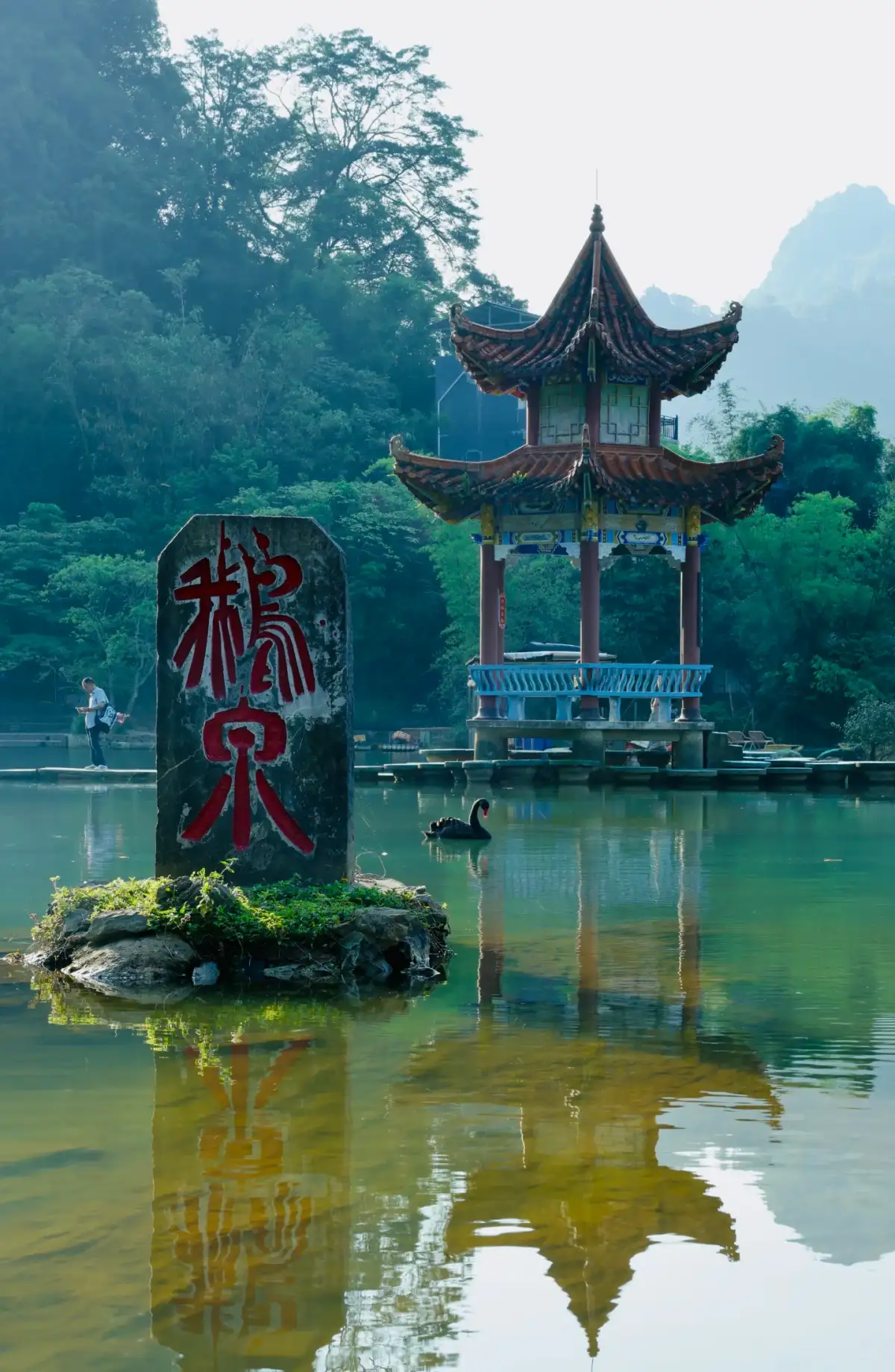
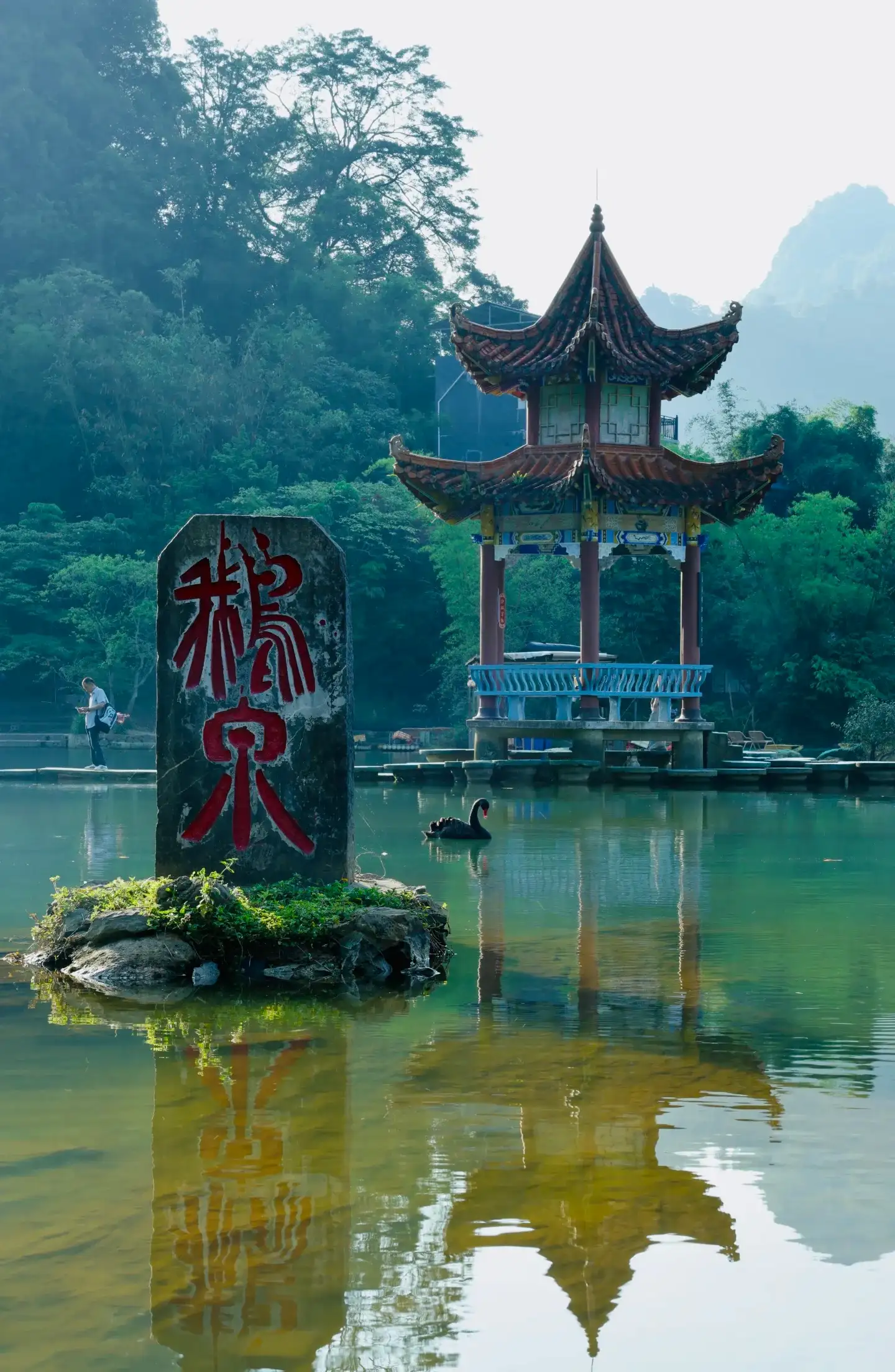
Inscription stones, pavilions, and karst forests by the waters of Jingxi’s Equan Spring.
From the spring’s source to the aquatic plants, the colors result from many factors
The water at Equan Spring gushes from an underground water system; the spring’s source and the relatively calm water surface along the shore can be observed separately. First, observe from the protected walkway where the water begins to flow, then notice how the aquatic plants, rocks, and play of light and shadow alter the colors. The green hues may differ in the bright spots on a sunny day, the shadows beneath the trees, and the rippling water surface; even if you happen to catch a glimpse of the bottom, it doesn’t mean the water is equally clear in every season or every part of the body of water. The aquatic plants along the shore, tilting with the current, offer a clue that’s easier to observe consistently than color, while the wind can introduce another kind of movement to the surface. This area is part of a karst landscape; the relationship between the mountains and groundwater can be understood through on-site explanations—there’s no need to speculate about the entire course and depth of an underground river based on a single spring. The clear, visible water surface should not be taken as an indication of its suitability for drinking or swimming; simply view it from the designated trails. Those with children can explain the changes before them using the shadows of trees, bridges, and aquatic plants—this is both fun and eliminates the need to feed the fish or throw objects into the water to create ripples. If you stand in the same spot for a few extra minutes, the spring water will transform from a simple, attractive green into an environment with visible currents, reflections, and signs of biological activity.
The Fifteen-Arch Ancient Bridge connects the two banks.
A prominent landmark at Equan is the Fifteen-Arch Ancient Bridge. Approach it along the open trail; first, observe from the riverbank how the continuous arches span the water, then decide whether to cross the bridge based on that day’s traffic conditions. From a lower vantage point, you can easily see the bridge arches and their reflections; from a higher vantage point, you can take in the bridge alongside the village paths on both banks. The bridge’s primary significance lies in its function as a connection, not merely in its symmetrical shape. By observing which end the riverside path approaches from and how it turns toward the village after crossing, you can view it in the context of everyday transportation. When others are passing, avoid having a group of tourists occupy the narrow path for an extended period; when pausing on the bridge, be sure to leave space for pedestrians coming from both directions. The stone surface may be wet after rain, so make sure to steady yourself before taking out your phone to frame a shot. If you’re interested in the bridge’s construction and restoration history, rely on on-site explanations or reliable sources—don’t attempt to determine an exact age based on the color of the moss or wear marks on the stone surface. You can still appreciate the bridge’s structure without stepping onto it; from a suitable vantage point on the riverbank, you can often see the arch, the flowing water, and the mountainside all at once. Whether the bridge’s reflection appears complete depends on the water level, wind, and light—don’t let the pursuit of a single ripple-free photo delay the rest of your itinerary.
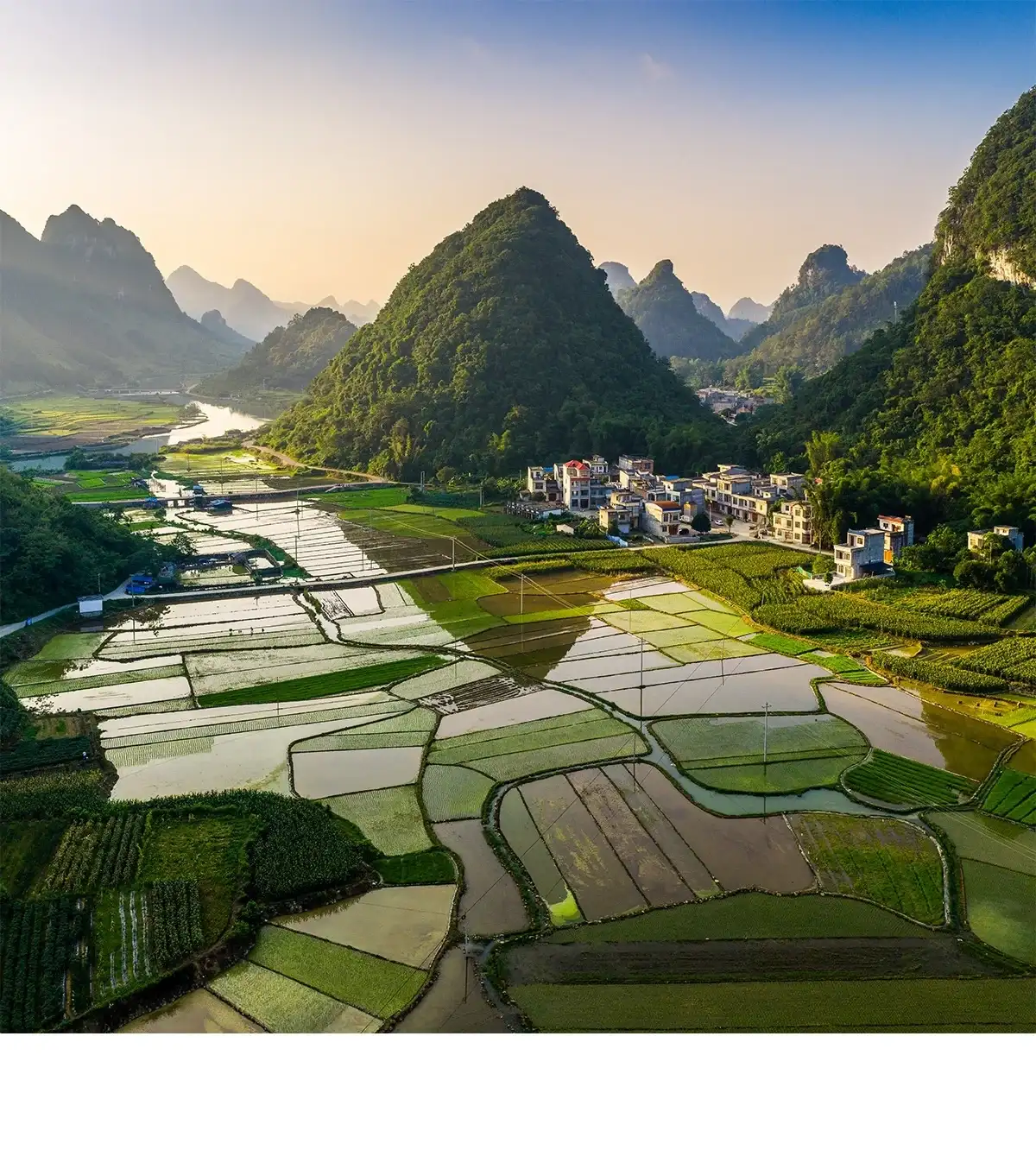
Fields at the foot of the mountains, village houses, and winding waterways around Jingxi’s Equan Spring.
Only when you climb slightly higher do the rice paddies and peak forests come together as a single landscape.
The scenic area guide describes facilities such as viewing platforms; visitors willing to climb can select a section based on the day’s open routes to fully appreciate the interplay between the spring, ancient bridges, and the surrounding fields. Before climbing the steps, check the round-trip route and the condition of the handrails, and realistically assess your stamina—don’t treat the very short “time to the summit” times found online as a standard that everyone in your group must meet. From a higher vantage point, the boundaries of the fields and the waterways are easier to make out, and the surrounding peaks merge from isolated silhouettes into a undulating backdrop. Not everyone needs to reach the very top; simply stop at a spot where you can see the entire landscape and easily turn around to rest. On hot, humid days, it’s best to tackle the steps early in the morning and save the sections near the water and under the shade of trees for midday. If light rain makes the stone steps slippery, or if staff adjust the open areas, you can still enjoy the views of the ancient bridge and the spring from lower elevations. The reward of climbing higher is not merely a broader view; it helps explain how the space beneath your feet is organized: the mountains form the backdrop, the fields spread out between them, and the springs and paths connect the villages and daily life. When you return to the riverside and look at the nearby scenery again, you’ll have a clearer sense of direction.
Fields change with the agricultural seasons, and village roads still serve their own purposes.
The fields surrounding Equan change with planting, harvesting, and landscape management; the rice, rapeseed flowers, and lotus blossoms mentioned in the report each have their own appropriate seasons. When booking your itinerary, inquire about the current field conditions before deciding which scenery you’d like to see—do not assume conditions remain the same year-round based on images from a single flower season. The earthen hues of freshly tilled fields, the green of sprouting rice seedlings, and the post-harvest landscape all demonstrate that agriculture is still in full swing. View the fields from public roads or paths authorized by the scenic area; do not step into crop fields, and do not treat field ridges as shortcuts for wandering at will. If you encounter villagers working or vehicles passing by, yield the right of way to them first. If you’re interested, ask questions only when it won’t disturb them—never ask people to pose for a photo of a rural scene. The space in front of a resident’s home may also be part of their private life; just because the door is open doesn’t mean you can enter. If there are homestays or farm-stay establishments on the outskirts of the village, learning how they utilize local produce or host travelers will reveal the changes taking place in this rural landscape today. Only by respecting roads, farming schedules, and family boundaries can travelers more easily witness the authentic work and life that unfold amidst the mountains and rivers.
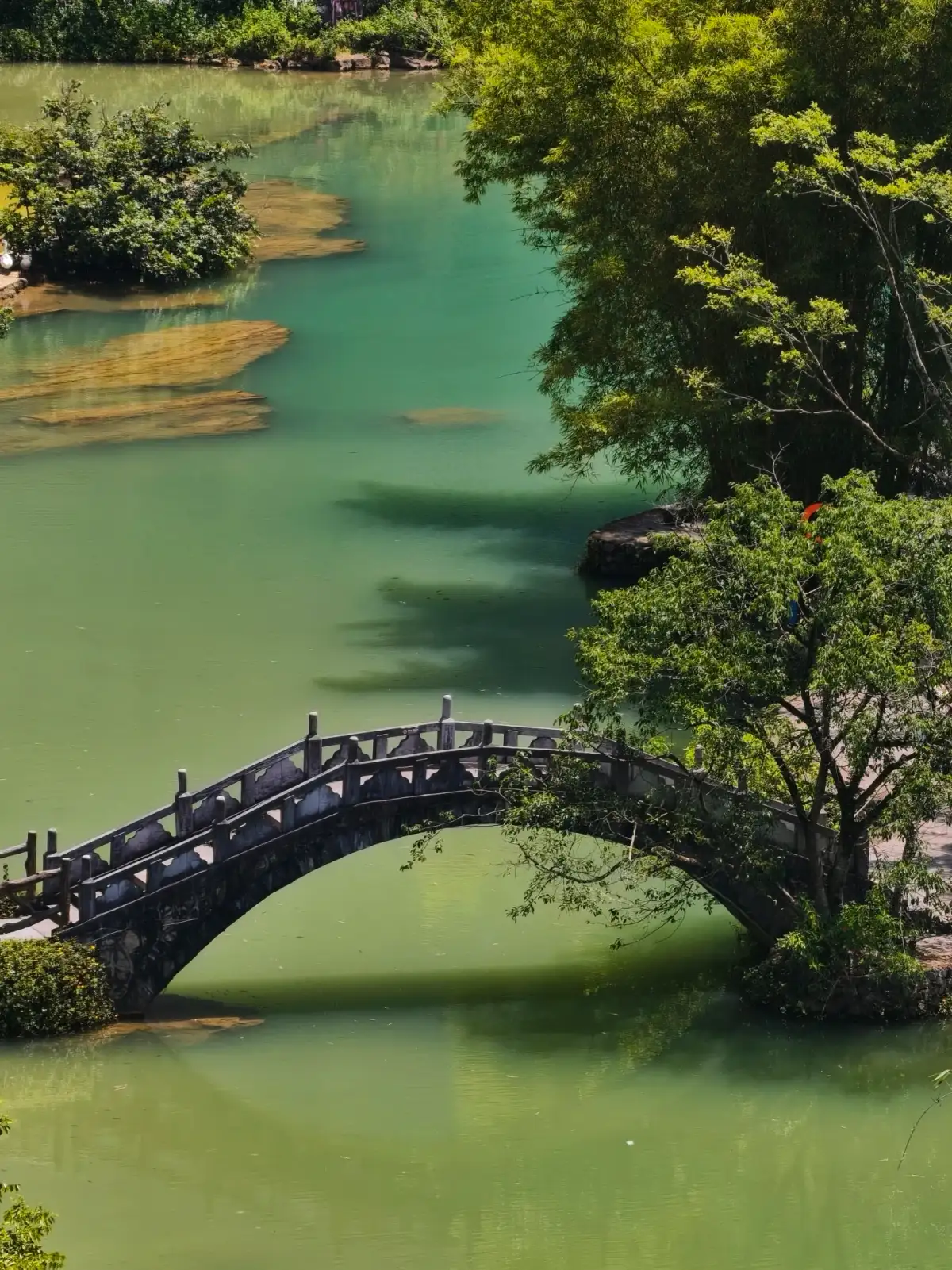
Shade from trees, a small arched bridge, and reflections in the water along the banks of Jingxi’s Equan Spring.
Bamboo rafts and legends each have their own place
Local operators may offer activities such as bamboo rafts near the spring. Whether these are operating, where to board and disembark, pricing, and the use of safety equipment should be confirmed based on the day’s operational and safety arrangements. A walk along the shore provides a complete view of the spring and the bridge; taking a raft ride is a personal choice and does not require the entire group to participate just to see the scenery from the water. In case of wind, rain, or changes in water conditions, follow staff instructions promptly; do not assume that the “open” status listed in outdated travel guides guarantees operations. The name “Goose Spring” is rooted in a local legend about geese and the spring water; if mentioned during the on-site tour, consider it a cultural story that people have woven around the land and water. Legends illustrate how the local people express their feelings toward water sources, while local explanations focus on the spring’s source and groundwater—each serves its own purpose. For international visitors visiting the Zhuang region for the first time, it is easier to understand when a guide clearly explains the language, village names, and story background rather than simply repeating the word “magical.” If you see related imagery on boats, stone steles, or along the shore, do not assume that these represent ongoing, fixed rituals; specific activities and community customs should be learned by asking questions.
Jiuzhou is ideal as another cultural side trip.
If you wish to explore Jingxi’s local crafts beyond its natural landscapes, you can plan a visit to Jiuzhou after Equan, making embroidered balls and the streets the focus of another segment of your journey. Plan your route based on actual road connections between the two locations, and do not assume that the water-based activities listed in the scenic area’s plans will necessarily be available as a means of transportation. Upon arriving in Jiuzhou, first explore the sections of the street open to visitors, then choose a shop willing to accommodate you to learn about embroidered balls: how the fabric pieces are pieced together, how the patterns are arranged, which steps are done by hand, and which are assisted by modern tools. Today’s production and sales methods have evolved; a product labeled as a local specialty cannot be assumed to be entirely handmade based solely on its appearance. If you wish to make a purchase, inquire about the materials, dimensions, and how the item is made and carried; the shopkeeper will clarify the price and estimated delivery time. Obtain permission before observing the crafting process, and do not crowd around the artisan at close range while they are working. The Zhuang culture associated with embroidered balls can be gradually understood through reliable explanations, but it’s best not to generalize about how they’re used in different regions and households. At the spring, you’ll learn about Shuitian; in Jiuzhou, you’ll see how people use materials to create objects. Combining these two experiences will enrich your day in Jingxi far more than simply rushing to another similar body of water.
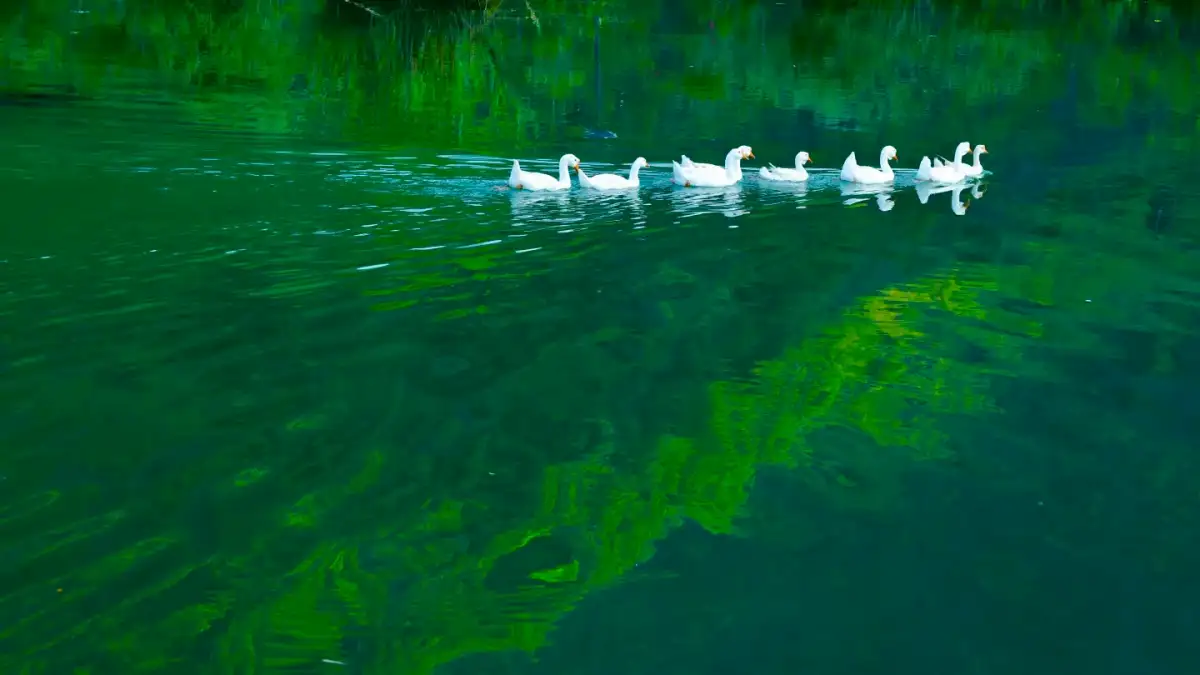
White geese swimming on the surface of Jingxi Goose Spring, with the reflections of greenery in the water.
Lunch begins with staple foods and sour flavors.
You can have lunch at a licensed restaurant near Equan Spring, or return to Jingxi or continue on to Jiuzhou before eating. The key is to first inquire about meal times and return transportation arrangements. Local snack guides for Jingxi mention sour dishes, zongzi (glutinous rice dumplings), and ziba (glutinous rice cakes); in the Zhuang cuisine of Guangxi, you can also discover five-color glutinous rice. Whether different shops offer these items, as well as their ingredients and portion sizes, depends on the daily menu—there’s no need to try every festive dish in a single meal. When ordering sour snacks, ask first which fruits or vegetables are used, how they’re seasoned, and whether chili peppers are added; discussing specific ingredients is clearer than simply asking if something is “sweet and sour.” Glutinous rice dishes are best shared and sampled according to appetite; if you plan to hike the stairs in the afternoon, don’t buy too much just because the colors look appealing. If a vendor describes local cultivation and preparation methods, you can ask when the ingredients are in season and how home-style cooking differs from the shop’s methods—this way, your lunch connects to the agricultural rhythms you just observed in the fields. Mention any dietary restrictions in advance, especially if the ingredients may include animal fats, meat, or nuts. An appreciation for regional flavors comes from a dish whose ingredients can be clearly explained—it doesn’t need promises of longevity or health benefits to make it appealing.
Take one last look at the water’s flow before heading back to the city
To wrap up the tour, follow the familiar riverside path back to the exit, and finally, find a suitable spot to watch the water flow out from the spring pool. Having previously explored the aquatic plants, ancient bridges, rice paddies, and village paths, observing this short stretch of flowing water helps tie the events of the half-day together. Official interviews have mentioned the connection between Goose Spring and the wider regional water system, but standing on the shore, one can confirm only the spring and the river channel right before one’s eyes—there’s no need to rely on imagination to piece together the entire underground path. If your next stop is Jiuzhou, confirm the meeting point with your driver before leaving, and refill your water bottle before getting back in the car; if you’re returning to Jingxi, you can take your time enjoying the city’s dining and rest options in the afternoon. Even on a cloudy day, the distant mountains retain their layered beauty—sunset and clear reflections aren’t prerequisites for this journey. Before leaving, take your trash with you; do not feed animals by the bridge, and do not venture onto private farm paths just to get a closer view of the water. The appeal of Goose Spring lies in a set of relationships that are already visible on-site: groundwater gushing forth, the bridge carrying the village road over the water, fields spreading at the foot of the mountains, and people working and going about their lives within them. If you take the time to truly observe this interplay, half a day is more than enough.
Further Reading and References
Compiled and organized by the Eastbound Travel Editorial Department based on publicly available travel journals and listed materials; intended for pre-trip reading and not as a personal account of firsthand experience. Information regarding access, transportation, reservations, and service arrangements should be verified according to the actual travel dates.
Guangxi Archives: Jingxi’s Jiuzhou and the Embroidered Ball Culture
Guangxi CPPCC: Jingxi local snacks and Jiuzhou embroidered balls
Guangxi Government Tourism Year Special Feature: Zhuang Five-Color Glutinous Rice
Balance water and landscape
Start with water plants and karst scenery at Equan Spring, then study the Equan ancient bridge and its connection between banks. Ask about permitted higher viewpoints in the Jingxi countryside. Water colour and crops vary, so choose the combination rather than expecting one photograph to repeat.
Rafting or another village?
If a raft ride interests you, check current operation, boarding points and your group's needs. The water can also be observed from shore. Jiuzhou adds another cultural theme and road transfer. Keep fields and residential paths clear, and do not infer drinking safety from clear water.
Planning references


