East Travel Editorial Department · Travel Diaries and Pre-Trip Reading
Starting from Jixi, begin by placing the ancient village back into the river valley
It’s best to set aside half a day specifically for Longchuan as part of your Jixi itinerary. It’s not within walking distance of the county seat, so you’ll need to arrange transportation to the village after arriving in Jixi. First, determine the boarding point, the scenic area entrance, and your return transportation. If you’re leaving by high-speed rail that same day, be sure to set aside extra time specifically for the trip from the village entrance to the station. Traveling on mountain roads is different from strolling through the city; it’s not advisable to estimate distances based on the shortest straight lines shown on a map.
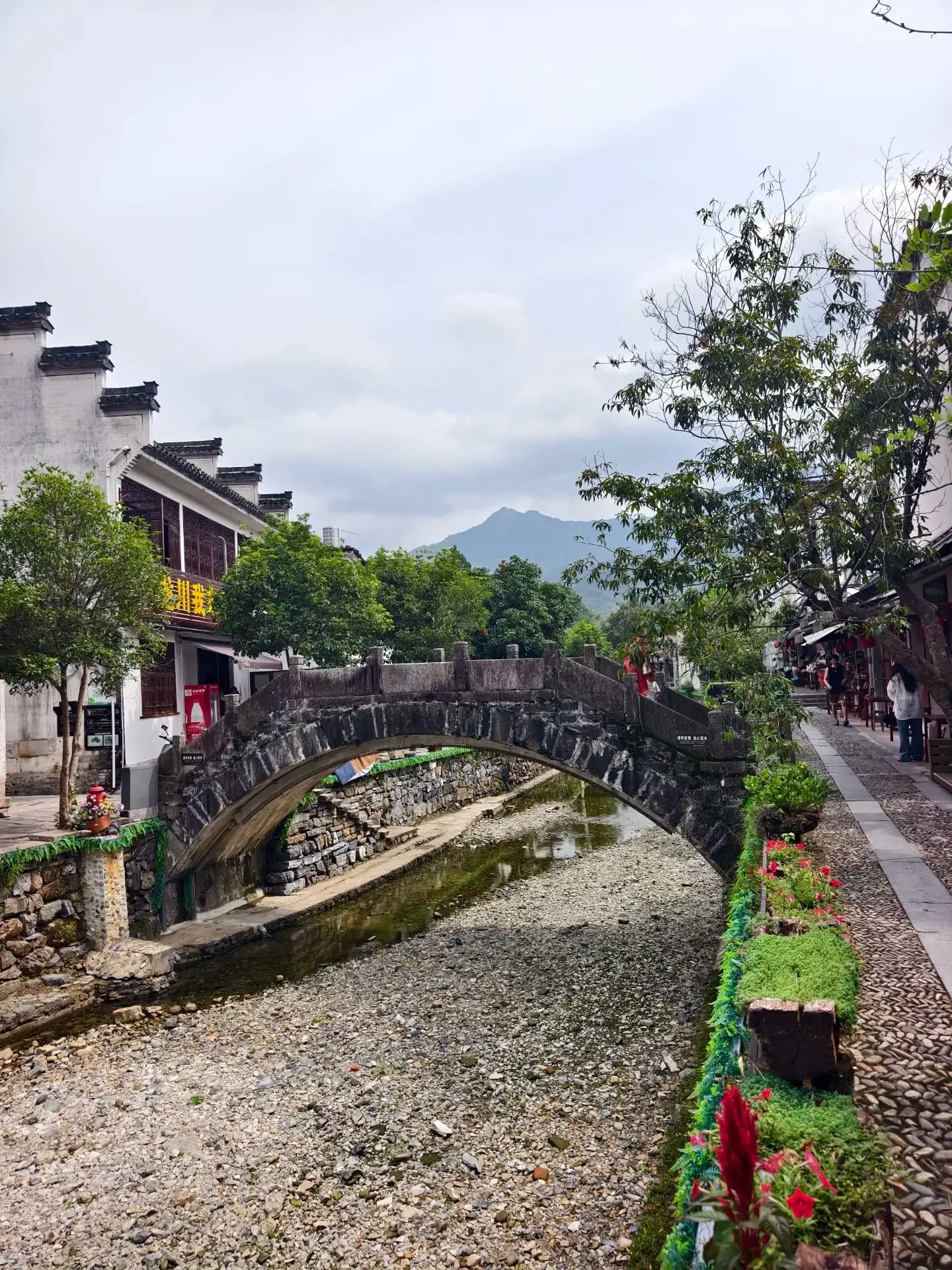
Upon reaching the entrance, start by consulting the village guide to identify the directions of Longchuan Creek and the Dengyuan River. According to the official introduction by Jixi County, the creek flows through the village before merging into the Dengyuan River, making the Water Street the primary natural route for exploring Longchuan. You can walk along Water Street toward the confluence and then return to the ancestral hall and the ceremonial archway; don’t rush to enter every building right away. Once you understand where the water flows, you’ll be able to tell which direction the bridges, riverside paths, and gateways face when you see them later. Daily village life and sightseeing overlap here, so follow the on-site signage to choose your route.
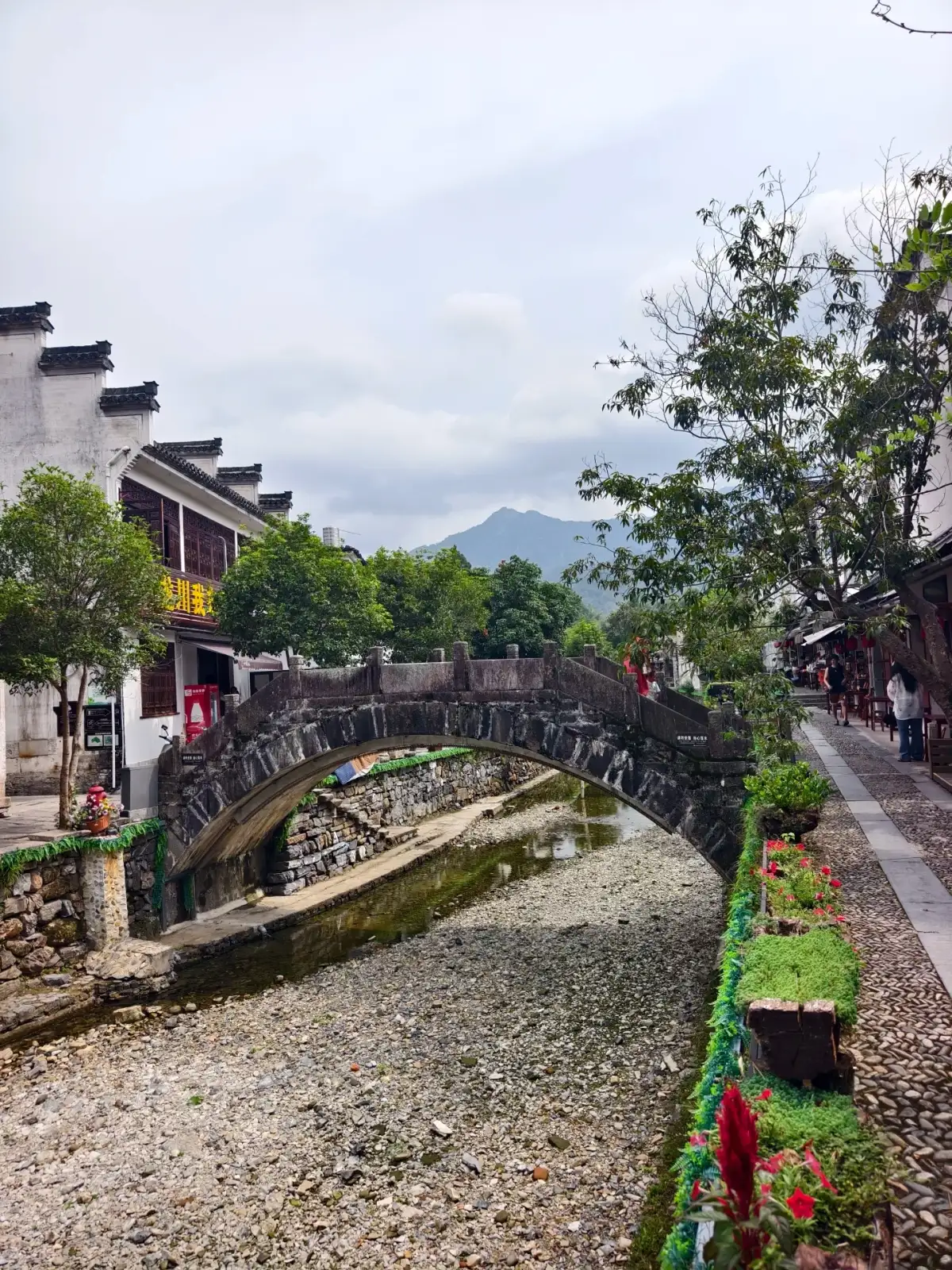
The Stone Bridge and Water Street of Longchuan Creek.
Take a round trip along the Water Street and notice what has been done on both banks The streets along both banks of Longchuan Creek ensure that the water is more than just a scenic view to be admired from afar. As you walk alon
The streets along both banks of Longchuan Creek ensure that the water is more than just a scenic view to be admired from afar. As you walk along the banks, first observe the elevation difference between the water and the pavement beneath your feet—noting which sections have riverbanks, which have bridges, and how the houses connect to this path. Even when the water level is low, the river channel still provides clear direction for the village; if the stream is full, the relationship between the shoreline and the bridges becomes more striking, though you’ll need to keep a safe distance.
You can walk from one bank, cross the stream via a bridge open to pedestrians, and then return via the other bank. The same waterfront street will reveal new details on the return trip: lintels that were previously obscured by the light, shadows cast by eaves on the opposite side, or the slightly curved path behind the bridge. You don’t always have to stop in the middle of the bridge; wider spots on the banks usually offer a better vantage point. Don’t treat the stone steps as a pathway to the water whenever you please; spaces used for washing, work, or by residents should be left for their original purposes. What makes a waterside street worth exploring is this kind of practical connection.
Upon entering the Hu Clan Ancestral Hall, first understand why it is located here
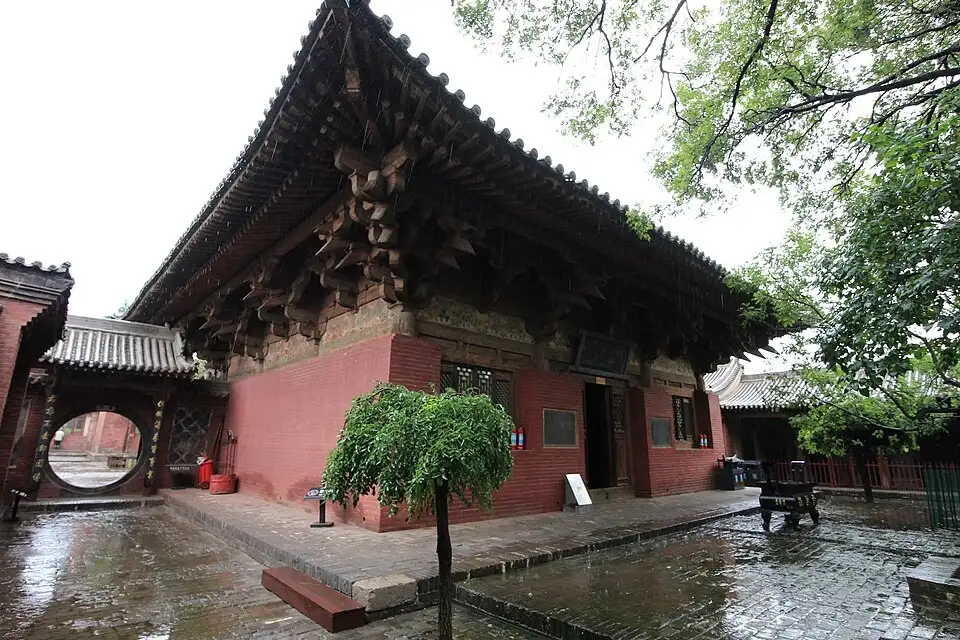
The Hu Clan Ancestral Hall is a key part of the Longchuan tour. It serves a purpose beyond that of an ordinary residence; understanding clan rituals and public affairs will make the hall’s layout and decorations easier to comprehend. For international visitors unfamiliar with China’s clan system, it’s best to start with an informational display panel to learn how families of the same surname use the ancestral hall to organize their shared memories, and then follow the designated tour route into the building.
It’s worth slowing down to appreciate the transitions between entrances, courtyards, and main halls. When natural light enters deeper spaces, your eyes need a moment to adjust—there’s no need to raise your camera immediately. Observe how the columns support the beam framework, where visitors can linger within the hall, and how the front and back spaces connect. When listening to the tour guide, ask about the building’s past uses and which parts were restored, rather than just collecting stories about famous figures. The history of a clan hall is tied to a specific family; don’t assume that all figures belong to the same branch simply because they share the same surname—the genealogy records and on-site explanations provide clearer clues.
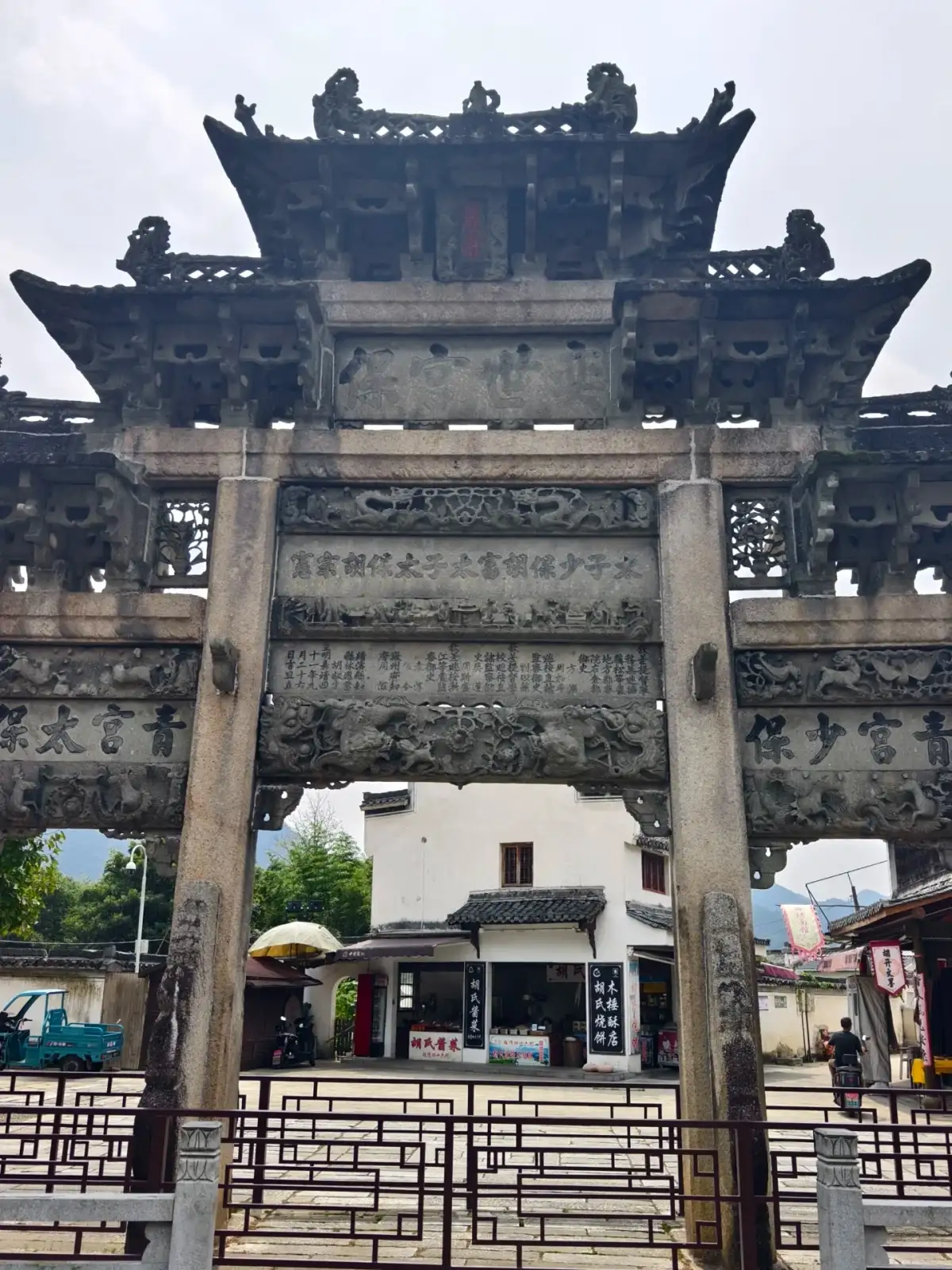
The stone facade of the Longchuan “Four Generations of Ministers” Archway.
Wood carvings require a leisurely gaze—and a change in perspective
The Longchuan Hu Clan Ancestral Hall is renowned for its wood carvings; county cultural and tourism materials highlight carving motifs such as lotus flowers. When viewing the carvings, choose a section that is well-preserved and well-lit. First, identify the branches, leaves, and flowers within the entire composition, then observe how the wood’s varying depths create a sense of depth and layering. Complexity does not mean every detail must be interpreted immediately; the direction of the flower stems, the curling of the leaves, and the spaces left uncarved already demonstrate the patience of the craftsmanship.
After getting closer to examine the details, step back to a designated viewing area to observe its role within the architecture. The wood carvings adorn specific structural elements—they are not standalone works meant for an art museum; rather, they work together with columns, beams, doors, and windows to shape the appearance of the hall. If you want to know the meaning behind a particular pattern, you can ask a certified guide to explain the corresponding theme and origin. When the lighting is dim, follow the photography guidelines—do not touch the architectural elements or cross the barrier lines just to capture brighter patterns. Focusing on a single detail you can understand is easier to remember than hastily snapping a photo of an entire wall covered in decorations whose meanings you don’t grasp.
From wooden structures to stone archways, let the materials guide the transition along the route
As you walk from the Clan Hall toward the Archway of the Generations of Ministers, shift your attention to the stonework. Unlike the surrounding buildings, the archway features a passageway that makes it both a structure and a landmark along the path. First, observe how the columns, crossbeams, and upper components are stacked, then identify the location of the inscribed plaque. Official county records indicate that it was built during the Ming Dynasty and is an important stone carving heritage site in Longchuan; you can read about the specific figures and titles mentioned on the on-site explanatory plaques.
Wooden carvings draw your attention to the depth and texture up close, while stone archways naturally prompt you to look up and appreciate the overall supporting structure; by placing these two materials side by side along the same walking path, the craftsmanship of Huizhou architecture becomes clearly distinguishable. The color variations on the stone surfaces need not all be interpreted as traces of a specific era—sunlight, wind, rain, and restoration work all contribute to their appearance. When there are pedestrians passing by, yield the path first, then observe from the side. Do not stand in the roadway to photograph the columns on both sides at once, nor climb onto the pedestals; you can still view the entire structure from safe, level ground.
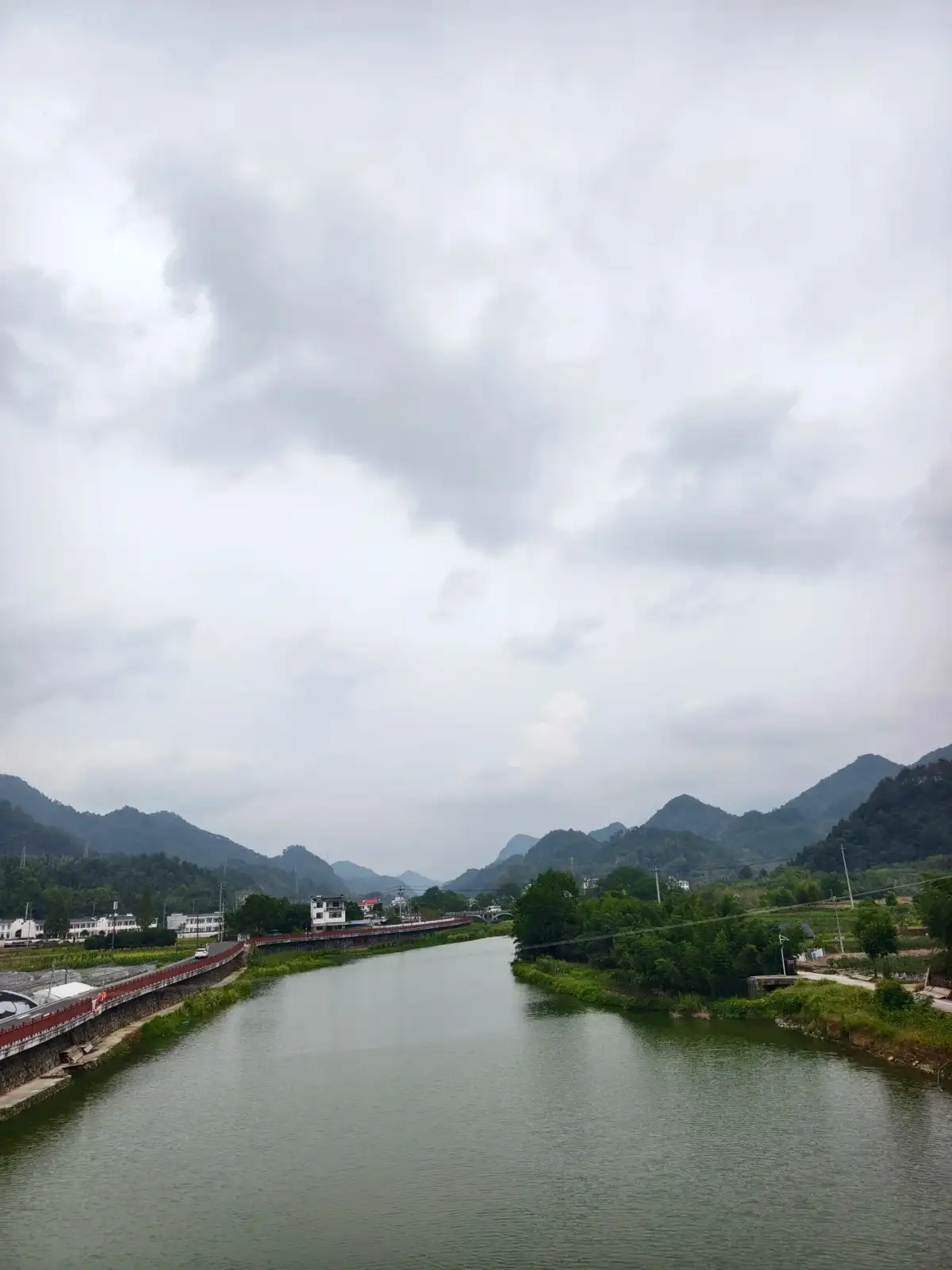
Longchuan Dengyuan River and the village’s mountainous terrain.
the mountains and the fields—filling in the picture of daily life outside the ancient village.
After leaving the key buildings, you can walk to the open areas accessible within the scenic area to see what fields and paths lie between the mountains, the river, and the village houses. The area behind the houses is not merely a blank backdrop; the mountainous terrain affects accessibility, while the fields and water are integral to daily life and production. Shift your gaze away from the eaves, and the ancient village will transform from a collection of beautiful buildings into a specific settlement nestled within the river valley.
If there are rural walking trails on-site, follow the signs to walk short sections; do not treat any field ridges as shortcuts for tourists. Farmlands, residential courtyards, and work areas each have their own users; if you encounter a closed gate or property boundary, return to the public path. Some historic residences in the village may not be open to the public; if you wish to visit a specific site, check in advance—do not treat the list of buildings mentioned in external guides as a mandatory itinerary. A half-day spent exploring the clan halls, stone archways, and waterfront streets is already quite fulfilling; if you plan to continue on to Huli, Renli, or other villages, arrange separate transportation—do not cram them all into a single rushed trip simply because they are all located in Jixi.
Lunch and the weather—leave some flexibility for your trip to Southern Anhui
You can plan your meal after touring the buildings. Local specialties like Jixi Ta Guo are worth trying, but the specific fillings, flavors, and portion sizes depend on what the shop has available that day. Visitors with dietary restrictions regarding wheat, pork, or other ingredients should clarify their needs in advance; do not assume ingredients based solely on a dish’s name. Choose a restaurant where you can sit down, have a drink of water, and rest your feet before deciding whether to return to Water Street and walk along the other bank; don’t let a rushed lunch turn your afternoon into another race against time.
The mountains are vibrant with color in spring, but the blooming season varies with the weather; in summer, walking along the water can get quite hot, so taking a break inside the ancestral halls can provide a welcome respite from outdoor activities. In fall and winter, observing the eaves and tree lines offers its own charm—there’s no need to focus solely on the golden foliage. In case of rain, slow down when walking on stone slabs, bridge surfaces, and along the stream banks; adjust your route promptly in the event of heavy rainfall or management changes. Before setting out, check the scenic area’s reservation status, open areas, and ticketing requirements—especially confirming whether buildings requiring a deeper exploration are open. When the weather is unfavorable, reduce the time spent on the outlying rural sections and focus instead on appreciating the architecture.
Before leaving, take one last look at the direction where the streams converge
Before heading back, if time permits, visit a safe public riverside area to observe the stream’s flow direction. When you first arrive, it’s just a stream running through the village. But after passing by the ancestral hall, the stone archway, and exploring both banks, the Water Street has already connected several distinct locations. Even without standing at the confluence, you can locate its relationship with the Dengyuan River on the map; the river’s course helps trace a recognizable path through the village’s collective memory.
This can raise several distinct questions: How does a clan hall manage family affairs? How is wood carved into intricate layers? How do stone archways dominate the road? And how do the houses coexist with the water? These elements don’t need to be unified by a single legend; together, they illustrate why Longchuan is worth exploring at a leisurely pace. Once you reach the village entrance, reconfirm your pickup location and destination, allowing for some leeway while waiting for the vehicle and during the journey. If you’re staying overnight in Jixi, you can continue exploring the local cuisine in the county seat that evening; if you’re leaving Southern Anhui, this half-day has already become a complete chapter in itself—there’s no need to squeeze in another village at the last minute.
Further Reading and References
Originally compiled by the Dongxing Travel Editorial Department based on publicly available travel notes and listed information. Intended as pre-trip reading material; this is not a personal account of firsthand experience. Please verify opening hours, transportation, reservations, and service arrangements according to your actual travel dates.
Jixi County: Introduction to the Longchuan Scenic Area
Jixi County Culture and Tourism: Hu Clan Ancestral Hall
Comparing timber carving and a stone archway
Begin in Longchuan Village Jixi by finding your direction beside the stream, then compare Hu Clan Ancestral Hall carvings with the stonework of Yishi Shangshu Archway. Record where decoration sits before using on-site interpretation to identify subjects. Timber and stone respond to different light and viewing distances; you can read their relationship to family and village without memorising every story.
Keeping a village setting in a half-day visit
Protect a Longchuan water-street walk from being squeezed out by indoor stops. After studying one component, return to a public riverside to compare stream, houses and surrounding hills. Allow separate time for lunch and transport back to Jixi. There is no need to enter unopened homes or farmland to understand how the village connects with life beyond its buildings.
Planning references
Planning reference: Longchuan Village Jixi 1