September 30, 2026 · Travel Diary
First, walk through the bamboo grove, then seek out the tower.
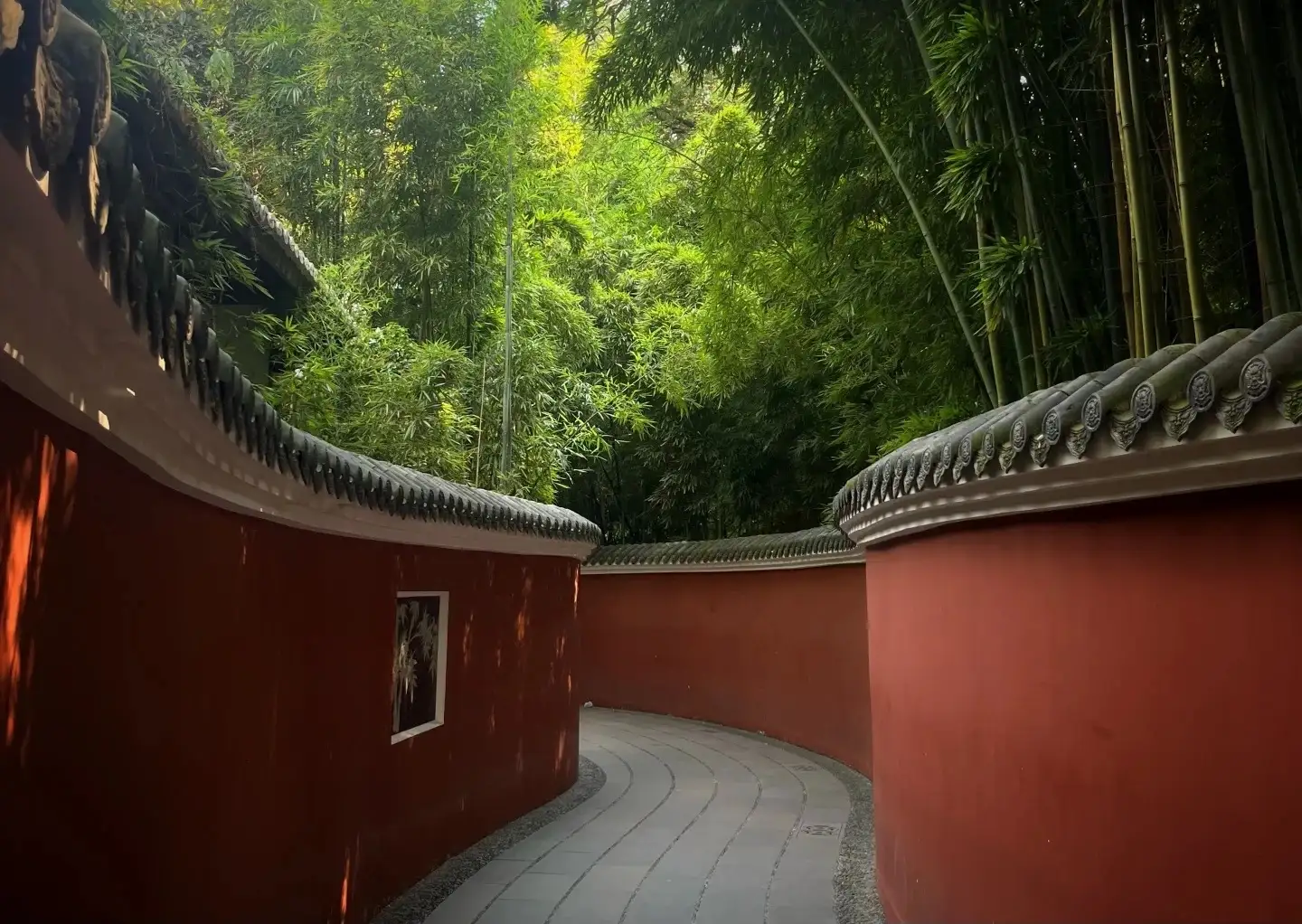
The name “Wangjianglou” might lead one to expect a towering structure, but it is often the bamboo that first alters the rhythm of one’s walk through the park. Where the bamboo stands densely, the view is sliced into narrow strips; upon turning a corner, white walls, red walls, or a corner of a roofline emerge from among the shadows of the leaves. The architecture isn’t always at the center; this interplay of visibility and concealment is precisely what makes these spots in the garden ideal for a leisurely stroll.
The park is divided into a garden area open to the public and a cultural heritage protection zone. Before your visit, decide whether you want to see the bamboo grove, the ancient architecture, or both, then check the corresponding entrance and your schedule for the day. If time permits, take the bamboo path to gradually approach the buildings, rather than rushing straight to the tower as soon as you see the sign. First comes the shelter of the grove, then the openness by the river—only then will your body truly remember the contrast between these two spaces.
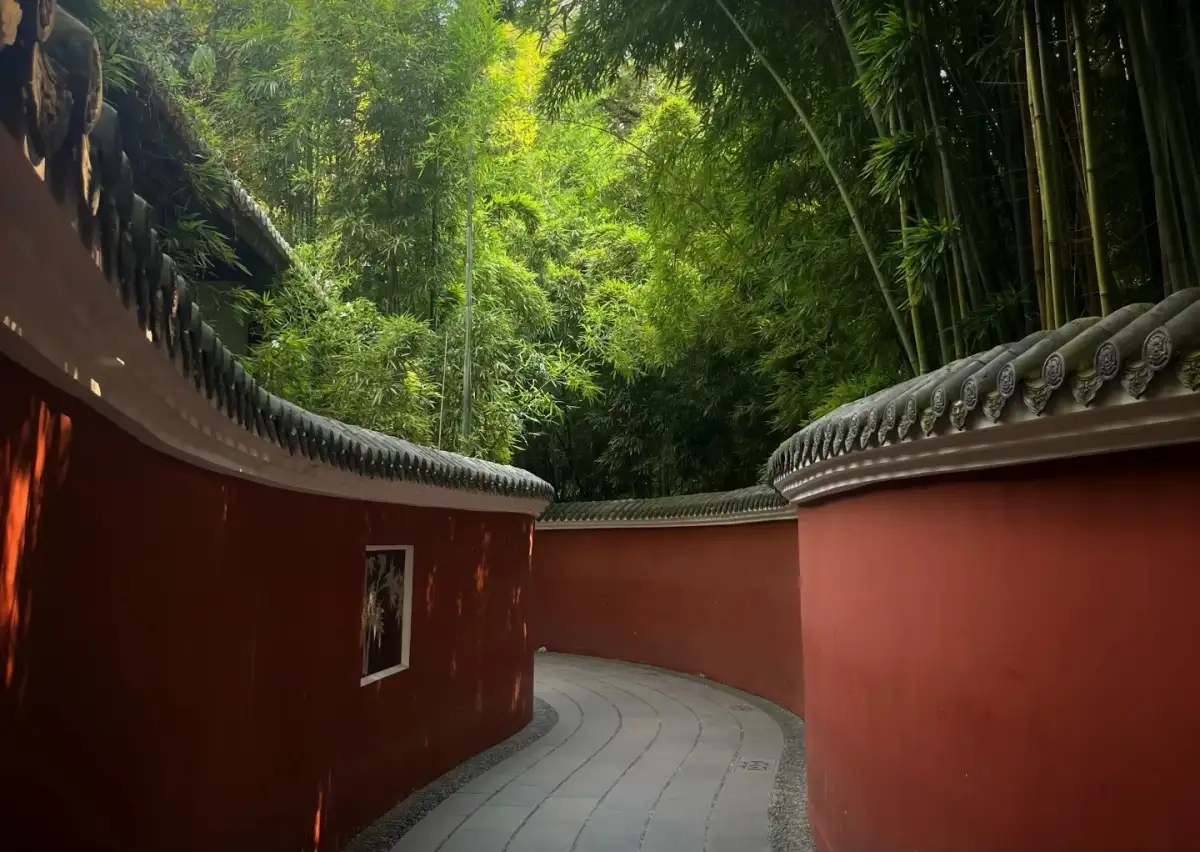
The winding paths and bamboo groves between the red walls of Wangjianglou Park.
Xue Tao Should Be Recognized as a Poet
The commemorative theme here centers on the Tang Dynasty female poet Xue Tao. When it comes to an ancient woman, travel narratives are easily sidetracked by a few romantic anecdotes; what is truly worth spending time on, however, is her writing, her literary talent, and how later generations have preserved her memory through architecture and gardens. The Xue Tao Memorial Hall and its related exhibits provide a gateway into this narrative.
There’s no need to memorize a lengthy biography before entering the park. Choose a poem clearly explained in the exhibition, read the title first, then the lines, and observe the bamboo, water, or everyday emotions within it; afterward, return to the park to observe. Literature need not be an interpretation forced onto the landscape, but after reading the text, a patch of bamboo shadows will take on an additional layer of meaning, and the park will no longer be merely a backdrop for taking photos with an ancient flair.
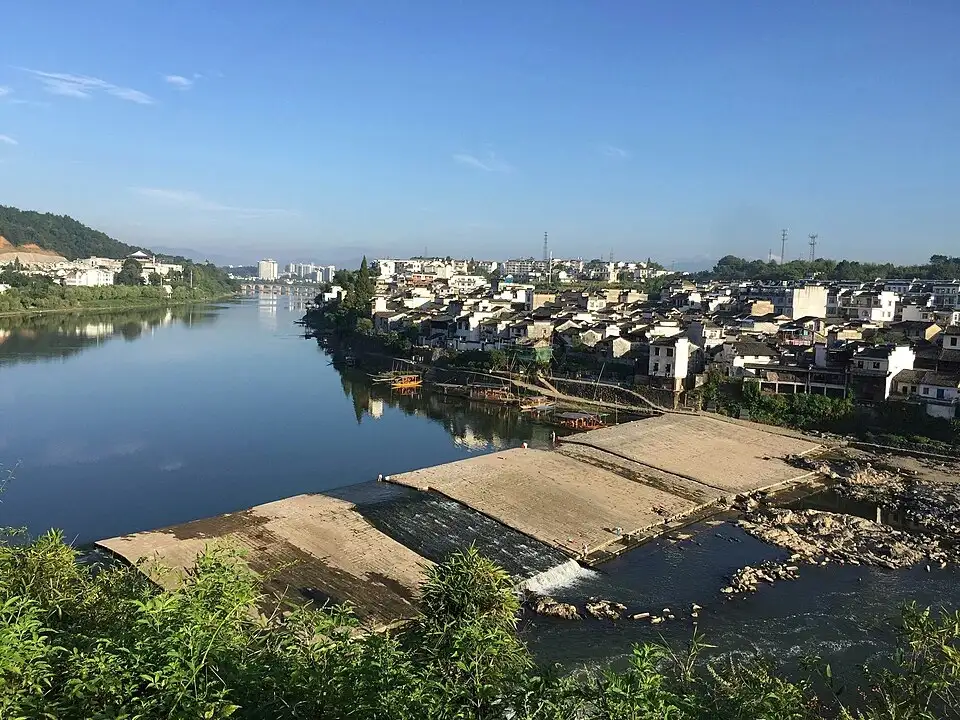
Chongli Pavilion and the Jinjiang River, illustrating their relative positions
Chongli Pavilion, commonly known as Wangjianglou, is situated on the banks of the Jinjiang River and stands out as a prominent structure within the park. According to the park’s official description, the pavilion’s name is derived from a passage in Zuo Si’s *Rhapsody on the Capital of Shu*. Understanding this name adds a literary dimension to Chengdu’s relationship with the pavilion, rather than simply remembering its tower-like silhouette.
When viewing the building, start by standing a bit farther away to discern the layers of the roof and the heights of the tree canopies; then move closer to examine the structural elements beneath the eaves; finally, from a vantage point where you can walk around, observe its relationship with the riverbank. The visual focal point of the pavilion rises upward, while the river stretches into the distance; these two lines give the same garden a sense of both uprightness and expansiveness. Whether visitors can ascend the pavilion and which spaces are open will depend on on-site arrangements; however, the view from ground level is sufficient to fully appreciate the garden’s character.
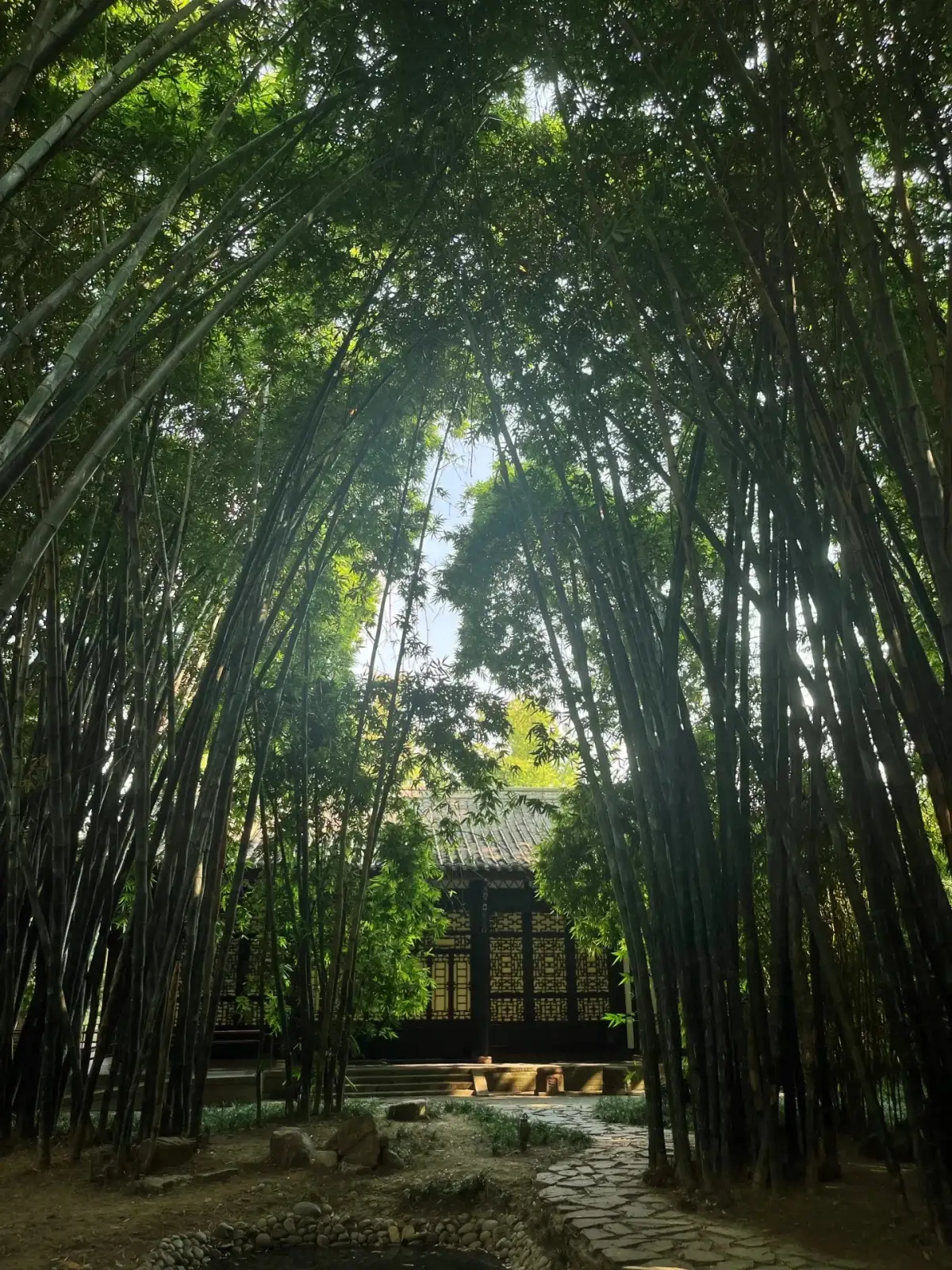
Latticed windows and stone paths deep within the bamboo grove at Wangjianglou Park.
wells, pavilions, and inscriptions—one must understand their historical context
—such as Xue Tao’s Well, the Paper-Washing Pavilion, and the Poetry Recitation Tower—have linked papermaking, poetry, and commemorative activities. However, these commemorative structures are not the same as the original objects the poet herself used. The park’s introduction makes it clear that Xue Tao’s Well is associated with the Ming Dynasty practice of replicating Xue Tao’s stationery; viewing the site with this distinction in mind makes it less likely to confuse the life of the Tang Dynasty poet with the constructions of later generations.
Take a moment to slow down when reading the plaque inscriptions—note whether the characters are on the gate, the wall, or inside a pavilion, and consider whether they correspond to the building’s function, a literary image, or a later commemoration. A visit to a garden doesn’t need to turn into a comprehensive history exam; simply distinguishing between “the era in which the figure lived” and “the era in which the commemorative space was built” already makes for a more substantive experience. Much of the charm in the garden’s details stems precisely from this dialogue across different eras.
Another thread connecting poetic notes to the garden
the Huanjian Pavilion—offers a path of exploration beyond the bamboo groves. Paper is not merely an insignificant medium for poetry: its size, color, and method of writing all influence how people preserve and transmit the written word. When viewing the related exhibits, visitors can first distinguish between the papermaking process and the stages of crafting poetic stationery, and then consider why these elements were incorporated into a garden dedicated to commemorating the poet.
This thread is particularly well-suited for a comparative reading with the exhibition of poetry and calligraphy in the Wuyun Xian Pavilion. By observing both the materials on which the text is inscribed and how the same verses are reimagined through calligraphy and engraving, the poet’s works take on tangible forms of transmission. There is no need to assume that the exhibits on display were necessarily created by Xue Tao herself; the significance of this commemorative space also lies in the ongoing interpretation and expression by future generations.
If your travel companion prefers the garden scenery, you can treat this section as a brief stop: choose a question related to paper, calligraphy, or bamboo, read the corresponding explanation, and then return outdoors. The alternation between text and scenery leaves a clearer impression than reading through a long series of exhibition panels in one go.
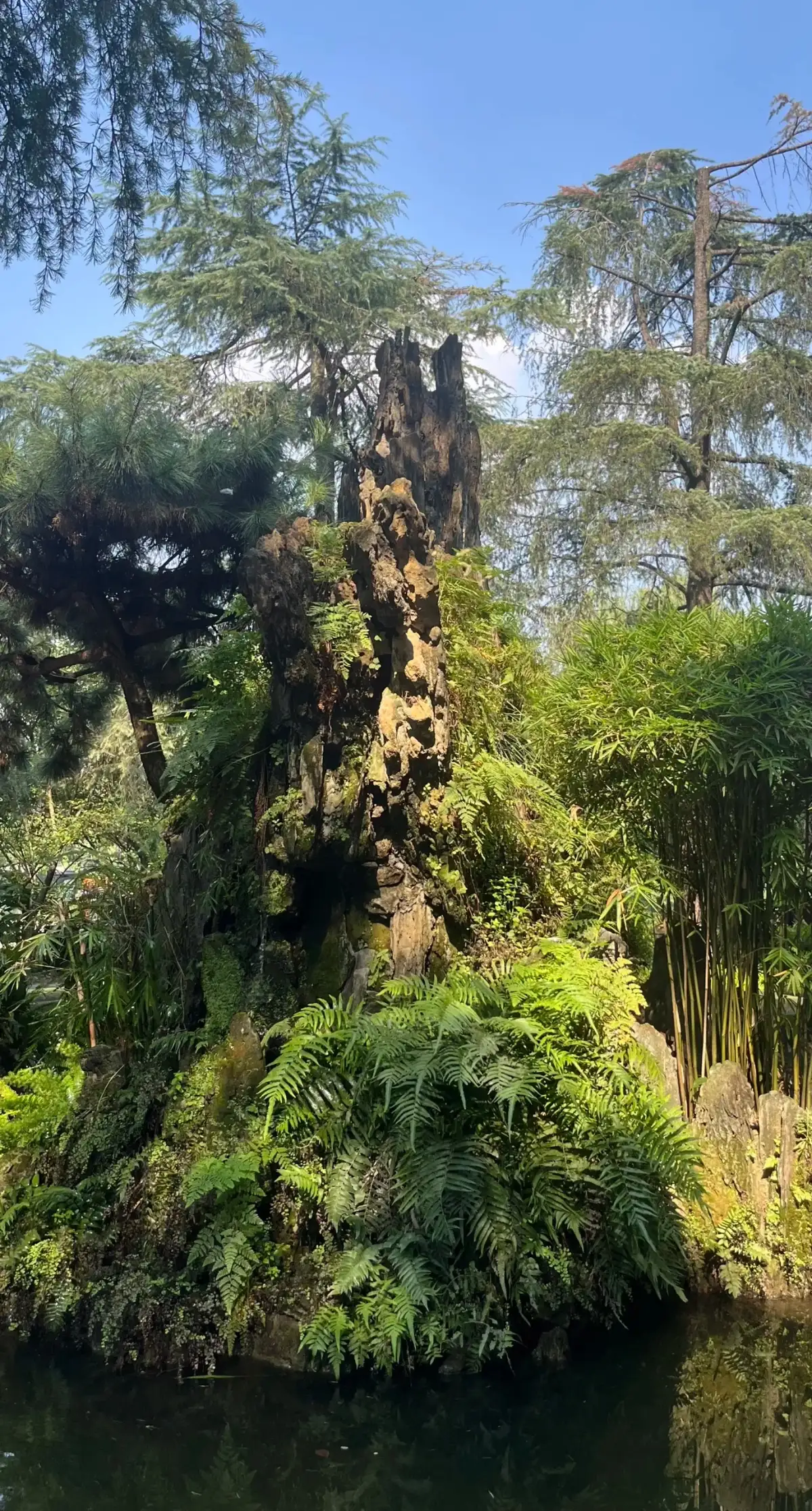
Rockeries and lush vegetation by the pond in Wangjianglou Park.
The beauty of bamboo lies in more than just its greenery
The bamboo grove is best viewed up close. The fine, dense leaves, the spacing between the bamboo joints, and whether they grow in dense clumps or more sparsely—all offer far more substance than the vague description of “a sea of green.” When you encounter a labeled bamboo species, you can observe its form in relation to its name; if you’re unsure, simply describe it as a “bamboo grove”—there’s no need to name every single bamboo plant just to appear knowledgeable about plants.
Photography can also explore these distinctions: one shot capturing the path’s direction, another focusing on the shapes of leaf shadows cast on the wall, and a third highlighting the relationship between the eaves and the treetops. A wall on a rainy day and the shadows of bamboo on a sunny day present different textures; there’s no need to describe a single moment as if it were a daily occurrence. The changes in the park are subtle; only by observing patiently can one avoid losing one’s way amid the same verdant scenery.
The tea house serves as a natural conclusion to this stroll through the park
The Chengdu teahouse experience can begin at a suitable teahouse within the park or nearby. First, inquire about the tea varieties, seating, and pricing before deciding how long to stay. The interplay between the lidded bowl, the tea, and the shadows of the bamboo doesn’t require a theatrical sense of ritual; simply setting aside some time without planning the next sightseeing stop is enough to let this pause unfold at its own pace.
If you’d like to continue your stroll afterward, you can extend your walk along the banks of the Jinjiang River as another short segment, connecting it based on the location of the exit. By dedicating time to the tower, the bamboo grove, poetry, and tea—each in its own measure—a visit to Wangjiang Tower gains depth. When you leave, what you’ll remember may not be the most picturesque view, but rather the moment after finishing a passage, when you look up and see a bamboo leaf gently swaying just beyond the wall.
Further Reading and References
Chengdu · Destination Overview
Compiled by the East Travel Editorial Department based on publicly available travel journals and the references listed in the text, for pre-trip reading; accompanying images are sourced from the notes as indicated.
Wangjianglou Park Official Website: Introduction to Wangjianglou