September 11, 2026 · Travel Diary
layers of the mountain village—starting with the rooftops
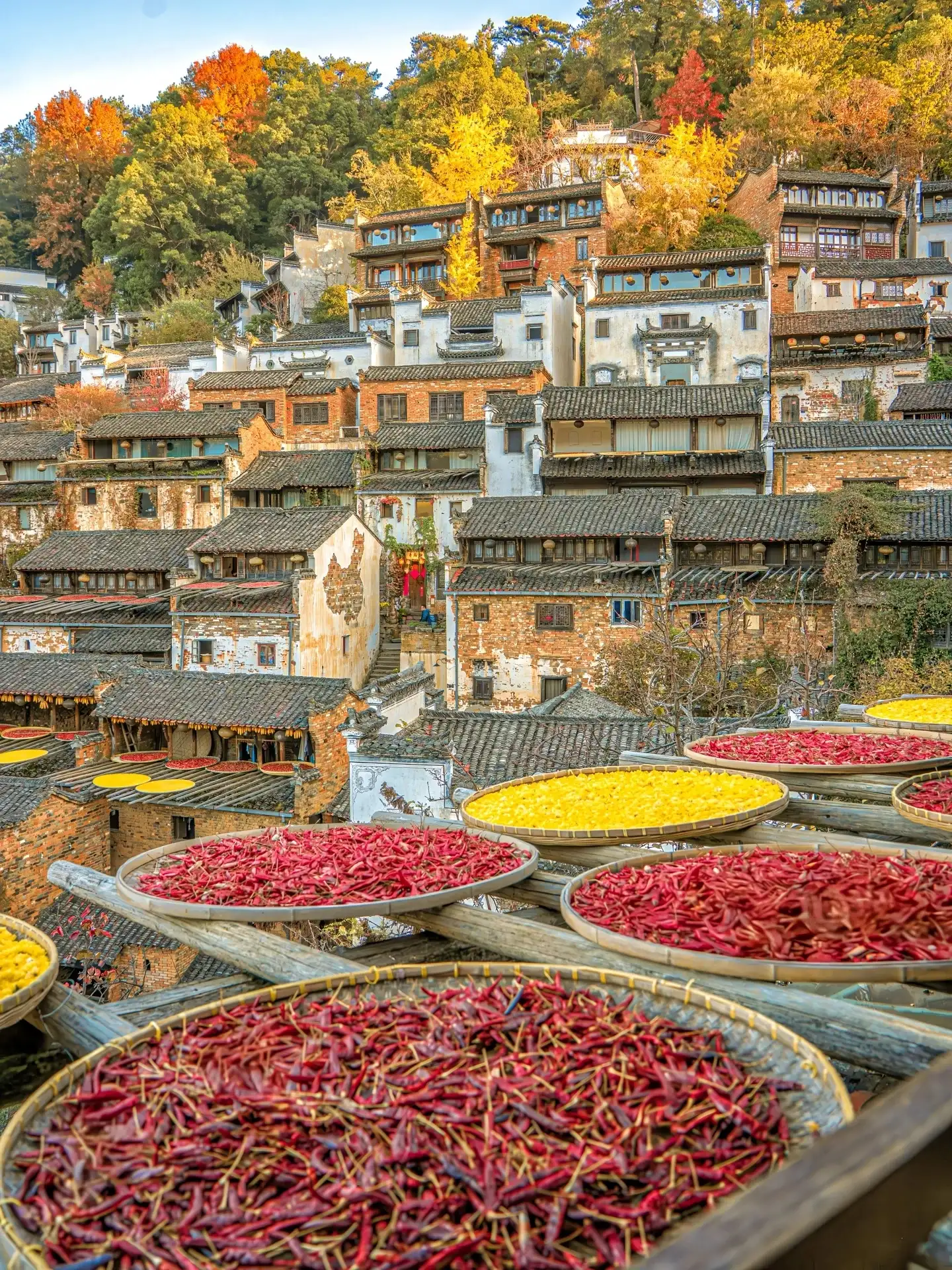
The five-day Jiangxi itinerary begins in Nanchang, winding through mountainous terrain and villages before heading to Jingdezhen. The section in Wuyuan offers an opportunity for the journey to shift its focus from mountain scenery to architecture and living spaces. Huangling often draws attention with its “Autumn Sun-Drying” photos, but upon arrival, it’s worth first observing how the rooftops unfold layer by layer along the sloping terrain, how the streets and alleys wind through the buildings, and how the distant mountains encircle the village.
Wuyuan’s villages and scenic areas are scattered across different locations; even though they belong to the same travel destination, this does not mean they are within walking distance of one another. When incorporating Huangling into this itinerary, set aside ample time to explore the entire village first, then arrange transportation back to your accommodation. If you enjoy viewing architecture, minimize the number of scattered stops; if you wish to capture changing light, set aside a more flexible schedule for the afternoon. Your advisor can adjust the specific itinerary based on your existing village itinerary.
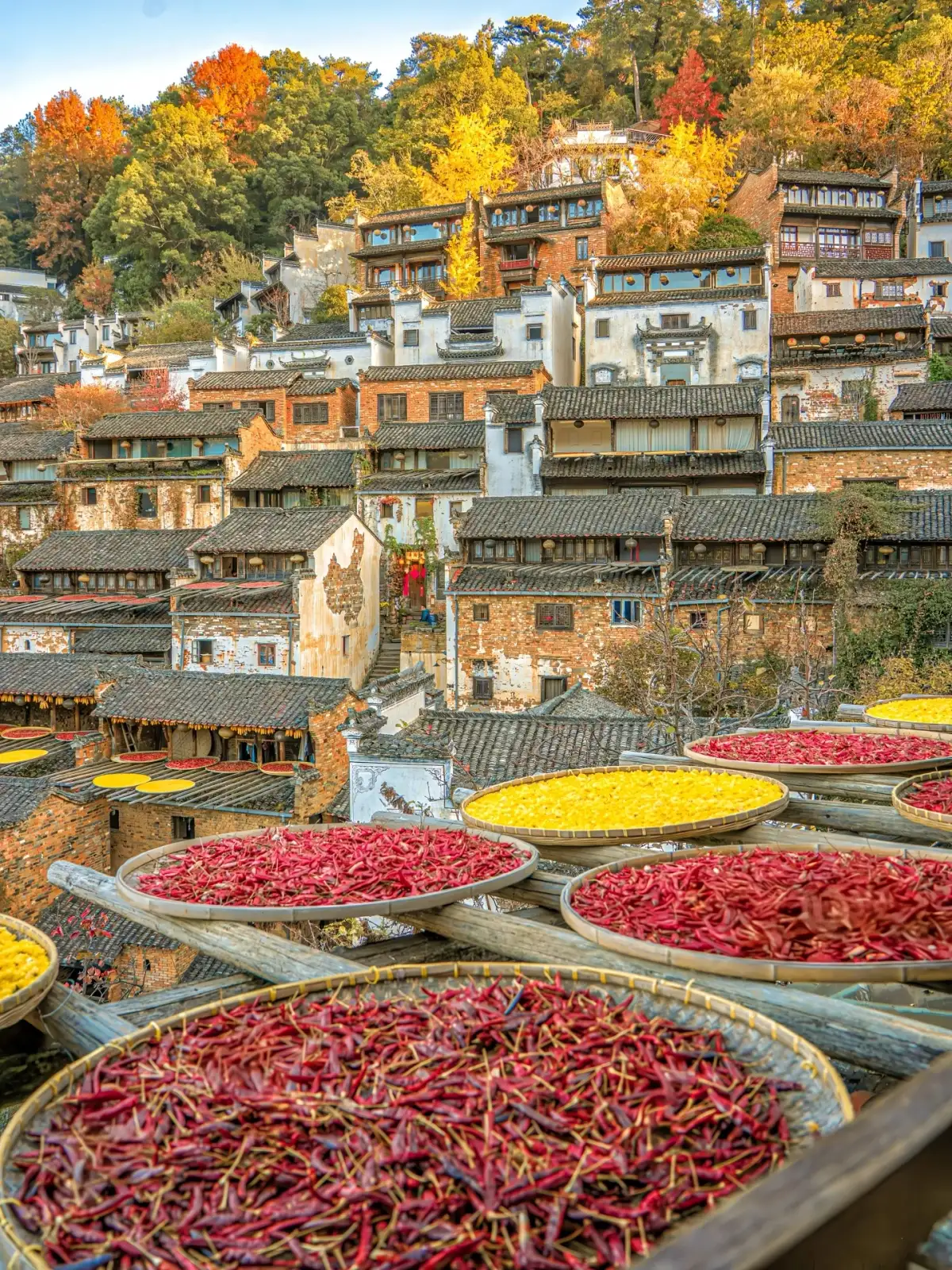
Huangling’s sun-drying trays against the terraced rooftops of the mountain village.
The drying trays are in the foreground, with the village as the backdrop
When viewing the “Autumn Drying” festival, start by observing the interplay between the drying trays and the rooftops from an accessible viewing platform: the circular containers and colorful crops create a striking contrast against the gray tiles and white walls. Then, broaden your perspective slightly to take in the houses and mountain contours beyond the platform. The photograph thus captures both detail and context, rather than being reduced to a mere display of vivid colors.
"Autumn Sun-Drying" displays, as well as the shifting hues of the plants and the ever-changing weather. Visiting in September doesn’t guarantee that the red leaves, persimmons, or any particular crop will be in their prime on that day. Before you go, check recent photos of the actual scenery, and once there, embrace the season as it is. If you’re curious about the purpose of the items being dried and their connection to local life, listen to an official guided tour or ask staff members who are willing to chat—don’t make up stories about the farmers based solely on what you see.
layered rooftops and fruit trees extending beyond the walls
In photographs of Huangling Village, the rooftops do not form a uniform, flat plane but rather interweave with the sloping terrain. The circular shapes of the drying trays meet the long lines of the roof ridges; the colors are vivid up close and gradually blend into the mountains and forests in the distance. This layering helps viewers discern the village’s topography and provides a spatial context for a photograph of the “Autumn Sun-Drying” festival.
the fruit trees and sections of the walls behind the platform—this offers a different perspective: branches extend beyond the eaves, while fruits and leaves form dots of varying density against the sky. It doesn’t require a whole expanse of red leaves to be compelling. When traveling, pay close attention to these smaller-scale details beyond the overall village landscape—observe how plants interact with buildings and how walls bear the marks of time. By capturing a mix of wide-angle shots and close-ups, you can avoid a photo series that consists entirely of images taken from the same crowded viewing platform.
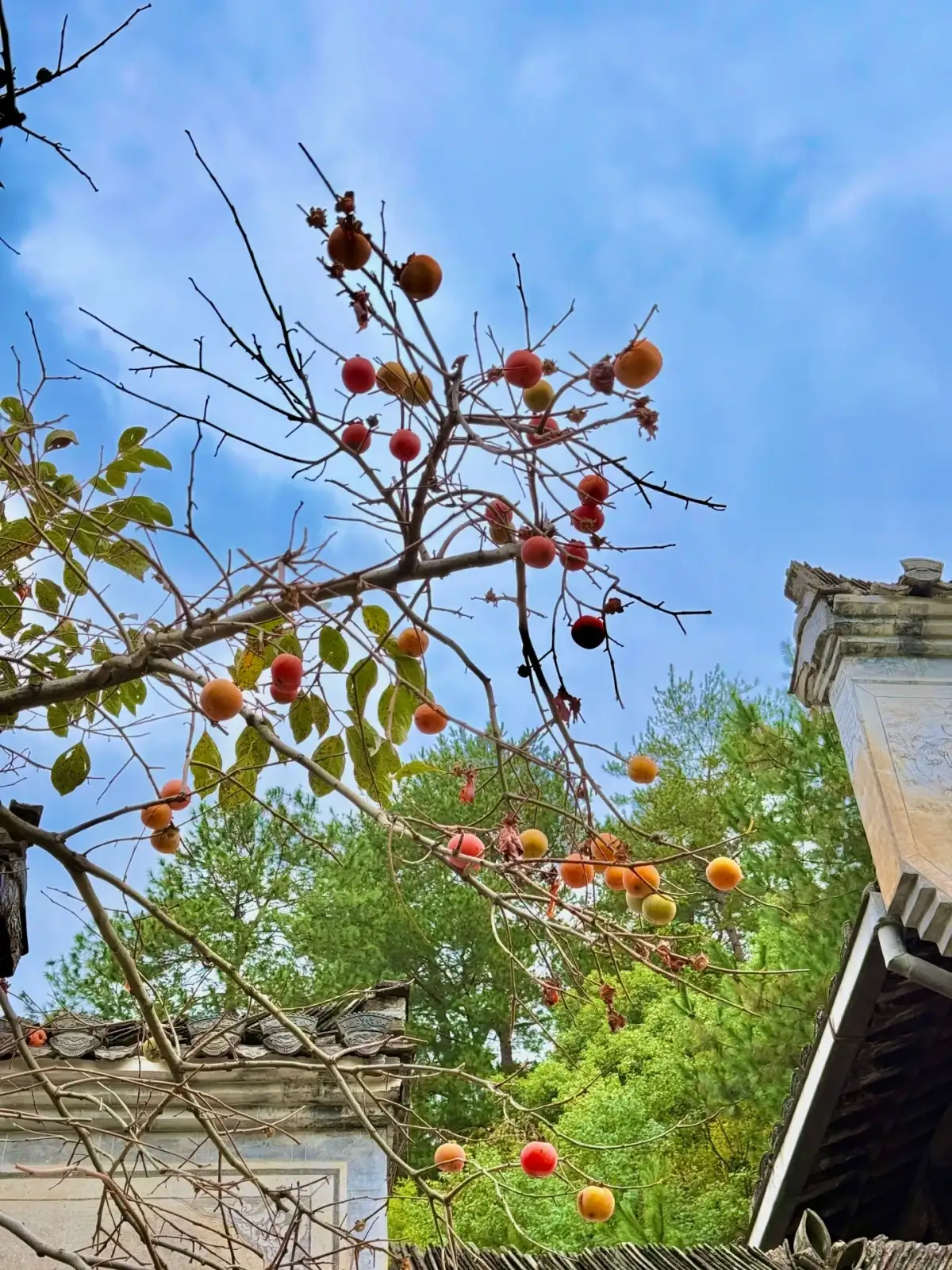
the branches and leaves of the fruit trees along the eaves of Huangling.
Walk through the alleys and pay attention to the scale beneath the eaves
After taking in the distant view, choose an open alleyway to walk closer. The details of doors, windows, walls, and eaves transform the previously uniform rooftops into architecture that tells a story. As you move, be mindful of steps, slopes, and oncoming traffic, and avoid standing in the center of the frame for extended periods, blocking the narrow passageway. When photographing homes and people, always respect the occupants’ personal space; daily life in a tourist area does not mean it’s an exhibit you can enter at will.
To avoid long lines, don’t limit yourself to a single vantage point. Viewing the rooftops from different heights, peering into courtyards through doors and windows where photography is permitted, or capturing wall surfaces and plants are all viable angles. Visitors who wish to minimize walking should check the cable car, shuttle, and actual walking routes in advance; taking the cable car up the mountain does not mean there will be no uphill or downhill sections afterward.
Set aside half a day for the village, and allow for some flexibility in your Jiangxi itinerary
The exact duration of your stay should be determined by your mode of transportation, the day’s visitor traffic, and the pace of your companions. If you enjoy photography, you can minimize other brief stops; if you’re more interested in rural architecture, focus on guided explanations and exploring the alleyways. Agreeing on meal times and departure times in advance can prevent the last-minute realization that your return transportation has cut short the beginning of your tour.
A five-day trip to Jiangxi should also include the mountainous terrain around Mount Sanqing, the urban spaces of Nanchang, and the porcelain culture of Jingdezhen. Huangling doesn’t need to offer every possible experience; it simply needs to leave visitors with a lasting impression of how the hillsides, rooftops, and drying trays are interconnected. Take with you a wide-angle view, an architectural detail, and a concrete impression of the season—this will set your visit to the village apart from the other days of your trip. A truly enriching itinerary isn’t one where every stop is bustling, but one where each stop offers its own unique way of observing.
Related Itineraries and Reference Sources
Jiangxi 5 Days, 4 Nights · View Itinerary
Compiled by the Dongxing Travel Editorial Department based on itinerary materials and publicly available travel notes, for pre-trip reading; accompanying images serve as landscape references from the source notes. The specific itinerary will be confirmed by a consultant based on travel dates and actual conditions.