September 9, 2026 · Travel Diary
When entering a water town, start by understanding the waterways
In this five-day tour of the Jiangnan region, we’ll travel from Hangzhou to West Gate in Wuzhen, then continue on to Nanxun, Xitang, and other destinations. When touring water towns one after another, it’s easy to feel that every place consists of white walls, tiled roofs, and bridges. The key to distinguishing the unique experience of each place is to first observe how a river organizes the space before you: how close the buildings are to the water, which streets and alleys the bridges connect, and where you can turn onto another path while walking.
In these reference notes, some people stayed for two days to observe changes in the water’s color, while others focused on early morning photography. For a five-day itinerary, there’s no need to replicate all of their time allocations. First, choose the experience you value most—whether it’s viewing architecture during the day or waiting until the lights come on—and then plan your arrival and accommodations accordingly. Even with limited time, you can still have a clear focus—there’s no need to try to capture the early morning, midday, dusk, and late night all at once.
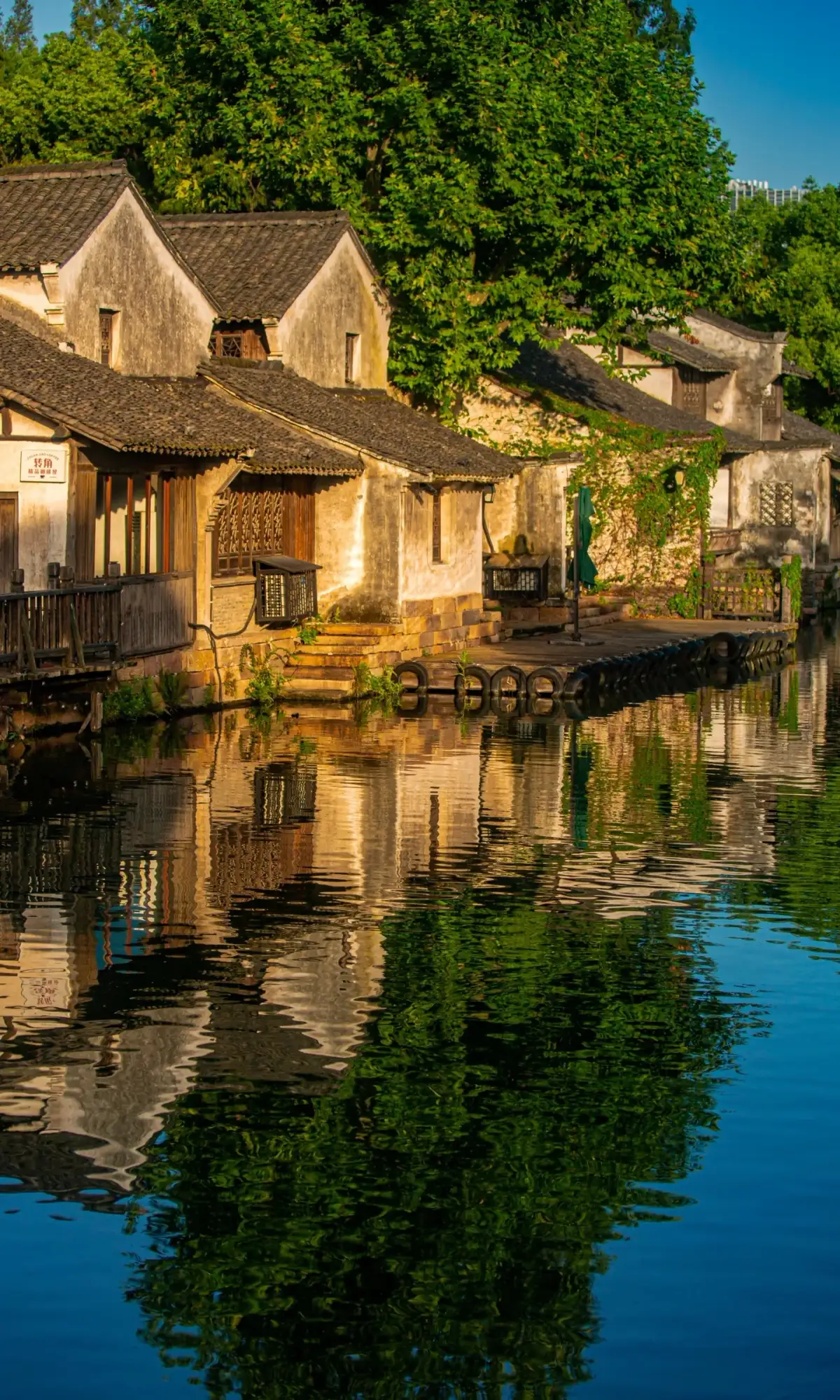
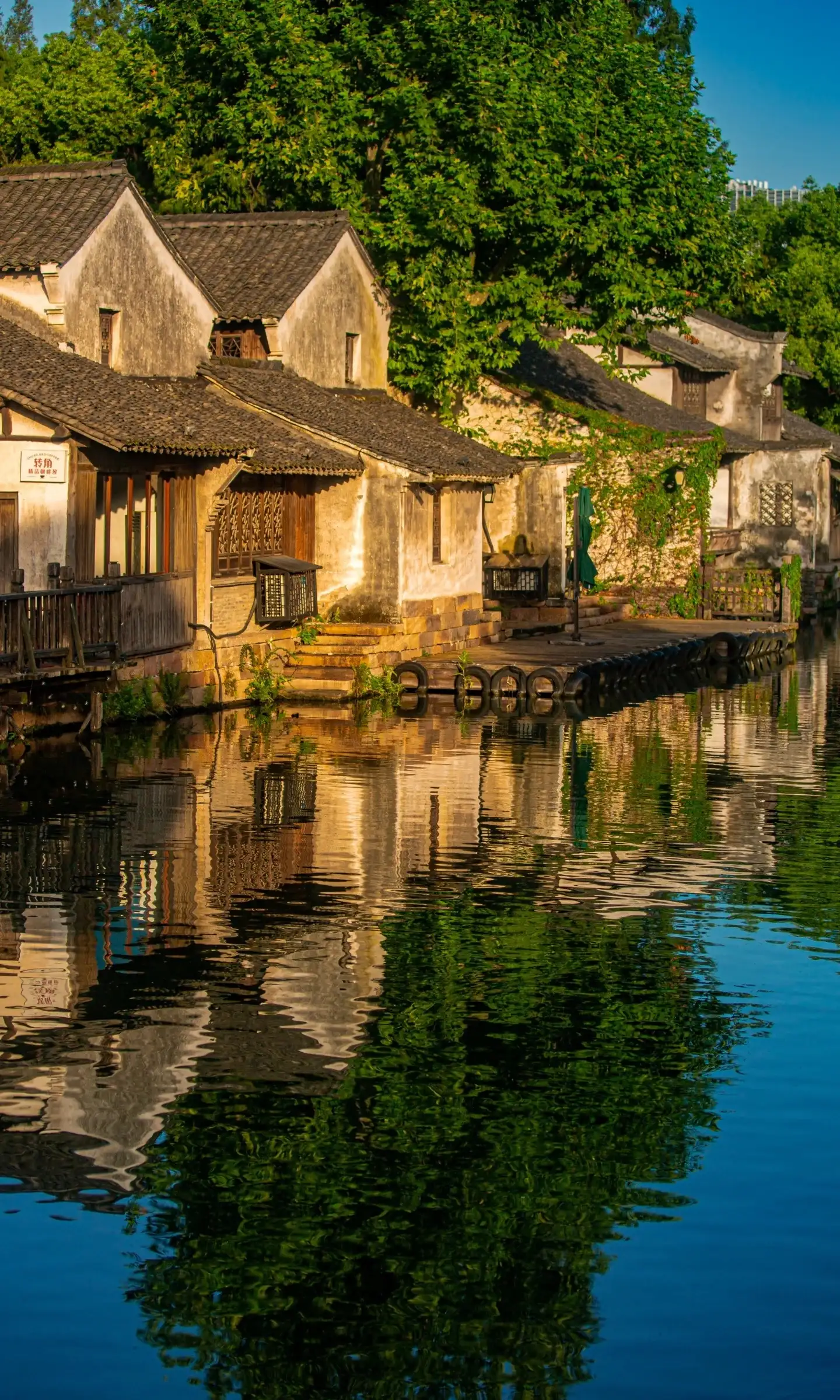
Waterfront buildings in Wuzhen and their reflections on the river.
View the near and far from the bridge; view the facades from the riverbank
The view from the bridge naturally connects foreground and background elements: the bridge railing, the river’s surface, and the eaves of the riverside houses in the foreground, along with another bend in the river further away. However, since the bridge is a thoroughfare, you should only pause briefly to compose your shot—there’s no need for a tripod or for your companions to occupy the narrowest part of the bridge for an extended period. When you walk off the bridge and look back, the proportions of the buildings and the water’s surface change, offering a different perspective on the same scene.
When walking along the river, choose a section with detailed facades to observe doors, windows, wooden structures, and waterside spaces, rather than constantly rushing to the next map marker. The quiet river in the reference photo captures a specific moment; it doesn’t mean the area will necessarily be empty when you visit. If it’s bustling at the time, focus your lens more on the eaves, reflections, and local textures—you can still capture a record that reflects your visit.
A row of eaves—reflected in the water, they take on a different shape
In Wuzhen’s waterside architecture, the eaves and walls have clear boundaries on the shore, yet when reflected in the water, they are broken up by gentle ripples into softer shapes. The tile colors, wooden windows, and plants along the walls in the photo each extend into their reflections. As your eyes shift back and forth between the shore and the water, you’ll discover that the charm of this water town stems not only from its architecture but also from the river’s surface itself.
Another detail to note is the shadows cast by trees. When branches hang over the water, the color of the leaves and the slanting light brighten specific sections of the river, creating a contrast with the tiled roofs in the shadows. Standing at a spot where you’re allowed to linger, wait for a small ripple to pass, and you’ll see the same scene reassemble itself. This kind of observation doesn’t need to be organized as a specialized photography class, but it fits perfectly into a walk through the water town, ensuring that the moments between one bridge and the next are also worth remembering.
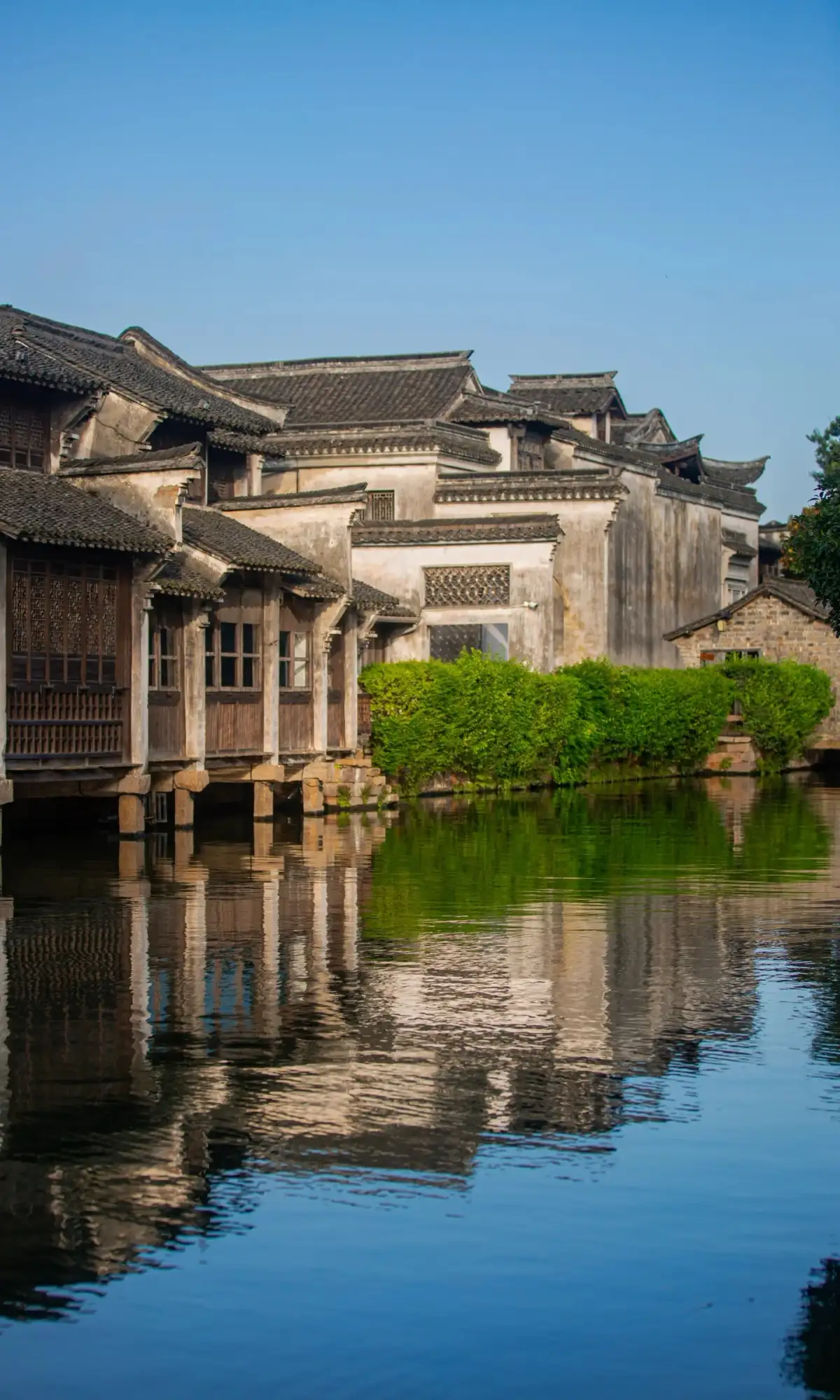
The gray tiles and walls of buildings along the Wuzhen riverbank.
Stay from day into night—start by planning a meal
To witness West Gate transitioning from day to night, there’s no need to wait by the river the entire time. You can complete a section of your walk first, find a suitable spot to sit down as mealtime approaches, and then return to a familiar stretch of the river based on the lighting and on-site conditions. Once you’ve taken care of dining and resting, the night view becomes a complementary experience rather than a final chore to be tackled while hungry and tired.
When viewing the water at night, pay attention to how the building lights and reflections interplay; there’s no need to strive for every shot to be a panoramic view with uniform brightness. On rainy days, pay close attention to the stone slabs underfoot and the bridge surface, and adjust your route based on accessibility. Boat tours, activities, and operating schedules should be verified on-site; do not treat the experiences mentioned in the original post as fixed, included items. If you plan to focus on the boat ride, you should also confirm the boarding and disembarking locations in advance to avoid too much overlap with your walking route.
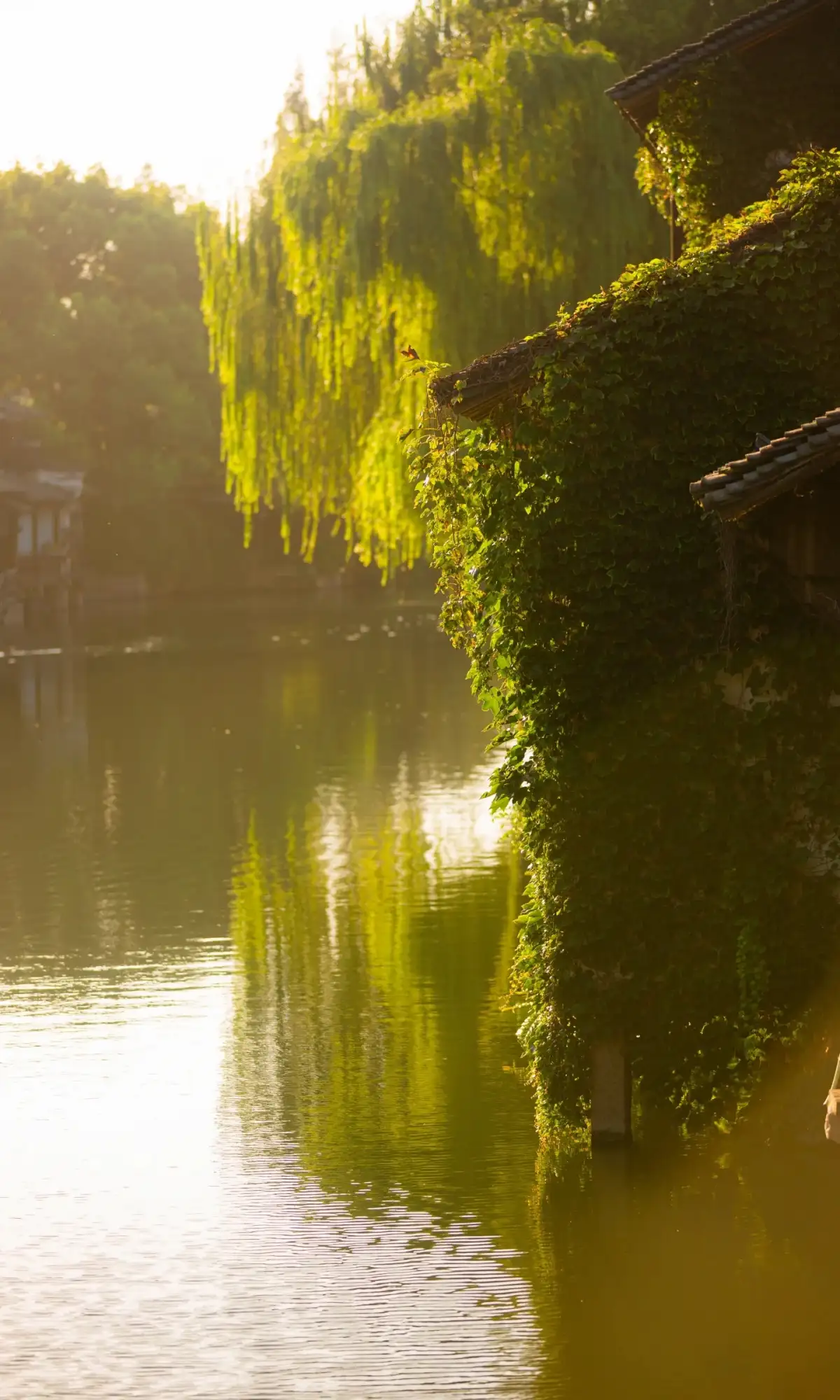
Tree shadows and light on the water in Wuzhen.
Don’t confuse Wuzhen with the next ancient town
If your accommodation is near West Gate, first confirm the actual entrance, luggage transfer procedures, and re-entry conditions—do not assume what your booking includes based on others’ hotel packages. If you need to travel to other locations that same day, clarify the final meeting time to avoid delaying your onward transportation while waiting for the perfect photo spot. Accommodation and ticket details are verified by your travel advisor; this article is intended only as a reference for planning your stay.
Since you’ll be visiting Nanxun and Xitang next, focus on the interplay between the waterways and architecture in Wuzhen—there’s no need to exhaust all the water town’s charm in one go. After the trip, if you can recall the different scenes on either side of a bridge or the transition from light to dark along a stretch of riverbank, that’s already more concrete than a checklist of “how many ancient towns you’ve visited.” The subtleties of Jiangnan often gradually reveal themselves through such repeated observations.
Related Itineraries and Reference Sources
Jiangnan 5 Days, 4 Nights · View Itinerary
Compiled by the Dongxing Travel Editorial Department based on itinerary materials and publicly available travel journals for pre-trip reading; accompanying images serve as landscape references from the source journals. The specific itinerary will be confirmed by a consultant based on travel dates and actual conditions.