September 13, 2026 · Travel Diary
After returning to Lhasa, take another look at this expansive lake
For a 10-day Tibet itinerary, start with Lhasa and Nyingchi, then return to Lhasa before heading to Yamdrok Lake and back to the city. The viewing experience here differs from that at Basum Lake: when gazing from designated viewing points, the lake’s bays, mountain ridges, and the distant sky create a more expansive sense of depth. To plan this stop effectively, you first need to understand the transportation and stopping points, rather than deciding in advance exactly which shade of blue you must capture.
These serve as observational materials; one should not assume that all photos were taken from the same vantage point, nor conclude that a standard itinerary can reach each location in turn. Before booking a customized tour, you can share your preferred vantage points with an advisor, who will verify the actual route, accessible areas, and required time.
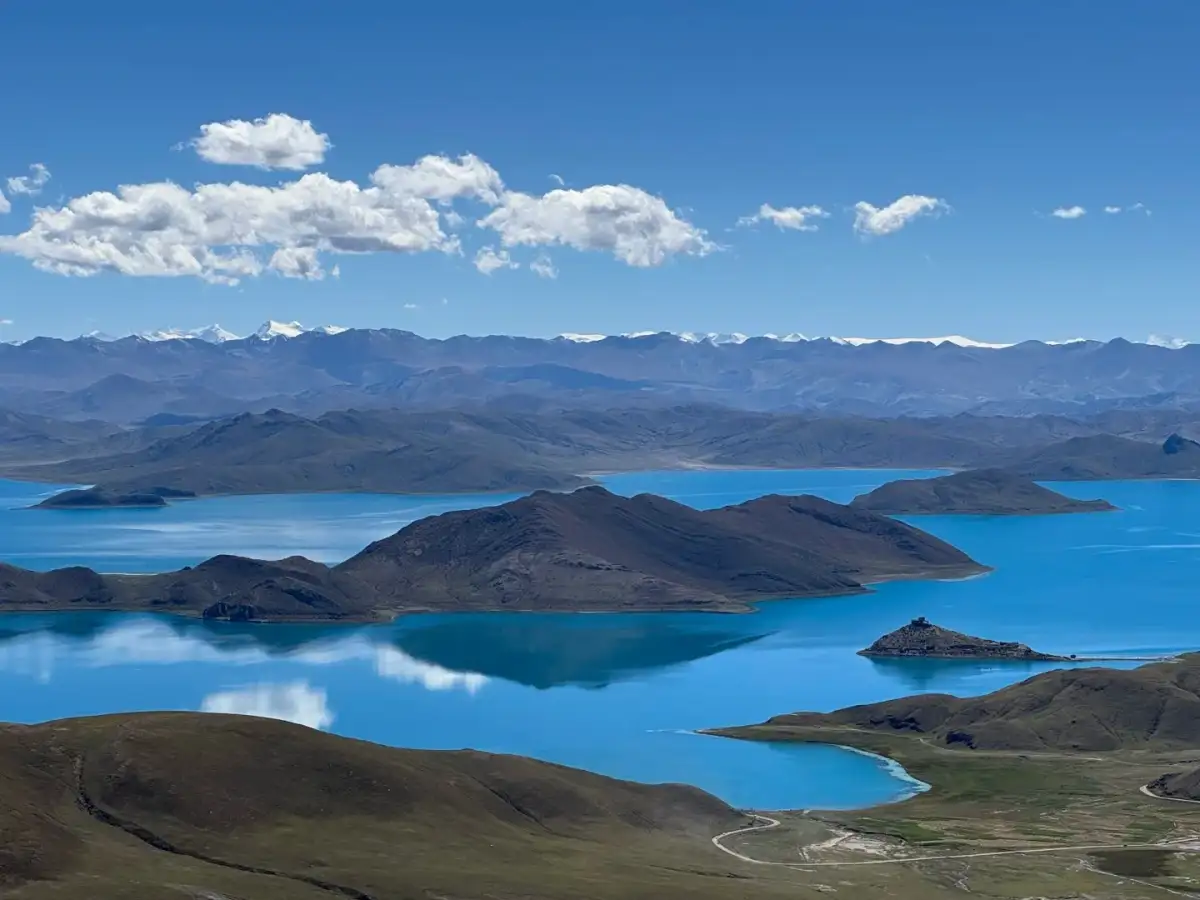
A bay of Yamdrok Lake with distant ridges.
The lake’s hues shift, but the interplay between the mountains and the water is even more captivating.
Photos of Yamdrok Lake often attract attention with their vivid colors. When viewing the lake in person, start by discerning the curves of the shoreline, then observe how the distance of the water’s surface, the shadows of the clouds, and the shadows cast by the mountains alter the light and dark tones. Different weather conditions, viewing angles, and photographic techniques can all result in variations in the image, so it is not advisable to use the colors in online photos as a reference for the actual lake’s appearance.
If there’s a suitable spot to pull over, take one wide-angle shot of the surroundings and one close-up of a specific cove to help you remember how the water nestles within the mountains. There’s no need to constantly get out of the car to chase similar angles. A viewing spot where you can stay for a sufficient amount of time is more suitable for this journey than many hurried photo stops. Also, do not assume that the entire shoreline is open to visitors just because other tourists are approaching the lake.
In the distance lies a bay; in the foreground, ripples on the water
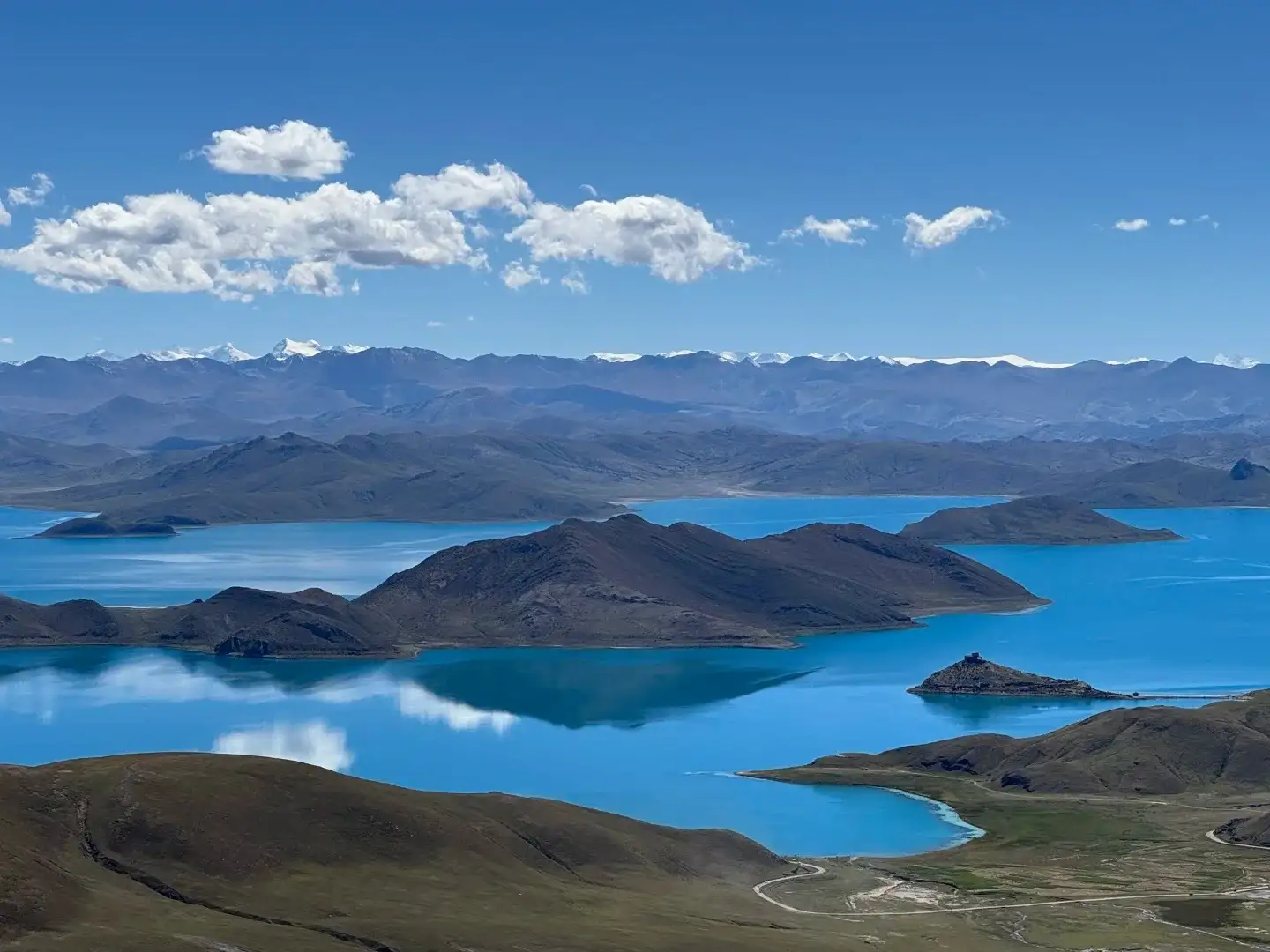
In a wide-angle view of Yamdrok Lake, the land appears as a series of shapes extending continuously into the water, while the blue of the water unfolds along the horizon. Distant ridges rise in layers, creating a contrast in scale between the snow-capped peaks and the gentle slopes near the shore. If you were to crop the photo down to just a patch of blue, you would lose the distinctive way the lake and mountains interlock.
close-up shots no longer emphasize the full panorama, but instead let the intricate ripples on the water take center stage. Here, the light and shadow of the clouds in the sky, the distant hillsides, and the water’s surface gradually blend together. These two perspectives—one capturing the broader scene and the other focusing on the details—can help structure your visit: the wide shot shows where you are, while the close-up captures what to look for. Not every trip is suitable for a walk to the lakeshore; whether you can reach it depends on your actual plans. The photos offer a way of observing, not a mandatory route to follow.
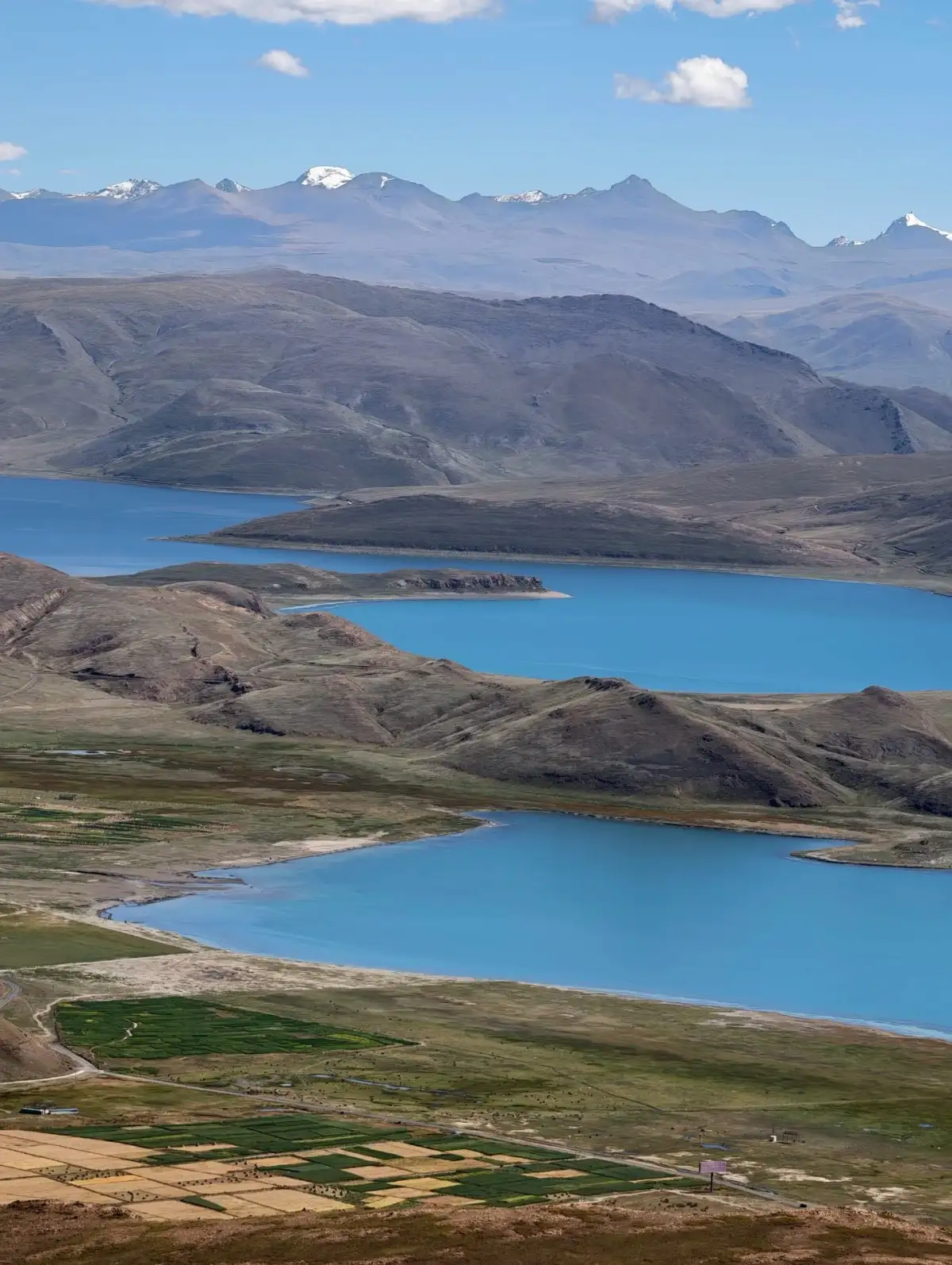
The winding shoreline of Yamdrok Lake.
The road is not deserted, but you cannot stop arbitrarily
The road to the lake area is also part of the journey. The changing terrain outside the window, along with distant and nearby ridges and settlements, offers a continuous visual experience. If you wish to stop to take photos, communicate with your driver in advance and arrange to stop at designated locations. Curves, the side of the road, or unsuitable shoulders should not be used as impromptu photo spots simply because they offer a good view.
The pastures and villages along the lake’s perimeter also have their own daily rhythms. When observing these scenes, maintain a respectful distance; do not assume that entering pastures, approaching livestock, or photographing residents is an accepted practice. For on-site activities that require payment, be sure to understand the details and conditions beforehand before making your own decision; do not assume that an activity is included in the itinerary simply because it appears in someone else’s photos.
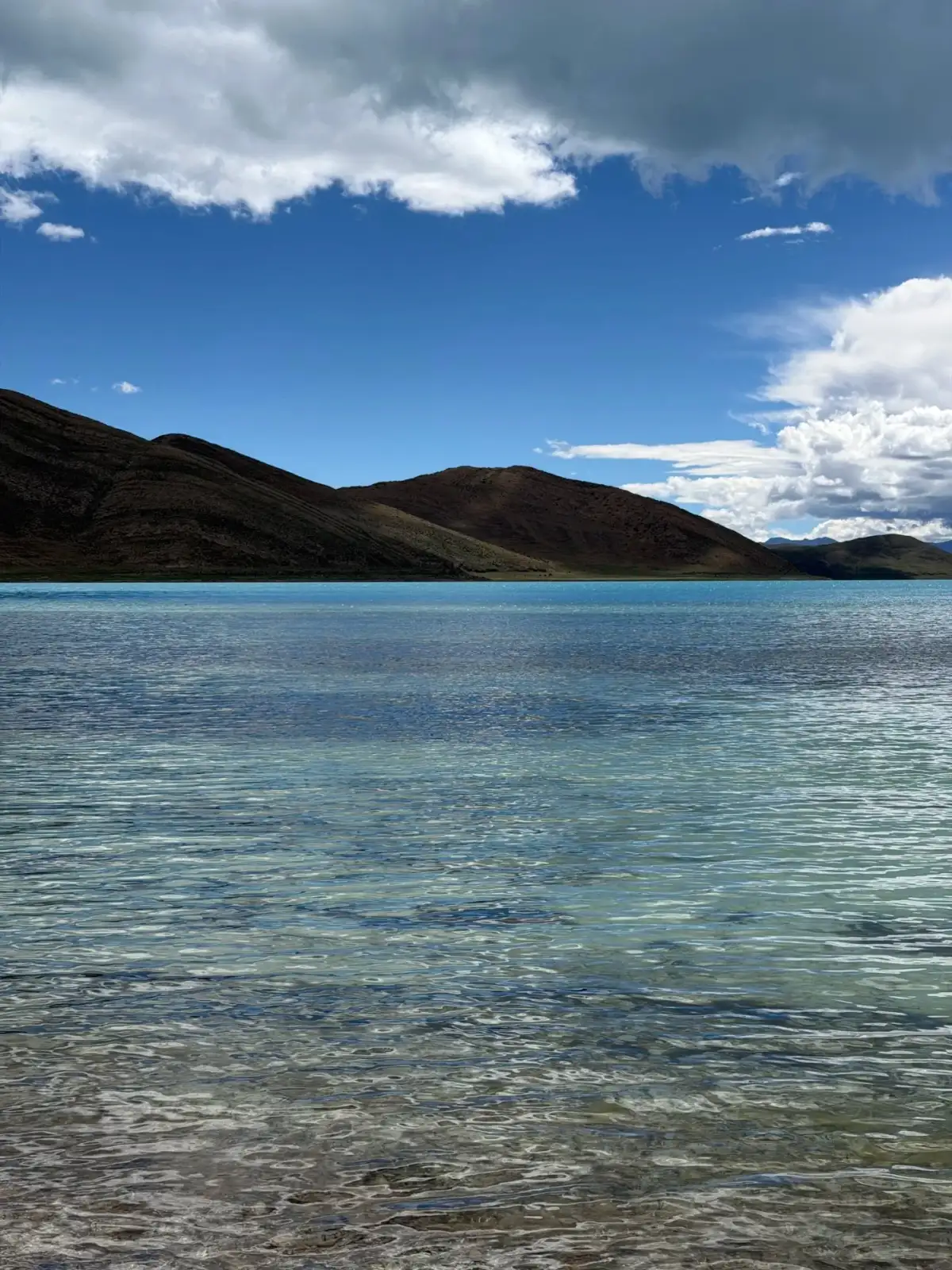
The waters near the shore of Yamdrok Lake and distant mountains.
Plan your day to allow for flexibility and a smooth return to the city.
This itinerary remains in a high-altitude environment; you should consult a qualified professional regarding your personal suitability and physical condition before traveling, as travel articles cannot provide guarantees. Actual departure times and duration of stays will be arranged by a guide based on conditions on the day; if continuing is not advisable, you should communicate promptly and make adjustments—do not push yourself just to take photos by the lake. In the event of changes in weather, road conditions, or management regulations, flexibility to cancel or modify the itinerary should be maintained.
For itineraries involving international travelers, travel advisors must verify and complete all necessary documentation and travel procedures in advance. This article does not present the route described in a self-driving travelogue as a plan that all tourists can freely adopt. By setting aside time for rest and reflection after returning to Lhasa, the journey to Yamdrok Lake can become a clear and leisurely moment of contemplation within a ten-day trip: remember the shape of the lake’s bays as they stretch between the mountains, and remember how you stopped at just the right spots.
Related Itineraries and Reference Sources
Tibet: 10 Days, 9 Nights · View Itinerary
Compiled by the Dongxing Travel Editorial Department based on itinerary materials and publicly available travel notes, for pre-trip reading; accompanying images serve as landscape references from the source notes. The specific itinerary will be confirmed by a travel consultant based on the travel dates and actual conditions.