East Travel Editorial Department · Travel Diaries and Pre-Trip Reading
Setting out from Kuche to see the grottoes in Baicheng
The Kizil Caves often feature in itineraries starting from Kuche, but they are located within Baicheng County; arriving in downtown Kuche does not mean you’ve reached the scenic area. Before setting out, confirm round-trip transportation, reservations, and meeting times, then decide whether to combine this visit with other activities on the same day. The Kizil Caves, the Kizilgaha Beacon Tower, and other sites with the same or similar names each have distinct locations and purposes; it is important to distinguish between them and use the correct name when navigating. If you’re focusing on the grottoes for the day, let the drive serve as an opportunity to explore the oasis and mountainous landscape, rather than rushing from one “check-in spot” to the next. Along the way, you’ll see a mix of trees, farmland, and bare mountains; once you arrive and view the cliff face where the caves are located, it will be easier to understand how the art is embedded in its specific geographical context. Plan your journey in advance so that you can dedicate the limited time inside the caves to viewing the murals and listening to the guided tour.
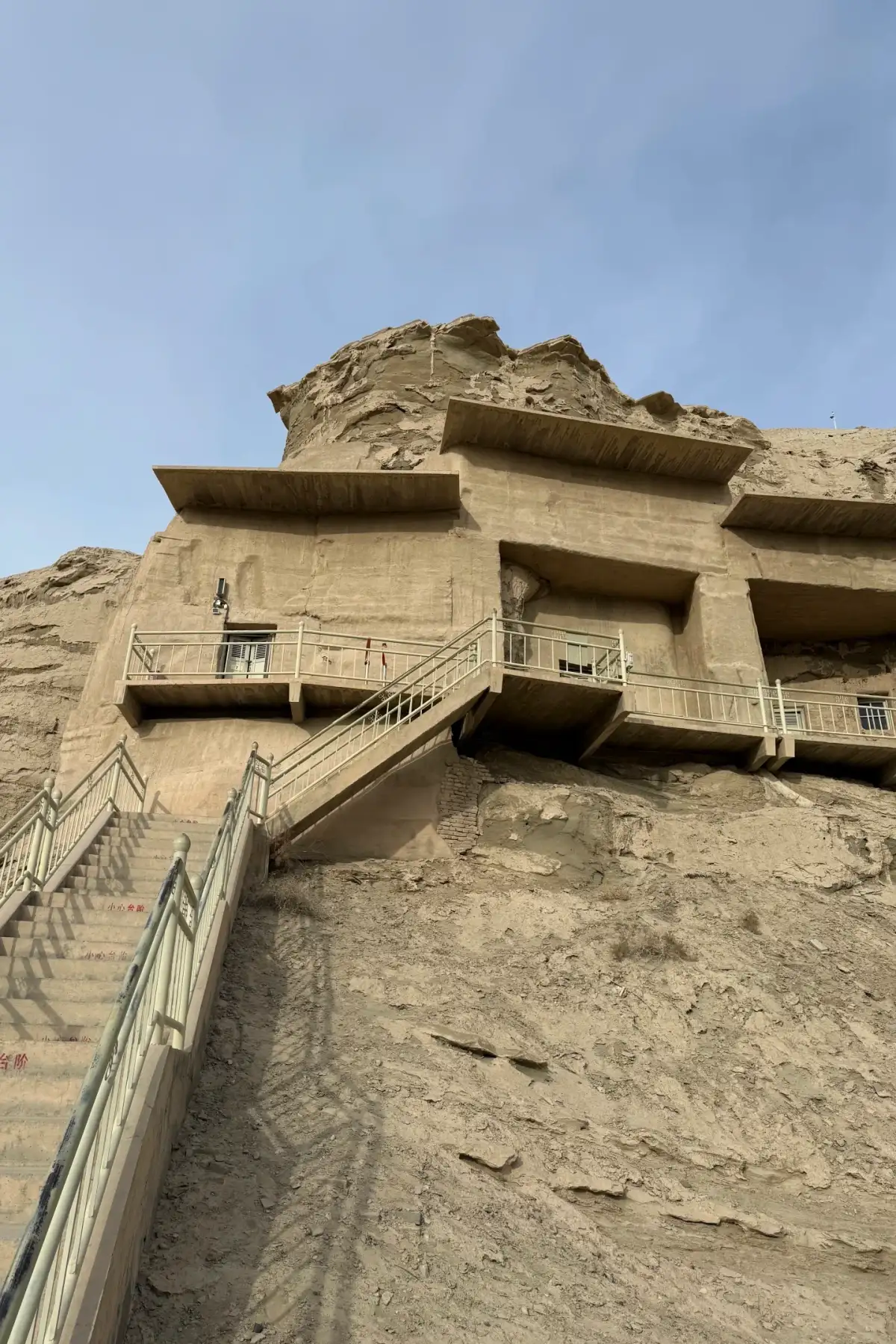
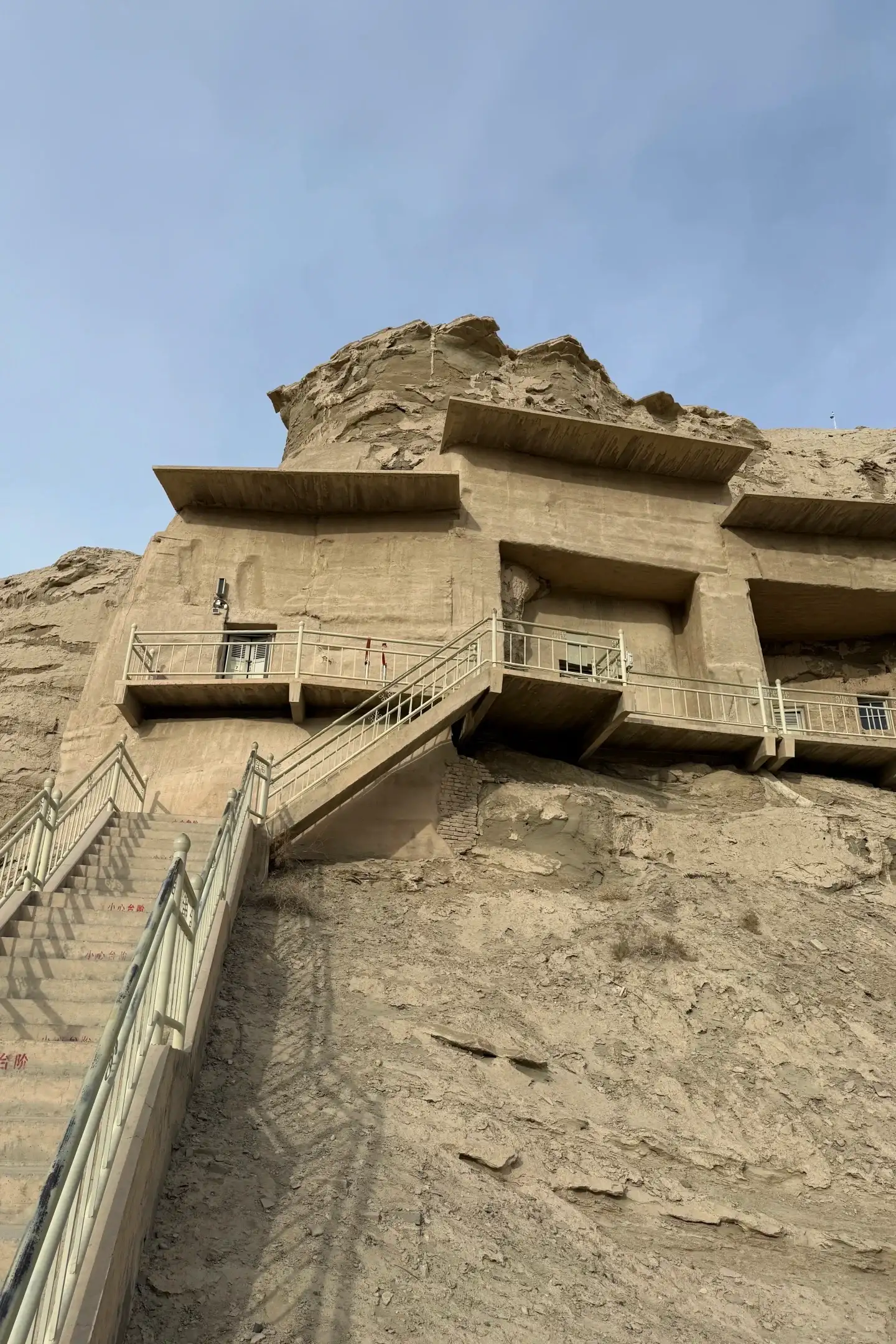
Entrances to the Kizil Caves, conservation facilities, and walkways.
Upon arriving in the valley, take a moment to admire the rock faces and trees
The surroundings of the Kizil Caves are well worth taking a moment to appreciate before entering. The caves and walkways on the cliff face, the trees and buildings at the foot of the mountain, and the exposed rock faces in the distance all come together to form the actual landscape. At the officially designated viewing area, first take in the distribution of the cave entrances and how the rock face changes from the base to the top, then connect the cave complex with the green spaces of the river valley. Do not assume that every cave will look the same: the rock formations, colors, and cave layouts here form a different relationship compared to those at Maijishan or Dunhuang. Viewing the site from a distance helps one grasp the overall picture, but it does not reveal the full content of the murals inside the caves; cave entrances that appear similar from the outside may each contain distinct interior spaces and murals. Before entering, read a brief official introduction and ask how the day’s tour is organized; the mountain before you will then transform from a scenic view into a cultural site you can truly understand.
For reservations and which caves are open, ask about the schedule for that day first
The caves’ access policies involve cultural heritage protection and visitor management; you cannot plan your itinerary based solely on the cave numbers, quantities, or specific cave combinations that others have previously visited. Before departing, confirm through official channels whether reservations are required, which identification documents are accepted, the meeting time, and the current open routes. International visitors, in particular, must verify their passport information and relevant visit procedures in advance. If you wish to explore more thoroughly, inquire separately about available tour languages and additional visit arrangements; do not assume that general admission grants access to all caves. Once inside, follow the staff’s instructions; do not attempt to locate closed cave entrances on your own, and do not rush the entire group to catch transportation to the next site. Since the time you can spend inside the grottoes is limited, it helps to think in advance about the questions that interest you most. For example, if you wish to understand the grotto’s architecture, the themes of the murals, or the state of preservation, let the guide know—this will allow the tour to focus more clearly on these topics within the official itinerary.
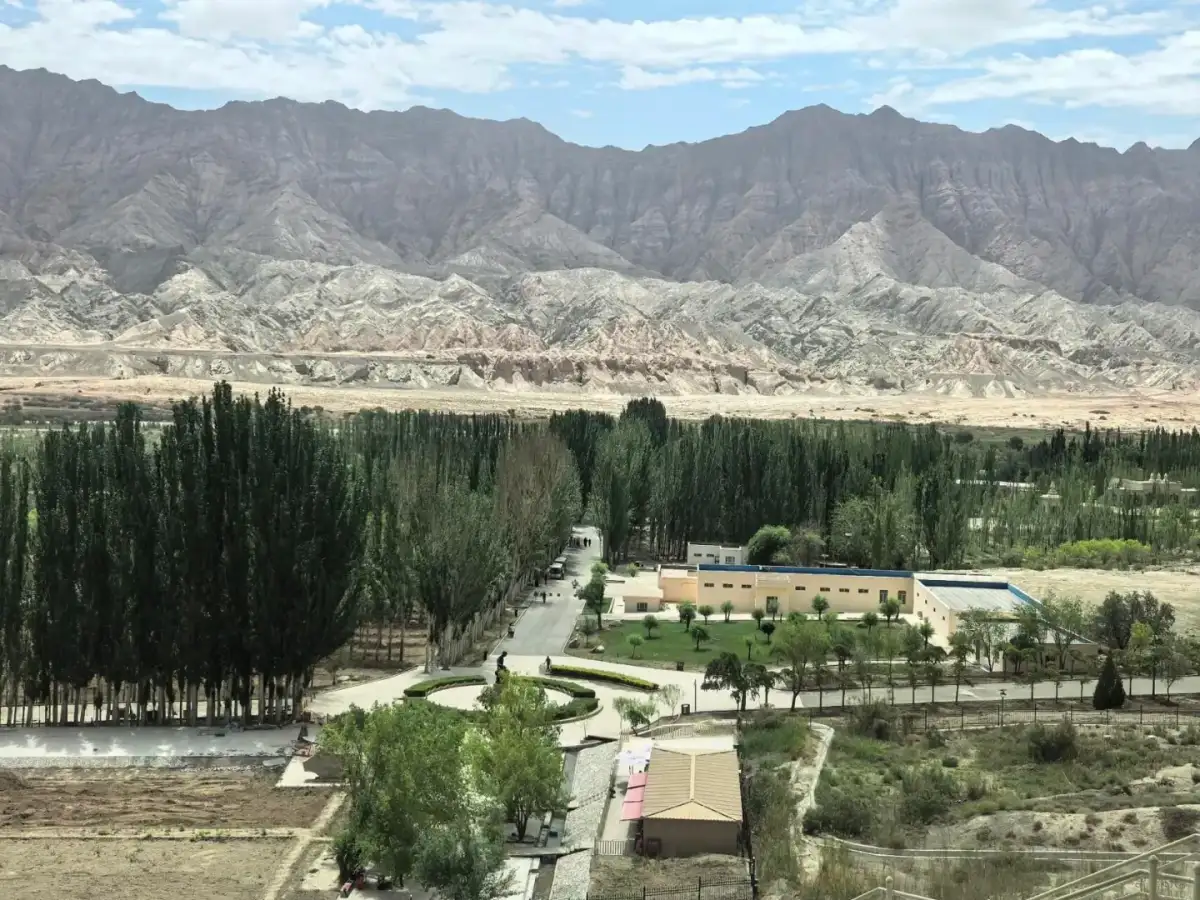
The green space at the foot of the Kizil Caves and the surrounding mountains of the river valley.
Inside the caves, familiarize yourself with the space before viewing the murals
Upon entering the caves, the first step is to get a sense of the nature of the space rather than immediately searching for the most vivid colors. The cave structure, viewing direction, and distribution of murals all contribute to the religious expression; the function of specific areas requires professional guidance. If your itinerary for the day includes caves of different types, compare how their entrances, interior spaces, and figurative imagery are organized; there’s no need to treat all caves as if they were ordinary rooms. For those encountering Buddhist caves for the first time, it’s also helpful to first grasp a clear relationship: where a particular scene is located and how it connects to adjacent images. In confined spaces, be especially mindful of leaving room for others to stand and follow the guide’s direction. It takes time to adjust to viewing in dimly lit areas; do not use bright lights or touch the walls to make out the details. Remain in designated viewing areas and allow the guide’s explanation to gradually reveal the images—only then will they transform from blurry patches of color into organized compositions.
A section of murals—choose a theme to explore
The Kizil murals feature a rich variety of themes and artistic expressions; on your first visit, there’s no need to rush to memorize every story. Within the limits of the guided tour, you can choose a single thread to follow: the characters’ movements, the lines of their clothing, or how the compositional elements are repeated and organized. First, observe how a figure is outlined by lines; then examine its relationship to the surrounding background, and the colors will begin to contribute to the narrative. For the specific identities of figures and their stories, rely on the explanations provided for each cave; do not assume a familiar legend based on a single gesture. If the guide mentions cultural exchanges between Kucha and the Silk Road, use the clothing, composition, and artistic style before you as a starting point for further exploration—while keeping in mind that cultural exchange does not mean every detail can be simply attributed to a single source. A scene observed with careful attention is often more powerful than memorizing a long list of names. Reflecting on questions after leaving the cave allows your brief observation to gradually evolve into your own understanding.
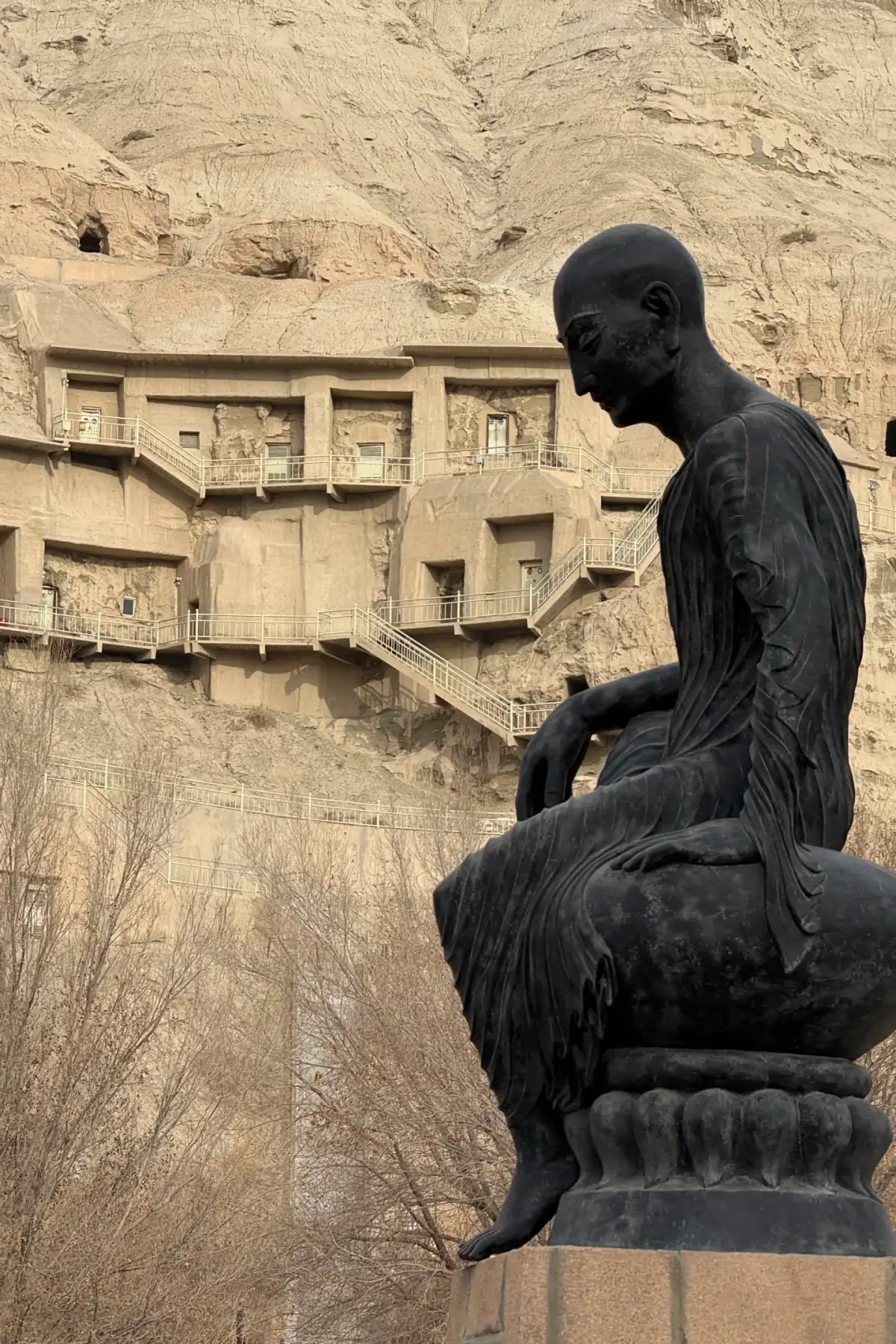
The commemorative statue in front of the Kizil Caves and the cliff face with the caves.
Fragmentation and Dispersal: Understanding the Reasons Behind Each
The missing sections in the grottoes may be regrettable, but observers must distinguish between different phenomena. Changes in the rock formation, material deterioration, historical damage, and the dispersal of murals do not always stem from the same cause; one should not immediately assume the formation process simply because a blank space is visible. Xinjiang’s culture and tourism authorities have previously detailed researchers’ investigations into Kizil murals held overseas; this information helps visitors understand why certain parts of the site need to be reconstructed through images, documents, and research. If conservation or restoration displays are present on-site, visitors should determine whether they represent the original, a replica, or a digital interpretation, and then assess their relationship to the cave structures themselves. The fragments deserve attention, and the surviving lines and colors also require careful examination. The purpose of a visit is not to casually imagine and fill in the missing content, but to recognize what can be seen today, identify the basis for research, and understand how conservation efforts ensure the continued preservation of the remaining parts.
Leave your camera in areas where photography is permitted
Photography of cultural relics inside the Kizil Caves is strictly regulated. Visitors must follow the daily guidelines by securing their cameras and cell phones, refraining from unauthorized photography, touching the murals, or climbing the rock face. Before entering, carefully review the requirements for personal belongings and storage; use only lighting methods permitted by staff, and minimize rummaging through your belongings on the spot. If you wish to take photos, you may do so on the external paths or at public viewing areas that are officially open and designated for photography; do not assume you have permission simply because photos taken inside the caves have appeared online. Statues and exhibits within the courtyard should also be interpreted according to on-site signage; do not mistake later-added commemorative figures for original ancient artifacts. Even without photography inside the caves, you can still preserve your memories through the cave number, the contextual information provided during the guided tour, or observations jotted down after your visit. This approach also allows you to spend more of your limited time directly observing the site, rather than searching for clear images through a screen.
Back at the foot of the mountain, give the river valley and the season a little time
After finishing the cave tour, you can rest in the open area at the foot of the mountain and observe the interplay between the trees, paths, and rock faces. In summer, the foliage makes the green areas more prominent; after the leaves fall, you can clearly see the gaps between the branches, buildings, and the mountains—both seasons offer their own unique perspectives. The season also affects transportation and your experience there, so be sure to check the weather forecast, road conditions, and the scenic area’s schedule before setting out. When temperatures are high, keep outdoor walks brief; when it’s cold or windy, choose a suitable spot to rest—don’t stand in an uncomfortable place for too long just to capture a panoramic photo. If the exhibits at the base of the mountain or related museums are open, take the time to read the explanations and review the reference materials; if they are closed that day, set aside your questions for further reading later—do not assume that all ancillary sites are included in the standard itinerary. The art inside the caves and the surroundings at the base require different paces; set aside some quiet time to allow the dense information you’ve just absorbed to slowly sink in.
After returning to Kuche, let the history of Kucha become a thread for your exploration
On the return trip to Kuche, you can choose a cultural exhibition confirmed to be open to continue learning about the Kucha Kingdom, or simply reflect on what you heard in the caves after dinner. If you plan to visit the Subashi Buddhist Temple ruins or the Kizilgaha Beacon Tower the next day, first check transportation options and opening hours, then compare the different purposes of each site: cave art, temple ruins, and defensive transportation hubs. Do not treat them as repetitive attractions simply because they are part of the same cultural route. A single visit to Kizil may not explain the entire history of Kucha, but it can raise several specific questions—such as how the caves accommodate imagery, how the murals tell stories, and why the mountains and valleys became part of the local environment. Carrying these questions forward, Kuche becomes more than just a departure point for a chartered car, and the grottoes are no longer merely a cluster of cave entrances in the distance. Art, geography, and research materials gradually interconnect during the journey, leaving behind insights that invite further exploration.
Further Reading and Reference Sources
Xinjiang · Destination Overview
Compiled and organized by the Dongxing Travel Editorial Department based on publicly available travel notes and listed information. Intended for pre-trip reading; this is not a personal travel account. Please verify opening hours, transportation, reservations, and service arrangements according to your actual travel dates.
People’s Government of the Xinjiang Uygur Autonomous Region: Kizil Thousand Buddha Caves
Xinjiang Department of Culture and Tourism: Preserving the Beauty of the Kizil Caves
Making a focused choice within organised access
A Kizil Caves visit follows the formally organised content of the day; the number of caves entered need not define success. Choose composition, figure relationships or cave shape as a Kizil mural observation subject and tell the interpreter your interest beforehand. Use reliable explanation for names and dates rather than inventing stories from similar imagery. If photography is unavailable, write questions after leaving.
Reading the valley and missing material together
A Kucha cultural route can begin with the cliff and river valley before comparing surviving lines and colours. Distinguish losses, replicas and digital explanation instead of assigning all blanks one cause. Ask the receiving team to confirm access and document arrangements in advance, leaving proper travel time back to Kucha. Caves under conservation should not be treated as freely accessible indoor attractions.
Planning references
Planning reference: Kizil Caves visit 1
Planning reference: Kizil Caves visit 2