Dongxing Travel Editorial Department · Travel Diaries and Pre-Trip Reading
Defining the City’s Direction with a Single Bridge
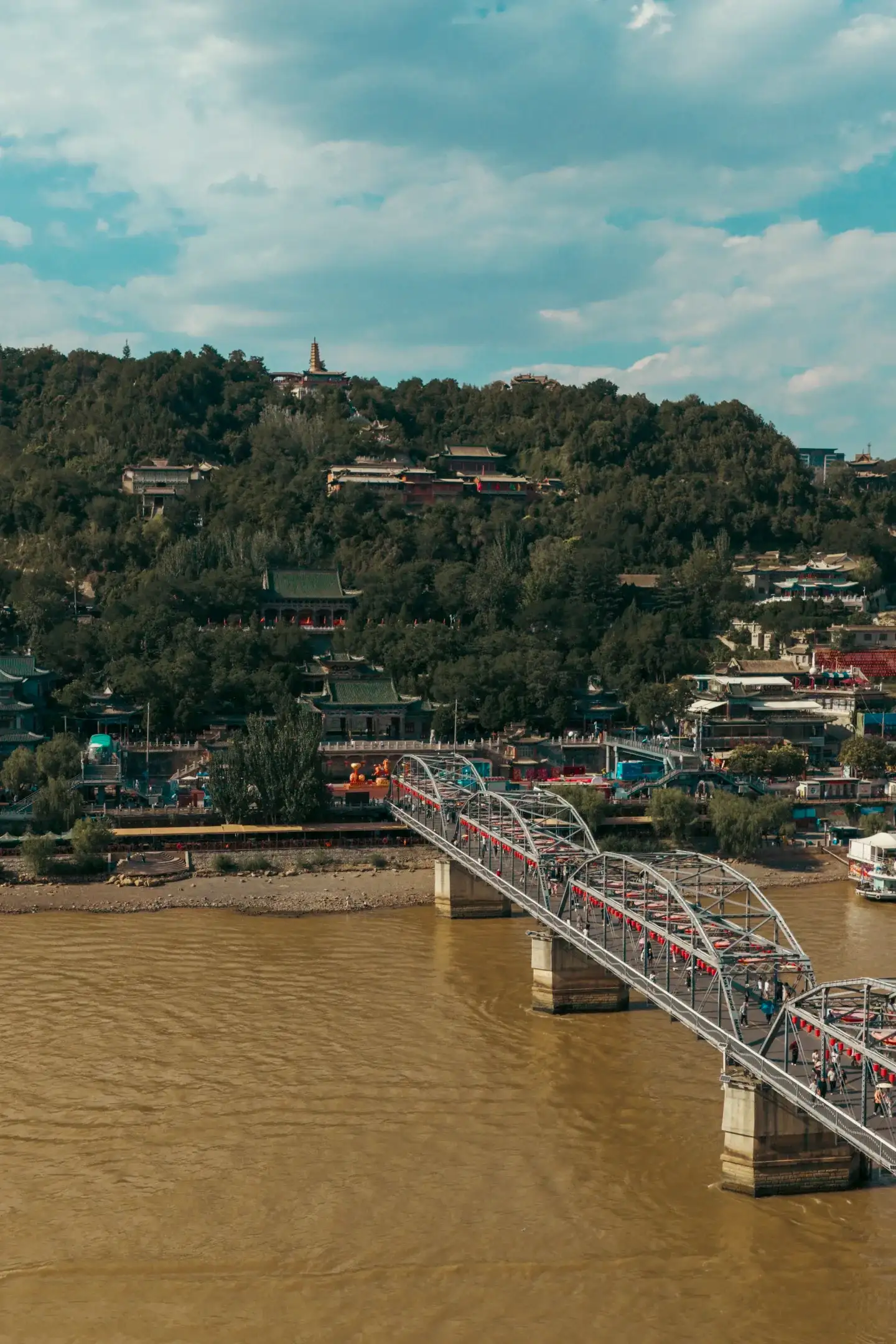
The Yellow River banks in Lanzhou are best explored starting from Zhongshan Bridge. Located at the foot of White Pagoda Hill, the bridge connects the pedestrian paths on both banks and provides first-time visitors with a clear sense of orientation: behind the south bank lie the city’s neighborhoods, while the buildings on the north bank’s hillside rise in tiers, with the river flowing between them. Before reaching the bridge, pause for a moment by the riverbank. Watch how the water flows past the bridge piers, listen to the blend of roadside traffic and the sound of the water, and then decide whether to cross the bridge first or walk along the south bank. Here, the Yellow River is more than just a geographical name on a map—it is a river with its own width, color, and flow. Your day’s itinerary can be simple: use the two ends of the iron bridge as your center and explore just one side for a while; there’s no need to rush through every stop along the Yellow River Scenic Route. First, understand the relationship between this stretch of the river and the city; only then will the waterwheels, hillsides, teahouses, and alleys that follow come together as interconnected places.
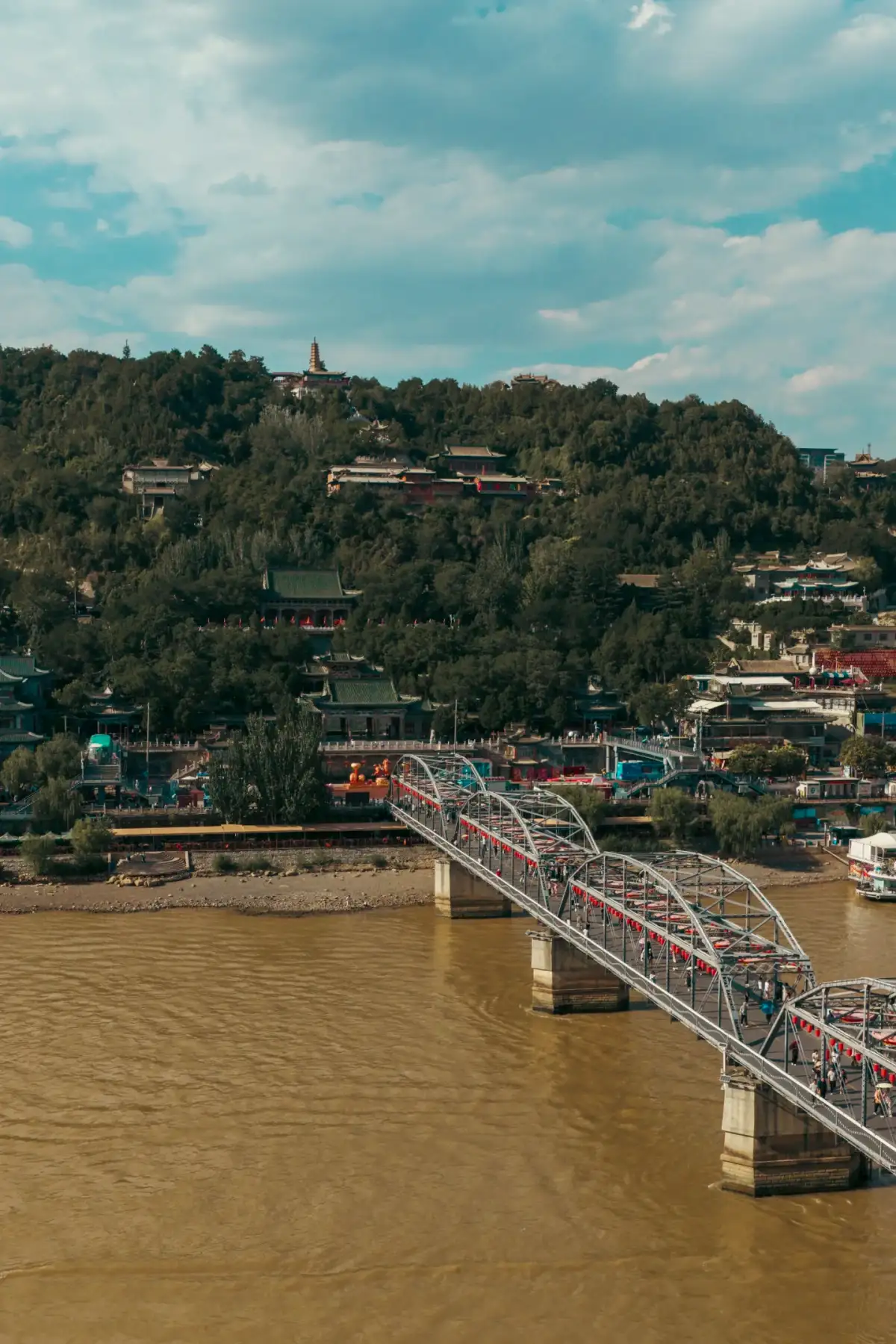
Zhongshan Bridge spans the Yellow River, with the buildings on the northern bank of Baita Mountain unfolding along the slope.
Crossing the bridge, pay attention to the changes beneath your feet and above your head
As you walk onto Zhongshan Bridge, the steel components transform from thin lines in the distance into an interwoven structure overhead and on either side. The triangular supports, the repeating crossbeams, and the spacing between the piers give this bridge a sense of order distinct from the ancient architecture along the riverbank. As you walk, you can compare the texture of the river water beneath different bridge spans; as the angle of the sunlight changes, the same river shifts from a deep brown to a reflective pale yellow. Tourists often stop on the bridge to take photos, while others are simply passing through; when you stop to look, be sure to leave space for people coming and going. To take in the entire bridge, you don’t necessarily have to raise your camera from the center of the bridge; looking back from the roadside where stopping is permitted actually makes it easier to frame the bridge, the mountains, and the water together. You can learn about its history from local annals, but what’s immediately apparent on site is how the steel bridge spans the river and how this pedestrian passageway connects two distinct urban landscapes.
Baitashan: Decide where to climb before setting off
Once you reach the north bank, White Pagoda Hill offers a different kind of journey—one that invites you to look upward. If you have the stamina, you can follow the open trail up the hill to a spot where you can pause and look back at the Yellow River and the city; if you just want a leisurely stroll, you can still see the buildings unfolding along the slopes from the foot of the hill and the riverbank. Don’t treat the mountaintop as a destination that every companion must reach—there are still plenty of gentle paths worth exploring in Lanzhou. Before heading up the mountain, check the currently open routes and the return direction; steps, forks in the path, and different entrances and exits can alter the actual distance. As you ascend, nearby trees and rooftops alternate with distant high-rises, and the Yellow River transforms from a body of water right before your eyes into a ribbon-like space cutting through the city. When you reach a spot where you can sit down, take a moment to look around instead of immediately continuing your climb to higher ground. The charm of the city’s hills lies in the fact that each elevation offers its own way of life and unique vantage point.
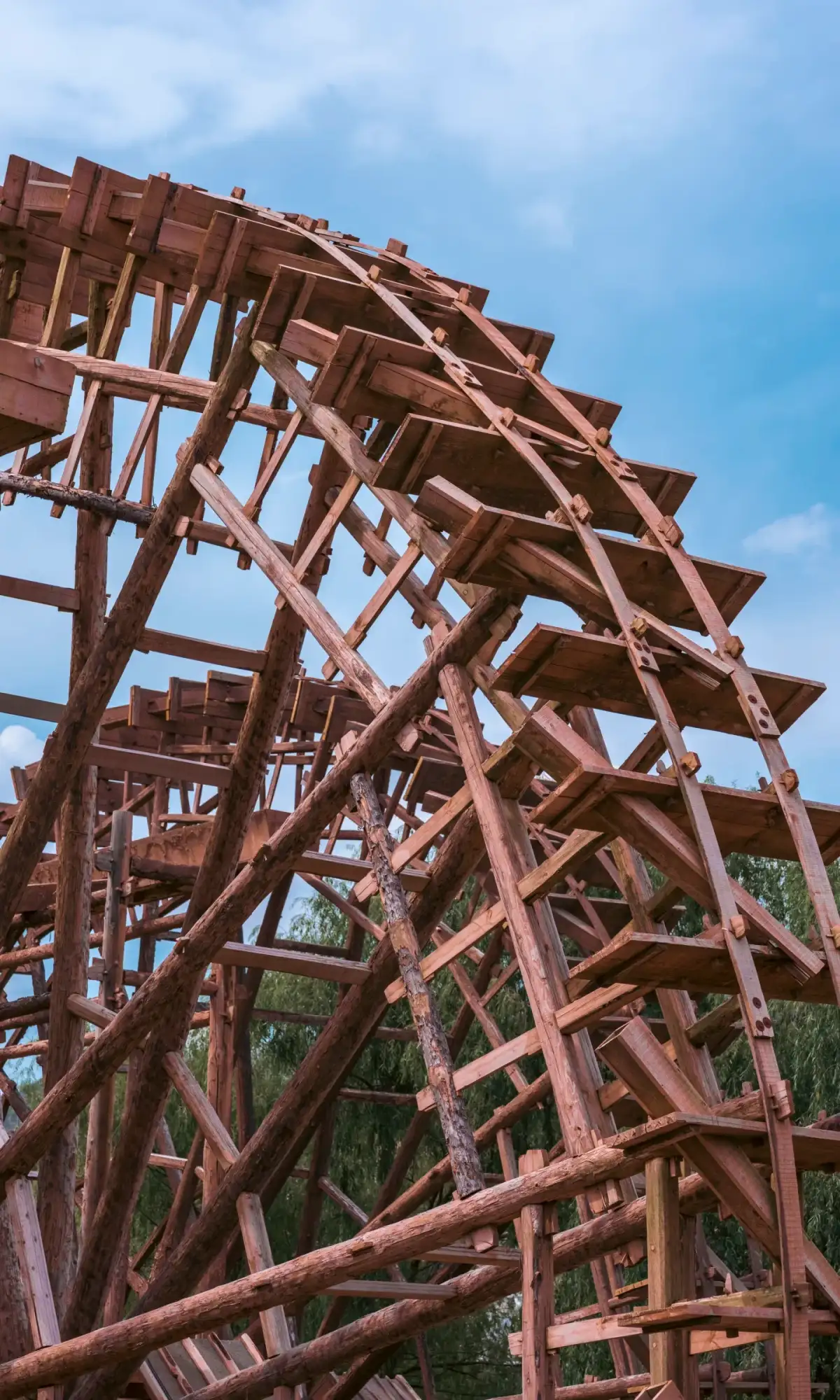
The rim and supporting structure of a wooden waterwheel in Lanzhou.
Listen to a slower-paced river melody on the north bank
Back on the riverbank, it’s a good idea to slow your pace after the climb. Choose a public path with tree shade, benches, or places to stop for tea, and observe how people use the riverside: some are strolling, others are chatting, and still others are lost in thought as they gaze at the water. Such scenes of daily life explain better than any tourist attraction name why Lanzhou is so closely connected to the Yellow River. If you’d like to try Sanpaotai or other local teas, first check the shop’s selection and prices, then choose a comfortable spot to sit and give the tea time to truly steep. The ingredients in the drink affect its flavor and sweetness; those who prefer a lighter tea should ask in advance. Not every spot along the riverbank is suitable for sitting right by the water; water levels, the shape of the embankment, and managed areas can vary, so you should stay on officially open paths. The exposed riverbanks shown in the photos should not be treated as routes you can freely access. Even viewing the water from behind the guardrails allows you to feel its speed and hear its sound.
Waterwheels: Bringing the River Back from Scenery to Utility
If you plan to continue walking along the riverbank, you can focus your next segment of observation on public landscapes or exhibits related to water wheels. The significance of Lanzhou’s water wheels lies not only in the visual appeal of their massive wooden wheels but also in the concept of lifting river water onto the bank to serve both production and daily life. As you approach the structure, first examine the components along the outer edge of the wooden wheel, then observe how they relate to the axle and supports; if there is an explanatory sign on-site, reading it before looking back at the structure will make it easier to understand how the water is lifted. Displayed water wheels and actual functioning traditional facilities may have different contexts; please refer to the on-site information for details. Do not assume, based solely on a diagram, that the wooden wheels are still used for daily irrigation, nor should you imagine the Waterwheel Park and Zhongshan Bridge as being located in the same small square. If you plan to connect them into a walking route, you should verify their locations, opening hours, and transportation options in advance. If time is limited, it’s better to choose one site to explore thoroughly than to rush along the river to several sites without having enough time to stop at any of them.
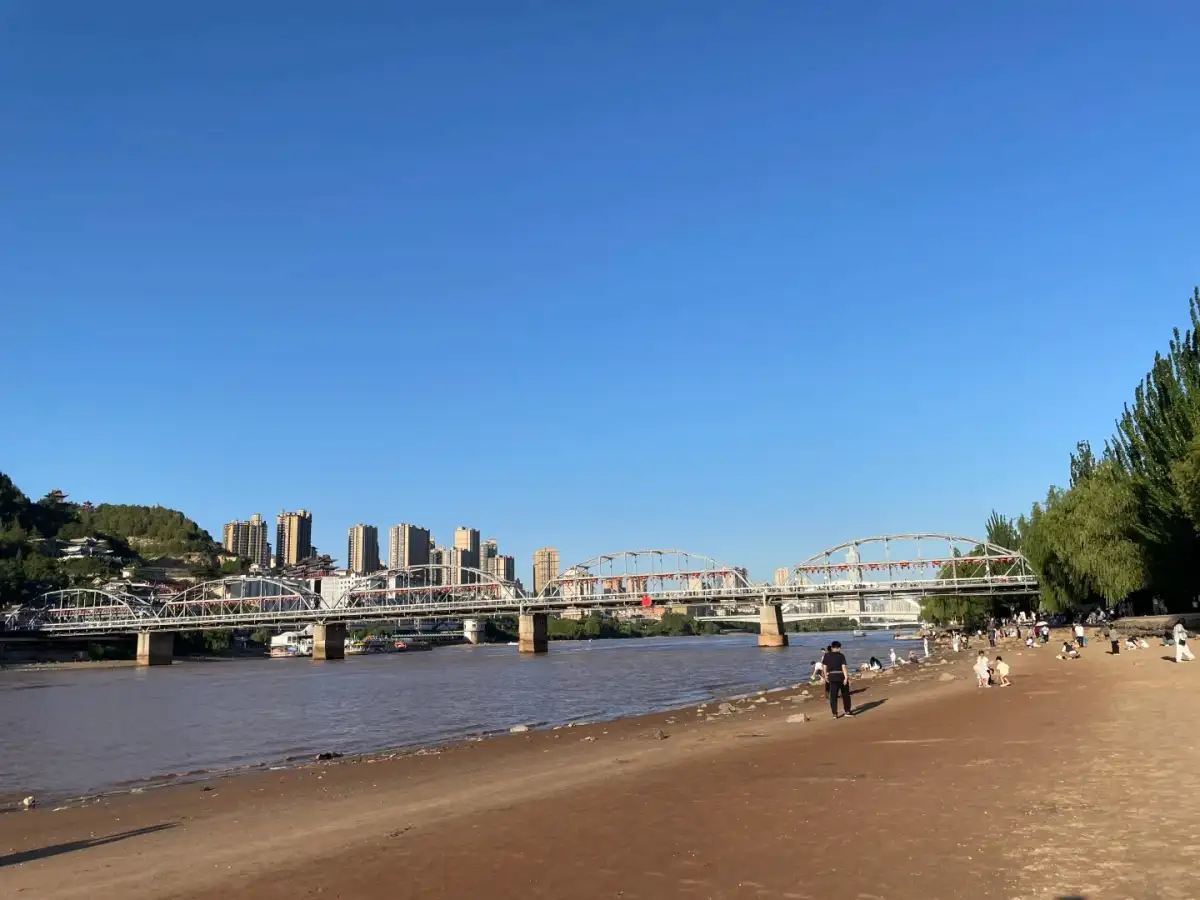
The Yellow River bank near Zhongshan Bridge and people strolling along it. . Tao’s Paintings
A bowl of noodles to satisfy the hunger that comes after walking
After a stroll along the riverbank, heading into the neighborhood for a bowl of Lanzhou beef noodles is a natural extension of getting to know city life. When ordering, start by choosing the thickness of the noodles, then specify whether you want it spicy; the basic set, extra meat, and side dishes usually have their own specific ordering methods. If you’re not familiar with Chinese, using the pictures on the menu or asking the staff for confirmation will make things clearer. Once the noodles are served, the interplay between the broth, radish, cilantro, and chili peppers is far more worth experiencing firsthand than the debate over “which place is the most authentic.” If you have allergies to certain ingredients, be sure to ask explicitly—don’t try to guess the contents based on color alone. You might also want to save a little room for local specialties like milk-and-egg rice wine, sweet fermented rice, and other local delicacies to see if the fermented rice wine, dairy products, and sweetness levels suit your taste. Eating isn’t about checking off every item on an online list; a satisfying lunch allows you to continue walking with ease, while also letting you observe the daily rhythm of the restaurant—from ordering noodles and hand-pulled noodles to picking up your meal and turning over tables.
Returning to the bridge at dusk, I witnessed a different kind of bustle
If you’ve already seen the bridge and the mountain during the day, return to the same stretch of riverbank at dusk to observe how the light and the crowd transform the scene. The reflections on the river’s surface gradually dim, the outlines of the steel structures become clearer, and the illuminated lights echo the buildings on White Pagoda Hill. As the sky shifts from light blue to dark, there’s no need to rush to capture the night view after complete darkness sets in—the transitional phase often reveals the details of the mountain, bridge, and water all at once. The riverbank can get quite lively at night, so choose a spot that’s easy to return from and avoid narrow passageways and crowded queues. If you plan to take a sightseeing cruise or try water activities, be sure to confirm separately whether they’re operating that day, where to board, and the return time—don’t assume they’re a given part of your stroll. A simple walk is rich enough on its own. After enjoying the night views, check the last public transportation schedules in advance or arrange a pickup location so you can end the day at a leisurely pace, with time to eat and rest.
In a linear city, roads must allow for traffic flow
Lanzhou stretches along the river, and attractions listed as adjacent on a map may actually be quite a distance apart. When planning your route, treat the area around Zhongshan Bridge and White Pagoda Hill as a single walking segment, and use public transportation to reach more distant attractions—such as the waterwheel exhibition, museums, or other riverside points—rather than assuming you’ll walk the entire way along the river. You can also choose accommodations based on the areas you truly want to see, then check the route from your hotel to your starting point. If you plan to visit the Gansu Provincial Museum on the same day, be sure to set aside additional time for the visit according to the museum’s current reservation schedule; do not linger by the river until late in the morning and then rush there at the last minute to wait for entry. When making reservations, international visitors should confirm which documents are required and which entry points are available, and keep a record of the information from official channels. On rainy days, you can shorten your riverside stroll and visit indoor cultural venues that are confirmed to be open; in hot weather, split your walk into two segments—one in the morning and one in the evening. Given the length of Lanzhou, making sensible use of transportation becomes an integral part of slow travel.
The seasons change how the riverbanks are used
The shade of the trees in summer and the nighttime atmosphere often draw more people to the riverbank, while in winter, you’ll need to pay closer attention to the wind and road conditions. Spring and fall are ideal for walking, though you may still encounter temperature fluctuations between day and night, dust, or sudden gusts of wind; dress in layers so you can easily adjust as needed. Don’t view the color of the Yellow River as a fixed tourist benchmark; it changes with water levels, sediment, lighting, and the angle from which it’s photographed. A single visit allows you to see the river as it is at that moment; only through repeated visits will you gradually come to understand its transformations. Before leaving Lanzhou, take a moment to reflect on your footsteps across the bridge, the structure of the wooden wheels, the rooftops unfolding in layers on the hillsides, and the sense of comfort brought by a bowl of noodles at the dinner table. Each of these elements has its own rhythm, yet they are all woven together by the Yellow River. Walking along a stretch of the riverbank does not mean you have completed your journey along the entire river; it is more like a starting point, allowing you to remember—even when passing through other parts of Gansu later—how this city weaves water into its daily life.
Further Reading and References
Compiled and organized by the Dongxing Travel Editorial Department based on publicly available travel notes and listed information. Intended for pre-trip reading; this is not a personal account of the experience. Please verify opening hours, transportation, reservations, and service arrangements according to your actual travel dates.
Lanzhou Municipal Local Chronicles Compilation Committee: Lanzhou Yellow River Iron Bridge
Must the bridge and hill both fit a half-day?
Begin a Lanzhou Yellow River walk with Zhongshan Bridge observation, seeing current and both banks before deciding on a Baita Hill climb. Choose a higher section for the relationship between city and valley; for less uphill walking, remain beside the river. Treat crossing, climbing and returning separately so changing energy does not disrupt the main subject.
Connecting waterwheels and a meal with the route
A waterwheel display turns attention from scenery towards use, making one interpreted example a useful follow-up to the bridge. A bowl of noodles or tea can then provide a seated pause without crossing the city repeatedly to complete a food list. Evening light changes the scene, but agree on the end point early and adapt the walk's length around it.
Planning references